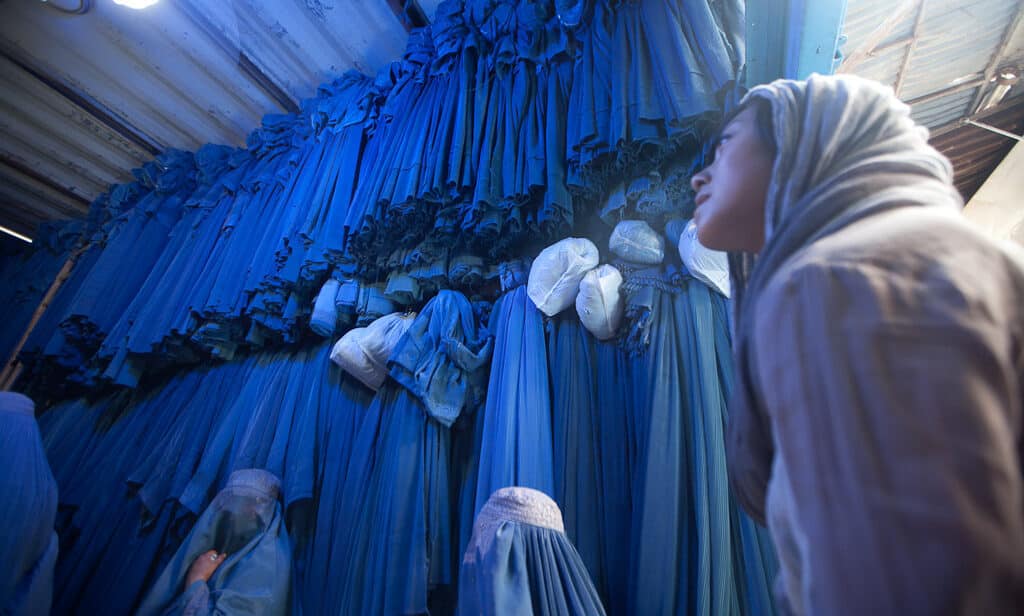
In times of conflict, political instability, and social unrest, women and children have always been the ones who face the most dire consequences compared to the rest of the population.
It is nearly three years since the Taliban returned to power and their extremist views and restricting edicts against Afghan women has been one of the major human rights crises. Afghan women’s rights are under constant attack by the Taliban. However, the silent struggle that Afghan women are facing on top of the restrictions on their rights and existence is food insecurity and malnutrition.
Women are struggling to feed their children and themselves, leaving them all malnourished.
Currently, 15.5 million people are considered to be facing acute food insecurity, 2.7 million of which are in an emergency situation. In 2023, it is estimated that 1.2 million Afghan women were malnourished. According to the World Food Programme, this number is only expected to grow this year. The statistics for Afghan children are also supposed to grow this year, reaching 3 million malnourished children.
Acute malnutrition is at a dire point for women and children as about 50% of children under five years of age and 25% of pregnant and breastfeeding mothers need nutritional support in the coming 12 months in order to survive.
The context behind this crippling reality for Afghan women is a combination of many factors, including a struggling economy as well as high unemployment rates. With a struggling economy, Afghan families are unable to pay for food to support their families. When the Taliban takeover occurred, a large number of Afghan families lost their main sources of income as international aid was suspended in sectors including the government, non-profits, humanitarian efforts, and in education and health sectors. Furthermore, Afghanistan is facing rising rates of inflation that make food and nutrition expensive for families to buy.
The Taliban’s restrictions on women also exacerbates the malnutrition crisis. Even highly educated women cannot earn income because of the Taliban restrictions on their employment and freedom of movement.
Afghanistan’s hunger and malnutrition crisis is often forgotten given the other wars around the world where famine and food crises are more visible. However, in addition to food insecurity, Afghanistan is one of the top 10 countries facing maternal and child mortality due to several reasons, including malnutrition. The health of women and children will continue to drastically decline unless sustainable interventions, such as allowing women to work and earn an income, are put in place to support families.
The consequences of a malnourished population of women and children are severe. With malnourished children, the next generation of Afghanistan will face life-long health consequences, such as cognitive impairment, and will have far worse quality of life. The economy will suffer as well because of a lack of a qualified and educated workforce. The GDP will continue to face losses and the recovery will take even longer.
Importantly, when an expecting mother is malnourished, it is more likely that their child will be born of a low-birth weight. This opens a large possibility of future health concerns for the child, including increased risk of adult chronic disease, frequent infections, and reduced mental and physical capacity.
Targeting malnutrition in Afghanistan and working to improve the nutrition of women and children must become as much of a priority as it has been in other parts of the world where there’s more visibility on food starvation. Targeting malnutrition means improving the health, physical growth, cognitive development, school performance, and productivity of Afghan women and children. By supporting the growth of a strong and prepared population of women and children, there is the potential to improve Afghanistan’s social and economic development in addition to the empowerment of women.
Sources: Ariana News, Khaama Press, Human Rights Watch, World Food Programme, Relief Web, UNSCN, UNICEF