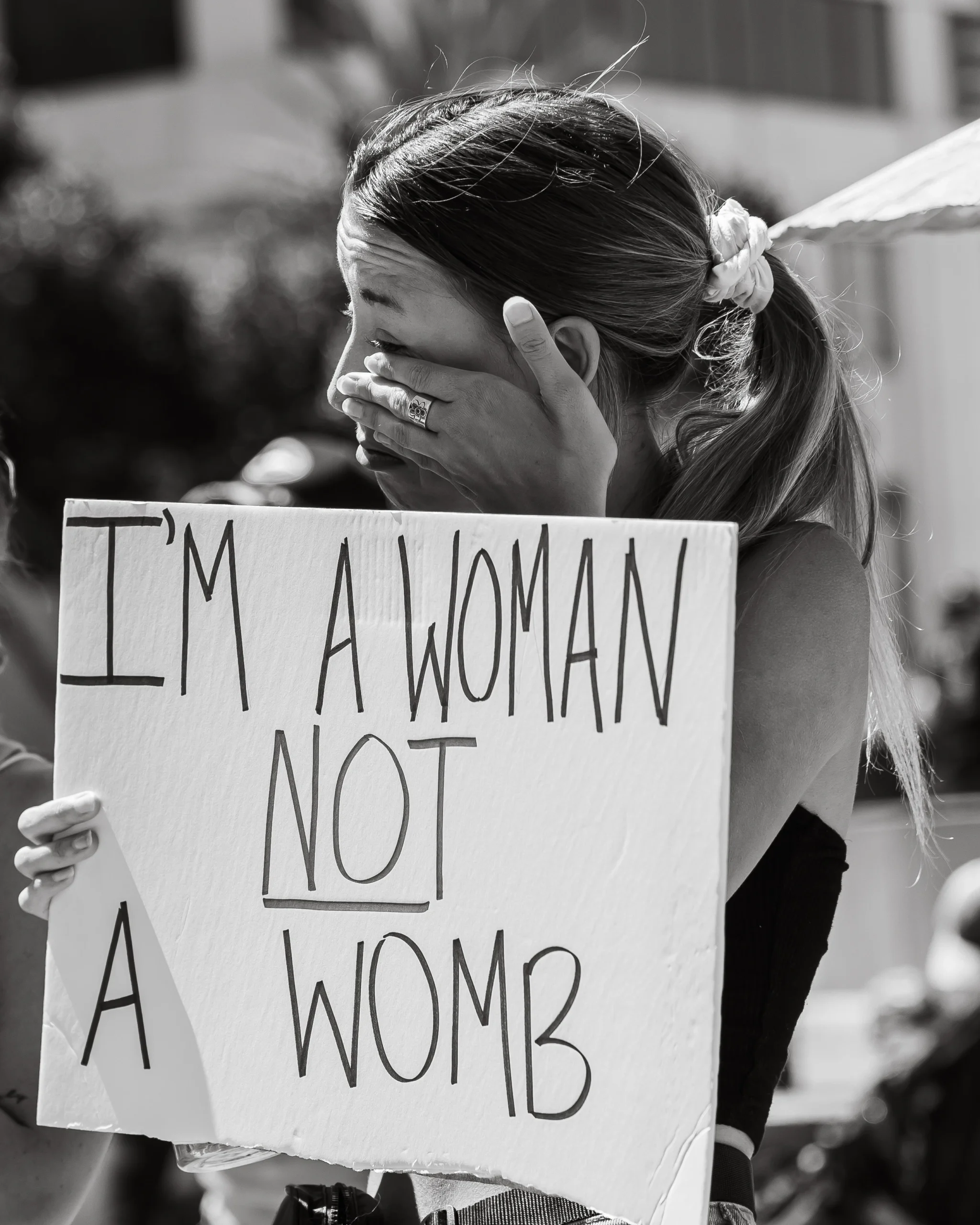
“Immigrant Reality Show” Pitched to the DHS Mocks Survival as a Game

Amidst the terrifying state of immigration under the current administration, it appears that some view the best way forward is with casually cruel and blatantly insensitive mockery: the kind you would only find on a reality show.

Recently, reports began to circulate of a competition show being pitched to the Department of Homeland Security (DHS), whose premise involved immigrant contestants competing for a chance at sped-up citizenship. According a The Daily Mail article, Kristi Noem, the Secretary of Homeland Security, allegedly backed the show and is actively attempting to accrue votes for it.

DHS spokeswoman, Tricia McLaughlin, profusely denied claims of Noem’s support and the proposition’s own popularity. “This is completely false,” McLaughlin said of The Daily Mail’s reporting. “Secretary Noem has not ‘backed’ nor is even aware of the pitch of any scripted or reality show.” According to McLaughlin, the DHS receives hundreds of pitches annually for media content reflecting the state of immigration. She assured that each pitch goes through a strict vetting process. However, despite her adamant denial of Noem’s support for the show, McLaughlin acknowledged that the show has been pitched to the DHS and is currently in the process of review. “This proposal has not received approval or rejection by staff,” she said. It’s “in the very beginning stages of that vetting process.”

Whether Noem herself has backed the proposal is not quite clear; however, the pitch itself is not exactly a hoax, as the show’s creative director has spoken out about his vision. Rob Worsoff, a reality TV vet who was behind shows such as “The Biggest Loser,” “Duck Dynasty,” and “The Millionaire Matchmaker,” provided CNN with a description of the proposal, as well as portions of a pitch deck. According to Worsoff, the show is titled “The American,” and will feature contestants who are also aspiring US citizens currently “in-line” at immigration. The idea is for them to travel across the country, competing in a series of challenges—the heritage challenge, elimination challenge, a town hall meeting, and the final vote—which all culminate in the winner being sworn into citizenship at the Capitol.

The idea is painfully superficial and flippant towards one of the gravest issues in America today. However, Worsoff brazenly insists on the show’s sincere purpose. “Contestants will represent a wide demographic of ages, ethnicities, and talents. We’ll join in the laughter, tears, frustration and joy, hearing their backstories,” he claimed, “as we are reminded of how amazing it is to be American, through the eyes of 12 wonderful people who want nothing more than to have what we have, and what we often take for granted: the freedom, opportunity and honor of what it means to be American.” 

Furthermore, Worsoff assures that the show will not pit contestants against each other in a cut-throat manner akin to The Hunger Games, which many people have begun to equate the concept to. “This isn’t ‘The Hunger Games’ for immigrants,” he said. “This is not, ‘Hey, if you lose, we are shipping you out on a boat out of the country.’”

The ignorance of this statement is palpable and the very reason why even the concept of the show—whether Noem or others are adamantly supporting it—is reflective of just how direly warped America’s understanding of immigration is. According to NBC News, since the Trump administration has come into power, “data shows border crossings have plummeted, Immigration and Customs Enforcement (ICE) arrests have doubled, and the number of people in detention is at an all-time high.” Per the report, ICE deported 11,000 migrants in February, just over 12,300 in the first four weeks of March, and approximately 17,200 in April. People are being snatched off of the street against their will, their whereabouts made a mystery. 

Worsoff claims that the show is inspirational, making the wondrous dream of American citizenship a source of bonding entertainment. In reality, this show, like the lives of many immigrants struggling to gain citizenship, is about survival. And that is not something that we should be laughing along to through a TV screen.
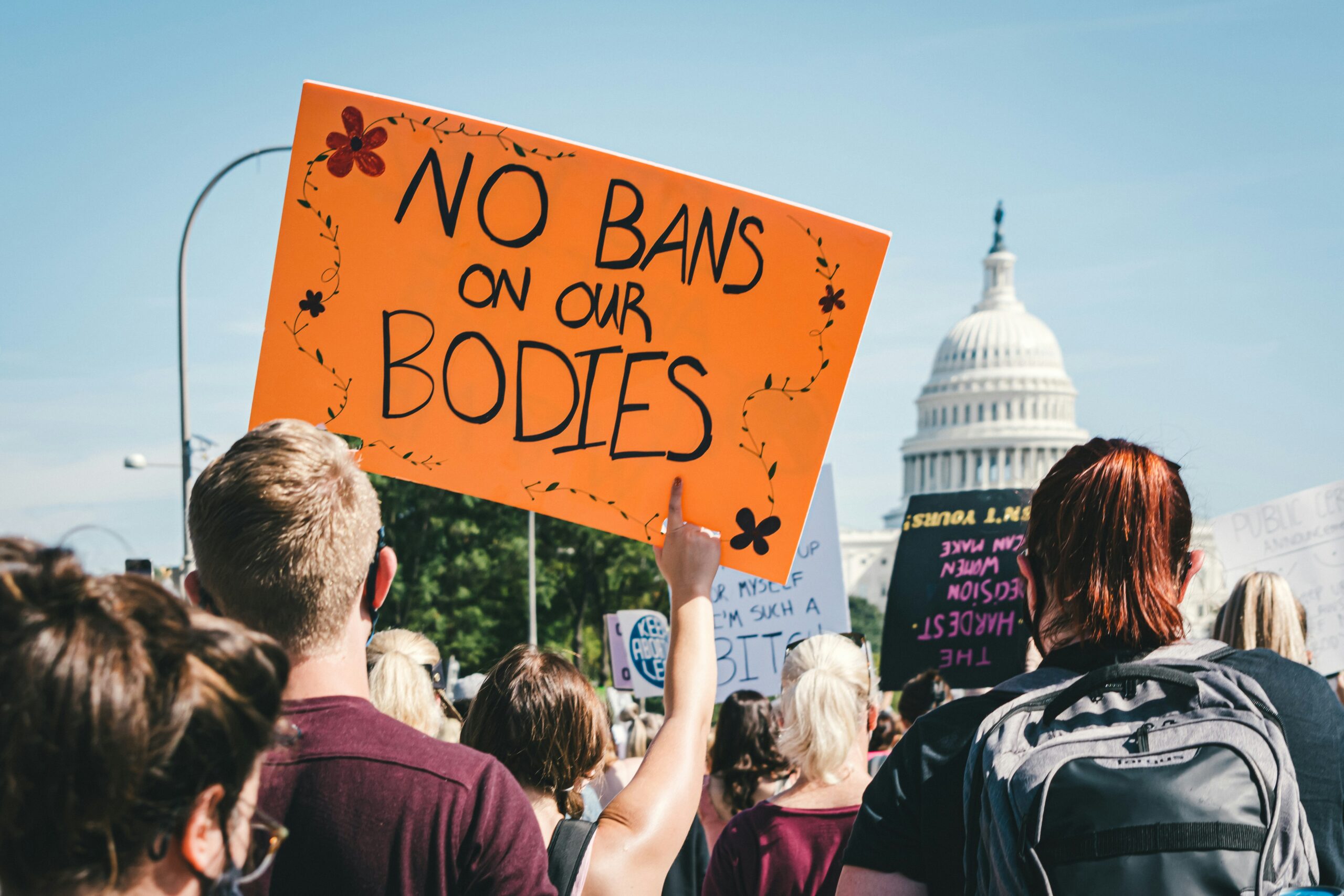
Missouri Lawmakers Aim to Undo Abortion Protections Passed by Voters

Last November, 52% of Missouri voters passed Amendment 3 to the state constitution, presenting a beacon of hope for women’s bodily autonomy post-Dobbs. The amendment guaranteed abortion rights up to fetal viability—generally considered around 24 weeks of pregnancy—along with fundamental reproductive freedoms such as birth control, pre- and post-natal care, and “respectful” birthing conditions. However, this significant progress is now facing total reversal. 

Employing a rare action known as the “previous question,” Missouri Senate Republicans ended the Democratic filibuster, leading to the successful approval of a referendum to repeal Amendment 3 and send a new measure back to the voters. The motion passed 21-11 and quickly faced protest upon its approval from abortion rights activists. “It’s unbelievable to me that our elected body will completely disregard what the people want,” Democratic Rep. Elizabeth Fuchs, expressed. “We always joke that we don’t have a boss in this building – yes, we do. It is the people.” Fuchs joined protestors outside of the Senate Chamber before they were swiftly cleared out.

Republican lawmakers claim that they are simply giving voters a “second chance” to vote on abortion. “This resolution presents the average Missourian with a choice at the ballot box, one that I believe is much more in keeping with their values,” Republican Rep. Adam Schnelting, who’s leading the replacement proposal, claimed.

To many lawmakers, activists, and voters, this “second chance” is simply a forced ploy to control women’s bodies despite expressed public leanings towards their liberation. “The majority of Missourians want to make their own decisions about health care without interference from prying politicians, and they made this abundantly clear at the ballot box in November,” Margot Riphagen from Planned Parenthood in Great Rivers said. 

The Missouri legislature has largely been dominated by anti-abortion lawmakers. This was made clear after the Dobbs decision when the Missouri legislature followed suit with large-scale bans covering most abortions. However, activists gathered quickly and petitioned to reverse these restrictions. Amendment 3 was a critical win in the fight for reproductive freedom, helping Planned Parenthood reinstate procedural abortions, though medication abortions remain on hold.

Now, with the revised measure on the ballot, this progress faces immense undoing. The newly proposed amendment, which will go back to voters in Nov. 2026 (or sooner), only allows abortions for medical emergency or fetal anomaly, and in the cases of rape or incest, still restricts abortions after 12 weeks of pregnancy. Additionally, the amendment would prohibit gender transition surgeries, hormone treatments, and puberty blockers for minors.

Along with going against the majority of Missouri voters and their stance towards reproductive rights, this new amendment presents a dishonest vision to second-time voters. Democratic Sen. Tracy McCreery called the measure “an attempt to mislead and lie to voters.” Indeed, the amendment employs euphemistic and vague language, claiming to “ensure women’s safety during abortions, ensure parental consent for minors” and “allow abortions for medical emergencies, fetal anomalies, rape, and incest,” without specifying the actual restrictions it plans to enact.

Despite this cutting reversal of the once hopeful amendment, activists and pro-choice lawmakers have only gotten more fired up and ready to fight as a result. “They might have more votes in the Capitol, in the legislature, but we have more votes at the ballot box,” Mallory Schwarz, executive director of Abortion Action Missouri, asserted. “We proved that before, we’ll prove it again.”

Southern California Fertility Clinic Bombing Highlights Ongoing Threats to Repro Healthcare Providers

“Our mission has always been to help build families, and in times like these, we are reminded of just how fragile and precious life is,” the American Reproductive Centers (ARC) Fertility clinic, located in Palm Springs, California, wrote in response to the recent bombing attack they faced. No members of the clinic were injured, nor was the lab or the reproductive resources inside, including IVF eggs and embryos. However, the building itself faced significant damage; its entrance was engulfed in smoke and flames, riddled with debris after the attack. 

The bombing occurred at around 11am on Saturday, May 17, in a car just outside of the clinic. Akil Davis, the assistant director at the FBI Los Angeles Field Office, described the attack as “probably the largest bombing scene that we’ve had in Southern California.” He asserted that the bomb was powerful enough to “throw pieces of a vehicle hundreds of feet in the air then several blocks away.” The attack has been treated as an intentional act of domestic terrorism.

Four people were injured as a result of the bombing, and one was killed. Police believe the sole fatal victim to have also been the perpetrator, 25-year-old California resident Guy Edward Bartkus. Bartkus had posted a variety of alarming online content before the attack, ranging from videos of him testing explosives to expressions of his “anti-natalist” beliefs, as categorized by the FBI. These beliefs generally tracked as deeply nihilist, and he has self-described as a “misandrist” and a “pro-mortalist.” “Basically, I’m anti-life,” he said in one recording cited by the LAist, “and IVF is like kind of the epitome of pro-life ideology.”

Reproductive healthcare facilities have faced an uptick in protests and violent attacks, typically based on beliefs directly opposing Bartkus’. According to the National Abortion Federation, from 2020-2021, reproductive healthcare centers have seen reports of stalking rise nationally by 600 percent, blockades by 450 percent, clinic invasions by 129 percent, and assaults by 128 percent, largely by anti-abortion extremists. IVF facilities have not faced as many violent attacks, but have experienced a surge of protestors, some calling themselves “abortion abolitionists.”

IVF fits into a unique role amidst the post-Dobbs anti-abortion crusade. Only 8 percent of Americans are categorically opposed to IVF care, however, 2024 saw a strong conservative policy movement against the treatment. In June 2024, now-Vice-President JD Vance, along with other Republican Senators, voted against a bill that would establish a federal right to IVF care. Similarly, the Southern Baptist Church voted that same month in opposition to the use of IVF.

While many conservative anti-abortionists ostensibly argue for the “preservation” of life, IVF—whose goal includes allowing women the opportunity to have children—is viewed to them as another “threat to life.” If anything, this mounting opposition to IVF reflects the pro-life movement’s potentially greater agenda. As Karla Torres, a leader at the Center of Reproductive Rights, put it, they are “squarely targeting reproductive freedom more broadly.” 

However an attack is motivated, reproductive healthcare providers are facing a critical moment of risk. And this bombing is another devastating reminder of their current vulnerability and need for support. “Those of us working in reproductive medicine are no strangers to these threats,” the group at the American Society for Reproductive Medicine said. “We have seen physicians murdered, facilities attacked, and patients being harassed, threatened, and harmed. We must not allow such violence to extend into the realm of fertility care.”

American University Hosts Pertinent Discussion on The Fourteenth Amendment and Its Impact on Education

On Feb. 28, American University Washington College of Law hosted a panel about the Fourteenth Amendment, which discussed the amendment’s impact on education culture and policy today. The panel was part of a larger conference titled, “The Constitution And Its Culture Wars,” covering First and Fourteenth Amendment issues in education, as well as discussions about the civil rights movement. The event was organized and hosted by the American University Journal of Gender, Social Policy, & the Law (JGSPL), a student-published journal that serves as a forum for discourse on gender issues and feminist legal studies. 

The Fourteenth Amendment panel was moderated by Professor Susan Carle, who specializes in civil rights legal history at American University. Joining her for the panel were four acclaimed speakers who each provided diverse insights into the amendment’s purpose and educational implications: Jin Hee Lee, the Director of Strategic Initiatives at the Legal Defense Fund, Jon Greenbaum, the Founder of Justice Legal Strategies, Leslie Annexstein, the Assistant Vice President for Equity and Title IX Coordinator at American University, and E. Christi Cunningham, the Director of the Education Rights Center and Professor at the Howard University School of Law.

The panel covered a range of issues but had some key throughlines. One of the primary focuses of the panelists was to completely dismantle the present false narrative surrounding DEI. Lee explained that after the first Trump term, there developed an “ahistorical narrative” about our country, which stands on the false premise that there is “no present-day inequality.” This harmful narrative is currently manifesting itself in the current administration, which is already attempting to expunge marginalized experiences: asserting that there are only two genders, eliminating certain words like “equity,” “barriers,” or “excluded” from the National Science Foundation, and rolling back DEI initiatives. 

DEI initiatives are particularly important in creating educational opportunities for marginalized communities. However, according to Cunningham, they have recently been painted as a “give-away,” when in reality, genuine access and power have never been available to marginalized groups. Annexstein seconded this point, referencing Thurgood Marshall’s statement about how the Constitution has been “defective from the start,” never believing in or intending to promote equality for all people.

As a result of this skepticism surrounding the disadvantages of certain communities, necessary support systems—especially within education—have been pulled, such as affirmative action. Greenbaum described his experience witnessing Students for Fair Admissions v. Harvard, explaining that the right-wing and now Supreme Court’s weaponization of the Fourteenth Amendment’s Equal Protection Clause has intimidated and prevented “perfectly legal activities” within DEI from happening. 

But beyond the threat to diversity within education, panelists emphasized that in attempting to implement the Fourteenth Amendment’s values of “equal protection,” more focus must be placed on equity. According to Lee, while lots of institutions have implemented DEI programs, they’ve neglected to acknowledge and explain why those programs exist in the first place. Simply put, their focus is “a lot about diversity, not enough about equity.” 

Of course, it’s much easier to add diverse perspectives to an institution than to change its fundamentally exclusive structure. But the resounding message from the panelists was to not shy away from seemingly impossible aspirations. Jin Hee Lee emphasized that if there’s anything the right has done well, it’s imagining and pushing for a vision of the law that does not yet exist. She closed the panel with a rallying emphasis on community organization, as opposed to remaining “tunnel-visioned in trying to convince a courtroom.” Only when the left commits to a greater vision of equality, she underscored, can they actually work towards achieving it. “Let’s not settle for breadcrumbs.”

Russel Vought, Project 2025 Co-Author, Confirmed as Federal Budget Chief

On February 6, the Senate confirmed Russell Vought as the director of the Office of Management and Budget. Vought’s nomination was heavily contested, primarily due to his history as the co-author of Project 2025, an extreme conservative agenda listing Trump’s priorities for his second term. 

Project 2025, created by the Heritage Foundation, a prominent right-wing think tank, calls for the president to have direct control over the entire federal bureaucracy. Under this total executive control, Project 2025 also aims to eliminate federal employee job protections, erase DEI from federal programs, militarize the southern border, and instill a nationwide ban on abortion. Vought contributed to Project 2025 by writing the key chapter on the executive office and also served as the Republican National Committee’s 2024 platform policy director. 

Democrats were unsurprisingly appalled by Vought’s nomination, as the position would give him complete control over the $7 trillion federal budget. As Democrat Senate Majority Leader,  Chuck Schumer (D-NY) described him, many view Vought as, “the most radical nominee, who has the most extreme agenda.” Some Democrats even suspected him as having been behind Trump’s order to freeze the federal budget. “Russ Vought was the puppet master,” Senator Elizabeth Warren (D-MA) claimed, “behind the funding shut down that threw this country into chaos.” 

Despite their significant dissent, holding the floor overnight with opposing speeches, Democrats still remained the minority in the house and could not prevail. They even reportedly attempted to deliver their reasoning while casting their “no” votes, only for Senator Ashley Moody (R-FL) to gavel them down, citing the Senate rule banning debate during voting. Ultimately, the Republican vote for Vought’s confirmation prevailed 53-47.

The position of budget chief holds significant responsibility and potential for major change, as the Office of Management and Budget essentially dictates the policy priorities and agency rule-making of the White House. Vought clearly understands the power of this position and intends to use it to further Trump’s extreme agenda previewed in Project 2025. Vought even wrote in Project 2025 that the budget chief’s job is, “the best, most comprehensive approximation of the President’s mind.” 

Beyond his work with Project 2025, Vought demonstrated a significant desire to slash the federal budget during Trump’s first term. He began a push to reclassify tens of thousands of federal workers as political appointees, laying the groundwork for mass dismissals. He additionally advocated for the president’s use of “impoundment,” a legal theory asserting that the president can decide not to spend money on actions he deems “necessary”: the goal of this theory is ultimately to expand executive control over federal spending. Vought affirmed his employment of this law during his confirmation hearings. 

Trump Reinforces the Hyde Amendment, Making Reproductive Rights More Precarious

During his first few weeks in office, President Trump has moved towards imposing a ‘domestic gag rule’ on abortion access. This past Friday, Jan. 31, he signed an Executive Order “to end the use of federal taxpayer dollars to fund or promote elective abortion.” The order primarily aims to reinforce the Hyde Amendment, a policy that has been prohibiting federal funds from covering abortion services since 1976. 

The amendment essentially prevents programs within Labor, Health and Human Services, Education and Related Agencies (LHHS) from covering abortion. Because these restrictions primarily apply to those in the Medicaid health insurance program, low-income individuals are critically impacted by this amendment. With these restrictions, one in four low income women seeking an abortion are forced to go through with an unwanted pregnancy. 

According to recent data, 58% of women of reproductive age who are enrolled in Medicaid or CHIP (Children’s Health Insurance Program) live in states that ban Medicaid coverage for abortion. Additionally, 51% of these enrollees are women of color, meaning that the Hyde Amendment disproportionately impacts the reproductive health of marginalized women. “The Hyde Amendment,” Supreme Court Justice Thurgood Marshall (1980) claimed, “is designed to deprive poor and minority women of the constitutional right to choose abortion.”

During his term, Biden passed two executive orders in support of abortion access, Executive Order 14076 and Executive Order 14079. However, both have now been rescinded, with Trump claiming they violate the Hyde Amendment. Executive Order 14076 imposed a whole-of-government effort to promote and fund abortion while also politicizing the enforcement of the Freedom of Access to Clinic Entrances (FACE) Act, which protects access to reproductive health care facilities and places of worship. Executive Order 14079 recategorized abortion as healthcare, which allowed for tax-payer money to go towards funding elective abortions, including Medicaid money to pay for travel costs. Trump has now nullified these two policies that were essential in providing support for equitable abortion access. 

This is not the first time Trump has enforced sweeping abortion restriction policies. During his first term in office, he instated a similar domestic gag rule which gutted Title X’s capacity to serve patients and their reproductive health. Title X was passed in 1970, as part of the Public Health Service Act. The program expressly aimed to help reduce reproductive health inequity and ultimately help patients exercise their right to make their own reproductive decisions. Trump’s past domestic gag rule and its restrictions reduced Title X networks’ capacity by 46% nationwide, affecting potentially 1.6 million patients. The Biden-Harris administration made efforts to rebuild from the devastating effects of this gag-rule, but the process was slow-going. 

Instead, many Title X programs had to accommodate and find independent solutions, such as allowing payments on a sliding scale, prioritizing free and/or low cost services for young people, and helping patients connect to private or public insurance. These strategies may need to be put to action again with Trump’s recent Executive Order.

Ultimately, Trump’s Executive Order represents a larger motion to return the issue of abortion to the states, as already seen with the 2022 Dobbs decision, in which three of the judges were Trump appointees. This order poses an immense threat to millions of women and child-bearing individuals, pulling out from under critical support needed for their reproductive health, safety, and freedom.

Study Shows Potential in a New Drug That Could Increase Accessibility to Medication Abortion

Photo by Reproductive Health Supplies Coalition on Unsplash

A recent proof-of-concept study from The New England Journal of Medicine (NEJM) found promising results for a new medication abortion drug. 

While there are already established medication abortion regimens around the globe, primarily the combination of mifepristone and misoprostol, mifepristone is fairly limited and pricey, making it less accessible. NEJM’s study presents a possible alternative that could increase safe and effective abortion access worldwide.

The study tested ulipristal acetate, a drug that has a similar chemical profile to mifepristone and has already been established as safe, in addition to being widely available. Conducting a two-stage clinical study, NEJM assessed the combination of ulipristal and misoprostol in order to determine the most effective regimen. 

NEJM collaborated with teams at Gynuity Health Projects and the National Autonomous University of Mexico to help design and analyze the data. The actual data collection was implemented at the outpatient clinic of a public maternal hospital affiliated with the Mexico City Health Secretariat and Inguarán Maternal & Child Hospital. 

The first stage was a dose-finding study, where sixty-six participants were randomly assigned either 60 mg or 90 mg of oral ulipristal, followed by 800 μg of buccal misoprostol. Both groups resulted in similar efficacy and safety profiles, so they decided to move forward with the 60-mg ulipristal dose in an open-label study of 133 participants using the same regimen. To evaluate acceptability, participants filled out a structured questionnaire at the end of the follow-up visit.

After collecting results, the study found that pregnancy termination occurred in 129-133 (97%) of participants with the combination dose of ulipristal-misoprostol, a comparable success rate to mifepristone-misoprostol. Regarding the participants who did not have a successful pregnancy termination, one had a completion with sharp curettage, two received manual vacuum aspiration, and one underwent a repeat medication abortion with misoprostol alone. 

When asked about their satisfaction with the treatment, 130 out of 133 participants (97.7%) rated it as satisfactory or very satisfactory. The pain level also received a similar rating, with 113 out of 133 participants (85%) rating it as acceptable or very acceptable. Ultimately, 121-133 of the participants (91%) said they would recommend the treatment.

On the whole, the study demonstrates ulipristal-misoprostol’s potential to be an effective option for medication abortion. If ulipristal-misoprostol does become integrated into the market, it could help create a more equitable environment for women’s reproductive health, simply by providing more accessible options. “A major problem hindering use of medication abortion is availability,” Beverly Winikoff, the lead author of the paper and president of Gynuity Health Projects, said. “Increasing the number of methods and arsenal of options could have bold and transformative implications for potential users everywhere.”

Democratic Women’s Caucus Announces Executive Steering Committee, Fighting for Women’s Rights Under a New Administration

Photo by Simon Ray on Unsplash

Yesterday, Tuesday, January 21, the Democratic Women’s Caucus (DWC) announced its Executive Steering Committee for the 119th Congress. 

The DWC brings together Congresswomen from across the nation to create state and local support for women’s rights and opportunities, no matter where they live. Spearheading this mission are Chair Teresa Leger Fernández (NM-03) and Vice Chairs Emilia Sykes (OH-13) and Hillary Scholten (MI-03), leaders of the Executive Steering Committee which works to set and advance concrete action steps towards the DWC’s goals.  

This Committee comes at a notable time in the organization’s history, as its members will lead the largest ever DWC at 96 women strong. “Together,” Chair Fernández and Vice Chairs Sykes and Scholten proclaimed, “we amplify the voices of the amazing 96 Democratic women in Congress and tell the stories of America’s women and the impact D.C. policies will have on their own fight for economic security and freedom for their families.” Among this Committee’s priorities are “lowering costs, protecting access to health care, and keeping women and girls safe from sexual violence and harassment.” 

The Committee itself comprises a variety of positions, with a particular focus on representing diverse experiences. Some liaisons directly represent certain marginalized communities, including Black, Hispanic, and Asian Pacific American women. There is also a chair for Global Women’s Issues, expanding the DNC’s mission beyond America. Highlighting these diverse perspectives is particularly essential now in the wake of Monday’s inauguration, which has already ushered in a proclamation to end DEI initiatives.

Indeed, now more than ever, the DWC faces an even greater task in their fight for protecting women’s rights and gender equality. The Trump administration threatens women on a variety of fronts, the most pressing perhaps being abortion rights and access to reproductive resources following the overturning of Roe v. Wade. Beyond abortion, the Trump term is predicted to restrict general women’s health-care, posing a particular risk to low-income women relying on public health-insurance programs. 

While the Committee aims towards bipartisan solutions for their goals, they ultimately reject complacency to the new administration’s treatment of women’s rights. “Heading into the new Administration, we will seek bipartisan wins on these priorities whenever possible,” Chair Fernández and Vice Chairs Sykes and Scholten said. “But we’ll also call out President Trump and the Republican House, Senate, and Administration for any moves they make that betray American women and families.”

Below is the complete list of the DWC Executive Steering Committee for the 119th Congress.

Chair- Rep. Teresa Leger Fernández

Vice Chairs- Rep. Hillary Scholten, Rep. Emilia Sykes

Chair Emerita- Rep. Lois Frankel

Chief Whip- Rep. Nikema Williams

Whips- Rep. Sarah McBride, Rep. Emily Randall, Rep. Kristen McDonald Rivet

Policy Task Force Co-Chairs- Rep. Deborah Ross, Rep. Sydney Kamlager-Dove

Communications Task Force Co-Chairs- Rep. Shontel Brown, Rep. Jasmine Crockett

Member Services Task Force Co-Chairs- Rep. Melanie Stansbury, Rep. Sara Jacobs

National Leaders & Advocacy Organizations Liaison- Rep. Joyce Beatty

Senate Liaison- Rep. Debbie Dingell

New Member Liaison- Rep. LaMonica McIver

Congressional Black Caucus Liaison- Rep. Lucy McBath

Congressional Hispanic Caucus Liaison- Rep. Andrea Salinas

Congressional Asian Pacific American Caucus Liaison- Rep. Pramila Jayapal

New Democrat Coalition Liaison- Rep. Norma Torres

Progressive Caucus Liaison- Rep. Jill Tokuda

Equality Caucus Liaison- Rep. Julie Johnson

Global Women’s Issues Task Force Chair- Rep. Sheila Cherfilus-McCormick

Servicewomen, Women Veterans, & Military Families Task Force Chair- Rep. Chrissy Houlahan

Reproductive Health Care Task Force Co-Chairs & Liaisons- Rep. Judy Chu, Rep. Ayanna Pressley, Rep. Kelly Morrison

>