

Get the Flock Out

On September 23rd, the Senate Judiciary Subcommittee on Crime and Counterterrorism held a hearing titled “Always Watching: Flock’s Nationwide AI Surveillance Network,” examining the privacy risks, data sharing, and misuse of private automated license plate reader (ALPR) networks. 

The hearing was chaired by Sen. Hawley (R-MO) and featured five witnesses, including Lindsey Isaacs, a wrongfully accused driver, Alasdair Whitney from Legislative Counsel Institute for Justice, Sheriff Ross Teeple, Benn Jordan, a self-proclaimed “hacker”, and policy counsel analyst Chad Marlow from the ACLU, where they have coined a campaign called “Get the Flock Out.” 

The hearing highlighted pertinent concerns about how ALPR technology can be used and shared. Public concern about Flock cameras has also grown in recent months. A September 2026 Navigator Research survey found that 62% of registered voters were concerned about Flock camera use, including 66% of Democrats, 55% of Republicans, and 70% of Independents. 

Flock Safety was founded in 2017 by CEO Garrett Langley, operating as a small startup meant to provide ALPR cameras to homeowners associations and neighborhoods looking to reduce petty theft and local property crimes. Now, it has grown into something alarmingly dystopian: an AI powered network of over 120,000 cameras across 49 states that photograph, scan, tag, and log every driver that passes, whether or not they are suspected of any crime.

License plate reader technologies have existed since the 1970s, in the form of speed, toll, and red-light cameras. These are only triggered by a specific action, such as running a red-light or driving through a toll booth, and only track license plate numbers. The entry of venture capitalist funding and advanced AI technology into the mass surveillance industry has transformed these automatic traffic enforcement cameras into a complex web of invasive surveillance tools. 

During the hearing, ACLU’s Mr. Chad Marlow argued that companies operating ALPR systems are profiting from the collection and sharing of information about people’s movements. The ACLU has called for greater limits on how ALPR data can be collected, accessed, and shared. 

Privacy concerns extend to how ALPR data can affect people seeking reproductive health care.  During the hearing, Sen. Booker (D-NJ) raised concerns that states could use ALPR technology to track people traveling to obtain reproductive care. The concern comes amid documented cases of law enforcement using vehicle surveillance systems to investigate people seeking or suspected of seeking abortion care. 

Unfortunately, this ‘hypothetical’ scenario has become the reality for women across the country.

Witnesses Alaster Whitney and Sheriff Ross Teeple both testified about the overreach of Flock’s ALPRs, with Whitney highlighting jurisdiction concerns which police officers have already been accused of taking advantage of. 

In Texas, a sheriff’s deputy used 83,000 Flock ALPRs to track a woman who allegedly performed a self-administered abortion, at the behest of her abusive partner. In Massachusetts, a police officer used Flock networks to stalk a former romantic partner who said she had changed her identity to escape from his abuse. In Kentucky, a police officer was accused of searching his child’s mother 1,000 times through Flock’s network, though she has a protective order. The Institute for Justice has catalogued more than 200 incidents of these ALPR abuses, including romantic stalking, wrongful stops and detentions, non-law enforcement use and other types of misconduct.  

These encroachments do not just stop here, as Sen. Padilla (D-CA) spotlights the use of loopholes within Flock, which ICE officers take advantage of to track immigrant communities. While Flock has guaranteed no direct access to the Border Patrol subagency, Witness Marlow points out all it takes is one sympathetic person connected to ICE for the agency to obtain access to billions of pictures of citizens, including facial properties.

Concerns about ALPR surveillance have crossed traditional political lines. During the hearing, Sen. Hawley noted that supporters of the Second Amendment have “long feared national databases of any kind.” This has drawn criticism from across the political spectrum highlighting the bipartisan opposition. 

While Flock operates as a leading company which produces ALPRs, they are not the sole producers. Companies like Axon and Motorola have slowly begun increasing outputs as Flock cameras have gotten more attention and dissent. Amid Flock’s controversy, many cities like Denver are publicly terminating their Flock contracts only to quietly replace them with Axon.

Witness Mr. Benn Jordan, a self proclaimed “hacker” testified on finding 65 security vulnerabilities within Flock’s system, exposing the missing security settings needed to protect data from both national and international threats. Following this testimony, Witness Jordan urged the Senate to “…create clear, effective, and unified federal privacy laws on par with the GDPR [the General Data Protection Regulation of the EU].”

Jordan concludes his statement: “ALPRs are used all over the world, but viewing license plates as personal data with modern privacy guardrails would have prevented nearly every single problem that we are learning about in this hearing. This is an opportunity for Congress to build the overdue framework to protect the privacy of Americans for generations to come.”
Virginia Voters Will Decide the Future of Reproductive Freedom, Marriage Equality, and Voting Rights This November

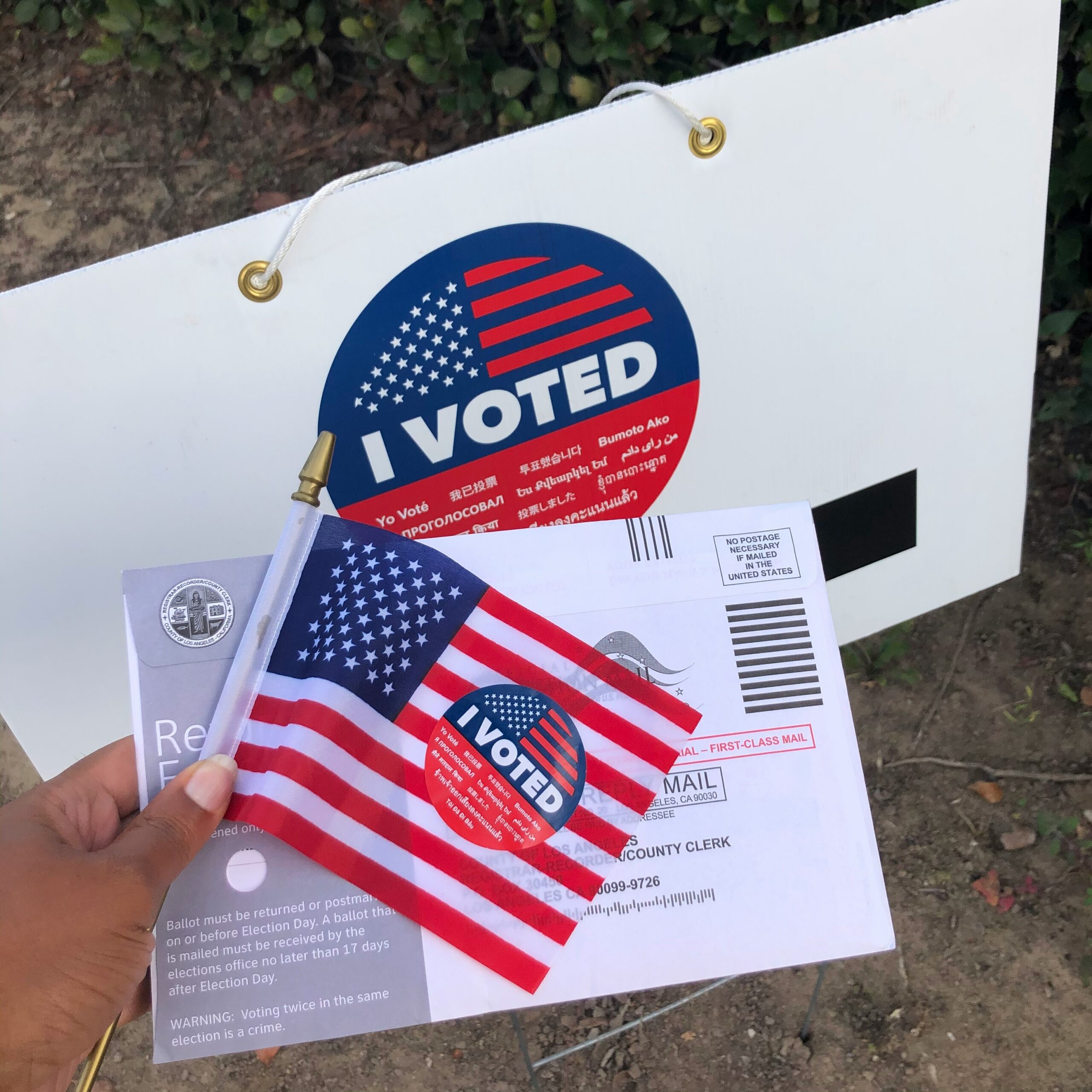
On November 3rd, Virginia voters will decide on three proposed amendments to the state constitution concerning reproductive freedom, marriage, and voting rights. The amendments would add a constitutional right to reproductive freedom, remove Virginia’s constitutional prohibition on same-sex marriage and require equal treatment of marriages, and automatically restore voting rights to people convicted of felonies upon release of incarceration. 

Together, the measures represent one of the most consequential ballot slates for civil rights in the state’s recent history, including a rare opportunity for voters to enshrine protections directly into the state constitution, beyond the reach of a hostile legislature or a change in administration. All three amendments were approved by the General Assembly through Virginia’s constitutional amendment process and will appear on the November 2026 ballot.

Question 1: Reproductive Freedom

The first amendment establishes a constitutional right to reproductive freedom and access. The amendment defines the right as including decisions about prenatal care, childbirth, postpartum care, contraception, abortion care, miscarriage management, and fertility care. It would also prohibit the Commonwealth from penalizing or prosecuting individuals for exercising those rights, as well as doctors, nurses, and others who assist patients with their voluntary consent. 

The question voters will see on the ballot:

“Should the Constitution of Virginia be amended to (i) protect the freedom to make personal decisions about prenatal care, childbirth, postpartum care, birth control, abortion, miscarriage management, and fertility care; (ii) protect doctors, nurses, and patients from being punished for these decisions; and (iii) allow for restrictions on access to abortion during the third trimester of pregnancy except when the patient’s health is at risk or the pregnancy cannot survive?”

If passed, this would make Virginia’s protections some of the most durable in the South, solidifying it as the last Southern state without an abortion ban. This status would keep reproductive rights safe from the current legislature but also from whoever holds the governor’s office next. In a state where 8,570 people traveled from states like Georgia, Florida, and North Carolina in 2025 to receive healthcare, establishing reproductive access has never been more important. Virginia voters can impact generations to come in a Post-Dobbs environment. 

Question 2: Marriage Equality

The second amendment would remove the Virginia Constitution’s existing language stating that only a union between one man and one woman may be recognized as a valid marriage. It would replace that language with a provision stating that marriage is one of the vital personal rights essential to the orderly pursuit of happiness.

The official ballot question asks:

“Should the Constitution of Virginia be amended to (i) remove the ban on same-sex marriage; (ii) affirm that two adults may marry regardless of sex, gender, or race; and (iii) require all legally valid marriages to be treated equally under the law?”

Same-sex marriage has been legally recognized in Virginia since 2014 following a federal court ruling, and the U.S. Supreme Court recognized a constitutional right to same-sex marriage nationwide in Obergefell v. Hodges that same year. Virginia’s Constitution, however, still contains language prohibiting same-sex marriage. The proposed amendment would remove that language and establish equal treatment of legally valid marriages in the state constitution.

If approved, the amendment would take effect January 1, 2027.

Question 3: Voting Rights Restoration

The third amendment would automatically restore voting rights to formerly incarcerated Virginians once they are released from prison and complete any additional required steps, such as parole or probation. Currently, Virginia is one of the few states where a person with a felony conviction must individually petition the governor to have their voting rights restored, producing a discretionary, case-by-case process which rights restoration advocates have long called arbitrary and disenfranchising.

The ballot question asks voters:

“Should the Constitution of Virginia be amended (i) to provide for the fundamental right to vote in the Commonwealth, (ii) to revise the qualifications of voters so that a person convicted of a felony is not entitled to vote during his period of incarceration but is automatically invested with the right to vote upon release from incarceration, and (iii) to update the existing prohibition on voting by persons found to be mentally incompetent?”

The measure is a chance to achieve a meaningful structural shift for a state with a long history of disenfranchisement rooted in the 1901–02 Constitutional Convention. This is a long overdue evolution to a system that disproportionately affects Black Virginians, who continue to be incarcerated at far higher rates than white residents.

All three amendments made it to the ballot only after clearing Virginia’s demanding two-session passage rule, requiring approval from the General Assembly, an intervening House of Delegates election, and a second round of approval before voters ever see them. All three proposed amendments will appear on the November 3, 2026, general election ballot. If approved by voters, the amendments will take effect on January 1, 2027.

The three questions address different areas of Virginia law, but each would change the rights or protections established in the state constitution. Virginia voters will decide whether those changes become part of the Commonwealth’s governing document this November.

Record ICE Arrests Reveal the Expanding Reach of Immigration Enforcement

In June of 2026, US immigration officers, including Immigration and Customs Enforcement (ICE), arrested a record of 43,138 people. The figure represents the highest number of arrests since President Donald Trump took office in January 2025 and an increase of 5,450 people from early April, an almost 15% difference. The increase comes as immigration enforcement operations have expanded across the country.

This three-month gap in data raises concerns about transparency. Since 2019, Congress has required ICE to publish data on arrests, detentions, and deportations every two weeks. However, the agency did not publish updated figures between early April and July. ICE attributed the delay to a series of government shutdowns.

As of July 11, 65,765 immigrants were detained at detention centers across the country, compared with a record of 70,700 people in January. Since Trump was sworn in this term, over 610,000 immigrants have been detained. The latest figures show that people without a criminal history continue to make up a larger share of those detained than people with pending charges or criminal convictions.

A recent increase in funding towards Border Patrol and Customs agencies occurred in June, the same month the arrest record was at its highest. This $70 billion bill passed by the US Senate on June 5th and the House on the 9th surged ICE’s monetary resources, a budget which will extend into 2029, past the current administration. 

The expanded funding passed amid sharp disagreement in Congress. Republican lawmakers argued that the funding was necessary to support ICE and Border Patrol, while Democratic lawmakers raised concerns about the administration’s immigration enforcement tactics. Those concerns included the federal response in Minneapolis, where ICE officers fatally shot US citizens Renée Nicole Good and Alex Pretti in January. 

Pretti’s passing transpired during Minneapolis protests opposing Good’s killing and the treatment of immigrants in the community. ICE agents targeting vulnerable populations in a city grieving for one of their residents points to concerns of violations against citizens’ First Amendment rights to protest. 

Following the Minneapolis operations, the administration began shifting away from the highly visible raids that had characterized some of its earlier immigration operations. After Kristi Noem was replaced as secretary of Homeland Security by Markwayne Mullin in March 2026, immigration enforcement increasingly moved toward smaller, more targeted operations. These include targeted attacks at hospitals, schools, outside homes, during traffic stops, and at mandatory immigration check-in appointments. 

The administration has also set ambitious arrest targets. In May 2025, the Trump administration reportedly stated a quota goal of 3,000 immigration arrests per day.

The scale of immigration enforcement is also raising concerns about the treatment of people during arrest and detention. The ACLU documented more than 1,200 immigration enforcement incidents. This violence includes killing citizens and immigrants, causing bodily harm which could result in death, and destroying property all while masked and many times in front of young children. 

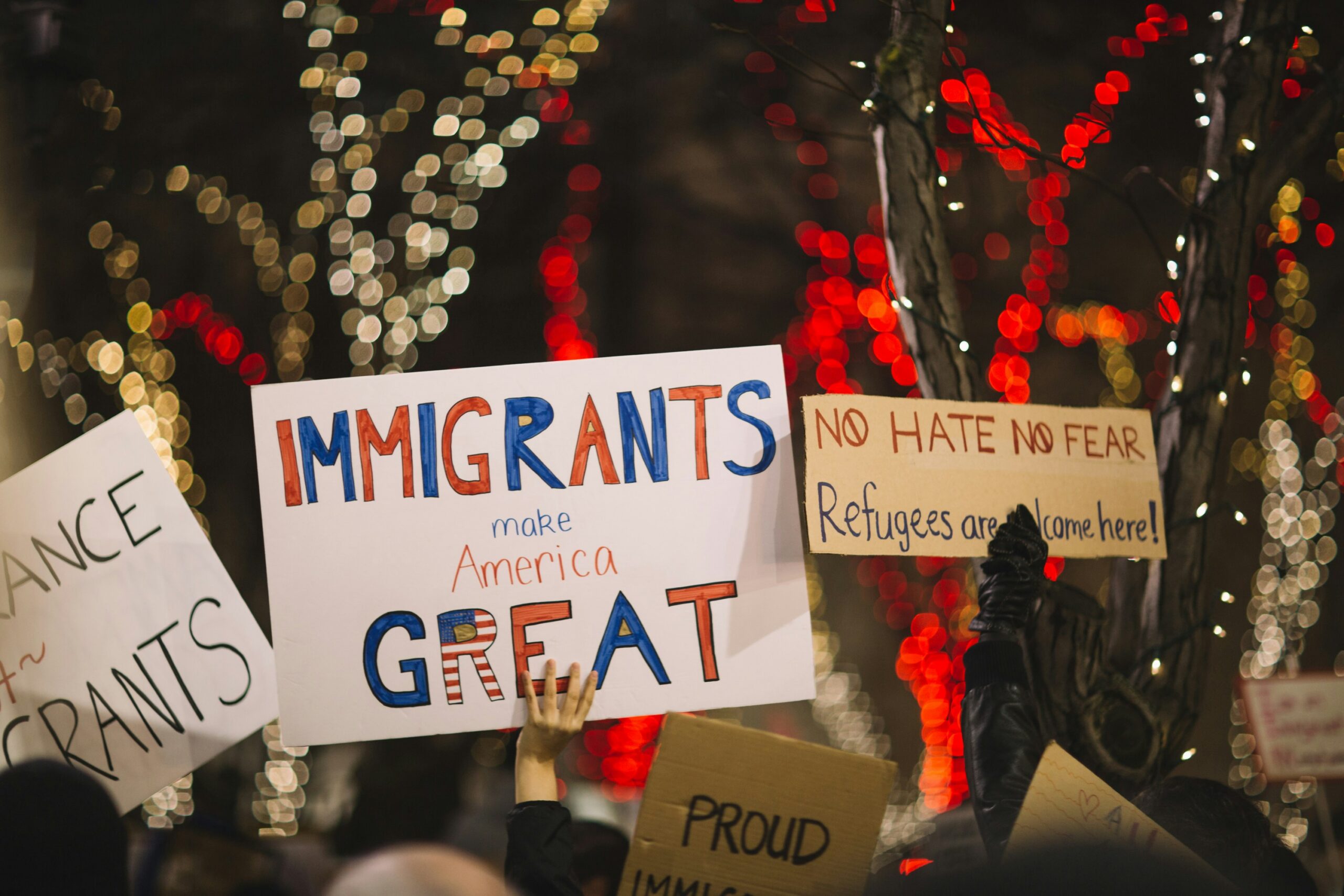
The record number of arrests reflects a broader expansion of immigration enforcement. The expansion raises questions about the state of American democracy and the checks and balances intended to protect individual rights. These protections cannot depend on a person’s immigration status.

>