House Rejects Bill to Advance Plans to Construct American Women’s History Museum

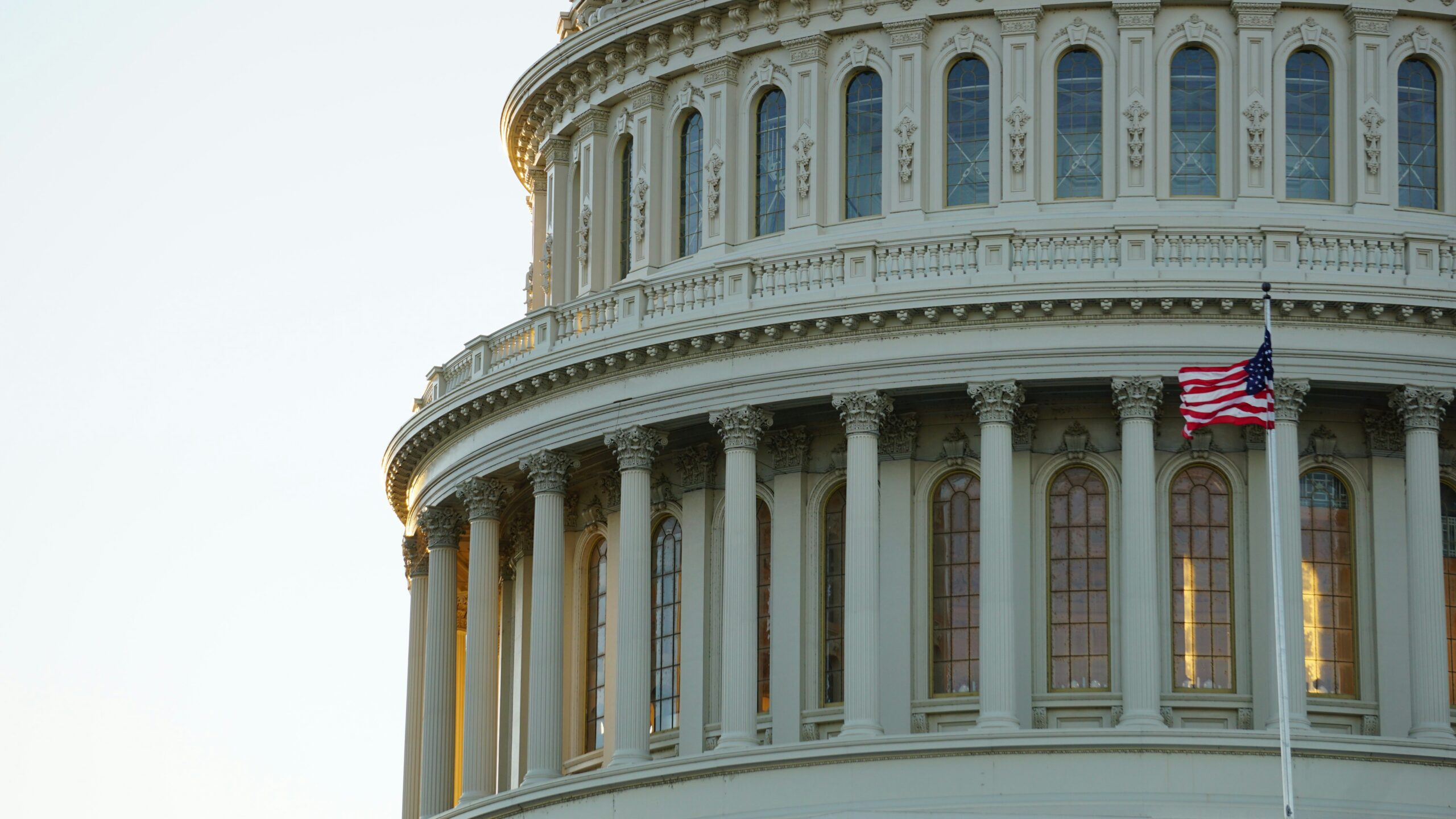
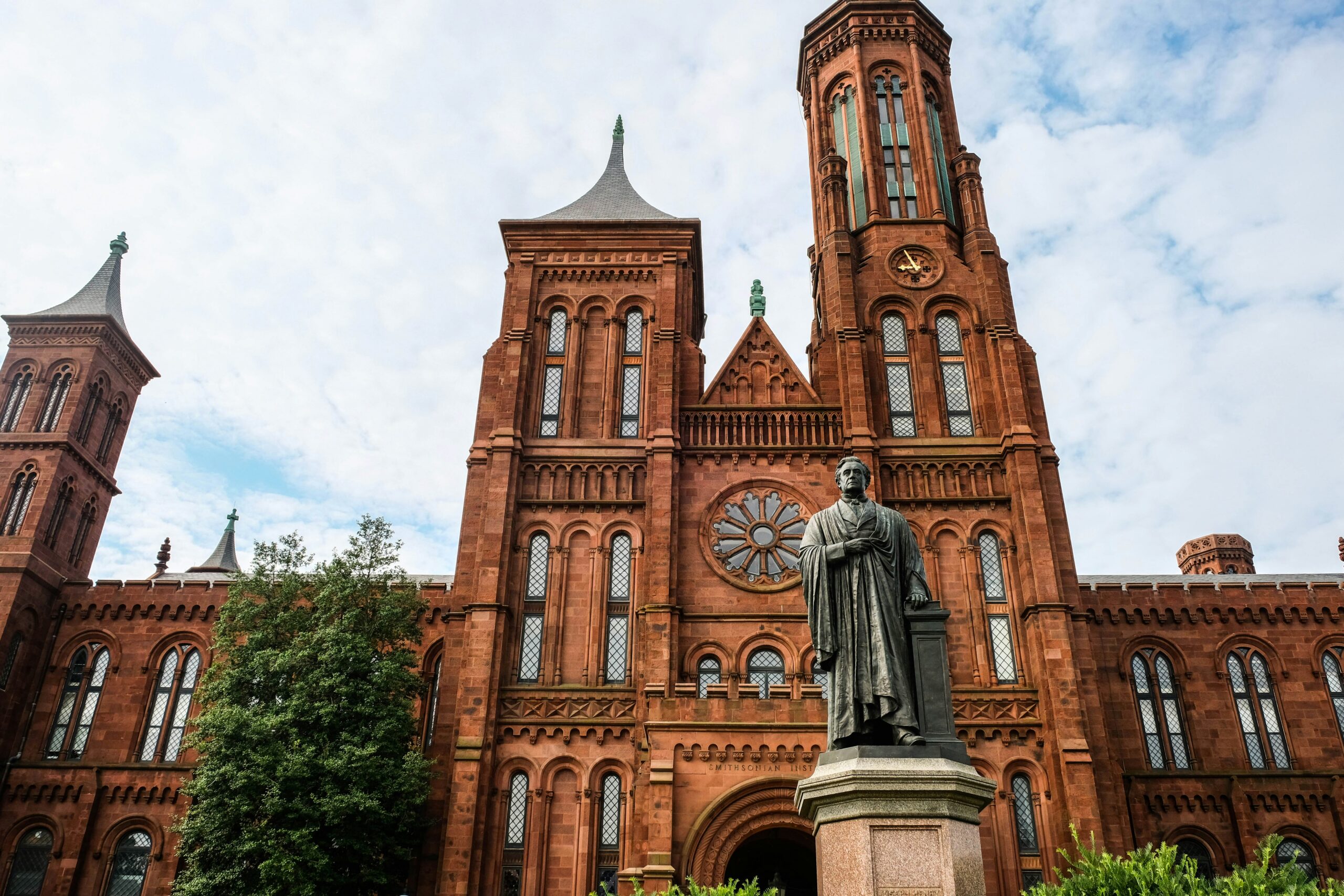
Despite nearly 180 years of Smithsonian history, the United States still does not have a national museum dedicated to women’s history. Congress approved the creation of the American Women’s History Museum (AWHM) in 2021 alongside the National Museum of the American Latino. Yet progress towards building the museum has stalled. Most recently, the House of Representatives rejected legislation that would have accelerated the selection of a site on the National Mall. 

The bi-partisan coalition that previously supported the museum, and was backed by President Trump, fractured last month over amendments added to the bill. The changes centered on the inclusion of trans-women and the President’s undue influence over the museum. 

The amended version of H.R. 1329 defined the museum’s mission as preserving and presenting the history and achievements of “biological women” and prohibited the museum from depicting “biological males” as female.

These provisions were not included in Representative Nicole Malliotakis’ (R-NY-11) original bill. After the bill failed in a narrow 216 to 204 vote, six Republicans joined Democrats in opposing it. Several representatives have called for a return to the bill’s original language. 

Democrats argued that the amendments transformed a broadly supported measure into a partisan fight. Rep. Teresa Leger Fernández (D-NM-3), chair of the Democratic Women’s Caucus and an original co-sponsor of the bill, said on the House floor “it was a simple bill — you kind of ruined it with your trans obsession and your culture wars.” Rep. Malliotakis (R-NY-11) countered that isolating the museum’s focus to “biological women” should not have been the deal breaker in the 20 year effort to establish the Museum. 

Democrats expressed additional concerns over changes in language that would grant the Commission of Fine Arts and the National Capital Planning Commission final approval power over the design of the Museum. These two groups’ membership is almost entirely made up of Trump-loyalists

Supporters of the bill dismissed those concerns. However, opponents pointed to previous disputes involving the content of Smithsonian exhibits, national parks, and other federal institutions as reasons to remain cautious.

At its core, the debate is about more than a building on the National Mall. It is about how history is told, whose stories are preserved, and whether future generations will encounter a full and accurate account of the people who helped shape the country. 

Given the extensive history of gender inequality in this country, denying the lived realities of American women and gender minorities is a serious concern. If we minimize the harm caused to others, in an attempt to assuage our national conscience, we avoid responsibility for our actions and diminish our capacity for future change. 

Beyond this, we deprive a generation of Americans from learning about the achievements and contributions of those who thrived in spite of adversity. We need these lessons in resilience to foster hope for a brighter tomorrow, so that we might live up to the potential of those who came before us.

E. Jean Carroll Faces Investigation Amid Ongoing Legal Battles With Trump

On May 28, the Department of Justice launched a criminal probe into E. Jean Carroll, a journalist whom President Trump sexually abused in the mid-1990s. The probe is intended to investigate whether Carroll committed perjury during her testimony in two civil lawsuits against Trump. The first case, Carroll I, pertains to his assault of Carroll in a New York department store in 1996 and the second, Carroll II, concerns Trump’s subsequent defamation of Carroll in 2019 as he denied the assault claims. 

While media sources have continued to refer to Carroll as an ‘accuser’ such categorization attempts to skirt reality – E. Jean Carroll was sexually abused and defamed by President Trump, as found by the United States District Court for the Southern District of New York and reviewed by the United States Court of Appeals for the Second Circuit

Trump’s guilt is not up for debate. Trump has already attempted to apply presidential immunity in the Second Circuit’s review of the defamation case. This is a standard established in Trump’s favor by the Supreme Court two years ago in Trump v. United States. The Second Circuit rejected this attempt, maintaining that the President waived the use of presidential immunity by not bringing it up earlier in the litigation proceedings. 

Even as Trump attempts to abuse the powers of his office, it is increasingly clear that not all Americans lend credibility to his version of events. A recent poll by The Economist and YouGov found that 46% of those surveyed believe E. Jean Carroll is telling the truth, compared to only 27% who believe Donald Trump. 

In the aftermath of the Second Circuit’s review, they upheld the District Court’s decision to award Carroll $5 million in the sexual abuse case and $83.3 million in the defamation suit. 

In response, Trump has repeatedly appealed the first suit to the Supreme Court, promising to do the same with the latter. The Supreme Court has deferred the President’s appeal twelve times, the most recent deferral occurring on May 27th. 

In the event the Supreme Court ultimately hears the President’s petition, it is unclear whether they will reconsider Trump’s presidential immunity defense or lend credence to his attempt to implement the Westfall Act. This legislation would swap the Department of Justice in as the defendant, making the case moot as the United States government cannot be sued for defamation. 

However, until the Supreme Court takes action by reviewing the case or declining to hear it, the Second Circuit has paused Trump’s $83.3 million payment. Caroll has not objected to the pause, on the condition that Trump increases the bond by $7.46 million, bringing the total amount the President owes in the defamation suit to $91 million. 

While Andrew Boutros, the top federal prosecutor for the Northern District of Illinois, has denied media reports that his office opened this investigation into E. Jean Carroll, there is a clear financial incentive for President Trump to challenge the lower court rulings in an attempt to avoid payment. 

These attacks on Carroll function to further harass a woman who dared to speak the truth. In a political environment intent on silencing and invalidating survivors, Carroll’s refusal to succumb to those in power encourages us to adopt her strength and resilience as we support those who have been sexually abused. It is only through ensuring accountability and the application of justice that we can obtain a higher standard of character from our leaders in government.

Protecting Life by Ending Lives: The Danger and Hypocrisy of North Carolina House Bill 1232

On May 13th, the North Carolina House of Representatives filed House Bill 1232, a proposed amendment to the state constitution which would declare human life as beginning at fertilization and hold any person using contraceptives that prevent the implantation of a fertilized embryo, such as IUDs, as guilty of attempted murder or first degree murder.

The bill states: 

“New human life is recognized by the State as an individual person, entitled to the protection of the laws of this State from the moment of fertilization until the moment of natural death. Any person who willfully seeks to destroy the life of another person, by any means, at any stage of life, or succeeds in doing so, shall be held accountable for attempted murder or for first degree murder, respectively. Any person has the right to defend his or her own life or the life of another person, even by the use of deadly force if necessary, from willful destruction by another person.”

Beyond criminalizing the use of birth control, a right which is protected under federal law in Griswold v. Connecticut, this bill declares open season on reproductive freedom. Opponents argue that the bill’s language regarding the use of deadly force could create legal uncertainty and potentially embolden individuals who believe they are acting to protect an embryo to perpetuate physical violence against women.

There are inherent obstacles to implementing this bill that could only be overcome through gross violations of privacy – a citizen acting upon this policy has no way of knowing whether someone is using birth control, if they are using birth control for medical reasons, if they are using birth control and having sex, if they have had sex and an embryo has been fertilized, etc. Knowing full well that perpetrators do not have this information, it will not prevent harm being committed against women, but rather it becomes more probable that harm will occur en masse, and to women to whom the proposed bill does not apply, with perpetrators shielded by the state on the auspices of their own ignorance. 

Those in support of the bill also seem to have conveniently forgotten that in their earnest effort to protect fertilized embryos, the murder of a woman seeking to prevent pregnancy also means the death of the embryo. If reverence for life is truly the predominant concern – it must follow that politicians take action to promote the quality of life for mothers and for children, through increased funding for maternal health, early education, childcare, and other programs. With North Carolina lagging behind on such initiatives, it is clear that protecting life is not actually the priority of this bill. 

The extremist anti-abortion bill was originally sponsored by Republican State Representative Ben Moss (R-Richmond), before he removed himself as primary sponsor in a social media post on May 26th, in response to public backlash to the bill. House Bill 1232 is now sponsored by Republican State Representative Keith Kidwell (R-Beaufort). This is not the first time Kidwell has advocated for fetal personhood, also joining Moss to co-sponsor House Bill 804 or the Human Life Protection Act of 2025, a bill intended to ban abortions in North Carolina from the moment of conception, with no exceptions for rape or incest – the bill did not leave committee. 

Several news outlets have reported Kidwell’s ties with the Oath Keepers, a far-right anti-government extremist group that has been associated with the January 6th attacks on the U.S. Capital that attempted to overturn the results of the 2020 presidential election. Although sources, following the Oath Keeper membership leak, placed Kidwell on the Oath Keeper’s roster since 2012, he refused to comment on the allegations.

While House Bill 1232 is not expected to progress to a vote, it is representative of the broader hypocrisy of opponents to reproductive freedom, indicating their intentions have nothing to do with concern for life, but rather about their ability to exert control. As we see more and more attacks on women’s health in the aftermath of Dobbs v. Jackson, it is more important than ever that politicians commit themselves to protecting women and reproductive freedom at the state level.

A Budget That Funds War While Cutting Care

On April 3, 2026, President Trump submitted his annual budget proposal to Congress. This request included a $1.5 trillion military budget, a 44% increase justified in large part due to the increasingly unpopular war in Iran. While proposing a 10% reduction in nondefense spending, the budget would increase military spending by $441 billion. Those increases come at the expense of domestic programs, including child care, Medicare, and Medicaid. 

Medicare and health spending programs have already faced threats of significant funding reductions before the release of Trump’s latest budget proposal. In 2025, health spending accounted for roughly $3 trillion, nearly one-third of federal spending. The One Big Beautiful Bill Act (OBBBA), signed into law last year and scheduled to take effect in January 2027, cuts approximately $1 trillion in Medicaid  spending over the next ten years, and will make an estimated 10 million people uninsured. Medicaid is the government program providing health insurance to low-income Americans. 

The President has defended reductions in domestic spending by arguing that programs such as child care, Medicaid, and Medicare should be handled by states rather than the federal government. However, states are not positioned to absorb these costs. Federal cuts to state programs limit states’ abilities to meet growing health care needs and rising costs. As a result, millions of Americans could face reduced access to care. 

It is difficult not to consider the sacrifice of domestic insurance programs as part of the broader attack on women’s health. Women make up 55% of both Medicare and Medicaid enrollees and are more likely than men to rely on public health insurance programs. These higher enrollment rates correspond with their greater dependency on these programs: women are more likely to be low-income, live longer, and have more health care needs compared to men.  

The consequences extend beyond health care. Federal cuts to child care spending disproportionately impact women as they are more likely to work low-wage jobs, take on unpaid caregiving responsibilities, and support households as single parents. These impacts are felt even harder by women of color, where community mothering extends into the unrecognized third shift. 

As military spending continues to rise, women and gender nonconforming people are increasingly expected to absorb the social and economic costs of shrinking public support systems. Those in positions of power who fail to challenge these priorities should not expect their decisions to be free of long-term consequences. 

>