As Midterm Elections Near, Courts Are Taking On Voter Suppression

With less than a month before the November 4 elections, courts are weighing in on voting rights across the nation.

via Shutterstock
via Shutterstock

In a victory for voters in Wisconsin, the US Supreme Court on Thursday blocked the state’s new voter identification law from taking effect in November. As a result of the Court’s decision, registered voters in Wisconsin will not have to show identification before casting ballots on November 4.

Enacted in 2011, the Wisconsin Voter ID law had faced ongoing legal challenges. The law would have required voters to show one of only nine specific forms of photo identification in order to cast a ballot. Tens of thousands of eligible voters in Wisconsin, however, do not have one of these forms of ID. A federal trial judge had originally blocked the law citing its disproportionate impact on black and Hispanic voters. A panel of the US Court of Appeals for the Seventh Circuit had reinstated the law before the Supreme Court blocked it from being enforced during the upcoming election.

The League of Women Voters of Wisconsin called the Supreme Court’s order “wonderful news and a victory” for Wisconsin voters. “We should be seeking ways to get more citizens to vote in our elections,” the League reiterated in a statement, “not to keep them away.”

Meanwhile, in Texas, a federal district court struck down that state’s strict voter ID law. The Texas voter suppression law allowed voters to cast a ballot only if they produced a Texas driver’s license, a US military ID with a photo, a US citizenship certification containing a photo, a US passport, or a license to carry a concealed handgun. Student IDs and social security cards were not considered acceptable forms of identification. In addition to suppressing the votes of people of color, then, the Texas law also suppressed the votes of women, students, and the elderly.

In her decision, Judge Nelva Gonzales Ramos, an Obama appointee, wrote that the law “creates an unconstitutional burden on the right to vote, has an impermissible discriminatory effect against Hispanics and African-Americans, and was imposed with an unconstitutional discriminatory purpose.” She concluded that the law was tantamount to “an unconstitutional poll tax.”

Texas Attorney General Greg Abbott has already asked the US Court of Appeals for the Fifth Circuit to reinstate the Voter ID law. It is unclear when the appeals court will consider the state’s request. Early voting in Texas begins on October 20.

Although both the Wisconsin and Texas decisions have pushed back against voter suppression laws, the Supreme Court last week reinstated part of a North Carolina law that eliminated same-day voter registration during the early voting period. The Court’s order also allows the state to eliminate out-of-precinct voting. Both provisions had been struck down by a panel of the US Court of Appeals for the Fourth Circuit earlier this month.

State courts are also being asked to weigh in on voting rights. In Georgia, civil rights groups filed a lawsuit on Friday concerning more than 40,000 voter registration forms that are currently backlogged, some of them filled out and submitted months ago. Many activists are arguing that the backlog is so large that it amounts to an act of voter suppression. The lawsuit requests that a judge order five counties and Georgia’s Republican Secretary of State Brian Kemp to immediately process the backlogged forms.

“Waiting for the state to act is not an option for us because we have folks who applied back in March and April who have yet to make it onto the rolls,” explained Georgia State Representative Stacey Abrams. Abrams also runs the New Georgia Project, a voter registration initiative.

Media Resources: US Supreme Court 10/9/14, 10/8/14; US District Court for the Southern District of Texas 10/9/14; SCOTUS Blog 10/11/14, 10/9/14; Politico, 10/11/14; League of Women Voters of Wisconsin 10/9/14; Feminist Newswire 10/2/14, 5/5/14, 10/22/13; MSNBC 10/9/13
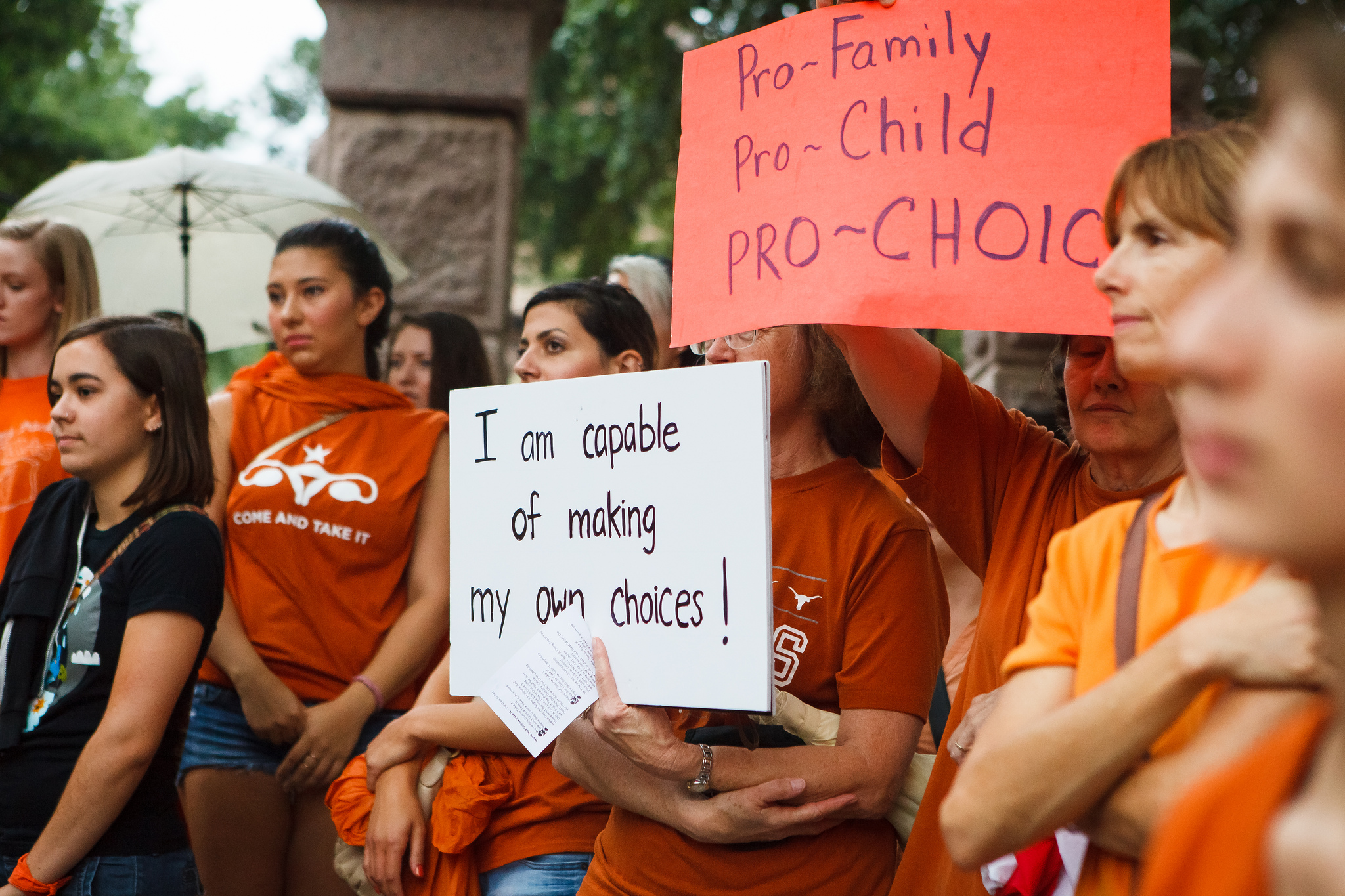
Full Fifth Circuit Court of Appeals Refuses to Hear Challenge to Texas TRAP Law

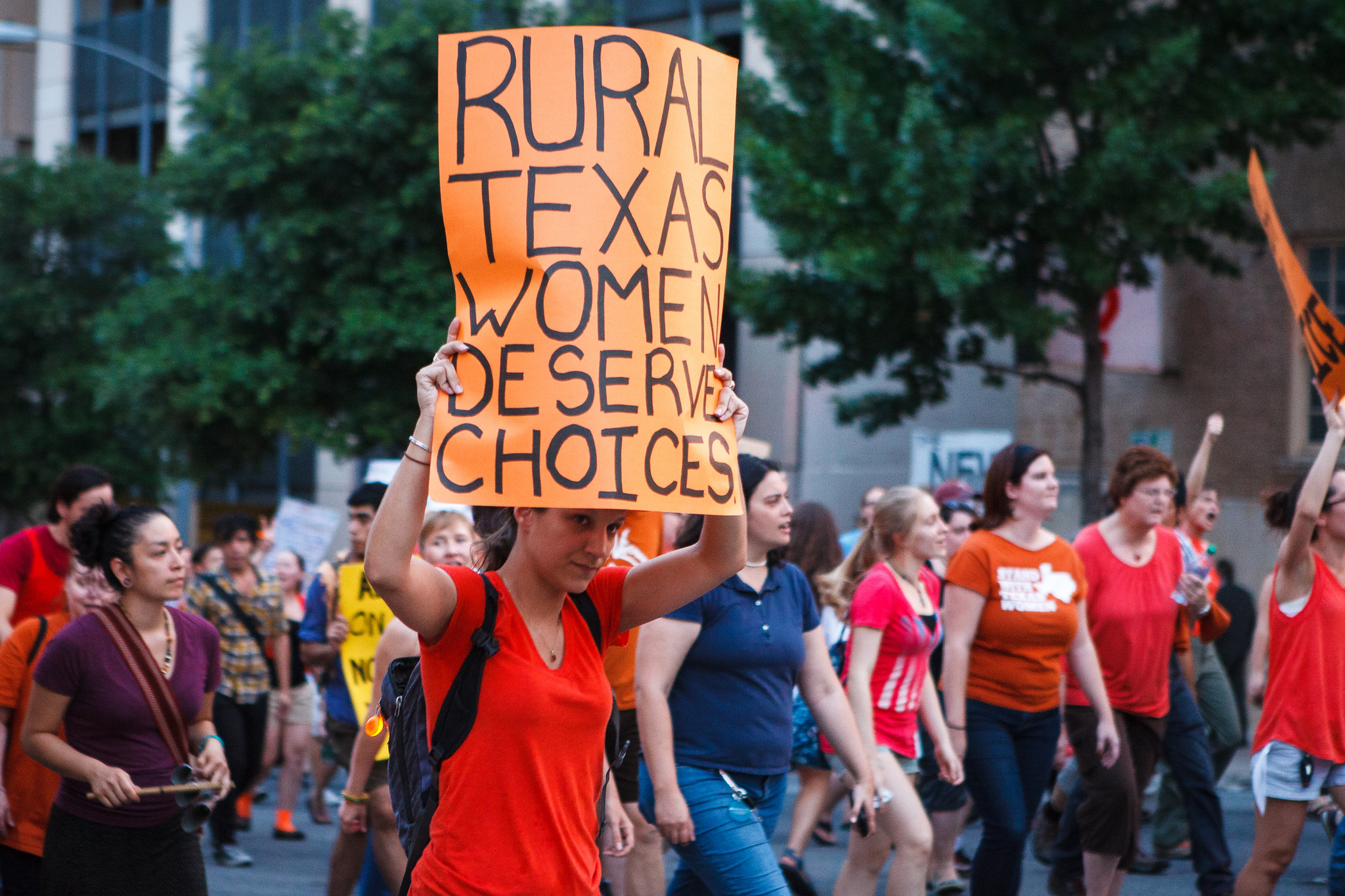
The full US Court of Appeals for the Fifth Circuit on Thursday refused to rehear a March panel decision upholding HB 2, the Texas TRAP (Targeted Regulation of Abortion Providers) law that has forced 80 percent of abortion clinics in the state to close.

via mirsasha
via mirsasha

Only 3 of 15 judges – all Democratic-appointees – supported the application to rehear the case against two provisions of HB 2. As a result, the admitting privileges requirement as well as restrictions on medication abortion will remain in effect. Both provisions are opposed by the American Medical Association and the American College of Obstetricians and Gynecologists.

The Center for Reproductive Rights, Planned Parenthood Federation of America, the American Civil Liberties Union (ACLU), and the ACLU of Texas asked the full Court of Appeals to reexamine the constitutionality of the admitting privileges requirement and medication abortion restrictions after a Fifth Circuit panel overturned a lower court decision striking down the admitting privileges requirement as unconstitutional.

12 Republican-appointed judges of the Fifth Circuit bench voted against the petition to rehear. Judge James Dennis, a Clinton-era appointee, authored a scathing 64-page dissent on behalf of himself; Judge James E. Graves, an Obama Administration appointee; and Judge Gregg Costa, also appointed by President Barack Obama.

“In upholding Texas’s unconstitutional admitting-privileges requirement for abortion providers and medication-abortion restrictions, the panel opinion flouts the Supreme Court’s decision in Planned Parenthood of Southeastern Pennsylvania. v. Casey, 505 U.S. 833 (1992), by refusing to apply the undue burden standard expressly required by Casey,” wrote Judge Dennis. “If not overruled, the panel’s sham undue burden test will continue to exert its precedential force in courts’ review of challenges to similar types of recently minted abortion restrictions in Texas, Louisiana, and Mississippi.”

Dennis said the Court’s failure to properly apply Casey to defend the due process rights of women seeking a safe and legal abortion threatened to “annihilate the constitutional protections afforded women under Roe [v. Wade].”

“Texas now stands at the epicenter of a national health care crisis brought on by politicians who have all but eliminated access to safe and legal abortion care for countless women, leaving many with only unsafe and unregulated options that may very well threaten their lives,” said Nancy Northup, President and CEO of the Center for Reproductive Rights, about the decision. “This is a threat to the well-being of millions of women, and an affront to the promise of equal rights and legal protection for all Americans. It is increasingly clear that either the Supreme Court or Congress needs to step in to protect the rights of women across the nation from this relentless assault on their dignity, health and rights.”

Last week, the Center for Reproductive Rights filed an emergency application with the US Supreme Court – in a separate legal challenge to HB 2 – to block application of the Texas law’s admitting privileges and ambulatory surgical center requirements, as applied to clinics in West Texas and the Rio Grande Valley. That application, brought before Justice Antonin Scalia, is still pending. Justice Scalia could issue a direct order himself, or refer the petition to the full Supreme Court.

Before the enactment of HB 2, Texas had 44 abortion clinics. That number has now been cut to 8. The Rio Grande Valley has not one abortion provider, and nearly one million Texas women of reproductive age must now travel 300 miles round-trip to to exercise their right to a safe and legal abortion.

Media Resources: Center for Reproductive Rights 10/9/14; US Court of Appeals for the Fifth Circuit 10/9/14; Feminist Newswire 10/7/14

Catholic Church Files Civil Rights Complaint Against State Over Abortion Mandate

California’s Catholic leaders have filed a civil rights complaint with the Department of Health and Human Services over a recent decision by the state to mandate that religiously affiliated universities there offer full abortion coverage in their employees’ health care plans.

via Jenn Farr
via Jenn Farr

Earlier this year, the California Lawyer learned that despite the state’s commitment to fully protect comprehensive reproductive rights, two Catholic universities – Loyola Marymount and Santa Clara – had discontinued coverage for “not medically necessary” abortion services for their employees. In August, the California Department of Managed Health Care (DMHC) Director Michelle Rouillard called those decisions discriminatory in a letter to their insurance providers and mandated that they cover the procedure in all instances.

The Catholic church claims the state’s mandate was a violation of the Weldon Amendment, which allows the government to withhold federal money from agencies that discriminate against doctors, hospitals, or insurers that don’t offer abortion coverage. But local reproductive rights advocates say any effort to deny coverage would adversely impact the many for the sake of the few.

“California is better than that,” the Legislative Women’s Caucus wrote this summer in a letter to California Governer Jerry Brown. “We respect women’s autonomy and proudly separate ourselves from the anti-choice states whose policies diminish women’s rights.” Attention to California law on mandatory abortion insurance access led to the late-August guidance issued by the DMHC, which called language about “medically-necessary” or “therapeutic” abortions discriminatory against women.

Sierra Harris, the Assistant Director of ACCESS: Women’s Health Justice, told the Feminist Newswire that their group consistently works with Californians who aren’t covered under any form of health insurance and noted that there is a grave need for expanded reproductive health access through the state’s health exchange. “We support all insurance coverage in California that covers abortion services,” Harris said. “We really hope California remains a leader in reproductive health services.”

Although a spokesperson for the Department of Health and Human Services’ Office for Civil Rights says the new complaint from the Catholic conference is under review, Rouillard has reiterated that the agency considers abortion a basic health care service.

Many religious colleges have tried to cut abortion and contraceptive coverage by challenging the birth control benefit of the Affordable Care Act, which requires health insurance providers to cover preventive health services – including all FDA-approved contraceptives, such as the pill, emergency contraceptives, and IUDs – without charging co-pays, deductibles, or co-insurance. In July, a majority of the US Supreme Court ruled that Wheaton College does not have to comply with the ACA contraceptive coverage benefit; the University of Notre Dame also recently asked the Court to intervene in its own case against the Obama administration objecting to the mandate’s accommodation for religiously affiliated non-profits that allows their insurers to cover contraception directly.


Media Resources: California Catholic Conference 10/1/14; CBS Sacramento 10/1/14; Associated Press 10/1/14; California Lawyer 6/2014; California Legislative Women’s Caucus 8/12/14; Los Angeles Times 8/25/14; California Department of Managed Health Care 8/22/14; MSNBC 10/6/14; Feminist Newswire 7/7/14, 8/25/14

Study Finds Abortion Restrictions Adversely Impact Women’s Health Outcomes

States with the greatest restrictions on abortion are the worst for women’s overall health, according to a new study from the Center for Reproductive Rights and Ibis Reproductive Health.

via Ann Hakrness
via Ann Hakrness

More than 250 bills restricting abortion were introduced in 40 states in 2014 alone, and in the period between 2011 and 2013, states signed 205 new abortion restriction provisions into law – “more laws than were enacted in the entire previous decade,” the report states. Based on the study, the groups found a “consistently negative relationship between a state’s number of abortion restrictions and its performance on indicators of women’s health, children’s health, and social determinants of health.” The groups say lawmakers’ insistence that anti-abortion legislation is intended to protect women’s health is fundamentally flawed rhetoric.

“With few exceptions, states that have passed multiple policies to restrict abortion have passed fewer evidence-based policies to support women’s and children’s well-being, compared to states with fewer restrictions on abortion,” the study read. “The negative relationship between the number of abortion restrictions and the number of policies that support women’s and children’s well-being was stronger than any of the other sub-topics.”

The study report distinguished 14 different kinds of abortion restrictions and TRAP (Targeted Regulation of Abortion Providers) Laws. After evaluating all 50 states and the District of Columbia, the groups compared each state’s performance on 76 different health indicators against the prevalence of anti-abortion legislation. Those indicators fell into five different categories, including women’s health outcomes, exclusively, including the occurrence of maternal death; children’s health outcomes exclusively; social determinants of health, which addressed socioeconomic or environmental outcomes proven to impact health; and pro-women and children’s health policy.

The median number of abortion restrictions was 10. Only Vermont placed no restrictions on abortion. Kansas, Mississippi, and Oklahoma had all 14 restrictions identified by the groups. Another eight states – Arizona, Indiana, Louisiana, Missouri, Nebraska, North Carolina, North Dakota, South Carolina – had 13 abortion-related restrictions.  According to the report, of the 23 states with 6 or less restrictive abortion laws in place, 78 percent performed above the median score for overall well-being. Of the 28 states with 7-14 abortion restrictions in place, only eight states were above the median score for women and children’s overall well-being. The best states for women’s health were New Hampshire, Iowa, North Dakota and Vermont.

TRAP Laws frequently come under fire from advocates and health care providers, and often their passage results in ongoing court challenges. In Texas, health care providers in the state have asked the US Supreme Court to block the enforcement of HB 2, an omnibus abortion bill. US District Court Judge Lee Yeakel of the Fifth Circuit Court of Appeals blocked the law’s TRAP provision in August, but reinstated it last week, closing all but eight clinics in the state overnight. In Virginia, Governor Terry McAuliffe ordered a periodic review of the state’s TRAP rules out of concern for women’s health; the state’s Health Commissioner ultimately recommended amending the rules after her review and blasted them as “arbitrary” and “marked by political interference.” In September, a court challenge to Louisiana’s TRAP law kept three of the state’s five clinics from closing; in August, a federal court found Alabama’s TRAP law unconstitutional; in July, a panel of the Fifth Circuit kept Mississippi’s last clinic standing. Despite these rulings, lawmakers have continued to fight for TRAP laws that close clinics by imposing extraneous requirements on reproductive health care facilities and providers that are unnecessary and challenging to meet, and often they have cited “improving women’s health” as their primary motivation. This study proves them wrong.

Last summer, a poll found that a majority of Americans supported abortion rights and access and opposed state attempts to regular what they see overwhelmingly as a national, and not local, issue. In 2015, the Center for Reproductive Rights will partner with state advocates to develop data-supported policy that answers the wave of misguided reproductive health laws.

Media Resources: Center For Reproductive Rights, 9/2014; RH Reality Check 10/3/14; Medical Daily 10/3/14; Feminist Newswire 7/25/13, 5/13/14, 7/30/14, 8/5/14, 8/14/14, 8/29/14, 9/2/14, 10/2/14, 10/3/14, 10/7/14; Ms. Magazine Blog 10/2/14

UPDATE: Supreme Court Justice Delays Marriage Equality in Idaho

Supreme Court Justice Anthony Kennedy halted a decision Wednesday that would have allowed same sex couples to marry in Idaho.

via Azhar J
via Azhar J

The Justice issued a one-page order requiring the Ninth Circuit Court of Appeals to delay a Tuesday ruling striking down Idaho’s same-sex marriage ban and calling them unconstitutional until either Kennedy or the full Supreme Court weighed in. Justice Kennedy’s order came in response to an emergency filing from Idaho state officials, who argue their case is unique enough to warrant the involvement of the full Supreme Court. Although the Ninth Circuit Court ruling also applied to Nevada, the state has not filed an appeal. Now, same sex couples in Idaho still cannot legally obtain marriage licenses.

The Supreme Court Monday elected not to take up cases concerning marriage equality in five states that were left pending before the court. Some legal analysts expected the decision, citing the unity of the lower courts on the decision to strike down bans on gay marriage. State officials in Idaho, however, said the content of their argument isn’t about whether states can ban same-sex marriage. According to SCOTUSBlog, they’re asking the Court to “clarify the constitutional standard that is to be used in judging laws that are claimed to discriminate against gays, lesbians, and transgender people.” State officials said the lower courts have used different standards to support a ban of same-sex marriage. The Ninth Circuit applied a “heightened scrutiny” standard, but six other federal appeals courts did not.

Lawyers representing same sex couples have until Thursday night to file a response to Idaho’s emergency plea request.

Media Resources: Supreme Court of the United States Order 10/8/14; Feminist Newswire 10/8/14; SCOTUSBlog 10/8/14

Staff at Immigration Center Accused of Sexually Abusing Women Detainees

Several civil rights organizations have filed a complaint against a privately run detention center in Texas, citing widespread allegations of sexual abuse and harassment.

via rickpilot_2000
via rickpilot_2000

Last week, attorneys from the Mexican American Legal Defense and Educational Fund (MALDEF), the Immigration Rights and Civil Rights Clinics at the University of Texas Law School, Human Rights First, and the Law Office of Javier N. Maldonado asked the Department of Homeland Security and the US Immigration and Customs Enforcement (ICE) to investigate the newly-opened Karnes County Residential Center, where more than 500 mothers and children have been detained.

According to the complaint, at least three facility guards and staff have removed “female detainees from their cells late in the late evening and early morning hours for the purpose of engaging in sexual acts in various parts of the facility; calling detainees their ‘novias,’ or ‘girlfriends’ and requesting sexual favors from female detainees in exchange for money, promises of assistance with their pending immigration cases, and shelter when and if the women are released; and kissing, fondling and/or groping female detainees in front of other detainees, including children.” The groups say the offenses are a clear abuse of the detained’s rights under the Due Process Clause of the Fifth Amendment, and a violation of the Prison Rape Elimination Act (PREA), which institutes a zero-tolerance policy for sexual assault and rape in certain federally-operated facilities.

Detainees reported the abuses to Karnes personnel, but so far, no significant action has been taken to stop the harassment. “These women and children have fled horrific conditions in their home countries, including sexual violence and extortion,” Marisa Bono, staff attorney with MALDEF, said. “Guards using their respective positions of power to abuse vulnerable, traumatized women all over again is not only despicable, it’s against the law.” Bono said the allegations prove the federal government should “not be in the business of detaining families.”

The complaint comes just a week after a second complaint against Karnes was filed by many of the same organizations. That complaint detailed disproportionate disciplinary tactics and limited food, health, and mental health services. Barbara Hines, Co-Director of the University of Texas Immigration Clinic, said called these new allegations “particularly disturbing” in light of ICE’s refusal to release some mothers and children on bond, even when they’ve met the threshold for an asylum claim.

The Karnes County Residential Center opened August 1, through an intergovernmental partnership between long-time private prison operator the Geo Group, Inc. and Karnes County. While DHS and ICE are responsible for enforcement of PREA’s zero-tolerance policy prohibiting rape and sexual assault and other offenses, Karnes is not licensed under Texas state child welfare standards, which complicates the federal agencies’ oversight power.

“It is clear from both the alleged and continuing conduct and the failure to respond to reports of abuse that either there is no prevention plan in place for the Karnes Center, or the Karnes Center policy is not being properly implemented, overseen, or enforced,” the complaint reads.  “DHS simply cannot continue to detain vulnerable individuals whom they are unable or unwilling to protect.”

In December, a bipartisan group of Congress members urged the President to issue stronger protections to prevent the sexual abuse of immigrant detainees. Since then, feminist activists have continued to push for comprehensive immigration reform and an end to deportations by the Obama administration. The allegations also come on the heels of a complaint filed this summer against US Customs and Border Protection agents working at the US-Mexico border in Texas and Arizona citing 116 allegations of child abuse.

Media Resources: Feminist Newswire 12/2/13, 6/19/14, 8/29/14; MALDEF

Georgetown University Administrators Apologize for Shutting Down H*yas for Choice Protest

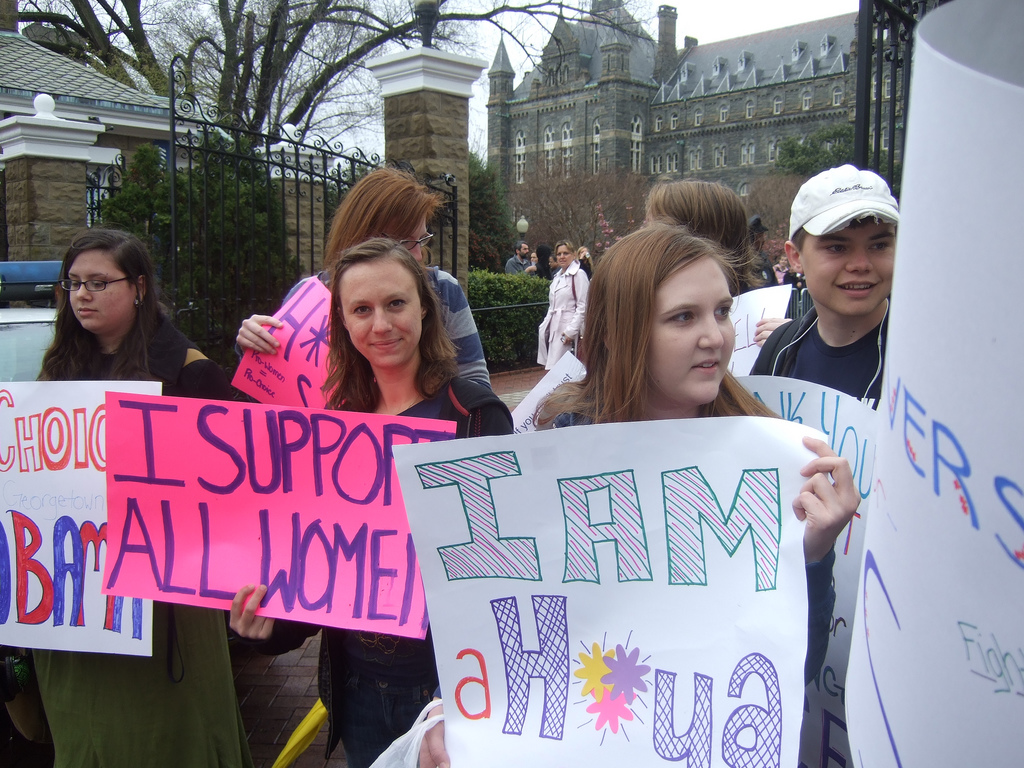
Georgetown University has formally apologized to students and alumni following a university police response to an off-campus H*yas for Choice protest last week that sparked outrage.

via H*yas for Choice

On September 22, the Georgetown Department of Public Safety (DPS) forced the H*yas for Choice to relocate from an off-campus sidewalk, where they were “quietly presenting an alternative view” to the school’s decision to grant an honorary degree to Washington, DC Archbishop Donald Wuerl. In a response to more than 200 alumni signed on to a letter to university President John J. DeGioia expressing concerns about the incident, the Georgetown University Vice President for Student Affairs and the Vice President of Public Affairs seemed to call the event a misunderstanding.

In the letter to alumni, university leadership said the removal “should not have occurred.” According to school officials, the officer involved invited the students to move back to their original location after “realizing the mistake,” but Police Chief Jay Gruber has scheduled additional training for DPS officers about students’ rights under the University’s Speech and Expression policy in light of the incident.  “We share Chief Gruber’s regret in how our DPS officer responded in this case and please know that we will work to prevent it from happening in the future,” the letter stated.

H*yas for Choice, a student group, is not formally recognized by the university. The President of the organization, Abby Grace, said the group chose the protest location precisely because University police forced them to relocate there during a different protest last year.

Media Resources:  RH Reality Check 9/29/14; Feminist Newswire 9/30/14; Erin to the Max 10/6/14

Marriage Equality Set to Take Hold in 35 States Following Court Rulings

Following the US Supreme Court’s decision Monday to decline review of three federal appeals courts’ decisions striking down same-sex marriage bans in five states, the Ninth Circuit Court of Appeals on Tuesday struck down same-sex marriage bans in Idaho and Nevada, bringing the number of states in which same-sex marriage bans are effectively null and void to 35.

via Shutterstock
via Shutterstock

Monday’s decision by the Supreme Court immediately expanded the number of states were same-sex marriage is legal from 19 to 24. At issue was whether the Supreme Court would review decisions from the US Courts of Appeal for the the Fourth, Seventh, and Tenth Circuits striking down marriage bans in  Oklahoma, Utah, Virginia, Indiana, and Wisconsin. The Court refused, immediately making same-sex marriage legal in those states. However, the decision also effectively ended bans in six additional states falling under those three circuits – Colorado, Kansas, West Virginia, North Carolina, South Carolina and Wyoming – bringing the total number of states where same-sex marriage would be legal to 30.

Following the news, Mary Bonauto of Gay & Lesbian Advocates & Defenders (GLAD) said that the Supreme Court had sent “a powerful signal to the many other courts considering the issue that there is no reason to delay and perpetuate the harms to same-sex couples around the nation.”

Just one day after the Supreme Court issued its order, the Ninth Circuit ruled that same-sex marriage bans in Idaho and Nevada were unconstitutional. This ruling is the law of the land in that Circuit, which means that same-sex marriage bans in Alaska, Arizona, and Montana – which are all subject to legal challenges in federal courts – are also set to fall. In total, 35 states are now expected to soon allow same-sex marriages.

The three-judge panel of the Ninth Circuit unanimously found that the marriage bans denied same-sex couples equal treatment under the law. Judge Marsha Berzon also wrote separately that the bans were a form of unlawful discrimination based on gender. Judge Berzon compared same-sex marriage bans to “laws that strip individuals of their rights or restrict personal choices or opportunities solely on the basis of the individuals’ gender” and found that the bans were impermissibly based in gender stereotypes. Such laws, wrote Berzon, “are damaging because they restrict individual choices by punishing those men and women who do not fit the stereotyped mold.” She concludes, “The same-sex marriage prohibitions, in other words, impose harms on sexual orientation and gender identity minorities precisely because they impose and enforce gender-normative behavior.”

Nevada is not expected to appeal the Ninth Circuit decision. Idaho may seek Supreme Court review, though given Monday’s decision, review is unlikely. It may also ask the full Ninth Circuit to review the decision.

Three other federal circuit courts of appeal are currently considering the constitutionality of state same-sex marriage bans. If one of these courts were to rule in favor of a ban, the Supreme Court could once again be asked to weigh in, and might be more likely to do so. The circuits are the Sixth, with challenges in Ohio, Kentucky, Michigan, and Tennessee; Fifth, with challenges in Louisiana and Texas; and Eleventh, with challenges in Alabama, Florida and Georgia. Lower federal courts in the Eighth Circuit are also considering same-sex marriage bans in Missouri, North Dakota, and South Dakota.

Media Resources: SCOTUSblog 10/7/14, 10/6/2014; National Center for Lesbian Rights 10/6/14; USA TODAY 10/6/2014; US Court of Appeals for the Ninth Circuit

Religious Leaders Unite in Tennessee and Colorado to Oppose Extreme Anti-Abortion Ballot Measures

Local religious leaders have come together to denounce ballot measures in Tennessee and Colorado that, if passed, would jeopardize access to abortion in those states.

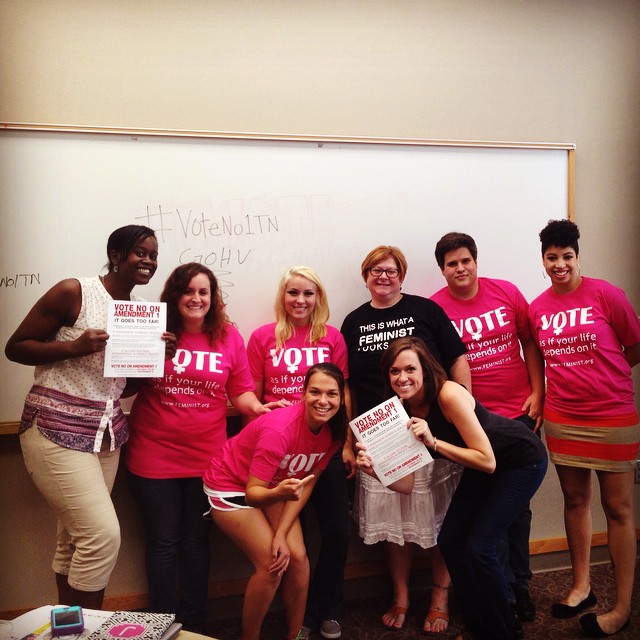
FMF's National Campus Organizers Edwith and Ashleigh with students from Austin Peay University voting No on Amendment 1
FMF’s National Campus Organizers Edwith and Ashleigh with students from Austin Peay University voting No on Amendment 1

At Sunday services last week, local clergy from Southern Baptist, Assemblies of God, United Pentecostal, Presbyterian and Free Will Baptist churches, as well as leaders of other faiths, spoke out against Tennessee’s Amendment 1, which would allow the government to interfere with women’s personal health decisions. Tennessee voters will decide on Amendment 1 in the upcoming election. Election day is November 4, but Tennessee voters can vote early, in-person, from October 15 to October 30.

“Who decides what’s best for a woman’s health? A rape victim and her minister, or a religious zealot who would impose his will on all Tennessee women and families?” said Rabbi Micah Greenstein at a gathering of 40 Memphis-area clergy at Evergreen Presbyterian Church last Wednesday.

If passed by Tennessee voters on November 4, Amendment 1 would allow state politicians to pass laws that ban abortion even in the cases of rape, incest, or to save the health or life of the woman. Politicians could pass state laws that would deny lifesaving treatments to pregnant women with critical illnesses like cancer, or even ban access to common forms of birth control, like the pill, IUDs, and emergency contraception, that they consider – contrary to respected medical information – to be abortifacients.

Amendment 1 would change the Tennessee state constitution to read: “Nothing in this Constitution secures or protects a right to abortion or requires the funding of an abortion. The people retain the right through their elected state representatives and state senators to enact, amend, or repeal statutes regarding abortion, including, but not limited to, circumstances of pregnancy resulting from rape or incest or when necessary to save the life of the mother.” In effect, if passed, Amendment 1 would give state politicians the right to make decisions about the health and lives of women, and takes those rights away from women and their doctors.

Tennessee is not the only state with potentially devastating measures on the ballot this Fall. In North Dakota, voters will decide on Measure 1, a personhood amendment that would change the state constitution to provide an “inalienable right to life” at “any stage of development.” If passed, Measure 1 would ban all abortions in the state, without exception, and could make illegal many forms of birth control, stem-cell research and in vitro fertilization. Measure 1 also threatens end-of-life care and could interfere with organ donation. And although Colorado voters defeated broad personhood amendments to their state’s constitution in 2008 and 2010, Personhood Colorado has placed Amendment 67 on the ballot this year, which would amend the state constitution to include “unborn human beings” in the definitions of “person” and “child” in the state criminal code and Wrongful Death Act.

“Though the strategy is arguably different, the result is the same,” wrote Gaylynn Burroughs, Director of Policy & Research for the Feminist Majority Foundation, in the Fall 2014 issue of Ms. magazine. “If passed, Amendment 67 would threaten abortion rights, birth control, fertility treatments and some medical treatments for critically ill pregnant women—and open up the possibility of criminal investigations into miscarriages. All pregnant women’s bodies would become potential crime scenes. Supporters of the amendment claim that the change would protect pregnant women from crime—but we’ve heard that one before. The reality is that these laws are used to punish women, many who are struggling with drug dependency and mental-health issues and too often suffer tragic pregnancy outcomes.”

Over 80 faith leaders in Colorado have also united in opposition to the extreme ballot measure in their state. “We support the rights of conscience, and a woman’s capacity to make a personal decision with consultation from her doctor, her family, her clergy and her God,” remarked Reverend Jann Halloran, president of the board of the Colorado Religious Coalition for Reproductive Choice, in a statement released last month. Rabbi Joseph Black, head of the largest Jewish congregation in Colorado, echoed her sentiments.

“While my tradition upholds the sanctity of life, the life and health of the mother is always more important than that of a fetus,” Rabbi Black wrote. “To claim that a fertilized egg is anything other than a potential life is to go against Jewish values. It is a dangerous precedent.”

Colorado voters can vote early in-person beginning on October 20. Coloradans may also vote by mail. Ballots are mailed to every Colorado voter on October 14.

Media Resources: The Tennessean 10/2/14; Pagosa Daily Post 9/19/14; Vote No On 1 TN; North Dakotans Against Measure 1; Vote No on 67; Ms. Magazine Fall 2014; Feminist Campus

Experts Recommend IUDs and Contraceptive Implants for Sexually Active Teenagers

Last week, the American Academy of Pediatrics (AAP) suggested sexually active teenagers use contraceptive implants and intrauterine devices (IUDs) over other forms of birth control.

via Shutterstock
via Shutterstock

This is the first time the AAP has suggested pediatricians recommend long-acting reversible contraceptive methods (LARCs) such as IUDs and implants before recommending other, less-effective forms of birth control to sexually active teens. The new policy statement, which says pediatricians play a large role in reducing teen pregnancy, replaces a statement that was written in 2007. The AAP first began recommending contraceptive methods to members in 1980; the academy suggests pediatricians be fully educated on different methods of contraception.

“Pediatricians should be able to educate adolescent patients about LARC methods, including the progestin implant and IUDs,” the AAP writes in the October issue of Pediatrics. “Given the efficacy, safety, and ease of use, LARC methods should be considered first-line contraceptive choices for adolescents. Some pediatricians may choose to acquire the skills to provide these methods to adolescents.”

The AAP also emphasized that pediatricians should stress that “all methods of hormonal birth control are safer than pregnancy.” Adolescent pregnancy is associated with higher risk of illness and death for mother and infant. Pregnant teenagers are at increased risk for hypertension, pre-eclampsia, and anemia. Pregnancy also increases the risk of violence for some teens.

In announcing the new policy, the AAP stressed the importance of pediatricians encouraging “healthy sexual health decision-making,” which includes abstinence as well as proper condom use for sexually active teens as a method of preventing sexually transmitted infections, including HIV. The AAP notes that “perfect adherence to abstinence is low,” and recommends that pediatricians “not rely on abstinence counseling alone but should additionally provide access to comprehensive sexual health information to all adolescents.”

About 750,000 adolescents become pregnant in the US every year, according to the AAP, and more than 80 percent of those pregnancies are unplanned. Of all teen pregnancies in the US, 60 percent result in birth. And about 5 percent of all abortions in the US are obtained by minor. In part because it does not require its user to remember to take or use something every day or every time they have sex, the IUD’s failure rate is less than 1 percent and implants have a failure rate of .05 percent – that’s compared with a 9 percent failure rate for oral contraceptives and a 18 percent failure rate for male condoms.

The AAP revised policy on LARCs comes after the American College of Obstetricians and Gynecologists (ACOG), based on research and expert opinions, revised its guidelines on LARCs in 2012, saying sexually active adolescents should be encouraged to use these methods. In its revision, ACOG noted that 42 percent of people ages 15-19 years old have had sexual intercourse, and that most adolescents use birth control but tend to use short-acting contraceptive methods (oral contraceptives, condoms, vaginal rings, etc.), which are less effective than LARCs. More information on different types of LARCs can be found here.

Media Resources: RH Reality Check 9/30/2014; American Academy of Pediatrics 9/29/14; Pediatrics 9/29/2014; Guttmacher Institute 5/2014; Centers for Disease Control and Prevention 8/28/2013; Advocates for Youth 10/2012; The American College of Obstetricians and Gynecologists 10/2014; California Family Health Council; National Institutes of Health

White House Releases Updated Title IX Guidance on Campus Sexual Assault

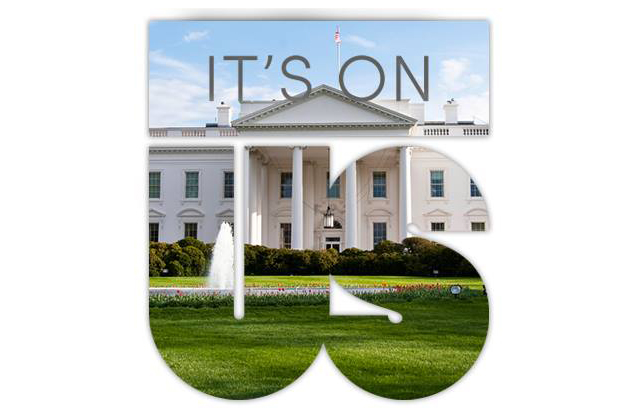
As part of the “It’s On Us” campaign to end campus sexual assault by changing campus culture, the White House has released guidance to assist with enforcement of institutional Title IX policies. 

via the White House
via the White House

The documents released include a “Guide to Drafting a Sexual Assault Policy,” “Definitions of Key Terms in Sexual Misconduct Policies,” the “Role of Title IX Coordinator,” and how to include “Interim and Supportive Measures for Victims.”

All education institutions in the United States that receive federal funding must adhere to Title IX policies. One of these policies includes having at least one employee in charge of coordinating efforts to comply with Title IX, the federal law prohibiting sex discrimination in school programs or activities. The Title IX coordinator can also be the person who implements the school’s sexual misconduct policy and responds to misconduct allegations.

The White House guidance also includes a definition of consent as something that is “informed, voluntary, and mutual, and can be withdrawn at any time.” The definition explains, “There is no consent when there is force, expressed or implied, or when coercion, intimidation, threats, or duress is used. Whether a person has taken advantage of a position of influence over another person may be a factor in determining consent. Silence or absence of resistance does not imply consent. Past consent to sexual activity with another person does not imply ongoing future consent with that person or consent to that same sexual activity with another person.”

The guidelines also include a checklist for how to properly develop a sexual misconduct policy, information for reporting sexual misconduct, how to support a survivor of sexual assault, and specific definitions that go along with these policies.

Our society still does not sufficiently value women,” President Barack Obama said during the unveiling of the campaign. “Unless women are allowed to fulfill their full potential, America will not fulfill its full potential… [Laws] won’t be enough unless we change the culture that allows assault to happen in the first place.”

Vice President Joe Biden has emphasized that men must be involved. “Violence against women is not a women’s issue alone, it’s a men’s issue,” said Vice President Joe Biden said. “To all the guys out there: Step up. Be responsible. Intervene.”

According to a White House report released early this year, 1 in 5 women are sexually assaulted during their time in college and only 12 percent report the crime. Currently over 70 colleges and universities are under investigation for mishandling sexual assault cases.

It’s On Us is an ongoing part of the “Not Alone” campaign and pushes for students to recognize sexual assault for what it is, identify warning signs, intervene when it seems consent cannot or has not been given, and change their campus cultures so that survivors are supported and sexual assault is seen as unacceptable. Individuals can participate in It’s On Us by going to ItsOnUs.org and taking the pledge, or by going a step further and downloading the free toolkit to help implement the campaign in their school or community.

Media Resources: NotAlone.gov; ItsOnUs.org; Feminist Newswire 9/19/2014, 5/16/2014; Washington Post 9/14/14; The White House Council on Women and Girls 1/2014

Federal Appeals Court Blocks Access to Abortion in Texas

The state of Texas lost all but eight of its abortion clinics overnight after the US Court of Appeals for the Fifth Circuit ruled that the state could begin enforcing unnecessary and harmful abortion restrictions passed as part of Texas’s omnibus anti-abortion bill, HB 2, last year. Now, close to 1 million women of reproductive age will now have to travel more than 150 miles to the nearest clinic, preventing access to abortion for many.

via Mirasha
via Mirasha


More than half of Texas’s abortion clinics had already been forced to close before the Fifth Circuit’s ruling, and reports showed that this lack of access was already forcing some women to resort to illegal and unsafe methods to end their pregnancies. In addition, clinic closures compromise access to a wide range of comprehensive reproductive health care services, including birth control and life-saving cancer screenings.

“It’s shocking and a disgrace. Women will suffer, some will die because of this reactionary policy,” said Feminist Majority Foundation President Eleanor Smeal. “Feminist must organize to stop these attacks.”

In its decision issued yesterday, a divided 2-1 panel of the Fifth Circuit allowed a provision of HB 2 requiring abortion clinics in Texas to meet the stringent building code requirements of ambulatory surgical centers to go into effect. That decision shuttered 13 clinics immediately. The appeals court also ruled that the law’s admitting privileges requirement – a provision that has already closed around half of the state’s abortion clinics, according to the Center for Reproductive Rights – could be applied to clinics in the Rio Grande Valley and West Texas.

“Today our hearts are broken on behalf of the women and families in Texas that have been left behind by this 5th circuit ruling,” said Amy Hagstrom Miller, CEO of Whole Woman’s Health, in a statement released after the decision. “What we have been fearing now if official: Texas faces a health care crisis, brought on by its own legislators.”

The Texas state legislature passed HB 2 last year amid strong protest from women’s rights and reproductive health activists. Wendy Davis successfully filibustered the bill in June 2013, but Governor Rick Perry (R) called a special session to pass it. In addition to the ambulatory surgical center and admitting privileges requirements, the law also bans abortion after 20 weeks and restricts medication abortion. Texas had 44 abortion clinics prior to HB 2. That number was cut to 21 after parts of HB 2 went into effect, and yesterday’s decision eviscerated 13 more clinics.

George W. Bush appointee, Judge Jennifer Walker Elrod, wrote the majority opinion in the 2-1 panel decision, overturning the decision of District Judge Lee Yeakel finding the ambulatory surgical center and admitting privileges requirements unconstitutional. A separate challenge to the Texas admitting privileges requirement is also making its way through the federal courts.

Activists will be protesting today at noon on the south steps of the the Texas State Capitol.

Media Resources: US Court of Appeals for the Fifth Circuit; Whole Woman’s Health 10/2/14; Center for Reproductive Rights 10/2/14; Feminist Newswire 9/2/14, 4/14/14, 3/6/14, 6/27/14, 6/26/13; Facebook

UN Speaks Out Against Islamic State’s Attacks on Women

The United Nations last week condemned the brutal killings of women by the Islamic State of Iraq and the Levant (ISIL), also know as ISIS.

via Shutterstock
via Shutterstock

In a recent attack, Sameera Salih Ali Al-Nuaimya, a well-known lawyer and women’s rights activist, was publicly executed by a masked firing squad in Mosul. According to the United Nations, said Al-Nuaimy was taken from her home by ISIL fighters on September 17, after posting comments that were critical of the group on her Facebook page. Al-Nuaimy denounced the “barbaric bombing and destroying of mosques and shrines in Mosul.” The group tortured Al-Nuaimy for five days, convicting her of apostasy in a Shari’a court before killing her.

“By torturing and executing a female human rights’ lawyer and activist, defending in particular the civil and human rights of her fellow citizens in Mosul, ISIL continues to attest to its infamous nature, combining hatred, nihilism, and savagery, as well as its total disregard of human decency,” Nickolay Mladenov said. Mladenov is the Special Representative of the United Nations Secretary-General for Iraq. “ISIL has repeatedly targeted the weak and defenseless in acts of brutality and cowardice that are beyond description, bringing about unfathomable suffering to all Iraqis regardless of their gender, age, religion, faith or ethnicity.”

The UN said Al-Nuaimy’s assassination is only the latest incident in a string of targeted and ruthless attacks carried out against prominent female leaders. In July, the UN said ISIL fighters killed a female former candidate for Iraq’s parliament after storming her home. In a separate attack, the group invaded the home of another female candidate, killing and abducting her husband. The same day, a third female candidate was kidnapped by gunmen in eastern Mosul. The UN says she is still missing.

The UN Assistance Mission for Iraq said they’ve received “numerous” reports of other women who’ve been murdered by fighters in ISIL-controlled territories, and condemned “gross human rights violations,” including “rape and other forms of sexual and physical violence perpetrated against women and children” by those fighting in Northern Iraq. “Educated, professional women seem to be particularly at risk,” according to the UN.

The UN has also spoken out against the mass abduction and enslavement of Yazidi women and girls in particular. According to the BBC, tens of thousands of the Yazidi religious minority have fled the Islamic State in just the last month. Yazidi survivors, and members of other ethnic and religious minority groups, said the militants are trafficking the women for sex, corralling them into camps where victims have been brutally raped and beaten by ISIL and ISIS fighters. While there is no confirmed number, more than 3,000 Yazidi are believed to have been captured, with more than 5,000 men, women, and children still unaccounted for.

Media Resources: United Nations High Commissioner for Human Rights 10/2/14; United Nations News Centre 9/25/14; United Nations Iraq 9/25/14; BBC News 9/24/14


Court Reinstates Same-Day Voter Registration in North Carolina

A federal appeals court blocked North Carolina’s effort to end same-day voter registration and out-of-precinct voting – methods disproportionately used by minority voters – overturning a decision by a lower court just last month.

via Shutterstock
via Shutterstock

In a 2-1 decision issued yesterday, the US Circuit Court of Appeals for the Fourth Circuit found that these provisions of H.B. 589, the voter suppression measure signed into law by Republican Governor Pat McCrory last year were likely to violate Section 2 of the Voting Rights Act of 1965 (VRA), which explicitly bans race or language-minority based disenfranchisement.

“Everyone in this case agrees that Section 2 has routinely been used to address vote dilution – which basically allows all voters to ‘sing’ but forces certain groups to do so pianissimo,” Judge James Wynn wrote for the majority. “Vote denial is simply a more extreme form of the same pernicious violation – those groups are not simply made to sing quietly; instead their voices are silenced completely.”

Elimination of same-day voter registration would have a disproportionate impact on African American voters in North Carolina. According to the American Civil Liberties Union (ACLU), more than 70 percent of African-American voters used early voting in 2008 and 2012, and as Judge Wynn highlighted, a disproportionate number of African Americans availed themselves of same-day registration. In 2012, 13.4 percent of African Americans who voted early in the state used same-day registration, versus 7.2 percent of white voters; in 2008, 13.1 percent of African Americans used this system versus 8.9 percent of whites.

The appeals court ruling means that during the early voting period, voters in North Carolina will, for this election at least, be able to register to vote and vote on the same-day, at the same early voting site. The early voting period runs between October 23 and November 1. A North Carolina voter will also be allowed to cast a ballot even if they are out-of-precinct, so long as she is otherwise eligible to vote.

“This is a victory for voters in the state of North Carolina,” said Allison Riggs, an attorney with the Southern Coalition for Social Justice, one of the organizations that filed the case. “The court has rebuked attempts to undermine voter participation.”

Citing possible voter confusion, the North Carolina Board of Elections announced that the state would appeal the Fourth Circuit’s decision to the US Supreme Court as soon as Thursday.

Media Resources: Charlotte Observer 10/2/14; Politico 10/1/14; US Court of Appeals for the Fourth Circuit 10/1/14; American Civil Liberties Union 10/1/14; North Carolina State Board of Elections 10/1/14; Feminist Newswire 8/11/14

Virginia Health Commissioner Recommends Amending State TRAP Law

Virginia Commissioner of Health Dr. Marissa Levine yesterday reccomended that Virginia’s harsh TRAP rules restricting abortion access within the state be amended.

via Debra Sweet
via Debra Sweet

The decision comes after Virginia Governor Terry McAuliffe (D) ordered a periodic review of the regulations, expressing concern that the TRAP (targeted regulation of abortion providers) rules were “extreme and punitive” and could endanger women’s health. During the public comment period, the Virginia Department of Health received over 10,000 comments, about 80 percent of the total number of comments received, urging repeal or revisions to the existing rules.

The Commissioner had until October 1 to recommend whether to repeal, amend, or uphold the regulations. Explaining that she did not feel she had authority to repeal the law, Dr. Levine recommended amendment. She called the clinic rules “arbitrary” and “marked by political interference.”

The Virginia Board of Health approved the existing regulations in 2013 under pressure from anti-choice, former Attorney General Ken Cuccinelli. The rules, which have already forced at least two clinics in the state to close, require clinics to have the same physical architectural standards as newly built hospitals. Examples of the changes required by the regulations include making additional parking available, replacing existing ceilings, and adding showers to all facilities for staff members.

The Board of Health had initially exempted existing clinics from the rules, but reversed itself after Cuccinelli, who unsuccessfully ran for Virginia governor in 2013, threatened Board members with the denial of state legal counsel.

“There is a perception across the commonwealth that the Board of Health was pressured into approving rules that impede the ability of women to access preventive services and even sometimes lifesaving care,” Governor McAuliffe stated when ordering his review. “Let me be clear – I share those concerns.”

Dr. Levine’s decision will now be presented to the full Board of Health for a vote at its December 4 meeting.

“Commissioner Levine’s decision today is an important first step to right a wrong and fix these dangerous restrictions on women’s’ health centers ,” said Tarina Keene, co-chair of the Virginia Coalition to Protect Women’s Health, following the announcement. “The current restrictions were designed to shut down women’s health centers and cut off access to comprehensive reproductive health care for Virginia’s women and families, including life-saving cancer screenings, birth control, and safe, legal first-trimester abortion.”

Keene urged the Board of Health to approve Dr. Levine’s recommendations and to “ensure that these regulations are based in medicine – not politics.”

Media Resources: American Civil Liberties Union of Virginia 10/1/2014; Huffington Post 10/1/2014; Feminist Newswire 5/13/14, 4/12/13, 9/14/12

Afghanistan and US Finalize Bilateral Security Agreement

In a nationally televised ceremony at the Presidential Palace just one day after President Ashraf Ghani Ahmadzai took office, Afghanistan signed a major security agreement with the United States. The agreement will allow continued U.S. assistance with security and counterterrorism efforts beyond December 31.

via Global Panorama
via Global Panorama

At the end of this year, the International Security Assistance Force (ISAF) mission in Afghanistan will draw to a close after 13 years, but the newly minted pact between Afghanistan and the United States, known as the bilateral security agreement, or BSA, will allow the U.S. to continue to provide assistance to strengthen the security and stability of Afghanistan, including coordinating counterterrorism efforts.

The BSA provides no combat role for U.S. troops, and President Obama has stated that the U.S. will continue to decrease the number of troops on the ground to 9,800 through the end of 2015. In June 2013, U.S. and NATO transferred security and combat responsibilities to the Afghan armed forces and began the drawdown of troops. 

On Tuesday, President Ahmadzai also signed a separate agreement with NATO: the status-of-forces-agreement (SOFA). The SOFA further defines the role of international forces in Afghanistan and emphasizes training and advising of Afghan troops.

The Afghan National Security Force (ANSF) has been leading combat operations in Afghanistan for over a year. Although the ANSF has been praised by international leaders, Afghan troops are still in need of assistance with intelligence-gathering, logistics, and medical support. International assistance is therefore necessary to ensure security in the country.

Women’s rights leaders have long supported continued international support in Afghanistan, including through the BSA. Many feared that without a security agreement, the Taliban would be emboldened in the country and set back important gains made by Afghan women since 2001.

Those fears were addressed at the BSA signing by U.S. Ambassador to Afghanistan James Cunningham. “By providing clarity about our security relationship,” he remarked, “the Agreement opens the way for continued efforts to promote development in health, education, communications, women’s issues, justice, and economic growth.” 

President Obama also hailed the agreement stating the the United States would work with the new government of Afghanistan “to cement an enduring partnership that strengthens Afghan sovereignty, stability, unity, and prosperity, and that contributes to our shared goal of defeating Al Qaeda and its extremist affiliates.”

The new Afghan president’s comments also signaled his belief that the BSA would strengthen Afghanistan. “This agreement will pave the way for peace, it will not be an obstacle to peace,” said Ahmadzai. The president also stated that the agreement is a sign of respect for Afghan sovereignty, and the democratic vote of the Afghan people.

Media Resources: Embassy of the United States, Kabul, Afghanistan 9/30/14; US State Department 9/30/14; The White House 9/30/14; Voice of America 9/30/14; Feminist Newswire 6/5/14; Foreign Policy 2/3/14

African American Girls Fall Behind Their Peers in Educational and Economic Outcomes

African American girls are falling behind when it comes to educational outcomes and economic opportunities, according to a new study from the National Women’s Law Center (NWLC) and the NAACP Legal Defense Fund.

via Shutterstock
via Shutterstock

The data present a rare opportunity to shed light on how economic barriers and inequitable access to educational opportunities impacts African American girls when compared to their peers.

“The ongoing experience of African American girls in our nation’s schools are rarely considered or discussed,” the groups said. Though often overlooked, the NWLC and the NAACP-LDF report African American girls face myriad barriers to educational attainment, including high rates of exposure to sexual harassment and violence, lack of access to quality educational opportunities, and discriminatory disciplinary practices.

During the 2011-2012 school year, for example, 12 percent of all African American girls in pre-Kindergarten through Grade 12 were suspended, a suspension rate six times the rate for white girls and higher than rates for white, Asian, and Latino boys. African American girls also disproportionately experience a school-related arrest, despite research that African American students are not engaged in more frequent serious misbehavior than white students.

Despite a well-documented history of African American women and girls as central characters in some of the most prominent legal battles for equal opportunity regardless of race or gender, data studying outcomes for black women and girls in the classroom and in the workforce are remarkably scarce.

“African American girls are faring worse than the national average for girls on almost every measure of academic achievement,” the report states. In nearly every state, the high school graduation rate for African American girls is significantly below that of their white counterparts. The graduation rate for African American girls is, on average, lower than all other groups of girls, except for Native American girls. African American girls are also held back at a rate double the national average for girls, and nearly three times the rate of white girls.

According to the report, black women’s educational attainments have a much stronger impact on their economic outcomes than white women. At nearly every education level, the higher the degree an African American woman is able to obtain, the more significantly she cuts her rate of poverty – even more so than her white peers. The rate of poverty for black women with just some college background drops by 8 percentage points compared to a 2 percent drop for white women. The poverty rate for a black woman with a bachelor’s degree drops another 12 points compared to just 5 percentage points for white women.

Despite an over-representation of African American womenpursuing associate degrees or enrolling in two-year programs, black women are grossly underrepresented in four-year college and university settings. However, the report states, “It isn’t until an African American woman has a bachelor’s degree or more that she is no longer disproportionately represented in the low-wage workforce.” Even African American women with some college background or an associate’s degree are significantly over-represented among low and minimum wage workers.

These findings have crucial implications for the families of African American women. In 2012, more than 40 percent of all households with children under 18 were led by mothers who were the sole or primary income provider. Another 22 percent of households were led by mothers who were co-breadwinners. In 2010, at least 53 percent of all African American wives earned as much or more than their partners, evidencing an extraordinary need to address the educational outcomes of black women in order to better outcomes for black women’s families.

The report concluded that widespread racial and gender stereotypes work in tandem with systemic educational barriers to create long term economic obstacles to success for black girls. “As a result, African American girls are uniquely vulnerable to a ‘School-to-Poverty Pathway,'” the NWLC and NAACP-LDF stated.

“The futures of African American girls are on the line,” said Marcia D. Greenberger, Co-President of the National Women’s Law Center. The NWLC has designed a pledge of support, calling on individuals to improve the educational outcomes of African American girls. Read the full report, or sign the pledge at the National Women’s Law Center site.

Media Resources: National Women’s Law Center 9/23/14; “Unlocking Opportunity for African American Girls: A Call for Educational Equity” 9/19/14; Stand with African American Girls Pledge 9/2014

US Supreme Court Shuts Down First Week of Early Voting in Ohio

Less than 24 hours before the start of Ohio’s would-be voting period, the Supreme Court blocked efforts to restore a full seven days of early voting in the state, marking a win for the Republican-controlled legislature that enacted the new voting restrictions.

via Shutterstock
via Shutterstock

The Supreme Court’s order offered no opinion or explanation, but Justices Ruth Bader Ginsburg, Sonia Sotomayor, Elena Kagan, and Stephen Breyer would have ruled differently. The ruling removes the first week of Ohio’s 35-day early voting period. Those first seven days are the only time same-day registration is permitted in Ohio – a process most often used by people of color.

The order, issued on Monday, comes less than a full week after the US Court of Appeals for the Sixth Circuit ruled that voters could begin casting ballots as early as today. In making its ruling, the Sixth Circuit noted that a shortened early voting period would have a disproportionate impact on low-income and African American voters throughout the state. The ruling prompted the state to file an emergency application with the Supreme Court, arguing that “all told, Ohio offers more early voting options than 41 other states and the District of Columbia.”

This weekend, the NAACP and the ACLU requested that the Supreme Court not get involved in the Ohio case. The groups said the appeals court decision, “merely preserves the same early voting opportunities that have been in place for the last four general elections,” and cited the confusion the high court’s involvement would cause in the immediate election cycle.

According to SCOTUSBlog, Ohio’s expansion of early voting was adopted by the state legislature following questionable and widespread poll delays in the 2004 general election. However, the state argued that the appeals court was using a now outdated method to measure whether Ohio provided an “equal opportunity to vote,” explicitly referencing the Supreme Court’s overhaul of a key component of the 1965 Voting Rights Act, meant to defend against targeted voter disenfranchisement.

Commenting on the Supreme Court order, Nan Aron, the President of the Alliance for Justice, said, “Let’s cut to the chase. The changes Ohio is implementing have one purpose and one purpose only: to make it harder for minorities and poor people to vote. The Sixth Circuit saw through this sham. Unfortunately, the Supreme Court majority has chosen to weigh in on the side of voter suppression.”

Media Resources: Supreme Court of the United States 9/29/14New York Times 9/29/14; SCOTUSBlog 9/29/14; Alliance for Justice 9/29/14; Feminist Newswire 2/25/14

Georgetown Alumni Call Out University for Not Allowing Reproductive Rights Protests

Over 200 Georgetown University alumni have sent a letter to university President John J. DeGioia expressing “dismay and strong concern” regarding an incident on September 22 in which campus police shut down a protest, conducted just off-campus, by H*yas for Choice.

via Bowen Murphy
via Bowen Murphy

H*yas for Choice – a student group that remains unrecognized by the university – had set up a table on a sidewalk just off-campus in silent protest of the university’s decision to grant an honorary degree to Archbishop of Washington Donald Cardinal Wuerl. According to the student newspaper The Hoya, group members say they are against Wuerl’s stance on women’s health and LGBT rights.

Only five minutes after the students had set up their table, campus police told group members that they had to leave the area. About an hour later, the same officer informed the group, without explanation, that they they could return to the sidewalk.

Abby Grace, President of H*yas for Choice said that the group had chosen the sidewalk location precisely because it was off-campus. In addition, the university had last year, during a protest of the Cardinal O’Connor Conference on Life, relocated the group from an on-campus site to that exact location.

“I’m really questioning where they got the authority to move someone from a public sidewalk,” said Grace. “I think that that is just showing a blatant lack of training when it comes to what students’ rights are on and off campus, what should be happening and how the university selectively chooses to support some speech and systematically oppress other speech.”

In their letter, Georgetown alumni echoed Grace’s concerns. The letter explains that H*yas for Choice was “quietly presenting an alternative view to official church teachings by advocating for reproductive rights, women’s rights, and equal rights regardless of sexual orientation.” It continues, “Georgetown has long played a leadership role in policy debates as the premier institution of higher learning in our nation’s capital. It can no longer do so if only one view may be stated.”

The Georgetown alumni argue that debate and open dialogue should be encouraged – even at a Catholic university. Georgetown had recently revised its policy on speech and expression to create “speech zones” on campus. But the Georgetown alumni believe this revision of policy is not enough.

“While this effort may have been designed to give clarity as to where H*yas for Choice and other unsponsored student groups may express their views, recent events demonstrate that such an objective has not been achieved,” they wrote. “The designation of free speech zones in itself serves to segregate and stigmatize certain speakers.”

The 232 alumni who signed the letter are requesting “an affirmation” that the University allow H*yas for Choice to fully express their beliefs in the future.

Media Resources: RH Reality Check 9/29/2014; The Hoya 9/23/2014; H*yas for Choice Tumblr

Hope for Afghan Women as New President is Sworn In

Ashraf Ghani, who has publicly and consistently stated his support for women’s rights and women’s participation in government, was sworn in as the new President of Afghanistan today at the Presidential Palace in Kabul.

via ISAF Media
via ISAF Media

Over 1000 national and international guests attended the ceremony, including high-ranking officials from the United Nations and 34 countries and a delegation from the United States. Chief Executive Abdullah Abdullah and former President Hamid Karzai participated in the ceremony, marking the first democratic transition of presidential power in Afghan history.

“We should look toward the future with hope,” said Ghani during his first speech as president. “Social justice is the foundation of long-standing peace. Any peace that is preserved with injustice does not stay.”

In his speech, President Ghani promised increased development, security, and government reform, including of the judiciary. Only last week, President Ghani told the country that he wanted to ensure that women were represented on the Supreme Court and at the highest levels of government.

Given the new president’s stated commitment to women, the mood among some Afghans is hopeful that the new administration will support the gains made by Afghan women since 2001 and encourage more progress for women’s advancement. “During his campaign and even after he was elected, [President Ghani] has said and done all the right things,” Manizha Naderi, activist and director of Women for Afghan Women, told The Guardian. “He has taken the women’s vote seriously.”

Women are also buoyed by President Ghani’s wife, First Lady Rula Ghani. A Lebanese-American, Rula, who met Ghani when they were students at the American University in Beirut. In a public display of respect and affection unusual for Afghanistan, President Ghani thanked her during his inaugural address for her continuous support, calling her “Bibi Gul,” a term of endearment. Rula, who is also a Christian, campaigned with her husband and has been a much more public figure than Hamid Karzai’s wife. She has indicated that she will play an active role on behalf of women and children during Ghani’s presidency.

“This will be a first for Afghanistan that the first lady is seen in public and this can have a very positive effect on women,” said Shukria Barakzai, a women’s rights advocate and member of Afghan parliament. “This is a male dominated society and a strong woman like her in the palace will make a huge difference.” She continued, “As an Afghan woman, I will be thrilled to see this great woman standing with our new president and advocate for women.”

The election of Ashraf Ghani was announced after Ghani and Abdullah concluded a power-sharing agreement that created a national unity government with Abdullah as the country’s new chief executive. At the presidential inauguration, Abdullah emphasized that “today we are working as one united team for a better Afghanistan.”

Media Resources: BBC News 9/19/14; Tolo News 9/29/14; Afghan Zariza 9/27/14; The Guardian 9/26/14; NBC News 9/24/14; Feminist Newswire 9/22/14; NPR 4/3/14

>