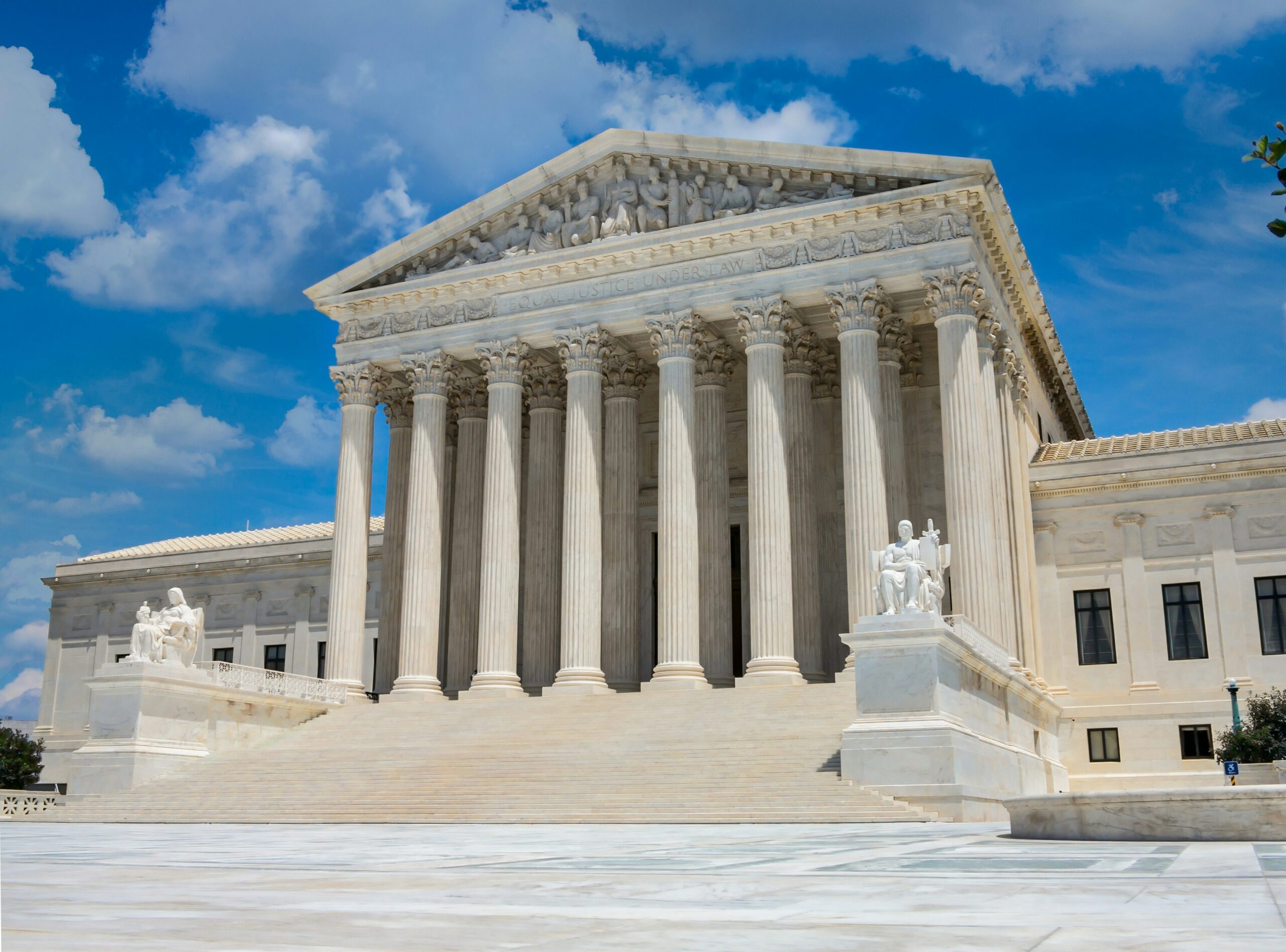
On June 30th, in a 6-3 ruling, the Supreme Court upheld laws from West Virginia and Idaho that prohibit transgender athletes from competing on girls’ and women’s sports teams. Known as Little v. Hecox and West Virginia v. B.P.J., both of these cases were closely watched for their implications for Title IX and transgender rights.
Little v. Hecox stems from Idaho’s 2020 Fairness in Women’s Sports Act, H.B. 500. The act prohibits transgender women and girls from participating in women’s and girls’ interscholastic sports teams from primary school through college. The plaintiff, Lindsay Hecox, challenged the law after being barred from trying out for her university’s women’s track and cross country team due to H.B. 500.
Hecox argued that the act violated Title IX and the Fourteenth Amendment’s Equal Protection Clause. She filed a suit against Idaho’s Governor Brad Little to halt H.B. 500’s enforcement.
In response to the ruling, HRC President Kelley Robinson shared in a statement, “When politicians convince the public that any girl could be ‘the wrong kind of girl,’ they invite harassment, intimidation, invasive questioning, or even an inspection of their body by a total stranger.”
A similar Title IX violation was at the center of West Virginia v. B.P.J. In 2021, West Virginia enacted the “Save Women’s Sports Act,” H.B. 3293. This bill requires student-athletes to participate in athletic or sporting events based on the athlete’s biological sex.
The plaintiff, identified in court filings as B.P.J., is a transgender girl who has competed on girls’ athletic teams since elementary school. After H.B. 3293 took effect, she was prohibited from continuing.
In this case, B.P.J. sued the West Virginia State Board of Education and other state and county education officials, as well as the West Virginia Secondary School Activities Commission. This was on the grounds that excluding her from girls’ sports violates the Equal Protection Clause and Title IX.
As Sruti Swaminathan, a senior staff attorney with the ACLU representing Hecox, explained: “It’s not just about trophies and competitions. It’s even just the mere presence of trans girls on girls teams that’s bothering these states and these advocates on the other side.”
Cases like these highlight preexisting barriers transgender athletes have faced when it comes to participating in sports, as seen with Executive Order 14201, “Keeping Men Out of Women’s Sports.”
In her dissent, Justice Ketanji Brown Jackson shared, “The institution has imposed its gender-based expectations upon her. And either way, the institution may have violated Title IX.”
The rulings from the Supreme Court exclude transgender students’ participation in school athletics nationwide. With June 30th marking the final day of Pride month, decisions like this highlight continued roll backs on protections for marginalized communities, and emphasize the need to fight for collective liberation.