Women’s March Organizes Peaceful Protest in Response to NRA Videos

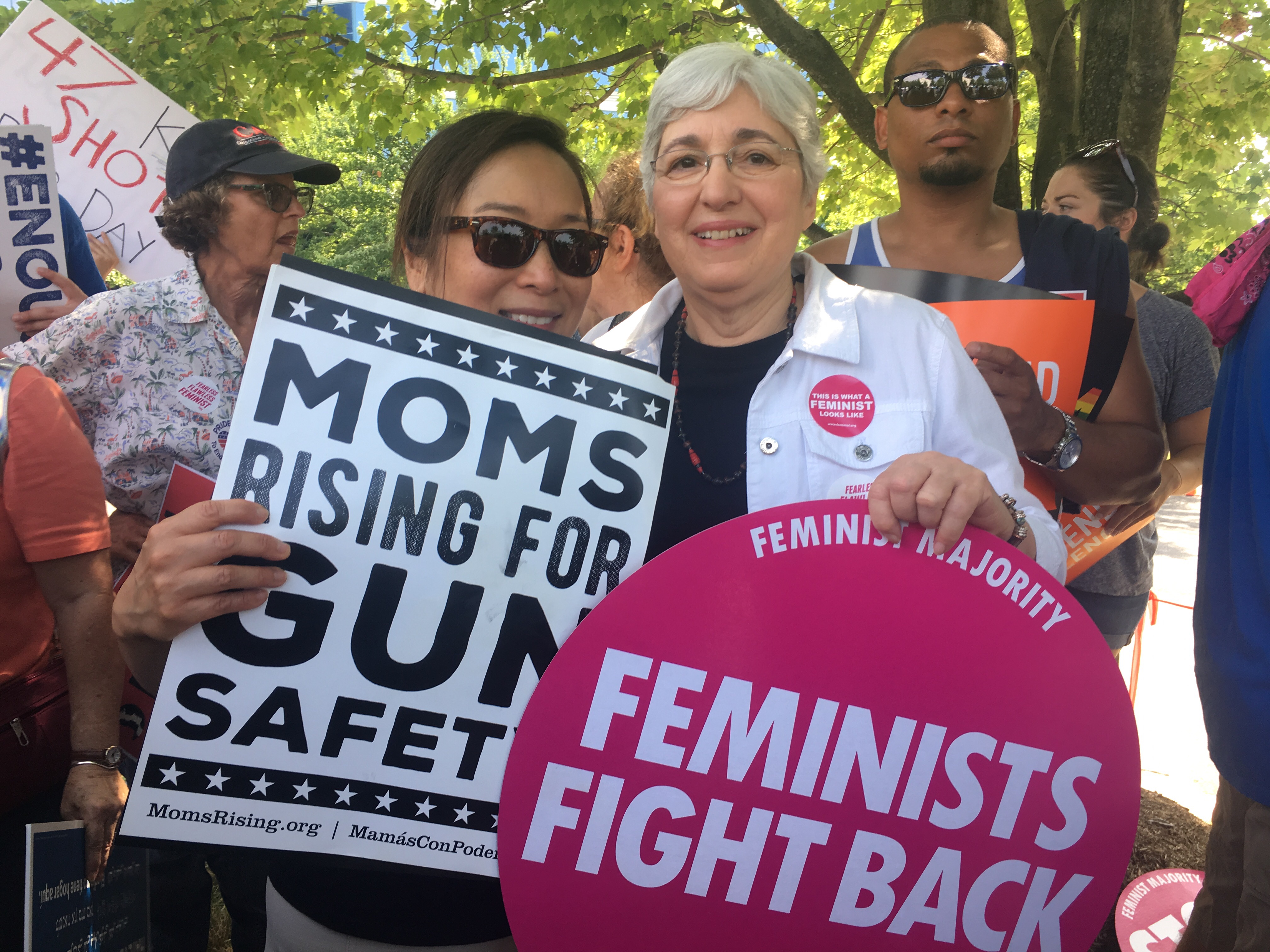
Last Friday, the Women’s March and several other organizations participated in a 17-mile, two-day rally in the Washington, D.C. area to protest the National Rifle Association’s (NRA) promotion of violence against progressive activists—especially women and people of color—in two recent incendiary videos, as well as the lack of action the NRA took in response to the shooting death of Philando Castile.

The NRA’s first video, released on June 30 and narrated by conservative talk show host Dana Loesch, uses aggressive language and suggests that gun ownership is necessary to defend “law abiding” citizens from “violent” progressive protestors.

In response, Women’s March co-president Tamika Mallory wrote a letter to NRA executive vice president Wayne LaPierre demanding removal of the video on the grounds that it advances a dangerous “us v. them” narrative and calls for violence against grassroots, nonviolent resistance such as the Women’s March. The letter also identifies the inconsistency inherent in defending NRA members’ second amendment rights while failing to do the same for Philando Castile, a licensed gun owner who was shot and killed by a police officer last year after the officer thought he was reaching for a legally registered firearm, despite video footage showing otherwise.

Soon after receiving the letter, the NRA released a second video refusing to apologize and directly attacking several progressive activists and politicians—such as Senator Chris Murphy, California Lieutenant Governor Gavin Newsome, Black Lives Matter activist DeRay Mckesson, and Mallory, among others.

In an act of resistance against the NRA’s racist and incendiary actions, the Women’s March organized their first major action since the record breaking January protests.

Eleanor Smeal, President of the Feminist Majority Foundation, said “There is a massive gender gap in gun violence. Women are simply sick and tired of it, and the NRA is doubling down on their extremism.”

While groups like the NRA try to exploit high rates of sexual assault and domestic violence as factors to promote gun ownership among women, the fact is that women in the United States are significantly more likely to be shot by an attacker than to shoot their attacker. A report from the Violence Policy Center found that for every woman who was able to use a handgun in self-defense against an intimate partner, another 83 women were murdered with a handgun by an intimate partner.

And while the gun lobby likes to portray firearms as a form of protection, too often for women it becomes a tool of intimidation, harm and murder.  4.5 million women in the US report experiencing intimidation or coercion by an intimate partner using a gun.

Women have suffered from gun violence for too long, while groups that claim to advocate safety are more concerned with profits for the firearm industry.

Media Resources: Washington Post 6/29/17; Women’s March; Futures Without Violence; Feminist Majority Foundation 6/2/17

Afghan Female Pilot Flies Around the World to Inspire Women

Shaesta Waiza, the youngest certified female pilot from Afghanistan and the founder of Dreams Soar, is flying around the world to serve as an inspiration for other women and girls.

Waiza started her 16,000-mile journey through 19 different countries back in May when she took off from Daytona Beach, Florida. She recently took a detour and traveled to her home country of Afghanistan to meet with Afghan President Ashraf Ghani to speak about women’s rights and opportunities in Afghanistan.

Women’s rights advancements have been significant in Afghanistan since the fall of the Taliban in 2001. Millions of Afghan girls now receive an education and women are permitted to work for the government, run their own business, and serve in parliament. But despite these advancements, Afghan women still face many barriers, making the country one of the most difficult in the world to be a woman.

The Afghan-American pilot, who was born in a refugee camp in Afghanistan, hopes that her story will inspire others to pursue their dreams. “When I was a little girl I thought maybe I would go to college, but I would get married at a young age and have a family. But then I found something that I really loved and that’s flying,” said Waiza.

Waiza has the incredible support from both the International Civil Aviation Organization (ICAO), the organization backing her trip, and her family. Waiza’s father said, “The support of parents for girls is very constructive. Parents should provide the opportunity for higher education studies for their children, especially for girls.”

Once Waiza completes her trip, she will be the youngest woman pilot ever to complete a solo trip around the world.


Media Resources: Al Jazeera 7/18/17; Abc News 7/11/17; BBC 7/10/17; TOLO News 7/10/17

Nominee for FBI Director Pushed on Anti-Abortion Violence

Last week the Senate Judiciary Committee held a hearing on the nomination of Christopher Wray to serve as the new director of the FBI, and Senator Richard Blumenthal (D-Conn.) pressed the nominee on his dedication to protecting abortion clinics from violence.


The Freedom of Access to Clinic Entrance (FACE) Act was signed into law in 1994 by President Clinton, and made it a federal crime to use force, the threat of force or physical obstruction to intimidate, harm or prevent someone from obtaining or providing reproductive health services. The law was passed during a surge of violence against reproductive health providers in the 1990s that culminated in the murder of Dr. David Gunn in Pensacola, Florida on March 10,1993.


Blumenthal began by citing specific acts of violence faced by abortion providers and their supporters, stating, “Between 1977 and 2015, there have been hundreds of crimes committed against reproductive health care facilities, clinics, and other offices, abortion providers, reproductive health care, senators, including 11 murders, 26 attempted murders, 42 bombings, 185 arsons and so forth.”


While Senator Blumenthal’s line of questioning may have appeared to many as out of the blue, it was a necessary action to ensuring the protection of reproductive rights within the vehemently anti-abortion Trump era. “In 1998, Attorney General Janet Reno created the national task force on violence against reproductive health providers to coordinate investigation and prosecution of such incidents,” the senator continued. “As FBI director, I hope you will continue to support the FBI’s participation in that effort.”


Wray confirmed his commitment to following FBI regulations, but did not explicitly comment on the protection of the abortion clinics as Senator Blumenthal had asked. “Senator, I gather there is a specific statute that is in place that the FBI has investigative jurisdiction to enforce,” he said. “We would zealously investigate all criminal violations including the ones under the statute.”


Advocates are concerned that while he showed dedication to upholding current FBI standards, the lack of enthusiasm or resources provided could mean an otherwise dangerous future for reproductive health care providers.


The importance of pushing Wray on his stance regarding the protection of abortion providers was brought to light late last month in a Rewire article discussing the questions the senators should ask of the nominee. Eleanor Smeal, President of the Feminist Majority Foundation, told Rewire that anti-abortion violence against clinics must be classified as Domestic Terrorism, and that there is no justice if our country puts faith into an FBI Director who doesn’t feel the same way.


“Would [the FBI director] agree to track violence against reproductive-health clinics and their doctors, owners, health-care workers, and patients—or for that matter their vendors—to see what pattern and practices emerge that gets to the core of this violence or terrorism?” Smeal asked Rewire. “That’s how they track international terrorism. This is domestic terrorism. Would [he direct the FBI to] use skills to investigate what we believe is organized crime to drive not only clinics out of business, but to stop the provision of reproductive health care?”


According to the Feminist Majority Foundation’s 2016 National Clinic Violence Survey, threats and violence against abortion providers has skyrocketed, from impacting 19.7 percent of clinics in 2014 to 34.2 percent of clinics in 2016. The survey also found that 91.1 percent of clinics experience some type of anti-abortion activity, such as protesting, with 63.2 percent of providers experiencing activity at least once a week, and a quarter of clinics experiencing it every day.


This weekend, anti-abortion extremist group Operation Save America will be descending on Louisville, Kentucky to illegally blockade the entrance to the only remaining abortion clinic in the state. You can help contribute the clinic’s security needs here.


Media Resources: Rewire 06/22/2017; PJ Media 07/12/2017; Feminist Majority Foundation 5/26/17, 7/17/17; National Clinic Violence Survey 02/2017

Anti-Abortion Extremists Descend on Kentucky’s Last Clinic

In less than one week, Operation Save America (OSA)—an anti-abortion extremist group—will be descending on Louisville, Kentucky for their annual national action with the goal to “break America’s covenant with death”  by blockading the entrance to the last abortion clinic left in the state.

The embattled EMW Women’s Surgical Center is frequently targeted by extremists. Every morning, Tuesday through Saturday, the political debate over abortion spills to the front door of the Louisville clinic, where anti-abortion extremists gather to hurl insults and fake inflammatory images at women who walk by. Clinic escorts are forced to strategically stand at points around the block to help women safely enter the healthcare center.

OSA performed a test run of their blockade at the health center in May, leading to the arrest of ten people. Among those arrested was Rusty Thomas, leader of OSA, who has publicly advocated for punishing women who obtain abortions by charging them with murder.

Last summer, OSA led a similar siege on Wichita, Kansas to commemorate the 25th anniversary of the Summer of Mercy, a 1991 blockade during which nearly 2,700 protesters were arrested for blocking access to the clinic, Women’s Health Care Services, for over six weeks. That clinic was run by Dr. George Tiller who was later murdered in his church by an anti-abortion extremist in 2009. Instead of turning out thousands last summer, OSA managed to recruit less than 200 people to the Kansas protests, and almost a quarter of those participating were children. This year, they are hoping that the recent election of Donald Trump will empower more people to come to Kentucky.

During last summer’s protests, Thomas issued an open letter to police calling on them to “insist their states immediately outlaw abortion, grant the police the authority to shut down any death camp in their jurisdiction, and arrest those who participate in the barbaric act of abortion.”

His message has a receptive audience in Kentucky Governor Matt Bevin, who has successfully shut down every other abortion clinic in Kentucky by pursuing licensing disputes through the State Cabinet for Health and Family Services. So far he has blocked the Planned Parenthood from continuing to perform abortions, closed the EMW clinic in Lexington and worked tirelessly to try and shut down the embattled Louisville health center. He was also behind the passing of a 20-week abortion ban and a law requiring doctors to narrate in detail the ultrasounds performed on women seeking abortion.

The Louisville clinic was ordered by Governor Bevin to stop performing abortions in April because of a “deficient” license, but the clinic was granted a temporary restraining order by a federal judge until their lawsuit against the state goes to court in September. Governor Bevin’s brother, Tim Bevin, has even been involved in a protest outside of the clinic.

In February, Governor Bevin actually addressed leaders of OSA in a 30 minute speech. When Governor Bevin met with Thomas and OSA, he mentioned a self-published book by an on-the-fringes, anti-choice extremist Matt Trewhella, a known signatory of a petition called “Justifiable Homicide” that calls for the killing of abortion doctors. What’s more, Trewhella’s book, The Doctrine of the Lesser Magistrates, advocates for lower ranking elected officials and civil servants to disobey federal laws that they believe do not comport with ‘God’s law’ especially abortion.

Blockading the entrance to a clinic is a federal crime under the 1994 Freedom of Access to Clinic Entrance (FACE) Act, which criminalizes the use of force, the threat of force, or physical obstruction to intimidate, harm or prevent someone from obtaining or providing reproductive health services.

However, OSA is the first group to attempt a blockade since the election of Donald Trump, and it is still yet unclear whether or not the nation’s chief law enforcement officer, Attorney General Jeff Sessions, will enforce federal law. As a Senator, Sessions repeatedly and unsuccessfully tried to undermine the right to abortion through legislation, putting him well out of the mainstream, as evidenced by the support he received from anti-abortion extremist Troy Newman, president of Operation Rescue.

Because of the Trump administration’s anti-abortion actions—including Trump’s statement that there should be “some form of punishment” for women seeking abortion, Pence’s keynote speech at the March for Life, and the administration’s expansion of the Global Gag Rule—many feminists are concerned about the future enforcement of the FACE Act.

The Feminist Majority Foundation’s (FMF) 2016 National Clinic Violence Survey recently found that 91.1 percent of clinics experience some type of anti-abortion activity, such as protesting, with 63.2 percent of providers experiencing activity at least once a week, and a quarter of clinics experiencing it every day. FMF produced a spotlight video called Walking the Gauntlet to demonstrate the extreme tactics employed by the anti-abortion industry to intimidate patients, clinic staff and doctors in front of the clinic.

Blocking access to a clinic is considered one of the most severe types of threats and violence experienced by clinics. The number of clinics who report these experiences has skyrocketed since 2014, from 19.7 percent to 34.2 percent.

FMF’s National Clinic Access Project has been traveling to Louisville to monitor OSA, help mobilize community members, fortify the clinic with security equipment, and coordinate appropriate responses with law enforcement. Click here if you would like to help contribute to the Kentucky clinic’s security needs.

Media Resources: Right Wing Watch 6/2/17; Feminist Majority Foundation 8/5/16, 02/2017, 2/14/17, 5/16/17, 5/26/17;

Feminist Protest Pressure Trump Administration to Grant Afghan Girls Robotics Team Visas

The Department of Homeland Security has issued humanitarian paroles to the Afghan all-girls robotics team that had been previously denied State Department visas to come to Washington DC for an international robotics competition. The girls have now arrived in the United States for ten days to compete in the FIRST Global Challenge.


The decision came after mounting criticism directed at the Trump administration and the State Department. Many believed that denying visas to the Afghan all-girls team sent the wrong message, counteracting the work of the United States and many women’s organizations who have been pushing for the equality of women in Afghanistan.


The Feminist Majority Foundation, Women for Afghan Women and 18 other feminist organizations, signed a letter pushing back on the denial of the visas. The letter emphasized the need for the U.S. to revisit its visa policy towards Afghanistan to ensure the U.S. leads by example both in promoting STEM programs and in its worldwide support of young women seeking educational, technological, and economic empowerment.


“We’re beyond thrilled that this courageous team of talented and educated Afghan girls is able to compete in the FIRST Global Challenge,” said Eleanor Smeal, president of the Feminist Majority Foundation.  “This is one issue that should remain bipartisan. Afghan women and girls, with the support of the feminist movement worldwide, have worked so hard to increase girls’ education opportunities and now millions of Afghan girls are going to school and college. It’s about time that the world recognizes and respects their talents.”


Representative Joe Courtney and Representative Suzanne Bonamici also spearheaded a Congressional Dear Colleague letter addressed to Secretary of State Rex Tillerson urging him to reconsider the State Department’s decision to deny the Afghani girls robotics team visas. The letter was signed by 53 other House members and stressed the importance of empowering women’s education. “Supporting women’s educational initiatives has been a vital component of our diplomacy and has been proven to enhance stability and speed development more than almost any policy focus,” wrote the members.


The team of six teenage girls has been working hard for months to build a robot to compete in the international robotics competition. The girls have faced obstacles at almost every turn, yet the group remains determined to pursue their passions. “We want to make a difference and most breakthroughs in science, technology, and other industries normally start with the dream of a child to do something great,” the team wrote on their competition page.


Media Resources: The Verge 7/13/17; BBC 7/13/17; Politico 7/12/17; Al Jazeera 7/13/17; Feminist Majority Foundation 7/6/17


Senate Committee Votes to Give Free Birth Control to Non-Active Service Members

Last month, the Republican-controlled Senate Armed Services Committee passed an amendment to the National Defense Authorization Act that, if passed by Congress, would give free birth control to all members of the military and their dependents. Currently, women in the military are only granted this benefit while on active duty. The new amendment expands access to those in the National Guard and military reserves, as well as their dependents. If the National Defense Authorization Act passes with this amendment intact, women in the military and their dependents will still have access to birth control even if the Affordable Care Act is repealed.

The amendment is sponsored by Senator Jeanne Shaheen of New Hampshire, who in a press release stated, “The women who serve in our military, and the dependents of our service members, deserve the same level of healthcare coverage and care as the civilians they fight to protect. I’m glad this legislation includes my amendment to ensure all non-active service members and their dependents have birth control coverage without cost sharing. Access to basic preventive health care like contraception is critical to promote both military readiness and quality of life.”

The amendment to the National Defense Authorization Act might not do enough to solve the problem. Though it will provide health resources for more people, the resources currently provided for those in active duty are not thorough enough.

Many women in the military rely on birth control measures to suppress periods, which can be inconvenient, messy, and painful during deployment. They can also be embarrassing to manage in spaces where there are often few or no other women. Additionally, unplanned pregnancies are 63% more likely for women in the military than civilian women.

Healthcare for armed-service members is provided by Tricare, which does offer contraceptive services, but not all methods are provided. One of the greatest obstacles comes when supplies need to be refilled. While the average length of a deployment is 12 months, Tricare only provides service members with a three-month supply of birth control. Since troops are often stationed in isolated areas, prescription refills can be out of reach.

A 2013 study by Daniel Grossman of the University of California San Francisco found that 41% of those who needed birth control refills while deployed found them difficult to obtain. Another 2011 study found that only 79% of soldiers who needed birth control were unable to access it for the entirety of their deployment. Long Acting Reversible Contraceptives (LARCs), such as intrauterine devices (IUDs) and implants, are underused in the military, possibly because of outdated notions of the health risks LARCs can cause. Grossman claims this may also be because the military does not provide enough information about how to deal with periods or contraceptives during deployment. The lack of research and information published by the DOD on this issue is reflective of this discrepancy.

Another bill titled “Access to Contraception for Women Service Members and Dependents Act” was introduced by Congresswoman Jackie Speier of California in the House of Representatives in 2015, and in the Senate in 2017, yet neither iteration succeeded.

The DOD currently covers health costs for active and retired service members and their dependents for erectile dysfunction. Since 2011, the DOD has spent $294 million on drugs like Viagra, Cialis and Levitra.

Sources: Center for American Progress 02/04/15; CBS News 02/20/15; Congress.gov 08/13/2015, 05/23/17; The Huffington Post 05/02/17; The Atlantic 02/23/17; Buzzfeed News 06/28/17; Jeanne Shaheen Press Releases 06/28/17

Senate Healthcare Bill Would Cut Nearly 1.5 Million Jobs

In addition to kicking 22 million people off of health insurance by 2026, the Senate Trumpcare bill—the Better Care Reconciliation Act (BCRA)—would also threaten the livelihood of millions and cause an economic downturn in every state in the nation except one.

A recent analysis of the economic consequences of the BCRA by researchers at George Washington University and the Commonwealth Fund found that the Senate Trumpcare plan would lead to a loss of 1.45 million jobs by 2026 and have a devastating impact on state economies. Gross state products (an aggregate measure of state economies) would drop by $162 billion, and business output would be $265 billion lower.

The majority of the job losses—919,000 jobs—would be in the healthcare industry, but there would be a ripple effect that could lead to a loss of half a million jobs in other sectors, including construction and real estate, finance, retail trade, and public employment.

The healthcare industry would take the largest hit, likely because of the deep and dangerous cuts to Medicaid included in the Senate Trumpcare plan. According to the Congressional Budget Office (CBO), the BCRA would cut Medicaid by 26 percent over 10 years—a cut of $770 billion. The cuts, however, would go substantially further over the next 10 years, amounting to a 35 percent cut to Medicaid by 2036. Some of the job losses would also flow from the reduction in the premium tax credits available to help individuals and families purchase affordable health insurance in the marketplaces.

Women, and in particular women of color, would be especially impacted by the projected job losses. Research by the National Women’s Law Center shows that women make up the vast majority of certain health care workers; women make up 88 percent of nursing, psychiatric, and home health aides, 80.3 percent of nursing home and residential care facility employees, 80 percent of ambulatory health care employees, and 76.6 percent of hospital employees. Medicaid creates jobs in all of these areas. The program pays health care providers who hire and pay staff and who purchase goods and services. By gutting Medicaid and capping federal funding, jobs will be lost, hospitals may be forced to close, and states will lose revenue.

Given the magnitude of the cuts to Medicaid, both states that have expanded Medicaid and states that have not will face job losses. The ten states that will experience the worst job losses, according to the George Washington University and Commonwealth Fund study are: New York, California, Pennsylvania, Ohio, Michigan, Florida, Illinois, New Jersey, Massachusetts, and Indiana. Medicaid supports women’s jobs in every state.

Some supporters of the Trumpcare plan have cited creating more flexibility for states as a justification for the dramatic changes to Medicaid. Yet, the conclusion of the George Washington University and Commonwealth Fund study should give lawmakers pause.

“The combination of more uninsured and more unemployed people will increase the demand for social assistance, but weaker state economies and federal reductions in Medicaid spending will make it more difficult for states to respond to those needs,” the authors write. They conclude, “States will confront painful choices between raising taxes or slashing services.”

It is no wonder that the Senate Trumpcare plan is so unpopular. The House Trumpcare plan was the most unpopular piece of major legislation in two decades, and the Senate version—which the authors of the George Washington University and Commonwealth Fund found to have even “harsher” economic consequences than the House version—is no better. A poll released last month by the Kaiser Family Foundation found not only that a majority of the public has an unfavorable view of the Trumpcare plan, but that a majority has a favorable view of the Affordable Care Act (ACA)—which Trumpcare seeks to dismantle—as well as Medicaid, which three-fourths of the public views favorably.


Media Resources: The Commonwealth Fund 7/6/17; Business Insider 7/5/17; Kaiser Family Foundation 6/23/17; National Women’s Law Center 6/17

Defense Department Delays Plan to Allow Transgender Recruits

Defense Secretary James Mattis announced at the end of June that the Pentagon’s deadline for allowing transgender individuals to enlist in the military would be delayed six months for review. The announcement came one day before the ban was set to expire as part of former Defense Secretary Ash Carter’s lifting of the ban on transgender service in the military.

Military officials will now have until December 1, 2017, to conduct a review process to determine whether allowing transgender people to enlist will affect the “readiness or lethality” of the United States Armed Forces. The Defense Department argues that more time is needed to study the unique impact transgender enlistment would have in all four military branches, including whether currently-serving transgender troops are facing discrimination or having trouble meeting the “physical or other standards” of the military.

Though the delay will not affect transgender troops who are already serving in U.S. military forces, who have been allowed to serve openly and receive medical care since last year, transgender people who are not currently in the military will not be able to enlist until the decision is released. But Aaron Belkin, the director of the Palm Center, a think tank that has helped the Pentagon with research in this area, said the delay “will put transgender people who want to serve in the same position as gay people who wanted to serve during the now-repealed ban on open homosexual service known as ‘don’t ask, don’t tell.’”

The RAND Corporation estimates that transgender troops make up about 2,450 of the approximately 1.3 million active-duty service members. Yet the Pentagon’s announcement comes as the federal government is rolling back civil rights for the transgender community, who account for approximately  1.4 million people in the United States and face frequent discrimination in healthcare, housing, the workplace, and elsewhere.

Media Resources: Associated Press 6/30/17; FMF 2/23/17, 7/1/16; Washington Post 6/30/17; New York Times

Title IX Complaint Filed Over School’s Refusal to Start Girls Football Team

A group of teenage girls have filed a Title IX complaint against three Utah school districts after the Utah High School Activities Association (UHSAA) refused to form a girls’ football team.

In 2012, Sam Gordon, a nine-year old from Utah, became the face of girls’ playing football when a video of her touchdowns went viral. She went on to appear on several television programs, including Conan and Good Morning America.

Three years ago, Gordon and her father, Brent Gordon, founded a youth tackle football league for girls. Their league has already grown from 50 members to 200 members since it was founded.

Now, Sam Gordon is fourteen and about to start high school, so her father approached the UHSAA to see if they would form girls’ football teams. However, they told him that there was not enough community interest, and that he should focus on his own league.

Brent Gordon said, “The suggestion was go ahead and grow your girls league for ten or 15 years and then come back to us. Well, my daughter will be 30 years old by then. It doesn’t help her or any of the other girls who want to play for their school now.” Gordon is a lawyer and so decided to research legal options after UHSAA’s refusal to consider their request. He and his daughter along with several others then filed a Title IX complaint against three Utah school districts.

Title IX mandates that schools ensure an equal number of resources goes to fund sports for both men and women. Title IX does have a contact sports exemption that allows schools to prevent girls from joining boys’ teams or creating teams of their own in contact sports like football. However, high schools across the United States offer girls teams in similar contact sports such as ice hockey.

Two other girls in Utah, high school senior Baylee Simmons and junior Madelyn Calchera, are joining Gordon in her suit against the Utah school districts. One of the main goals of their lawsuit is to demonstrate sufficient interest in creating a girls’ team. Neither Sam nor Brent Gordon are concerned about a lack of interest.

Brent Gordon said: “These schools are trying to use their own discrimination against girls to say there is no interest. We’ve never had a girls’ football team, and we’ve never provided equal participation opportunity. You created the lack of girls playing football by discriminating against them in the first place.”

“For girls who are afraid to play football or don’t feel like it’s the type of things that they should do, I think it’s time for us to be trailblazers and take away the stereotype that girls can’t play football,” Sam said. “They should believe in themselves to do anything they want to do.”

Although Title IX has prompted many educational equity victories for women and girls over the last 45 years, there is still a long way to go. To address gender-based inequities, advocates have been urging Members of Congress to hold Secretary DeVos accountable for upholding Title IX protections and pass the Patsy T Mink Gender Equity in Education Act of 2017, which would allocate greater federal funding to helping schools uphold Title IX.


Sources: New York Times 7/1/2017; Fox Salt Lake City 6/27/2017; Bleacher Report 6/30/2017; Feminist Majority 8/22/2016; Feminist Majority Foundation 6/26/17

US Denies Visas to Afghan Girls Robotics Team, Sparks Feminist Protest

An all-girls robotics team from Herat, Afghanistan was denied visas to enter the U.S.


The teenagers risked their lives making the 500-mile journey across Afghanistan twice to interview for visas at the U.S. embassy in Kabul— the site of several recent deadly attacks. Despite their efforts to secure a 7-day visa, the girls were rejected.


The news of the visa denial has sparked feminist protests in the United States. “This makes no sense and is even more outrageous when you consider it is counterproductive to the work of the United States and many women’s organizations who have been fighting for some two decades for the equality of women in Afghanistan,” said Eleanor Smeal, President of the Feminist Majority Foundation. The Feminist Majority Foundation has conducted a campaign for Afghan Women and Girls since 1997.


The team of six teenage girls has been working for months to build a robot to compete in the FIRST Global Challenge, an international robotics competition in DC. The competition attracts teams of young students from around the world and aims to engage students by sparking a passion for Science, Technology, Engineering, and Mathematics (STEM).


“We want to develop and explore our minds and creativity and maybe unveil the genius inside of each one of us,” the team wrote on their webpage, showcasing their passion and excitement for STEM.


Facing obstacles at almost every turn, the determined group of Afghan girls has had to overcome great odds to pursue their passions. Teams participating in the global competition were supposed to receive tech materials to build their robots back in March. But the box sent to the Afghan all-girls team was held up for months and never arrived. Instead of giving up, the young engineers improvised and built machines from household materials.


Roya Mahboob, the founder of Citadel Software Company in Afghanistan and one of the sponsors of the team, said when the girls heard the news that their visas had been denied, “they were crying… they’re young and they were very upset.” Mahboob who is a technology entrepreneur and women’s rights trailblazer knows too well the obstacles that women and girls must overcome in Afghanistan, especially in the tech world. In addition to founding Citadel Software Company, she founded a multilingual blog and video site to give women a platform to tell their stories and has plans to build 40 free Internet classrooms across Afghanistan to make the Internet more accessible to female students.


While the U.S. State Department has not commented on the reasons for rejecting the all-girls robotics team, the denial has drawn international attention and condemnation. U.S. Senator Bernie Sanders released a statement emphasizing the importance of empowering women, “supporting the educational aspirations of young people, particularly young women, all over the world should be seen as a priority for US foreign policy, not a threat.”


Women for Afghan Women, a grassroots human rights organization dedicated to securing and protecting the rights of disenfranchised Afghan women and girls, has released a letter to Secretary of State Rex Tillerson urging Tillerson to overturn the decision to deny the visas of six Afghan girls. The letter emphasizes the need for the U.S. to revisit its visa policy towards Afghanistan to ensure the U.S. leads by example both in promoting STEM programs and in its worldwide support of young women seeking educational, technological, and economic empowerment. More than a dozen organizations, including the Feminist Majority Foundation, have signed the letter.


As of now, the Afghan all-girls team will have to watch their robot compete in the challenge through a video link during the July 16-18 event, rather than joining the other teams who were granted visas. Teams from Iran, Syria, and Sudan all received visas, despite being on Trump’s list of countries whose citizens are banned from entry. Mahboob has confirmed that the other teams granted visas were all male, leaving the impression that the Afghan all-girls team was denied visas and discriminated against because of their gender.


Media Resources: The Washington Post 7/4/17; Newsweek 7/1/17; Forbes 6/29/17; BBC 7/5/17; The Guardian 7/5/17; TIME 5/18/13

Maternal Mortality Rates are Rising in the United States

There has been renewed interest recently in investigating the United States’ rising maternal mortality rate, as studies show that the U.S. is the only developed country to see the maternal mortality rate increase as countries such as France, Spain, Germany, Canada and Portugal witness a steady decrease.

The United States saw a dramatic 27 percent jump in the maternal death rate from 19 deaths per 100,000 live births in 2000 to 24 deaths per 100,000 live births in 2014. In 2015, the rate once again went up to 26.4 deaths per 100,000 live births, and it is black women who are three to four times more likely to die from pregnancy or childbirth related incidences than white women.

Whereas white women have a rate of maternal death that stands at 12 per 100,000 live births, black women die in 40 of every 100,000 live births, and the gap is widening.

Some medical experts have connected the overall rise in American maternal mortality to the rise in obesity, diabetes, and other chronic conditions among American women. Others have pointed to a possible correlation between decreased access to contraception and abortion services and increases in maternal mortality rates. Higher maternal mortality rates for black women can be partially attributed to higher levels of poverty, which can impede healthcare access. But even after accounting for socioeconomic status and level of healthcare access, black women are more likely to experience pregnancy complications than white women.

In an effort to address this epidemic, states such as North Carolina have sought to close the maternal death gap. North Carolina developed a healthcare management program for low-income women called Pregnancy Medical Home. Doctors who service Medicaid patients receive a financial incentive to fully screen pregnant women for all possible high-risk pregnancy indicators, everything from depression to diabetes. The doctor then informs the pregnancy care manager of the diagnosis so that the program can make sure that the patient can obtain the necessary medical treatment and understands how, when and why to follow the treatment plan.

The program has been successful. In 1999, the death rate for black women in North Carolina was 39 per 100,000 live births. By 2013, they managed to close that gap to a rate of 23 deaths per 100,000 live births for both black and white mothers, putting North Carolina slightly below the national average.

California has also been successful in lowering the maternal mortality rate, mainly through the creation of a maternal mortality review board which examines every single maternal death in the state to determine what the problem was and how it went unaddressed. California currently has the lowest maternal death rate in the country with 7.3 deaths per 100,000 live births; however, the black-white health gap still persists with black women almost four times more likely to die due to pregnancy-related causes than white women.

On the other side of the movement to combat maternal mortality  is Texas, where the maternal death rate almost doubled between 2010 and 2012 from 72 deaths to 148 deaths, data the coincides with state lawmakers move in 2011 to cut family planning funds by 66 percent. 82 family planning clinics have been forced to close in the state since 2011, largely due to the dramatic funding cuts and the passage of draconian targeted restrictions on abortions providers that aimed to force women’s health centers to close their doors.

Unfortunately the successful Medicaid based programs in states like North Carolina are being threatened by national Republican efforts to significantly cut Medicaid funding. The most recent bill produced by Senate Republicans would slash Medicaid by 35 percent over the next 20 years, forcing states to choose between cutting a large number of people completely off of care and/or significantly limiting the quantity and quality of services available to recipients. Because half of all births in the United States are paid for through Medicaid, it is likely that pregnant women’s healthcare would be on the chopping block.

In addition, the bill could allow health insurers to opt out of covering many women’s health services, including pre- and post-natal care and contraceptive coverage. The bill would also bar Planned Parenthood from receiving Medicaid reimbursements for a year, preventing many young and low-income people from accessing affordable contraception, abortion, maternal care and other health services.

In a recent briefing on black maternal health, advocates emphasized the need to pursue research on black maternal health, protect access to reproductive, maternal and mental health services for black women, and give black mothers a platform to share their experiences.

Media Resources: Vox 7/3/17, 6/29/17; Center for Disease Control 2/21/03; NPR 5/12/17; Feminist Majority 6/19/17, 8/23/16; Feminist Majority 7/5/17

German Parliament Votes to Legalize Same-Sex Marriage

The German Parliament has voted 393-226 in favor of legalizing same-sex marriage, and the bill now heads to the Bundesrat, Germany’s upper house, where it is expected to pass. A recent poll found that two-thirds of Germans support legalizing same-sex marriage.


The Parliament’s move came just days after German chancellor Angela Merkel dropped her longstanding opposition to holding a free vote on the matter. Chancellor Merkel opposes same-sex marriage on claims of religious grounds, but has previously stated that she understood the significance of same-sex marriage in relation to adoption and children’s wellbeing.


Since 2001, same-sex couples in Germany have been able to enter into civil unions, but have not been able to receive the same benefits as married couples. Notably, same-sex couples with civil unions are not allowed to file joint tax returns, and do not receive the same preferential treatment as heterosexual couples in adoption procedures.


The vote was a significant win for gay rights activists in Germany, including groups such as The Gay and Lesbian Association, which has been pushing for same-sex marriage legalization since 1990. After Friday’s vote, The Gay and Lesbian Association celebrated the vote by announcing “This is a historic day! Not only for lesbians and gays, but for a more just and democratic society.”


But members of the progressive party caution that marriage equality could still be contested before Germany’s Constitutional Court, as some conservatives argue that such a measure would require an amendment to the country’s Constitution.


Media Resources: The Guardian 6/30/17, 6/30/17; CNN 6/30/17

Trump’s Temporary Muslim Travel Ban Goes Into Effect

On Thursday June 29th at 8:00 PM, President Trump’s ban on people traveling from six majority Muslim countries, as allowed by the Supreme Court, went into effect. Travelers from Libya, Syria, Iran, Somalia, Yemen, and Sudan will be banned for 90 days if unable to provide a “bona fide relationship” connection to the United States. The Supreme Court ruled to allow the ban until the Court can hear the case in October and make a final ruling.

Those accepted as “bona fide” include parents, spouses, fiancés, son- or daughter-in-laws, siblings (including step- or half-siblings). The “bona fide” status does not extend to grandparents, aunts, uncles, nieces, nephews, in-laws, extended family and grandchildren.

Critics have cited issue with the vagueness of the Court’s ruling, arguing that the narrow definition of the “bona fide relationships” required for entry will cause more delays and chaos.

CNN spoke with David Beir, an immigration policy analyst for the Cato Institute’s Center for Global Liberty and Prosperity, who explained that the unclear nature of the Court’s wording gives more freedom to the Trump administration.

“The reality is the Supreme Court didn’t provide anything other than a general statement for President Donald Trump (and his administration) to go off of,” Beir said. “So long as he appears to be acting in good faith in order to implement this order…he is probably going to be within his rights to do so as a Supreme Court has given him those powers now.”

The specifics of the order restrict entry from banned countries for 90 days. That number is extended to 120 days if the traveler is a refugee, despite the fact that there are zero instances, since the instatement of the 1980 Refugee Act, of a person accepted to the U.S. as a refugee having taken part in a major fatal terrorist attack. Further criticisms of the ban cite that the major terrorist attacks, specifically quoted within the ban’s text, experienced by the United States were carried out by people from countries not impacted.

Within the Supreme Court’s ruling, Justices Gorsuch, Thomas, and Alito issued a partial dissent arguing that they would have prefered the travel ban in full effect. “Weighing the Government’s interest in preserving national security against the hardships caused to respondents by temporary denials of entry into the country, the balance of the equities favors the Government,” Thomas wrote in the collective dissent. “I would thus grant the Government’s applications for a stay in their entirety.”

Despite the Court’s motion, advocacy organizations including the ACLU and Amnesty International continue to monitor the situation closely, and are providing presence at certain airports to lend assistance to persons affected.


Media Resources: CNN 06/29/2017, 01/29/2017; White House 04/06/2017, Supreme Court of the United States 06/26/2017

Another Civil Rights Opponent Nominated for Job in Justice Department

President Trump has nominated attorney Eric Dreiband, a man who has spent his career opposing equality movements, to head the Civil Rights Division of the Department of Justice. The role of the Civil Rights Division is to hold corporations and states accountable for compliance with federal anti-discrimination laws.

In a statement regarding the nomination, Jesselyn McCurdy, deputy director of the American Civil Liberties Union (ACLU) Washington Legislative Office, stated that “Dreiband has made a career going against women and LGBT rights. As a lawyer for the Equal Employment Opportunity Commission under President George W. Bush, Dreiband testified before Congress against legislation that would prevent wage discrimination… With a history of restricting civil rights, Drieband’s record must be thoroughly examined and weighed for his fitness to serve in the position that is supposed to advocate for the rights of all Americans, regardless of their background.”

Dreiband successfully defended the financial media company Bloomberg L.P. in a class action lawsuit where 65 women employees claimed to have been discriminated against because they were pregnant. The pregnant women claimed that the managers of the company reduced their pay, demoted them or excluded them from meetings. The women also accused their managers of making inappropriate, sexual comments towards them.

Dreiband also represented the Roman Catholic Archbishop of Washington when they did not want to comply with the Affordable Care Act mandate to provide employees with insurance coverage for birth control, arguing that it was a violation of their religious freedom. But in a separate case, Dreiband defended the clothing company Abercrombie and Fitch when they denied a Muslim woman employment because she wore a headscarf.

This year, Dreiband defended the University of North Carolina in a Title IX lawsuit after the University agreed to comply with state law HB2, which required all students and faculty to only use the bathroom that matched the gender on their birth certificate, a direct attack on transgender and non-binary students. Dreiband argued that that HB2 was required to protect the privacy and safety of cisgender people, but a federal judge ruled that the bathroom law was “unenforceable.”

The Trump administration has sought to weaken civil rights offices in a number of agencies. The proposed budget from the White House proposes dramatic budget cuts to the civil rights offices within the Environmental Protection Agency and the Department of Education, and outlines a plan to completely disband the Labor Department division that has been tasked with policing discrimination among federal contractors for nearly forty years. Within the Education Department, budget documents acknowledge the strain such cuts would have, stating that “to address steadily increases in the number of complaints received and decreased staffing levels, OCR must make difficult choices, including cutting back on initiating proactive investigations.”

Under Attorney General Jeff Sessions, the Justice Department has already withdrawn a number of Obama era civil rights objections. One was the attempt to protect transgender students’ access to the restroom that corresponded with their gender identity as a condition of the education equity guarantee under Title IX. Next, the DOJ withdrew the Obama era objection to Texas’s draconian voter ID law, claiming they no longer believed the law was passed with discriminatory intent.

In April, Sessions attempted to delay the implementation of a reform agreement that had been previously reached between the Baltimore Police Department and DOJ after an investigation last year found that the Baltimore police systematically violated the civil rights of black residents. Sessions then decided to deliver an ominous statement, warning that the decree in Baltimore will “reduce the lawful powers of the police department and result in a less safe city.”

Before serving as Attorney General, Secretary Sessions served as Alabama’s state’s attorney general and a United States Senator where he was far from a champion on civil rights, making him one of Trump’s most controversial Cabinet nominees. Sessions has a record of opposing measures that aimed to combat violence against women, hate crimes, and voter suppression.

Sources: New York Times 8/11/2011, 8/17/2011; LexisNexis 3/31/2014; NPR 6/1/2015; Jones Day 7/2015; The Washington Post 8/26/2016, 5/8/2017; The Feminist Majority 8/30/2016; ACLU 6/29/2017; Feminist Majority Foundation 6/1/17, 4/10/17

Texas Supreme Court Undermines Marriage Equality

On Friday the Texas Supreme Court discarded a lower court’s ruling that spouses of gay and lesbian public employees are entitled to government-subsidized marriage benefits. The court argued that, although Obergefell v. Hodges requires states to license and recognize same-sex marriages, it does not mandate that states “provide the same publicly funded benefits to all married persons.”


In June 2015, the Supreme Court of the United States’ ruling on Obergefell v. Hodges declared that same-sex couples fundamentally have equal protections under the Constitution. The Supreme Court held that the Fourteenth Amendment requires all 50 states to both license a marriage and recognize a marriage between two people of the same sex.


The case ruled on this Friday by the Texas Supreme Court originates before the Obergefell vs. Hodges decision. In November 2013, Annise Parker, the mayor of Houston at the time, declared that Houston would begin offering health and life insurance benefits to the spouses of all legally married city employees, whether they were gay or straight. Two men, Larry Hicks and Jack Pidgeon, represented by the Harris County Republican Party chairman then sued the city of Houston. Hicks and Pidgeon’s case was based on the argument that the offered benefits are an illegal and wasteful use of taxpayers money.


After Obergefell vs. Hodges, a lower Texas court threw out Hicks and Pidgeon’s lawsuit in 2015. Hicks and Pidgeon then appealed to the high court. In September 2016, the Texas Supreme Court refused to hear the case based on the Obergefell v. Hodges decision. However, Justice John Devine of the Texas Supreme Court stated his belief that the state should only offer spousal benefits to those in heterosexual marriages because the state should “encourage procreation within marriage” and benefits contribute to that encouragement.


Nevertheless, Texas leadership decided to ensure Hicks and Pidgeon’s case was heard in the court. In October 2016, Governor Greg Abbot, Lieutenant Governor Dan Patrick, and Texas Attorney General Ken Paxton asked the justices to reconsider their decision. In addition, the justices received letters opposing their initial ruling; as a result, the Texas Supreme Court decided in January 2017 to hear the case.


The court’s decision this Friday was then the result of years of legal action and conservative political movements. Hicks and Pidgeon’s lawsuit will continue to be deliberated on in Texas’s lower courts. Social conservatives hope that this ruling will help weaken the Obergell vs. Hodges ruling from two years ago.


Sources: Associated Press 6/30/2017; Houston Chronicle 6/30/2017, 1/17/2014; Texas Tribune 6/30/2017; Houston Press 1/24/2017, 9/7/2016; Feminist Majority 6/26/2015

First TV Channel for Women Launches in Afghanistan

The first women’s television station, Zan TV, has just launched in Afghanistan. The TV station, which focuses on women’s voices and women’s issues, has an all-female staff of presenters and producers.


The launch of the TV station comes after a high-profile marketing campaign in Kabul and on social media to promote the channel. Women across the country and the world waited in anticipation for the launch and celebrated the TV station as a major achievement for women in the country. Not long ago under the Taliban, women were not even allowed to work, let alone present or produce media.


Despite advances for Afghan women since the fall of the Taliban in 2001, Afghanistan remains one of the hardest countries in the world for women in the media. Women face both discrimination and harassment in the workplace. But for the women staffers at Zan TV, the hardship will not stop them from voicing their opinions and pursuing careers in media.  Ahmadi, a staff member at Zan TV, stated, “I came to share my experience with colleagues here and I am really happy working along with the other girls.”


Hamid Samar, a media entrepreneur who founded Zan TV, realized both the need and the market for such a station. Samar stated, “There has been a lot of talk about women’s rights and media rights but we’ve never seen anything special for women and that’s why we’ve done this.”


Just last month, 23 year old Fatana Hassanzada, with a team of a dozen young female volunteers and two paid freeland designers, launched Gellera, Afghanistan’s first women’s magazine featuring fashion tips alongside information about women’s health and legal rights.


According to the Afghan Central Statistics Organization, 21 percent of students enrolled in public universities in Afghanistan are now women. Hassanzada says those women, women who have now graduated from universities, and even girls in high school are her target audience.


Women entrepeneurs are becoming more common in Afghanistan despite continuing safety concerns. “When you think of business in Afghanistan, most of it is run by men,” said Arifa Paikar, a lecturer and professor at Kabul University. “But recently, women’s recognition is growing, and the international community is paying close attention to women, which makes our work more credible. In the past, the women were left out of the decision-making process, but now Afghan women know they can take part in the political and economic process.”


The Feminist Majority Foundation recently held a briefing for Members of Congress on the status of women and girls in Afghanistan. Portrayals of Afghanistan in the American media most often show war, women in burqas, and extreme violence. In reality, however, women and girls now have much more opportunity to attend schools, universities, and access health facilities. There are also more women participating in free media, music programs, advocacy, athletics, the military and the electorate.


Of course, there remain challenges to women’s advancement. American foreign policy should focus on supporting Afghan women who join security forces, establishing national election fairness and human rights commissions, and increasing women’s access to education, health services, and contraception to provide Afghan women with increased control over their lives.


Media Resources: Reuters 6/19/17; NYTimes 5/23/17; World Crunch 6/20/17; Al Jazeera 6/10/17; Feminist Majority Foundation 5/24/17, 6/21/17

One Year After Whole Woman’s Health Ruling Little Has Changed

This week, reproductive rights advocates celebrated the one-year anniversary of the Supreme Court’s historic ruling in the case of Whole Woman’s Health v Hellerstedt that declared Texas’ anti-abortion HB 2 law unconstitutional.

The Texas law required clinics offering abortion services to comply with ambulatory surgical center standards, as well as mandated that doctors performing abortions have admitting privileges at local hospitals, leading to the closure of over half the abortion clinics in Texas. Because the Texas government could provide no proof of HB 2’s medical benefits, the Court ruled that both provisions constitute an undue burden for women seeking an abortion.

According to the Guttmacher Institute, 18 states require abortion clinics to meet the standards for surgical centers in order to meet licensing requirements. Additionally, 17 states have laws that lay out specific requirements for procedure rooms, hallways, and neighboring facilities including the dimensions of corridors and procedure rooms and proximity to hospitals.

The ruling was welcomed by women and clinics across the country, as dozens of other states had passed hundreds of targeted restrictions on abortion providers since 2010, but the devastating impact of the laws had already been felt by many.

82 family planning clinics in Texas were forced to close since 2011 because of significant state cuts to family planning initiatives as well as HB 2. Though the Court found HB 2 unconstitutional, it might take years for the closed clinics to open their doors again, if they’re able to reopen at all.

But Texas has not given up on passing laws that unnecessarily restrict women’s access to abortion care. This month Governor Abbott signed into law a bill that requires fetal remains to be buried or cremated, prohibits donations of fetal tissue and implements sweeping bans on some of the safest types of second trimester abortions.

The Center for Reproductive Rights, who led the suit in the Whole Woman’s Health case, has called the new law unconstitutional and medically unsound, stating “Senate Bill 8 clearly falls short of the robust constitutional standard set forth just last year by the US Supreme Court in Whole Woman’s Health.” The Center also reminded the Governor that the state of Texas owes them $4.8 million in reimbursements due to the legal fees they incurred successfully fighting that case.

In an effort to force states to comply with the 2016 Supreme Court ruling, the Women’s Health Protection Act of 2017 was introduced to the Senate Judiciary Committee in March. The bill states that “access to safe, legal abortion services is essential to women’s health and central to women’s ability to participate equally in the economic and social life of the United States.” The bill makes state “TRAP laws” illegal, including requirements that require individuals looking to obtain abortion to undergo unnecessary medical tests and in-person visits prior to the procedure.” The bill has yet to be brought up for a vote due to Republican control of the Senate.


Media Resources: Feminist Newswire 6/27/16, 8/23/16, 5/30/17, 4/20/17

Healthcare Activists Rally as Senate GOP Delays Vote

Following a damaging Congressional Budget Office (CBO) score and unrelenting pressure from healthcare activists, Majority Leader Mitch McConnell announced the Senate’s vote on the Better Care Reconciliation Act would be delayed until after the July 4th recess, likely because he did not have enough Republican votes to push the legislation through.


McConnell’s June 27th announcement to delay the vote came just as healthcare advocates kicked off their three day long People’s Filibuster in an effort to put pressure on the Senators who were considering voting for a bill that would cut $772 billion from Medicaid and $408 billion from insurance subsidies in order to give a tax break to the top 1 percent of American earners and major corporations.


Activists proceeded with the planned resistance actions, arguing that Senate leadership would most likely try very soon to push the bill to a vote. Chants of “Shame” could be heard outside the Capitol building Thursday as Senate Republicans boarded buses to head over to the White House for a lunch meeting with President Trump.


The nonpartisan CBO had released a report on Monday outlining how this bill would rip health insurance away from 22 million people by 2026, and claiming that the number of uninsured would continue to skyrocket after that. Following the CBO analysis, multiple GOP Senators either expressed concerns about voting for such a devastating bill or outright refused to do so, such as Senator Susan Collins (R-ME).


The Senate bill was crafted behind closed doors with absolutely no input from any Democratic Senators and almost no input from the majority of Republican Senators.According to a new poll, the Republican bill currently has only a 17% public approval rating, and there is a reluctance amongst Republican Senators to spend their July 4th recess meeting publicly with constituents, as only two have scheduled town halls during the break.


The almost a trillion dollars cut from Medicaid under this bill would force states to start rationing care and kicking people off of coverage. Medicaid pays for nearly half of all births in America, 70% of all nursing home patients–two-thirds of whom are women, and 43% of Medicaid funds go to care for people with disabilities.


The Senate’s bill would also eliminate protections for Essential Health Benefits, meaning insurance companies would no longer be forced to cover maternity care, prescription drugs or mental healthcare. This bill would also allow insurance companies to charge women higher prices for less coverage, as everything from pregnancy to domestic violence could once again be considered a pre-existing condition.


The bill also temporarily bans Planned Parenthood from receiving reimbursements for treating Medicaid patients, putting access to affordable care out of reach for millions of women who rely on the healthcare provider for cancer screenings, STI and pregnancy tests, contraceptive care and other critical reproductive health and family planning services.


Media Resources: New York Times 06/26/2017; Vox 06/22/2017, 06/27/2017; NPR 6/28/17; Feminist Majority Foundation 6/23/17

Supreme Court to Hear Case Regarding Constitutionality of Partisan Gerrymandering

Last week, the Supreme Court announced it would hear Gill v. Whitford, a case regarding whether it is constitutional for lawmakers to gerrymander Congressional districts to advantage their own political party. The term “gerrymandering” refers to the redrawing of legislative districts in order to achieve a balance of voters that will elect a specific kind of candidate.

The Gill v. Whitford case originated in Wisconsin. In the first statewide election after Wisconsin Republicans redrew the state’s legislative map in 2010, Republicans won just over 48.6% of the statewide vote but received 60 of the 99 seats in the state assembly. Based on that evidence, federal judges ruled that the 2010 Wisconsin redistricting plan violated the First and Fourteenth Amendments because it gave a clear electoral advantage to Republican candidates.

The lower court ruling on Gill v. Whitford marked the first time in 30 years that a federal court had ruled a partisan gerrymander unconstitutional. In the past, the Supreme Court has struck down gerrymandering schemes that sought to minimize the voting power of racial minorities. But the Court has never before called into question the constitutionality of partisan gerrymandering.

The Court ruled on Monday to stay the lower court’s decision in Gill v. Whitford until it can reach a final verdict on the case. If the Court upholds the lower court’s ruling, it could dramatically alter up to a third of the U.S. legislative map.

The Gill v. Whitford case is also significant because it introduces a new element to the conversation surrounding partisan gerrymandering; the challengers in the case have devised a method that they say can determine if a district has been gerrymandered specifically for partisan reasons. This method involves calculating the number of so-called “wasted votes” created by a gerrymander. Votes can be “wasted” in one of two ways. In some instances, many members of one party are placed in a single Congressional district. This means that even if members of that party form a vast majority of that district’s electorate, they only have the chance to elect a single representative. Alternatively, when members of one party are spread across many districts, their votes are wasted because it is impossible for them to achieve a majority in any of those districts.

Justice Anthony Kennedy is likely to provide the swing vote in Gill v. Whitford. He has expressed in previous cases that partisan gerrymandering could potentially be ruled unconstitutional if there was a workable method to determine if a gerrymander was created for partisan or for other reasons. It remains to be seen whether the method created by the challengers in Gill v. Whitford is considered a workable standard for pinpointing when partisan gerrymandering is present.

Partisan gerrymandering has been common practice for American lawmakers since the early nineteenth century. But many legislators, pundits, and legal experts have criticized the practice, arguing that it robs voters of political voices. According to Trevor Potter, the president of an organization of legal experts part of the team representing the plaintiffs in Gill v. Whitford, partisan gerrymandering is anti-democratic because it allows legislators to “choose their voters” instead of the other way around.

Media Resources: New York Times 6/19/17, 9/25/10; Washington Post 6/19/17; New York Times’ “The Daily” 6/20/17; BBC 6/20/17; The Hill 6/19/17

After 45 Years of Title IX, Advocates Hold Briefing on Law’s Successes and Failures

Last week, Title IX – the 1972 legal provision which prevents sex and gender-based discrimination in education – turned 45 years old. In honor of the anniversary, feminist groups briefed Congress on the victories Title IX has won, as well as the ways in which the law continues to fall short.

The National Women’s Law Center (NWLC) briefed lawmakers and advocates on their latest education equity campaign, “Let Her Learn: Stopping School Pushout,” which is focused on pinpointing and combatting factors that prevent girls from receiving the instruction they deserve.

In “a closer look at what girls need to be safe and successful in school,” the NWLC determined that discriminatory discipline, harassment and violence, lack of support for trauma survivors, and discrimination against pregnant and parenting students all play major roles in pushing girls out of classrooms and schools.

The NWLC found that one in five girls have been sexually assaulted, one in three girls have experienced violence of some kind, and one in seven girls have reported missing school because they felt unsafe there. When sexism interacts with racism and homophobia, girls are especially vulnerable. Girls of color are often subject to discriminatory discipline – for example, black girls do not commit more serious offenses than white girls but are five times more likely to be suspended from school. And girls who identify as LGBTQ+ are more likely to report experiencing sexual harassment and violence. Violence, discrimination, and harassment all interfere with girls’ ability to attend school and focus on learning.

The NWLC highlighted challenges faced by pregnant and parenting students, and emphasized the role that schools need to play in ensuring that these students receive equitable treatment. Pregnant and parenting girls and women are likely to experience school pushout as a result of being pushed into less rigorous schools or tracks, being penalized for medically-necessary absences, and not being allowed to make up missed work.

The National Coalition for Women and Girls in Education (NCWGE) also briefed lawmakers and advocates on their 2017 report “Title IX at 45,” which details Title IX’s strides and shortcomings in a number of education objectives. Panel speakers agreed that although Title IX has prompted many victories for women in education, there is still a long way to go.

To address these gender-based inequities, speakers at both the NWLC and NCWGE briefings urged members of Congress to increase funding for the Office of Civil Rights, hold Secretary of Education Betsy Devos accountable for upholding protections for sexual assault victims, and pass the Patsy T. Mink Gender Equity in Education Act of 2017, which would put more federal funding towards helping schools uphold Title IX. They also called for individual schools and communities to commit to enforcing Title IX. One panel speaker stressed the need for cultural competency, implicit bias, and trauma response training for teachers, while others highlighted the importance of proactive Title IX coordinators.

Advocates for women and girls are increasingly concerned that Secretary DeVos is opposed to enforcing Title IX and working to create an education environment free from gender based harassment and violence. DeVos hired Candice Jackson to serve as the new secretary for civil rights in the Department of Education. Jackson is a critic of programs that aim to assist people of color and has called the women who accused President Trump of sexual assault “fake victims.”

Media Resources: National Women’s Law Center website; National Women’s Law Center “Let Her Learn” 2017; National Coalition for Women and Girls in Education website; National Coalition for Women and Girls in Education “Title IX at 45” 2017; Patsy T. Mink Gender Equity in Education Act of 2017; Feminist Majority Foundation 4/21/17

>