Supreme Court Decides: Obamacare Lives

In a momentous victory, the US Supreme Court today upheld the Affordable Care Act, also known as “Obamacare,” and protected access to health insurance for millions of families and individuals.

via Will O'Neill
via Will O’Neill

In its 6-3 decision authored by Chief Justice Roberts, the Supreme Court ruled in King v. Burwell that federal financial assistance made available under the Affordable Care Act (ACA) to purchase health insurance should be available to all eligible individuals, regardless of the state in which they live.

“At last, conservative efforts to kill Obamacare in the courts have decisively failed,” said Eleanor Smeal, President of the Feminist Majority. “It is shameful that Republican leaders are already announcing that they will continue to fight to kill Obamacare and take away health care from millions of low-income people. I am confident that this will be a major presidential issue, and that a majority of voters will demand that conservative politicians stop playing games with people’s health and lives.”

Under the ACA, the federal government provides financial help, in the form of tax credits, to middle- and low-income individuals to purchase health insurance through Health Insurance Marketplaces. Some states created their own marketplaces, but 34 states controlled by Republican governors refused to set up state marketplaces and therefore had to rely on use federally-facilitated marketplaces to allow individuals to buy health insurance. The issue in this case centered on whether these tax credits could be made available to families and individuals in those 34 states.

Failing to provide tax credits in those 34 states would likely have had devastating effects for around 9 million people – including over 3.5 million women, approximately one-third of whom are women of color – who may have no longer been able to afford insurance coverage. These millions would have lost critically needed health insurance, including access to preventive care that contained essential reproductive health benefits.

In the majority opinion, Chief Justice Roberts explained that “Congress passed the Affordable Care Act to improve health insurance markets, not to destroy them.” Without tax credits, a key reform of the ACA would have unraveled, leading to a “death spiral” where the cost of insurance rise, the number of people insured would plummet, and insurers would flee the market.

With its decision, the Court refused to accept an argument that would essentially overturn the ACA and disrupt the necessary health care reforms initiated and implemented by the Obama Administration.

Media Resources: Feminist Newswire 3/5/15

Marc Benioff Wants Women to Have Equal Pay and Opportunity at Salesforce

The CEO of Salesforce has laid out a plan to ensure equal pay and equal hiring at the global cloud-based software company.

via World Economic Forum


Women Surge, a new program Marc Benioff is instating at every level of Salesforce, is aimed filling gendered gaps in pay and Salesforce’s team, as well as pushing women into other opportunities such as leadership positions and important meetings.

“My job is to make sure that women are treated 100 percent equally at Salesforce in pay, opportunity and advancement,” Benioff said. “When I’m done there will be no gap.” He added that thus far, he’s given some of the women in his company raises, but he’s not done. “I expect to be giving a lot more,” he said.

Benioff was shocked when he examined his own company and found that gender-based wage gaps existed. He is now taking steps that have been called both “radical” and “brilliantly simple” to guarantee that all of his employees are compensated fairly and equally, and he’s taking it upon himself to personally ensure the entire 16,000 person work force is paid equally.

Benioff is also interested in the gender makeup of his company. Currently, only 29 percent of Salesforce employees are female, and in leadership roles that percentage shrinks to just 15. “We have to take the goal of 50-50,” he said. “There has to be a goal. This should be a metric that every CEO manages.” Now, Salesforce is putting quotas on the number of women present for meetings, making sure women are equally considered for promotions, and deliberately including women speakers and leaders in its annual Dreamforce event— a nation-wide tech conference.

A dearth of women in the tech field is not unique to Salesforce. In the tech industry, women are largely outnumbered by their male co-workers. At Google, Apple, and Twitter alike, the percentage of female employees remains around 30.

Democratic women in the Senate have been raising the alarm on unequal pay, pushing for the Paycheck Fairness Act, which would greatly lessen the gender pay gap experience by women in the workforce, as well as prevent retaliation against women seeking pay parity. The PFA, introduced in the Senate in 2013, has since been blocked by Republicans in the Senate more than once.

Senator Rosa DeLauro, one of the leaders for this bill, spoke on her frustration in the minimal improvements to lessen the gender pay gap since the Equal Pay Act passed more than 50 years ago. “The gap has barely budged in over a decade,” DeLauro said. “It’s not an abstract problem, and it hurts people on a daily basis.” DeLauro cited specifically a study released in March ,which showed that even in the female-dominated profession of nursing, men make significantly more than women.

Media Resources: Fortune 4/24/15; Washington Post 4/27/15; Huffington Post 4/23/15; Feminist Newswire 4/14/15; 1/24/15; 9/16/14; USA Today 3/25/15;

Confederate Flag Debate Intensifies in Wake of Charleston Shooting

Politicians, retailers, and activists are taking part in a push in South Carolina to have the Confederate flag removed from the grounds of the state Capitol. This movement follows the massacre of nine African American people by a 21-year-old white man in the historic Emanuel African Methodist Episcopal Church in Charleston last week.

via
via Grace Beahm

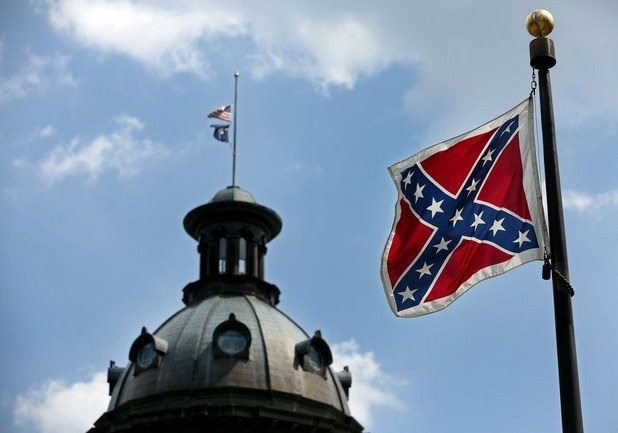
Wal-Mart, Sears, and Amazon announced today that they will no longer carry Confederate flag merchandise.  South Carolina Governor Nikki Haley also joined the support for removing the Confederate flag from the Capitol groups, switching her view on the subject from when she ran for re-election last year. The Confederate flag, which many view as a symbol of racism and white supremacy, was added to the state Capitol in 1962, in response to Civil Rights efforts in the state.

Removing the flag will require a two-thirds vote by the general assembly. Although their legislative session ends this week, Governor Haley announced that she will be using her authority to call them back into an emergency session to vote on the issue.

“My hope is that by removing a symbol that divides us, we can move forward as a state in harmony,” Governor Haley said.

“It’s past time to take down the Confederate flag, and it’s currently imperative that both parties come together and restore the Voting Rights Act of 1965 and stop all other voter suppression efforts and excessive gerrymandering aimed at suppressing the vote, especially of African Americans, and the vote of Latina/os, young people, and women.” said Eleanor Smeal, president of the Feminist Majority.

Smeal speaks of recent legislative efforts to make voting in South Carolina more difficult for some groups, including stricter voter identification laws, limits on early voting, and elimination of same-day voter registration. Women and people of color are the most affected by voter ID laws. For example North Carolina has strict identification requirements that require particular forms of government-issued photo IDs. According to the Brennan Center for Justice, however, 25 percent of eligible African American voters, and 16 percent of Latina/o voters do not have such identification. The issue is further compounded for women who have recently changed their last names, or whose names do not reflect that of their birth certificate.

The shooting that sparked a heightened debate about the Confederate flag took place last week in one of the oldest African American churches in South Carolina. The shooter, 21-year-old Dylann Roof, claims that he went to the church specifically to “shoot Black people,” and that he was intending to start a “race war.” He shot and killed nine African American churchgoers, including its pastor and state Senator Clementa Pinckney (age 41), Cynthia Hurd (age 54), Tywanza Sanders (age 26), Rev. Sharonda Coleman-Singleton (age 45), Myra Thompson (age 59), Ethel Lee Lance (age 70), Rev. Daniel Simmons (age 74), Rev. DePayne Middleton-Doctor (age 49) and Susie Jackson (the eldest at age 87).

In the wake of the Charleston shooting, every flag at the South Carolina Capitol has been flow at half-mast, with the exception of the Confederate flag.

Governor Haley hopes that the flag will be removed from the State Capitol grounds before the Fourth of July, saying “This flag, while an integral part of our past, does not represent the future of our great state.”

Media Resources: NBC News 6/22/15; CNN 6/23/15; 6/20/15; MSNBC 10/19/13; Ms Magazine Blog 6/22/15;

Senate Narrowly Approves of Vote for Fast Tracking the TPP

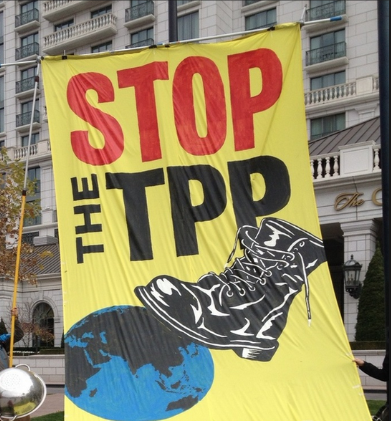
The Senate voted this morning to advance consideration of trade promotion authority, also known as “fast track” authority, for the Trans-Pacific Partnership (TPP), barely getting the 60 votes necessary to continue the bill.

via  NC Letter Carrier
via NC Letter Carrier

The cloture vote, which was needed in order to proceed with a vote on fast track authority for the TPP, was narrowly passed at 60-37. All Senate Republicans and 13 Senate Democrats voted in favor of the motion to proceed. Democrats voting in favor of fast track included Senators Ron Wyden (D-OR), Michael Bennet (D-CO), Maria Cantwell (D-WA), Tom Carper (D-DE), Chris Coons (D-DE), Dianne Feinstein (D-CA), Heidi Heitkamp (D-ND), Claire McCaskill (D-MO), Bill Nelson (D-FL), Tim Kaine (D-VA), Patty Murray (D-WA), Jeanne Shaheen (D-NH) and Mark Warner (D-VA).

The Senate now only needs a majority, or 50 votes, in order to pass fast track legislation.

The Senate approved fast-tracking the TPP in May as a package deal that included Trade Adjustment Assistance, a bill that provides assistance to workers who will lose their jobs because of the TPP. At the time, Senate Democrats would not agree to approve fast-track without the TAA.

Republican leaders in the House then decided to separate the two provisions, requiring members first vote on the TAA and then on fast-track, but both bills had to pass for fast-track to reach President Obama. House Democrats blocked TAA two weeks ago– a bill they would usually support– in order to stop fast-tracking of the TPP.

In addition, House Republicans have amended the customs bill, part of the larger trade package, to weaken anti-human trafficking measures in the fast track bill. Under an amendment offered by Rep. Paul Ryan (R-WI), the US may also be prevented from considering climate change during trade negotiations.

Over 2,000 organizations, including the Feminist Majority, released a joint letter  opposing fast tracking the TPP, representing labor, environmental, farming, civil rights, digital rights, human rights, public health, faith, student, consumer, and other concerns.

The Trans-Pacific Partnership, which has been negotiated in near-secrecy, has been heavily criticized by Senators Elizabeth Warren (D-MA) and Representative Rosa DeLauro (D-CT). Fast-tracking TPP would prevent lawmakers from addressing concerns in the agreement by offering amendments. It would also prevent Congress from having significant input into US trading partners. That is a big concern, especially since among the countries included in the TPP is oil-rich Brunei, a country that adopted a vicious new penal code last year that threatens the rights and lives of women, lesbians, and gay men.

The Feminist Majority released a petition asking people to urge their Senators and Representative to vote against Fast Track and oppose the TPP.

Media Resources: Coalition for a Prosperous America 6/23/15; Feminist Newswire 5/11/15; 7/9/14; Huffington Post 6/18/15; Citizens Trade Campaign 4/27/15;

Planned Parenthood Cleared to Apply for License in New Orleans

The Louisiana health department has allowed Planned Parenthood to apply for a license to provide abortion services in New Orleans, backtracking on a previous rule that barred the organization from opening a clinic in the city.

via Charlotte Cooper

In January, under the administration of Louisiana Governor Bobby Jindal, the Department of Health and Hospitals (DHH) issued a letter to Planned Parenthood Gulf Coast refusing to allow its new state of the art clinic in New Orleans to perform abortions on the legal “excuse” that it did not show a need for a new facility to perform abortions in Louisiana. In 2012, Jindal’s administration passed a state law requiring abortion clinics to show that there is need for another clinic before applying for a license. Planned Parenthood challenged this decision, and the Feminist Majority Foundation and New Orleans Abortion Fund released a petition demanding that the DHH recind the regulations.

In a letter released on Friday, it seems the DHH listened. It revoked the requirement that an outpatient abortion facility provide a “facility need review,” clearing the way for Planned Parenthood to open a clinic in Louisiana. The new clinic will be just one of five abortion clinics in the state of Louisiana. The DHH did not provide a reason for the change in regulation.

“Planned Parenthood is now one step closer to providing safe, legal abortion in Louisiana,” said Jewel Bush, a spokeswoman for Planned Parenthood Center for Choice, in a statement.

The new health center that Planned Parenthood intends to license will offer a wide array of health care services, including screenings for cervical cancer, breast cancer, and sexually transmitted diseases and- if its application to the state for a license is successful- abortion care.

Media Resources:  The State 1/16/2015; The New Orleans Advocate 6/22/15

The Fifth Circuit Has Put Texas Abortion Clinics in Crisis

The US Fifth Circuit Court of Appeals has refused to suspend a ruling upholding harmful anti-abortion provisions from June 9, despite an emergency request filed by women’s health care providers asking the Court to “preserve abortion access for all Texas women.”

via Steve Rhodes
via Steve Rhodes

The Texas Appeals Court previously stated that forcing a woman seeking abortion care to leave the state does not pose undue burden. The ruling from earlier this month also reverses a lower court’s order blocking Texas’ admitting privileges requirement except as applied to a single doctor.

Amy Hagstrom Miller, president and CEO of Whole Woman’s Health, said that the June 9 ruling “put a road full of unnecessary hurdles in front of every woman in Texas who has decided to end her pregnancy… For scores of Texas women, the repercussions of this ruling will be devastating.”

Indeed, an estimated 1.3 million women of reproductive age will now live more than 100 miles from the nearest abortion clinic. This provision has already forced approximately half of the state’s abortion clinics to close their doors over the past two years. The court claimed that this is not an undue burden on Texas women, despite only seven clinics in Texas currently meeting these standards. The decision means 13 clinics are facing imminent closure, leaving only 9 in the entire state of Texas.

The women’s health care providers will now submit an emergency application to the Supreme Court of the United States, requesting the Supreme Court justices stay the Appeals Court’s June 9 ruling. This would allow the clinics to stay open while the providers ask the Supreme Court to review the case.

“As the Fifth Circuit once again turns a blind eye to the devastating consequences of Texas’ clinic shutdown law, it is imperative that the Supreme Court step in,” said Nancy Northup, president and CEO of the Center for Reproductive Rights. “No woman should be forced to cross state lines or travel hundreds of miles for essential health care.”

Media Resources: Center for Reproductive Rights Press Release 6/19/15; 6/9/15; Whole Woman’s Health et. al., Appeals for the Fifth Circuit Request 6/10/15; SCOTUS Application 6/19/15

TPP “Fast Track” Headed Back to the Senate Again

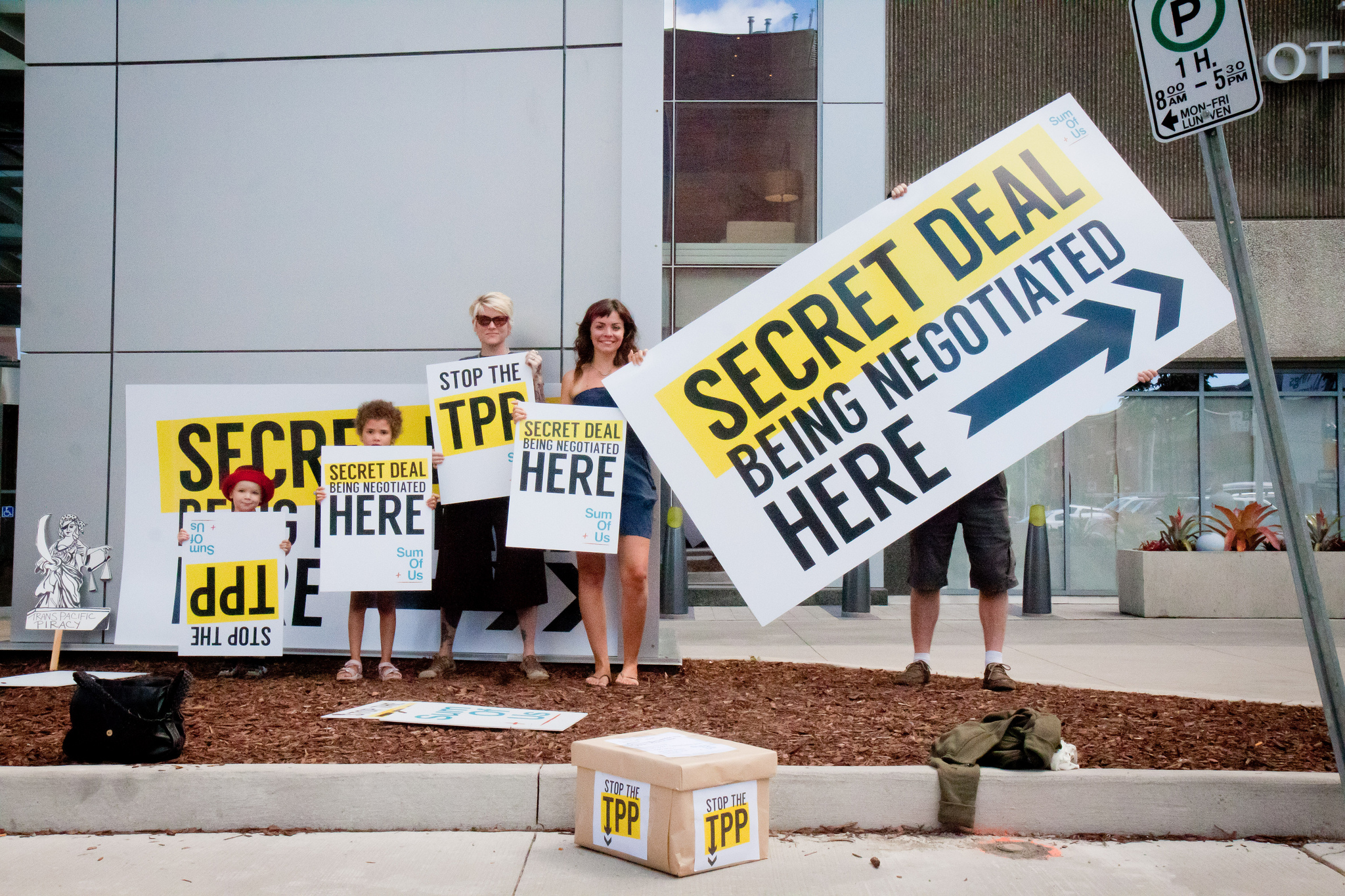
In what has become a procedural roller-coaster, the House voted 218 to 208 yesterday to pass Trade Promotion Authority for the Trans-Pacific Partnership (TPP). Trade Promotion Authority, also known as “fast-track,” will now go back to the Senate for a vote on  Tuesday to determine whether or not to move forward with the bill.

via Sum of Us
via Sum of Us

The Senate approved fast-tracking the TPP in May as a package deal, that included Trade Adjustment Assistance, a bill that provides assistance to workers who will lose their jobs because of the TPP. Senate Democrats would not agree to approve fast-track without the TAA.

Republican leaders in the House decided to separate the two provisions, requiring members first vote on the TAA and then on fast-track, but both bills had to pass for fast-track to reach President Obama. House Democrats blocked TAA on Friday– a bill they would usually support– in order to stop fast-tracking of the TPP. It is unclear as to how the Senate will vote on fast-track without the TAA.

Senator Ron Wyden (D-Oregon), who was one of the authors of the original trade package, explained to CNN that the minority of Democrats who supported the TPP have been called out for their support of fast-tracking. Fearing backlash from labor groups if they vote again for the TPA without the worker’s rights and assistance that they TAA offers, Senate Democrats may be more hesitant to vote for fast-track this time around.

In addition, House Republicans have amended the customs bill, part of the larger trade package, to weaken anti-human trafficking measures in the fast track bill. Under an amendment offered by Rep. Paul Ryan (R-WI), the US may also be prevented from considering climate change during trade negotiations.

“We’re really nervous about a provision that binds the hands of negotiators and prevents them from doing anything on climate change,” said Karthik Ganapathy, a spokesperson for the environmental organization 350.org.

Over 2,000 organizations, including the Feminist Majority, released a joint letter  opposing fast tracking the TPP, representing labor, environmental, farming, civil rights, digital rights, human rights, public health, faith, student, consumer, and other concerns.

The Trans-Pacific Partnership, which has been negotiated in near-secrecy, has been heavily criticized by Senators Elizabeth Warren (D-MA) and Representative Rosa DeLauro (D-CT). Fast-tracking TPP would prevent lawmakers from addressing concerns in the agreement by offering amendments. It would also prevent Congress from having significant input into US trading partners. That is a big concern, especially since among the countries included in the TPP is oil-rich Brunei, a country that adopted a vicious new penal code last year that threatens the rights and lives of women, lesbians, and gay men.

The Feminist Majority released a petition asking people to urge their Senators and Representative to vote against Fast Track and oppose the TPP.

Media Resources: Feminist Newswire 5/11/15; 7/9/14; CNN 6/18/15; Citizens Trade Campaign 4/27/15; Think Progress 6/11/15

Adults Shout Racist Insults at Girl Scouts Protesting Animal Abuse

A group of young Girl Scouts who were protesting animal abuse received threatening racial insults by adults attending a public Cecil County meeting in Maryland last month.

via Raw Story
via Raw Story

The Girl Scouts had become concerned with animal rights after reading about poor conditions and mistreatment of pets in local shelters. The girls then attended an Animal Care and Control Oversight Commission meeting, bringing homemade signs and speaking up during public comment.

“I felt really bad for the animals because that wasn’t a really good home for them,” said 10 year old Amayah Spurlock.

After the meeting, adults who reportedly were supporters of the animal shelter in question, began harassing the young girls, many of whom are African American, with comments like “go back to Baltimore, where you belong.”

“They were calling us animals and stuff,” 13 year old Arianna Spurlock told ABC News.

In a video recording of the verbal altercation, troop leaders can be heard asking the crowd not to make racial comments. “Saying that they belong in Baltimore because they’re black, that is wrong. Please don’t say that okay?” one man said.

The Girl Scouts were left shaken and confused by the incident. “As kids we always were taught that if you have nothing nice to say, don’t say it at all,” said 11 year old Lily Talley, adding “they shouldn’t have done that.”

Cecil County executive Tari Moore has since reached out to the troop and apologized to them, denouncing the treatment of the Scouts, and offering to meet with them to discuss what happened.

Media Resources: ABC WMAR 6/16/15; Raw Story News 6/17/15

The Senate Blocked the Military Justice Improvement Act Again

The Military Justice Improvement Act (MJIA), championed by Senator Kirsten Gilibrand (D-NY), was once again blocked by the Senate in a vote yesterday.

via Shutterstock
via Shutterstock

Gilibrand filed the MJIA as an amendment to the FY16 National Defense Authorization Act (NDAA). The bipartisan amendment, which would move the decision of whether to prosecute serious crimes in the military including sexual assault, from the chain-of-command and give responsibility to independent military prosecutors, was introduced with 25 cosponsors, including 6 Republicans.

Although the MJIA received a majority of votes, it fell short of the 60 votes needed to overcome a filibuster. This is the second year in a row the Senate has blocked this legislation.

Sexual assault in the military is a serious problem that, although the Department of Defense has recognized and promised reform, DOD data show that little has changed in both the number of assaults per year and the retaliation against those who report assault. These data show that the number of military members who experience sexual assault has remained largely the same, and more troubling, that the retaliation rate against those who do report has increased.

Senator Claire McCaskill (D-MO) is leading Senate opposition to Gilibrand’s bill, aiming to keep procedural responses to sexual assault within the military. McCaskill cites a slight drop in the number of assault and the small rise in the number of reported incidents as proof that military justice reforms are showing progress.

Senator Gilibrand and the 49 that voted with her yesterday are not convinced, and Gilibrand says that she will not give up. In a statement, she wrote:

“While I’m incredibly disappointed by the outcome, it comes with a silver lining: We counted five new Senators among our “yes” votes- growing our bipartisan coalition and making clear to the military that we will not quit until our work is done.”

Media Resources: Feminist Newswire 12/12/14; Protectourdefenders.com DoD Fact Sheet 2014; Military Times 6/16/15;

BREAKING: Loretta Lynch Takes Oath of Office

Attorney General Loretta Lynch took the oath of office today, becoming the first African American woman to serve in the role. Lynch was sworn in by Supreme Court Justice Sotomayor using Frederick Douglass’ bible at the investiture ceremony, which gives her official rank United States Attorney General.

lev radin / Shutterstock.com

Lynch was nominated for the post in November by President Obama, and then faced an unprecedented five month delay as Senate Republicans refused to bring her nomination up for a vote.  The amount of time she waited to be confirmed totals the wait time of the last seven attorney general nominees combined.

During the ceremony this morning, Lynch thanked her father and mother, both of whom were on the stage with Lynch, President Obama, and Justice Sotomayor, for overcoming Jim Crow segregation. Lynch referenced challenges facing the Department of Justice, particularly in regards to police violence against African Americans in the United States.

“As we confront the very nature of our citizens’ relationship with those of us entrusted to protect and to serve–these are indeed challenging issues and challenging times,” Lynch said.

President Obama remarked that as a child, Lynch would attend court proceedings with her father in Durham, North Carolina, and see first-hand the effects of segregation in the South. Obama called Lynch’s parents “her biggest cheerleaders.”

“Her intelligence, her judgment, and her grace under fire have earned the trust and admiration of those she works with and those she serves,” President Obama continued.

As of this month, there are 330 federal Obama judgeship nominees that have been confirmed. A few dozen are still pending, awaiting Senate action. Obama is also responsible for appointing the most diverse group of judges in history. As of January this year, 42 percent of Obama nominees for the federal bench are women, 19 percent are African-American, 11 percent are Hispanic, and 11 percent are openly gay, lesbian, or bisexual men or women. At the same time, 9 of the 13 federal Circuit courts of appeals are composed of a majority democratic appointment. Until recently, 10 out of 13 had a majority of appointments by Republican presidents.

Media Resources: Feminist Newswire 4/23/15; 12/18/14; Washington Post 6/17/15; C-SPAN 6/17/15;

Supreme Court Refuses to Hear North Carolina Forced Ultrasound Law

The Supreme Court refused to review a North Carolina mandatory ultrasound law this week, permanently blocking what many feel is the most extreme forced ultrasound law in the nation.

via  Shutterstock
via Shutterstock

The North Carolina law, which was passed in 2011, requires a physician perform an ultrasound on a patient seeking an abortion at least four house, and no more than 72 hours before the abortion. Also under the law, the physician must display imaging from the ultrasound and describe it to the patient, even if she objects, and even if she covers her eyes and ears, which the law permits.

This law was preliminarily blocked in October 2011 after several North Carolina physicians, medical practices, and organizations including the American Civil Liberties Untion (ALCU) and the Center for Reproductive Rights, filed a lawsuit. A federal court then struck down the law in 2014, when U.S. District Court Judge Catherine C. Eagles ruled that the “speech-and-display” provision of the law violated the First Amendment, and acknowledging that the ultrasound law was designed to persuade women not to obtain abortions. In December of last year, the Fourth Circuit Court of Appeals unanimously upheld this decision.

The Fourth Circuit Court wrote that the law violates doctors’ First Amendment right, and threatens patient well-being, writing:

“[The patient] must endure the embarrassing spectacle of averting her eyes and covering her ears while her physician–a person to whom she should be encouraged to listen–recites information to her. We can perceive no benefit to state interests from walling off patients and physicians in a manner antithetical to the very communication that lies at the heart of the informed consent process.”

The Supreme Court gave no explanation for refusing to review the law, although Justice Anotonin Scalia dissented. He did not file an explanation on the grounds for his dissent.

“We are pleased that the Supreme Court decided not to review the decision striking down this law. Doctors shouldn’t be forced to humiliate a woman and disregard their best medical judgment in order to provide an abortion,” said Jennifer Dalven, director of the Reproductive Freedom Project for the ACLU. “The purpose of this law was crystal clear: to shame a woman who has decided to have an abortion out of getting one.”

“Women are fully capable of making thoughtful decisions about their families, future, and health without interference from politicians who presume to know better. And all doctors must be free to give patients their best medical judgment, free from talking points dictated by lawmakers advancing an agenda,” said Nancy Northup, president and CEO of the Center for Reproductive Rights.

Media Resources: RH Reality Check HB 854; 12/22/14; Reproductive Rights Press Release 10/25/11; 12/22/14; Feminist Newswire 1/21/14;

China’s Maternal Mortality Rate Has Decreased Dramatically

The National Health and Family Planning Commission released a report this month showing that China’s maternal death rate has dropped by over seventy-five percent in the past twenty-five years.

via Shutterstock
via Shutterstock

China’s maternal mortality rate dropped from 23.2 per 100,000 births in 2014 to 21.7 per 100,000 births. The maternal mortality rate in 1990 was 88.8 per 100,000 births, which means there has been a 75.6%-percent drop in the last twenty-five years.

The National Health and Family Planning Commission attributed China’s progress to more social programs that gave allowances to rural Chinese women to give birth in hospitals and equitized medical care. Chinese health professionals also give free pre-pregnancy check-ups and care to reduce the spread.

“[The lowered mortality rate is] the result of strong political will and willingness to invest in healthcare for children, which is a tremendous achievement given the size of the country and population,” said Pia MacRae, country director for Save the Children in China. MacRae recognizes, however, that China still needs to take further steps in addressing inequalities in children’s health due to uneven development across the country. She says there is still much to be done on “lasting improvements in children’s health, in particular supporting the training and supervision of frontline health workers in remote areas of rural China.”

According to the China National Program for Women’s Development (2011-2020), China wants to continue the decrease the number of maternal deaths to 20 deaths per 100,000. With this new report, China officially meets their Millennium Development Goals, as designated by the United Nations. Members of the UN were to cut their maternal mortality by seventy-five percent by 2015.

Media Resources: Women of China 3/23/2015; National Health and Family Planning Commission of the PRC 2015; China Daily 5/7/14; Women of China 8/11/2011

New Poll Reaffirms That 1 in 5 College Women are Sexually Assaulted

A recently released Washington Post-Kaiser Family Foundation poll reaffirmed the commonly-cited statistic that one in five women, or twenty percent, who attended college in the past four years say they were sexually assaulted. The data also show that students are divided about the definition of consent, that victims of sexual assault suffer from trauma, and that a small minority of victims report the crime.

via Eric Parker
via Eric Parker

The Post-Kaiser poll defined sexual assault to include five types of unwanted contact: oral sex, vaginal sexual intercourse, anal sex, sexual penetration with a finger or object, and forced touching of a sexual nature. In all, 25 percent of women and 7 percent of men said they experienced one or more of the types of unwanted contact listed while in college. And while most of the victims told someone they trusted about the incident, only 11 percent reported the crime to police of college authorities.

The findings of these data reflect the findings of a 2005 congressionally-mandated report by the National Institute of Justice (NIJ), underscoring the lack of progress in lowering the 1 in 5 statistic of college sexual assault over the past decade. The NIJ report, which studied random samples from almost 2,500 schools including 2 and 4-year institutions, also found that twenty percent of college women experienced sexual assault, while only 12 percent reported the crime.

The effects of sexual assault manifested in different ways, according to victims. Victims reported having trouble concentrating, resulting in poor grades, panic attacks, and other post-traumatic stress symptoms like rage or depression. Respondents in the poll also gave mixed responses on the topic of consent: In instances of verbal consent, where a “yes” or “no” had been obtained, students were clear on what constituted as consent; responses became much more muddled, however, when asked about consent through non-verbal means such as body language. For example, when asked if actions like a nod, undressing, or getting a condom established consent, 40 percent said it did while 40 percent said it did not. The poll found that men were much more likely to infer consent from sexual foreplay than women.

Responses also varied along gender lines in perceptions of the amount of sexual assault victims. 58 percent of men polled think the number of women assaulted at their school is less than one in five, while an equal 58 percent of women think the number of women assaulted on their campus is one in five or greater. The poll also suggested that campus characteristics- such as size, private versus public, religious affiliation, or reputation for being a “party school”- were non-factors, with the exception of the presence of fraternities and sororities, which was linked to an increased likelihood that women were assaulted.

The poll was conducted from January to March of this year, and surveyed a random national sample of 1,056 women and men between the ages of 17 and 26 who were undergraduates at four-year colleges or had been at some point since 2011. It spanned more than 500 colleges and universities of varying sizes in every state and the District of Columbia.

Media Resources: Washington Post 6/14/15; NIJ Publication 2005; Ms. Blog 2/18/14

New Nigerian Law Forbids Bans Genital Mutilation

Last month outgoing Nigerian President Goodluck Jonathan signed a law formally banning female genital mutilation (FGM). Despite the progressive action, many say that it will take years for FGM practices to cease due its cultural pervasiveness.

via Shutterstock
via Shutterstock

The United Nations defines FGM as any “harmful procedures to the female genitalia for non-medical purposes, for example: pricking, piercing, incising, scraping and cauterization.” The practice of FGM is often done without anaesthesia, medical professionals or proper equipment. An incomplete list of potential effects of the procedure includes infection, infertility, heavy bleeding, cysts, complicated childbirth, and chronic pain.

“With such a huge population, Nigeria’s vote in favour of women and girls is hugely important,” FGM programme manager of Equality Now Mary Wandia told the Guardian. “We hope, too, that the other African countries which have yet to ban FGM – including Liberia, Sudan and Mali, among others – do so immediately to give all girls a basic level of protection.”

According to a 2013 UNICEF report, about 125 million girls and women in the world undergo FGM procedures. FGM is most common in Africa, where it is known to be practiced in 29 countries. A handful of Asian, Middle Eastern, and South American countries regularly practice FGM, and it can be found in some western countries including Canada, Australia, and the United States among diaspora populations.

“It is crucial that we scale up efforts to change traditional cultural views that underpin violence against women,” Stella Mukasa, Director of Gender, Violence and Rights at the International Center for Research on Women wrote on the topic of FGM. “Doing so involves laws and policies, as well as community level engagement and programs that work to empower girls directly.”

Media Resources: World Health Organization (WHO) 2008; United Nations Children’s Fund (UNICEF) 07/13; The Guardian 05/29/15; Equality Now; The Guardian 05/20/15

An Appeals Court Just Upheld the Law Closing Abortion Clinics in Texas

Texas’ Fifth Circuit Court of Appeals upheld harmful anti-abortion provisions this week stating that forcing a woman seeking abortion care to leave the state does not pose undue burden. The decision also leaves 13 clinics facing imminent closure.

via Do512
via Do512

The decision allows the state to uphold 2013 bill HB 2, requiring that every reproductive health care facility offering abortion services meet the costly hospital-like standards for buildings known as ambulatory surgical centers (ASC). It gives Texas clinics twenty two days to achieve this multi-million dollar requirement.

Amy Hagstrom Miller, president and CEO of Whole Woman’s Health, said that the ruling “put a road full of unnecessary hurdles in front of every woman in Texas who has decided to end her pregnancy.” Indeed, an estimated 1.3 million women of reproductive age will now live more than 100 miles from the nearest abortion clinic.

“For scores of Texas women, the repercussions of this ruling will be devastating,” Miller added.

The ruling also reverses the lower court’s order blocking Texas’s admitting privileges requirement except as applied to a single doctor.  This provision has already forced approximately half the state’s abortion clinics to close their doors over the past two years. The court claimed that this is not an undue burden on Texas women, despite only seven clinics in Texas currently meeting these standards.

The seven clinics that comply are in Texas’ major cities: Austin, Dallas, Fort Worth, Houston, and San Antonio. Only two clinics (in McAllen and El Paso) serve the Rio Grande Valley area. These two clinics will be closed due to non-compliance with ASC standards. In El Paso, women will face a round-trip of over a thousand miles to obtain abortion care, traveling to neighboring New Mexico to access their constitutional right to safe and legal abortion.

“Not since before Roe v. Wade has a law or court decision had the potential to devastate access to reproductive health care on such a sweeping scale,” said Nancy Northup, president and CEO of the Center for Reproductive Rights.

“We now look to the Justices to stop the sham laws that are shutting clinics down and placing countless women at risk of serious harm,” Northup said, urging the Supreme Court to take up the case.

This ruling will especially impact low-income women and single mothers. It adds significant burdens such as coming up with the cost and means of travel, taking additional time off work, and often finding lodging, due to Texas’s 24-hour mandatory waiting period.

Media Resources: NY Times 7/18/13; Center for Reproductive Rights Press Release 6/9/15; Feminist Newswire 5/9/13;

UPDATE: Murder Charges Dropped for Georgia Woman Taking Abortion Pills

Dougherty County District Attorney Greg Edwards announced yesterday that murder charges against a Georgia woman who ended her pregnancy using a prescription abortion pill she ordered online have been dropped.

via Beth
via Beth

According to Dougherty County authorities, Kenlissa Jones was arrested on Saturday after a call from hospital social worker. The social worker reported to police that Jones had gone into labor after taking four abortion pills she had purchased over the Internet. Jones then delivered the fetus, which did not survive. Following her arrest, Jones was taken to the Dougherty County jail, charged with murder and possession of a dangerous drug, and held without bond.

The original murder charge was unprecedented in Georgia, a state that has specific laws protecting women from legal prosecution for acts committed against unborn fetuses.

“I dismissed that malice murder warrant after thorough legal research by myself and my staff led to the conclusion that Georgia law presently does not permit prosecution of Ms. Jones for any alleged acts relating to the end of her pregnancy,” Edwards said yesterday in a statement. “Although third parties could be criminally prosecuted for their actions relating to an illegal abortion, as the law currently stands in Georgia, criminal prosecution of a pregnant woman for her own actions against her unborn child does not seem permitted.”

The National Advocates for Pregnant Women (NAPW) applauded Edwards for dropping the charges, and is calling on prosecutors to drop all charges. NAPW says that Jones “should never have been arrested in the first place.”

“A person’s health decisions during pregnancy — including the decision to end a pregnancy — should never be the subject of criminal investigation, arrest, prosecution, or public disclosure of medical information without consent,” NAPW said in their statement. “It is especially troubling to see a young black mother of a toddler charged with a crime that carries the death penalty.”

Edwards told a local news station that Jones’ case will likely go before a grand jury.

Media Resources: Feminist Newswire 6/10/15; Washington Post 6/10/15; NAPW Statement 6/10/15

Police Need to be Held Accountable for Violence Against Black Women and Girls

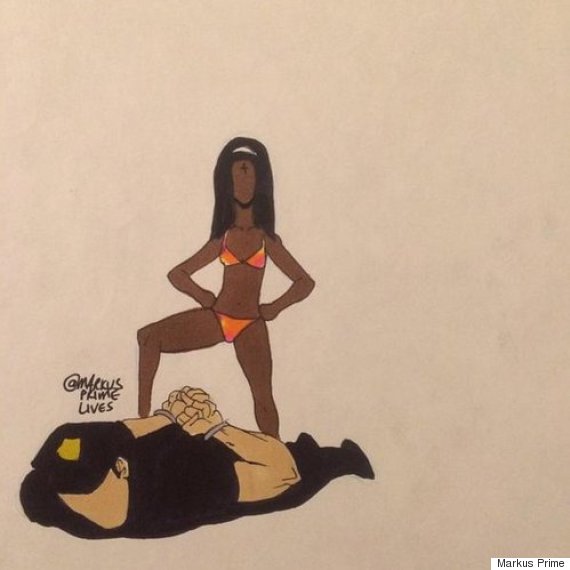
McKinney, Texas police officer Eric Casebolt’s violent attack on Dajerria Becton, a 15-year-old African American girl at a neighborhood pool party, which was captured on video, went immediately viral over the weekend.

via Markus Prime
via Markus Prime

There is little data on police violence toward African American women and girls, which, according to the African American Policy Forum (AAPF) “There is a paucity of data in cases of police violence against Black women, which perpetuates the myth that they are not impacted by this problem.”  Yet we know that 12 African American women were reported killed by police in 2014, and this is only what is currently known. There has been no systematic collection of these data.

AAPF, under the leadership of its Director and Founder Kimberlé Crenshaw, a well-recognized UCLA and Columbia University Professor who developed the theory of intersectionality, has created a Black Women Police Violence Database, to which it is inviting the public to add their stories. Crenshaw and the AAPF released a report last month called “#SayHerName: Resisting Police Brutality Against Black Women.” The report highlights stories of Black women who have been killed by police, and studies forms of police brutality, such as sexual assault, that are often disproportionately experienced by women.

By Tuesday, after of the publicity caused by the video, which was viewed more than 6 million times over the weekend, Casebolt resigned. The McKinney Police Chief Greg Conley called Casebolt’s behavior “indefensible” and “out of control.” In a statement, Conley said, “Our policies, our training, our practice do not support his actions.” No decision has been made if Casebolt will be prosecuted.

“Ex-officer Casebolt must face legal action for his violent, reckless action against Becton. Until more police officers are held accountable, this out of control violent behavior disproportionately against African Americans –women and girls as well as boys and men – will continue,” said Eleanor Smeal, President of the Feminist Majority Foundation.

“So far the public debate about police violence has centered on body cameras and training. But a central element has been neglected: police department recruiting and representation of people of color and women both on police forces and in police command positions,” Smeal continued.

Of the 170 sworn officers in McKinney’s police department, 141 or 83 percent were white and 88 percent were male, according to 2013 data (the most recent that could be located). Only 16 officers or 9 percent were identified as white females. McKinney’s police department has only 1 African American woman. Four officers, or 2 percent of the force, were Latinas; 9 or 5 percent were African American males; and 16 or 9 percent were Latinos. Meanwhile the population of McKinney is 26.5 percent black, 17 percent Latina/o, and 44.6 percent white.

“The under-representation of women and people of color is a serious problem in one police department after another in our nation,” said Smeal, adding “For decades, the FMF National Center for Women and Policing has reported that the underrepresentation of women in policing and the lack of community policing is contributing to police brutality. Our nation must not only change the culture, but also the makeup of its police forces by gender, race, and ethnicity,” concluded Smeal.

Georgia Woman Charged with Murder for Taking Abortion Pills

A 23-year-old Georgia woman was arrested yesterday and charged with malice murder and possession of a dangerous drug for attempting an at-home abortion using the drug misoprostol. The charges, which are unprecedented in the state of Georgia, have left groups on all sides of the abortion debate stunned.

via Shutterstock
via Shutterstock

According to Dougherty County authorities, Kenlissa Jones was arrested on Saturday after a call from hospital social worker. The social worker reported to police that Jones had gone into labor after taking four misoprostol pills she had purchased over the Internet. Jones then delivered the fetus, which did not survive. Following her arrest, Jones was taken to the Dougherty County jail and held without bond.

“We don’t believe there is any law in Georgia that allows for the arrest of a woman for the outcome of her pregnancy,” said Lynn Paltrow, attorney and Executive Director for the National Advocates for Pregnant Women (NAPW).

NAPW released a statement condemning the arrest of Jones, saying that not only is there no law in Georgia that allows for the arrest of women based on the outcome of their pregnancies, such an arrest is actually at odds with existing state law.

“There are no criminal statutes in Georgia that permit punishment of women based on pregnancy or pregnancy outcomes – and the constitution, as well as human rights principles, prohibit such punitive laws directed to pregnant women,” the statement reads.

Indeed, Genevieve Wilson, a director of the anti-abortion group Georgia Right to Life, says she was “very surprised by the arrest,” and that “I’m thinking that perhaps whoever made the arrest may not have known what the laws really are.”

Paltrow and other abortion rights activists are concerned with the increasing trend of criminalizing pregnant women, as in the case of an Indiana woman sentenced to 20 years in prison for charges of feticide after suffering a miscarriage. Patel was convicted of both terminating her pregnancy on purpose and abandoning a live, delivered fetus. However, there is no evidence to support the idea that she abandoned a living fetus – there was no evidence she took an abortion-inducing pill, and no proof the fetus was alive once it existed her body. Patel has remained consistent that what happened was that she suffered a miscarriage, and has since filed an appeal.

“People who seek medical attention for any aspect of pregnancy – including prenatal care, labor and delivery, miscarriage, stillbirth, or abortion – should not fear arrest. There is no role for police or prosecutors in reproductive health,” the NAPW states.

Media Resources: NAPW Statement 6/9/15; HuffingtonPost 6/9/15; Feminist Newswire 4/29/15; 4/2/15;

Virginia’s Abortion Clinics Renew Licenses Amidst Regulation Dispute

The Virginia Board of Health announced last week that all 18 abortion clinics in the state have renewed their licenses, despite anti-abortion efforts to place limitations on Virginia clinics.

this-clinic-stays-open
via Urgent Action Fund

Virginia has issued a number of Targeted Regulation of Abortion Providers (TRAP) laws and regulations over the past few years, causing 13 of the state’s 18 abortion clinics to fall under regulating violations. The Board of Health announced last week that all of the 18 clinics would nevertheless receive their licenses, as the violations did not have to do with patients’ health.

During the 2013-2014 regulation period, Virginia inspectors conducted strict reviews of the state’s abortion clinics, giving out demerits for minor administrative deficiencies, like not collecting or filing paperwork properly. As the Editorial Board of the Washington Post pointed out, “the violations that officials did find at the clinics were much less severe than those identified in the state’s nursing homes.”

Virginia Governor Terry McAuliffe ordered the state Board of Health to review TRAP laws last year, calling them “extreme and punitive.” Virginia Commissioner of Health Dr. Marissa Levine, upon reviewing the laws, explained that she did not feel she had authority to repeal the law, and instead recommended amendments. She called the clinic rules “arbitrary” and “marked by political interference.” In December of last year, the Board voted 13-2 to begin to revise several of the more onerous abortion clinic regulations.

Tarina Kaine, Executive Director of NARAL-Pro Choice Virginia, wrote that it was clear that abortion clinics were being disproportionately targeted by these new regulations. “Never in the history of Virginia has an existing facility – be it a hospital, doctor’s office, restaurant, or hotel – been forced to retroactively comply with new construction regulations,” Kaine wrote.

Proponents of the regulations argue that abortion clinics pose threats to patients at such a level that they should be regulated like hospitals, requiring costly changes to the buildings’ structures like creating wider hallways. The evidence, however, shows that in the over 50,000 abortions in two years in Virginia, there has not a single instance of physical harm to a patient.

Media Resources: National Partnership 6/8/15; 12/5/14; Feminist Newswire 5/13/14; 10/2/14; Washington Post 6/6/15; PilotOnline 6/7/15;

Rana Plaza Victims Will Receive Compensation

After a two-year campaign for compensation for the victims of the Rana Plaza factory collapse in Bangladesh, the International Labour Organization has succeeded in securing $30 million in compensation.

via Solidarity Center

In April 2013 a multi-story building in Bangladesh that housed five garment factories and a shopping center collapsed, killing at least 1,127 workers and injuring another 2,500. Women made up the majority of the workers in the building, providing low-cost labor to factories producing clothing for Western brands, including those sold in the US, Canada, and Europe. Bangladeshi officials have since charged 41 people with murder for failing to listen to inspectors orders to close the building due to the discovery of cracks in the façade. Among those charged was Sohel Rana, the owner of Rana Plaza, who was arrested after the collapse attempting to flee the country.

In 2014 the Rana Plaza Coordination Committee calculated that they would need $30 million to pay the 5,000 claimants in the tragedy. The International Labour Organization set up the Rana Plaza Fund, which met the goal of $30 million yesterday after an anonymous donor filled the remaining $2.4 million gap.

Since Bangladesh does not have a national workplace injury compensation program, worker’s rights activists both locally and internationally are calling on apparel brands and retailers like Gap, H&M, The Children’s Place, and Walmart, who sold clothes produced at Rana Plaza, to pay compensation to the injured survivors and the families of the deceased. Over the two-year campaign, worker’s rights groups and labor unions held more than a hundred store actions and demonstrations at corporate headquarters.

Media Resources: Feminist Newswire 6/1/15; BBC News 6/1/15;

>