Secretary of Defense Ash Carter announced this week that the Department of Defense (DOD) will begin the process of lifting the ban on transgender military service members, allowing transgender people to openly serve in the military.
In a statement Carter called the current ban on transgender service members “outdated,” writing, that throughout wars and conflict “transgender men and women in uniform have been there with us, even as they often had to serve in silence alongside their fellow comrades in arms.”
Although transgender people are banned from military service, research shows that approximately 150,000 transgender people have served in the US armed forces, with 8,800 transgender individuals currently on active duty and another 6,700 transgender individuals serving in the Guard or Reserve forces. These folks often have to keep their gender identity secret, or else risk being discharged.
Carter says the DOD issued directives in order to integrate transgender service members, the first of which includes creating a six month group study “the policy and readiness implications of welcoming transgender persons to serve openly.”
“We welcome and applaud the announcement by Secretary Carter that the military will at last conduct a comprehensive review of the outdated ban that has for far too long discriminated against qualified transgender Americans who simply want to serve their country,” said Chad Griffin, President of the HRC. “Transgender Americans have every right to serve their country openly and honestly, and their sense of patriotism and duty is no less than any other service member’s,” Griffin continued.
According to RH Reality Check, openly transgender people will not be able to join the military during the six-month review period, and decisions on whether to discharge individuals who are already serving will be referred higher up the chain of command.
Media Resources: Defense.gov Press Release 7/13/15; Williams Institute Research May 2014; RH Reality Check 7/15/15;
The agreement follows a Title IX complaint that the schools were out of compliance with Title IX of the Education Amendments of 1972, which prohibit discrimination on the basis of sex in all federally funded education.
The National Women’s Law Center filed this complaint in 2010 with the Department of Education’s Office for Civil Rights (OCR), alleging that the Chicago district did not equally accommodate the athletic interests and abilities of both girls and boys, and maintained that girls did not have equal opportunities to participate in athletics. A subsequent OCR investigation showed significant disparities in opportunities to play sports in the district’s 98 high schools. The OCR estimated that 6,200 additional spots on teams are needed to level the playing field for female students.
The agreement for resolving the OCR complaint is based on a three-part test of compliance. If the schools cannot show they provide equal opportunities for girls and boys using any part of the test, they need to make the necessary adjustments, possibly adding new athletic teams or new levels to existing teams. Additionally, the district hired a Title IX Sports Compliance Coordinator to work with the Office for Civil Rights to ensure implementation of these corrective measures.
“It’s time to level the playing field and give girls the athletic opportunities they deserve,” said Fatima Goss Graves, Vice President for Education and Employment for the National Women’s Law Center. “The Center’s findings and OCR’s investigation underscore the urgency of treating girls fairly and putting these schools on the path toward compliance with Title IX.”
Research clearly shows that athletics have a positive effect on youth, especially girls. Girls who play sports are less likely to become pregnant as teens, experience depression or eating disorders, and be diagnosed with some major illnesses such as breast cancer. Similarly, girls who play sports in school are more likely to develop positive relationships with their bodies, experience higher self-esteem, and perform better in school.
Media Resources: National Women’s Law Center Press Release 7/10/15; NWLC Complaint 2010; OCR Letter 7/9/15; Women’s Sports Foundation; Feminist.org Education Equity page;
A bipartisan majority in the Senate Appropriations Committee approved an amendment that repeals the anti-abortion “Global Gag Rule” and restores $600 million in funding for international family planning and reproductive health services. Republican Senator Mark Kirk (IL) and GOP Senators Susan Collins (R-ME), and Lisa Murkowski (R-AK) joined Senate Democrats in passing the amendment.
GOP Senators Murkowski and Collins join Senate Dems to Block Global Gag Rule. Image via Getty Images
The amendment, proposed by Sen. Jeanne Shaheen (D-NH), was added to the 2016 State and Foreign Operations Appropriations bill and passed by a vote of 17-13.
The Global Gag Rule bans US funding for family planning programs in developing countries that advocate for or provide information to women on a full range of options, including abortion, even if organizations use their own funds to do so. President Reagan first implemented the Global Gag rule through an executive order. It was later rescinded by President Clinton and then reinstated by President Bush. President Obama has since rescinded it, but the changing nature of the rule makes organizations afraid to accept U.S. assistance. Under the Global Gag Rule, abortion rates increased and many clinics were forced to close or reduce their services.
“We thank Senators Shaheen, Leahy and their bipartisan allies on the Appropriations Committee for putting women’s health over politics and rejecting anti-women’s health provisions in the funding bill,” said Cecile Richards, the president of the Planned Parenthood Action Fund. “The United States should redouble efforts to empower women and girls throughout the world, not stand in the way. That means investing more, not less, in women’s health, making women and girls a top priority in foreign assistance, eliminating gender-based violence, and incorporating gender equity across the board in policymaking and international development.”
The United States is the biggest donor to family planning programs in developing countries. The US’s current family planning program helps 28 million women receive contraceptive services, which helps avert 6 million unintended pregnancies and more than 12,000 maternal deaths annually.
“An estimated 225 million women in developing countries are unable to access family planning services,” said Senator Shaheen. “Providing greater access to family planning and reproductive health services improves the health of mothers and children, empowers women to make their own choices about how to grow their families, and is a smart investment that helps reduce poverty.”
While the Senate version of the appropriations bill no longer has restrictions on family planning services, the House version, which was passed in the House Committee last month, contains proposals to cut international family planning assistance by $149 million (25 percent) and reinstate the Global Gag Rule. As a result of this bill, 79 organizations, including the Feminist Majority, have since signed an open statement to Congress, calling for a repeal of the Global Gag Rule.
Media Resources: The Hill 7/9/15; Politico 7/9/15; Planned Parenthood Action 6/15, 7/9/15; Feminist Newswire 10/3/11; The New York Times 10/19/12; Guttmacher Institute 7/8/15; Senator Shaheen Press Release 7/9/15
A study conducted by researchers from the University of Pennsylvania and published in Health Affairs found that after the ACA mandate went into effect, birth control users have saved an average of $255 every year and IUD users have saved $248. Spending on implant devices has dropped to $91, a 72 percent decrease, and the cost of emergency contraceptives has declined by over 90 percent. Before the ACA, women were spending about 44 percent of their annual health expenditures on birth control, but after the mandate, that number has been reduced to 22 percent. At this rate, consumer spending on the pill alone could drop by almost $1.5 billion annually.
While the study was not able to definitively prove that the law was the cause of these falling expenditures, experts say that the timing and magnitude of the decline suggest that it was. These results are also consistent with smaller studies that have found similar results. “I find this study persuasive and consistent with what other studies are finding,” said Alina Salganicoff, the director of women’s health policy at the Kaiser Family Foundation. “I think we’re seeing a clear pattern in the research.”
Under the ACA health insurance providers must cover preventive health services, such as birth control, without charging co-pays, deductibles or co-insurance. At least one version of all 18 federally approved birth control methods, including IUDs, the patch, pill, shots or injections, vaginal contraceptive rings, and some long-term options such as surgical sterilization or implant, must be available to women.
Costs have been a huge barrier to access to birth control, leading to an increase in the number of unintended pregnancies. About 3.3 million pregnancies each year in the United States are unintended, and, according to the Brookings Institution, poor women in the United States are five times as likely as affluent women to have unintended births.
“We have no doubt that the cost makes a difference,” said Diana Zuckerman, the president of the National Center for Health Research in Washington. “When you have free contraception, it’s going to affect pregnancy and abortion as well because money matters.”
Despite these positive findings, many women still do not have access to affordable birth control under the ACA. The National Women’s Law Center found that many insurance companies have failed to comply with the law. The ACA also does not cover all versions of birth control and many women still have to pay for contraception if their plans predate the ACA.
Media Resources: ThinkProgress 7/8/15; TIME 7/7/15; Feminist Newswire 6/12/14, 5/12/15; Brookings Institute 2/15; New York Times 7/7/15; National Women’s Law Center 4/30/15
A new study has found that the majority of Black men and women believe in a woman’s right to choose and want women to have access to abortion care and contraception. These attitudes are broadly shared across age, gender, income, political ideology and religion.
85 percent of those who participated in the study, conducted by In Our Own Voice: National Black Women’s Reproductive Justice Agenda, believe that Black women should be trusted to make their own reproductive choices. 71 percent believe abortion should be available in their communities. 86 percent see contraception as part of a woman’s basic health care, ad 94 percent want publicly funded contraception to be made available for low-income people.
“Overwhelmingly, black Americans support a woman’s right to determine for herself when she will have children,” said Dázon Dixon Diallo, the founder and CEO of reproductive justice nonprofit SisterLove. “We are being faced with an assault against that critical belief that exists in the black community.”
African-American women face different health risks than white women, partially due to lack of access to care. Because of this, diseases such as breast and cervical cancers are less likely to be found early, when they are most treatable. Because many clinics that provide abortions also offer screenings for cancers and STDs, African American women are disproportionately affected as new state-level restrictions cause these clinics to shutter.
In Our Own Voice applauded the introduction of the EACH Woman Act on July 8 in their report, a bill that would make insurance coverage for abortion available to all women, especially low-income women. “The EACH Woman Act puts the power back in the hands of Black women, in varying financial and life situations, and gives options that are best suited for their families’ needs,” said Michelle Batchelor, the National Director for In Our Own Voice in their press release.
Media Resources: Ms. Magazine 7/9/15; U.S. Department of Health and Human Services 3/1/12; Feminist Newswire 7/8/15
Earlier this month, the Kansas Attorney General announced his plans to appeal a Shawnee County Judge’s ruling which blocked an anti-choice law in the state.
Lawyers representing Attorney General Derek Schmidt filed the notice asking to overturn the ruling. Schmidt’s lawyers did not say why the Attorney General was appealing, but did argue that the abortion procedure was “inhumane.” The suit is being filed on behalf of Doctors Herbert Hodes and Traci Nauser of Overland Park, a suburb of Kansas City. Their practice is only one of three providers of abortion in Kansas.
The law in question, SB95, was drafted by the National Right to Life Committee and took effect July 1. It outlaws a “dismemberment” abortion, which essentially bans any dilation and evacuation procedure; this procedure is used in most second-trimester abortions and in about 9 percent of all abortions performed in the state. Kansas was the first state to ban this type of abortion.
District Judge Larry Hendricks ruled the ban unconstitutional, citing that it puts an undue burden on women seeking abortions since the procedure is so common. Hendricks also said that the Kansas Constitution protects abortion rights as much as the U.S. Constitution. He put the law on hold until he hears a lawsuit filed by the Center for Reproductive Rights, which he said is “likely to prevail.”
SB95 prohibits patients from finding safe, effective, and medically-proven method of second trimester abortion. The law was originally signed over objections of local, state, and national medical experts and physicians.
“We are confident this court will see the harm this law would inflict upon Kansas women,” said Nancy Northup, President and CEO of the Center for Reproductive Rights, “and block it before even one woman is denied the care that she and her doctor have decided is best.”
Media Resources: Feminist Newswire 04/08/15; The Topeka Capital-Journal 07/01/15; Center for Reproductive Rights 06/01/15
Colorado’s Family Planning Initiative (CFPI), which offers teenagers and poor women free and low-cost intrauterine devices (IUDs) and implants and has significantly reduced the state’s teen pregnancy and abortion rates, may soon disappear.
“It’s outrageous that, in this day and age, politicians in Colorado voted to dismantle a critical program that is proven to help young women reduce unintended pregnancy and plan for their futures,” Cecile Richards, the president of Planned Parenthood Action Fund, said in a statement.
The Initiative resulted in a 40 percent drop in the teen pregnancy rate between 2009 and 2013 and a 42 percent drop in the abortion rate. Birth rates among unmarried women under 25 who did not finish high school also dropped by about the same amount. While teen pregnancy rates have been declining around the country, experts say that these dramatic results are most likely due to the program, which was started six years ago and funded by a private grant. About one-fifth of women ages 18-44 in Colorado now use a long-acting method of birth control, compared to 7 percent nationwide.
CFPI has particularly helped women in the poorest areas of the state. The Initiative gives funding to family planning clinics all over the state, resulting in around 30,000 IUDs and implants being offered to low-income young women at little or no cost. Without insurance, an IUD would cost between $500 and $900, preventing many low-income women from accessing this highly-effective, reversible, long-acting form of contraception.
While the Affordable Care Act (ACA), which seeks to provide free contraception, may ease some of the burden if Colorado’s program were to disappear, the ACA is not as effective. The ACA does not cover all versions of birth control and many women will still have to pay for contraception if their plans predate the ACA.
Media Resources: New York Times 7/5/15; Feminist Newswire 8/12/14; Governor John Hickenlooper Press Release 7/3/14; ThinkProgress 4/30/15; Colorado Department of Public Health & Environment Press Release 7/1/15
Leaders were outraged last week when the Appeals Court of Afghanistan reversed the death penalties issued in the murder case of Farkhunda, who was killed by an angry mob in March.
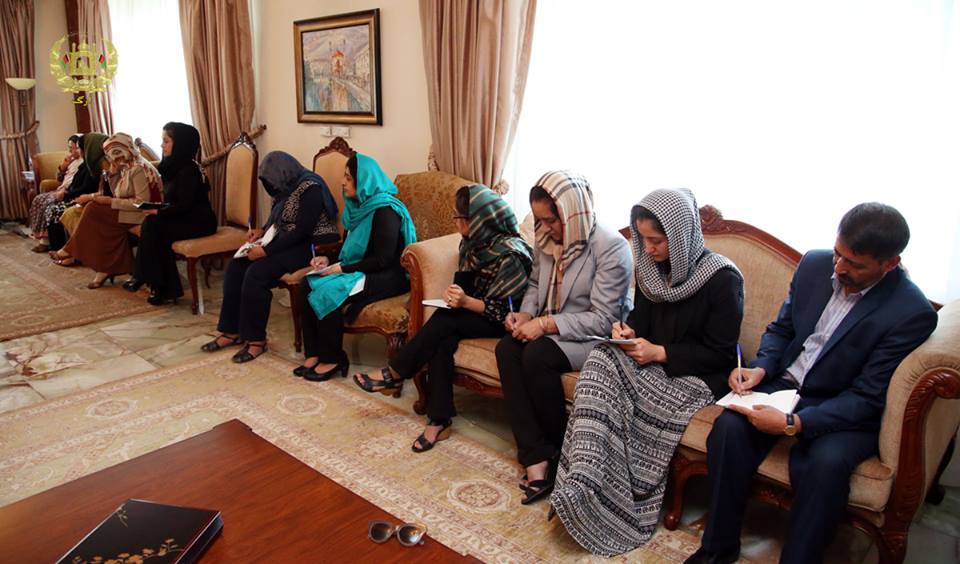
The Kabul Primary Court sentenced four men to death and eight to 16 years in prison who were charged with the murder of Farkhunda in May. The Appeals Court instead sentenced three of the men to 20 years of imprisonment and another to 10. After the decision, Samira Hamidi and Hasina Safi from Afghan Women’s Network, members of Afghanistan’s Civil Society Forum, and Parliamentarians Farkhunda Naderi and Gulalai Safi met with President Ashraf Ghani to express their anger over the decision.
Although the Afghan Constitution prohibits the President from interfering in the Court’s ruling, Ghani promised the group the case is yet to be finalized and assured civil society members that any shortcoming of the prosecutor’s work will be thoroughly reviewed. The President has also met with Farkhunda’s family and promised them justice. According to reports by Afghan media, the deputy spokesman of the President has confirmed that due to some gaps in the investigation, the case will be reviewed once again. The President also called on the people of Afghanistan to exercise patience during this case so that the urge for quick prosecution of the case does not reduce it to Taliban style justice.
27-year-old Farkhunda was brutally killed by an angry mob in front of a famous shrine in the center of Kabul. She challenged the guardian (or “mullah”) of the shrine for giving charms and amulets in return for money to the visitors, most of whom were women. For being challenged by a woman, the mullah falsely accused her of burning the Quran. The false accusation of the mullah and guardian ignited vicious and fatal attack on Farkhunda by an angry mob of men in front of the shrine.
The shrine attendant, along with 47 other people – including 19 police officers – was arrested in connection to the murder.
In a long overdue step to ensuring access to health insurance coverage for abortion for low-income women, Congresswomen Barbara Lee (D-CA), Jan Schakowsky (D-IL), and Diana DeGette (D-CO) today introduced the Equal Access to Abortion Coverage in Health Insurance (EACH Woman) Act. This Act would make insurance coverage for abortion available to all women, regardless of income, type of insurance, or zipcode.
All Above All, a coalition of over fifty organizations, including The Feminist Majority, joined several members of Congress, including Rosa DeLauro, Lois Frankel, Mike Honda, Brenda Lawrence, and Jerrold Nadler, to make the bills introduction and to condemn federal restrictions that prevent low-income women from being able to access safe abortion care.
“The amount of money a woman has or doesn’t have should never prevent her from having an abortion,” said Congresswoman Lee.
Since the passage of the Hyde amendment in 1976, Congress has withheld coverage for abortion services from women insured through the Medicaid program. Approximately 1 in 6 women are enrolled in Medicaid are of reproductive age. To date, only 17 states provide state Medicaid coverage for all or most medically necessary abortions. Medicaid restriction often creates an insurmountable barrier to abortion for women already struggling to make ends meet and disproportionally impacts women of color.
“For too long, low-income women have been denied abortion coverage just because they can’t afford it and live in a state without coverage,” said Feminist Majority President Eleanor Smeal in a press release. “The size of your paycheck and which state you live in should not determine access.”
The Act would also prevent federal, state, and local government from restricting insurance coverage of abortion in private health insurance plans, including plans purchased on health insurance exchanges created through the Affordable Care Act. Across the country, legislators have attempted – sometimes successfully – to limit access to abortion by placing restrictions on ACA plans or private insurers, putting women’s health at risk, especially low-income women.
“Politically motivated attacks on women’s access to abortion must end,” said Feminist Majority Policy Director Gaylynn Burroughs. “The EACH Woman Act takes a huge step forward by preventing politicians from playing games with women’s lives by deciding which services their health insurance can and cannot cover.”
California legislation aimed at preventing sexual assault and educating high school students on healthy relationships is poised to become law, as it passed the California Assembly Education Committee last week.
Senate Bill 695 passed through the Education Committee unanimously with a bipartisan vote of 6-0. The bill provides new requirements for public high school health classes- which most California high schools require for graduation- that include instruction on affirmative consent and healthy relationships as well as sexual harassment, assault, violence. These new educational requirements are aimed at informing students on these issues before they reach college campuses, where instances of rape and sexual assault are high.
“It’s no longer acceptable to say ‘boys will be boys’ as an excuse for rape or dating violence. We need to broaden our perspective beyond college campuses,” said Avni Parikh, co-founder of Students for Sexual Respect, a group aiming to a consent-based culture for young people in sexual relationships.
“The statistics show we are not doing nearly enough. We can and must educate the youth of our state, especially our young men, about affirmative consent and healthy relationships to change behavior toward young women,” said Senate Pro Tem Kevin de Leon (D- Los Angeles), joint-author of the bill. Joint-author Sen. Hannah-Beth Jackson (D-Santa Barbara), and chair of the California Legislative Women’s Caucus, added “If we want to prevent sexual assault, it’s important that we start early, before our young people reach adulthood.”
Just last fall, California passed the affirmative consent “Yes Means Yes” bill for its colleges and universities, removing all ambiguity from rules about consent- the first law of its kind. It radically changed the standard of proving sexual assault, which previously required victims of sexual assault to demonstrate that they did not consent. Instead, affirmative consent has to be continually given throughout the sexual activity and can be revoked at any time and does not include silence, lack of resistance, or “consent” given while intoxicated. All people involved in the sexual activity must ensure that they have the affirmative consent of others.
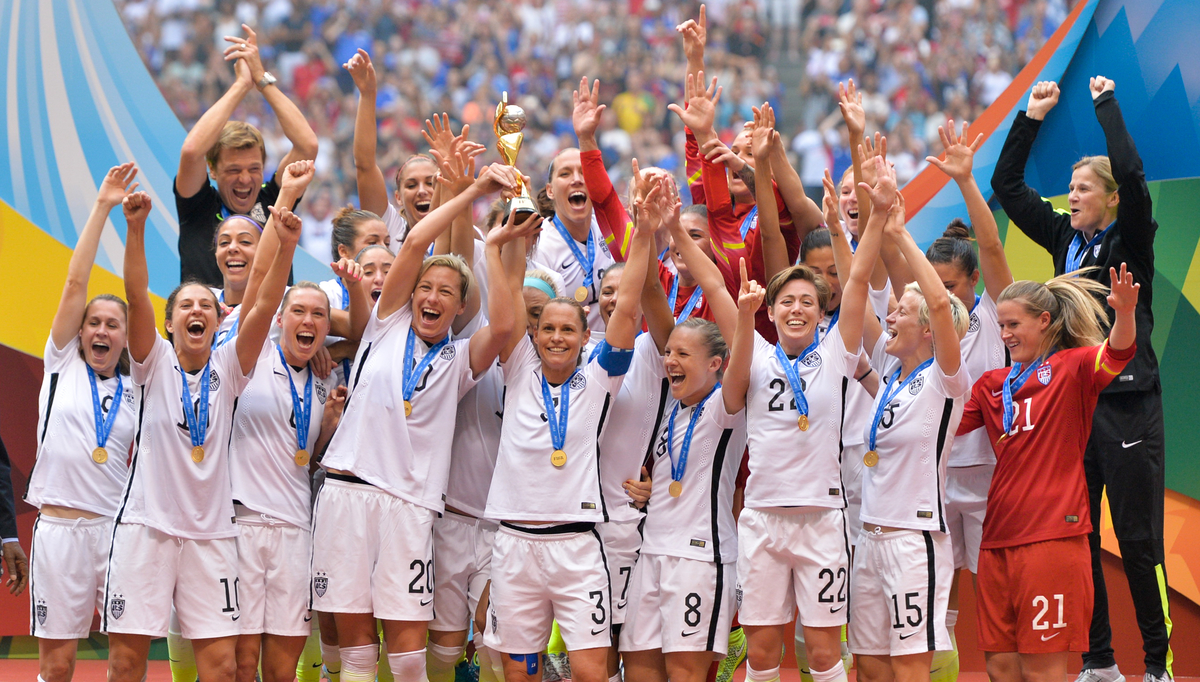
The United States’ women’s soccer team defeated Japan this weekend in an impressive and fast-paced game, bringing home the championship trophy for the first time in 16 years. But despite national and international celebration, disparities in coverage, respect, and pay still linger between women’s and men’s soccer teams.
The FIFA World Cup tournament was hosted in Canada, and included some of the best athletes in the world competing in a fast-paced, month-long competition. The US women’s team in particular was a favorite from the beginning; with a world-class lineup that includes international goal-scoring record holder Abby Wambach, Christie Rampone, Alex Morgan, and goal keeper Hope Solo, this match has many reminiscing about the US team who last brought home the World Cup trophy in 1999.
For the final match, over 53,000 people completely filled the Canadian stadium to watch the US bring win against Japan. The US won 5-2, with a hat trick (3 goals in one game) by Carli Lloyd in the first twenty minutes of the game. This is the first time such a hat trick has ever been scored in men’s and women’s World Cup history.
Even so, feminists have been noting the differences between coverage of last year’s men’s World Cup in Brazil and this year’s tournament in Canada. The months of in-depth coverage leading up to the men’s World Cup last year dramatically overshadows the limited coverage of the women’s cup, which mostly focused on the last two weeks of the tournament.
As Maggie Mertens wrote for the Atlantic, “The gender inequities in sports are just as vast as those faced by women in corporate offices and on movie sets, but for some reason they fail to incite the same level of outrage.” There is a massive pay gap between male and female professional athletes. In this tournament alone the US world champions of the women’s World Cup will earn collectively $15 million- a stark difference from the $576 million earned collectively by the US men’s team, who lost in the first round of the tournament last year.
The fight for equality in sports is not a new one. With the historic passing of Title IX of the Education Amendments in 1972, sex discrimination in federally funded education programs was prohibited, opening the doors for women in sports and higher education. In 1972, women were only 15.6 percent of collegiate athletes, but by 2007 women made up as much as 41.7 percent, and that statistic has been climbing.
“When we started the fight for women’s athletic equality in the 70s, we were told repeatedly that no one would want to watch women and girls’ sports,” Eleanor Smeal, president of the Feminist Majority Foundation, remembers. “We knew that was simply untrue—and the women of the United States soccer team proved that last night. The 2015 FIFA World Cup stadium was filled to capacity to watch these women play.”
Indeed, Fox Sports- the primary United States carrier of the FIFA World Cup- had to expand its coverage of the tournament with 30 additional hours of programming, including expanded pre- and post-game coverage, due to unprecedented demand for coverage of this championship match. The increase in programming is promising, although we are far from parity; a new report by researchers from USC and Purdue University found that ESPN’s coverage of sports news through program SportsCenter only gave 2% airtime to women in 2014.
A group of more than 40 leading women’s soccer players have recently filed a lawsuit against FIFA for gender-based discrimination, specifically citing FIFA and the Canadian Soccer Association (CSA) decisions to have the women’s tournament played on artificial turf as opposed to a grass field. Those filing the lawsuit call artificial turf an “inferior surface,” and cite the increased risk of injury and significant temperature difference on the field that artificial turf creates. In this World Cup, the artificial turf brought temperatures on the field to up to 120 degrees. Every men’s World Cup since 1930 has been played on natural grass, while most women’s World Cup matches, as well as the next six scheduled, are slated to be played on artificial turf.
Media Resources: Quartz 6/30/15; the Atlantic 6/5/15; BBC 12/20/14; Think Progress 7/6/15; 6/8/15; Feminist Campus Blog 6/25/12; Fox Sports 7/2/15; UNC News 6/5/15; NBC Sports
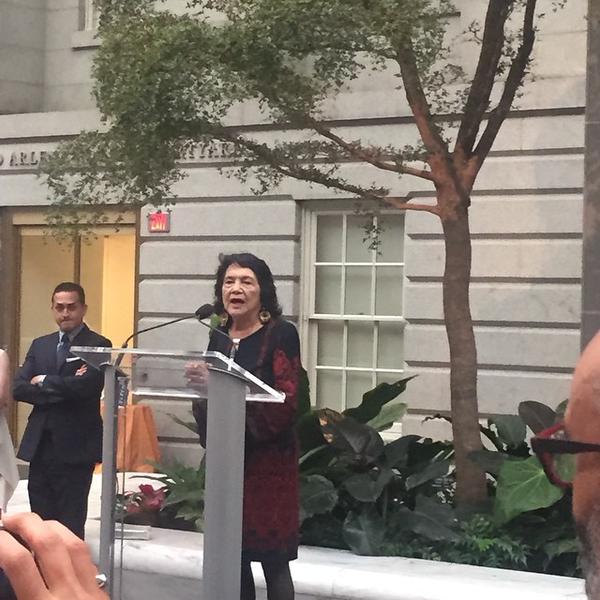
Feminist Majority Foundation board member and lifelong feminist activist Dolores Huerta was honored by the National Portrait Gallery last night as the first Latina person to have a featured exhibition at the museum.
Huerta is an active defender of civil rights, farm workers’ rights, women’s rights, and immigrant rights, and has been for over five decades. She was awarded a Presidential Medal of Freedom by President Obama in 2011 for her tireless work. She also founded the Dolores Huerta Foundation for organizing and advancing human rights.
Huerta is often considered unparalleled in her skill in grassroots organizing, and has celebrated many successes. She co-founded with César Chavez the United Farm Workers Union (UFW). Huerta was also instrumental in the enactment of the Agricultural Labor Relations Act of 1975, and was a principle UFW negotiator with major growers.
Huerta, a leading women’s rights advocate, joined the Feminist Majority Foundation board and the board of its sister organization the Feminist Majority, in 1988.She was a leader of the Feminist Majority’s Feminization of Power campaign to inspire women to run for public offices.
The National Portrait Gallery exhibition is titled “One Life: Dolores Huerta,” and “highlights the significant role of this Latina leader in the California farm workers movement of the 1960s and 70s.” It is the first national museum to feature Huerta’s many accomplishments.
At the premier event for the exhibition Wednesday, Executive Director of the Latino Museum Estuardo Rodriguez said that he hopes the national and international attention that the National Portrait Gallery receives has will greatly increase visibility for Huerta and her causes. “Tonight is an example of the stories that should be in our history books,” Rodriguez said. He also spoke to Huerta’s determined spirit, remarking on her willingness to go to great lengths for what she believes in. “For Dolores Huerta,” he said, “nothing is inconvenient if it’s for a cause.”
Of the exhibition, curator Taina Caragol writes, “Huerta was instrumental in achieving major legal protections and a better standard of living for farm workers, yet she remains largely under-acknowledged in history.” The exhibition, which opens in July 2015 and closes in May 2016, will also coincide with the 50th anniversary of the historic 1965 grape strike launched by Huerta and the farm workers movement. The exhibition includes artifacts from Huerta’s many protests, portraits of her as an activist, and even her Presidential Medal of Freedom.
Media Resources: WhiteHouse.gov 2011; Dolores Huerta Foundation; National Portrait Gallery “One Life”;
President Obama is proposing a plan this week to broaden overtime pay that is expected to affect millions of Americans in the working class, especially women.
President Obama hopes to continue the positive trends, and proposes a plan to give a significant amount of Americans an economic boost. The President acknowledges a trending problem in the way many employers avoid giving overtime pay.
Federal regulation currently places a salary cap for those eligible to receive overtime at $23,660, leaving out a large amount of workers, particularly women, who receive no overtime pay for working more than 40 hours a week. It is a regulation that was instituted 40 years ago, and President Obama feels it no longer reflects the realities of the working middle class. The President’s new rule would allow workers who earn up to $50,440 to demand the standard time-and-a-half pay for work past 40 hours.
“As president, my top priority is to strengthen the middle class, expand opportunity and grow the economy,” Obama writes. He then asks, “Will we accept an economy where only a few of us do exceptionally well? Or will we push for an economy where every American who works hard can contribute to and benefit from our success?”
Women will likely benefit most from this move, as Time magazine writes, “With average income hovering around $35,154, unmarried women previously experience the double whammy of earning less income than their single male counterparts (single men earned an average of $50,625 in 2013), and being unable to earn overtime pay.”
Particularly in the retail industry, companies are finding ways to skirt around overtime compensation laws giving employees managerial titles, without pay compensation. Employees with managerial titles are not entitled to ask for overtime compensation, and can therefore work upwards of 80 hour work weeks without any additional pay. The President commented on this phenomenon earlier this year:
“What we’ve seen is, increasingly, companies skirting basic overtime laws, calling somebody a manager when they’re stocking groceries and getting paid $30,000 a year,” Obama said. “Those folks are being cheated.”
The proposal must undergo a public comment period before going into effect, and is expected to be implemented in 2016.
Media Resources: Huffington Post 6/29/15; 3/21/15; Feminist Newswire 6/25/15; 6/26/15; 6/29/15; Time Magazine 6/30/15;
A woman in Kenya is suing the Kenyan government for failure to provide safe and legal abortions, which caused her daughter – a 15-year-old rape victim – to suffer a kidney failure after undergoing the procedure illegally.
Currently, there are four petitioners on the case: the mother of the survivor, the Federation of Women Lawyers-Kenya, and two other women’s rights advocates. The petitioners are calling on the government to provide expanded guidelines on when an abortion can be performed as well as safe abortion training for medical professionals.
Abortion is currently illegal in Kenya, with a narrow exception for women who prove her life or mental well-being are in danger. Due to Kenya’s restrictive laws, many women and girls have to seek illegal abortions which are often botched and dangerous.
“The Kenyan government is allowing thousands of women in Kenya to needlessly die or suffer severe complications every year due to unsafe abortion,” said Regional director of Africa for the Center of Reproductive Rights, Evelyne Opondo, “and it must be held accountable.”
Illegal abortion procedures in Kenya cause 35 percent of maternal deaths. In 2012, one-quarter of women and girls who had an illegal abortion had to hospitalized with serious health complications, including cervical damage, septic shock, and uterine perforation.
Last year, the Kenyan government received international attention on abortion access as well. The government chose to execute a nurse who drove a woman seeking an abortion to another hospital for advanced assessment before performing the abortion. The woman and fetus died in the car, and the nurse was charged with murder on two counts, illustrating that strict anti-abortion laws such as the ones in Kenya threaten the lives and well-being of both women and medical professionals.
Media resources: World Intellectual Property Organization, www.wipo.int; Reuters 06/26/15; Afromum 06/23/15; The Guardian 09/30/2014
In a 5-4 decision delivered by Justice Ginsburg this morning, the Supreme Court upheld Arizona’s Independent Redistricting Commission, allowing the use of independent state commissions to draw federal congressional districts and taking that power away from the state legislature.
In 2000, Arizona voters amended their constitution, shifting the responsibility of drawing congressional districts, previously held by the state legislature, to a panel called the Arizona Independent Redistricting Commission. The panel consists of two Republicans, two Democrats, and one independent. Legislative leaders cannot alter the maps and the governor cannot veto them, though they may comment on the plans drawn up by the commission. Diminishing the legislature’s role in reapportionment is a victory for voters seeking to curb the practice of gerrymandering, the drawing of congressional districts in an effort to manipulate the results of an election.
Today’s decision upheld the commission, allowing Arizona voters to transfer powers over federal congressional districting to an independent commission. In the Court’s opinion, Justice Ruth Bader Ginsburg for the Majority of the Court referenced a 2005 gerrymandering case, which stated that, “the voters should choose their representative, not the other way around.”
Chief Justice Roberts joined Justice Scalia, Thomas, and Alito in dissenting.
California is the only other state to approve a commission that diminishes the legislature’s role in a manner similar to Arizona, though 11 other states have commissions that play a role in redistricting.
On June 27 at about 6:30 AM, Bree Newsome scaled the flagpole at South Carolina’s Statehouse and removed the confederate flag. Newsome’s removal of the flag with the help of a white man is an act of civil disobedience that demonstrates a transcendence of the boundaries of race and gender, and it is a true testament to the power people have when working together.
“For far too long, white supremacy has dominated the politics of America resulting in the creation of racist laws and cultural practices designed to subjugate non-whites,” Newsome said in her first-ever statement after the flag’s removal. “And the emblem of the confederacy, the stars and bars, in all its manifestations, has long been the most recognizable banner of this political ideology. It’s the banner of racial intimidation and fear whose popularity experiences an uptick whenever black Americans appear to be making gains economically and politically in this country. It’s a reminder how, for centuries, the oppressive status quo has been undergirded by white supremacist violence with the tacit approval of too many political leaders.”
Newsome is charged with “defacing a monument,” a misdemeanor, and faces imprisonment up to three years and a fine of up to $5,000. James Tyson, who aided Newsome by belaying her, was also charged. In just two days, over 4500 people have raised over $114,000 online for her bail fund. According to a statement from Ignite NC, “some of the funds will go towards covering the bonds of Bree and Jimmy and the rest will go toward legal defense funds for other #BlackLivesMatter direct actions.”
Celebrities are also coming forward to support Newsome, both economically and politically. Famed documentary filmmaker Michael Moore tweeted an offer to “pay her bail money or any legal fees she has.” A number of other celebrities have taken to social media accounts to share their support, ranging from hip-hop artists like 2 Chainz, Nas, Questlove, and Big Boi to actress Gabrielle Union. Director Ava DuVernay also took to twitter to share her support:
North Carolina NAACP President Rev. William Barber II compared Newsome to Fannie Lou Hamer and Rosa Parks in a statement released after the flag was removed. Barber called Newsome a “committed, trained, non-violent messenger of the truth.”
At her core, Newsome is a freedom fighter and an organizer. She’s the western field organizer for Ignite NC, a non-profit based in Durham, a co-founder of StAY UP NC, and a People’s Power Assembly organizer and an organizer with Tribe CLT, a group of “committed individuals dedicated to community building, education, and revolutionary action.” She was one of six protesters arrested while participating in a sit-in at North Carolina’s Statehouse to protest the draconian “monster” voter suppression bill passed in 2013. An NYU Tisch School of the Arts graduate, she has also released a number of videos, short films, and songs, including “#StayStrong: A Love Song To Freedom Fighters,” which she performed at the first-ever Black Lives Matter Youth Assembly.
Newsome’s father is a former dean of the School of Divinity at Howard University and former President of Shaw University in Raleigh, the university where the Student Nonviolence Coordinating Committee (SNCC) was founded. He is currently a trustee of Duke University, and president of the National Underground Railroad Freedom Center.
Media Resources: Facebook Group Tribe CLT; Duke University Profiles; Ignite NC; Hollywood Reporter 6/27/15; Billboard 6/27/15; NAACP Press Release 6/27/15; WISTV
The Supreme Court ruled 5 to 4 today to put a temporary hold on a Fifth Circuit Court of Appeals ruling that would have closed all but 9 of the state’s abortion clinics in Texas.
The order from the Supreme Court comes in response to an emergency request filed by women’s health care providers on the behalf of Texas women earlier this month asking the Court to stay House Bill 2, which would have taken effect as law on Wednesday. The law would have required abortion clinics to adhere to strict and costly hospital-like facility requirements. Had it gone into effect, 13 clinics in Texas would have face immediate closure.
“The justices have preserved Texas women’s few remaining options for safe and legal abortion care for the moment,” said Nancy Northup, president and CEO of the Center for Reproductive Rights. “Our Constitution rightly protects women from laws that would create barriers to safe and legal abortion care, but Texas politicians have tried to sneak around the Constitution with sham regulations designed to close clinics’ doors,” Northup added.
If the clinics in Texas were to close, an estimated 1.3 million women of reproductive age would live more than 100 miles from the nearest abortion clinic. This provision has already forced approximately half of the state’s abortion clinics to close their doors over the past two years.
“We’re relieved that the high court has, once again, prevented anti-choice politicians from pushing safe and affordable abortion care entirely out of reach for Texas women,” said Amy Hagstom-Miller, founder, president, and CEO of Whole Woman’s Health.
“The 5-4 split- with Justices Kennedy, Bader-Ginsburg, Breyer, Sotomayor, and Kagan, voting to keep the clinics open, and Chief Justice Roberts together with Justices Scalia, Thomas, and Alito voting against the clinics- shows just how important elections and judicial appointments are to guarding women’s constitutional rights,” said Eleanor Smeal, president of the Feminist Majority.
The ruling today means that the Supreme Court will likely determine during its next term whether or not onerous TRAP laws, like the one in Texas, are constitutional.
Media Resources: Feminist Newswire 6/22/15; 9/5/13; Center for Reproductive Rights Press Release 6/29/30
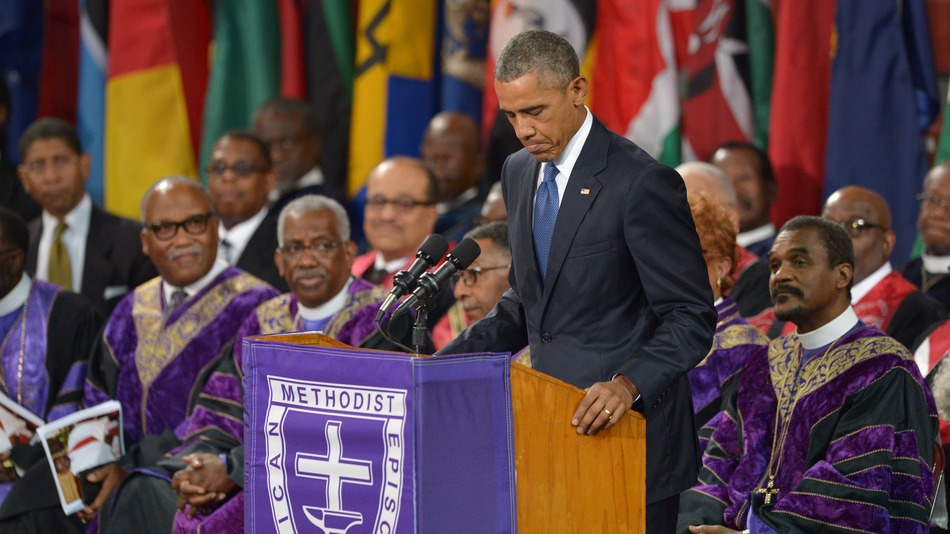
The nation is remembering the nine victims of the Emanuel AME Church mass shooting this week, as President Obama gave an unforgettable eulogy for State Senate Reverend Clementa Pinckney.
President Obama knew Reverend Pinckney personally, meeting him during his 2008 election campaign. He recounted Pickney’s impressive life, as he became a pastor at age 13, a minister at 18, and was the youngest African American to be elected to a position in the South Carolina House at just 23. The President spoke of Reverend Pickney’s kind spirit, calling him a good man and saying he was “full of empathy and fellow feeling.”
In his eulogy, President Obama also mentioned the Reverend’s uphill battle as a minority in the state senate. “His calls for greater equity were too often unheeded. The votes he cast were sometimes lonely. But he never gave up- he stayed true to his convictions.” Reverend Pinckney, however, was always protecting those in need, as the President said, “he encouraged progress as a reverend and as a state senator.”
President Obama honored Pinckney’s memory too by urging action on gun violence, police violence, and the removal of the confederate flag, saying that it represents “more than ancestral pride.”
“Maybe then we can realize the way racial bias affects us in ways we might not realize,” he said. “History must not be a sword to justify injustice… but must be a manual for how to avoid repeating the mistakes of the past.”
He ended by singing the first verse of “Amazing Grace,” and ended his eulogy with the names of the victims of the Charleston shooting: Sen. Rev. Pinckney, Cynthia Hurd, Tywanza Sanders, Rev. Sharonda Coleman-Singleton, Myra Thompson, Ethel Lee Lance, Rev. Daniel Simmons, Rev. DePayne Middleton-Doctor and Susie Jackson.
Some 5,500 people attended the funeral for Rev. Pinckney in Charleston, South Carolina, with estimated millions watching a live broadcast. Attendees included President and Michelle Obama, Hillary Clinton, Vice President Biden and Dr. Jill Biden, Speaker John Boehner, SC Governor Nikki Haley, Rev. Jesse Jackson Sr., and many fellow members of Pinckney’s church.
In a 5-4 decision delivered by Justice Anthony Kennedy this morning, the Supreme Court of the United States declared that same-sex couples fundamentally have equal protections under the Constitution.
The Supreme Court held that the Fourteenth Amendment requires all 50 states to both license a marriage and recognize a marriage between two people of the same sex. The opinion of the Court, delivered by Justice Kennedy, reads that “marriage is fundamental under the Constitution,” and applies “with equal force to same-sex couples.”
“No union is more profound than marriage, for it embodies the highest ideals of live, fidelity, devotion, sacrifice, and family,” wrote Justice Kennedy. “It would misunderstand these men and women to say they disrespect the idea of marriage. Their plea is that they do respect it, respect it so deeply that they seek to find its fulfillment for themselves… They ask for equal dignity in the eyes of the law. The Constitution grants them that right.”
Previously, only 37 states had provisions allowing same-sex marriage. Along with marriage equality, this morning’s Supreme Court decision affords same-sex couples many state and federal benefits, including benefits in taxation, inheritance and property rights, hospital access, medical decision-making authority, birth and death certificates, worker’s compensation benefits, and more.
“When President Obama took office in 2008, only two states recognized legal marriage for same-sex couples. Now the nation does,” said Eleanor Smeal, president of the Feminist Majority Foundation. “At last, SCOTUS recognizes that love is love, and that all 50 states must recognize marriage equality.”
Republican leaders are digging their heels in and showing their determination to fight against marriage equality and Obamacare, which was upheld by the Supreme Court just yesterday. Already, the majority of Republican presidential candidates have come out against the Supreme Court’s decisions on both issues. As GOP Republican National Committee leader Reince Priebus said, “As a Party, we believe in the importance of traditional marriage between a man and a woman.”
While feminists and activists everywhere are celebrating, many are also keeping in mind the many areas of discrimination that LGBT communities face. For example, 29 states lack explicit protections for LGB individuals, and 32 states lack explicit protections against discrimination for transgender individuals or based on gender identity. As the Center for American Progress writes, “in 16 states and counting, same-sex couples can legally marry and then be legally fired from their jobs, evicted from their apartments, denied credit, refused hotel rooms, and discriminated against in education all because of their sexual orientation.”
Media Resources: Opinion Obergefell et al V. Hodges 6/26/15; Center for American Progress 3/9/15; GOP Press Release 6/26/15; Jezebel 6/26/15; Feminist Newswire 4/27/15
The Supreme Court, in a 5-4 decision written by Justice Anthony Kennedy, just upheld the use of disparate impact claims under the 1968 Fair Housing Act, which bans housing discrimination on the grounds of race, color, religion, sex, familial status, or national origin.
This case ruled that a plaintiff does not need to prove intent to discriminate- a standard that is nearly impossible to meet. Instead, the plaintiff can use the tool of disparate impact to show discrimination based on a policy or policies of the defendant.
“A disparate-impact claim relying on a statistical disparity must fail if the plaintiff cannot point to a defendant’s policy or policies causing that disparity,” the majority of the Supreme Court said. “A robust causality requirement is important in ensuring that defendants do not resort to the use of racial quotas.”
“Our country remains deeply segregated and we need not only provisions of the Fair Housing Act to be intact, but we need aggressive, and affirmative enforcement of the act by the federal government and by state jurisdictions,” said Sherrilyn Ifill, the president of the NAACP Legal Defense and Educational Fund.
“Losing this case would have resulted in a serious blow to the Fair Housing Act,” said Eleanor Smeal, president of the Feminist Majority Foundation. “It’s troubling that this was only a 5 to 4 decision. Upholding the integrity of the Fair Housing Act is essential if we are ever going to desegregate our neighborhoods.”
“The NAACP Legal Defense Fund (LDF) is incredibly pleased that the United States Supreme Court today has reaffirmed core principles of fairness and equality,” the organization said in a statement, “by clearly and unambiguously recognizing both the legality and the importance of the ‘disparate impact‘ protections of the Fair Housing Act in addressing housing discrimination.”
Media Resources: Supreme Court Decision King v. Burwell 6/25/15; CNN 6/25/15; NAACP LDF Press Release 6/25/15