President Trump Disappoints the Country, Comparing Neo-Nazis to Those Who Oppose Them

While the majority of Americans were deeply disturbed by the riot in Charlottesville, Virginia, many considered President Trump’s response to be equally as troubling after he made shameful comments that were widely seen as siding with the white supremacists against the counter protesters, and exacerbating the already deep racial tension in America.

Following the murder of counter-protester Heather Heyer by a white supremacist, and dozens of injuries from violent clashes between neo-Nazis and those protesting against them, the President delivered a prepared remark on Saturday condemning the violence, but going off script to place the blame “on many sides,” and arguing that he was not responsible for the rise in racist hate groups.

The neo-Nazi website, The Daily Stormer, wrote, “Trump’s comments were good. He didn’t attack us. He just said the nation should come together. Nothing specific against us…No condemnation at all.”

Backlash was swift, as people pointed to the extensive evidence showing neo-Nazis, KKK and white supremacists ganging up to beat counter-protesters and antagonizing and threatening people in mass. Many white supremacists had come to the rally armed with torches, guns, knives, shields, and body armor, and of course the deadliest weapon became James Alex Fields’s car when he intentionally, lethally drove it into a large crowd of counter-protesters.

Several Republican Senators referred to the President’s initial remarks as insufficient. Senator Orrin Hatch (R-UT) tweeted Saturday, “We should call evil by its name. My brother didn’t give his life fighting Hitler for Nazi ideas to go unchallenged here at home.”

By Monday, almost 48 hours after his initial statement, the President was forced to revise his comments and condemn white supremacists, though he still failed to denounce their support for his leadership or condemn the so-called “alt-right” movement. News outlets, social commentators and political officials continued to comment on the insincerity of his condemnation and his lack of willingness and leadership, failing to bring the country together.

But on Tuesday, following a speech on an infrastructure bill, the President took questions from reporters and chose to double-down on his original statement blaming both sides, vilifying the counter-protesters in a 15 minute display that has since shaken the nation.

In response to comments by reporters over whether or not he would be willing to condemn the alt-right—the rebranded name for the self-described white supremacist and ethnic cleansing movement—Trump said, “When you say the alt-right, define it….What about the alt-left that came charging at…the, as you say, the alt right? Do they have any semblance of guilt?”

“The people of all genders, ages, races and backgrounds who turned out on Saturday to defend civil rights and condemn the KKK, neo-Nazis and white nationalists are heroes,” said Eleanor Smeal, president of the Feminist Majority. “They did not deserve to be attacked, and they certainly did not deserve to be vilified by the President who falsely equated their message of social justice with that of white supremacists.”

People opposing white supremacy are not known as the alt-left, implying that the President created the description himself. The alt-right, however, is the modern rebranding for the self-proclaimed white supremacist movement, and were the organizers of Saturday’s protest. Known leaders of the alt-right currently serve in high ranking positions of the Trump administration, including senior advisor Stephen Miller, and deputy assistant Sebastian Gorka. Another leader of the movement, who was present in Charlottesville, is Richard Spencer, head of the National Policy Institute, an organization and think tank classified as a white supremacist hate group by the Southern Poverty Law Center. After Trump’s election, his group held a controversial conference for the alt-right, during which Spencer notoriously chanted “Hail Trump, hail our people, hail victory” as the cheering crowd made Nazi Salutes.

But Trump’s comments about the alt-right were only the first of many controversial statements from Wednesday. He went on to double-down on his original sentiment blaming both sides, saying of the counter protesters, “You had a group on the other side that came charging in without a permit, and they were very very violent.”

While the white supremacists had been given a permit to protest in a park away from the statue of Robert E. Lee that they sought to defend, a judge ordered the city to let them protest in the park with the statue, causing last minute mayhem and leading to a confrontation between the white nationalists and the people there to oppose them. Many have come out to criticize the police’s response, which was considered insufficient and failed to quench much of the violence.

Trump went on to say that “Not all of those people were white supremacists by any means,” and later added, “You also had people that were very fine people on both sides.” These comments led to praise from a number of prominent white supremacists including former leader of the Ku Klux Klan, David Duke, who thanked the President for his “honesty and courage.”

Texas Representative Will Hurd responded, “If you are showing up to a Klan rally you are probably a racist or a bigot.” Many of the white nationalists who came to Charlottesville had traveled across the country to march through the streets waving torches and confederate and swastika flags, chanting “Jews will not replace us,” “White Lives Matter,” and other bigoted slogans.

“We all see them for who they are,” said Smeal. “Anyone who doesn’t is employing willful ignorance.”

Senator Marco Rubio tweeted a response to the President, saying “The organizers of events which inspired and led to Charlottesville terrorist attack are 100% to blame for a number of reasons…These groups today use SAME symbols and same arguments of Nazi and KKK groups responsible for some of worst crimes against humanity ever…Mr. President you can’t allow White Supremacists to share only part of the blame. They support idea which cost nation and world so much pain.”

Smeal added, “It will take the heart and soul of the entire country to counter the damage that President Trump has done, and to make clear to white supremacists that momentum is not on their side, society will not tolerate their hate, and the voters will not support their leaders.”

Media Resources: Feminist Majority Foundation 8/14/17; Politico 8/15/17; Feminist Majority 8/16/17
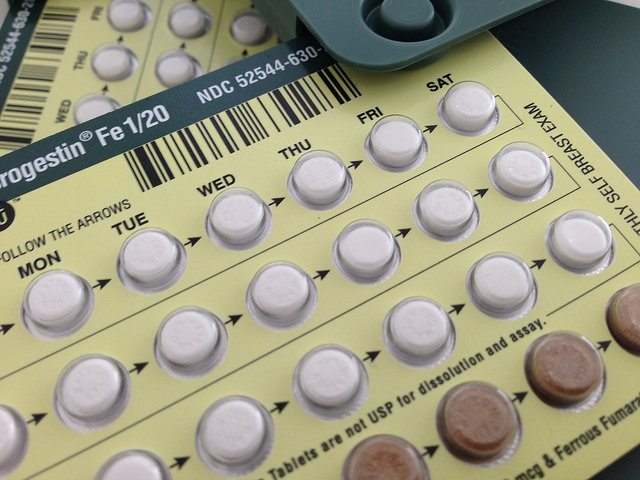
Texas Passes Bill to Restrict Abortion Access with New Insurance Mandates

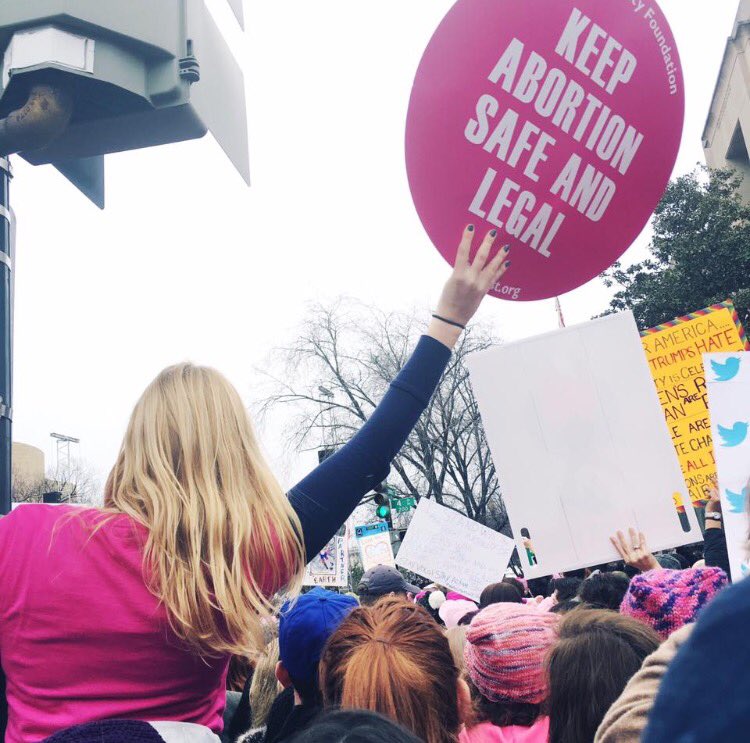
Over the weekend, Texas lawmakers passed a bill to further restrict abortion access in the state. House Bill 214 was given early approval by the Texas State Senate on Saturday night during a 30-day special session called by Governor Gregg Abbot in July.

The bill bans all private health insurance plans and plans sold through the Affordable Care Act marketplace from covering abortion care unless the life of the woman is directly at risk. Instead, women would be required to buy supplemental insurance should they ever think they may need or want an abortion, prompting some Democratic lawmakers to accuse Republicans of forcing women to buy “rape insurance.”

The bill passed the Senate with a 20-10 vote on party lines and is headed to the Governor’s desk where it is expected to be signed into law. Texas will join ten other states that require additional insurance to cover abortion procedures including Idaho, Kansas, Kentucky, Michigan, Missouri, Nebraska, North Dakota, Oklahoma, and Utah. Only Utah and Indiana make exceptions to this rule in cases of rape and incest.

Women who have not elected to pay the additional premium for abortion coverage in their insurance plan are likely to pay for the procedure out of pocket. According to Planned Parenthood, an abortion procedure can often cost as much as $1,500 and varies depending on how far along the pregnancy is.

Texas has long been considered a hostile state for reproductive rights. Since 2011, the state has refused federal Medicaid family planning funds due to the fact that they would then be required to fund family planning clinics that are affiliated with abortion providers, resulting in a 66 percent cut to their family planning budget. Since then, 82 family planning clinics across Texas have been forced to close and the maternal mortality rate has doubled, with over a quarter of women enrolled in Medicaid now unable to see a covered doctor of any kind.

Texas’s special legislative session continues and will move on to debate the transgender bathroom bill. The bill would require people in school and government buildings to use the restroom that corresponds with the gender on their birth certificates, and forbid localities from enforcing anti-discrimination laws that would extend protections to transgender people using the bathroom of their choice. Reports say that there is little time left to pass the bill and the special session will most likely end without its passage.

Media Resources: Feminist Newswire 8/9/17; Texas Tribune 8/12/17; Slate 8/14/17; Planned Parenthood; Reuters 8/14/17

Free Feminine Hygiene Products for Federal Inmates Now Required

A new policy issued by the Federal Bureau of Prisons (BOP) mandates that all federal facilities that house female inmates must provide free tampons and pads. The August 1st memorandum states that the BOP “ensures that female inmates have access to a range of feminine hygiene products related to menstruation.” This mandate will not apply to state prisons and jails.

For many incarcerated women, access to feminine hygiene products is a hardship. In some institutions, pads and tampons are distributed at the leisure of correctional officers and women often have to trade with other inmates in order to obtain them. For most women, they are required to request pads or tampons from correctional officers and they are given products on an “as-needed basis” or are required to purchase products at high prices at the prison commissary. In more severe cases, women are left with improvised supplies such as medical gauze or with no tampons or pads at all.

The new policy sets an important precedent on the federal level. The previous BOP memorandum pertaining to feminine hygiene products was ultimately vague and only asserted that women will have access to these products. The new policy states that all women in federal institutions will have access to pads and tampons “at no cost to the inmates.”

This memorandum comes just one month after the “Dignity for Incarcerated Women Act,” was introduced to the senate by Senator Kamala Harris (D-CA) and sponsored by Cory Booker (D-NJ), Elizabeth Warren (D-MA) , and Dick Durbin (D-IL). This bill includes a section devoted to the availability and quality of certain healthcare products including tampons and sanitary napkins.  The bill also would amend visitation regulations for inmates who are parents to allow more time with family members and require all institutions to offer parenting classes. Additionally, the bill would protect incarcerated pregnant women from being placed in segregated housing units or from being shackled.

Pregnant prisoners in US prisons and jails face harsh and sometimes dehumanizing treatment. These women often struggle to access physical and mental health care. In many states, it is common practice to shackle female prisoners while they are in labor or even while they are giving birth regardless of whether or not the inmate has a history of violent behavior. This practice of shackling pregnant women furthers the trauma incarcerated women already endure in the US prison system.

The number of women in US prisons and jails continues to rise with an 800% increase from 1977 to 2007 making such provisions aimed to protect the dignity and health of female prisoners highly necessary.

Media Resources: The Mercery News 8/11/17; The New York Times 4/20/17; Federal Bureau of Prisons 8/1/17; Senate Bill S.1524; USA Online Journal 8/11/17; Eat Bay Times 8/11/17; Feminist Newswire 7/1/14

White Supremacists Hold Hate-Filled Rally in Charlottesville, Virginia

White supremacists, emboldened by the election of Donald Trump, took to the streets in Charlottesville, Virginia and Seattle, Washington this weekend for one of the most visible displays of hatred from the new so-called “alt-right” movement.

The Virginia rally was originally launched in opposition to the Charlottesville City Council’s decision to remove a statue of Confederate general Robert E. Lee from the newly renamed Emancipation Park. Plans to hold a massive rally in the city began building in June. “It was astounding to see it go from 100 people saying they were going to go, to 300, to 500, to 700, to raising money on online platforms to facilitate that,” said Heidi Beirich, head of the Southern Poverty Law Center’s intelligence project.

On Friday, the white supremacists marched onto the campus of University of Virginia holding torches and chanting slogans like, “You will not replace us,” while circling peaceful counter-protesters.

Tensions were high going into Saturday’s rally in Charlottesville, as white supremacists gathered at Emancipation Park chanting “White lives matter.” Thousands of armed white supremacists began violently clashing with counter-protesters hours before the rally was scheduled to begin. By the middle of the day, Virginia Governor Terry McAuliffe was forced to declare a state of emergency and call in the national guard, saying “Please go home and never come back. Take your hatred, and take your bigotry.”

The rally turned deadly when a 20 year old member of the so-called alt-right, James Alex Fields Jr, intentionally drove his car into a group of peaceful counter protesters, injuring 19 people and murdering 32-year-old Heather Heyer. He was denied bail on Monday morning and has been charged with second-degree murder, three counts of malicious wounding, and one count of failing to stop at an accident resulting in a death.

Attorney General Jeff Sessions announced Monday that the Department of Justice believes the violent car attack on Saturday constitutes an act of domestic terrorism and that the DOJ will pursue all relevant charges against the perpetrator.

Dozens of others were injured in brutal clashes between the white nationalists and the counter-protesters, who turned out to show solidarity with targets of the rally’s hatred and declare that racist and neo-Nazi sentiments are not welcome in Virginia.

Laura Goldblatt, a progressive organizer and postdoctoral fellow at University of Virginia, said turning a blind eye to the white supremacist gathering was not an option, describing how history has shown that “ignoring white supremacy, in terms of shutting your doors and not coming out to confront them, has been a really dangerous strategy.”

The President, however, responded to Saturday’s violence by condemning hatred and violence “on many sides,” and arguing that he was not responsible for the rise in racist hate groups. He quickly left the room as reporters shouted questions about the endorsements he’s received from white supremacists and whether or not he would classify Saturday’s attack as an act of terrorism. Many pointed to Trump’s eagerness to call out Islamic terror as a stark contrast to his statements about the white nationalists.

The neo-Nazi website Daily Stormer wrote, “Trump’s comments were good. He didn’t attack us. He just said the nation should come together. Nothing specific against us….No condemnation at all.” Meanwhile several Republican Senators referred to the president’s remarks as insufficient. Senator Orrin Hatch (R-UT) tweeted Saturday, “We should call evil by its name. My brother didn’t give his life fighting Hitler for Nazi ideas to go unchallenged here at home.”

The Mayor of Charlottesville, disgusted by the events unfolding in his town, stated “I’m not going to make any bones about it. I place the blame for a lot of what you’re seeing in America today right at the doorstep of the White House and the people around the president.” The President’s chief strategist Steve Bannon proudly considers himself to be a leader of the so-called alt-right movement.

According to George Hawley, a University of Alabama professor who studies white supremacists, many of the young people he’s met with in the movement were radicalized online, not by their parents, and have never heard of Klu Klux Klan leaders like David Duke, but rather follow the young heads of the alt-right, like Richard Spencer.

Spencer is the head of the National Policy Institute, an organization and think-tank classified as a white supremacist hate group by the Southern Poverty Law Center. After the election, the group held a controversial conference of alt-right white nationalists, during which Spencer notoriously chanted “Hail Trump, hail our people, hail victory” as the cheering crowd made Nazi Salutes.

Spencer celebrated Saturday’s protests as “a huge moral victory in terms of the show of force.” Spencer and other white supremacists will be holding a White Lives Matter rally at Texas A&M on September 11.

Media Resources: New York Times 8/13/17; Talking Points Memo 8/14/17; The Hill 8/12/17; Chicago Tribune 8/13/17; Huffington Post 8/12/17; Feminist Majority Foundation 11/22/16

Hearing Begins in Case of Anti-Abortion Group Versus Virginia

Hearings began today concerning a lawsuit filed in April by the Family Foundation of Virginia over amendments to Virginia’s “Regulations for Licensure of Abortion Facilities” that removed unconstitutional outpatient surgical center building requirements imposed on clinics that perform abortions.

The Feminist Majority Foundation and other members of the reproductive healthcare community were in front of the Henrico County Circuit Court to show support for the Board of Health’s decision and solidarity with the women of Virginia.

In a statement, Governor McAuliffe said, “My administration has been and will continue to be a brick wall to protect women’s health. The regulation attacked by this lawsuit reversed rules that were aimed solely at closing health clinics and denying Virginia women access to safe and affordable care. This lawsuit is yet another attack on women and their rights.”

The struggle over these burdensome targeted regulations of abortion providers began in 2011 when the state passed a law requiring clinics to widen their hallways and doorways, expand their parking lots, and construct awnings at the entrances, forcing clinics to either pay unnecessary costs or close.

The Virginia Board of Health was responsible for carrying out that law, and in 2013 the Board voted to only impose the medically unnecessary requirements on new clinics. Then-state Attorney General and strong abortion opponent Ken Cuccinelli responded by saying he would not defend the Board if they were sued over that decision and threated that Board members could be held personally legally liable, bullying them into reversing their vote.

But in June of 2016, the Supreme Court heard the case of Whole Woman’s Health v. Hellerstedt and ruled that Texas’s ambulatory surgical center requirement was unconstitutional, as lawyers for the state could prove no medical benefits and the provision constituted an undue burden on women seeking an abortion. At that point, 18 states had similar requirements, and that decision rendered all of those laws unconstitutional.

In October 2016, the Virginia Board of Health approved amendments doing away with the newly unconstitutional requirements by a vote of 11-4 and Governor Terry McAuliffe certified the changes in January 2017. The amendments went into effect March 22 and put Virginia in compliance with the Supreme Court decision. That is when the Family Foundation of Virginia filed their lawsuit alleging that procedure had been violated.

Virginia’s Republican majority General Assembly has failed to pass the Whole Woman’s Health Act, which would get rid of all targeted regulations of abortion providers and bring Virginia fully into compliance with the 2016 Supreme Court ruling. The state has also refused to expand Medicaid and bars Medicaid, public employee insurance plans, and plans sold in the Affordable Care Act marketplace from covering abortion care except in cases of life-endangerment, rape or fetal impairment. In addition, before an abortion, Virginia women are required to endure mandated counseling, a 24 hour waiting period, and an ultra-sound where they are asked if they would like to view an image of the fetus.

The state also has 58 crisis pregnancy centers, which often have no doctors on staff but rather are used to deceive, manipulate, and shame pregnant women seeking information about abortion. That is three times the number of legitimate clinics that offer actual abortion counseling and services.

But recently there have also been some successes in Virginia, including last year’s Board of Health vote. In a surprising turn, the General Assembly voted in February to allow women to access a 12-month supply of birth control at a time. That same month, Governor McAuliffe vetoed a bill that would have specifically cut off Title X funding to organizations that perform abortions.

Media Resources: NBC 4/21/17; Feminist Majority Foundation 4/25/17, 6/29/17; Roanoke Times 8/9/17

Senate Democrats Skeptical of Health and Human Services Nominee

Senate Democrats are skeptical of the Trump administration’s selection for assistant secretary of health for the Department of Health and Human Services (HHS) and are requesting a full Senate vote on his nomination when the body reconvenes in September. The Senate did confirm four other HHS nominations last week without issue.

During Texas doctor Brett Giroir’s testimony before the Senate Health, Education, Labor and Pensions Committee, he failed to defend the right of all qualified reproductive health providers to receive federal funding.

Senator Patty Murray (D-WA) put out a statement that read, “After carefully reviewing his qualifications, I am unconvinced Dr. Giroir would be willing to stand up to this administration’s ideological attacks on women in a key leadership role at HHS.”

If confirmed Giroir would oversee HHS’s Office of Population Affairs, which handles Title X grant funding, the only federal domestic program that is exclusively concerned with providing funds for family planning and reproductive health services. In 2015, over 4 million people received healthcare from over 3,900 facilities funded under Title X, a third of which were Planned Parenthood clinics. Typically beneficiaries of Title X are teens and adults who have too much income to qualify for Medicaid but too little income to afford health insurance through the marketplace.

Title X funding is awarded through competitive grants to whichever healthcare providers prove they are best qualified for meeting the needs of the communities they serve. In April, President Trump signed a bill that repealed a rule put in place by the Obama administration last year that blocked states from cutting off Title X funding to women’s health clinics that provide abortion services.

Giroir would also be responsible for the Office of Adolescent Health, which is charged with running the Teen Pregnancy Prevention Program. Last month, the Trump administration announced a plan to cut $213.6 million in funding to over eighty teen pregnancy research and prevention programs around the country. The programs focus on developing practical, evidence-based methods to decrease teen pregnancy and helping teens access contraception, reproductive healthcare and comprehensive sexual education. The loss of federal funds means researchers will have to stop their projects before their five-year research grants are up, rendering their data scientifically invalid. Over 25 percent of women will become pregnant by the time they are 20.

HHS has already put in place several troubling figures who did not require Senate confirmation including Charmaine Yoest, former president of Americans United for Life, Valerie Huber, who lead a group formerly known as the National Abstinence Education Association, and Teresa Manning, previously a lobbyist with the National Right to Life Committee.

Current HHS Secretary Tom Price has consistently supported an anti-woman health agenda. As a Congressman, Price co-sponsored legislation that would make some forms of birth control illegal, introduced multiple 20-week abortion bans, and voted repeatedly to defund Planned Parenthood. During his confirmation hearing for HHS Secretary, Price refused to accept Congressional Budget Office data showing that in one year 400,000 women would lose access to all healthcare if Planned Parenthood were defunded.

Media Resources: Rewire 8/10/17; Feminist Majority Foundation 3/31/17, 8/1/17, 1/25/17.

Two Controversial Bills to Watch in Texas’s Special Legislative Session

There is less than nine days left in Texas’s special legislative session and two of the most controversial bills being considered have yet to make it to the Governor’s desk for signature.

The first bill would ban all private health insurance plans and plans sold through the Affordable Care Act marketplace from covering abortion care unless the life of the woman is directly at risk. Instead, women would be required to buy supplemental insurance should they ever think they may need or want an abortion, prompting some Democratic lawmakers to accuse Republicans of forcing women to buy “rape insurance.”

The bill passed the House on Tuesday and now heads to the Senate. Should it pass, Texas would become the eleventh state to ban abortion coverage for plans in the marketplace and the second state to forbid employers from offering abortion coverage in their private plans. The U.S. House of Representatives passed a similar bill in January, but it has yet to be voted on in the U.S. Senate.

Texas has long been considered a hostile state for reproductive rights. Since 2011, the state has refused federal Medicaid family planning funds due to the fact that they would then be required to fund family planning clinics that are affiliated with abortion providers, resulting in a 66 percent cut to their family planning budget. Since then, 82 family planning clinics across Texas have been forced to close and the maternal mortality rate has doubled, with over a quarter of women enrolled in Medicaid now unable to see a covered doctor of any kind.

Another controversial bill being considered in Texas’s special legislative session is a transgender bathroom ban similar to the one that was previously seen in North Carolina. The bill would require people in school and government buildings to use the restroom that corresponds with the gender on their birth certificates, and forbid localities from enforcing anti-discrimination laws that would extend protections to transgender people using the bathroom of their choice.

While a version of the bathroom ban has passed the Texas State Senate, many believe it is unlikely to be put up for a vote in the House, as the speaker, Joe Straus, is considered to be a moderate. Law enforcement, big business interest, religious groups and LGBTQ rights advocates have all actively lobbied against this bill.

Advocates against the Texas bill have pointed to the overwhelmingly negative legal and economic blowback that North Carolina received after passing their discriminatory bathroom bill. The state became embroiled in legal battles with the federal government and human rights organizations, major companies such as PayPal halted expansion efforts in North Carolina, and sport conferences such as the National Collegiate Athletic Association (NCAA) and the National Basketball Association (NBA) chose to remove the state from consideration as a host for major events. In September, then-Governor Pat McCrory withdrew the state’s lawsuit asking a federal court to uphold the law, citing “substantial costs” of money and time.

Should Texas successfully pass the discriminatory bill, they are likely to receive some support from the Trump administration, which in February rescinded Obama era protections that allowed transgender students access to whichever restroom corresponded with their gender identity as a condition of the education equity guaranteed under Title IX.

Media Resources: Jezebel 8/9/17; New York Times 8/8/17; Feminist Majority Foundation 3/31/17, 2/23/17, 8/3/17.

Government Scientists Fear Trump Administration Will Cover Up Climate Change Report

On Tuesday, the New York Times received a draft of a not-yet-public report on climate change written by scientists from thirteen different federal agencies. The report, which is currently awaiting approval by the Trump administration, paints a bleak picture of the effects of climate change and the role that humans have played in its escalation.


The report concludes that global temperatures have risen significantly in the past forty years, making temperatures between 1980 and 2017 the warmest in over 1500 years. What’s more, the authors of the report said it was “extremely likely” that over 50% of the temperature increase in the past seventy years was caused by human action—namely, the emission of greenhouse gases. The report predicts that global temperatures will increase by five to 7.5 degrees Fahrenheit by the end of the century, and states that even if humans stopped emitting greenhouse gases today, the earth would still warm by at least 0.5 degrees Fahrenheit by the year 2100. Among the most ground-breaking of the report’s claims is that extreme weather events induced by climate change, including heatwaves and droughts, can be directly attributed to human action.


The findings of this report directly contradict the stance on climate change taken by the president and other Republican officials and politicians – that the effects of climate change are exaggerated and that evidence linking human influence to climate change is inconclusive.


Scott Pruitt, the director of the Environmental Protection Agency (EPA), denies the fact that carbon dioxide contributes to global warming; the EPA is among the government agencies that needs to approve the report before it is officially released.


Trump himself provoked outrage from environmental groups and public officials alike when he withdrew the United States from the Paris Climate Agreement, an international pledge to reduce carbon emissions signed by every nation in the world besides Syria and Nicaragua. Additionally, Trump’s budget plan proposes a 31 percent cut to the EPA’s funding, which would eliminate 20 percent of the workforce and cut over 50 EPA programs. In addition, the EPA would be cut by 2 percent each year after 2018 for the next 10 years.


A scientist involved in the writing of the report told the New York Times that he and his colleagues feared, given the anti-climate science stance taken by the Trump administration, that their findings would be suppressed or modified. According to the Washington Post, similar climate change reports have fallen prey to political influence in the past; Philip A. Cooney, an official under the Bush administration, modified the language of a 2002 climate change report to make findings seem more inconclusive.


Women, especially those in poorer countries, are disproportionately impacted by climate change. Women in developing nations tend to rely on food production to make a living, meaning that erratic weather can be economically devastating for women and their families. What’s more, women are more likely to be impoverished than men, and poorer people tend to live in less desirable areas that are vulnerable to floods, droughts, or storms. Women are also more likely than men to die in natural disasters, meaning that climate change puts women’s lives at risk.


Media Resources: New York Times 8/7/17; Washington Post 8/8/17; CNN 8/8/17; NPR 8/8/17; Mother Jones 11/19/09; United Nations Population Fund 11/18/09; Feminist Majority Foundation 6/2/17, 3/17/17


Chilean Congress Votes to Ease Strict Abortion Ban

Last week, the Chilean Congress voted on a proposal to lift the total abortion ban after almost two years of debate.

The bill that passed through the lower congressional house last week will allow abortions in circumstances of deadly birth defects, risk of the mother’s life, and rape. The bill passed rough the chamber with a significant majority including votes from members of the conservative Christian Democrats. A public opinion poll found that approximately 70% of people approved of the ease in abortion regulations. The bill will proceed to a Constitutional Tribunal and if the judges on the court decide to review the law, a decision must be made by August 28, 2017.

Like 6 other South American countries, abortion in Chile has been outlawed entirely since the dictatorship of Augusto Pinochet who acted as head of Chile’s military government from 1973-1990. Since 1989, those caught and charged in abortion cases faced up to 15 years in prison. But the risks are not only legal, as the total ban also forced women to seek clandestine abortions, which are often performed in unsafe and unsanitary locations and come with significant health risks.

The issue of abortion sparked public interest in 2013 after an 11 year old girl became pregnant after she was raped by her mother’s partner. While the conservative country was outraged by the incident, the young girl was forced to endure the pregnancy because Chile did not allow abortion under any circumstance. President Michelle Bachelet called for “a therapeutic abortion” to protect victims of rape and has made ending the abortion ban a major priority of her most recent four year term, which ends next spring.

The United Nations considers legal abortion to be a human right, stating in a 2016 joint statement that “Criminalization of abortion and failure to provide adequate access to services for termination of an unwanted pregnancy are forms of discrimination based on sex.” Around the world, approximately 50,000 women a year die because they are forced into unsafe abortions, making it one of the leading causes of maternal death.

On his second day in office, President Trump reinstated and expanded the Global Gag Rule, a deadly U.S. policy that forbids international nongovernmental organizations (NGO) receiving US global health funding from providing, counseling, advocating or even referencing abortion, even if these activities are done with non-US funds. Marie Stopes estimates that Trump’s Global Gag will lead to the deaths of more than 21,000 additional women over the next three years.

Media Resources: New York Times 8/3/17; CNN 8/3/17/; Time 8/2/17; BBC 3/18/2016; Ms Magazine 7/13/2013; Feminist Majority Foundation 2/24/17;


Court Rules 16 Year Old Recruit Not Protected Under Title IX

The Eighth Circuit Court of Appeals has ruled that a 16 year old girl who was sexually assaulted while on a college recruitment overnight does not have grounds to sue the university under Title IX because at the time of her assault she was not a student enrolled at the school.

On her soccer recruitment trip to Culver-Stockton College, the girl, known as KT, was given alcohol and sexually assaulted by a male student. When she reported the assault to the school, administrators responded by canceling a scheduled meeting they had set up with KT and her parents to discuss her future at the college. The college then did nothing to further address the assault.

But in the case of KT v Culver-Stockton College, the appeals court upheld the ruling of the federal district court in saying that an individual only has the right to sue under Title IX if both they and the perpetrator attend the same educational institution. If this misguided ruling stands, any visitor on a campus would have no expectation of protection against gender based discrimination under Title IX.

Yet the language of Title IX contradicts the court’s ruling, as it was written intentionally broad so as to bar all actions, carried out on the basis of sex, that hinder educational activity. In the April 2015 Title IX Resource Guide, the Obama administration stated that Title IX protects not just students, but also “employees, applicants for admission and employment, and other persons from all forms of sex discrimination.”

In her suit, KT also argues that the college should have taken steps to protect 16-year-old recruits from potential sexual assault, yet the court determined that the college was not responsible for creating a preventative environment for KT as they had no evidence that such assaults had previously taken place, despite the epidemic rates of rape on all college campuses.

While KT can appeal to the Supreme Court, many education equity advocates believe the Trump administration is unlikely to support her in her push for justice. In July, Education Secretary Betsy DeVos met with men’s rights activists to discuss dismantling Title IX enforcement guidelines that combat campus sexual assault. Candice Jackson, the deputy assistant secretary for the department’s office of civil rights, recently made a blatantly false accusation that 90 percent of people who report sexual assaults have not really been raped. Jackson, who has yet to apologized, has also called the women who accused President Trump of sexual assault “fake victims.”

More than 100 survivors recently wrote a letter to DeVos urging her to protect survivors, writing, “From the moment we were raped or assaulted, the question of who protects us has haunted us all. Collectively, we represent thousands of instances of institutional failure at colleges, universities, and K-12 schools. We suffered immensely, as did our academics, relationships, and overall well-being. Institutional betrayal forced many of us, and countless others, to leave school.”

One in five women and one in sixteen men will be sexually assaulted while in college, and 90 percent of survivors never report the attack.

Media Resources:  Rewire 8/4/17; Department of Education 04/2015; Feminist Majority Foundation 7/19/17.

Texas’s Dangerous Plan for Women Being Reviewed by Department of Health and Human Services

The Department of Health and Human Services is currently considering a waiver that would allow Texas to receive federal Medicaid family planning funds despite the state’s refusal to follow federal law by banning providers who offer abortion care, like Planned Parenthood, from receiving federal Medicaid family planning funds. Texas also wants HHS permission to impose dangerous and unlawful barriers that would jeopardize access to healthcare for minors and immigrants. People have until August 4 to submit comments to HHS.

Under federal law, Medicaid patients are supposed to be guaranteed the ability to receive medical services from any qualified person or institution that provides such care. The Centers for Medicare and Medicaid Services, as well as the courts, has consistently upheld this right, and forbidden states from defunding a provider simply because they offer a legal medical service, such as abortion.

Texas has already demonstrated that excluding qualified providers from the family planning network severely reduces low-income women’s access to care. Since 2011, the state has refused federal family planning money due to the fact that they would then be required to fund family planning clinics that offer abortion services. This decision cut Texas’s family planning budget by 66 percent. The results have been startling.

After ten years of stability, Texas’s maternal mortality rate almost doubled between 2010 and 2012. The American Journal of Obstetrics and Gynecology called the spike hard to explain “in the absence of war, natural disaster, or severe economic upheaval.”

Since 2011, 82 family planning clinics across Texas have been forced to close. Prior to the state’s draconian funding cuts, 60 percent of low-income Texas women accessed their healthcare through Planned Parenthood, and the majority of these women were redirected to state and charitable hospitals where the demand has overwhelmed their capacity to provide services. Last year, 26% of Texas women enrolled in Medicaid never received healthcare services from a covered provider, up from 10% in 2011. Between 2011 and 2015, prescriptions for birth control dropped 41%.

In addition to barring legal and qualified family planning providers, Texas is also seeking permission to require minors to receive parental approval for all medical treatments, including access to birth control, STD testing and other sensitive services.

Far from protecting minors, this policy could put them at greater risk. For example, over half of single, sexually active girls under age 18 surveyed in family planning health centers in Wisconsin reported that they would stop using all services if parental notification for birth control became mandatory. 99% of those girls indicated that despite stopping the use of birth control, they would continue to have sex.

Texas is also seeking federal approval to deny coverage to otherwise eligible Medicaid applicants should they not be able to confirm citizenship or immigration status within 30 days, or if they are currently enrolled and renewing, within 10 days. Under federal law, people otherwise eligible for Medicaid are allowed at least 90 days to verify their status. Texas’s proposal would create unreasonable administrative hurdles and delay or completely prevent coverage.

Despite Texas’s track record of having their anti-abortion laws stopped by federal courts and agencies, advocates are fearful that the new Secretary of HHS, Tom Price, will be sympathetic to their waiver request. As a Congressman, Price co-sponsored legislation that would make some forms of birth control illegal and voted repeatedly to defund Planned Parenthood. During his confirmation hearing for HHS Secretary, Price refused to accept Congressional Budget Office data showing that in one year 400,000 women would lose access to all healthcare if Planned Parenthood were defunded. In addition, Texas frequently pushes the lie that fetuses can feel pain at 20 weeks, a false claim off which Price introduced multiple 20-week abortion bans in the House.

Click here to submit a comment to HHS.

Media Resources: Health Affairs Blog 7/18/17; Feminist Majority Foundation 8/31/16, 1/25/17; National Institute of Health 8/14/02;


Rhode Island Bans LGBTQ Youth “Conversion Therapy”

Last week, Governor Gina Raimondo signed into law a ban on LGBTQ Youth “Conversion Therapy”, making Rhode Island the ninth state to regulate the abusive practice. Connecticut, California, New Jersey, Oregon, Illinois, Vermont, New York, and New Mexico—as well as Washington DC already have legislation or regulations banning or restricting conversion therapy.


Earlier this year, over 100 people testified in support of the law which prohibits conversion therapy providers from advertising to those under 18 or practicing conversion therapy on those under 18. However, adults can still undergo conversion therapy if they choose.


The term “conversion therapy” refers to a range of abusive practices performed to change a person’s sexual orientation or gender identity or expression. These practices, strongly denounced by the medical and mental health community, have included, among other things, electric shock treatment and induced nausea, vomiting, or paralysis, and have inflicted serious harm on LGBTQ people—including depression, anxiety, drug use, homelessness, and suicide. In a 2013 survey of over 400 people who had undergone some form of conversion therapy, more than 90 percent reported that they felt they were harmed in some way by the experience, and most felt that the harm was persistent.


In May, the Supreme Court refused to hear a challenge to California’s ban on conversion therapy for minors. The challenge was brought by a Christian minister from San Jose, and others, who argued that the law violated religious freedom. The US Court of Appeals for the Ninth Circuit had previously rejected that argument, finding that the law was constitutional, leaving the ban in place.


On the federal level, Therapeutic Fraud Prevention Act was introduced in Congress on April 25. If passed, it would classify as fraud all commercial conversion therapy and any advertising that claims to change sexual orientation or gender identity. The Act would give the Federal Trade Commission the power to enforce the law, but also allow individuals to sue in court.


Media Sources: The Providence Journal 7/19/2017, NBC News 7/20/2017, Huffington Post 2/2/16, Feminist Majority Foundation 5/10/17


Trump Administration Pulls Funding for Teen Pregnancy Prevention Programs

Last month, the Trump administration announced a plan to cut $213.6 million in funding to over eighty teen pregnancy research and prevention programs around the country.

During the Obama presidency, the Department of Health’s Office of Adolescent Health issued five-year research grants  as part of its Teen Pregnancy Prevention Program (TPPP). But programs funded by the TPPP received word in mid-July that their grants would be terminated two years early. The loss of federal funds will prevent researchers from analyzing the data they have already gathered, rendering their findings scientifically invalid. Thus, the government money that these programs have already spent will be wasted.

Currently, over twenty-five percent of women become pregnant before age twenty.  The programs funded by the TPPP focus on developing practical, evidence-based methods to decrease teen pregnancy. They help teens access contraception, reproductive healthcare, and comprehensive sexual education.  Many programs, such as the North Texas Alliance to Reduce Unintended Pregnancy in Teens, conduct outreach to low-income neighborhoods where teen pregnancy rates are drastically higher than the national average. Others, like the Georgia-based Quest for Change program, bring discussions about safer sex and pregnancy prevention to a classroom setting.

Grantees were given little explanation for why their funding was ended early, but the Office of Adolescent Health attributed the cuts to “shifting priorities.” The cuts are thought to be at least partially the brainchild of Valerie Huber, the director of the Office of Adolescent Health under Trump and the former head of Ascend, a group that advocates for abstinence-only education. Huber has long questioned the efficacy of the TPPP.

Last week, a Health and Human Services Department spokesperson stated that the department had studied thirty-seven TPPP programs and found that while only four were effective in lowering teen pregnancy rates, three actually increased the likelihood of teen pregnancy. But medical professionals and anti-teen pregnancy groups widely disagree with this assessment, and hold that the Trump cuts will jeopardize efforts to cut down on teen pregnancy. A spokesperson for the  American Congress of Obstetricians and Gynecologists said that programs like these are partially responsibly for the current all-time low in teen pregnancy rates in the U.S., and implored the Trump administration to “not turn back the clock.”

In an interview with NPR, Kelly Wilson, the director of a teen pregnancy prevention program at Texas A&M University that will be affected by the cuts, highlighted the continuing importance of programs like hers. She stated that while some non-governmental organizations will provide grants to teen pregnancy prevention projects, federal support is still needed for these programs to be fully successful. And teen pregnancy is an intersectional issue that disproportionately impacts low-income people and people of color. Wilson emphasized that although overall teen pregnancy rates are down, pregnancy rates remain high for certain populations, including black and Latina teens.

Last Friday, thirty-seven Democratic Senators issued a letter to Department of Health and Human Services Secretary Tom Price demanding an explanation for the cuts. The letter warns Price that cutting funding for teen pregnancy prevention programs could cause a “ripple effect” – an increase in teen pregnancy across U.S. communities.

The Feminist Majority Foundation supports evidence-based teen pregnancy prevention programs, and has urged the Department of Health and Human Services to provide these programs with the funding they need to get results. In the words of Senate Democrats, “Young people deserve better.”

Media Resources: Mother Jones 7/14/17; The Hill 7/26/17; NPR 7/17/17; Ascend website; Associated Press 7/25/17; North Texas Alliance to Reduce Unintended Pregnancy in Teens website; Quest for Change website; Senate Committee on Health, Education, Labor, and Pensions 7/21/17; Health and Human Services Office of Adolescent Health website

Today is Black Women’s Equal Pay Day


On July 31st, Americans recognize Black Women’s Equal Pay Day, the date that marks how far into the year 2017 that black women have to work to earn the same amount of money that white men earned during 2016 alone. The date is a jarring reminder of the persistence of racial and gender pay inequity; black women today earn 63 cents for every dollar made by white men.


This 37-cent disparity makes a real difference in the lives of black women and their families. It means that by the time they retire, black women will have made $840,040 less than white men of the same age. It means that a black woman would have to work past age eighty to make the same amount of money that her white male counterparts made by age sixty. If the wage gap was bridged, the eight out of ten black mothers who are bread-winners for their families could afford 43 more months of childcare, 19 more months of mortgage payments, and 11,600 more gallons of gas.


Although the gender pay gap persists across racial groups – the average American woman makes 80 cents for every dollar a man makes — it is substantially wider for black, Hawaiian and Pacific Islander, Native American, and Latina women. According to a study by the American Association of University Women (AAUW), white women earn 76 cents for every dollar made by a white man and Asian women earn ninety cents, while black women earn 63 cents, Hawaiian and Pacific Islander women earn 60 cents, Native American women earn 58 cents, and Latina women earn only 54 cents.


Even after accounting for differing careers and levels of education, race and gender-based wage gaps remain. And as women get older, the gender wage gap tends to widen. On average, women earn 90 percent of what similarly-aged men earn until they reach age 35. But at this point, their paychecks shrink to be 74-82 percent of what similarly-aged men make.


There have been some successes for pay equity legislation on the state level. During the summer of 2015, Massachusetts Governor Charlie Baker (R) signed into law what is arguably the nation’s strongest equal pay measure, requiring employers to pay men and women the same for comparable work. The law is also the first in the country to ban employers from asking applicants about their salary histories. In addition, the law bans the practice of pay secrecy, wherein employers prevent their employees from discussing each other’s salaries. Similar equal pay legislation has been introduced in forty states.


This past November, voters in Arizona, Colorado, Maine and Washington successfully passed ballot measures to raise their minimum wages in light of Congress’ refusal to touch the federal minimum of $7.25 an hour. Two-thirds of minimum wage workers are women and the raises in those four states are expected to benefit around 2.1 million people. According to POLITICO, state ballot initiatives to raise the minimum wage have appeared 20 times in the last 20 years, and have only failed twice, both times in 1996 only three months after a federal minimum wage increase.


But in order to bridge the wage gap, especially for black women, federal action is needed. The battle for gender pay equity has been waged on the federal level for over 60 years now. The first Equal Pay Law was signed by President Kennedy in 1963, making it illegal to pay women less money for doing the same job as men. However, a Supreme Court ruling later limited the amount of time that a woman could file a wage discrimination suit against her employer to within 180 days of the first discriminatory pay check. In 2009, President Obama signed the Lilly Ledbetter Fair Pay Act, allowing women to file suit for wage discrimination no matter how much time had passed since the discrimination first began.


But in 2014, Senate Republicans unanimously blocked a bill that would have made it illegal for employers to punish employees who discussed their wages. Democrats had hoped the bill would empower women and others to have constructive conversations about their position responsibilities and salaries. Likewise, a rule passed by the Obama administration in an effort to combat wage discrimination by requiring large employers to provide data on their employee’s pay checks broken down by gender, race, and ethnicity is currently being reviewed by the Trump White House’s Office of Management and Budget at the request of a coalition of business associations.


Senator Kamala Harris (D-CA) and Facebook CEO and feminist writer Sheryl Sandberg agree that raising the federal minimum wage, passing pay transparency legislation like the Paycheck Fairness Act, strengthening laws that prohibit wage and employment discrimination, and expanding educational opportunities and affordable job-training programs will help to narrow the wage gap, particularly for black women. 20% of minimum wage jobs are held by black women; were the federal minimum wage raised from $7.25 to $15 an hour, four million black women would experience a rise in income. Pay transparency and anti-discrimination laws would hold employers accountable for paying black women equally. And helping black women access education and job-training would give them the capacity to hold higher-earning jobs.


Media Resources: Bustle 7/31/17; Refinery 29 7/31/17; Feminist Majority Foundation 4/4/17; American Association of University Women Spring 2017; USA Today 4/3/17

DOJ Says LGBT People Not Protected from Employment Discrimination Under Title VII

In what ACLU’s LGBT and HIV Project director James Esseks called a “gratuitous and extraordinary attack on LGBT people’s civil rights,” the United States Department of Justice is set to file a brief arguing that Title VII of the Civil Rights Act of 1964 does not protect LGBT people from employment discrimination.

The friend-of-the-court brief will be considered when the U.S. Second Circuit Court of Appeals hears the case of Zarda v. Altitude Express, in which the plaintiff alleges that he was fired from his job in 2010 because he is gay.  A three-judge panel for the Second Circuit ruled in April that sexual orientation is not protected under Title VII, but the court has agreed to hear the case again before all of the circuit’s judges.

Title VII prohibits workplace discrimination on the basis of sex but remains vague when applied to the rights of LGBT people. However, a growing number of courts and the Equal Employment Opportunity Commission (EEOC) have determined that Title VII can protect LGBT individuals against discrimination due to the notion that firing an employee as a result of their nontraditional physical appearance or sexual preference amounts to prejudice.

The revelation from the Justice Department came the same week that President Trump announced via Twitter that he plans to reinstate a ban on transgender individuals serving “in any capacity” in the U.S. military, implying that the 1,320 to 6,630 transgender troops currently serving could be discharged, or essentially fired, because of their gender identity.

The Joint Chiefs of Staff were apparently unaware that the President was planning to re-institute the ban, and released a statement informing service members that there would be no changes to policy until the President has issued a formal directive, not just a Tweet. General Joseph Dunford added, “In the meantime, we will continue to treat all of our personnel with respect.”

Attorney General Jeff Sessions has notoriously opposed protections for LGBT individuals throughout his career. During his confirmation hearing, it became a serious point of contention that as a Senator, Sessions had refused to reauthorize the Violence Against Women Act, in part because it would have extended protections to domestic violence victims regardless of sexual orientation or gender identity.

In February, Sessions urged President Trump and Education Secretary Betsy DeVos to join him in rescinding Obama era protections that allowed transgender students access to whichever restroom corresponded with their gender identity as a condition of the education equity guaranteed under Title IX of the Civil Rights Act of 1964. This decision resulted in the Supreme Court announcing that they would no longer hear the case of transgender student Gavin Grimm, a 17-year-old transgender student who filed a lawsuit against the Gloucester School Board after he was barred from using the boys’ restroom at his Virginia high school. The Court said the administration’s rescinding of protections forced them to send the case back down to the appeal’s court for further consideration.


Media Reources: EEOC 7/8/16; Washington Blade 7/25/17; Feminist Majority Foundation 7/26/17, 3/6/17, 2/23/17; CNN 7/27/17

Senate Republicans Try and Fail to Repeal the Affordable Care Act

This week Senate Republican leadership tried and failed to pass every  version of their healthcare plans, known as Trumpcare, granting a victory to progressive advocates and Democratic Senators who fought for the last six months, and the last seven years, to defend the Affordable Care Act and Medicaid funding.

On Tuesday afternoon the Senate voted 50-50 on a motion to proceed to a debate on Trumpcare, forcing Vice President Mike Pence to come in and make the tie-breaking vote in favor of moving the bill forward. Senator John McCain had to be flown into Washington following extensive brain surgery and a diagnosis of a brain tumor in order for the motion to proceed to pass. Senator Lisa Murkowski (AK) and Senator Susan Collins (ME) broke from party lines on the motion to proceed vote, arguing they could not vote to move forward on a bill they didn’t know anything about.

The successful motion to proceed vote opened up almost three full days of debate on the floor, procedural votes and offering of amendments during which time Republicans and Democrats had very little idea what the final bill would look like.

First Majority Leader Mitch McConnell put up for a vote the Senate’s version of Trumpcare, officially known as the Better Care and Reconciliation Act, which would have kicked 22 million people off of health insurance and decimated Medicaid services for 74 million. That failed by a vote of 43-57, with nine Republican Senators voting against the measure. Most of the Senators who voted against the plan did so because they felt it did not go far enough in repealing the ACA.

On Wednesday McConnell put up for a vote an ACA repeal  bill identical to the one that had passed the Senate in 2015 but was then vetoed by President Obama. That vote failed 45-55 with 7 Republicans voting against the measure because they did not find it responsible to repeal the law without offering an immediate replacement.

By Wednesday evening, McConnell was getting desperate to put up a plan that would pass, and serious conversations were taking place about what was being called a “skinny repeal” of the ACA. The skinny repeal plan would’ve ended the ACA’s individual mandate requiring all people to purchase health insurance or pay a tax penalty, done away with the ACA’s employer mandate requiring all businesses with 50 or more employees to provide health insurance, and defunded Planned Parenthood.

Most of the Republican Senators acknowledged that they had no intention of this skinny repeal ever becoming law, as it would have kicked 15 million people off of health insurance in the first year, thrown the insurance markets into chaos, and caused premiums to skyrocket. Instead they planned to pass it through the Senate and use it as a way to bring the bill into conference with House lawmakers, where they would began crafting a fuller plan from there.

But on Thursday afternoon, Speaker Ryan told House Republicans to clear their schedules and plan to stay in Washington for the next week, leading many Republican Senators to fear that the House intended to pass the skinny repeal as it was and send it straight to the President’s desk for signing. Speaker Ryan attempted to reassure them that the intention of the House was to bring the bill into conference committee, not to pass it as is, but multiple Senate Republicans were left unconvinced.

In the early hours of Friday morning, the Senate held a vote on the skinny repeal bill. As expected, Murkowski and Collins voted against the bill, but in an unexpected shift, they were joined in their descent by McCain, who could not bring himself to vote for a bad bill that he thought had the possibility of passing the House. When he cast the deciding vote, gasps of shock could be heard across the Senate chamber. The bill failed with a final vote of 49-51.

McConnell is now saying that the Senate plans to move onto other business, but progressive advocates are cautiously vigilant that Republicans might soon try again.

Media Resources: Feminist Majority 7/27/17; CNN 7/27/17; New York Times 7/27/17

Funding Allocated for Ambassador for Global Women’s Issues

This week Senator Jeanne Shaheen (D-NH) successfully amended the State Department funding bill for fiscal year 2018 to preserve funding for the position of Ambassador-at-Large for Global Women’s Issues for which funding had been originally excluded. The amendment was approved by the Senate Foreign Relations Committee and now heads to the Senate floor for a vote.

The ambassador-at-large heads the State Department’s Office of Global Women’s Issues, which since 1955 has worked to promote the rights of women and girls and include their experiences and perspectives in all diplomatic missions.

In a statement, Shaheen said, “Women and girls represent 50 percent of the global population. Their empowerment and protection must continue to be a top foreign policy priority of the United States. It’s both practically and symbolically important that the position of Ambassador for Global Women’s Issues is maintained to prioritize gender issues in U.S. foreign policy.”

So far the Trump administration has failed to appoint anyone to serve in the position of ambassador-at-large for global women’s issues, a fact that seems to be in line with administration’s policy positions that consistently disregard the challenges faced by women and girls around the world.

One of the most egregious foreign policy actions the Trump Administration has taken against women has been the reinstatement and expansion of the Global Gag Rule, a deadly policy that forbids international nongovernmental organizations (NGO) receiving US global health funding from providing, counselling, advocating or even referencing abortion, even if these activities are conducted with non-U.S. funds.

Unlike previous iterations of the Global Gag Rule, most recently under President George W. Bush, Trump’s Global Gag Rule applies to all U.S. global health accounts, not just family planning programs. The expanded rule impacts upwards of $9.5 billion in US global health assistance, and effects programs providing a range of services including initiatives to combat HIV/AIDS, Zika, malaria and more.

Marie Stopes estimates that Trump Global Gag will lead to the deaths of more than 21,000 additional women over the next three years. It is estimated that over 50,000 women a year already die from unsafe abortions around the globe. According to the American Congress of Obstetrics and Gynecologists, 800 women die every day from preventable pregnancy related causes.

Senator Shaheen is a consistent advocate for global women’s issues in the Senate and is the sponsor of the Global Health, Empowerment and Rights (HER) Act, which would permanently revoke the Global Gag Rule.

Media Resources: Senate Office of Jeanne Shaheen 7/27/17; US State Department; Center for American Progress 7/6/17; Feminist Majority Foundation 3/9/17

Trump Plans to Reinstate Ban on Transgender Troops

President Trump announced via Twitter on Wednesday morning that he plans to reinstate a ban on transgender individuals serving “in any capacity” in the United States military. There are currently 1,320 to 6,630 transgender people serving in the military.

Politico is reporting that the President’s decision to ban transgender troops was a trade-off so that House Republicans would fund his Mexican border wall in their upcoming spending bill. Some far-right House Republicans were allegedly opposed to the spending bill because they were against defense funding being used to pay for service member’s transition surgery, but were never opposed to transgender individuals serving.

A senior House Republican aide told Politico, “This is like someone told the White House to light a candle on the table and the WH set the whole table on fire.” It’s being reported that neither GOP leadership nor Pentagon leadership was aware that the President was going to make this announcement.

As of Wednesday morning, it is unclear how this ban will be instituted. A Pentagon spokesperson referred all questions about Trump’s statements to the White House and stated that the Defense Department will “continue to work closely with the White House to address the new guidance provided by the Commander-in-Chief on transgender individuals serving the military [and] provide revised guidance to the Department in the near future.”

The announcement comes less than a month after the defense department delayed an Obama-era deadline for the expiration of the ban and exactly 69 years to the day after President Truman desegregated the American military. In contrast to the advancement of equality in treatment and opportunity that Truman’s action displayed, Trump’s proposal is consistent with his administration’s efforts to roll back civil rights and protections for the LGBTQ community.

Trump administration officials have repeatedly emphasized their concern over the effects transgender troops serving openly might have on health care costs within and the “readiness and lethality” of the military. A 2016 RAND Corporation study commissioned by the Defense Department concluded that letting these troops serve openly would have a “minimal impact” on readiness and health care costs, largely because there are so few in the military’s 1.3 million-member force.

Specifically, the study estimates that total costs for hormone treatment and gender transition surgery could range from $2.4 to $8.4 million, an amount which would also represent “an exceedingly small proportion” of total military health care expenditures, which amount to more than $50 billion dollars per year, including $84 million a year on erectile dysfunction medications.

Media Resources: FMF 7/10/17; CNN 7/26/17; The Hill 7/26/17; Forbes 3/12/12; The RAND Corporation 2016; Politico 7/26/17; Washington Post 7/26/17

Senate Healthcare Bill Hits Parliamentarian Road Blocks

Republicans will need 60 votes in the Senate to move forward with some of the worst provisions for women’s health included in their Trumpcare plan, including the defunding of Planned Parenthood, restrictions on abortion coverage, the continuous coverage penalty, and elimination of the guarantee of essential health benefits for Medicaid, among others.


On Friday evening, the Senate Parliamentarian determined that these provisions violate Senate rules that allow Republican leadership to push through the Trumpcare plan with only 51 votes. Advocates have hailed the decision as a step in the right direction, but the Trumpcare plan is still alive, and Senate Majority Leader McConnell is still expected to call a vote as early as Tuesday afternoon that will set the stage to repeal the Affordable Care Act (ACA), decimate Medicaid, and force at least 22 million people off their insurance.


Both the House and Senate are trying to repeal the Affordable Care Act (ACA) using a process called budget reconciliation that would require that the Senate bill receive just 51 votes to pass. The Senate, however, has a special rule called the Byrd Rule, which prohibits the use of the budget reconciliation process to create policy changes. If a specific provision violates the Byrd Rule—meaning that it has only a “merely incidental” impact on the budget—any Senator can challenge that specific provision. It will then be stricken from the legislation unless it receives 60 votes.


The Senate Parliamentarian determines whether a provision violates the Byrd Rule. On Friday, the Parliamentarian found that several provisions of the Better Care Reconciliation Act (BCRA), the Senate Trumpcare bill, violate the Rule, including:


  • Defunding Planned Parenthood by prohibiting the healthcare provider from receiving Medicaid funds for one year
  • Further restricting access to abortion coverage by preventing anyone receiving a premium tax credit from purchasing any private health plan that offered abortion coverage beyond the Hyde exceptions
  • Penalizing certain employers who offer coverage of abortion by prohibiting them from receiving certain tax credits
  • Eliminating the essential health benefits requirement for Medicaid coverage, impacting coverage of prescription drugs, mental health services, and substance abuse treatment
  • Imposing a six-month waiting period on individuals enrolling in coverage if they have experienced coverage gaps
  • Elimination of the 80/20 rule, which limited how much money from premium payments insurers could take as profit or spend on administrative costs by requiring insurers to spend 80% of premium payments on health care for consumers


The Senate Budget Committee Minority Staff has published the full list of provisions that violate the Byrd Rule. Other provisions are still under consideration, including the provision that allows states to waive the essential health benefits requirement, which would jeopardize coverage of maternity care, among other benefits, and allow insurers to once again impose annual and lifetime caps on coverage. The Parliamentarian is also reviewing the section that allows insurers to charge older adults five times more for coverage than younger people.


Majority Leader McConnell has indicated that the Parliamentarian’s determinations are merely “guidance.” McConnell is still expected to move forward with a Motion to Proceed to ACA repeal on Tuesday. He needs only 51 votes to win the motion. It remains unclear whether McConnell has the votes needed. If the motion passes, however, the Senate will engage in only 20 hours of debate before voting on at least two versions of Trumpcare: one that will repeal the ACA without a replacement, ripping coverage away from 32 million people, and another, the BCRA, which will force 22 million people off of their insurance. Both plans would eliminate the Medicaid expansion and make deep cuts to the Medicaid program—between $772 billion and $842 billion in cuts—that would decimate Medicaid, and put the health and lives of the 74 million people currently covered by the program at risk.


Media Resources: Kaiser Health News 7/21/17; New York Times 7/21/17; Senate Budget Committee Minority Staff 7/21/17; Center on Budget and Policy Priorities 11/9/16

Motion for Temporary Restraining Order Filed Against Anti-Abortion Extremists Heading to Kentucky

Just days before Operation Rescue/Operation Save America (OR/OSA) plans to bring hundreds of protesters to Louisville, Kentucky, to blockade the state’s only remaining clinic providing abortions, the United States Attorney for the Western District of Kentucky has filed for a court order prohibiting OSA participants from physically blocking or interfering with EMW Women’s Surgical Center. The motion, filed in federal court under the Freedom of Access to Clinic Entrances Act (FACE), seeks a temporary restraining order and preliminary injunction prohibiting OSA and its followers from physically obstructing or interfering with persons obtaining or providing reproductive health services at EMW and from coming within a “buffer zone” to be established at the entrance of the clinic.

Louisville Metro Police Department officers arrested Rusty Thomas, the director of OSA, and nine others on May 13 for blockading the EMW entrance. The U.S. Department of Justice then filed its FACE complaint asking for both compensatory damages, civil penalties, and a permanent injunction against all ten individuals and any others “acting in concert or in participation” with any of the named defendants. complaint In its complaint, the US Attorney states the defendants are likely to continue to violate the FACE Act and that “various persons are being, have been, and will continue to be injured, intimidated and/or interfered with by the defendants’ conduct,” therefore justifying the need for injunctive relief. At least two of the defendants—James Soderna and Eva Edl—have previously been found to have violated FACE, and Thomas has previously entered into a consent decree to resolve FACE Act violations. It also noted that Thomas has recently used social media to encourage others to violate the FACE during OSA sponsored events. OSA leaders in the city have openly declared a plan to ignore any buffer zones put in place around the clinic.

Possibly emboldened by the Trump-Pence election, and the Administration’s commitment to an anti-choice agenda, OSA is the first group to violate the FACE Act under the new president. The group has heavily targeted the Louisville clinic in an attempt to create the first “abortion free” state. Thomas and his attorney said they were surprised the charges were brought. The Department of Justice has been scaled back under Trump, leaving concerns about the Department’s willingness to enforce the act.

“We are very encouraged by the US Attorney’s actions,” said duVergne Gaines, director of Feminist Majority Foundation’s National Clinic Access Project. “Anti-abortion extremists are testing the Justice Department’s resolve to enforce FACE – which has been a critical tool in dealing with anti-abortion violence and threats.” Gaines is in Louisville to assist the clinic and local pro-choice community during OSA’s siege.

The Feminist Majority Foundation’s 2016 National Clinic Violence Survey recently found that 91.1 percent of clinics experience some type of anti-abortion activity, such as protesting, with 63.2 percent of providers experiencing activity at least once a week, and a quarter of clinics experiencing it every day. Blocking access to a clinic is considered one of the most severe types of threats and violence experienced by clinics. The number of clinics who report these experiences has skyrocketed from 19.7 percent in 2014 to 34.2 percent in 2016.


Media Resources: Feminist Majority Foundation 7/17/17; Courier Journal 5/13/17, 7/19/17

>