June 2, 1920: Paul and National Woman’s Party Put Pressure for Suffrage on Republicans

Founding Feminists is FMF’s daily herstory column. Each day, we bring you the feminist news that’s fit to print – from years past.

FoundingFeministLogo-color

“Deeds, not words,” were demanded of the Republican Party today by Alice Paul and the National Woman’s Party when Delaware refused to become the 36th and final State needed to ratify the Susan B. Anthony Amendment.

Though the Republican National Committee unanimously passed a resolution yesterday reaffirming its support of the Anthony Amendment, and thus, nationwide woman suffrage, and strongly urged Republican legislators in all unratified States to vote for it, members of the Republican-controlled Delaware Assembly voted 24-10 against bringing up the proposal for a vote. The Assembly then adjourned, dooming any chance of passage there this year.

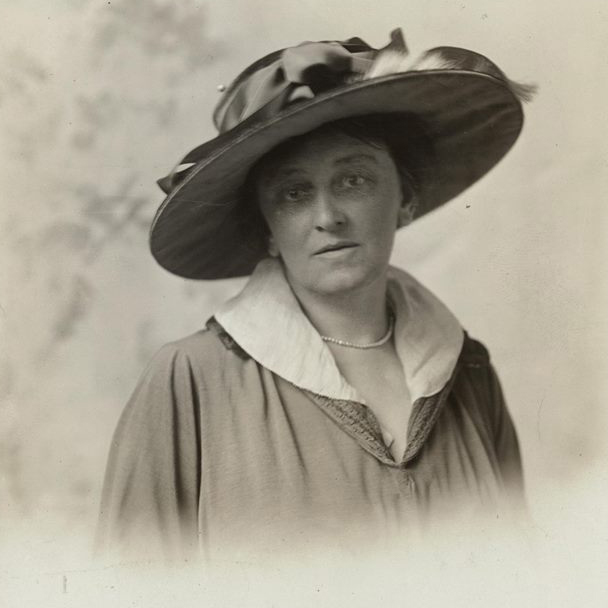
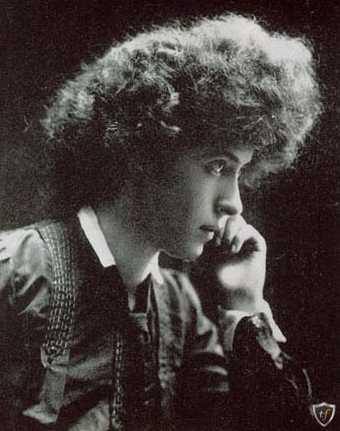
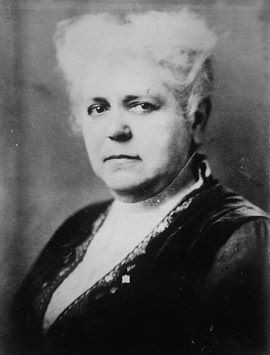
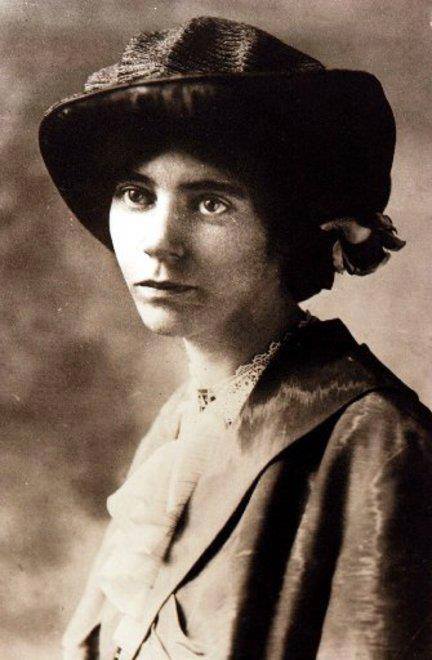
Alice Paul
Alice Paul

Because passage of the suffrage amendment was blocked for so long by Southern Democrats in Congress, many State Legislatures had already adjourned by the time it was finally passed by Congress and sent to the States on June 4th of last year. These legislatures cannot meet again until their next regular sessions – well after the November elections – unless their Governors call them back into “special sessions.” So the few Statehouses which are still in session are critical to achieving victory before the November 2nd Presidential Election.

Today’s rejection by Delaware has resulted in Alice Paul asking thousands of suffrage supporters nationwide to join her in a protest against the party that’s now holding up the enfranchisement of millions of women in States which presently bar them from the polls.

Though the Republican Party provided the vast majority of the votes needed for the Anthony Amendment’s passage by 2/3 of both houses of Congress (200 out of the 304 “yes” votes in the House and 36 of the 56 affirmative votes in the Senate) and is the party which controls 26 of the 35 State Legislatures which have ratified so far, it will nevertheless be Republicans who will be the targets of protests for now. As explained by Alice Paul in her appeal:

The Republican Legislature of Delaware refuses to ratify the suffrage amendment. The Republican Governors of Connecticut and Vermont, where the Legislatures are counted on to ratify, refuse to allow their Legislatures to meet. We are confronted by a serious emergency. It looks as though Republican opposition would prevent millions of women from voting this November. Will you join us on June 8 at the Republican National Convention in Chicago in a demonstration of protest against Republican action in holding up ratification in the one State needed? The demonstration will probably take the form of a line of women in front of the convention hall with banners of protest against the opposition of the Republicans.

President Wilson, a Democrat who was at one time the principal object of the National Woman’s Party’s protests due to his refusal to support the Anthony Amendment, or to be actively involved in the struggle to get it passed by Congress after he endorsed it, has become a vigorous advocate of suffrage. As just one recent example of his efforts, he sent the following telegram to three leading anti-suffrage Democrats in the Delaware Assembly: “May I not as a Democrat express my deep interest in the suffrage amendment and my judgment that it would be of great service to the party if every Democrat in the Delaware Legislature should vote for it?”

But despite the President’s plea, as well as that of the Central Labor Union of Wilmington, no votes were changed. Since there are still five months left until the Presidential Election, there is some hope that the Anthony Amendment may yet become the 19th Amendment by that time, but it’s uncertain where the 36th ratification might come from. Meanwhile, the battlefront will temporarily shift to Chicago.
May 30, 1943: Eleanor Roosevelt Praises the Women’s Army Auxiliary Corps

Founding Feminists is FMF’s daily herstory column.

FoundingFeministLogo-color

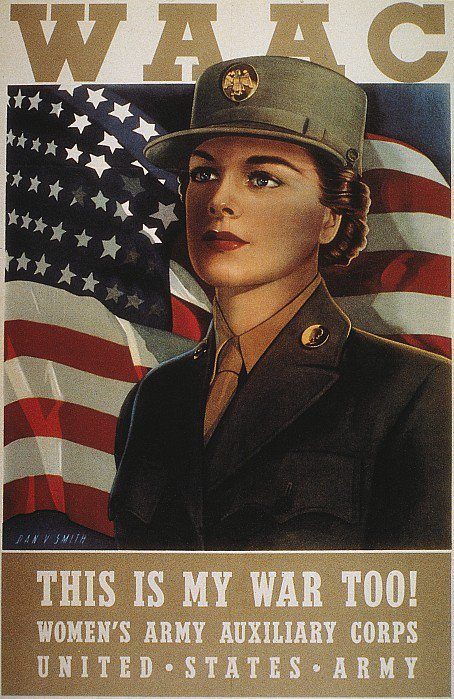
In a Memorial Day address to the Women’s Military Service Club today in New York, First Lady Eleanor Roosevelt praised the accomplishments of the Women’s Army Auxiliary Corps.

1005540_10202540851626085_5064273397990527309_nShe also indicated that entire WAAC units may soon be stationed outside the U.S., saying, “Some of you, I rather think before long, all of you, may have the opportunity to go overseas, as many as want to.”
She cited the pressing need for members of the WAAC to work alongside our troops now in England, and noted that President Roosevelt had been quite impressed by the courage of some servicewomen recently. When in Casablanca in January for a meeting of the Allied leaders, he had the opportunity to greet a small detachment of WAACs, who were on their way to being the first posted to Algiers. Their ship had been torpedoed en route to North Africa. Some were pulled off a burning deck, and others dragged injured sailors into their lifeboat. They were later picked up by a destroyer, and had the opportunity to talk to the President as they disembarked. He said that they seemed quite calm about their experience, as though it was just an expected part of military life.

The First Lady also discussed post-war work that will need to be done: “A world in which people starve and live under fear and injustice is no world in which peace thrives.” She said that many people believed that all great nations exploit all weak ones: “We will have to do some work to convince all peoples of the world that this is not so. The first piece of work we have to do is watch ourselves.”

In another development today, fifty more women were inducted into the service in a ceremony carried over CBS Radio during the “Andre Kostelanetz Presents” program. Col. Overta Culp Hobby, director of the WAAC, urged every woman to ask herself if she was helping the war effort to the best of her ability, and to enlist in her organization if possible in order to free up more men for combat: “Thousands of tasks are now being done by men, men whose presence on the battlefront may mean victory, and whose absence may mean defeat.”

May 29, 1926: Feminist Groups Speak Out Against One Another Overseas

Founding Feminists is FMF’s daily herstory column.

FoundingFeministLogo-color

The rivalry between the National Women’s Party and the League of Women Voters went international this week, with one victory for each side so far.

The stage upon which the battle between the two wings of the American women’s rights movement is being fought is the Tenth Congress of the International Woman Suffrage Alliance, which opens tomorrow at the Sorbonne in Paris.

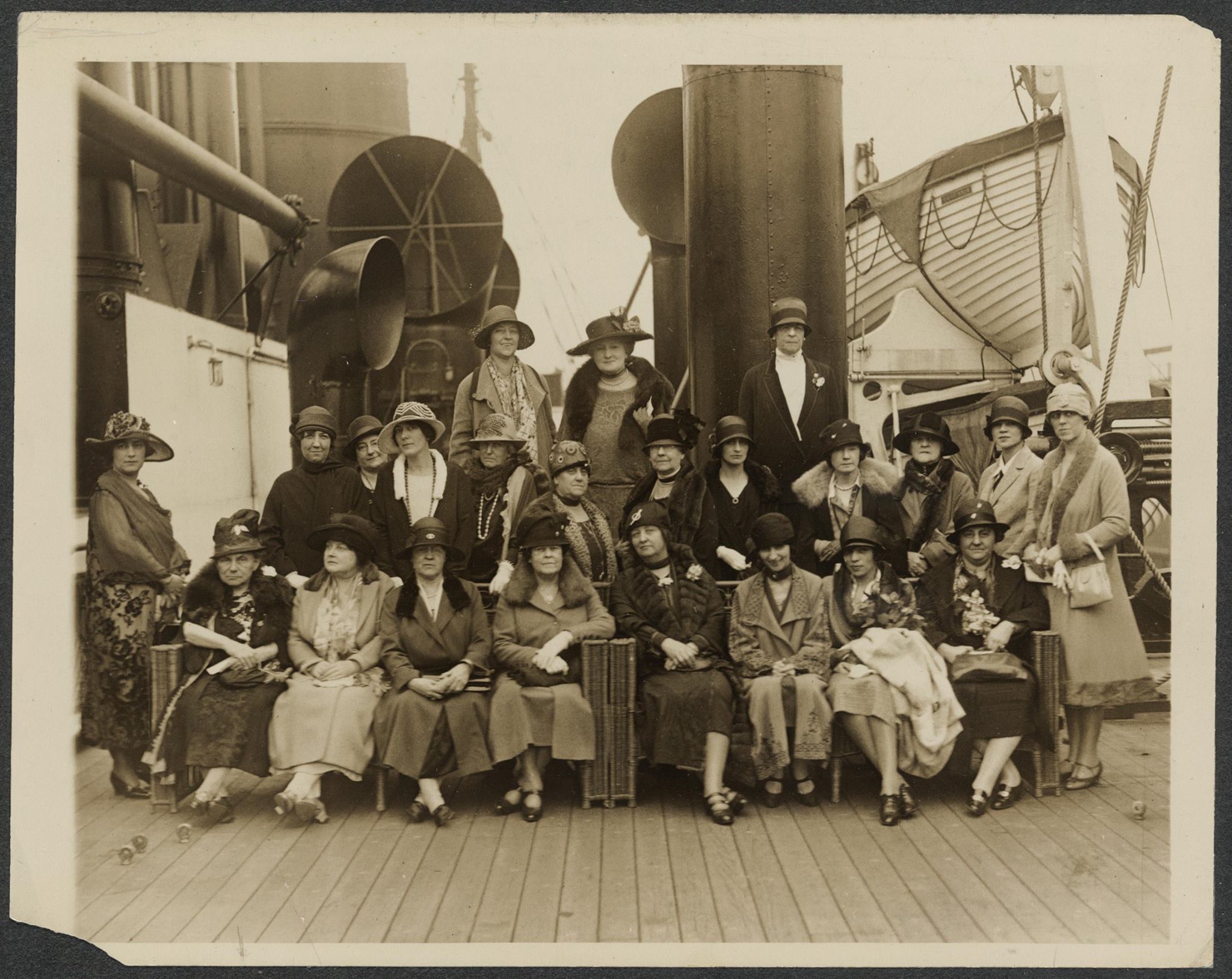
The National Woman's Party delegation on its way to Paris aboard the Tuscania.
The National Woman’s Party delegation on its way to Paris aboard the Tuscania.

The first volley in the present conflict was fired by Belle Sherwin of the L.W.V., who objected to the admission of the N.W.P. as a second group representing the women of America:

The League objects to the admission of the Woman’s Party on a ground which every one concerned recognizes as a fact – that the Woman’s Party and the League are opposed to each other in policy and political action.

Sherwin then used the National Woman’s Party’s sponsorship and strong support of the Equal Rights Amendment to illustrate the difference between the philosophies of the two factions. Though both groups support equal suffrage worldwide and the general principle of equal opportunities for women, the League opposes the kind of absolute equality in all circumstances demanded by the Woman’s Party, and endorses some “protective” labor laws applying only to women. The National Woman’s Party recognizes that so-called “protective” labor laws applying only to women are actually more “restrictive” than “protective” and simply make it harder for women to compete with men for jobs.

Despite a fine presentation by Doris Stevens, head of the N.W.P. delegation, the group was denied admission to the International Woman Suffrage Alliance by its board of directors, even though several other nations were permitted to be represented by more than one group.

But while the L.W.V. won that round yesterday, the N.W.P. is celebrating today. A committee of the International Woman Suffrage Alliance has just endorsed the main resolution the N.W.P. came here to support. Following a vigorous debate, the committee voted 70 to 38 to submit to the convention a resolution stating that “no special regulations for women’s work different from regulation for men’s should be imposed on women; that the only policy consonant with the present trend of labor legislation, which permits the fullest development of the welfare of all workers and safeguards individual liberty, is that of basing all labor regulations or restrictions upon the nature of the work and not upon the sex of the worker.”

Doris Stevens, Mabel Vernon, Anita Pollitzer, Alva Belmont and other members of the National Woman’s Party will remain in Paris to lobby the delegates when they are outside the conference, and some seem quite supportive. Gabrielle Duchene, a veteran European suffrage leader, said she was happy to see a young and active group like the N.W.P. coming to Europe to strengthen the international women’s movement.

May 28, 1980: Military Women Make History Across the Nation

Founding Feminists is the FMF’s daily herstory column.

FoundingFeministLogo-color

Women are now among the elite who have graduated from each of the nation’s most prestigious military academies.

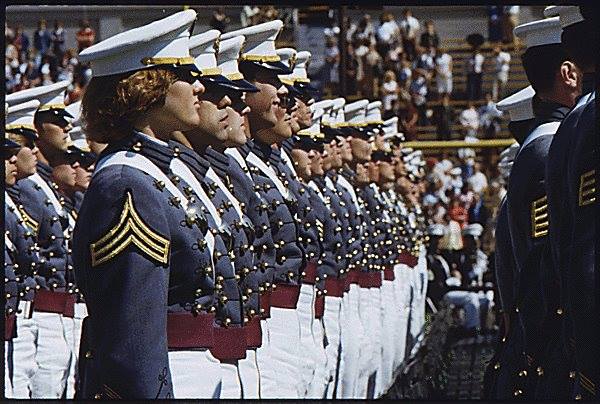
Around the country today, precedents were shattered at graduation ceremonies from West Point to Colorado Springs, exactly one week after the Coast Guard set the pace by awarding diplomas and commissions to Jean Marie Butler and 13 other women at their academy in New London, Connecticut.

The largest contingent of women was found at the Air Force Academy, where 97 women and 970 men graduated. At West Point it was 61 women and 809 men, while at the Naval Academy in Annapolis the figure was 55 women and 938 men.

Andrea Hollen, a Rhodes scholar, became the first woman to receive her diploma from West Point, ranking tenth in her class. After the ceremony she noted that, “We’ll always be first, but we’re not tokens anymore.”

Elizabeth Belzer, the first to graduate from Annapolis, held her diploma over her head and waved to the crowd, receiving loud applause in return. Kathleen Conley, eighth in her class, got the honor of the first Air Force Academy diploma ever awarded to a woman.

The fight to get women admitted to the service academies was a difficult one, and the fact that women are presently barred from combat roles has made their admission a controversial issue. But thanks to a good deal of persistence by advocates of equal opportunity, such as N.O.W. President Karen DeCrow, who testified at Congressional hearings – plus the support of 80% of the public in a survey – Congress passed Public Law 94-106 by a vote of 303 to 96 in the House on May 20, 1975, and a voice vote in the Senate 17 days later. It was signed by President Gerald Ford on October 7, 1975, and required the academies to open their doors to women the following year.

The Class of 1980 began its difficult journey about the time the nation celebrated its Bicentennial on July 4, 1976. Of all the women who were admitted that year, 66% managed to get through all the physical and academic challenges and graduate. That’s a rate comparable to 70% of men, who did not have to encounter resistance due to their sex.

Though there is still a long way to go to achieve equality in the military, the fact that women have now proven their ability to earn a commission under the strictest standards that any branch of our military has to offer shows that the goal is a realistic one, and that our country will be better off when it fully utilizes the talents of all its citizens who wish to serve in uniform.

May 27, 1933: Equal Rights Amendment Push Picks Up Steam

Founding Feminists is FMF’s daily herstory column.

FoundingFeministLogo-color

The need for an Equal Rights Amendment has increased dramatically in the past few years, due to an assault on women’s rights and opportunities that some misguided individuals see as one of the solutions to our country’s current economic crisis.

That was the view expressed by Maud Younger of the National Woman’s Party at a Senate Judiciary Subcommittee hearing on the E.R.A. today.

Maud Younger
Maud Younger

Specifically mentioned as examples of this trend are the firings of marred women workers to make jobs available to men, and new laws restricting only women’s hours and regulating only their pay. The hearings were chaired by Senator John G. Townsend, Republican of Delaware, an E.R.A. supporter. He said:

It has been my observation that women have not sought recognition in our political life as a matter of special privilege, rather they have asked simply for their rights. On this ground they won their suffrage. It is my belief that on the same principle of justice they will win equality in legal status. It may be contended that the results hoped for in the measure might be accomplished by working through State legislatures. I submit that such procedure would mean long delay.

Of the three main witnesses, only one spoke against the legislation. Mary Winslow, of the Women’s Trade Union League, appeared as a representative of her group as well as several others. As a supporter of special “protective” legislation for women she called the E.R.A., “vague, unnecessary, ineffective, destructive, reckless of consequences and tyrranous.”

But Florence Bayard Hilles sees so-called “protective” laws as simply “restrictive,” and a woman’s status under the law as what’s vague and too easily changed:

Today the civil rights of women can be extended or restricted at the caprice of any State legislative authority, so that a woman’s right to earn her living in the trades or professions, or the uses of the powers of her mind, or body, can be defined, permitted, or denied by State legislative authority. The history of the common law is the story of master and slave. Women were at one time in the slave class, and some of the attributes of that status still cling to her. Today there is absolutely no reason to regard a woman as a weakling or an inferior. She has demonstrated her ability in spite of the handicaps imposed on her by law and custom, and earned her complete emancipation. This emancipation should be written into the Federal Constitution in order that it may be made secure.

The Equal Rights Amendment was written by Alice Paul, and the campaign for its adoption was launched by the National Woman’s Party on July 21, 1923. It was introduced into Congress in December of that year by Senator Charles Curtis and Representative Daniel Anthony, both Republicans of Kansas. Rep. Anthony is the nephew of Susan B. Anthony. Two months later, the first hearings were held by a Subcommittee of the House Judiciary Committee, with the National Woman’s Party testifying in support. On February 4, 1925, the Senate Judiciary Committee held its first E.R.A. hearings. Last year saw two positive developments, as the E.R.A. got a hearing before the full House Judiciary Committee, and on September 22nd, Amelia Earhart and other members of the National Woman’s Party called on then-President Hoover to discuss the measure with him.

Eighty-five years after the Seneca Falls Convention, and thirteen years after national suffrage was won, the battle for total equality continues. Though that may still be a distant goal, the continued activism of those who were active in winning the vote, such as Alice Paul, Maud Younger, and Florence Bayard Hilles, should insure the same successful outcome for this amendment as for the 19th.

The Equal Rights Amendment states : “Men and women shall have equal rights throughout the United States and every place subject to its jurisdiction.”

May 16, 1913: Suffragists Condemn Comments by NYC Mayor

Founding Feminists is FMF’s daily herstory column. Each day, we dig in to a theoretical headline from women’s history from that day in years past.

FoundingFeministLogo-color

Local suffragists expressed immediate and universal outrage today over some remarks made by New York City Mayor William Gaynor in a newspaper interview.

The interview actually started off on a quite positive note when he said: “Would I call myself a suffragist? In that I am perfectly willing, yes.” He then went even further and said he could understand the violent actions taken by some British suffragists. But like many public figures, he didn’t know when to stop talking, and went on to explain why he had sympathy for the actions of what he called “rather desperate” English suffragists. This exposed his true views on women in general, and suffragists in particular.

William Jay Gaynor, Mayor of New York since January 1, 1910

Apparently the Mayor feels that what makes women “militant” about seeking equal rights is the lack of a husband, and since there are “1,500,000 unmarried women” in England, he believes such desperation there is inevitable. As he put it, “as soon as every woman has a man the women will get peaceful… Is there any suffragette in the world who would not give up her principles for a nice man?” He said that the reason he did not fear such violence here was because “most of our woman suffragists are married.”

He then made things even worse by blaming women themselves for their failure to win suffrage, and showed that he does not take the suffrage movement seriously:

Do I think the men of this State are opposed to woman suffrage, or are in favor of it, or indifferent about it? I think the greatest number are in that mood that they just laugh and rub their stomachs and say that they are perfectly satisfied for the women to vote if they want to. But the trouble is that there are only a few women, apparently, who want to vote. Mark me, as soon as the majority of them want it they will get it.

There was quick and universal condemnation of Gaynor’s remarks by suffragists. Elizabeth Freeman, who drove the literature wagon during a recent suffrage hike from Newark, New Jersey, to Washington, D.C., and who has served time in English prisons for her suffrage work there, said:

The Mayor is talking through his hat when he says that all militant suffragettes need is a mere man. All they need is a vote! Most of the militant suffragette leaders in England, as a matter of fact – that is to say many of them – are very sweetly married women.

Freeman then recalled a recent debate here, in which the anti-suffragists implied that those who were committed to the cause of “Votes for Women” tended not to believe in marriage and motherhood. She then called for a survey of those on the platform, and it was discovered that the five women who argued against suffrage had three children between them, while four of the suffragists had a total of twelve children, Freeman being the only unmarried debater on the platform.

Harriot Stanton Blatch said English militance was not due to so many unmarried women, but political and economic conditions, and mentioned the names of many prominent English militants who are married.

Rheta Childe Dorr, author of “What Eight Million Women Want” said: “What an insult to women to say that any suffragette would give up her principles for a nice man. Lots of suffragettes who are chucking things in England are married women whose husbands are nice men, and many of these husbands have stood by them and been arrested with them.” She then noted: “Women don’t need men half as bad as men need women, anyway.”

With the suffrage movement enjoying unprecedented strength, as shown by massive pageants in Washington, D.C. on March 3rd and here in New York on May 3rd, it’s surprising to see anyone who holds elective office so unconcerned about offending a group that may soon constitute at least half the electorate. But suffragists – single, widowed, divorced or married, with or without children – have never been deterred by such old-fashioned views, or the condescending attitudes personified by the Mayor, and will simply use these insults as a spur to greater efforts, thus bringing the day of victory closer.

May 15, 1894: Students Speak Out for Suffrage in Brooklyn

Founding Feminists is FMF’s daily herstory column. Each day, we dig in to a theoretical headline from women’s history from that day in years past.

FoundingFeministLogo-color

The woman suffrage movement’s youngest supporters may be among its most insightful and articulate if those who spoke earlier this afternoon at the Brooklyn Woman Suffrage Association’s headquarters are any example.

School-age suffragists came up with some devastatingly logical responses to some of the most common arguments used by the “antis.”

10294478_10202456504677464_5269002442823136517_nEdith Merzbach hurled several questions at suffrage opponents, one aimed at the myth that women would somehow lose their femininity at the polls:
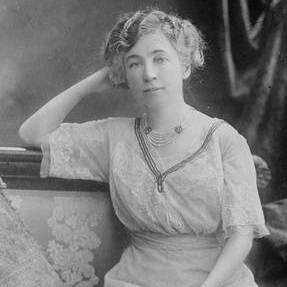
Why is it when boys and girls go to the same schools, men and women go to the same churches, and sit in the same pew, go to concerts and lectures together, that once a year, if they should meet at the voting places, the women would suddenly be unsexed?

Merzbach also turned another “anti” argument about women voters neglecting their families against those who created it:

While the anti-suffragists are gathering in conventions to oppose this advance step, what is becoming of their husbands’ suppers? While they are carrying the protest from house to house, who is rocking their cradles at home? They devote more time to shopping in one season than would be required for voting in two years. Are not their homes being neglected then?

Mildred Leyd was eager to personally refute the assertion that only a few older women wanted the ballot, or to sign a petition asking for a suffrage referendum. “Those who made that statement hadn’t yet heard from us,” she said. “We so long to sign the petition that we would fain reverse the sentiment of the poem and exclaim ‘Forward turn forward, O time in thy flight, and make me twenty-one just for to-night.’ ”

Leyd then went on to lampoon the “logic” of some basic anti-suffrage arguments. Especially effective was juxtaposing two of the most common ones: “If suffrage were granted, women would not take sufficient interest to vote, for she does not want it,” and “If granted she’d take so much interest she’d neglect home.” She then gave an example of a brother and sister who went to the same school, where the sister took all the prizes. And yet, years later, the boy “is perfectly willing to legislate for all his sisters and his mother besides.”

The veteran suffragists in the audience were quite impressed by the students’ rhetorical skills, and cheered by the thought that the battle for the ballot – begun when the students’ grandmothers were about the same age as today’s orators – will be carried on by this new generation with great vigor and eloquence.

May 14, 1929: Charges Dismissed Against Women Arrested for Distributing Birth Control Information

Founding Feminists is FMF’s daily herstory column.

FoundingFeministLogo-color

A victory for birth control advocates today, as charges were dismissed against all five defendants arrested on April 15th for distributing contraceptive information, a violation of Section 1142 of the New York State Penal Code.

The doctors and nurses never disputed that they gave information and advice on birth control to an undercover detective. But according to Magistrate Abraham Rosenbluth, the prosecution failed to present any evidence to contradict the assertion of the examining physician that the patient did, in fact, have a serious medical condition which would authorize the distribution of contraceptive information and devices to her “for the protection of her physical health and welfare.”

10365954_10202452045245981_5186553769696346129_n
Nurses Sigrid Brestwell and Antoinette Field; Dr. Elizabeth Pissoort; Margaret Sanger (the clinic’s owner, not present at the time of the raid or arrested); Dr. Hannah Meyer Stone and Nurse Marcella Sideri.

Rosenbluth’s decision was based on a 1918 ruling by Judge Frederick Crane of the New York State Court of Appeals that licensed physicians should be exempted from prosecution under Section 1142 if they are giving advice or prescribing contraceptives to a married patient “for the prevention and cure of disease.”

Magistrate Rosenbluth spent two weeks weighing the evidence gathered at two previous court sessions, then made his ruling:

Good faith is thus made the test of guilt or innocence. It may well be that, in spite of Mrs. McNamara’s purpose to search out and beguile a suspected violator of the statute, her physical condition, as disclosed to the doctors who are defendants, made their advice and instructions entirely necessary…

If Mrs. McNamara was in such physical condition, before she consulted defendants, that their prescription was unwarranted, and necessarily made in bad faith, that was easily susceptible to affirmative proof, but the prosecution at bar rested its case without any evidence to challenge the diagnosis made by the defendant…

The burden clearly rests on the people in this kind of prosecution to negative the good faith of the doctor or the nurse.

Dr. Hannah M. Stone, director of the facility, the Clinical Research Bureau at 46 West 15th Street in Manhattan, gave out a statement on behalf of herself and Dr. Elizabeth Pissoort, and nurses Marcella Sideri, Sigrid Brestwell and Antoinette Field. In it they said they held “no resentment against the misguided raid and the attempts to fingerprint us.” She continued:

Those responsible for the raid were apparently entirely ignorant that the law expressly permits physicians to give such advice for medical indications. Our Clinical Research Bureau is a most signal and valuable public health service and aids in the working program of many important social service agencies in this city. This decision is a vindication.

The raid has caused much public criticism, even from those who had not been supportive of the clinic in the past, and it has proven to be a great embarrassment to the police department. It was conducted so overzealously and ineptly that many items clearly not having any relation to birth control, such as forceps used to handle instruments being sterilized, were seized. Mary Sullivan, head of the Women’s Bureau of the New York Police Department at the time of the raid, was removed from that position on May 10th for her part in it.

Especially disturbing to the medical community was the confiscation of huge numbers of private patient files, 150 of which have been “lost.” Raids, arrests, and even jail sentences of birth control advocates were common in the early days of the movement. But in the eleven years since Judge Crane’s opinion in “People v. Sanger” (222 N.Y. 192), doctors who prescribe contraceptives to married women whose health would be endangered by pregnancy have been relatively free of harassment, at least in New York. Last month’s raid was quite unexpected, and there is much speculation as to why it occurred.

Hopefully, the public outcry over the methods used, plus the dismissal of all charges against all defendants will be enough to make this the final “raid” in New York State, and the battle for birth control can continue here without medical professionals once again living in fear of arrests and criminal prosecution when treating their patients.

May 13, 1909: Suffragists Picket Reverend in Madison Square

Founding Feminists is FMF’s daily herstory column.

FoundingFeministLogo-color

Clearly not reluctant to venture into hostile territory in search of converts, Edith Bailey, Harriot Stanton Blatch, and several other suffragists held a rally today just outside the church of militant anti-suffragist Rev. Dr. Charles Henry Parkhurst on Manhattan’s Madison Square.

At 12:30, a big red automobile carrying the speakers drove up, was turned into a rostrum immediately after being parked, then after a large yellow “Votes for Women” banner was unfurled, the rally began. The speakers, all prominent members of the Equal Franchise League, were there strictly as individuals. But though this was not an officially sanctioned rally, the arguments in favor of woman suffrage were as effective as those at any well-planned, fully authorized meeting.

Blatch first explained why the open-air forum was chosen: “You men are so shy that you will not come to a hall to hear us speak and we must come to you.” She then expounded on one of every suffrage speaker’s pet peeves – the question of why they aren’t at home taking care of their children:

You never think to ask the actress who amuses you why she doesn’t stay at home and mind the kids, or the factory girl who makes your hats, why she doesn’t. You do not ask either if the women speaker may not be a grandmother, as I am, whose ‘kids’ have all left her, or if she may be an unmarried woman.

Edith Bailey
Edith Bailey

Blatch then introduced Edith Bailey, who she noted, “has kids to mind, but who is a better mother for having something outside her four walls to think of.” Bailey, author of a suffrage tract entitled “Some Ideals of Suffrage,” which was being enthusiastically distributed to the crowd by poet Rosalie Jones, said that women who are suffragists were simply housekeepers who “do not want to confine our housekeeping to our own homes. We feel that there is housekeeping for us in the streets, in the prisons, and on the School Boards. There are old and young bachelors on the School Boards and there ought to be a mother or two.”

Bailey noted that “it used to be considered unwomanly for women to get equal pay with men,” indicating that some progress had been made in that area. However, she thinks there are still too many men like Secretary of State Elihu Root who believe “women should be protected by their husbands and brothers,” but who fail to provide them with either. “Women must have the right to take care of themselves, and then there will always be some one out to see that they are protected.”

Josephine Casey, a factory worker, challenged the double standard which presumes that women, but not men, need to justify leaving the home and/or voting:

I protest against giving reasons for wanting to vote. If you were going out of your house you would not have any one stop you and say ‘Are you going shopping, or are you going to a matinee? Why are you going out?’ I leave the house because I wish to, and that is the reason for my asking for the vote.

There were definite indications that the arguments presented today were effective. Near the end of the rally, Harriot Stanton Blatch said: “A good way for you to show that you believe in ‘Votes for Women’ is to give something to the cause.” Immediately two men volunteered their hats to be passed around, and funds were successfully collected from the crowd. Blatch then asked: “Is there any reason who women should not vote?” and the men surrounding the four-wheeled speakers’ platform enthusiastically shouted, “No! No!”

The day’s final encouragement was given by a working man, just coming down the street as the meeting ended. After asking what the gathering was about, he was told that it was put on by women who wanted to vote. He then replied: “Well, I don’t know why they shouldn’t.” The speakers departed as quickly as they came, and are now on their way to lunch at the Colony Club, where they will celebrate today’s success, and plan similar actions for the future.

May 12, 1942: Congress Passes Bill Establishing Women’s Army Auxiliary Corp

Founding Feminists is FMF’s daily herstory column.

FoundingFeministLogo-color

The bill to establish a Women’s Army Auxiliary Corps (WAAC) got final Congressional approval today with a Senate vote of 38 to 27.

It passed the House on March 17th by a vote of 249 to 86. The bill, sponsored by Representative Edith Nourse Rogers (Republican – Massachusetts) now goes to President Roosevelt for his signature. Under the provisions of the bill, the WAAC will enlist up to 150,000 members who may serve anywhere in the world they’re needed, will receive Army pay, be subject to military regulations, and live on Army posts.

The two-hour debate prior to the vote was intense at times, as Senator Francis Maloney, Democrat of Connecticut, and John Danaher, Republican of Connecticut, led those arguing against the bill. In addition to failing to defeat the bill, Maloney was also thwarted in an attempt to pass an amendment to confine the WAAC to service “within the boundaries of the United States.” His proposal was defeated by a vote of 37 to 26, with Senator Hattie Caraway, Democrat of Arkansas, the only woman in the Senate, voting in favor of the Rogers Bill, and against the Maloney Amendment. Senator Maloney seems to be opposed to women in any military capacity, and claimed that this measure “casts a shadow on the sanctity of the home.”

Another controversy involved the issue of racial discrimination. Three amendments were proposed which would have specifically banned racial bias in the WAAC. But if amended in any way, the bill would have had to go back to the House for re-approval, and this would have delayed, for an unknown amount of time, the establishment of the WAAC.

1506797_10202439904542471_2442843499176689179_n
Rep. Edith Nourse Rogers, Republican of Massachusetts

Though under normal circumstances the bill’s chief Senate sponsor, Senator Warren Austin, Republican of Vermont, would have endorsed an anti-racial-bias amendment, he said that the need for immediate passage of the bill, and the assurance of the War Department that it would not discriminate on the basis of race in the WAAC caused him to oppose the amendments. Two amendments were withdrawn, and the third, by Senator James Hughes, Democrat of Delaware, was rejected by a voice vote. According to Senator Austin, there is “nothing in the bill which would lead to discrimination.”

As soon as President Roosevelt signs the bill, the War Department will give specific details on plans to implement it, and Secretary of War Stimson will name a director for the corps. The Women’s Army Auxiliary Corps will be open to women between the ages of 21 and 45. Once functioning, the WAAC will free many men for combat, and provide a major boost to our defense effort in many critical areas at a time when the talents and abilities of all our citizens are needed most.

May 9, 1945: Army Seeks 9,000 Nurses Following Germany’s Surrender

Founding Feminists is FMF’s daily herstory column.

FoundingFeministLogo-color

Though it’s been barely 24 hours since nationwide celebrations greeted President Truman’s announcement at 9AM Eastern War Time yesterday of Germany’s unconditional surrender, today brought a reminder that the battles in the Pacific are far from over, and Army Nurses are as vital to our war effort as ever.

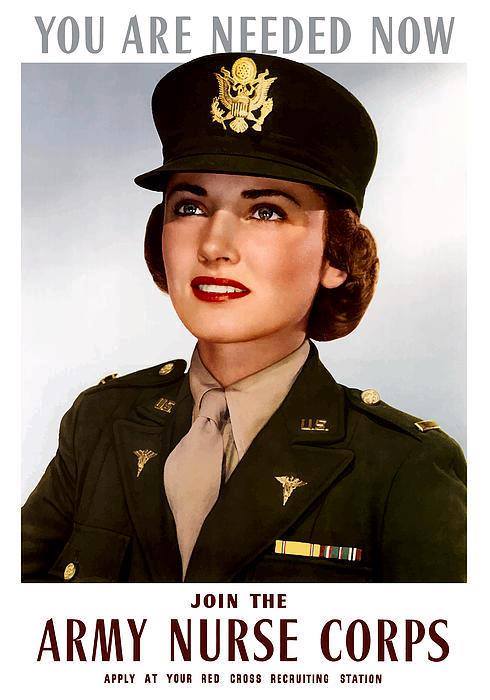
The Office of War Information said today that the Army had an immediate need for 9,000 more nurses so that its Nurse Corps can reach its maximum authorized strength of 60,000 by June 1st. Several reasons were given to explain why the numbers need to be rapidly increased despite victory in Europe.

Many of the troops who fought their way to the heart of Germany, or were shot down while flying missions over enemy targets are still recovering from their wounds. Substantial numbers of civilians who were recently liberated from Nazi rule are in need of medical care in countries whose infrastructures – including hospitals, clinics and doctors’ offices – were devastated by the fierce fighting. And now that the war has ended in Europe, there must obviously be a massive redeployment of Allied forces to the Pacific, where sickness rates among the troops as well as attrition rates among the nurses will be higher.

1012565_10202416676801792_5167392510407875140_nIt is estimated that 4.000 of the 9,000 nurses needed will come from those already registered with the armed services, and need only be called to serve, plus those about to finish their training with the United States Cadet Nurse Corps. But that still leaves the Army 5,000 nurses short of its goal, so that many must enlist within the next three weeks. Once the goal of 60,000 has been reached, the Army plans to begin rotating those who have served long tours of duty overseas back in the U.S., and will still keep recruiting, so that even with attrition, new recruits can keep the Army Nurse Corps at 60,000 through the end of the war plus six months.
Army Nurses have been in the war from the moment America first entered it. On December 7, 1941, there were less than 1,000 Army Nurses, but 82 were stationed at Pearl Harbor. Many distinguished themselves by going above and beyond the call of duty that day. One was Annie Fox, Chief Nurse at Hickam Field, who became the first woman to be awarded a Purple Heart, because “her fine example of calmness, courage and leadership was of great benefit to the morale of all with whom she came into contact.” Though her award was changed to a Bronze Star last year when it was decided that only those who were wounded could qualify for a Purple Heart, her actions on that first day still serve as an example of the bravery and professionalism of America’s nurses.

The Army Nurse Corps was officially established in 1901, with the Navy following suit in 1908. But many nurses were serving in military hospitals during the Civil War, with Dorothea Dix appointed Superintendent of Nurses for the Union forces on June 10, 1861, just two months after the conflict started. The Government hired 1,500 civilian nurses to serve during the Spanish-American War in 1898.

During the First World War, 21,460 nurses were recruited by the military, about half of them sent overseas. Though not assigned to combat duty, they worked in environments that were the most vulnerable to the spread of influenza, and over 200 died during that epidemic.

Army Nurses have been captured as prisoners of war, subject to air raids, and have had to practice their profession while under fire, so they are entitled to the same respect as any other member of our armed forces. In recognition of this, both Army and Navy Nurses were granted full military status on February 26, 1944.

Though many tough battles are sure to lie ahead in the Pacific this summer, and the worst fighting of the entire war will occur during the invasion of Japan itself, an operation expected to begin late this Fall, there is no doubt that women will serve their country as well in the future as they have in the past. They therefore deserve our commendation for services already rendered, as well as our thanks in advance for their upcoming sacrifices in the drive for total and final victory.

May 8, 1915: Suffrage Promoted at Panama-Pacific International Exposition

Founding Feminists is FMF’s daily herstory column.

FoundingFeministLogo-color

Jeannette Rankin, who was Field Secretary for the National American Woman Suffrage Association (NAWSA) before returning to her home State of Montana last year to work full-time for passage of a suffrage referendum, came up with a novel idea recently for promoting the cause of woman suffrage at the Panama-Pacific International Exposition.

Reverend Anna Howard Shaw, NAWSA’s president, embraced it immediately, and today their enthusiasm proved justified as this simple idea has been a great success.

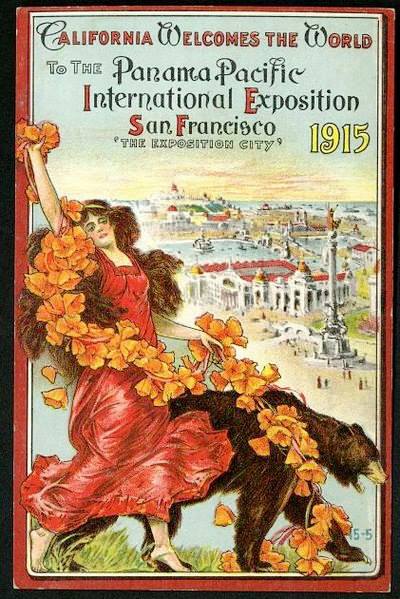
10313986_10202411286667042_8854361957610832857_nHuge numbers of visitors from the East, where no State has equal suffrage, are visiting the Exposition here in San Francisco. It opened on February 20th, runs through December 4th, and is being held to celebrate the completion of the Panama Canal last August as well as to showcase the city’s remarkable recovery from a devastating earthquake nine years ago. Since women in California (as well as in ten other Western States) can vote on the same basis as men, Rankin wondered if this visit to “suffrage country” by all those Easterners could provide a way to get them comfortable with the idea of women as voters. Having large numbers of women walk about the fairgrounds wearing “I’M A VOTER” buttons came to Rankin as the perfect strategy.
Those buttons were seen everywhere today, and it’s proving an educational experience for Eastern men who may have never seen or talked to a woman voter before. Many are pleasantly surprised to see that voting women – and even active suffragists – are not as anti-suffragists portray them.

Of course, one of the women who can’t wear the button is Reverend Shaw herself. Though Jeannette Rankin is a voter, thanks to having played a major role in winning woman suffrage in Montana on November 3rd, Shaw is from Pennsylvania, which along with New York, Massachusetts, and New Jersey, will be voting on woman suffrage this Fall.

But Shaw hopes to be wearing her “I’M A VOTER” button six months from now, saying, “I have saved a button in the hope that the men of Pennsylvania will be just as sensible as the Western men who have enfranchised ten million women and seem to be glad of it.”

May 7, 1894: Elizabeth Cady Stanton and Harriot Stanton Blatch Lead Mass Suffrage Meeting

Founding Feminists is FMF’s daily herstory column.

FoundingFeministLogo-color

A lively and well-attended mass meeting was held at New York City’s Cooper Union earlier this evening, and there certainly seem to be plenty of people willing to do whatever it takes to remove a single word from the New York State Constitution, which presently grants the right to vote to “every male citizen of the age of 21 years.”

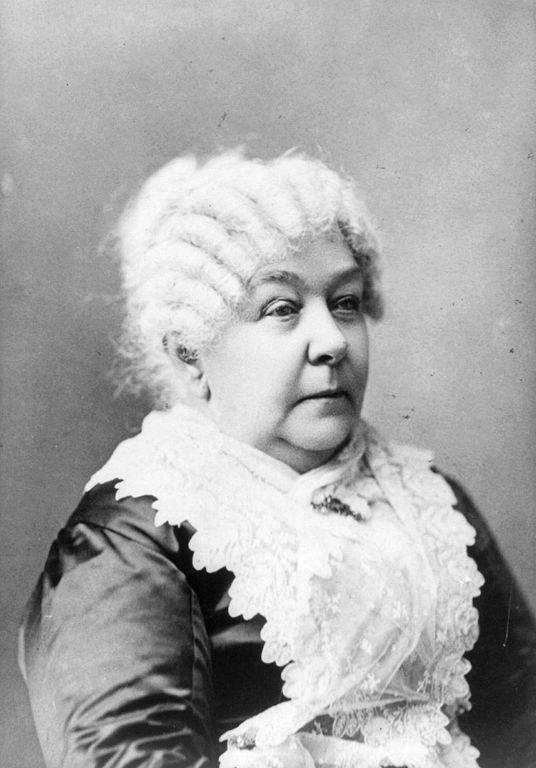
Elizabeth Cady Stanton was given a rousing ovation before she even began speaking, and deservedly so, considering her nearly 46 years of work for suffrage. She noted just how basic a right voting should be, and the injustice of arbitrarily withholding it from entire groups. “The State has no right to abolish the suffrage for any class of people,” she said. “I remember when the enfranchisement of the Negro [sic] was the vital question of the hour. In one of the debates on the floor of the Senate, Charles Sumner said: ‘Do you tell me suffrage is a privilege? Allow that sentiment to crystallize in the hearts of the people and we have rung the death knell of American liberty.'”

Elizabeth Cady Stanton

She then addressed a common opposition argument that only those who may be called to serve on the battlefield should have a vote. “They talk of fighting. It seems to me those who have been able to meet persecution, ridicule and tears have done the best kind of fighting.”

Her daughter, Harriot Stanton Blatch, spoke next, elaborating on that point. “It was twenty years ago, and a gentleman was talking about this same question of suffrage to my mother,” she told the audience. “‘But Mrs. Stanton,’ he said, ‘if you have the franchise you could not protect it. You cannot fight.’ ‘Yes, I can,’ she replied. ‘I should fight just as you did. I should hire someone to go in my place.’ ”

The meeting had a surprisingly wide spectrum of speakers. John Milton Cornell, of the Cornell Iron Works presided, and at one point in the program he introduced American Federation of Labor president Samuel Gompers. Cornell remarked, “What men have failed to do woman has accomplished with a wave of her hand. She has brought capital and labor together on the same platform.”

Woman suffrage petitions to the State Constitutional Convention in Albany were available for signing at numerous tables, and a suffrage resolution to the Convention was presented, then unanimously adopted by all present. It was then announced that the suffrage headquarters at 10 West 14th Street will be open all summer, and the gathering concluded with the names of those willing to have parlor meetings in their homes being taken.

The widespread support shown for suffrage tonight certainly gave everyone here hope that there will soon be a woman suffrage amendment on the Statewide ballot along with the rest of the proposed constitutional changes. If a suffrage amendment is submitted and then approved by the male voters, the addition of New York as an “equal suffrage” State would be a huge victory for many reasons.

Presently, women can vote in only two States (Wyoming since 1869 and Colorado since last November) so the addition of ANY third State would be significant in and of itself. But because New York has the biggest population of any State, it also has the biggest delegation in Congress, and having that many Members of Congress who would need to win the “Women’s Vote” every time they ran for election would be quite helpful in getting the Susan B. Anthony (nationwide woman suffrage) Amendment passed by Congress and sent to the States for ratification.

An East Coast win would also prove that woman suffrage is not just a phenomenon unique to a couple of sparsely populated Western States, but an idea that has been endorsed by the electorate in very different States thousands of miles apart. So a major effort will be made to make November 6, 1894 a red-letter day in the history of suffrage, and many people here tonight are eager to work to assure that victory.

May 6, 1911: NYC Suffrage Parade Largely Exceeds Expectations

Founding Feminists is FMF’s daily herstory column.

FoundingFeministLogo-color

Anyone who still doubts that the woman suffrage movement is rapidly gaining support must have been a long way from New York’s Fifth Avenue earlier today.

The turnout for this year’s annual suffrage parade was unprecedented, with at least 3,000 marching from 57th Street to Union Square. That’s nearly eight marchers for every one last year. At the end of the parade, speakers then addressed a friendly crowd of about 10,000, an equally stunning turnout.

Reverend Antoinette Brown Blackwell, the first woman in America to be ordained a minister, turned out to be the second oldest participant at age 85. She is five years younger than a great-grandmother who came all the way from Martha’s Vineyard in Massachusetts to show her support for suffrage. The youngest suffragist was Sarjo Martina, one year old, a member of the “Future Voters” delegation, who was pushed along in a stroller.

10313452_10202400100347391_4253789440909913361_n

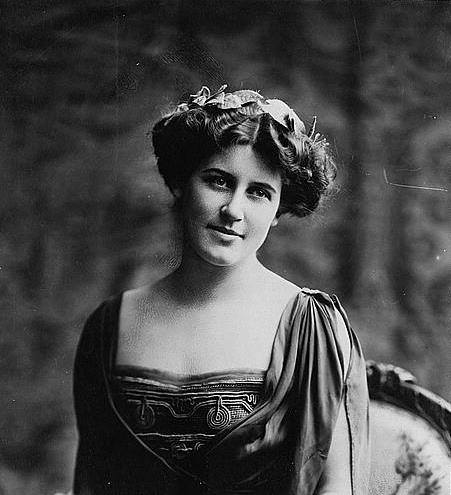
The procession was headed by Inez Milholland and two other women carrying a banner inscribed: “Forward out of error, Leave behind the night; Forward through the darkness, Forward into light,” from the hymn “Forward ! Be Our Watchword.” The three women were followed by Scotch bagpipers, the first of the parade’s many musicians, then several floats (a new innovation this year), and women representing many different occupations and other groups.

The National College Equal Suffrage League delegation was led by Reverend Anna Howard Shaw, who has been President of the National American Woman Suffrage Association since 1904. These marchers were among the most colorful, with all members in caps and gowns.

The marchers received a good deal of applause along the route, and large “Votes for Women” banners could be seen as the parade passed the headquarters of Alva Belmont’s Political Equality Association at 505 Fifth Avenue. Belmont herself was seen smiling as she observed the parade.

The Women’s Trade Union League carried a banner saying “Women Need Votes To End Sweat Shops,” and the Shirtwaist Makers behind them trimmed their banner in black in memory of the victims of the recent Triangle fire.

The Woman Suffrage Party was well represented, and as a sign that spectacles such as this are no longer considered radical or militant, Maud Nathan, one of the Party’s most influential members, gave the event her blessing. She had strenuously objected to the two previous and much smaller parades. In 1908 twenty-three members of the Progressive Woman Suffrage Union marched despite being refused a parade permit, and last year four hundred marched. But as a sign of the growing prestige and influence of suffrage groups, the permit for the 1910 parade was obtained without difficulty. Nathan was among the participants today, and happily accepted a bouquet of flowers tossed to her by a male spectator.

Harriot Stanton Blatch and her Women’s Political Union organized the parade, and a large contingent of that group’s members was present. Their colors of purple, green and white could be seen throughout the parade in many delegations. The march ended at Union Square, with the biggest ovation reserved for the Men’s League for Woman Suffrage, whose members required the most courage to march. Many of the women’s delegations ran out to greet them waving banners and clapping loudly as the men arrived.

Union Square was packed with those waiting to hear what the suffragists had to say. After the “Woman Suffrage March” was sung, speeches began from locations all around the Square. The orators got on top of anything they could improvise to address their audiences. It was proudly noted that Washington State voters had approved a woman suffrage referendum on November 8th by an almost two-to-one margin, and that though it had been 14 years since any previous victory, the stalemate was now over.

The New York State Legislature will be under siege to put a referendum on the ballot here, and an all-out effort will be made in California to pass a suffrage amendment to their State Constitution at a special election on October 10th. Despite feeling exhausted after all of today’s activities, everyone feels that it was well worth all the time and effort necessary, and that next year’s parade will be even more spectacular – and have another victory to celebrate!

May 5, 1916: Attendees Celebrating Emma Goldman’s Release from Prison Storm Carnegie Hall Stage for Birth Control Information

Founding Feminists is the FMF’s daily herstory column.

FoundingFeministLogo-color

Rose Pastor Stokes has just caused a sensation in Carnegie Hall by distributing small slips of paper containing birth control information, a clear violation of Section 1142 of the New York State Penal Code.

She took this step at a mass meeting called to celebrate Emma Goldman’s release from prison, where she had just served two weeks in the workhouse for the same offense.

Though the main event of the evening was supposed to be Goldman’s speech, it was eclipsed by the pandemonium set off when those in the audience stormed the stage to obtain knowledge criminalized by the State of New York, and classed by the U.S. Government as “obscenity” under the Comstock Act of 1873.

During part of her speech, Stokes spoke directly to those whose job it is to enforce these Victorian era laws:

You, gentlemen, who earn your living by hunting down the victims of a maladjusted society, and you, gentlemen of the club, if you are here to interfere with, or arrest, or provide the authorities with evidence against anyone ignoring this unjust section of the law, I address myself to you. I should be truly sorry to place you under so mean an obligation, for I know your hearts well enough to know that you do not always relish the job your economic insecurity forces you to hold on to. But I cannot do other than again take the opportunity afforded me here of passing out information to wives and mothers in need.

Rose Pastor Stokes
Rose Pastor Stokes

At the conclusion of the evening’s speeches, many audience members rushed forward and scrambled for the slips that she had promised to distribute. Stokes found herself quickly surrounded and besieged as private security officers tried unsuccessfully to maintain order. A false report then began to spread that Stokes was being arrested. But Max Eastman, in charge of the meeting, stood on one of the few unoverturned chairs and reassured the audience that the clamor on stage was not the result of an arrest, but only because so many people were trying to obtain the slips at once, and resentment by a few men and boys that only women were being given the information.

After a substantial number of slips had been distributed, some of the other speakers (Ben Reitman, Arturo Giovanitti, Leonard Abbott and Max Eastman) pushed their way through the crowd and escorted Stokes off the stage, enabling her to escape the chaos. After resting for a few minutes, she left the hall, saying: “I expect to be arrested,” though no attempt was made to do so tonight.

This isn’t the first time Stokes has openly defied the law. On April 19th, at a dinner put on by birth control advocates at the Hotel Brevoort, she went among the guests quietly whispering some banned knowledge to a number of them, and giving out small slips of paper with similar information for some of the diners to take home.

The battle to legalize contraceptive information and birth control devices will undoubtedly be a lengthy one, but this long-overdue fight has clearly begun in earnest and will only continue to increase in intensity. Victory will require many different approaches, from speaking at various forums, to lobbying legislators, to challenging unjust laws in court. It will certainly require a good deal of courage on the part of advocates who must sometimes openly break these laws in order to fight them.

Tonight was a welcome assurance that there are those who are willing to step forward and do whatever is necessary to point out the absurdity and harm of anti-birth-control laws. But though the forces determined to use repressive measures to defend the “values” of reproductive ignorance and sexual shame may eventually be overcome, they won’t go away, so this could be just the first stage of a permanent battle. Hopefully, those who grow up in a future society where effective methods of birth control and accurate, explicit information about human sexuality are legally available will not take these hard-won rights for granted and will be as zealous in defending them as today’s advocates are in establishing them.

May 2, 1913: President Theodore Roosevelt Speaks Out for Suffrage

Founding Feminists is FMF’s daily herstory column.

FoundingFeministLogo-color

 Theodore Roosevelt joined the ranks of suffrage speakers tonight, and left no doubt he will bring the same enthusiasm and stirring oratory to the “Votes for Women” campaign which have characterized his efforts for other causes he passionately supports.

Ten suffrage organizations combined to present a program at New York’s Metropolitan Opera House to accompany the former President’s first suffrage speech. Not only was every seat and box sold out, but the aisles were packed with those grateful for the opportunity to listen, even if they had to stand for the entire length of the program.

When the curtain went up, there was a loud burst of applause and waving of both American flags and suffrage pennants as the audience spotted Col. Roosevelt next to Rev. Anna Howard Shaw, president of the National American Woman Suffrage Association. Dr. Shaw opened the program by reminding the audience of recent victories in Kansas, Arizona and Oregon – and one defeat. The Colonel enthusiastically nodded and clapped when Dr. Shaw talked of how what should have been a suffrage victory in Michigan had been “stolen.”

10289868_10202374945878545_2418845275556781624_nOn November 5th, a suffrage referendum in Michigan came within 760 votes of victory out of 495,510 cast (49.92% in favor, 50.08% opposed). But charges of fraud favoring the anti-suffrage forces were so widespread that a new referendum was put on the ballot on April 7th. This time, the liquor interests waged an open, all-out, extremely well-funded campaign against suffrage, and it was defeated again.
After Dr. Shaw finished bringing her listeners up to date on other late developments in the suffrage campaign, she proceeded to the main business of the night and introduced Col. Roosevelt to an audience that gave him a two-minute standing ovation.

As always, Roosevelt gave his listeners what they came for. In an hour-long speech he addressed and refuted every objection to woman suffrage and gave positive reasons for advancing the cause as well.

To those who would oppose woman suffrage in America because of the violent actions of some British militants, he said: “It is an utter absurdity, it is wicked to condemn a great law-abiding movement because there are a few elsewhere who do foolish and wicked things. As Dr. Shaw said, apply to men that rule that none are worthy of the vote because some of them are not and there will not be one of us permitted to vote.”

He attacked the idea of male supremacy directly, noting that things had changed greatly since the first women’s rights convention in Seneca Falls, New York, in 1848:

At that time you would have found a great number of worthy people, including the very orthodox people, who insisted that the foundation of the family would have been ruined if it didn’t rest on the masterful headship of a man. But now we have advanced to a far better ideal, the ideal of equal partnership between man and woman ….

Conservative friends tell me that woman’s duty is the home. Certainly. So is man’s. The duty of a woman to the home isn’t any more than the man’s. If any married man doesn’t know that the woman pulls a little more than her share in the home he needs education. If the average man has more leisure to think of public matters than the average woman has, then it’s a frightful reflection on him. If the average man tells you the average woman hasn’t the time to think of these questions, tell him to go home and do his duty. The average woman needs fifteen minutes to vote, and I want to point out to the alarmist that she will have left 364 days, twenty-three hours and forty-five minutes.

Roosevelt then said that not only had the predictions of disaster made by opponents of woman suffrage been proven false, but that each new suffrage State had benefited from this reform:

Mind you, I don’t believe that getting votes for women will cure all our ills or ailments, but I give it as my deliberate and careful judgment that in every State where suffrage has been tried, there has been, as far as I know, no single instance where it has produced damage. And there has been case after case where it has worked for universal betterment of social and civil conditions … In every community where women have received the vote it has meant so much loss of power to the underworld …

Every disbeliever in decency will oppose this movement. And when you see men who make a business of that which is foul and base rallying against a cause you may be convinced that it is pretty good common sense to stand for that cause.

He then noted that when he was in Michigan campaigning for President last year, he saw “Vote Against Woman Suffrage” signs outside of every saloon in the State, making it clear where much of the opposition comes from.

He exclaimed near the end of his presentation that: “There is no surer sign of advancing civilization than the advanced respect paid to a woman, who is neither a doll nor a drudge.”

Roosevelt then handed the meeting back to Dr. Shaw, who, as might be expected after such a speech, had a most successful call for contributions to the cause. This was followed by an elaborate and beautiful pageant put on by the combined efforts of nine different suffrage organizations. It featured women who represented “Hope,” “Truth,” “Woman,” “Justice” and “Columbia.”

The pageant ended with a procession of women representing the nine “equal suffrage” States, and the singing of the “Star Spangled Banner” to close the evening. Like the huge parades of last May in New York and on March 3rd of this year in Washington, D.C., the addition of Col. Roosevelt as an active supporter of the cause offers still more proof that this is a new era for the suffrage movement, and that its final victory can no longer be doubted – or be far off.

May 1, 1895: New York State Investigates Labor Conditions for Women and Children

Founding Feminists is FMF’s daily herstory column.

FoundingFeministLogo-color

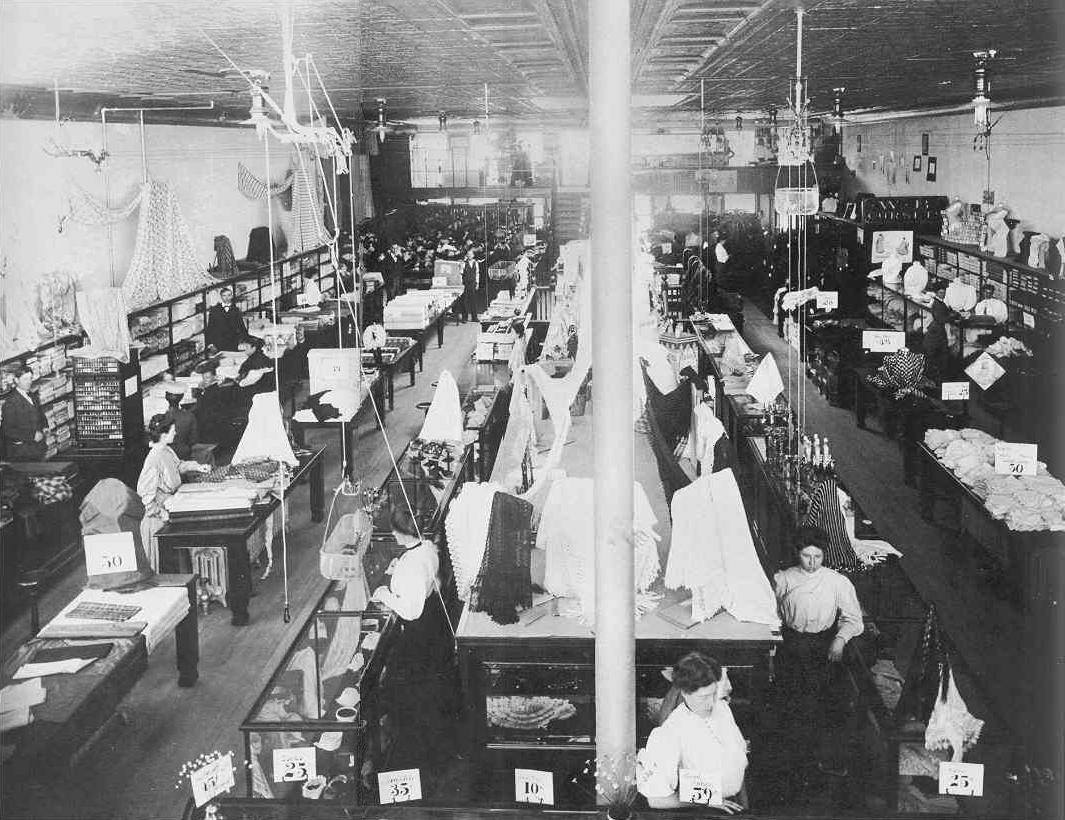
A special New York State Assembly Committee report investigating conditions of female and child labor in New York City was submitted today, and it paints a bleak portrait of working conditions for those who earn their living at department store counters, in factories, or through home work.

The typical working day in New York City’s large mercantile establishments is 8 a.m. to 6 p.m., with 30 to 45 minutes for lunch Monday through Saturday, though in some stores employees work later on Saturdays, often until 9 or 10 p.m.

In one of the small stores surveyed, the hours were 8 a.m. through 9 p.m. Monday through Friday, and until 11 p.m. or midnight on Saturdays with some employees working 8 a.m. until noon on Sundays, though they receive extra compensation for their Sunday work.

10321520_10202368240270909_1474007164826573702_o

Large numbers of girls 14 to 16 years of age are employed at $1.50 a week and up. The insufficient number of truant officers employed by the Board of Education means they can rarely do personal inspections of these establishments looking for school-age workers, and tend to take the word of the owners that they do not employ children under 14. Employment of children even under that age is not barred under all circumstances by State law at present. Impoverished parents also seem willing to fill out certificates stating that their children are old enough to work, even if this is not the case. These factors enable “sweat shop” operators to employ young children for at least 60 hours a week in return for $1.75 to $2.00 pay.

The law passed seven years ago requiring employers to provide seats for female workers has not been generally observed, and is in need of amendment to make it better enforced. Though only the clothing industry has been carefully examined so far, there is a “general and constant violation” of the factory laws and of the regulations of the Board of Health by those who employ labor in shops and tenements.

In one example of the present risks to public health, an employer’s child became sick with Scarlet Fever, and the Health Inspector only ordered the employer to close the door between his living room and the workshops, but not shut down, a choice the inspector is permitted to make. Later, a Factory Inspector finally ordered the employer to stop work, but the infected coats had already been sent to the wholesaler without being tagged (as is required for tax purposes.) It was not until nine days after the initial report of the child’s illness was made to the Health Department by the family physician that the infected clothing was tracked down and fumigated, clear proof that the system isn’t working well in the tenements.

Though the committee was able to give an interim report today, further study is needed, especially since there is a great reluctance on the part of employees to testify about working conditions until they can do so in private executive sessions where no employers are present. Hopefully the full report, when it’s completed, will help bring about sufficient outrage over current working conditions that they will be improved in the future through both labor union activism and appropriate legislation.

April 30, 1915: New York Senator Remains Opposed to Suffrage Following Meeting with Movement Leaders

Founding Feminists is FMF’s daily herstory column.

FoundingFeministLogo-color

There was a quite frustrating and somewhat heated exchange of views this afternoon in Washington, D.C., as Inez Milholland Boissevain, Doris Stevens, and several other members of the Congressional Union for Woman Suffrage met with Senator James O’Gorman, Democrat of New York.

Despite their best arguments on behalf of the Susan B. Anthony (nationwide woman suffrage) Amendment, the Senator still remains opposed, saying: “I will not vote for this or any other women suffrage amendment.”

Inez Milholland Boissevain

At one point in the debate, O’Gorman actually asked: “Aren’t you women going to hastily?” Noting that the Anthony Amendment had first been introduced into Congress in 1878, one woman retorted: “Too quickly? After 40 years?” She was immediately seconded by Boissevain, who asked: “Can freedom come too quickly?” The Senator then insisted that women already had a good deal of influence and don’t need the vote. As the laughter died down, someone said: “It is too late to say anything like that to us now!”

The Senator was reminded that there are already a number of States in which women can vote, and it as only a question of time until they would be powerful enough to force the issue nationwide. He replied that there are only 8 million people in all eleven suffrage States, not much more than the population of New York City, and that in one suffrage State there were more square miles than people. “What is good for Utah and Colorado may not be good for New York,” he cautioned.

Mary Prendergast noted how unfair and illogical is was that the President must listen to women in States where they can vote, while freely ignoring those in the rest of the nation. Then the difficulty and indignity of the burden women face in winning the vote was brought up by her as well:

Our country ought to be too big and magnanimous to stand by and see the flower of its womanhood spending itself in this hard struggle to which it has consecrated itself and which it is determined never to relinquish until it is won, when with one single act of justice it can place its women, who have never failed it in time of need, in a position of dignity which they surely merit and which they will always cherish.

Doris Stevens added: “The slow, tedious process of converting the male electorate of half the country is a task that we feel is too wasteful. It is too humiliating and unjust, and that is the reason we women have come to Congress in such numbers the last two years to ask for a Federal Amendment.”

But O’Gorman took a “States’ Rights” stance, and said: “States that want woman suffrage can bestow it now as freely and effectively as the Federal Government could if the Federal Constitution were amended for that purpose. The sole purpose of the proposed amendment seems to be to force woman suffrage on the States that are opposed to it.” But his early and enthusiastic support for recently passed Constitutional amendments such as the 16th, which provides for a national income tax, and the 17th, which mandates direct election of Senators by the voters, would seem to call into question his reluctance to amend the Constitution.

Eventually the meeting ended with both sides unmoved, and equally committed to their respective stands. Doris Stevens made the best of it: “Well, he has declared himself clearly. That was what we wanted and it was worth coming for.”

April 29, 1905: NYC Teachers Take Action for Equal Pay

Founding Feminists is FMF’s daily herstory column.

FoundingFeministLogo-color

“Equal pay for equal work” is the demand of an insurgent group of women teachers led by Anna Louise Goessling of P.S. 44 in Brooklyn, New York.

She and some of her fellow members of the Class Teachers’ Association have just printed up and sent out a circular to all the women teachers of New York City saying:

The time is ripe to establish the principle of equal pay for equal work. Why should a woman’s minimum annual salary be $300 less than a man’s, and why should her maximum salary be $960 less than a man’s? The women teachers do the same work, are exempt from no rules or duties, and most of them have fathers, mothers, sisters or brothers dependent upon them. Why, then, should women not receive the same salaries? Let us make a strong, united effort to bring about a consummation of what is so manifestly just.

via Matthew Paulson
via Matthew Paulson

At present, elementary school teaching salaries for women start at $600 a year, and can rise to a maximum of $1,440 after 11 years if they pass extra examinations. Male teachers begin with a salary of $900 a year, and can reach $2,400 after 11 years if they pass the same examinations. Women who teach boys’ classes can get an extra $60 a year bonus.

Of course, the first task of the C.T.A. women is to replace the male president of their group, who does not support their goal, with someone who does. Fortunately, an election is scheduled for May 9th, and since women outnumber men in the group by 30 to 1, as the only woman running, Goessling’s chances of winning are quite good.

The present C.T.A. President, George Cottrell, was understandably less than enthusiastic about today’s development. Upon being presented with a copy of the circular, which came as a surprise to him, he said: “I consider this an insult. It implies that I have not done my work properly.” But the rebel delegation that called upon him reminded him that when the “equal pay” proposition had been suggested last Fall, he “frowned on it” and said that it would only result in the lowering of the men’s salaries.

So, after due deliberation, the insurgents have now taken matters into their own hands. With this kind of determination behind their cause, and both logic and justice on their side, it will surely not be long until women win equal pay as well as equal suffrage.

April 28, 1924: League of Women Voters Convenes In Expectation of Upcoming Elections

Founding Feminists is the FMF’s daily herstory column.

FoundingFeministLogo-color

Though this is the fifth annual national convention of the League of Women Voters, it’s the first one to be held in a Presidential election year since women won the vote nationwide on August 26, 1920, so it’s an especially exciting one.

Since women in all States can now make their influence felt at the ballot box on the same basis as men, the League takes stands on all the important issues of the day, and enforcement of the Prohibition law continues to be one of them. Of course, the fight here was only over how strong and explicit to make the League’s statement of its unwavering support for the nation’s four-year-old “Noble Experiment,” something the group’s founder, Carrie Chapman Catt, actively supports.

An early draft of this year’s Prohibition resolution simply called for “bringing about respect for the law by cooperation and active work for law enforcement” with no specific reference to the Prohibition amendment. But after a stirring speech by Cornelia Bryce Pinchot and intense lobbying by the Pennsylvania delegation, the final resolution said: “Laxity in the enforcement of the Eighteenth Amendment to the Constitution is not only a scandal and dishonor to our nation, but tends to weaken the regard for law in general.”

10307418_10202347851161194_5441739287662792043_nMary Garrett Hay, who led the New York City branch of the Woman Suffrage Party in 1917, when women won the vote in a Statewide referendum, chose to look to the future and not the past. With both major parties holding national conventions this summer, her speech contained some advice that will clearly be just as valid in decades to come as it is today:

Don’t take what the men hand out to you. Take for yourselves the kind of things you want in the platforms and tell the men so. Keep your backbone at the conventions. When they want your vote for a candidate of whom you don’t approve, don’t give it, even for a unit vote. Let the men see that women are going to help to lead them to the right kind of platforms and the right kind of candidates.

Though the decades-long national battles over both Prohibition and woman suffrage have now finally been settled once and for all by the 18th and 19th Amendments, there are still some issues that provoke fierce debate around the country, and the controversy over birth control certainly brought out strong feelings here. After intense arguments were made on both sides of the issue, it was decided that the L.W.V. would not yet take a stand, but that each State chapter is free to do so. The League rejected a proposal to endorse a Constitutional amendment giving Congress the power to regulate marriage and divorce laws, but it did go on record as favoring America’s entry into the Permanent Court of International Justice.

Four years of nationwide woman suffrage have not yet resulted in a utopian society, but they have certainly proven that the predictions of anti-suffragists that disastrous social consequences would inevitably follow if women won the vote were, in fact, just as ridiculous as they sounded at the time they were made.

Though it took 72 years to win the vote, 44 months after that victory, women are already a substantial and well-informed portion of the electorate, with voter registration and voter education programs by the League of Women Voters certainly deserving a share of the credit for that advance.

Women cannot as yet claim credit for electing a President, because Harding won a majority of both men’s and women’s votes in the 1920 election. But it’s still far too soon to know whether similar voting patterns will be the exception or the rule. Should women begin to vote differently from men, politics could still become as radically changed as anti-suffragists feared and suffragists hoped. So, a society in which men and women have equal rights, responsibilities and opportunities, as envisioned 76 years ago at Seneca Falls, may yet be established thanks to the work of those pioneer suffragists.

>