Missouri Legislature Passes Bill Instating 72-Hour Abortion Waiting Period

The Missouri House voted last night, in the middle of an ongoing 3-day protest on the steps of the state capitol, to approve a measure that will triple Missouri’s waiting period for an abortion procedure from 24 hours to 72 hours. The Missouri Senate had already voted on Tuesday 22-9 to pass the waiting period bill.

via Shutterstock
via Shutterstock

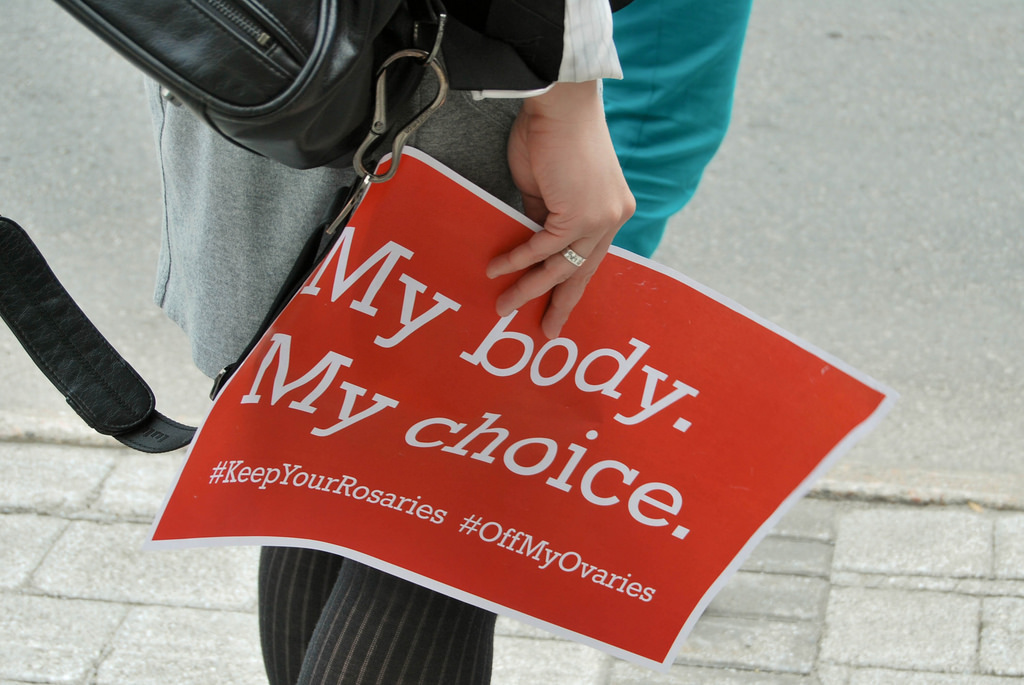
If signed into law, women seeking an abortion will have to wait three days between an initial appointment with the physician who will perform the procedure and the actual procedure. The long waiting period will significantly increase the financial and transportation burdens on women seeking abortions, especially since there is only one clinic in the entire state that provides abortions. There is also no exception to the waiting period for victims of rape or incest.

“Those of us who oppose this bill believe it’s designed to demean and shame a woman in an effort to change her mind and places unnecessary hurdles on her decision to end a pregnancy,” said Missouri Representative Judy Morgan before the House voted on the legislation yesterday.

It is unclear whether Governor Jay Nixon plans to sign or veto the bill, but if he signs the measure into law, Missouri will join South Dakota and Utah as the states with the longest waiting period.

The Missouri state legislature has considered 29 other anti-abortion proposals during this session alone.

Media Resources: St. Louis Post-Dispatch 5/15/14; USA Today 5/15/15; ThinkProgress 5/15/14; Feminist Newswire 1/28/14, 5/13/14

State Refusals to Expand Medicaid Have Left Millions Uninsured

Nearly five million low-income Americans do not have access to affordable insurance because state legislators in 24 states refuse to expand Medicaid. A new report released last week gives a picture of some of the most vulnerable uninsured.

via Images Money
via Images Money

Of those low-income Americans who depend on community health centers for care, over one million people still lack health insurance coverage because of state refusal to expand Medicaid under the Affordable Care ActCommunity health centers receive federal funding to operate in communities that are medically under-served and typically poorer than the overall uninsured population. 71 percent of the people who depend on community health centers live in just 11 southern states, and people of color are disproportionately impacted by disparities in care.

“These low-income patients, many of them living in the South, already face significant challenges to obtaining health care,” said Dr. Peter Shin, the lead author of the study and director of George Washington University’s Geiger Gibson Program in Community Health. “Our analysis suggests these patients will remain without access to affordable insurance, which will almost certainly lead to delays in care and the risk of more serious health conditions.”

In contrast, community health centers in states that have expanded Medicaid have seen 2.9 million patients gain health coverage in 2014.

Researchers determined that community health centers in states that refuse Medicaid expansion will ultimately forgo $569 million in revenues. Some centers have already been forced to close due to lack of funding and patients – further limiting access to health care for people who depend on them. “In addition to forgoing the major gains in overall cost savings from greater access to preventive services, these states will also forgo gains in job creation, labor income and productivity, and related tax revenues,” the report states.

Some 3 million individuals enrolled in Medicaid or the Children’s Health Insurance Program (CHIP) between October 2013 and the end of February. There is no deadline for states to opt into the Medicaid expansion.

Media Resources: George Washington University Milken School of Public Health; ThinkProgress 5/13/14; US Department of Health & Human Services 4/4/14; Kaiser Family Foundation 4/2/14; Feminist Majority Foundation

Louisiana Senate Passes Omnibus Anti-Abortion Bill

The Louisiana Senate voted 34-3 to pass an omnibus abortion bill yesterday that would limit access to abortion in the state by imposing burdensome regulations on abortion providers and forcing women to wait longer to obtain an abortion.

via Steve Rhodes
via Steve Rhodes

HB 388 will implement a 24-hour waiting period on surgical abortions and require abortion providers to have admitting privileges at a hospital within 30 miles of the clinic. Admitting privileges requirements are very difficult to follow if the clinic is in a rural area far from a hospital – a concern voiced by Senator Jean-Paul Morrell (D-New Orleans) – or if the closest hospital will not agree to let the clinic doctor have admitting privileges. A law implementing admitting privileges requirements in Texas has caused 19 clinics in Texas to close, and the Louisiana version is expected to close three out of five of the state’s current abortion clinics.

“This bill will seriously impede a woman’s ability to access a procedure that is perfectly legal in the state,” said Senator Karen Carter Peterson (D-New Orleans). “Clearly this is a deeply personal decision for women, and a complex decision that women often struggle with. The bottom line is that this is a decision a woman should make and not a politician.”

The Louisiana House approved a version of the anti-abortion bill earlier this year.  The Senate bill contained some amendments, so the bill will now return to the House for a vote.

Media Resources: RH Reality Check 5/14/14, 4/1/14; Legis.la.gov; Feminist Newswire 4/14/14

Advocates Push NYPD for More Reform Following Recent Condom Seizure Policy Revision

The New York City Police Department (NYPD) announced changes Monday to their policy of using condoms as evidence of sex work, but advocates maintain that practice should be put to rest rather than modified. Under the revised policy, officers will no longer confiscate condoms from suspected sex workers in order to use them as evidence in individual prostitution cases, but can still seize condoms as evidence in cases where someone is suspected sex trafficking and promotion of prostitution.

via Shutterstock
via Shutterstock

While this is an important change, advocates say the NYPD should stop confiscating condoms at all. “This is a step in the right direction but it doesn’t go far enough and creates a loophole big enough to drive a truck through,” Andrea Ritchie, a coordinator at Streetwise and Safe, told the Associated Press. “We will be monitoring the NYPD carefully to see how they implement this policy.”

Opponents of the former NYPD policy have long criticized it for contributing to police harassment and undermining efforts to combat HIV/AIDS and other sexually transmitted infections. A 2012 Human Rights Watch (HRW) study found that as a result of the condom confiscation and arrest policy, sex workers and transgender women who are often profiled as sex workers in New York City “feared carrying condoms either for use with clients or with other sexual partners, and sometimes engaged in unprotected sex.” Another HRW report found that condom confiscation policies and police harassment of sex workers in Louisiana may be contributing to the state’s high HIV/AIDS rates.

“A policy that inhibits people from safe sex is a mistake and dangerous,” New York City Mayor Bill de Blasio said at a recent event announcing the changes.

Media Resources: Associated Press 5/12/14; RH Reality Check 5/13/14; Human Rights Watch 6/25/13; Feminist Newswire 12/18/13

Minnesota Governor Signs Women’s Economic Security Act

Minnesota Governor Mike Dayton signed a package of bills into law this weekend aimed at eliminating discrimination against women in the workplace.

via Shutterstock
via Shutterstock

The Women’s Economic Security Act includes 9 pieces of legislation that address a variety of issues women face in the workplace. The act will work to narrow the compensation gap between men and women in Minnesota by requiring larger-sized businesses  that contract with the state at a certain amount to undergo a pay equity analysis and earn an “equal pay certificate.” The act also bans salary secrecy, doubles unpaid maternity leave time from 6 weeks to 12 weeks, creates more employment protections for nursing and pregnant women, and creates “safety leave” for those who need time off due to sexual assault, domestic violence, or stalking, among several other changes.

“We know that strong women make a strong Minnesota, and that underlies the Women’s Economic Security Act,” said Representative Carly Melin. “When future generations look back we will be able to tell them that we did something to make the lives of working women and working families better.”

The act was originally introduced in January and passed the state’s House and Senate last week. Other states, including Nebraska and New York, have introduced expansive legislative packages to combat these problems as well. In July, Representatives Nancy Pelosi (D-CA) and Rosa DeLauro (D-CT) unveiled the “When Women Succeed, America Succeeds” agenda, which addresses universal childcare, a minimum wage increase, paid sick leave, and equal pay. The Paycheck Fairness Act, which was included in their legislative package, failed to advance in the Senate in April after a filibuster along party lines.

Media Resources: Minnesota Coalition for Women’s Economic Security; Northlands News Center 5/11/14; ThinkProgress 5/14/14; Office of Democratic Leader Nancy Pelosi; Feminist Newswire 1/30/14, 2/3/14, 4/9/14


Missouri Activists Stage 72-Hour Protest of Abortion Waiting Period

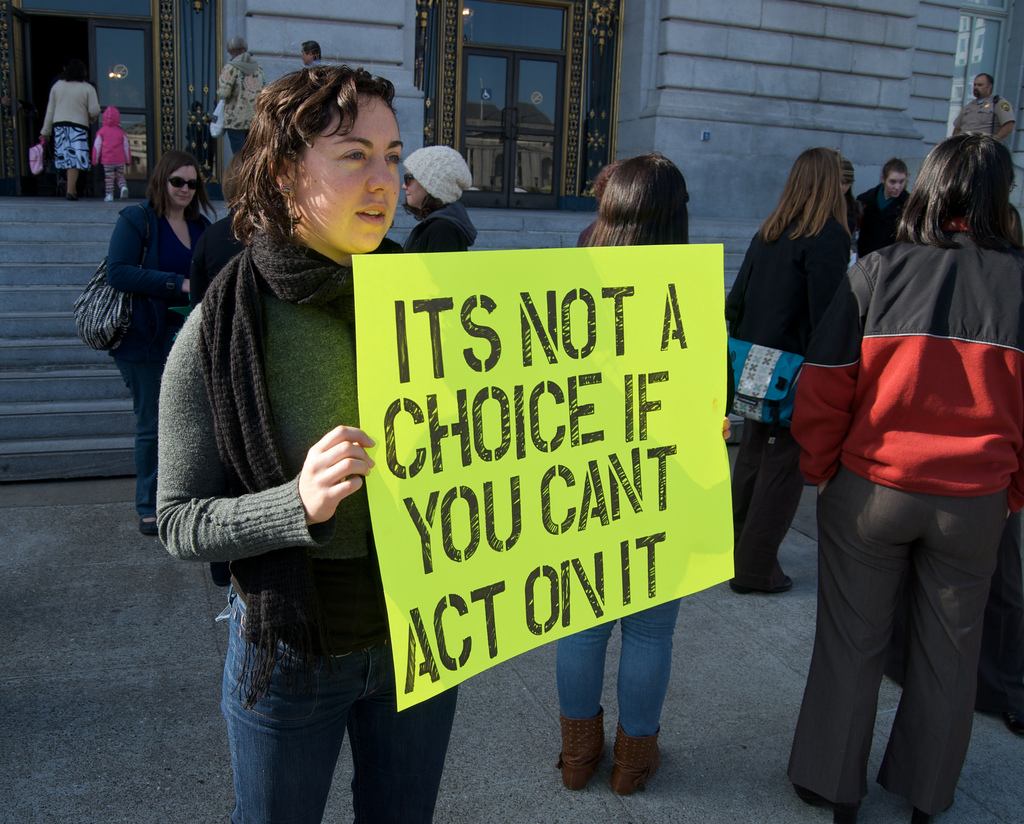
Reproductive rights activists in Missouri are halfway through a 72-hour rally on the steps of the state capitol in protest of a state bill that would require a 72-hour waiting period for women seeking abortion.

via Shutterstock
via Shutterstock

The Women’s Filibuster began yesterday at 2 pm and will end on Thursday at 2 pm. Activists are protesting against the expected passage of the bill that would triple Missouri’s waiting period for an abortion from 24 hours to 72 hours – a change that will significantly increase the financial and transportation burdens on women seeking abortions, especially in a state with only one clinic that provides abortions. A live feed of the protest is being shown on the event’s website.

“Missourians are outraged by this dangerous and misguided agenda and have been organizing for months – hundreds rallied last month at a Lobby Day for Women’s Health, and thousands more have called and emailed their legislators,” the website for the protest says. The bottom line is: Lawmakers should be helping Missouri women have more access to medical care, not less.

The Missouri Senate voted shortly after midnight on Tuesday to pass the waiting period bill. Last week, the Missouri Senate voted against providing victims of rape and incest an exemption from the waiting period. The Missouri House already approved a 72-hour waiting period, but the Senate version of the bill removed a requirement, approved by the House, that women watch a state-created video prior to obtaining an abortion. As a result, the Senate-approved version of the bill will return to the Missouri House for a vote.

The Missouri state legislature has considered 29 other anti-abortion proposals during this session alone. If the 72-hour waiting period is passed, Missouri will join South Dakota and Utah as the states with the longest waiting period.

Media Resources: St. Louis Post-Dispatch 5/13/14, 5/6/14; The Women’s Filibuster; Feministing 5/12/14; Feminist Newswire 5/10/12, 3/11/13, 1/28/14

Virginia Governor Orders Review of TRAP Regulations

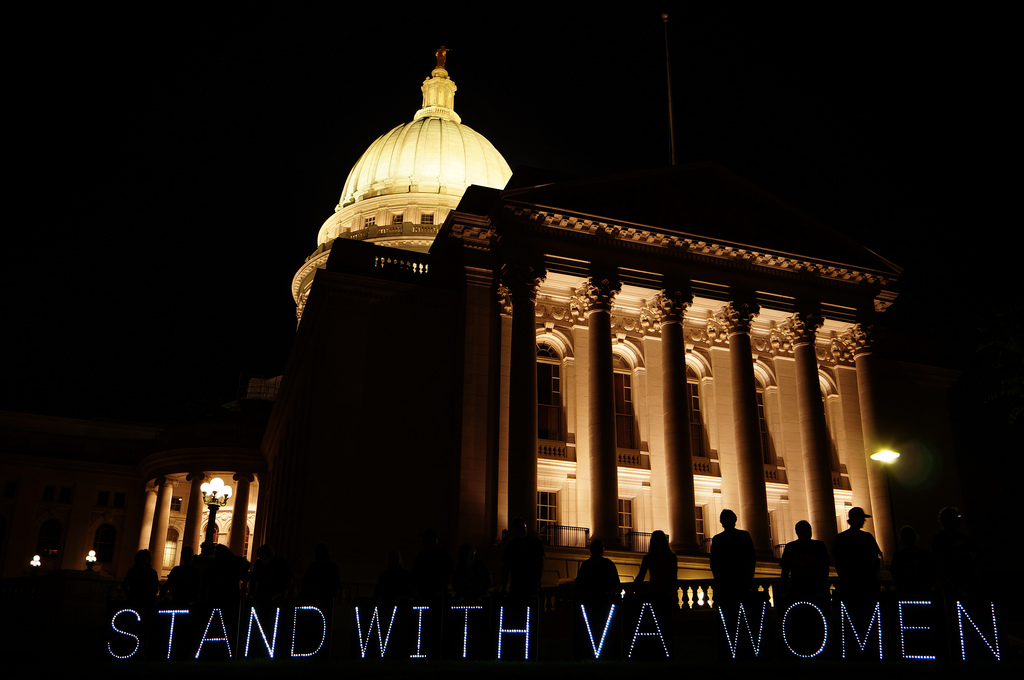
In a victory for Virginia women, Governor Terry McAuliffe directed the state Board of Health yesterday to review TRAP regulations adopted last year that would require clinics providing abortion care to meet the same construction standards for new hospitals.

via Light Brigading
via Light Brigading

“I am very concerned that the extreme and punitive regulations that were adopted last year jeopardize the ability of most women’s health centers to keep their doors open and place in jeopardy the health and reproductive rights of Virginia women,” the governor told reporters. “There is a perception across the commonwealth that the Board of Health was pressured into approving rules that impede the ability of women to access preventive services and even sometimes lifesaving care,” he continued. “Let me be clear — I share those concerns.”

The Virginia TRAP laws – targeted regulation of abortion providers – have been heavily criticized for imposing unnecessary, onerous burdens on women’s health clinics. Examples of the changes required by the regulations include making additional parking available, replacing existing ceilings, and adding showers to all facilities for staff members. Critics say that the regulations are not based on medical practice and are an attempt to shut off access to abortion care by closing clinics that cannot afford to comply. The Virginia regulations have already caused at least two clinics in the state to close. 

The Virginia Board of Health had initially exempted existing clinics from the new TRAP rules. But after pressure from then-Attorney General Ken Cuccinelli, the board reversed itself. Cuccinelli, who unsuccessfully ran for Virginia governor in 2013, had threatened Board of Health members with the denial of state legal counsel if they did not change their decision on the exemption. The Falls Church Healthcare Center has sued the Board of Health for disregarding an executive order by then-Governor Bob McDonnell requiring state agencies to consider how regulations impact small businesses and to make alternative options available. The case is still pending.

The TRAP regulations will remain in effect pending the state Board of Health’s review. Clinics have until the end of June to comply.

Media Resources: Richmond Times Dispatch 5/12/14; Feminist Newswire 10/14/13, 6/14/13, 3/13/13, 9/14/12

Senator Lindsey Graham Pushes Federal 20-Week Abortion Ban

Senator Lindsey Graham (R-SC) is expected to push for a vote today on a federal ban on abortion at 20 weeks. The bill, S. 1670, has no Democratic sponsors, but 41 Republican Senators have already pledged support of the bill and the Republican National Committee recently released a resolution in support of a 20-week ban. A companion measure passed the House last June.

via Zhu
via Zhu

Several news outlets have noted that Graham’s increased advocacy for the abortion ban coincides with the one-year anniversary of the murder conviction of Kermit Gosnell, a rogue doctor who performed illegal abortions in Pennsylvania. Graham’s abortion ban, however, would do nothing to protect women. Instead, a 20-week abortion ban undermines women’s health and safety and prohibits safe abortion care to women whose pregnancies go wrong. The proposed ban does not contain an exception for fetal anomalies, and contains only a narrow health exception for women. The ban would also interfere with the ability of a woman to choose abortion before fetal viability – usually after 20 weeks – in direct conflict with Roe v. Wade.

Senator Graham, who is up for re-election, is also facing a primary challenge in South Carolina, spurring some to believe that his push is motivated by a desire to appeal to certain voters before the June 10 contest.

Media Resources: RH Reality Check 5/13/14; Salon 5/13/14; ABC News 5/9/14; Politico 5/8/14; Congress.gov; Feminist Newswire 6/19/13

Boko Haram Releases Video Offering Kidnapped Girls in Exchange for Released Prisoners

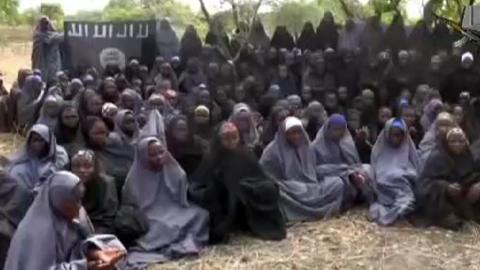
Boko Haram, the terrorist group that kidnapped over 200 teenage girls from their school in Northeast Nigeria one month ago, released a video yesterday on YouTube offering to free the girls in return for the release of imprisoned group members.

Around 100 girls are shown in the video praying and wearing full grey veils. “We will not release them while you detain our brothers,” Boko Haram’s leader Abubakar Shekau says. Nigeria has reportedly deployed two army divisions to find the girls. “The government of Nigeria is considering all options towards freeing the girls and reuniting them with their parents,” said senior Ministry of Information official Mike Omeri.

Several countries have offered assistance to the Nigerian government, including the United States. An anonymous source told the New York Times that US surveillance aircraft have already joined the search for the girls and satellite images have been provided to the Nigerian government.

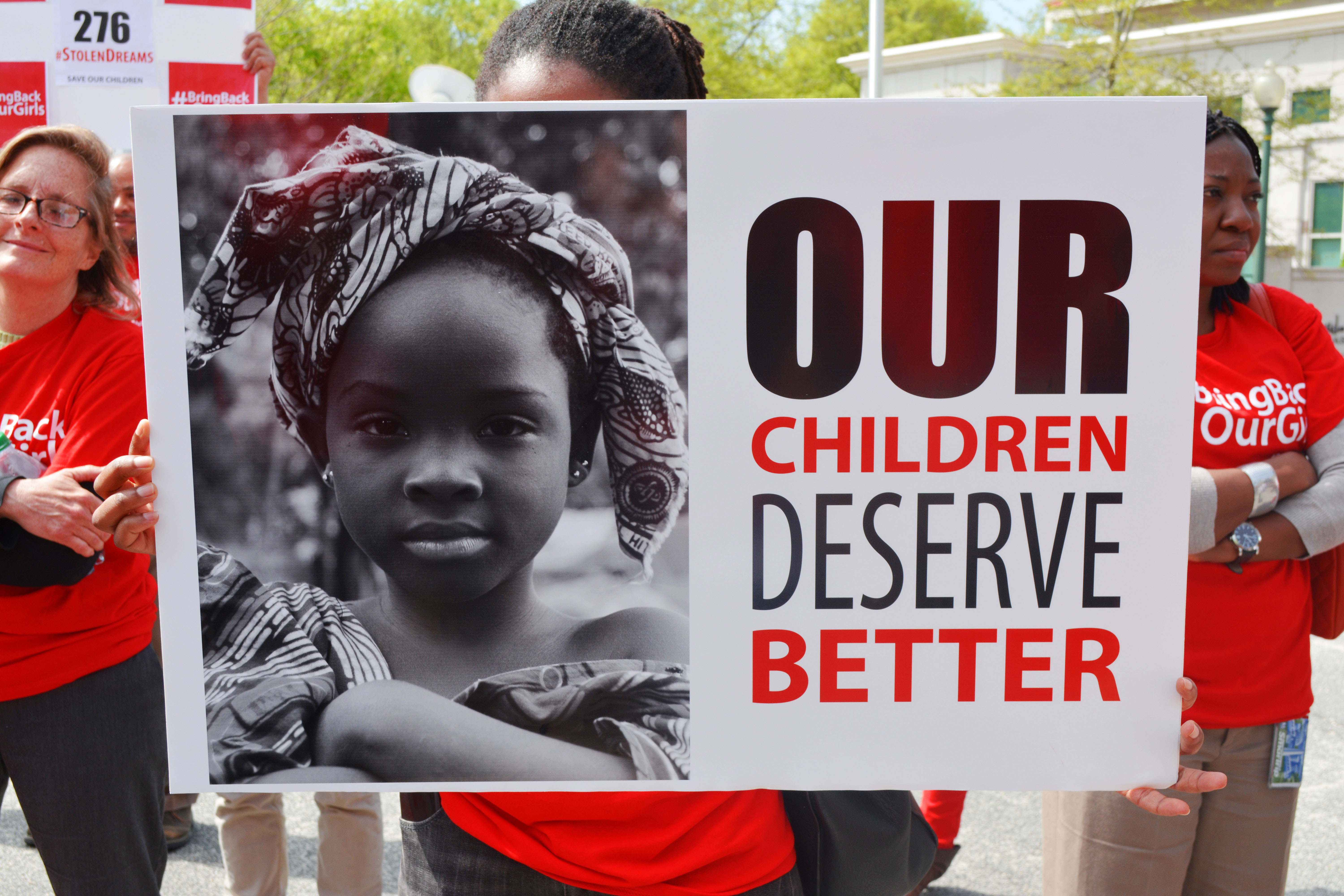
Nigerian officials updated the number of girls still in the hands of Boko Haram to 223 after 53 escaped. After the kidnapping, Nigerians demanded that the government needed to do more to secure the girls’ safe return home. Rallies were held around the world in support, and a social media campaign spread using the Twitter hashtag #BringBackOurGirls. Shekau threatened in an earlier video to sell the girls into slavery, and many feared that the girls had already been trafficked into other countries or forced into marriage to Boko Haram members.

Boko Haram has a long history of terrorism in northern Nigeria. Human Rights Watch reported in 2012 on the group’s atrocious activities, which have included murder, abduction, rape, mutilation, and the use of child soldiers. The group kidnapped 8 more girls from Warabe and killed as many as 300 people in an attack on a city in the northeastern region of Nigeria last week.

Media Resources: Reuters 5/12/14; The New York Times 5/12/14; Human Rights Watch 10/11/12; Feminist Newswire 5/2/14, 5/5/14, 5/6/14, 5/7/14; Feminist Campus 5/6/14


Bill Extending Abortion Coverage to Peace Corps Volunteers Re-Introduced

Senator Jeanne Shaheen (D-NH) and Representative Nita Lowey (D-NY-17) re-introduced the Peace Corps Equity Act in the Senate and House last week. The bill, previously introduced by the late Senator Frank Lautenberg (D-NJ), would extend coverage for basic reproductive health care services, including abortion, to all Peace Corp volunteers.

via National Museum of American History

“Extending basic reproductive health services to female Peace Corps volunteers is long overdue,” said Sen. Shaheen in a statement. “Peace Corps volunteers face inherent risks living and working abroad and there’s no reason they should be denied standard health care services offered to most women with federal health care coverage.”

Unlike other employees under federal health care plans – including Peace Corps employees – Peace Corps volunteers currently do not have access to abortion coverage even in cases of rape, incest, or endangered health or life.

“This is about fairness – fairness for American ambassadors working in every corner of the world to save and change lives,” said Rep. Lowey. “It is absolutely unconscionable that female Peace Corps volunteers who are victims of sexual assault, or whose pregnancies endanger their lives, are not afforded the same health care access as virtually all other women with federal health coverage.”

A study and report on the abortion experiences of Peace Corps volunteers, also released last week, found that many peace corps volunteers viewed the ban on abortion coverage even in cases of rape as being particularly punitive. The study, consisting of over 400 interviews with returned volunteers, documented at least 125 different sexual assault and rape experiences. Of those who discussed their own personal experience with abortion, the majority reported that they did not know about the abortion ban before becoming pregnant and that they found it difficult to cover the cost of abortion. Peace Corps volunteers, more than 60 percent of whom are women, receive only a small stipend of $250-$300 per monthThe report recommendations include lifting the “no exceptions policy” on abortion coverage and ensuring that volunteers receive access to a full-range of contraceptive methods, including emergency contraception.

Media Resources: Senator Jeanne Shaheen 5/6/14; Cambridge Reproductive Health Consultants 5/2014; Center for Reproductive Rights 5/6/14

Arkansas Same-Sex Marriage Ban Struck Down

An Arkansas state judge struck down an Arkansas law and state constitutional amendment defining marriage as only between a man and a woman.

via Shutterstock
via Shutterstock

Calling the ban an “unconstitutional attempt to narrow the definition of equality,” Circuit judge Chris Piazza ruled Friday in Wright v. Arkansas that the state legislative and constitutional bans on same-sex marriage violate the state constitution and the Equal Protection Clause of the United States Constitution’s 14th Amendment.

In his decision, Piazza cited Loving v. Virginia, the Supreme Court case that eliminated the ban on interracial marriage, and rejected the notion that religious objections to same-sex marriage were reason enough to support a ban. “A marriage license is a civil document and is not, nor can it be, based upon any particular faith,” he wrote. “Same-sex couples are a morally disliked minority and the constitutional amendment to ban same-sex marriages is driven by animus rather than a rational basis. This violates the United States Constitution.”

“It has been over forty years since Mildred Loving was given the right to marry the person of her choice,” continued Piazza. “The hatred and fears have long since vanished and she and her husband lived full lives together; so it will be for the same-sex couples. It is time to let that beacon of freedom shine brighter on all our brothers and sisters. We will be stronger for it.”

Judge Piazza did not stay his ruling in anticipation of an appeal. Couples immediately obtained marriage licenses this morning, lining up before dawn at the state’s largest courthouse. Arkansas Attorney General Dustin McDaniel, however, asked the Arkansas Supreme Court today to suspend Judge Piazza’s ruling in anticipation of his appeal. As of this writing, the state Supreme Court has not issued a decision.

Eight judges have now invalidated state laws prohibiting same-sex marriage, including Oklahoma, Virginia, and Texas this year alone.

Media Resources: Arkansas Times 5/9/14; CBS News 5/12/14; Arkansas KHBS TV 5/12/14; Feminist Newswire 1/15/14, 2/14/14, 2/28/14

Reports Reveal Decrease in Maternal Mortality and Need for Faster Progress

Two new reports by United Nations agencies revealed that although there has been significant progress in reducing maternal mortality worldwide over the last decade, much more can be done to protect women’s lives.

via Gates Foundation

Maternal deaths have dropped 45 percent since 1990, according to the new UN data. In 2013, an estimated 289,000 women worldwide died due to pregnancy and childbirth complications – a sharp decrease from 523,000 in 1990. The current 2013 rate, however, still comes to about 800 women dying every day, one every two seconds. Only 11 countries have reached their Millennium Development Goal (MDG) target of a 75 percent reduction in maternal mortality by 2015, and several countries – including the United States – actually saw their maternal mortality rates increase over the last decade.

99 percent of all maternal death occurs in the developing world, with women in Sub-Saharan Africa facing the greatest risk of dying from complications in pregnancy and childbirth. Yet, most maternal death is preventable.

World Health Organization (WHO) study published this week points to the common causes of maternal death. 28 percent of maternal deaths are caused by pre-existing medical conditions that are exacerbated by pregnancy, such as diabetes, malaria, HIV, and obesity. Severe bleeding was the second most common cause. Pregnancy-induced high blood pressure, obstructed labor, unsafe abortion, infections, and blood clots are additional causes.

“Together, the two reports highlight the need to invest in proven solutions, such as quality care for all women during pregnancy and childbirth, and particular care for pregnant women with existing medical conditions,” says Dr. Flavia Bustreo, the Assistant Director-General of Family, Women’s, and Children’s Health for WHO. The reports also demonstrate the need for more accurate data, strong health systems, progress in preventing adolescent pregnancies and sexually transmitted infections, and comprehensive sexual health education.

To fully combat maternal mortality, the United States and the international community must also work to provide universal access to reproductive health care, including contraception, empower women and girls economically and socially, ensure access to basic education, end child marriage, confront sexual violence and conflict, and provide comprehensive health care, including access to safe abortion to women and girls who are victims of war rape.

Take Action: You can work to improve women’s reproductive health worldwide with Feminist Campus!

Media Resources: World Health Organization 5/6/14; The Lancet Global Health Journal 5/6/14;  United Nations; ThinkProgress 5/6/14; Feminist Majority Foundation 5/9/14

Veterans Groups File Lawsuit Alleging Discrimination Against Military Sexual Assault Survivors

The Service Women’s Action Network (SWAN) and Vietnam Veterans of America filed a federal lawsuit last week alleging that the US Department of Veterans Affairs (VA) discriminates against survivors of military sexual trauma (MST) in granting disability claims. The suit uses the term “military sexual trauma” to encompass not only military sexual assault, but sexual harassment and rape.

via Shutterstock
via Shutterstock

The lawsuit alleges that the VA makes military sexual assault trauma who are suffering from post-traumatic stress disorder (PTSD) go through more procedural hurdles than other veterans to receive disability benefits. For example, a veteran suffering from PTSD from combat must submit only a statement to receive benefits, while veterans who are MST survivors must submit additional evidence like court documents and prove that their PTSD was caused by their military service. Further, disability claims for MST survivors are approved at a 16 to 30 percent lower rate than other veterans. The lawsuit specifically alleges gender discrimination, against both male and female MST survivors, especially noting that only 37 percent of the disability claims of male MST survivors are granted.

“The VA knows the current process makes veterans who’ve been harmed by military sexual harassment and assault jump through more hoops than other PTSD claimants to apply for and receive PTSD disability benefits,” said Anu Bhagwati, Executive Director of SWAN and former Marine Corps captain. “But they refuse to change their regulations. The result of this discrimination is that survivors of military sexual harassment and assault are denied life-saving benefits and critical income to support themselves and their families.”

An estimated 26,000 cases of unwanted sexual contact and sexual assaults in the military occurred in 2012, according to a report by the Sexual Assault Prevention and Response program of the Department of Defense, and reports of sexual assault jumped 50 percent last year.

Legislators have been fighting to pass reforms of military procedures to hold perpetrators more accountable. In March, the Senate passed a limited military sexual assault reform bill that would eliminate the “good soldier defense” in trials, give accusers more power to choose whether their cases go through the military or the civilian system, allow victims to challenge their discharge from the military, increase the accountability of commanders, and extend the changes to service academies.

Media Resources: Vietnam Veterans of America 4/30/14; Service Women’s Action Network 4/29/14; RH Reality Check 5/2/14; Associated Press 5/1/14; Feminist Newswire 3/11/14

Beverly Hills City Council Condemns Taliban-Like Brunei Penal Code

The Beverly Hills City Council voted unanimously yesterday to approve a resolution urging Brunei to divest its ownership of the Beverly Hills Hotel and condemning the Southeast Asian nation’s brutal new “kill-a-gay” and “flog-a-woman” penal code.

via trekandshoot on Shutterstock

“The City of Beverly Hills strongly condemns the government of Brunei as well as other governments which engage in similar policies for adopting laws that impose extreme and inhumane penalties including execution by stoning, flogging and severing of limbs,” the resolution says. “The City of Beverly Hills urges the government of Brunei to divest itself of the Beverly Hills Hotel and any other properties it may own in Beverly Hills.”

The Brunei Investment Agency owns the Beverly Hills Hotel, the Bel-Air Hotel, and other Dorchester Collection Properties. The Agency is managed by the Brunei Ministry of Finance, which is controlled by Hassanal Bolkiah, the Sultan of Brunei.

“We are pleased that the Beverly Hills City Council is taking action,” said Feminist Majority Foundation President Eleanor Smeal. “This new Taliban-like penal code is a clear violation of international law and the United Nations Declaration of Human Rights.”

The new penal code is set to be implemented in three phases over three years. The first phase, which began on May 1, will include fines and prison sentences. The second phase includes corporal punishment such as amputations and flogging women who have abortions. The stoning to death of gay men and lesbians is slated for the third phase.

In protest of the new laws, the Feminist Majority Foundation pulled its annual Global Women’s Rights Awards from the Beverly Hills Hotel and held a rally on Monday in the park across from the venue. Several celebrities, including actor and activist Frances Fisher and comedian Jay Leno, who co-chairs the Global Women’s Rights Awards with Mavis Leno, joined a coalition of women’s rights and LGBT groups at the rally, calling on the Sultan of Brunei to immediately rescind the penal code. FMF has launched a massive petition drive and social media campaign, using the hashtag #StopTheSultan, calling on the government of Brunei to rescind the new code and asking the United Nations to take action if these laws go into effect as planned.

According to news reports, the U.S. State Department indicated on Tuesday that the ambassador to Brunei had discussed concerns about the law with the Brunei government. The Feminist Majority Foundation is calling on the United Nations to condemn the government of Brunei and to explore additional options if the Sultan fails to rescind these inhumane laws. “‘Kill-a-gay’ laws, or laws that allow the flogging of women for abortion, violate international law and have no place in civilized society,” said Mavis Leno, Feminist Majority Foundation board member.

TAKE ACTION: Sign FMF’s petition to stop the Brunei’s new Taliban-like penal code and urge the United Nations to condemn the government of Brunei and explore all options, including sanctions, against Brunei if the government does not rescind these horrific laws.

Media Resources: Reuters 5/7/14; Los Angeles Times 5/6/14; Feminist Newswire 5/1/14, 5/5/14, 5/6/14

President Obama Announces That US Will Help Nigeria Find Kidnapped Girls

President Barack Obama announced yesterday that the US will assist Nigeria in finding the over 200 teenage girls who were abducted by terrorist group Boko Haram three weeks ago.

via Feminist Campus National Campus Organizer Kristy Birchard. The FMF Campus Team attended a #BringBackOurGirls rally in DC this week.

“We’ve already sent in a team to Nigeria – they’ve accepted our help through a combination of military, law enforcement, and other agencies who are going in, trying to identify where in fact these girls might be and provide them help,” Obama said Tuesday. The support will include technical assistance from US military and law enforcement officials skilled in intelligence, investigations, victim assistance, hostage negotiating, and other areas. Armed forces will not be involved.

“In the short term our goal is obviously to help the international community, and the Nigerian government, as a team to do everything we can to recover these young ladies,” Obama told NBC. “But we’re also going to have to deal with the broader problem of organizations like this that . . . can cause such havoc in people’s day-to-day lives.”

The kidnapped girls, 53 of whom have escaped, were at their school when Boko Haram abducted them. The group’s leader, Abubakar Shekau, announced his intention to sell the girls “in the market” in a video. Many fear that some of the girls may have already been forced into sex slavery or trafficked across the border, and protests have grown around the world and on twitter where people have called on Nigeria to #BringBackOurGirls.

President Obama called the kidnapping “heartbreaking,” and called on the international community to take action against Boko Haram. “You’ve got one of the worst regional or local terrorist organizations in Boko Haram in Nigeria, they’ve been killing people ruthlessly for many years now and we’ve already been seeking greater cooperation with the Nigerians – this may be the event that helps to mobilize the entire international community to finally do something against this horrendous organization that’s perpetrated such a terrible crime.”

Boko Haram kidnapped 8 more girls from Warabe on Sunday night, and killed as many as 300 people in an attack on Gamboru Ngala. Both towns are in the northeastern region of Nigeria, near the border with Cameroon, not far from Chibok were the schoolgirls were abducted. A government official told a local newspaper that the attack on Gamboru Ngala lasted about 12 hours. Members of Boko Haram were reported to have sprayed gunfire into crowds and set shops and resident homes on fire.

Media Resources: CBS News 5/7/14; The Associated Press 5/6/14; ABC News 5/6/14; Feminist Campus 5/6/14; Feminist Newswire 5/5/14, 5/6/14

Voter ID Law Struck Down in Wisconsin

A federal judge struck down Wisconsin’s new voter identification law last week, ruling that the law violated the 14th Amendment to the US Constitution as well as Section 2 of the Voting Rights Act, which prohibits states from imposing a voting qualification that “results in a denial or abridgment of the right of any citizen of the United States to vote on account of race or color.”

via Shutterstock
via Shutterstock

In his ruling, District Judge Lynn Adelman found that Wisconsin did not sufficiently prove that voter fraud exists. “The evidence at trial established that virtually no voter impersonation occurs in Wisconsin,” wrote Adelman. “The defendants could not point to a single instance of known voter impersonation occurring in Wisconsin at any time in the recent past.” The judge also found that the law unjustifiably targeted minority voters, who were less likely to have qualifying identification than whites, and would result in less opportunities for minorities to participate in the political process. This result would be particularly troublesome given Judge Adelman’s finding that “the disproportionate impact of the photo ID requirement results from the interaction of the requirement with the effects of past or present discrimination.”

Commenting on the ruling, Dale Ho, Director of the American Civil Liberties Union (ACLU) Voting Rights Project, said, “This is a warning to other states that are trying to make it harder for citizens to vote.” He continued, “This decision put them on notice that they can’t tamper with citizens’ fundamental right to cast a ballot. The people, and our democracy, deserve and demand better.” The ACLU, the ACLU of Wisconsin, the National Law Center on Homelessness & Poverty and Dechert LLP argued the Wisconsin case at trial.

Several other states have recently passed or are trying to pass similar voting restrictions, leading to lawsuits and court battles. Just last month, for example, Arkansas judge Tim Fox struck down that state’s voter identification law, ruling that it violated the Arkansas state constitution. 

According to the Brennan Center for Justice, 25 percent of eligible African-American voters, 18 percent of people aged 65 and up, and many students do not have a current government-issued photo ID card. In addition, 34 percent of women voters do not have an ID that reflects their current name. These issues were prominent in the Wisconsin case. One of the plaintiffs Shirley Brown, an African-American woman in her seventies who had voted for decades in Wisconsin, was denied an ID because she did not have a birth certificate. “The assault on voting rights is a naked attempt to suppress the votes of minorities, students, the elderly, and the poor,” wrote Feminist Majority President Eleanor Smeal and Lawyer’s Committee for Civil Rights Under Law President and Executive Director Barbara Arnwine in an Op-Ed for MSNBC. “But don’t be fooled. This War on Voting is an essential part of the War on Women.”

Media Resources: ACLU 4/29/14; The Washington Post  4/29/14, 4/24/14; MSNBC.com 10/20/13; Brennan Center for Justice

US Department of Education: Title IX Protects Transgender Students

The United States Department of Education’s Office for Civil Rights (OCR) issued guidelines this week clarifying for the first time that Title IX of the Education Amendments of 1972 prohibits discrimination against transgender students.

via Shutterstock
via Shutterstock

“Title IX’s sex discrimination prohibition extends to claims of discrimination based on gender identity or failure to conform to stereotypical notions of masculinity or femininity and OCR accepts such complaints for investigation,” the guidelines state. The guidance, included in a larger document on school’s responsibilities to protect students from sexual violence, also declares that schools must provide equal access to all programs and facilities for transgender students, consistent with the student’s gender identity.

“This announcement is a breakthrough for transgender students, who too often face hostility at school and refusal by school officials to accept them for who they truly are,” said Harper Jean Tobin, Policy Director for the National Center for Transgender Equality, in a statement. According to research by the Gay, Lesbian, and Straight Education Network (GLSEN), 80 percent of transgender students feel unsafe at school because of their identity.

“It is now clearer than ever that schools nationwide are responsible for ensuring that transgender students are respected and safe, and students can seek protection from the Department of Education and the courts if schools fail to do so,” Tobin added.

The guidance builds on previous federal settlements and court cases, including a case in a California school district where a transgender boy was excluded from school restrooms and field trip accommodations.

Media Resources: US Department of Education; National Center for Transgender Equality 4/29/14; ACLU 4/29/14; Feminist Majority Foundation

Senate Republicans Block Vote on Federal Minimum Wage Increase

Senate Republicans blocked a vote on legislation yesterday that would increase the federal minimum wage.

via Shutterstock
via Shutterstock

The Senate voted 54-42 along party lines to end debate on the Minimum Wage Fairness Act – short of the 60 votes needed to move forward. The bill, introduced last November, would raise the federal minimum wage from the current $7.25 to $10.10 over three years, then index for inflation.

“The workers who’d benefit from a minimum wage increase often work full-time, often in physically demanding jobs,” said President Obama in remarks after the vote. “They average 35 years of age. Most low-paying jobs are held by women. But because Republicans in Congress said “no” to even allowing a vote on the floor of the Senate, these folks are going to have to wait for the raise they deserve.”

Several states have taken action on their own and increased the state minimum wage, most recently Hawaii and Maryland. President Obama also issued an executive order in February raising the minimum wage for federal contractors to $10.10.

Senate Majority Leader Harry Reid (D-NV) changed his vote from yes to no so he can bring up the bill again another time.

Media Resources: The White House 4/30/14; The Hill 4/30/14; Reuters 5/1/14; Feminist Newswire 2/14/14, 2/20/14, 4/30/14

Hawaii Legislators Pass Minimum Wage Increase

Hawaii’s legislature voted yesterday to increase the state’s minimum wage from $7.25 to $10.10.  The increase – the state’s first since 2007 – will be phased in over time, reaching $10.10 by January 2018.

via Shutterstock
via Shutterstock

“Raising the minimum wage I contend will have a direct, positive impact on Hawaii’s families,” said Senator Rosalyn Baker (D-HI). “Hawaii’s women with children are disproportionately represented in low wage jobs, and they are the ones who will gain the most from an increase in the minimum wage.”

In February, President Obama issued an executive order raising the minimum wage to $10.10 for federal contractors, and he has been encouraging Congress to raise the overall federal minimum wage to $10.10 as well. Several states have gone ahead and passed legislation on their own like Hawaii’s, including California, Maryland and Connecticut.

Governor Neil Abercrombie is expected to sign the bill into law today.

Media Resources: Associated Press 4/30/14; Reuters 4/30/14; Feminist Newswire 9/27/13, 12/6/13,  2/14/14

Virginia Attorney General Announces DREAMers Will Qualify for In-State Tuition

Virginia Attorney General Mark Herring announced yesterday that DREAMers, children of undocumented immigrants who lawfully live in the United States under the Deferred Action for Childhood Arrivals (DACA) program, will qualify for in-state college tuition at Virginia’s public universities.

via Shutterstock
via Shutterstock

“These hard working Virginia students who have grown up and are an important part of our state’s economic future will finally be able to study at Virginia’s public universities without the barrier of out-of-state tuition,” said Edgar Aranda-Yanoc, Chair of the Virginia Coalition of Latino Organizations, in a statement.

Legislation that would have made these students eligible for in-state tuition has failed several times in the Virginia General Assembly. Herring and his team reviewed the laws after requests from lawmakers, DACA students and their peers, and forged ahead on their own.

“It simply makes no sense to tell these Virginia students that the commonwealth doesn’t care about their ability to reach their potential,” Herring told reporters. “Instead of punishing them for the way their parents brought them to Virginia as children, we should extend an affordable education to these students. It’s what the law requires, it makes economic sense, and it’s the right thing to do.”

Many of Virginia’s public institutions have already made it clear they will welcome the students. While it is unclear so far exactly how many students will be positively affected, about 8,100 young people in Virginia have had their applications for DACA approved since December 2013.

Media Resources: Richmond Times-Dispatch 4/29/14;  The Roanoke Times 4/29/14; Virginia Coalition of Latino Organizations 4/29/14; Feminist Newswire 12/19/13

>