Trigger Warning: Graphic descriptions of violence.
In November of 2010, a Pennsylvania court granted the wife of Anthony Elonis a protective order after he wrote a violent Facebook stating, in graphic terms, that he would kill her. After a jury trial, Elonis was convicted of making interstate illegal threats against others – a federal crime – and sentenced to 44 months in prison. But yesterday, the Supreme Court heard arguments that Elonis’ conviction should be overturned because his online posts were not “true threats” but were merely online “rants” in the form of “rap lyrics” that were protected by the First Amendment.
“There’s one way to love you but a thousand ways to kill you,” Elonis posted that October about his wife. “I’m not going to rest until your body is a mess, soaked in blood and dying from all the little cuts. Hurry up and die, bitch, so I can bust this nut all over your corpse from atop your shallow grave.” Elonis had also posted statements on Facebook threatening to harm a coworker, employees of an amusement park, and law enforcement officers, and he posted about targeting a kindergarten class for “the most heinous school shooting ever imagined.” Elonis admits that he made the online posts, but he says that he did not intend to threaten anyone.
Now, the Supreme Court must decide when something is a threat: when a reasonable person feels threatened, or when the person making the statement, here Mr. Elonis, intended the statement to be threatening. “How does one prove what’s in somebody else’s mind?” Justice Ruth Bader Ginsburg asked, quickly summing up the problem with making the speaker’s intent the bottom line.
Elonis argued that he was clear on Facebook that he did not intend to harm anyone, citing a post where he said, “I do this for me; it’s a therapeutic.” Justice Alito was not convinced that this type of statement should shield other threatening posts, or discount the fear that a reasonable person may have felt upon reading the threatening statements, and responded that Eloni’s argument “sounds like a roadmap for threatening a spouse and getting away with it.”
“So you put it in rhyme and you put some stuff about the Internet on it,” Alito said, “and you say, I’m an aspiring rap artist. And so then you are free from prosecution?” Alito also seemed concerned about the impact of Elonis’ argument on domestic violence cases. “Well, what do you say to the amici who say that if your position is adopted, this is going to have a very grave effect in cases of domestic violence?” Alito asked Elonis’ attorney. “They’re just wrong, they don’t understand the situation?”
“A threat is a threat, whether it is made online or offline,” said Kim Gandy, National Network to End Domestic Violence (NNEDV) President and CEO. “Victims of domestic violence, for whom threats are often accompanied by other types of violence, take all threats seriously. Whether Mr. Elonis actually meant to kill his wife is irrelevant. His threats succeeded in doing what he intended, which was to further abuse his wife by making her fear for her life.” This fear is very real. Three women are murdered by a current or former intimate partner every day in the US.
The Supreme Court will make its decision by the summer. NNEDV has filed an amicus brief in the case.
Media Resources: Supreme Court of the United States 12/1/14; US Court of Appeals for the Third Circuit 9/19/13; National Network to End Domestic Violence 12/1/14
Former Baltimore Ravens player Ray Rice won an appeal last Friday that makes him immediately eligible to return to the NFL. This past summer, Rice was given a two-game ban, then in September, an indefinite ban, by the NFL after a video was released of Rice punching his fiancee, Janay Palmer (now Janay Rice), unconscious in an elevator then dragging her out.
Initially, both Rice and his fiancee were arrested on simple assault charges, but charges against his fiancee were dropped. After the NFL announced the two-game suspension, activists were outraged that the discipline imposed was no worse than the punishment a player would receive for minor offenses. Then, on September 8, TMZ released a video of the February assault. Public outcry was swift. The NFL issued a statement saying that the League had not seen the video before it was leaked by TMZ and announced that Rice’s suspension would be “indefinite.”
Rice appealed his his indefinite suspension, claiming that he was sanctioned twice for the same conduct. NFL Commissioner Roger Goodell maintained that he had been “misled” when he issued the two-game suspension since he did not know of the extent of Rice’s attack on his now-wife.
Arbitrator, former Judge Barbara S. Jones, however, found no evidence that Rice lied to the NFL about the domestic assault or that Goodell was misled. To the contrary, Judge Jones found that “any failure on the part of the League to understand the level of violence was not due to Rice’s description of the event, but to the inadequacy of words to convey the seriousness of domestic violence.”
“That the League did not realize the severity of the conduct without a visual record,” she continued, “also speaks to their admitted failure in the past to sanction this type of conduct more severely.”
National Organization for Women President Terry O’Neill put it more succinctly. “Goodell has insisted that Ray Rice misled him about what happened in that elevator in Atlantic City. But it turns out Goodell knew the truth all along—he just didn’t care.” NOW continues to call for Goodell’s resignation and for a comprehensive, independent investigation into the NFL’s response to domestic violence.
Media Resources: ESPN 11/30/14; NFL 11/28/14; National Organization for Women 11/28/14; Feminist Newswire 11/17/14, 9/29/14, 9/18/14; Huffington Post 9/8/14,
As the Joint United Nations Programme on HIV/AIDS (UNAIDS) released its new report for World AIDS Day calling on the world to take a “fast-track approach” over the next five years to end the world AIDS epidemic by 2030, UN Women Executive Director Phumzile Mlambo-Ngcuka reminded the international community that to end AIDS, we must first work to eradicate gender inequality.
There is no doubt that the international community has made substantial progress on stemming the AIDS epidemic. Since 2001, new HIV infections have fallen by 38 percent worldwide. But that number alone does not tell the full story.
In 2013, almost 60 percent of all new HIV infections among young persons occurred among adolescent girls and young women. That’s almost 1,000 young women newly infected with HIV every day, and according to UN Women, AIDS is the leading cause of death among women of reproductive age (ages 15-49) worldwide. Violence against women, discrimination, lack of education, and poverty make women particularly vulnerable to HIV and create barriers to accessing treatment and care.
“To fast track the end of the AIDS epidemic we must fast track gender equality,” asserted Mlambo-Ngcuka. “We know the critical steps that must be taken on the path to gender equality, and we must scale up and invest in what works for women and girls in the context of HIV and AIDS. This includes empowering women and girls, particularly those living with HIV, and advancing their leadership; eliminating barriers and constraints to women’s access to prevention, treatment and care services; eradicating gender-based violence; and ensuring adequate financing for women’s needs and priorities in the AIDS response.”
She continued, “It is clear that we can end the AIDS epidemic only if we work together to ensure that women can protect themselves from infection, overcome stigma, and gain greater access to treatment and care, as well as live free of violence, coercion, and discrimination.”
The UNAIDS Fast-Track Targets include a short-term goal of achieving “90-90-90” by 2020, or “90% of people living with HIV knowing their HIV status; 90% of people who know their HIV-positive status on treatment; and 90% of people on treatment with suppressed viral loads.” The long-term goal for 2030 is to increase this percentage from 90 to 95, as well as to decrease the number of new infections among adults to 200,000 globally.
The 2014 theme for World AIDS Day is “Focus, Partner, Achieve: An AIDS-free Generation,” which underlines key elements of the Fast-Track initiative, as well as the President’s Emergency-Plan for AIDS Relief (PEPFAR), which President Obama has attributed to achieving “extraordinary progress in the global fight against HIV/AIDS.”
Visit the AIDS Healthcare Foundation World AIDS Day 2014 website for a list of locations to get tested, as well as a calendar of events in the US and worldwide for the fight against HIV/AIDS and information on memorial services for those who have lost their lives.
Media Resources: The White House 11/29/14; UN Women 11/28/14;UNAIDS 11/18/14
Today marks a full week of national pop-up demonstrations protesting the Ferguson grand jury’s decision not to indict Darren Wilson, the officer responsible for the shooting death of unarmed teenager Michael Brown.
On Saturday, Wilson resigned from the Ferguson Police Department, citing “credible threats” he could bring to his colleagues and to the department. The chief of police said Wilson will not receive a severance package or pension. The same evening, organizers on the ground in Ferguson issued the latest draft of their action plan, which included the appointment of a special prosecutor in all cases of deadly force. The demands also reiterated calls for the immediate charge and arrest of Darren Wilson, and the implementation of state and federal law that establishes a clear standard operating procedure when an officer is implicated in a deadly-force situation.
Monday, unexpected protests continued to disrupt morning traffic. Monday afternoon, a national walkout action is planned to go forward as protesters continue to demand justice for the family of Michael Brown, and all victims of police brutality and excessive force.
Media Resources: Feminist Newswire 11/24/14, 11/26/14; Youngist.com, Open Letter From #StopTheParade 11/27/14; TheWrap.com 11/26/14; Forbes.com, 11/29/14; Huffington Post 11/21/11; KSDK-TV 11/28/14, 11/30/14; New York Times 12/1/14; NBC News 11/30/14; Scribd, FergusonAction.com & TheDemands.org 11/29/14; USA Today 12/1/14; Missouri Business Filings 8/16/14; Internet Archive, “Support Officer Darren Wilson” GoFundMe Page 8/27/14; Backstoppers, Inc; Washington Post 12/1/14; St. Louis American 9/23/14
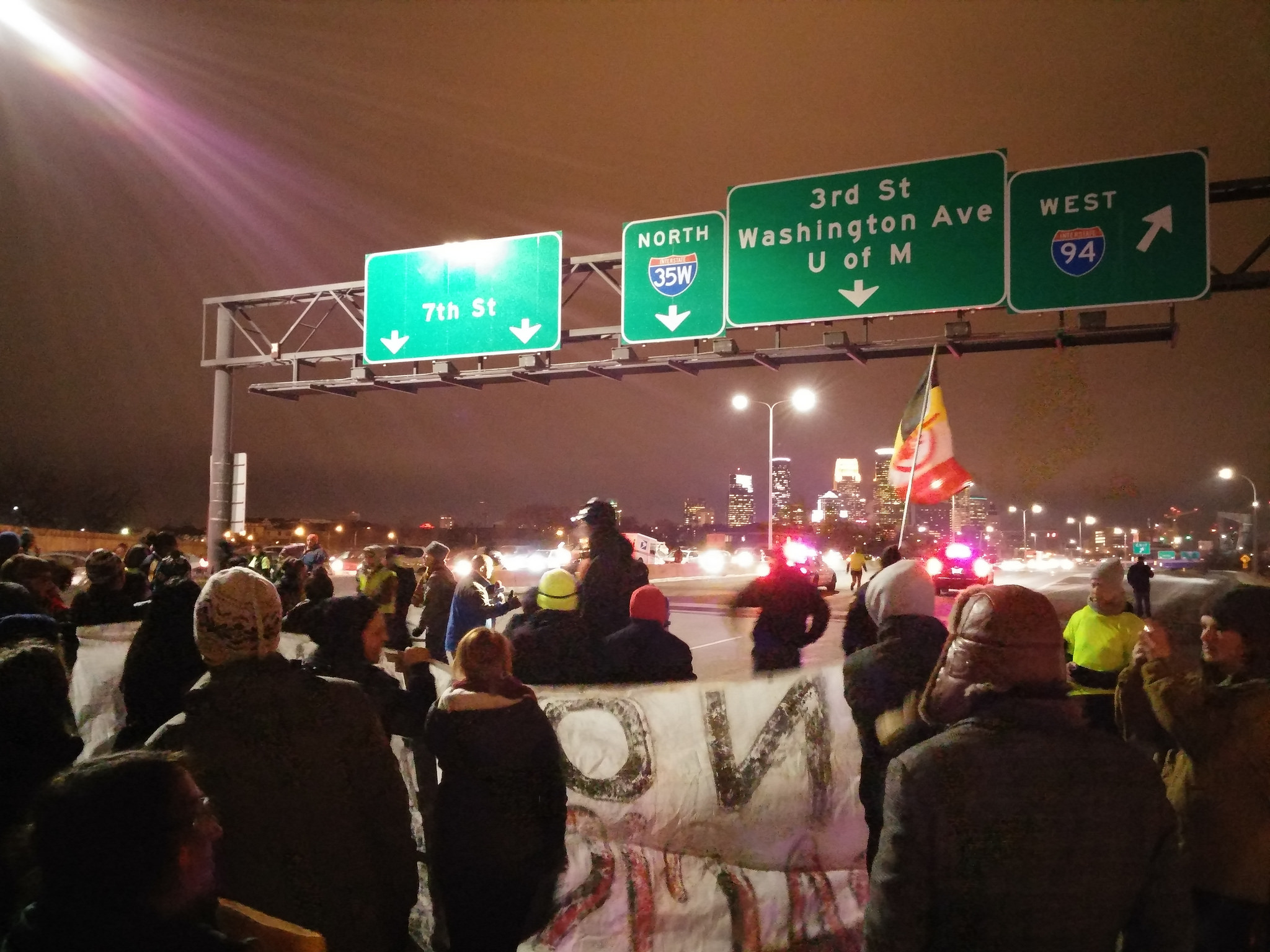
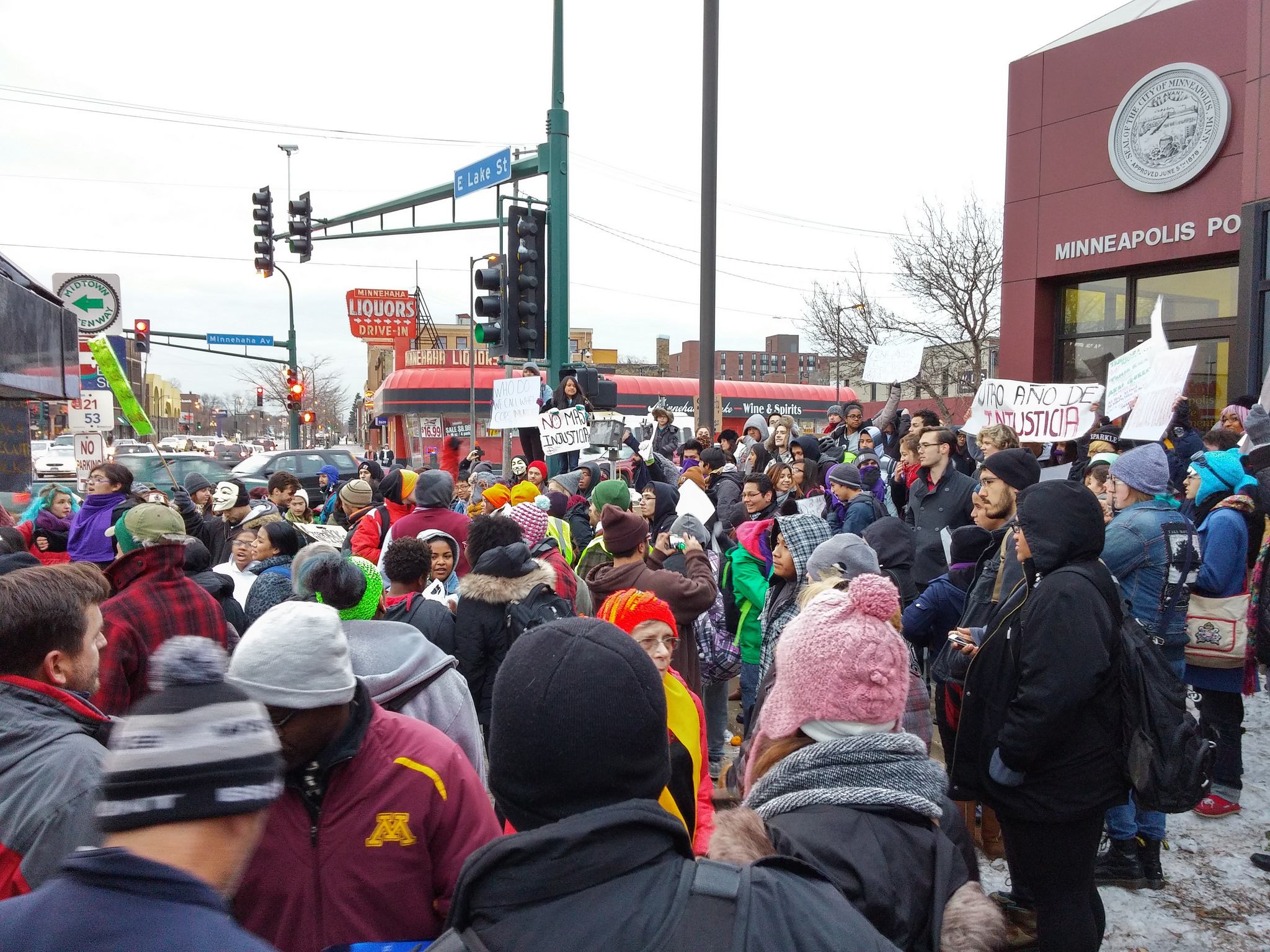
For the second night in a row, thousands of people flooded major roads and thoroughfares in cities across the country in protest of the Ferguson grand jury’s decision not to indict Darren Wilson for the shooting death of Michael Brown.
In Columbus, Ohio, more than 200 people peacefully marched in response to the Ferguson grand jury decision. Rashida Davison, 24, helped organize the demonstration in Columbus. “We’re fed up,” Davison told the crowd. “I kind of knew it would happen, but it doesn’t make me less fired up.” Marchers also called attention to the police-involved deaths of 12-year-old Tamir Rice and 37-year-old Tanisha Anderson of Cleveland.
In Washington, DC, protesters peacefully marched through the Chinatown area, stopping briefly at one of the city’s newest Walmart locations to show solidarity with workers demanding a living wage. Dozens of DC protesters were ushered out of the store while security temporarily locked the entrance, but the march proceeded without incident from local police monitoring activity nearby. Local organizer, Erika Totten, told the crowd gathered in Washington why she committed to the months-long series of demonstrations that have gone forward for Ferguson. “I was shot at, and teargassed in Ferguson,” she said. “I am a mother. That’s what got me off my couch.”
Monday in Ferguson, some protests turned violent with officers launching teargas canisters into the crowd following claims that protesters threw bricks at police. Patrol cars were set on fire and at least 12 local businesses were damaged during riots that both organizers and police say were far worse than any night in August. Some churches and pre-designated safe houses were gassed by police. Multiple accounts emerged of reporters being blinded by teargas or “manhandled” by police in Ferguson, despite the state’s insistence that officers trained for 5000 hours to avoid repeating scenes captured in August of officers violating protesters constitutional right to assemble and stifling press coverage.
Tuesday, arrests outside of Ferguson far exceeded the town itself. At least 120 satellite demonstrations were carried out peacefully in solidarity with the Ferguson community, and in solidarity with local incidents involving law enforcement and charges of excessive force. Downtown Los Angeles saw the greatest police response on Tuesday night. At least 130 people were arrested following marches that repeatedly shut down major freeways and intersections. According to local news reports, 10 demonstrators were arrested in downtown Manhattan. Hundreds of people stopped traffic, walking between cars on FDR Drive in New York, largely without incident.
Walmart workers in at least six states have submitted formal strike notices for the day of Black Friday to demand higher, livable wages and better hours.
This is the third year in a row that Walmart workers have protested on Black Friday, the day after Thanksgiving known for stores opening for longer hours and offering reduced prices that is considered the biggest shopping day of the year. A union-backed labor campaign called OUR Walmart has launched a nationwide strike against the chain, calling for wages of $15 an hour – the same wage fast-food workers are demanding.
In many cases, OUR Walmart will be picketing and protesting outside Walmart. Workers who plan to strike will most likely only strike for a single day. Under federal law, companies are not allowed to retaliate against workers who strike over wages or working conditions.
Barbara Gertz, a Walmart employee in Colorado who is also a member of OUR Walmart, told Al Jazeera, “They haven’t tried to fire me yet … but I’ve seen them retaliate in large ways against my co-workers, and they’ve kicked me out of a store just for walking through it with my OUR Walmart T-shirt.”
Walmart argues OUR Walmart strikes are not legally protected strikes. Walmart also argues its employees overwhelmingly do not participate in these strikes. Organizers of the first OUR Walmart strike in 2012, however, say that more than 500 Walmart workers participated.
Some workers in Ohio have already gone on strike, and OUR Walmart says they guarantee work stoppages this year.
“It’s hard. We work in an atmosphere where the pay doesn’t make ends meet, and a lot of my co-workers think the solution is to look for another job rather than try to improve conditions,” she said. “I joined because I wanted to be part of a movement. I’m looking forward to going back to work and encouraging my co-workers to join me.”
Media Resources: Huffington Post 11/26/14; Al Jazeera 11/25/14; Fight for $15
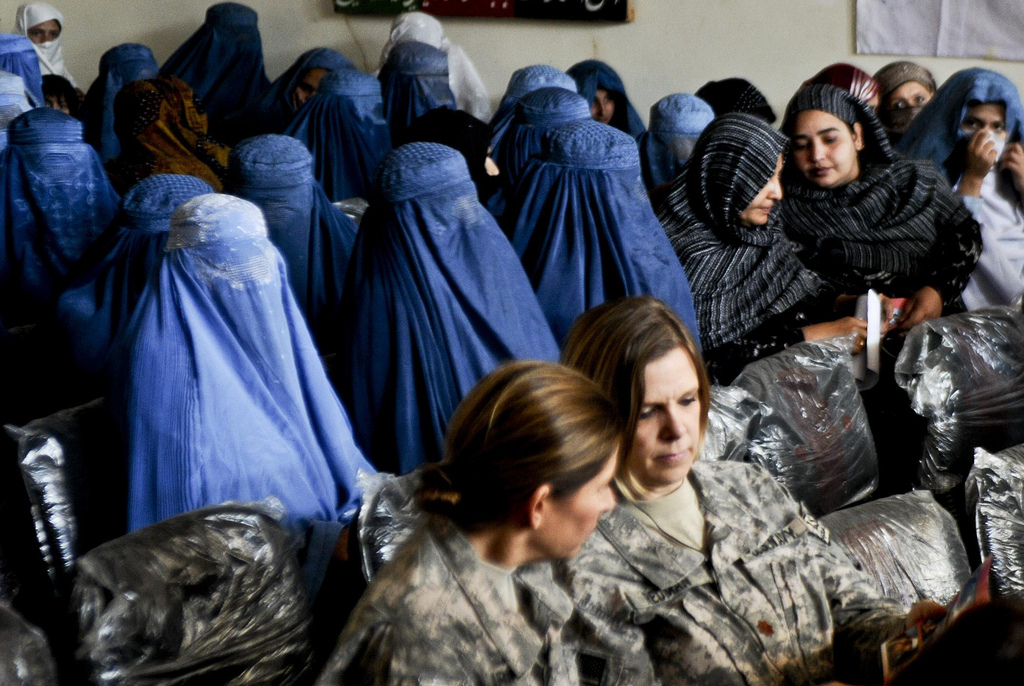
As the drawdown of US and NATO troops in Afghanistan continues, Afghan women leaders are awaiting the launch of a new Afghan National Action Plan for Women, Peace, and Security, which aims to engage women more meaningfully in the peacebuilding process.
Developed over two years, the National Action Plan was signed in Kabul last month. The NAP was drafted using a consultative process that included the Afghan Women’s Network (AWN), an advocacy coalition of over a hundred Afghan women’s organizations. AWN also facilitated seven provincial consultations, gathering input from thousands of Afghan women on the document.
The NAP is expected to give women a larger role in all peace negotiations with the Taliban, an important consideration for scores of Afghan women leaders who have expressed concern that current negotiations threaten the real progress made by Afghan women since the collapse of the Taliban regime. Just this Monday, Oxfam released a report, Behind Closed Doors, detailing how Afghan women have been excluded from high-level peace talks with the Taliban or only marginally represented.
“We’ve always been concerned about the threat that our leaders will trade women’s rights away for peace,” Sara Surkhabi told the New York Times. Surkhabi, an Afghan Parliamentarian, is one of nine women on the 70-member Afghan High Peace Council. “We need to fight for our rights or we’ll lose all the advances we’ve won.”
The importance of Afghan women having a role in the peace process cannot be overstated. Afghan women have already participated in peace and reconciliation as members of Provincial Peace Councils, with many having worked directly with insurgent groups to help broker reconciliation processes, according to the Institute for Inclusive Security.
Women also have the most to lose in peace negotiations with the Taliban if they are not at the right negotiating tables. Let us not forget that the Taliban’s system of gender apartheid forced women out of public life, and left them without basic human rights, including access to health and education. Women now comprise 40 percent of primary school students and nearly 50 percent of healthcare workers. The maternal mortality rate – although still high – has plummeted. Millions of Afghan women voted in nationwide elections, and women make up 28 percent of Afghan Parliament.
Now that the NAP is signed, it must be adopted by the President Ashraf Ghani and the National Unity Government. The NAP will help the country implement United Nations Security Council Resolution 1325, which calls on member states to include women in all aspects of conflict resolution and peacebuilding by ensuring that women have meaningful decision-making roles. SCR 1325 acknowledges that women are not simply victims of war but can, and do, provide necessary leadership to help ensure long-lasting stability.
Media Resources: New York Times 11/24/14; Oxfam 11/24/14; Feminist Newswire 11/21/14, 11/11/14, 4/7/14; Institute for Inclusive Security 11/19/14; The Daily Beast 12/21/13; Inter-Parliamentary Union 10/1/14; United States Institute for Peace; United Nations Security Council; Afghan Women’s Network
Marissa Alexander, the woman imprisoned for firing a warning shot in the presence of her abusive husband, chose to accept a plea deal Monday with the state of Florida, pleading guilty to three felony counts of aggravated assault.
As part of the plea deal, Alexander received three years imprisonment, but she will be credited for the time she’s spent behind bars. As of Monday, Alexander must serve another 65 days in Duval County Jail. After that time, Alexander must spend another two years on house arrest. She will wear an ankle monitor and be permitted to leave her home only to go to work, church, her children’s school, and doctors’ appointments. Alexander will remain in custody until January 27.
Alexander, an African-American survivor of domestic violence and the mother of three children, was initially sentenced to 20 years for aggravated assault, charges that resulted from a 2010 incident during which Alexander fired warning shots to stop her estranged husband, Rico Gray, from assaulting her. Alexander had previously locked herself in a bathroom to escape Gray, who then broken down the door and grabbed Alexander by the neck. She then tried to flee the home through a garage, but could not open the door to the outside. While in the garage, Alexander grabbed a gun. She fired the warning shot only after Gray, who had a history of domestic violence with Alexander, threatened, “Bitch, I’ll kill you.” No one was injured as a result of Alexander’s actions.
Alexander was convicted in 12 minutes. Her conviction was later overturned by a state appeals court in September 2013. The appeals court found that the trial judge had improperly instructed the jury on self-defense and ordered a new trial, which was set to begin this December.
During its most recent session, the Florida state legislature expanded its law to include warning shots as a protected means of self-defense, but this summer, a judge refused to rehear Alexander’s case on the basis of the state’s revised Stand Your Ground law. Advocates from around the nation had called on State Attorney Angela Corey to drop all the charges against Alexander, who had already spent 1,030 days in prison. Instead, Corey sought a new 60-year sentence for Alexander using Florida’s 10-20-life mandatory minimum sentencing statute for gun offenses.
The Free Marissa Now Mobilization Campaign has raised over $100,000 for Alexander’s legal defense. In a statement issued shortly after the plea deal was announced, the group pledged to continue their work. “Alexander’s case has unfolded in the context of the larger crisis of mass incarceration that disproportionately impacts black women and survivors of domestic and sexual violence,” they said. “The ACLU estimates that 85-90% of people in women’s prisons have been victims of domestic violence or sexual abuse.”
Media Resources: Florida Times-Union 11/24/14; MSNBC.com 11/24/14; Florida State Legislature; Free Marissa Now 11/24/14; Feminist Newswire 7/29/14, 3/4/14, 9/26/13; American Civil Liberties Union 4/29/11
The city of Louisville, Kentucky approved a resolution that will use the UN Convention on the Elimination of All Forms of Discrimination Against Women (CEDAW) as a framework for all future policy aimed at ending gender-based discrimination.
Councilwoman Tina Ward-Pugh introduced the resolution, which passed overwhelmingly on November 6. The resolution declares that the city of Louisville is committed to eliminating violence against women and girls, promoting the health of safety of women and girls, and providing equal academic, economic, and business opportunities in the city.
Several state and local governments have passed local CEDAW resolutions, and two cities have passed CEDAW ordinances, including San Francisco, California, in 1998, and Los Angeles, California, in 2003.
The Louisville resolution was supported by the Louisville Coalition for CEDAW and praised by Cities for CEDAW, a campaign of the NGO Committee on the Status of Women/New York (NGO/CSW NY) that “promotes the adoption of CEDAW principles in cities large and small as a framework for improving the status of women and girls.” The Cities for CEDAW campaign plans to recruit 100 US municipalities to implement CEDAW locally.
The campaign is built around the idea that the fastest growing and most politically influential bases are cities. The UNA-SF estimates that by 2050, nearly 80 percent of the world’s women and girls will live in urban areas, and in the US, the number of women in leadership roles at the municipal level is quickly growing. According to the Center for American Women in Politics (CAWP) at Rutgers University, there are 249 female mayors of US cities with populations over 30,000 – the greatest raw value of any elective office in the US.
Every participating city’s CEDAW ordinance must fulfill three requirements: a gender analysis of city operations; the establishment of an oversight body; and funding to support the full implementation of the principles of CEDAW.
The US was instrumental in drafting CEDAW, and President Jimmy Carter signed the treaty on July 17, 1980. However, the US has never ratified the treaty which is the most comprehensive and detailed international agreement which seeks the advancement of women. It establishes rights for women in areas not previously subject to international standards. Now, the US is one of only 7 countries that still have not ratified the treaty.
Media Resources: Louisville Kentucky Government 11/14/14; CitiesForCEDAW.org; United Nations Association of the United States of America-San Francisco Chapter 2/28/14; Center for American Women in Politics Fact Sheet on Women in Elective Office 11/2014; The Women’s Treaty: CEDAW
University of Virginia President Teresa Sullivan announced on Saturday that all fraternities and sororities will be suspended until January 9 in the wake of several allegations of rape at the university. The decision closely follows the release of a Rolling Stone article detailing a pattern of rape and sexual assault occurring at UVA fraternities, which has caused student and faculty protests and sparked national outrage.
In a letter to the UVA community President Sullivan writes that the many rape allegations described in Rolling Stone are “appalling and have caused all of us to reexamine our responsibility to this community.” Sullivan has called on the Charlottesville Police Department to investigate one case in particular, occurring in 2012 and the main subject of the Rolling Stone article.
Sullivan wrote that the UVA Inter-Fraternity Council announced a voluntary suspension of all social activity for the weekend, but that “our challenges will extend beyond this weekend,” and she therefore is suspending all Greek life social activity until January 9, the start of the new semester. Tommy Reid, president of the Inter-Fraternity Council, says the fraternities will be using the time to reach out to sexual violence prevention groups such as One in Four and Green Dot. Sullivan says she will use the intervening time to assemble groups of students, faculty, and other related parties to discuss steps for preventing rape and sexual assault. She also encouraged members of the UVA community to review and respond to the university’s Student Sexual Misconduct Policy, which is open for public comment.
Since the Rolling Stone published its investigation, UVA has faced pressure from alumni and the general public to respond to the allegations and make changes to keep students safe from sexual assault on campus. On Saturday night several hundred students participated in a faculty-led protest, which took place on the campus’ Rugby Road and ended in front of the fraternity Phi Kappa Psi, the site of the alleged rape detailed in the Stone article. The rally, titled “Take Back the Party: End Rape Now!” was part of a series of responses to the prevalence and tacit acceptance of sexual assault on the UVA campus.
“Usually in terms of speaking with our students and being concerned with their lives, we stick to intellectual conversation in the classroom,” said Professor Susan Fraiman, one of the organizers of the Saturday night rally. “But this is something of enormous importance, so we wanted to be out here on the street. We wanted to make a statement as faculty, to say that sexual violence against women will not be tolerated.”
Media Resources: Rolling Stone 11/24/14, 11/22/14, 11/19/14; University of Virginia 11/24/14, 11/19/14; The Daily Progress 11/24/14; The Cavalier Daily 11/23/14, 11/21/14
A decision by the Ohio Department of Health to exempt a Planned Parenthood clinic from a recent Ohio TRAP law means that the last remaining abortion clinic in Cincinnati will remain open.
The Ohio TRAP law requires abortion clinics get a written agreement with a local hospital willing to take patients from the clinic in an emergency – even though these emergencies are extremely rare and hospital emergency rooms must already accept patients in emergency situations. Under the law, however, existing clinics could apply for a variance that would exempt the facility from the requirement.
The Elizabeth Campbell Surgical Center had applied for a variance over a year ago, when it received the initial notice threatening to rescind the clinic’s operating license. Planned Parenthood subsequently filed a lawsuit against the state earlier this month.
“We are pleased that ODH [Ohio Department of Health] has approved of the emergency plan we have in place for patients,” said Jerry Lawson, CEO of Planned Parenthood Southwest Ohio. “This ruling will ensure that women in Southwest Ohio continue to have access to safe and legal abortion.” Planned Parenthood has arranged care with four doctors at local hospitals in cases of emergency.
In grating the variance, Hodges reiterated that he could revoke approval of the variance at any time. Under Ohio law, the health department director’s decision is final.
A clinic in Sharonville called Women’s Med was recently declined the exception by the health department, and clinic in Dayton, also a Women’s Med clinic, is seeking the exception but has not yet heard back.
This was Manjoo’s third visit to Afghanistan, and the Special Rapporteur noted many positive developments since her travel to the country in 1999, during the Taliban regime, and in 2005.
In particular, Manjoo cited the creation of the Elimination of Violence Against Women Law (EVAW) by presidential decree in 2009 as “a key step towards the elimination of violence against women and girls.” EVAW criminalizes 22 acts of violence against women – including rape, child and forced marriage, domestic violence, trafficking, and forced self-immolation – and specifies punishment for perpetrators. Although enforcement of EVAW has remained a challenge, the law was recently used last month to convict and sentence a local mullah to 20-years imprisonment for the rape of a 10-year old girl in Kunduz.
Despite this success, Manjoo noted with concern that many women and girls continue to lack access to the formal justice system. Her investigation also found problems with corruption within the justice system as well as distrust concerning the ability of the courts to appropriately adjudicate matters related to women’s rights. These factors combine with societal pressure to push women and girls outside of the formal justice system to resolve disputes.
Afghan women and girls are reluctant to report crimes of violence. Manjoo reported several reasons, including “lack of knowledge of the law and its protective remedial provisions; fear of reprisal from the perpetrators and family members; financial and other constraints, including the lack of freedom of movement; and fear of being treated as criminals instead of victims, when reporting crimes committed against them.”
Afghanistan, however, has several opportunities to address barriers to eliminating violence against women. A comprehensive review of the Penal Code is expected to be carried out over the next year. According to Manjoo, this review will include gender-based violence crimes, including sexual harassment. In addition, Afghanistan is expected to draft a new, comprehensive family code.
The role of the international community in supporting efforts to end violence against women in Afghanistan is also key. In the preliminary statement of her findings, Manjoo wrote that the increase in efforts over the past decade by the international community to promote the rights of women in Afghanistan was noticeable during her most recent visit, and she called on the international community to stand with Afghanistan to continue this work.
“It is crucial to recognize that violence against women and girls is a human rights violation that is rooted in multiple and intersecting forms of discrimination and inequalities, and that it is strongly linked to the social, cultural and economic situation of women,” wrote Manjoo. “The importance of accountability as the norm for acts of violence against women cannot be over-emphasized, more especially within a context of generalized impunity for violence in public and private spheres. Accountability for all crimes committed against women and girls; the empowerment of women; and, the transformation of society, need to remain a focus for the government of Afghanistan, independent State institutions, civil society organisations and also the international community.”
She continued, “It is imperative that the best interests of all women and girls in Afghanistan should guide the response of relevant stakeholders to ensure coherent and sustainable solutions, in the quest to address the individual, institutional and structural causes and consequences of violence against women and girls.”
Manjoo’s findings will be discussed in a comprehensive report presented at the United Nations Human Rights Council in June.
Media Resources: United Nations Office of the High Commissioner for Human Rights 11/12/14; Feminist Newswire 10/27/14, 10/21/014, 9/22/14
The full US Court of Appeals for the Fifth Circuit on Thursday refused to reconsider a panel decision blocking enforcement of a Mississippi law that threatened to close the last remaining abortion clinic in the state.
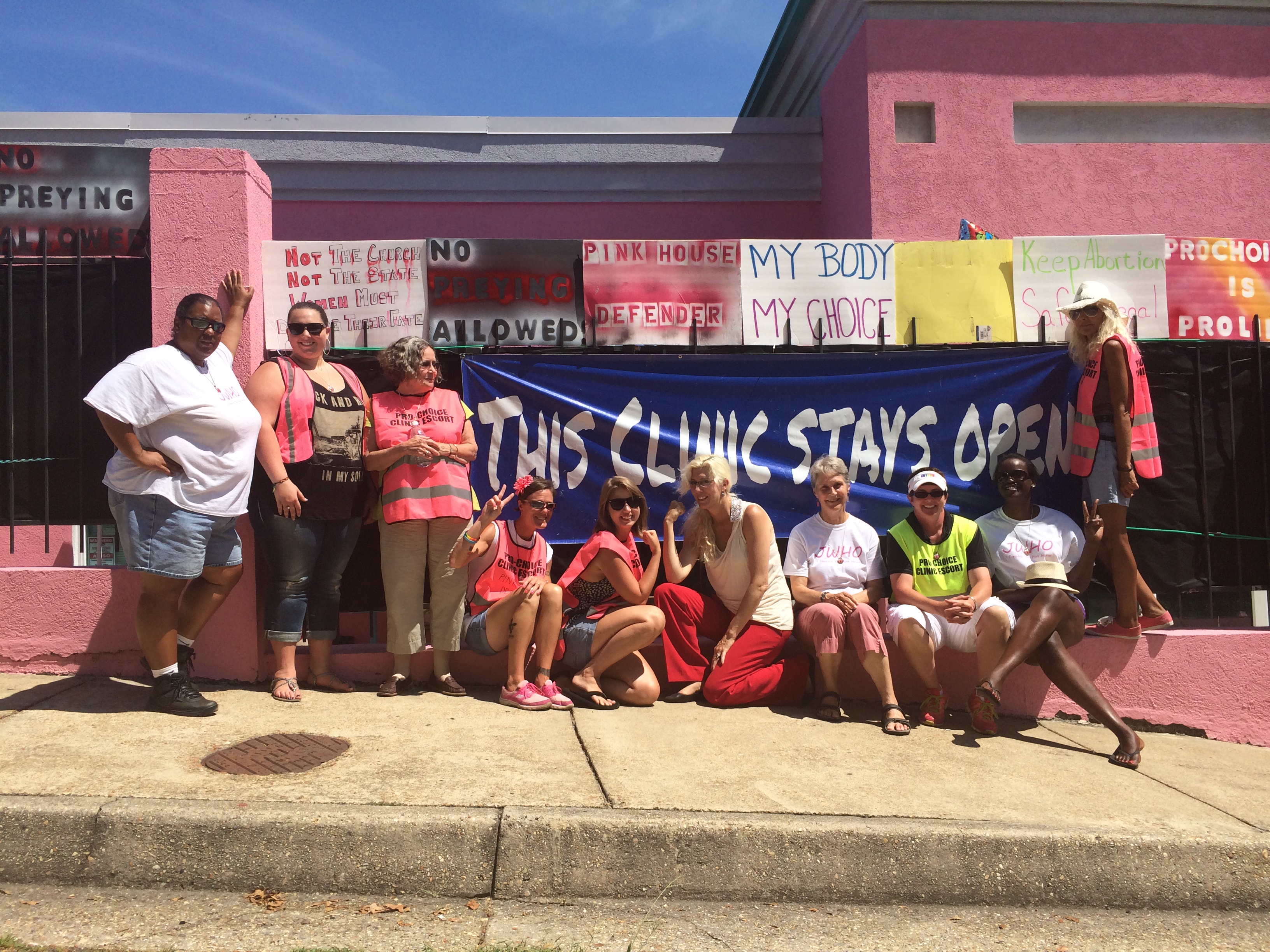
Feminist Majority Foundation’s National Clinic Access Project team with clinic escorts and legal observers outside of the Jackson Women’s Health Organization in Mississippi.
In July, a panel of the Fifth Circuit Court of Appeals upheld a preliminary injunction against a Mississippi TRAP (Targeted Regulation of Abortion Providers) law requiring abortion providers to obtain admitting privileges at local hospitals. Had the law gone into effect, Mississippi’s last remaining abortion clinic, Jackson Women’s Health Organization (JWHO), would have had to shut its doors.
Admitting privileges requirements are a political tool used by anti-abortion politicians to close abortion clinics. Both the American Congress of Obstetricians and Gynecologists (ACOG) and the American Medical Association (AMA) have opposed these laws, which have no health benefit and do not increase patient safety. In fact, admitting privileges laws jeopardize women’s health by cutting off access to comprehensive reproductive healthcare.
After the Mississippi law was passed, two of the three doctors affiliated with JWHO attempted to obtain admitting privileges at at least seven Jackson-area hospitals, but every hospital denied their request, even though the doctors are both board-certified OB-GYNs. Reasons for the denials included “the nature of your proposed medical practice” and fear that extending privileges would disrupt the hospital’s relationship with the community.
After a two-day preliminary hearing, an Oklahoma state court judge ordered that Daniel Holtzclaw, an Oklahoma City police officer, will stand trial for sexually assaulting 13 African-American women while on duty.
During the hearing, all 13 women gave testimony against the police officer, who is alleged to have used his power as an officer to commit these crimes. One woman testified that she was forced to perform sexual acts: “It was either that or the county jail.” Another woman testified, “He was an officer. And I was scared. And I knew he could hurt me.”
A 17-year old girl also offered testimony that Holtzclaw, after threatening her with arrest, pulled down her shorts and forced her to have sex with him on the front porch of her mother’s home. “What am I going to do? Call the cops? He was a cop,” she testified. “I was afraid of what could happen to me if I was snitching.” Prosecutors introduced DNA evidence found inside of Holtzclaw’s pants matching that of the girl.
Another woman testified that Holtzclaw stopped her as she was walking through her neighborhood. The 52-year-old said the officer put his hands under her blouse, and when she resisted, he put his hand in her pants. After this, she said Holtzclaw told her, “OK, you don’t have anything in there. You can go.”
Police began investigating Holtzclaw after one of the survivors reported an assault in June. The other 12 women had not reported Holtzclaw until they were contacted by detectives investigating the June assault. Many of the women feared reprisal or that they would not be believed.
“Who are they going to believe?” the 17-year old told the court. “It’s my word against his. He’s a police officer.”
Holtclaw has pleaded not guilty. He remains out on $609,000 bail. During the hearing on Tuesday, protesters outside of the courthouse called on the court to rescind bail.
Media Resources: Associated Press 11/18/14, 11/17/14; The Oklahoman 11/17/14; Feminist Newswire 11/14/14
In a victory for women’s health, a unanimous panel of the US Court of Appeals for the DC Circuit on Friday rejected a challenge to the Affordable Care Act (ACA) contraceptive coverage benefit brought by Priests for Life, the Roman Catholic Archbishop of Washington and other religiously affiliated non-profit organizations.
Judge Nina Pillard, a former law professor who was nominated to the DC Circuit by President Obama and confirmed by the Senate in December, wrote the opinion for the Court, which found that the ACA birth control benefit did not substantially burden or violate non-profits’ religious freedom.
Under the Affordable Care Act, health insurance companies must cover the full cost of all FDA-approved contraceptives – including the pill, IUDs, and emergency contraception – without requiring co-pays or cost-sharing. Religious employers, like churches, are entirely exempt from this requirement. Religiously affiliated non-profit organizations that object to providing birth control coverage to their employees, are entitled to an accommodation. These non-profits must only inform their health insurance issuer, third party administrator, or the Department of Health and Human Services (HHS) of its objection. At that point, these organizations are no longer required to play a role in providing or subsidizing birth control. The insurance issuer or third party administrator would be solely responsible for providing birth control benefits to affected employees.
The DC Circuit panel found that this accommodation – which the plaintiffs in Priests for Life claimed would violate their religious beliefs – put no substantial burden on religious non-profits exercise of religious freedom.
“All Plaintiffs must do to opt out is express what they believe and seek what they want via a letter or two page form. That bit of paperwork is more straightforward and minimal than many that are staples of nonprofit organizations’ compliance with law in the modern administrative state,” wrote Judge Pillard. “Religious nonprofits that opt out are excused from playing any role in the provision of contraceptive services, and they remain free to condemn contraception in the clearest terms.”
The fact that others may provide contraceptive coverage to these religious non-profits’ employees did not mean that the non-profits were aggrieved under the Religious Freedom Restoration Act (RFRA). According to the Court, there is “no RFRA right to be free from the unease” of knowing that third parties may “act in ways their religion abhors.”
The decision also pointed out that the religious accommodation provided the least restrictive means to achieve a compelling government interest – namely, ensuring women’s health and providing to women the equal benefit of the preventive care coverage guaranteed by the ACA. Judge Pillard specifically noted that “The contraceptive coverage requirement derives from the ACA’s prioritization of preventive care, and from Congress’ recognition that such care has often been modeled on men’s health needs and thus left women underinsured.”
Directly after the ruling, Rev. Frank Pavone, National Director of Priests for Life indicated that the group would continue to challenge the law. “The court is wrong,” he said, “and we will not obey the mandate.”
The DC Circuit is the third federal appeals court to reject non-profits’ challenge to the accommodation. This decision is the first appeals decision since the US Supreme Court decided Burwell v. Hobby Lobby this summer. The Feminist Majority Foundation, along with 12 other national and local organizations, joined an amicus brief, submitted by the National Women’s Law Center in support of the birth control benefit rule in the DC Circuit case.
Media Resources: US Circuit Court of Appeals for the DC Circuit 11/14/14; PBS NewsHour 11/14/14; National Women’s Law Center; Centers for Medicare and Medicaid Services; Feminist Newswire 7/1/14
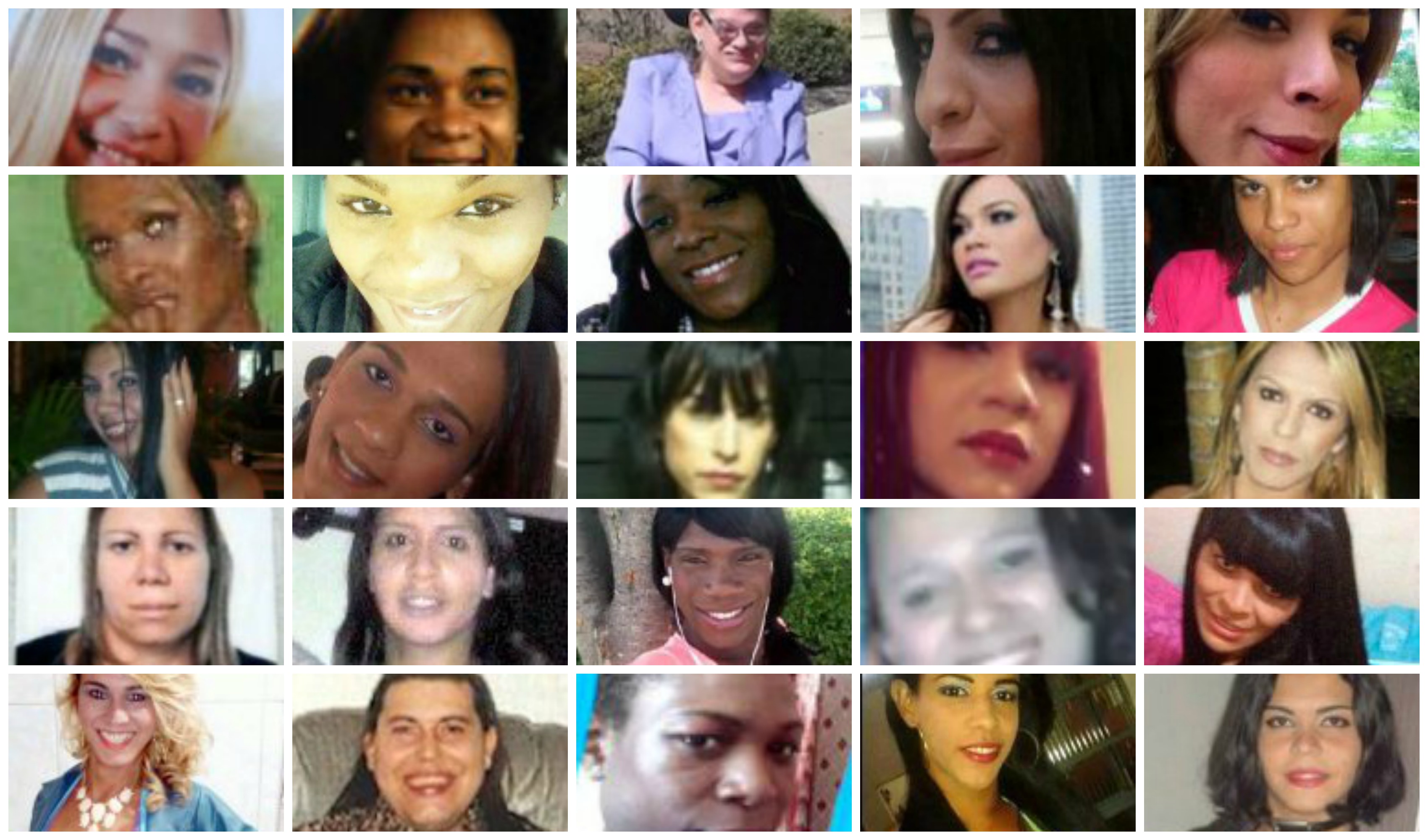
Transgender people are about 400 times more likely to be assaulted or murdered than cisgender people. This, and other sad realities are a product of a culture that does not accept those who do not identify as the gender they were assigned at birth. Today marks the 15th annual International Transgender Day of Remembrance, a memorial for all transgender (and other non-gender-conforming people) who have lost their lives due to hatred and violence toward their identity.
Each year a list is compiled of all transgender lives lost since the last Day of Remembrance. Events are held internationally to memorialize those lost. This year, 81 names are listed on the Transgender Day of Remembrance website, and 226 names are reported by Transgender Europe. The original Day of Remembrance was held in Allston, Massachusetts, to remember Rita Hester, a transgender woman of color who was killed in November 1998.
The Transgender Day of Remembrance website writes: “The Transgender Day of Remembrance serves several purposes. It raises public awareness of hate crimes against transgender people, an action that current media doesn’t perform. … Day of Remembrance gives our allies a chance to step forward with us and stand in vigil, memorializing those of us who’ve died by anti-transgender violence.”
In one example, a woman named Tiffany Edwards, 28, was killed in Ohio when a man shot her to death. In his official defense, the man accused said he felt “trans panic” when she “came on to him.”
The list of names, along with photos when available, of the lost transgender people can be found here, and a full list of events for the Transgender Day of Remembrance can be found here.
Media Resources: Advocate 11/20/2014, 6/30/2014; Transgender Europe 10/2014; The Society Plages 11/20/2009; TDoR.com; Human Rights Campaign; Trans* Violence Tracking Portal
Wednesday, Ms. Magazine and Ms. publisher, the Feminist Majority Foundation, celebrated grassroots feminist activism at the 2014 Ms. Wonder Awards Luncheon and Ceremony.
Gloria Steinem addressing the crowd at the 2014 Ms. Luncheon, credit: Jenny Warburg
Know Your IX, Black Women’s Blueprint, the #CarryThatWeight Movement, and End Rape on Campus were all honored for their work to end campus sex assault at colleges and universities nationwide. Fight for $15 and Fast Food Forward organizers representing four cities and the state of North Carolina were honored for their work to raise the wage for fast food workers through direct action and some of the largest workers’ strikes in recent history.
Feminist Majority Foundation Director of Policy and Research, Gaylynn Burroughs presented Wonder Awards to the organizations working to end sexual violence on campus. “I had the chance to meet some of them earlier,” Burroughs said, “and they are fierce.”
Know Your IX is a grassroots, survivor-run, and student-led campaign to end gender-based violence on campuses across the country. The organization focuses on educating students about their right to an education unencumbered by violence and harassment, and they advocate for stronger federal enforcement to protect that right. The organization takes its name from Title IX of the Education Amendments of 1972, which explicitly “prohibits discrimination on the basis of sex in any federally funded education program or activity.”
In 2013, Know Your IX’s ED ACT NOW Campaign delivered over 100,000 signatures from organizers, survivors, and student activists demanding that the US Department of Education’s Office of Civil Rights conduct more transparent, timely investigations and issue meaningful sanctions against non-compliant schools – something it had never done for violations of Title IX related to sexual assault. Dana Bolger, Founding Co-Director, and Chandini Jha, the Outreach Coordinator for Know Your IX, accepted the award on behalf of the organization.
The Black Women’s Blueprint works within Black communities and on historically Black college and university (HBCU) campuses to fight rape and sexual assault. Last week, the organization testified before the United Nations Committee Against Torture in Geneva, Switzerland, where they called on the UN to hold the United States accountable for the rape and sexual torture of black women by law enforcement and public officials, as in the case of Oklahoma City police officer Daniel Holtzclaw. “Thank you for making us visible,” Farah Tanis, the Co-Founder and Executive Director of the organization said.
Black Women’s Blueprint also spearheaded the Black Women’s Truth and Reconciliation Commission on Sexual Violence, which combines civil and human rights research and action, as well as community organizing and public education campaigns to prevent sexual assault of black women and girls.
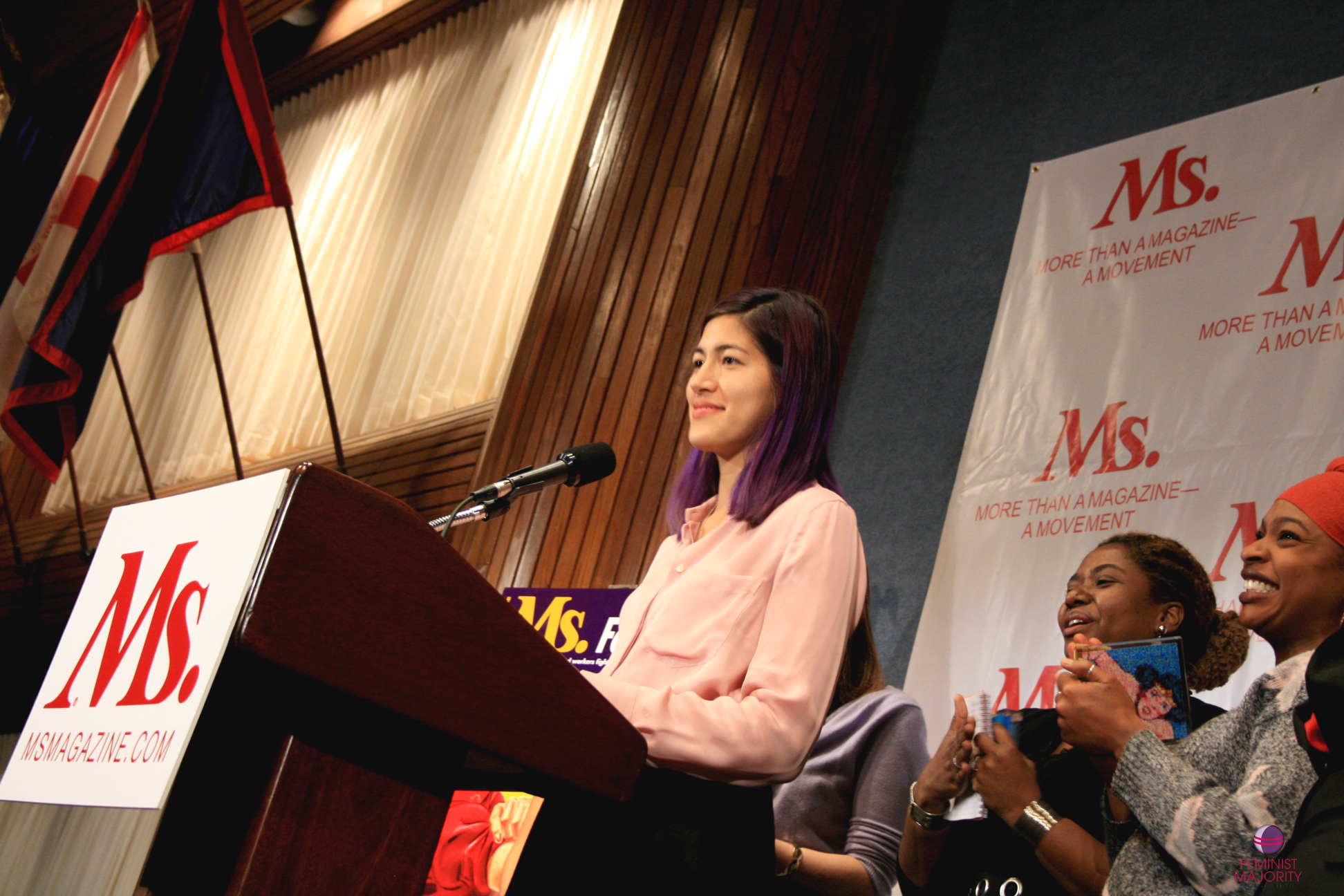
Emma Sulkowicz, Columbia University senior & #CarryThatWeight Movement
Through her extremely personal endurance performance project, Emma Sulkowicz launched a national movement and made the fight against campus sex assault visible in a new way. The #CarryThatWeight Movement was born out of Sulkowicz’s own experience as a rape survivor. Columbia University did not expel the student who raped Sulkowicz and two other females on campus. That prompted the idea for her senior thesis project, titled Mattress Performance: CarryThatWeight. Every day, Sulkowicz has carried a dorm room XL twin-size mattress to symbolize the weight she carries as a survivor who must still attend school with her rapist.
A coalition of college students and activists who advocate for stronger campus policies on behalf of domestic violence and sex assault survivors coordinated the national #CarryThatWeight Day of Action. On October 29, students across the country carried mattresses and pillows across their campuses to stand in solidarity with survivors, and to show their support for the movement to end sexual violence and rape culture.
Sulkowicz received a standing ovation as she accepted her Wonder Award. She thanked her family and friends for supporting her “crazy idea” to carry a mattress for nine months.
Andrea Pino, Co-Founder of End Rape On Campus, thanked the sponsoring organizations for recognizing the work of the awardees being honored, but encouraged the room of feminist activists to remember all the ways campus sex assault impacts survivors long after the violation has occurred. “Perpetrators are graduating while survivors are dropping out of school,” Pino said, stopping to share her own fear that she may not get her bachelor’s degree, or go on to law school because of the sexual violence that disrupted her education.
Ashona Osborne, Pittsburgh Fast Food Striker, with her son, addressing the crowd after receiving her Ms. Wonder Award.
A group of young activist leaders and fast food workers from Chicago, New York City, Philadelphia, Pittsburgh, Richmond, and North Carolina accepted Wonder Awards for their work fighting for a $15 an hour minimum wage and the right to unionize. Ashona Osborne has worked for McDonald’s, and now Wendy’s, for a total of six years. As the mother of a young child, Osborne said the fight is about more than a wage. “We don’t only need $15, we need a consistent schedule,” she said. Osborne recalled paying for childcare and paying to take public transit to work, only to be told she wasn’t needed for work.
The workers represented have been arrested and, even now, risk losing their jobs because of their work to raise the wage, but they are not deterred. Ashona Osborne and Brittney Berry from Chicago have been arrested twice. “Both times I felt like I was the modern day Rosa Parks,” Osborne said.
Dolores Huerta, President of the Dolores Huerta Foundation and member of the Feminist Majority Foundation Board of Directors, thanked the workers for their courage, and urged the audience to join this modern day labor movement. “They know that if they don’t do it, no one is going to do it for them,” Huerta said.
Gloria Steinem stressed the need for cohesive grassroots organizing to push the work of feminist activists forward. “Only bottom up organizing can defeat this kind of inequality – and there is inequality everywhere,” she said, pointing to the outcome of the 2014 midterm elections, and stressing the power of the masses to push back against disenfranchisement and unrepresentative leadership. “It is crucial that we pay attention to the state legislatures,” Steinem remarked. “They are redistricting themselves into perpetuity.”
“I don’t think I’ve ever been in a room with so much personal history, and so much future,” Gloria Steinem said.
The luncheon was attended by over 400 feminist leaders and activists. The event was co-sponsored by dozens of organizations including the National Organization for Women, National Congress of Black Women, Planned Parenthood Federation of America, American Association of University Women, Americans United for Separation of Church and State, Catholics for Choice, National Family Planning and Reproductive Health Association, the National Network to End Domestic Violence, and NARAL Pro-Choice America.
Media Resources: US Department of Justice Federal Coordination and Compliance; KnowYourIX.org 7/2013; Feminist Newswire 11/14/14
The speakout, which will run from 1 to 9 p.m. EST, will be recorded live in Washington, D.C. and livestreamed at the 1 in 3 website. Participants can share via Skype, prerecorded video, or live in the Advocates for Youth studio.
The project aims to challenge abortion stigma and create a culture of empathy, compassion and support for abortion access, according to the 1 in 3 site.
“We are really excited,” said Julia Reticker-Flynn, Associate Director of Organizing and Mobilization at Advocates for Youth. “Every hour is chock full with people from across the country who will share their stories.”
For more information or to get involved, visit http://www.1in3campaign.org/speakout.
Media Resources: 1 in 3 Campaign, 11/18/14; Advocates for Youth, 11/18/14.
“It’s On Us” launched a nationwide Week of Action yesterday, with students at campuses throughout the country hosting events calling on everyone to play a role in ending campus sexual violence.
The It’s On Us campaign, coordinated by Generation Progress, was launched in September by President Obama and Vice President Joe Biden, and builds on the White House’s campaign against college sexual assault. Various universities, non-profit organizations, sports teams, and women’s rights organizations have joined the campaign as partners, including the Feminist Majority Foundation, the American Association of University Women, and the National Alliance to End Sexual Violence
The focus of It’s On Us is bystander intervention, which was spotlighted in the “Not Alone” report issued by the White House Task Force to Prevent Campus Sexual Assault as a successful tool for shifting cultural norms around sexual violence and engaging individuals in creating safe spaces. Bystander intervention efforts, often targeted at men, empower individuals to speak up when they see violence or abuse, and intervene in high-risk situations where sexual assault might occur.
“The Week of Action is building on the momentum from this fall and getting more people involved so we can include them next year and in the spring,” said Generation Progress’ It’s On Us campaign manager Kristin Avery. “Our goal is to really spark as many conversations as we can.”
Under the leadership of President Obama and Vice President Joe Biden, the White House has made ending campus sexual assault a leading priority. In addition to creating the White House Task Force to Prevent Campus Sexual Assault, the White House has created a website, www.notalone.gov, where survivors can locate resources and learn how to take action against universities that failed to protect them.
One in five women are sexually assaulted in college. Despite the overwhelming prevalence of sexual violence on campuses, only 12 percent of campus sexual assault survivors report their assault to authorities or administrators. Dozens of schools are currently under investigation for mishandling sexual assault cases, and a rising tide of student activism has compelled legislators and community members to mobilize in recent years around awareness and prevention efforts.
Media Resources: It’s On Us; NotAlone.gov; Huffington Post 11/16/14; Feminist Newswire 9/19/14; White House Task Force to Prevent Campus Sexual Assault, April 2014; White House Council on Women and Girls, January 2014
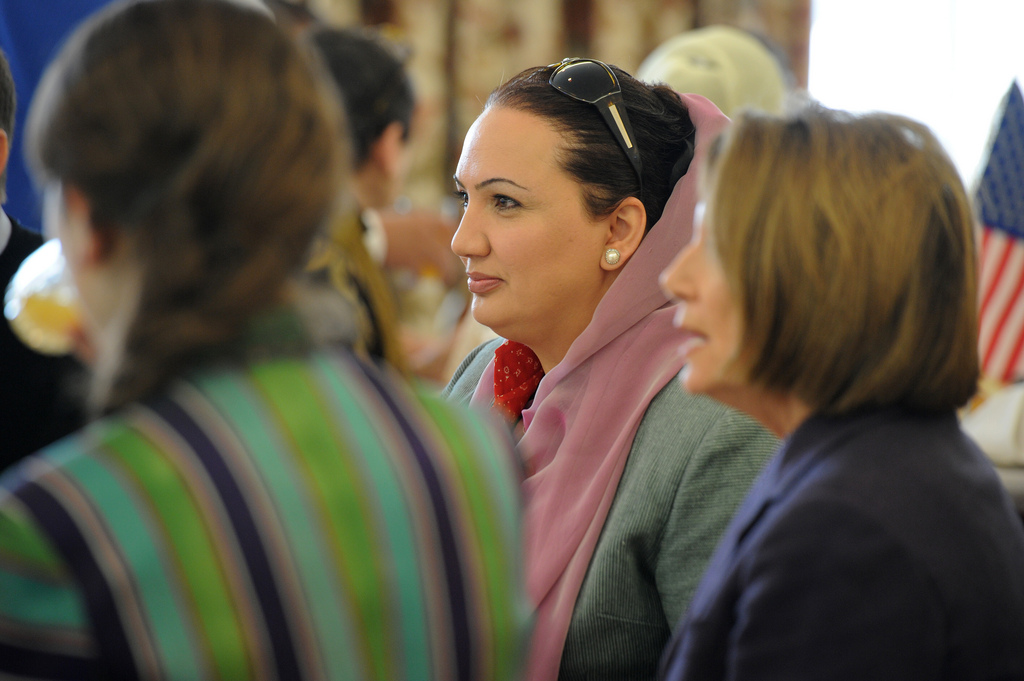
Afghan law maker and prominent women’s rights leader Shukria Barakzai survived a suicide bombing attack on her armed vehicle on Sunday, November 16. Three people were killed and more than 20 wounded in the attack, which took place several hundred feet from the Parliament building where Barakzai was headed.
On Sunday morning, a car rammed into Barakzai’s armored vehicle, at which point a suicide bomber detonated his explosives. Barakzai escaped the attack with minor injuries, as did the driver of her car, but three civilian bystanders were killed in the blast.
An elected member of Afghanistan’s Parliament, Barakzai has long been a champion for women’s rights in a male-dominated society. She is known for being outspoken about corruption and injustice, even in the face of many enemies, and once remarked of her fellow legislators, “Our Parliament is a collection of lords. Warlords, drug lords, crime lords.”
Barakzai is a close ally of Afghan President Ashraf Ghani, who recently helped launch “Promote,” the largest women’s empowerment program in the world. Ghani issued a statement condemning the attack as “heinous act as against all Islamic and Afghani values.” Barakzai approves of Ghani’s ambitious agenda for promoting women’s rights and promise for change. She was appointed by President Ghani as a member of the team charged with helping to chose the new Presidential cabinet.
Barakzai, who helped run underground schools for girls during the Taliban-era, has been a vocal critic of the Taliban and has received death threats from many different extremist groups, but as of yet no group has claimed responsibility for this attack.
Media Resources: BBC News 11/16/14; New York Times 11/16/14; Feminist Newswire 11/11/14; ABC News 11/16/14