National Football League Commissioner, Roger Goodell finally met with members of the Black Women’s Roundtable last week after failing to invite any women of color to weigh in on the League’s initial plan of action on domestic violence.
Two months ago, Goodell announced the formation of an advisory board tasked with leading institutional reforms related to relationship violence and sexual assault. Goodell appointed an all white female trio to lead the advisory board, despite the over-representation of African Americans in the NFL, and as the Black Women’s Roundtable pointed out, despite the overwhelming representation of African American women among relationship violence victims.
Media Resources: New York Daily News 11/14/14; Feminist Newswire 9/29/14, 9/18/14; SB Nation 11/6/14; CBS News 9/10/14; National Coalition on Black Civic Participation 9/16/14; ESPN.com 10/2/14
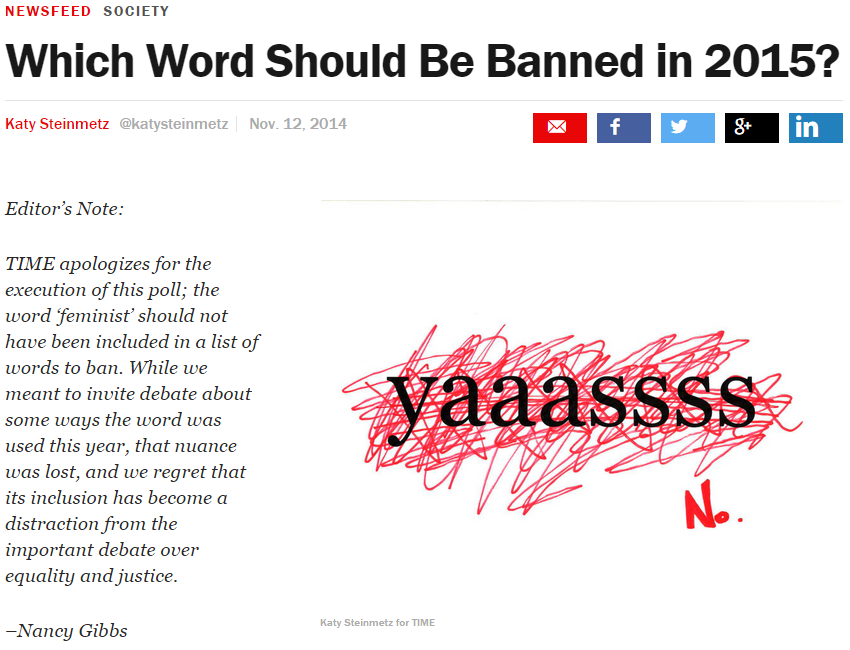
After facing sharp backlash, TIME magazine issued an apology over the weekend for including the word “feminist” on its poll of words to “ban” in 2015.
“At last, TIME comes to its senses,” said Feminist Majority Foundation President Eleanor Smeal. “Obviously ‘feminist’ is a worldwide movement for equality of women that cannot and must not be trivialized. Too many women’s lives depend on it. It’s very important that leaders from every walk of life, not only declare they are feminist, but help to empower women and to end the violence against and exploitation of women.”
The full apology, which is included as an editor’s note above the poll, reads,
“TIME apologizes for the execution of this poll; the word ‘feminist’ should not have been included in a list of words to ban. While we meant to invite debate about some ways the word was used this year, that nuance was lost, and we regret that its inclusion has become a distraction from the important debate over equality and justice.
The original TIME poll was created to have users vote on which popular Internet slang word was most annoying and should be “banned” for 2015. The list included “yaaassss,” “bae,” “turnt,” and “basic.” Activists argued the inclusion of “feminist” on the poll downplayed the importance and the work of the feminist movement.
Media Resources: Feminist Majority Foundation 11/17/14; Feminist Newswire 11/14/14; Time Magazine 11/12/14; Ms. Blog 11/12/14
Police brutality, military sexual assault, and gender-based violence in the US came under scrutiny this week as the United Nations Committee Against Torture conducted its periodic review of the United States’ compliance with the international Convention Against Torture and Other Cruel, Inhuman or Degrading Treatment or Punishment (CAT).
In preparation for the review, the UN asked the United States to provide the Committee with specific information on what steps the US has taken to “prevent and punish violence and abuse of women,” in particular women of color. The Committee also requested information on “brutality and use of excessive force by law enforcement officials and ill-treatment of vulnerable groups, in particular racial minorities, migrants and persons of different sexual orientation.”
To assist the Committee with its review, US-based advocates, organized by the US Human Rights Network, provided information, reports, and testimony earlier this week.
The Black Women’s Blueprint, which will be honored by Ms. magazine with a Wonder Award next week, provided the Committee with its report, “Invisible Betrayal: Police Violence and the Rapes of Black Women in the United States.” The report highlights how Black women’s experience of rape and sexual assault constitute a form of torture. The group also focused on the continued minimization of sexual violence as it relates to Black Women. As an example, the group cited the recent arrest of white Oklahoma City, Oklahoma police officer Daniel Ken Holtzclaw. Despite facing 16 felony counts of sexual assault and misconduct – including the sexual assault, rape, stalking, fondling, and indecent exposure of himself to at least eight black women while on duty – Holtzclaw was released on $500,000 bond, after having an initial $5 million.
The report goes on to note: “Despite the facts that 22 percent of Black women and 50 percent of racially mixed Black women experience rape in higher amounts when compared to white women, the long-standing legacy and continued devaluing of Black women as legitimate victims of rape and assault generally compound Black women’s continued victimization and likelihood to get a conviction against a police officer no less.”
Women’s All Points Bulletin (WAPB) provided the Committee with information on the hyper-policing of transgender women of color. “Transgender women are four times more likely to experience police violence compared to all victims of police violence,” according to WAPB, and 22 percent of all who’ve had an interaction with law enforcement reported they were harassed, physically assaulted, or sexually assaulted by an officer. More than one-third reported “they were harassed by correctional staff while a sizeable portion had reported being physically (16 percent) and sexually (15 percent) assaulted” with rates increasing for people of low-income or racial minority backgrounds.
Appearing before the Committee on Wednesday, Lesley McSpadden and Michael Brown, Sr., parents of unarmed African-American teenager Michael Brown who was slain by a Ferguson, Missouri police officer in August, testified about the excessive use of force that ended their son’s life. Martinez Sutton, the brother of 22-year-old Rekia Boyd spoke on behalf of his family as well. Boyd was killed when an off-duty Chicago police officer fired his gun at another unarmed man in 2012. No member of law enforcement has been fully prosecuted in either case. The family of Israel “Reefa” Hernandez Llach, along with the Dream Defenders and the Community Justice Project of Florida Legal Services, also testified about a Miami Beach, FL police officer’s reckless use of a taser that ended 17-year-old Llach’s life.
The Avon Global Center for Women and Justice at Cornell Law School, in conjunction with the American Civil Liberties Union, Equality Now, the Global Gender Justice Clinic at Cornell, the Military Rape Crisis Center, and the Service Women’s Action Network also submitted testimony calling on the UN to recognize military sexual assault as a reality that “violates service members’ right to be free of torture.” The groups acknowledged some effort by the US Department of Defense to address the prevalence of sex assault in the military, however, they said, “By failing to adequately prevent and address incidents of sexual violence in the US military, the DoD fosters a culture of impunity.”
The US has been a party to CAT since 1994. The Committee Against Torture conducted its review of the United States on Wednesday and Thursday of this week. The Committee will continue to meet through November 28.
Media Resources: UN High Commissioner for Human Rights; US Human Rights Network; UN Committee Against Torture 1/20/10; Huffington Post 9/5/14; ABC WLS-TV Chicago 3/22/12
Time Magazine is facing backlash after a poll they released last week listing the work “feminist” alongside popular slang terms on a list of words that should be “banned” in 2015.
TIME posted a poll to its readers asking them to vote on a list of words that may cause you to “seek out the nearest pair of chopsticks and thrust them through your own eardrums.” Among common slang terms like “bae,” “turnt,” and “on nom nom nom,” TIME also posted the word “feminist,” for which the Magazine is now receiving a lot of negative attention.
The magazine lists reasons as to why each word on the poll makes them “cringe,” and the reason for listing “feminist” is attributed to the word becoming “a thing that every celebrity had to state their position on whether this word applies to them, like some politician declaring a party.” Despite the fact that TIME’s current cover artist is Taylor Swift, and Swift discusses her recent claiming of the title “feminist” within the feature article, TIME seems to think it might be appropriate and necessary to ban the word.
In a response to TIMEe’s poll, Huffington Post writer Emma Gray reminds us of the power behind the title “feminist.” Feminists have, after all, achieved women’s suffrage, fought for equal pay, demanded affordable and comprehensive healthcare, organized on college campuses to tackle the issue of sexual assault, and have fought tirelessly to achieve women’s equality. Gray writes that banning the word is not only offensive to the majority of women who identify as feminist, but “doing so, in essence, would erase the existence of a decades-long social movement.”
The poll has caused an uproar on social media, and the Feminist Majority Foundation released a petition to Managing Editor Nancy Gibbs, writing “Your poll adds to the hateful push against those who fight for equality every day” and asking Gibbs to “please reconsider and remove the word from your poll.” Currently, the petition has been signed by over 6,000 people.
The US Circuit Court of Appeals for the Fifth Circuit has refused to rehear a ruling that permits the use of race as a factor of consideration in undergraduate admissions at the University of Texas.
Twice before, the Fifth Circuit sided with the University of Texas at Austin in a case brought by Abigail Fisher, a white student who believes UT discriminated against her when she was denied admission six years ago. UT considers race as a factor for roughly 25 percent of students who are not admitted under the Top 10 percent rule, which grants automatic admission to the top students of a high school’s graduating class. Fisher did not meet the 10 percent threshold and was denied admission. She claimed that UT rejected her because of her race and that the school’s admission policy is therefore a violation of the 14th Amendment.
“We are pleased with the ruling of the Court of Appeals for the Fifth Circuit,” UT Austin President Bill Powers said in a statement following the Court’s decision. “The University of Texas at Austin is committed to maintaining a student body that provides the educational benefits of diversity while respecting the rights of all students. The exchange of ideas and cultural richness that occurs when students from diverse backgrounds come together on our campus prepares all our students for life in a global society.”
The Supreme Court is not unfamiliar with the case. In 2012, the Supreme Court heard Fisher’s appeal from the Fifth Circuit’s original ruling in favor of the University. At that time, the Supreme Court voided the Fifth Circuit’s decision and sent the case back for the Fifth Circuit to determine whether the University’s use of a race-conscious admissions policy could survive “strict scrutiny.” After hearing the case again, the Fifth Circuit continued to uphold the University’s admissions policy.
Media Resources: US Court of Appeals for the Fifth Circuit 11/12/14; University of Texas at Austin 11/12/14; Houston Chronicle 11/12/14; Feminist Newswire 7/16/14
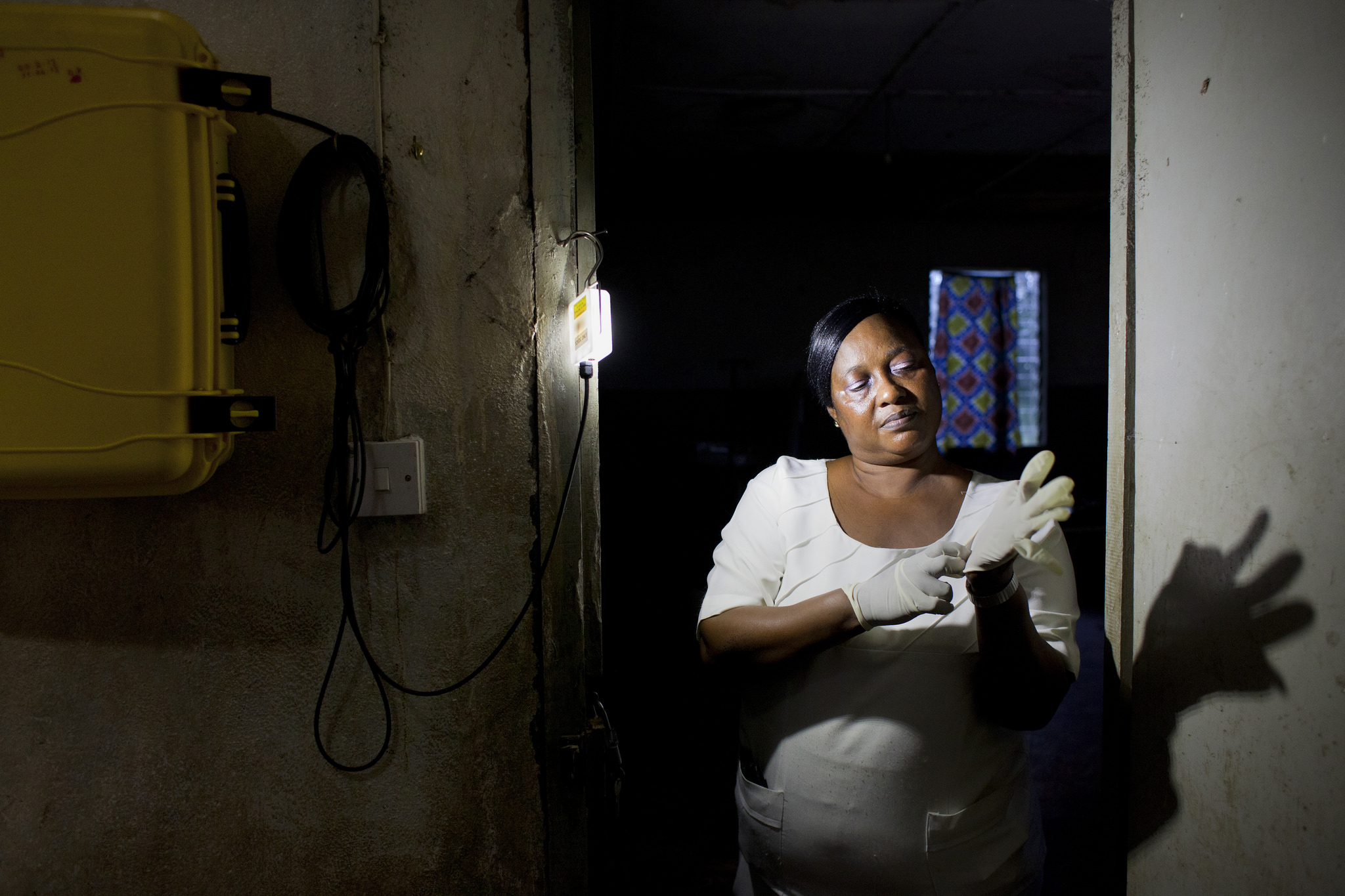
One in seven women could die during childbirth in the West African countries most impacted by the Ebola crisis, according to members of the Disasters Emergency Committee, a coalition of aid organizations in the UK.
Though on the decline before the outbreak, maternal mortality rates in Sierra Leone, Liberia, and Guinea were still some of the highest in the world. Now, these rates are expected to soar. The state of many local hospitals and clinics, strained by the influx of patients fighting the disease, has discouraged pregnant women from seeking antenatal care due to fear of interaction with bodily fluids. Korto Williams, the head of ActionAid in Liberia, said online videos have emerged of women giving birth in the streets with no help, because bystanders feared they had the disease.
“We have to do more to stop this horrendous prediction (from) coming true,” Williams said. “We have to ensure that pregnant women get the care they urgently need or we will see the rate of maternal deaths skyrocket. Ebola has taken enough lives already.”
According to the World Health Organization, more than 13,000 people have been infected with the disease since March. Almost 5,000 people have died in the three worst-hit countries. Some healthcare providers have turned into exclusive Ebola treatment facilities, leaving pregnant women, and people battling other diseases like malaria or tuberculosis, without any care. Save the Children chief executive Justin Forsyth said Ebola is having a “huge impact on wider health issues,” even spilling over into public education. “No children have gone to school since March and pregnant mums are avoiding health clinics and hospitals,” Forsyth said, adding that where pregnancy-related admissions averaged 80 a day, they are now around 20.
Aid groups are working to train more care givers and staff Ebola treatment facilities. Save the Children has worked with more than 250 providers and midwives, and has provided sanitation supplies to help workers stay safe. Meanwhile, there has been a drop in the number of new Ebola cases in Liberia, but the groups warn that the outbreak is far from over.
UN Women has been calling for a “gender-based” humanitarian response to the Ebola crisis that targets outreach services specifically to women. The UN Country Team in Sierra Leone launched an Ebola Gender Mainstreaming Strategy last month to better integrate women into all aspects of the Ebola response. The Strategy seeks to “build confidence among heath workers, and reestablish trust among communities to utilize public health facilities and services.”
Media Resources: Al Jazeera America 11/11/14; The Guardian 11/10/14; UN Women 10/30/14, 9/2/14; Feminist Newswire 9/18/14
After almost a year of negotiations, the US and China announced an unprecedented pledge to limit their carbon emissions, giving hope to climate change activists worldwide.
This morning, President Obama pledged that the United States will increase their efforts to curb carbon emissions, aiming for a 26-28% decrease in overall emissions by 2025, and President of China Xi Jinping announced the country’s first-ever commitment to cap fast-growing carbon emissions by 2030. As the United States and China are the two largest producers of carbon emissions, the pledge has been largely praised by international communities interested in preventing climate change.
This move by Presidents Obama and Xi follows an urgent environmental push by the UN through the release of their report on climate change earlier this month. The report warned of the “clear and growing” human influence on the climate, stating that if we were to continue with its “business as usual” attitude, climate change will increase severe, pervasive, and irreversible impacts for people and ecosystems.
Brian Dixon, vice president for media and government relations at Population Connection, places the decision within the context of global impact. “Certainly by itself, this is not going to solve the problem,” he told Feminist Newswire, “but it’s important that these two countries are willing to take aggressive steps to deal with our carbon issue.”
The two goals are highly ambitious, and already there has been some criticism from Republicans for President Obama’s plan. To meet the 2025 goal, the US will have to more than double carbon pollution reduction from an average of 1.2 percent per year to an average of 2.8 percent per year until 2025. Senate Republican leader Mitch McConnell called the plan “unrealistic,” and thinks it “would ensure higher utility rates and far fewer jobs.” Many more people, however, are applauding the landmark agreement and its implications for the environment. Former president Al Gore called the decision “a major step forward in the global effort to solve the climate crisis.”
Although the United States’ agreement to cut back emissions is still far from what the UN has called for, President Obama is optimistic. “This is a major milestone in the US-China Relationship,” he said while standing alongside President Xi this morning, maintaining that “[the US has] a special responsibility to lead the global effort against climate change.”
China and the United States made more than one agreement during President Obama’s meeting with President Xi. As well as the historic climate change pledge, the two presidents agreed on the importance of denuclearizing the Korean peninsula, increasing cybersecurity, strengthening military relations and increasing trade.
Media Resources: NY Times 11/11/14; Washington Post 11/12/14; PopulationConnection.org; Huffington Post 11/11/14; UN News Centre 11/2/14; CNN World 11/12/14
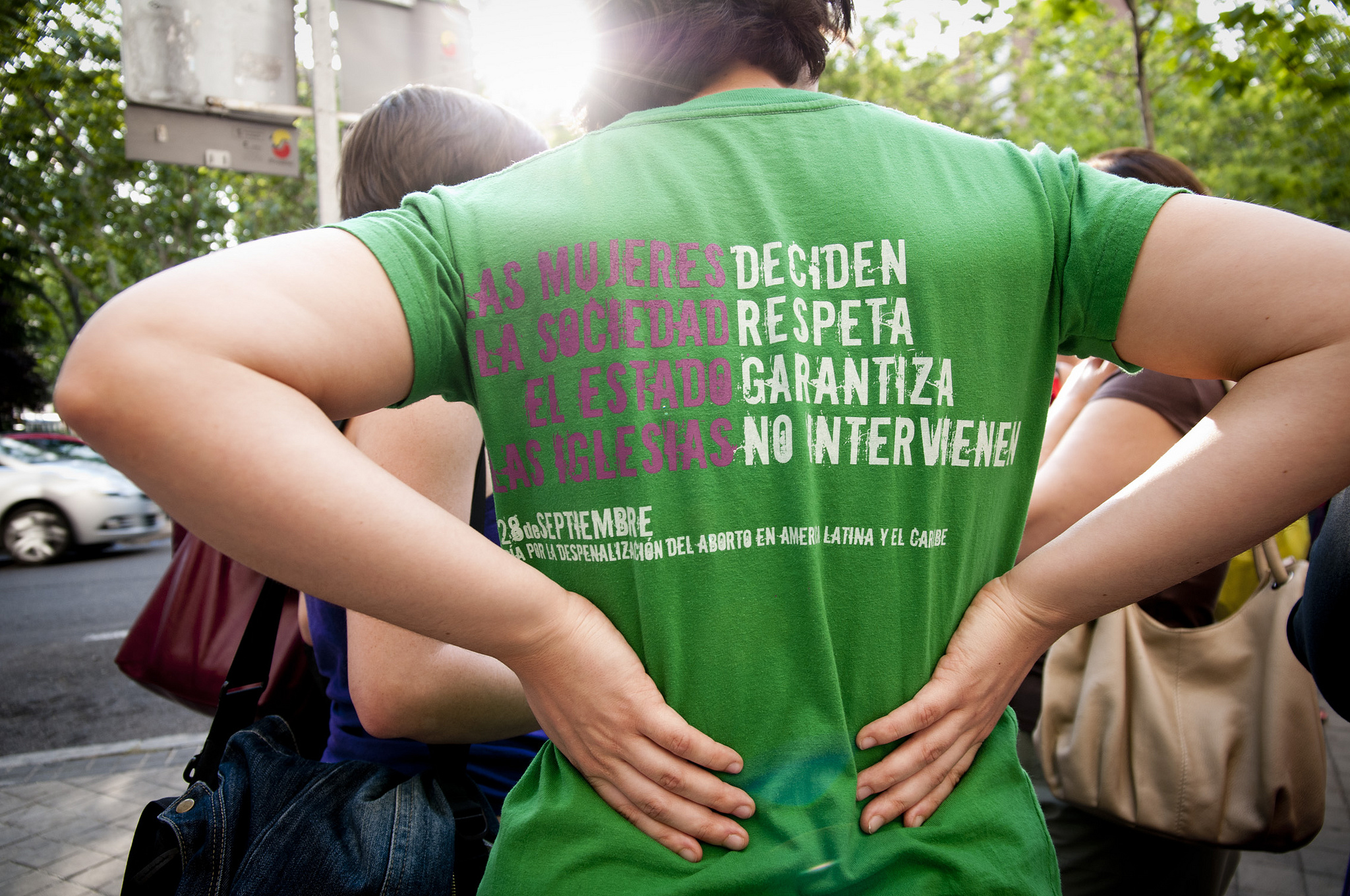
As part of a review currently being conducted by the United Nations Human Rights Council, Australia, Canada, the Czech Republic, France, Germany, Iceland, Luxembourg, Norway, Slovenia, Spain, Sweden and the UK all submitted statements urging El Salvador to lift its complete ban on abortions. The assessment, the Universal Periodic Review, is conducted regularly by the United Nations to see whether UN member states comply with human rights commitments.
“The chorus of countries worldwide calling for El Salvador to end its unjust abortion ban is growing ever larger and louder,” said Nancy Northup, President of the Center for Reproductive Rights (CRR). “The Salvadoran government cannot ignore the calls any longer, and must not be allowed to evade accountability for the human rights abuses that countless women continue to suffer. Access to safe and legal reproductive health care, including abortion, is a fundamental right, not a crime.” There are currently about 28 countries that hold full bans on abortion, according to the Center for Reproductive Rights (CRR).
El Salvador’s abortion ban makes no exceptions for rape, incest or threats to a mother’s life or health. Women for the last 16 years have faced prison charges of up to 30 years for attempting to take control of their reproductive rights – and, in some cases, for having miscarriages.
El Salvador, which has one of the highest teen pregnancy rates in all of Latin America, has put the lives of women and girls on the line with their draconian ban on abortion. Since the ban was instated, hundreds of girls and women who became pregnant after rape have committed suicide every year, and teen pregnancy is reportedly one of the leading causes of suicide in the region. Nearly one third of all pregnancies in El Salvador occur in girls between 10 and 19, but initiatives to improve sex education in schools and to improve contraception access have been denounced by the powerful Catholic Church in El Salvador.
To make matters worse, a strong stigma surrounding rape prevents girls and women from reporting sexual violence – and of reported sexual violence, only a small number of perpetrators actually go to jail. “Sometimes the person carrying out sexual violence is the family’s sole breadwinner,” Mario Soriano, a doctor who works with adolescent development in El Salvador, told Reuters, “and so the possibility that their economic help will be taken away is used as a threat against the girl not to report the crime.”
El Salvador’s government has chosen to postpone a response to the UN recommendations until the next session in March 2015. “Now more than ever the international human rights community must continue to advocate and pressure the Salvadoran government to ensure women’s reproductive rights,” said Monica Arango, regional director for Latin America and the Caribbean at CRR.
Media Resources: Center for Reproductive Rights 11/10/2014; Reuters 11/12/2014; Feminist Newswire 5/30/13, 6/3/13
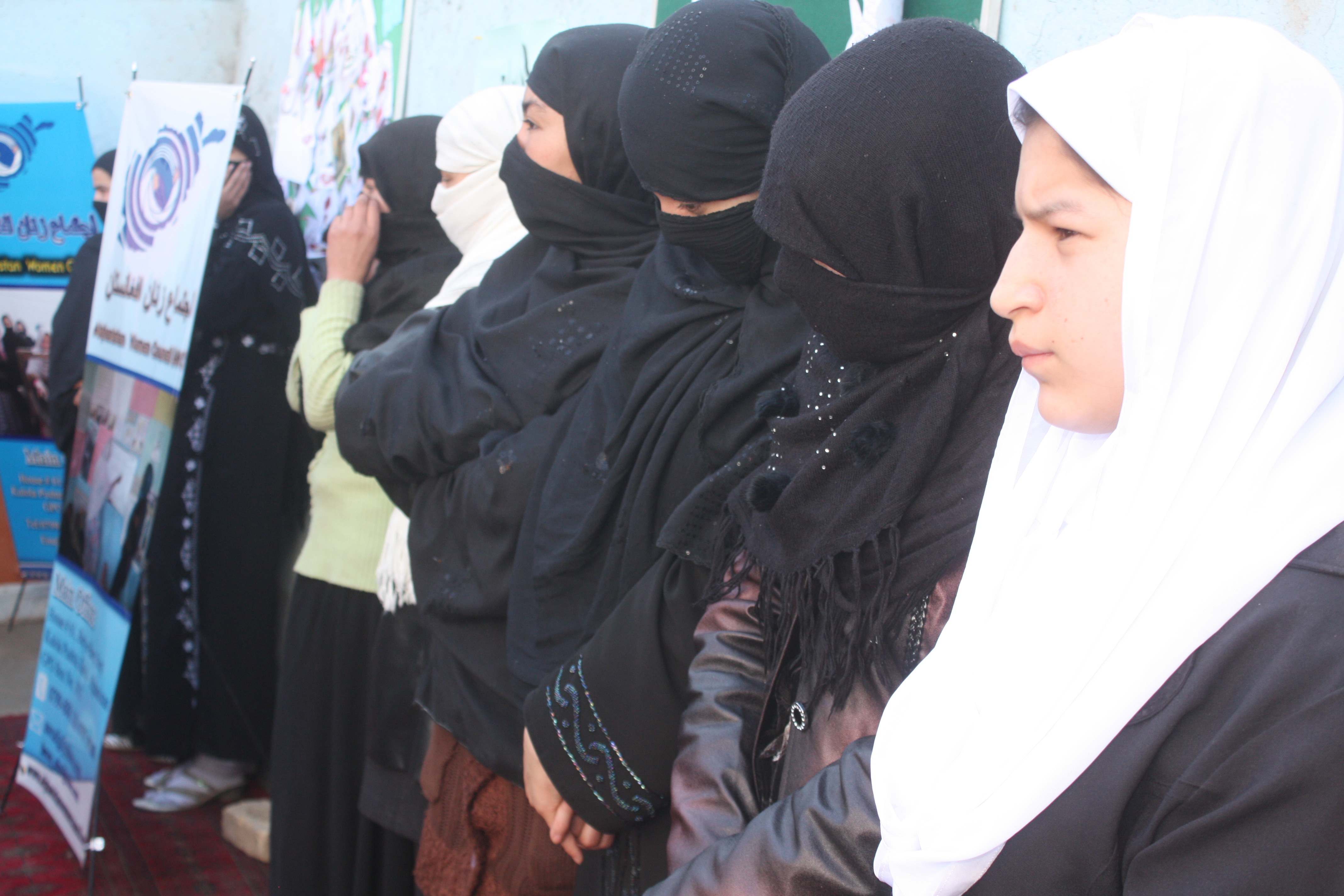
The United States Agency for International Development launched its largest women’s empowerment program in the world on Saturday. Called “Promote,” the program will invest up to $416 million dollars into the education, training, and promotion of Afghan women in civil society, government, and business.
via MA
The US has committed $200 million to Promote and is seeking $216 million from other donors for the five-year program. Promote will target Afghan women between the ages of 18-35 who have had secondary education. The program has four components: leadership training; the promotion of women in decision-making roles within the government; inclusion of women in the workplace, particularly in technology, finance, and administration; and strengthening the capacity of women’s rights groups and coalitions.
Both President Ashraf Ghani and Afghan Chief Executive Officer Abdullah Adbullah attended the launch of Promote in Kabul with USAID Administrator Rajiv Shah and other officials. Ghani and Adbullah both spoke about giving more roles to women in government and the need for women’s inclusion in economic development.
Administrator Shah explained that Promote, while a women’s empowerment program, is designed to foster development in Afghanistan as a whole. “Promote helps the Afghan people see that investing in a woman’s chances to succeed is essential to their own economic prosperity and national security,” said Shah. “By investing in women as champions for development, we can advance peace and broad-based growth across Afghanistan.”
“For us to see this take shape in Afghanistan, women have to be at the table–and in even greater numbers,” said Russell. “It is essential that women hold elected office and leadership positions at the highest levels, and to participate in all aspects of Afghan life.” Russell remarked that Promote is “about a commitment to doing everything we can to help the Afghan government continue to build momentum for women and especially the next generation of women leaders.”
In addition to providing small grants to women’s organizations throughout the country, Promote will work with the Afghan Ministry of Women’s Affairs (MOWA) to provide funding for internship and fellowship programs in government ministries for Afghan women high school and college students. It will also promote policy reform at the national and local level and encourage the creation of more economic opportunities, primarily in urban areas.
MOWA Deputy Minister Muzhgan Mustafavi expressed optimism around the launch, telling Tolo News, “This program will bring visible changes in the working conditions of the women in the country.” At the same time, Mustafavi was candid about the need to monitor the program closely. “We ask that the government of Afghanistan is allowed to monitor the budget to ensure transparency and that aids are not wasted.”
In addition to Promote, USAID Administrator Shah also announced more than $110 million in aid for health and nutrition programs for Afghan women and girls. That aid will be used to improve nutrition among Afghan women and girls and reduce stunting, anemia, and iron deficiency.
Media Resources: USAID Press Release 11/8/14; USAID Promote Fact Sheet November 2014; Tolo News 11/8/14, 11/6/14; US Department of State 11/10/14
At least 12 women are dead and more than 50 women have been hospitalized in India following botched sterilization procedures in government-run health camps.
According to reports, more than 83 women between the ages of 26 and 40 were operated on in only six hours by one doctor and an assistant. At least 20 women who were hospitalized as a result of these procedures are in critical condition. Witnesses say the procedures were carried out “hurriedly” and a doctor is accused of using rusty tools in an unclean operating room. The women were sent home, but soon began reporting fever and pain. A few days later, many of them were taken to a hospital and several died. The exact cause is unknown, though first investigations suggest the deaths were from blood poisoning or extreme loss of blood.
So-called “sterilization camps” reportedly exist in several states in India, with authorities in some areas offering couples incentives like cash payments for undergoing the procedure. In this case, each woman was offered 600 rupees, which is the equivalent of less than $10 US dollars, to undergo the procedure. The botched laparoscopic tubectomy operations were performed in Chhattisgarh, one of the poorest states in India, with at least a 49 percent poverty rate.
After the deaths, state surgeons met to debate whether or not to continue the state sterilization schedule, which would see 180,000 women sterilized by March of 2015. Activists say these schedules and quotas are a danger to women as they pressure doctors to lead women in the direction of sterilization over other effective methods of contraception.
“These women have become victims because of the target-based approach to population control,” All India Democratic Women’s Association member Brinda Karat told the Associated Press. The Indian government estimates 4.6 million women were sterilized in the country from 2011 to 2012.
Although four health officials, including one man who received an award last year for having performed 50,000 sterilization procedures, have been suspended, the Indian government denies claims of negligence.
This is not the first time botched sterilization procedures in India led to hospitalizations and death. In early 2012, three men were arrested for performing the procedure without anesthesia on 53 women in just two hours. Sterilization camps are put in place to perform mass procedures. A national sterilization campaign was abandoned in the 1970’s after people complained that thousands of people were forced into getting sterilized. While these procedures are now said to be voluntary, poverty and health officials have pushed women into sterilization – sometimes without proper consent forms.
Updated 11/12/2014
Media Resources: Reuters 11/12/2014; BBC News 11/7/2014; Associated Press 11/7/2014; The New York Times 11/7/2014
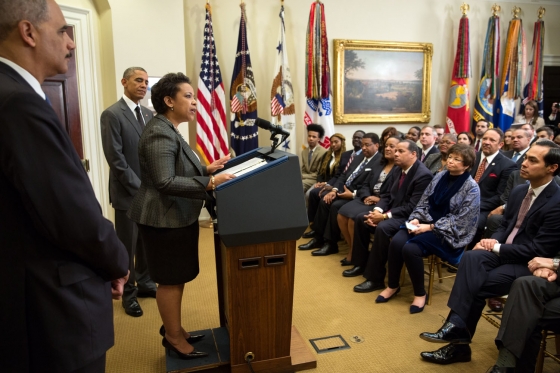
Saturday, President Barack Obama officially announced Loretta Lynch as his nominee to replace outgoing US Attorney General Eric Holder. If confirmed, she would be the first African American woman in US history to hold the position.
Official White House Photo.
In his announcement, the President emphasized the need for the next Attorney General to continue building on the civil and human rights legacy being left behind by Eric Holder, and pointed to the quiet, but solid record of his nominee. “It’s pretty hard to be more qualified for this job than Loretta,” President Obama said on Saturday. “Loretta might be the only lawyer in America who battles mobsters and drug lords and terrorists and still has the reputation for being a charming ‘people person.'”
Lynch, who is a graduate of Harvard College and Harvard Law School, rose through the ranks of New York’s Eastern District, serving as chief of the Long Island Office, then moving on to Chief Assistant US Attorney, then US Attorney. Twice – under President Bill Clinton’s Administration, then again under President Obama – the Senate unanimously confirmed Lynch as head of the US Attorney’s Office. She is best known for successfully prosecuting the New York City police officers who assaulted and brutally sodomized Abner Louima with a broken broomstick in a Brooklyn precinct bathroom in 1997. Louima received $8.7 million in settlement money years after the gruesome attack, with one of the officers receiving a 30-year sentence. Lynch also successfully prosecuted the suspects that plotted to bomb the Federal Reserve Bank and the New York City subway system in 2012.
This morning, Barbara Arnwine, Executive Director of the Lawyers’ Committee for Civil Rights Under Law, told NewsOne host Roland Martin that Lynch is “clearly” qualified for the job. “There’s no doubt that she has the background, the qualifications, and the experience to lead this important agency,” Arnwine said. “And it means the world to me that there will finally be an African American woman in this cabinet.”
According to the Los Angeles Times, Lynch rarely gives news conferences or interviews, a quality the President lauded over the weekend. “Loretta doesn’t look to make headlines, she looks to make a difference,” he said. “She’s not about splash, she is about substance. I could not be more confident that Loretta will bring her signature intelligence and passion and commitment to our key priorities, including important reforms in our criminal justice system.”
Media Resources: White House 11/9/14; The New York Times City Room 8/9/07; The Grio 11/9/14; ABC News 11/7/14; Black America Web 11/10/14; LA Times 11/7/14; The Washington Times 11/9/14; Chuck Grassley 11/7/14
The Columbia Student group Carry That Weight Together garnered nationwide attention last week when they organized a national Day of Action, in which over 130 campuses from Stanford University in California to Eastern European University in Budapest, Hungary, participated. The Day of Action was inspired by student Emma Sulkowicz, whose senior thesis titled “Carry That Weight” includes Sulkowicz carrying her mattress around campus to protest the University’s decision not to punish the student she and two other students have accused of rape.
As part of the national protest last week, Columbia students carried 28 mattresses around campus with messages of protest against rape and sexual assault, words of support for survivors, and demands for change to the University’s sexual assault policy. At the end of the protest, the mattresses were placed on Columbia University President Lee Bollinger’s lawn, for which the students are now being charged with up to $1,500 in clean-up fees.
Columbia spokesperson Robert Hornsby says the fees were not unusual. “These are entirely typical matters in apportioning direct costs for facilitating student events,” he said, referring to the University’s decision to throw the mattresses into dumpsters within an hour of being placed on President Bollinger’s lawn. However, according to student and protest organizer Michela Weihl, the University’s actions held more meaning than a simple clean-up. “The symbolism of them literally dumping the mattresses in the trash within an hour,” said Weihl, “it’s so indicative of how they handle sexual assault on this campus – they literally throw out rape cases without a second thought.”
The Carry That Weight Together group, led by Sulkowicz, continues to protest rape and sexual assault, and has been pushing their list of demands for Columbia University. The list includes improvements to the reporting process on campus, a comprehensive and recurring review of the University’s policy for handling rape and sexual assault, among other demands for making the campus safer for survivors.
The Feminist Majority Foundation and Ms. Magazine will be honoring Sulkowicz and the Carry That Weight project with a Wonder Award next week for her courageous efforts to fight college rape and sexual assault. For more about the upcoming Wonder Awards Luncheon, visit our homepage.
Media Resources: Huffington Post 10/29/14, 11/6/14; Carry That Weight
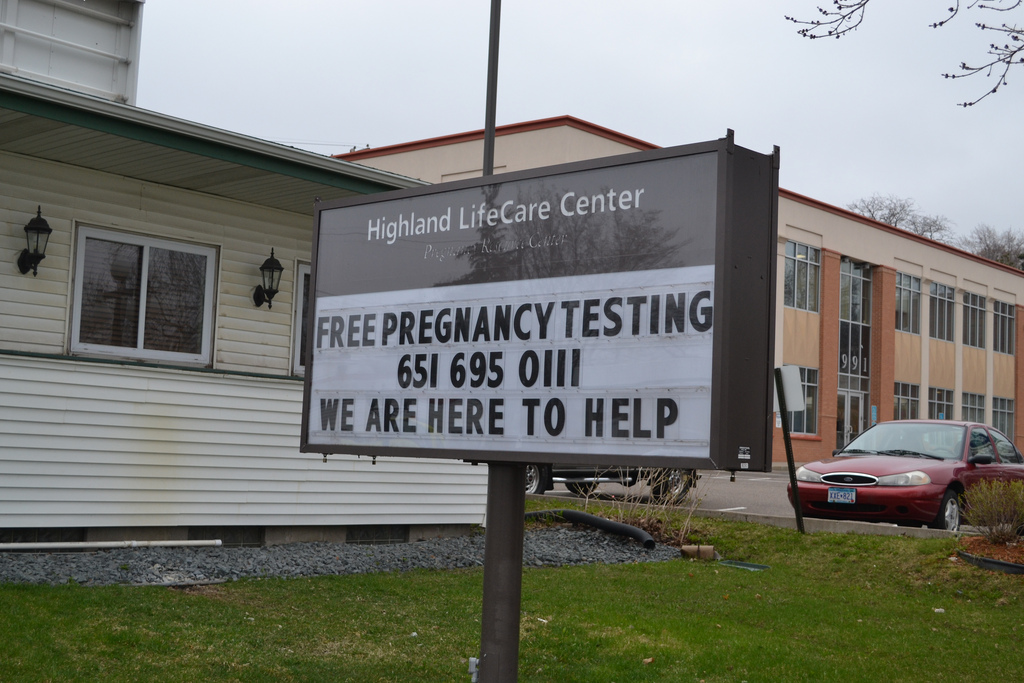
The Supreme Court declined last week to review a decision by the US Court of Appeals for the Second Circuit upholding a New York City law that requires so-called crisis pregnancy centers (CPCs) in New York City to inform patients that they do not have any medical professionals on staff.
The Supreme Court’s decision lets stand a portion of a New York City law that requires CPCs to post a “status disclosure” in English and Spanish at the entrance to its facilities and in waiting rooms, informing patients whether or not a licensed medical professional works on-site at the facility. CPCs must also communicate the disclosure orally during meetings and in telephone conversations with potential clients.
The law requiring CPCs to disclose their non-medical status was enacted in 2011. It mandates that imitation clinics must post a “status disclosure” in English and Spanish at the entrance to facilities and in waiting rooms. The disclaimer must be communicated orally to clients or potential clients, in-person and in advertisements. The law also required CPCs to disclose that the New York City Department of Health encourages women who are or may become pregnant to consult with a licensed medical provider. In addition, the original law mandated that CPCs disclose their policy on referrals for abortion services, emergency contraception, or prenatal care.
The New York City Council passed the CPC law in response to evidence that certain CPCs in New York City were engaging in “deceptive practices” intended to mislead clients about the services they provide, which include misleading consumers about the types of goods and services they provide on-site, the types of goods and services for which they will provide referrals to third parties, and the availability of licensed medical providers that provide or oversee services on-site. It is the Council’s intention that consumers in New York City have access to comprehensive information about and timely access to all types of reproductive health services.
Shortly after the law took effect in 2011, five CPCs – including Evergreen Association Inc and the Life Center of New York, Inc – filed suit against the city, alleging that the law was an infringement of their right to freedom of speech and due process. A lower court judge, siding with the anti-abortion centers, ruled that the law was “unconstitutionally vague,” and granted a preliminary injunction. Earlier this year, the Second Circuit Court of Appeals reinstated the “status disclosure” provision of the law, but struck down the portions of the bill that required CPCs to acknowledge the NYC Health Department message or state its referral policy for services like abortion.
The Supreme Court’s decision not to hear the anti-abortion groups’ suit means the law will be enforced according to the ruling of the Second Circuit.
Media Resources: Reuters 11/3/14; Feminist Newswire 2/22/14; 6/9/14
The Oklahoma Supreme Court on Tuesday temporarily blocked two new abortion restrictions, allowing Oklahoma women to continue to access safe, legal abortion while the legal challenge to the state’s laws continues in court.
The decision by the state’s highest court means that Dr. Larry Burns, who provides 44 percent of all the abortions in the state of Oklahoma, will be allowed to continue offering services. Dr. Burns had been forced to stop providing abortion services after 12 area hospitals refused to extend admitting privileges, as required by an Oklahoma law, which took affect on November 1 after a lower court ruling allowed the law to go forward.
The admitting privileges requirement was signed into law by Oklahoma Governor Mary Fallin (R) earlier this year. According to the new law, abortion providers must be able to admit patients to a hospital within 30 miles of their clinic, however, a hospital is under no obligation to grant these privileges. Advocates and doctors agree that admitting privileges requirements have no medical purpose, and only serve to burden women seeking care.
The Oklahoma Supreme Court also temporarily blocked restrictions on medication abortion. Those restrictions, which had also taken effect on November 1, requires doctors to use an outdated Food and Drug Administration (FDA) protocol for administration of mifepristone. The American College of Obstetricians and Gynecologists and the broader medical community have long abandoned the FDA protocol for a new standard of care that requires a lower dosage of the drug. Based on the old protocol, the Oklahoma law bans medication abortion beyond seven weeks, but abortion providers say the drug can safely be used beyond that time. The state tried to appeal a 2011 medication abortion law attempt to the US Supreme Court, but the Court dismissed the case after receiving guidance on the law from the Oklahoma Supreme Court.
“The Oklahoma Supreme Court handed the women of Oklahoma a crucial victory by protecting their constitutional rights and restoring critical options for those seeking safe and legal abortion services,” said Nancy Northup, President and CEO of the Center for Reproductive Rights, who is representing the plaintiffs in both cases. “Time and time again, courts are seeing that the true motive behind these underhanded and baseless restrictions is to push essential reproductive health care services out of reach for as many women as possible.”
A panel of the US Court of Appeals for the Sixth Circuit upheld same-sex marriage bans in Michigan, Ohio, Tennessee and Kentucky. The 2-1 decision, issued on Thursday, makes it more likely that the US Supreme Court will review the constitutionality of marriage equality bans – perhaps as early as this Term.
Although same-sex marriage is now legal in 32 states, Judge Jeffrey S. Sutton, joined by Judge Deborah L. Cook, both George W. Bush appointees, relied heavily on “tradition” to uphold same-sex marriage bans, calling same-sex marriage a “new social issue” that must be decided through the democratic process. Writing in dissent, Judge Martha Craig Daughtrey, a Clinton appointee, blasted the majority for failing to address the central issue in the appeal: whether same-sex marriage bans violate the US Constitution.
“The author of the majority opinion has drafted what would make an engrossing TED Talk or, possibly, an introductory lecture in Political Philosophy,” Judge Daughtrey wrote. “But as an appellate court decision, it wholly fails to grapple with the relevant constitutional question in this appeal. In the main, the majority treats both the issues and the litigants here as mere abstractions. Instead of recognizing the plaintiffs as persons, suffering actual harm as a result of being denied the right to marry where they reside or the right to have their valid marriages recognized there, my colleagues view the plaintiffs as social activists who have somehow stumbled into federal court, inadvisably, when they should be out campaigning to win’the hearts and minds’ of Michigan, Ohio, Kentucky, and Tennessee voters to their cause.”
Judge Daughtrey noted, however, that the plaintiffs were not “political zealots,” but instead were ordinary citizens “who want to achieve equal status” by “exercising a civil right that most of us take for granted – the right to marry.”
Chase Strangio, an attorney with the American Civil Liberties Union (ACLU), one of the legal organizations representing the plaintiffs, indicated that the ACLU would immediately appeal the case to the US Supreme Court, explaining that the majority decision, “is an outlier that’s incompatible with the 50 other rulings that uphold fairness for all families, as well as with the Supreme Court’s decision to let marriage equality rulings stand in Indiana, Wisconsin, Utah, Oklahoma, and Virginia.”
“It’s wholly unconstitutional to deny same sex couples and their families access to the rights and respect that all other families receive,” Strangio continued. “We will be filing for Supreme Court review right away and hope that through this deeply disappointing ruling we will be able to bring a uniform rule of equality to the entire country.”
Media Resources: US Circuit Court for the Sixth Circuit 11/6/14; SCOTUS Blog 11/7/14; American Civil Liberties Union 11/6/14; Freedom to Marry; Autostraddle 11/6/14
In a recently released video, a man who says he is the leader of extremist group Boko Haram denied a claim that successful ceasefire talks had taken place between the group and Nigerian officials laying out a plan for the return of over 200 schoolgirls kidnapped from Chibok in April. Now, their families are still waiting.
Nigerian officials had announced the ceasefire would lead to the release of the girls, but in the video a man named Abubakar Shekau claims the Nigerian government had negotiated with a man who does not represent Boko Haram. Nigeria will hold general elections in three months, a fact that some believe is leading the government to handle the situation with Boko Haram poorly. Others point out that Boko Haram is not always a unified group, and that one faction may agree to a ceasefire while another may not.
Instead of releasing the schoolgirls, Boko Haram has continued its attempt to takeover Nigeria’s northeastern region. According to residents in Mubi, the town has been renamed by Boko Haram from Mubi to “Madinatul Islam,” which translates to “City of Islam.” Thousands have fled the towns taken over by Boko Haram and have taken refuge nearby.
International activists and human rights organizations have pressured Nigerian officials to concentrate on the release of the schoolgirls during ceasefire talks, but Boko Haram has been unwilling to negotiate every step of the way. Directly after Nigerian officials seemed certain a truce had been agreed upon, Boko Haram reportedly kidnapped more girls and women. Veteran diplomat Bolaji Akinyemi told BBC News that peaceful negotiation may no longer be a reasonable solution.
“The government needs to stop sending mixed signals about the possibilities and now consider that maybe the solution is a military one,” Akinyemi said. “Unfortunately we have to accept that the loss of lives is inevitable and maybe we need to prepare ourselves for that.”
The #BringBackOurGirls campaign, which looks to rescue the kidnapped Nigerian girls and to quell the insurgency in the country, points out that the Nigerian government has been inconsistent – or flat-out wrong – about the narrative of rescuing the kidnapped schoolgirls; whether this is purposeful misinformation or a result of confusion in talks with Boko Haram’s factions is unknown.
Families of the kidnapped schoolgirls remain hopeful for the return of the girls, but are justifiably skeptical of any announcements of their release. Despite some analysts suggesting efforts should be concentrated on restoring stability in Nigeria instead of on rescuing the girls, #BringBackOurGirls insists the international community should not give up on bringing the girls back home.
“…We DEMAND the immediate rescue of our 219 Chibok Girls,” wrote the campaign in a statement on November 1. “We cannot but remind our Federal Government that time is running out and that these endangered daughters of our nation have been in travail for too long.”
Media resources: CNN 11/7/2014; AFP 11/7/2014; BBC News 11/5/2014, 11/3/2014; #BringBackOurGirls 11/3/2014, 10/31/2014; Feminist Newswire 10/23/2014, 5/5/2014; International Crisis Group 4/3/2014
Employers in one state and three municipalities will now be required to provide their employees with paid sick leave after a string of Election Day victories at the polls. Employees in Massachusetts and in the cities of Oakland in California and Trenton and Montclair in New Jersey will be able to utilize their newly mandated sick leave by 2015.
Massachusetts passed Question 4 with 59 percent of the vote on Tuesday, making Massachusetts the third state, along with Connecticut and California, to require employers to provide paid sick leave to both full- and part-time workers. Though considered a big win for paid leave advocates, Question 4 is by no means generous. Under the new law, employees who work for employers with eleven or more employees can now earn 40 hours, or five days, of paid sick leave per calendar year. One hour of sick leave is earned for every 30 hours an employee works – but an employee cannot begin accruing leave until after 3 months on the job. Employees can use the sick leave when they’re ill, injured, or when a spouse, child, or parent needs to be cared for.
Employees in Oakland, California now have the ability to earn up to five paid sick days, two more than the California state law requirements passed in September. Similarly, Trenton and Montclair in New Jersey passed laws requiring employers with 10 or more employees to provide up to five earned paid sick days.
Workers’ rights groups hope that this is an indication of more improvements to come. Analilia Mejia, Executive Director of New Jersey Working Families, celebrated the success in New Jersey. “Tonight’s victories ensure that, for 20,000 more New Jersey workers, a case of the flu or a sick child won’t mean losing pay or getting fired,” she said.
These successes are a part of a sick leave movement that has been picking up in recent years. Since 2013, the number of cities requiring paid sick leave has increased from six to 16, and the number of states with similar requirements rose from one to three.
Nationally, according to Bureau of Labor Statistics, 76 percent of part-time workers in the US private sector have not one single paid sick day, and the most vulnerable employees are the most at risk of having no paid time off for illness. Of workers in the bottom quarter of the wage scale, 70 percent have no paid sick leave, and of those in the bottom 10 percent, 80 percent have no paid sick days.
Media Resources: Massachusetts Secretary of State; MassLive 11/4/14; The Star-Ledger 11/4/14; ThinkProgress 11/5/14; Bureau of Labor Statistics, March 2014
420,000 minimum wage workers in Alaska, Arkansas, South Dakota, and Nebraska can now expect a higher hourly beginning January 1, although many of the approved increases will happen gradually over the course of the next two years. Alaska’s minimum wage is now set to be $9.75 an hour by January 2016, with an $8.75 rate taking effect in the new year. Arkansas will boost their minimum wage to $7.50 this January and $8.50 in January 2017. Nebraska’s will increase to $8.00 on January 1 and $9 in January 2016. South Dakota’s minimum wage will ultimately increase to $9.00 in January 2016, but workers will see a $1.25 jump this January to $8.50 an hour.
Although the increases are modest, they send a strong message to national legislators about the broadening support for living wages for all workers across the country. Yesterday’s victories united voters across party lines, and over 25 states have now taken action to raise the minimum wage. On Election Day, efforts to give low-wage workers a raise even won at the county and city level.
190,000 workers in San Francisco and Oakland will also see raises after two successful measures to raise the minimum wages in those California cities were approved by voters. San Francisco’s Proposition J will gradually raise the minimum wage in the Bay Area city to $15 an hour by July 2018, beginning with an increase on January 1. The move rivals nearby Seattle’s historic decision to do the same earlier this year and affirmed the “living wage” activists have been championing since 2012 across the country as part of the Fight for 15, but unlike Seattle’s minimum wage law, San Francisco’s wage hike covers nearly all workers – including those that earn tips – and takes effect faster.In Oakland, Measure FF will give up to 48,000 workers a raise in March of 2015 when the city adopts a $12.25 an hour minimum wage.
Shum Preston, a spokesperson for the SEIU Local 1021, which was a proponent of Proposition J, called the city-based strategy “The California Model” in an interview with the SFGate. “These ballot initiatives are the right issue at the right time,” he told them. “This is a strong example of the traditional progressive left in the Bay Area not only being relevant, but driving a national agenda.”
San Francisco Mayor Ed Lee championed Proposition J, and spoke out prior to the election to voters about his time washing dishes in his family’s restaurant growing up. “I know what [low-wage workers] are going through,” he said to SFGate. “I’ve washed those dishes.” Lee also looked forward in his remarks. “We are now going to be the light for the rest of the country to lead the way on a real, true minimum wage.”
“Faced with an unresponsive Congress and opposition by Republican-controlled legislatures in a numbers of states, Americans came out in force to vote for minimum wage increases across the country,” Christine Owens, Executive Director of the National Employment Law Project Action Fund, told NBC news. “Rare is the issue that can bring together voters in South Dakota and San Francisco.”
Media Resources: NBC News 11/5/14; CNN 11/5/14; FiveThirtyEight Politics 10/30/14; Milwaukee Business Journal 11/5/14; Ward Room 11/5/14; SFGate 11/4/14; Mic News 11/5/14; Feminist Newswire 2/14/14, 5/1/14, 9/4/14, 11/4/14
Voters in three states and Washington, DC made significant headway in ending criminalization of nonviolent and low-level drug offenses on Election Day. The new laws could help to significantly reduce the disparate impact of overpolicing and incarceration of people of color.
Voters in Alaska, Oregon, and the District of Columbia approved legislation to legalize marijuana Tuesday. Alaska and Oregon approved marijuana for recreational use and sale, while voters in the nation’s capital weighed in on possession.
In Alaska, more than 52 percent of voters approved Measure 2, which would “tax and regulate the production, sale and use of marijuana” in the state. In Oregon, nearly 1.5 million residents cast their vote, with roughly 56 percent approving Measure 91. The Oregon law also permits the “possession, manufacture, sale of marijuana” and subjects the substance to state regulation and taxation.
Washington, DC voters may face the most uncertainty following Tuesday’s advances toward decriminalization of marijuana. DC voters overwhelmingly passed Initiative 71, which legalizes possession of small amounts of marijuana, up to two ounces, for personal use. Individuals in DC are also allowed to grow marijuana in their homes, but sale is still prohibited. Days ahead of the vote, the DC Council held a joint hearing addressing regulation and taxation of marijuana. DC mayor-elect Muriel Bowser suggested she did not want to move forward with full implementation of the voter-approved initiative until sale and regulation had also been addressed.
“I see no reason why we wouldn’t follow a regime similar to how we regulate and tax alcohol,” Bowser said following her win, adding that her transition team will take up the issue in the coming weeks. DC’s subjection to federal oversight, however, could delay -if not unravel -these efforts to further decriminalize marijuana in the nation’s capital. Maryland Republican Representative Andy Harris has already said he would actively attempt to block the DC law from taking effect.
DC Chief of Police Cathy Lanier commented that she respects “the clear intent of District voters,” but is calling for the DC Council to “provide clarity to the public and law enforcement officers” going forward. “[W]e need to recognize that the initiative cannot be immediately implemented,” Lanier said. “If the initiative is held up in Congress, attorneys for the District will need to provide additional guidance.”
In California, voters passed a much broader decriminalization law. Nearly 3 million voters approved Proposition 47, which reclassifies certain drug and property offenses as lower level misdemeanors. The money the state saves in housing low-level offenders will be reinvested to support “school truancy and dropout prevention, victim services, mental health and drug abuse treatment, and other programs designed to keep offenders out of prison and jail,” according to the text of the initiative.
According to The Sentencing Project, approximately 10,000 people will be eligible for re-sentencing under the new law, helping alleviate the burden of overcrowding facing California’s prison systems. In 2006, then-Governor Arnold Schwarzneggar declared a state of emergency when the prison population reached its peak. In 2011, the US Supreme Court ruled that the administration of health care in the state’s prisons was constitutionally inadequate because of overcrowding. The Court ruled that the state must reduce overcrowding to 137.5 percent within two years. Last year, the United Nations lead torture investigator, Juan Mendez condemned the state of US prisons nationally, and called for access to California prisons specifically to ensure that prisoners’ rights were being protected.
Despite the fact that African Americans and Hispanics make up only a quarter of the US population, they represent 58 percent of all prisoners in the US. African Americans represent 12 percent of monthly drug users in the US, but make up nearly a third of persons arrested for possession. When it comes to time served for non-violent offenses, people of color are sentenced to as much time for non-violent drug offenses as white folks are sentenced for a violent offense. According to a 2013 report from the Washington Lawyers Committee for Civil Rights and Urban Affairs, more than 80 percent of all arrestees in the nation’s capital were African American. Of that number, 90 percent were arrested for drug-related offenses. More than 19 out of 20 arrests in Washington, DC were for nonviolent offenses. A similar picture emerges for people of color nationally. Together, all the state-based measures help chip away at the disproportionate rate of arrest, incarceration, and over-policing of people of color by law enforcement.
Florida was the only state to emerge from Tuesday’s elections with a failed vote on marijuana. Amendment 2, which would have legalized medical marijuana, fell shy of the 60 percent majority required for approval. However, more than 3.3 million people voted in favor of the amendment – more than any single federal or executive candidate in the state.
Media Resources: Alaska Secretary of State Election Results 11/2014; Alaska Board of Elections 3/2014; Oregon Secretary of State Election Results 11/2014; DC Board of Elections 11/5/14; Council of the District of Columbia Hearing Notice 10/30/14; WAMU-FM News 11/5/14; Washington Post 11/5/14; Florida Division of Elections 11/2014; MassLive.com 11/6/14; California Secretary of State Statewide Results 11/6/14; The Sentencing Project 11/6/14; California Office of the Governor Emergency Proclamation 10/4/06; Los Angeles Times 10/18/13; Washington Lawyers’ Committee For Civil Rights & Urban Affairs 7/2013; NAACP Criminal Justice Fact Sheet
In a strong win for reproductive rights advocates, voters in North Dakota and Colorado handily defeated – by a 2-to-1 margin – two state constitutional personhood amendments that would have granted legal rights to fertilized eggs and ban access to abortion and some forms of birth control. In Tennessee, however, a state constitutional amendment that takes away privacy rights to abortion from women and gives state legislators more power to restrict abortion access and birth control passed.
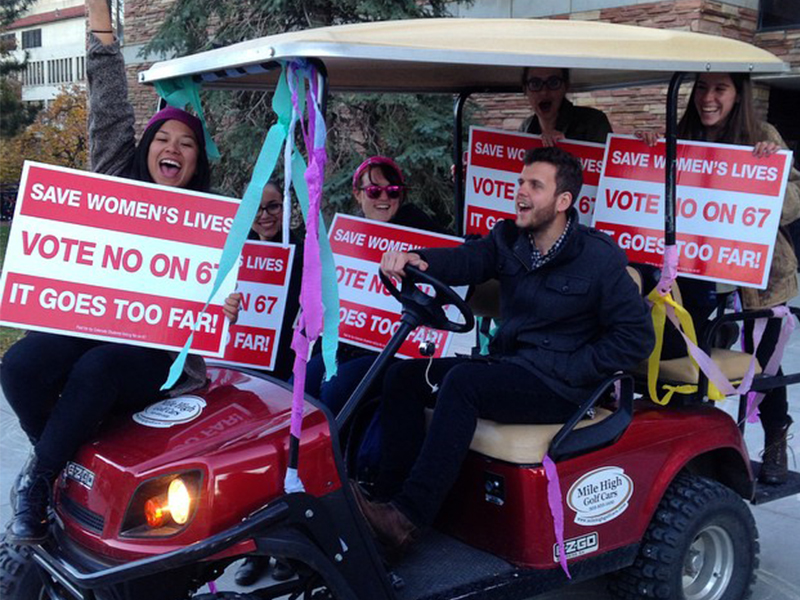
Students in Colorado rallied against Amendment 67, a personhood measure.
In Grand Forks, students from the University of North Dakota were told they could not vote at their local precinct because their student ID certificates did not properly indicate their campus addresses. Feminist Majority Foundation (FMF) National Campus Organizers on the ground in North Dakota, Taylor Kuether and Alyssa Seidorf, estimate that about half of all student voters were turned away at the polls in Grand Forks. However, in Fargo, the vast majority of students were able to vote using their student ID certificates.
“We are so proud of all the students that helped get out the vote,” Kuether and Seidorf said in a statement to the Feminist Newswire. FMF’s organizers tweeted guidance throughout the election to students, reporting problems and encouraging others to get out and vote.
Despite the ballot initiative victory, realizing full access to comprehensive reproductive health care under North Dakota law is still a challenge. There is only one abortion clinic in the entire state, and that clinic continues to operate despite a state TRAP (Targeted Regulation of Abortion Providers) law that requires doctors who perform abortions to obtain admitting privileges to an area hospital. The North Dakota Supreme Court also just upheld HB 1297, a bill that dramatically limits access to medication abortion in the state. The law took effect November 1.
In Colorado, voters rejected personhood but also elected a proponent of similar legislation as their Senator. Representative Cory Gardner (R) – who cosponsored a federal personhood bill – defeated incumbent candidate and personhood opponent, Senator Mark Udall (D-CO), by 10 points. Amendment 67, however, a measure which would have banned abortion without any exceptions, end in-vitro fertilization across the state, severely restrict access to common forms of birth control, and potentially subject anyone who suffered a miscarriage to a criminal investigation, was trounced. 64 percent of voters rejected the extreme amendment, marking the third time that a personhood measure has failed on the state ballot.
Amendment 67 drew strong criticism from 18 national and local newspapers, legendary human rights activist and FMF Board Member Dolores Huerta, and a host of other high-profile advocates. FMF organized campaigns across the state to mobilize student voters against the ballot measure led by National Campus Organizer Nancy Aragon and duVergne Gaines, Director of both the FMF’s CHOICES Feminist Campus Leadership Program and National Clinic Access Project. FMF President Eleanor Smeal celebrated the Colorado victory on Twitter, noting the certainty of the numbers:
Women’s movement defeats the so-called Personhood Amendment in #Colorado by about a 2 to 1 margin for the third time. #VoteNo67
In Tennessee, however, voters passed Amendment 1 – a state constitutional amendment that takes away privacy rights for abortion and birth control access and permits state legislators to pass laws restricting abortion and birth control – despite strong opposition from students, medical doctors, and survivors of sexual violence, including Ashley Judd. The Amendment passed by six points, with 53 percent voting yes and 47 percent voting no.
National Campus Organizers Edwith and Ashley worked with students to defeat Tennessee’s Amendment 1.
“This is a stumbling block, but by no means an end to everything our students have been working so hard towards,” added Moses. “Right after they realized we were defeated, the students’ first thought was what do we do next to win reproductive rights in Tennessee. The students are still fired up and determine to make sure women’s rights are not denied by a bunch of male politicians.”
Theogene echoed her. “Every county where we organized the student vote, we won – against tight opposition.”
The defeat in Tennessee intensifies the statewide movement to roll back infringements on women’s right to comprehensive reproductive health access. Under the rule of current Governor Bill Haslam (R) – who also won last night – Tennessee laws have turned increasingly sour for women’s reproductive rights, thanks to provisions like the state’s “pregnancy outcome” law and a sex education bill that prohibits instruction related to so-called “gateway sexual activity.” In separate studies, the Guttmacher Institute and the Center for Reproductive Rights have deemed Tennessee one of the most hostile states in the country on abortion rights. Now, analysts say the passage of Amendment 1 is now in direct conflict with a 2000 Tennessee Supreme Court decision that deemed abortion “an inherently intimate and personal enterprise” that should be protected from “government interference” by the Tennessee Constitution’s right to privacy laws.
Media Resources: Jamestown Sun, 11/4/14; Feminist Newswire 10/30/14, 10/29/14, 8/1/13; Twitter; Colorado Secretary of State; North Dakota Secretary of State; Tennessee Secretary of State