Instead of Returning Kidnapped Nigerian Schoolgirls, Boko Haram Reportedly Abducted More Women and Girls

Despite Nigerian military officials announcement last week that they had negotiated with militant group Boko Haram for the release of more than 200 schoolgirls who were kidnapped in April, it appears the girls have not be brought home – and residents say more women and girls have been kidnapped since.

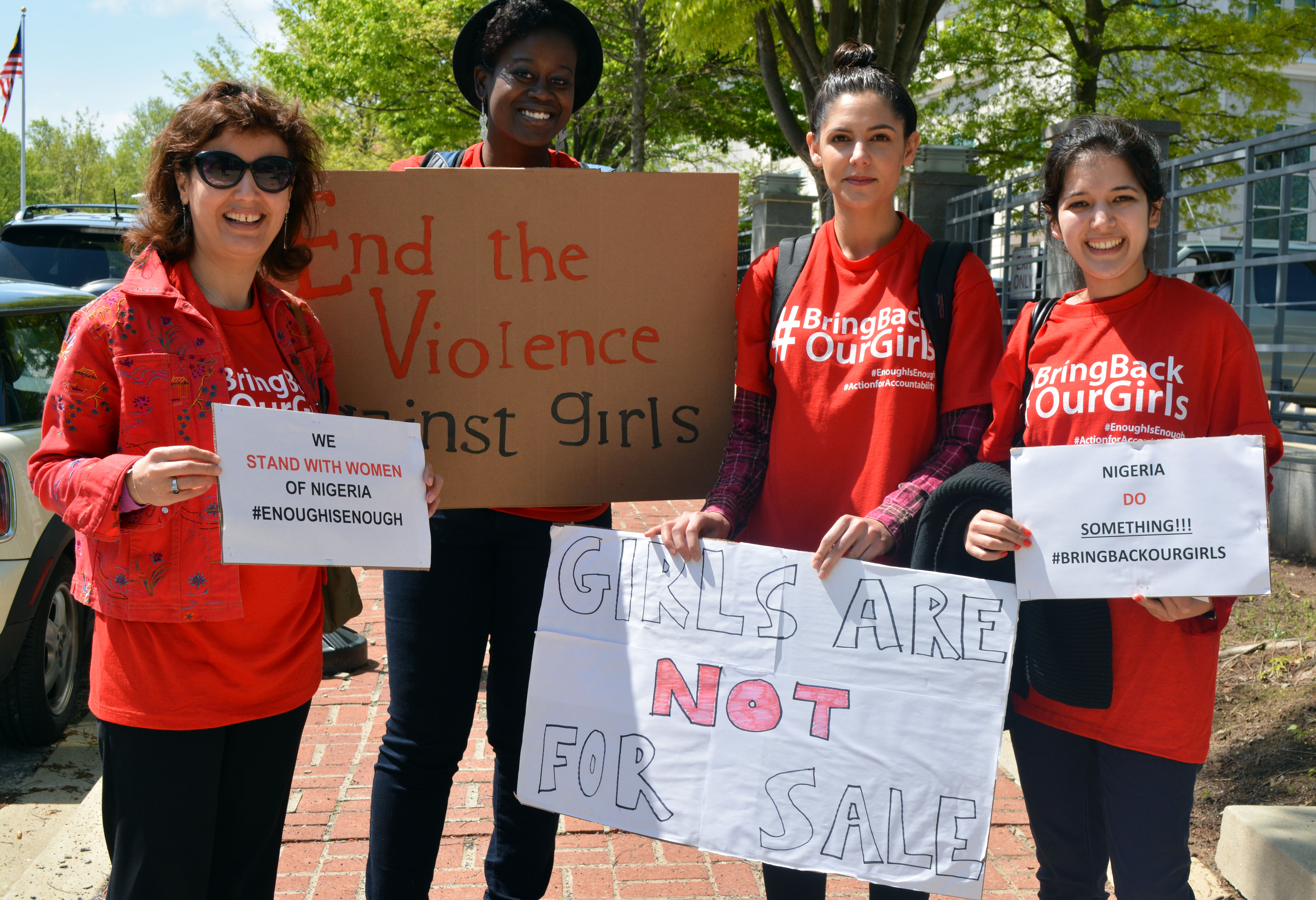
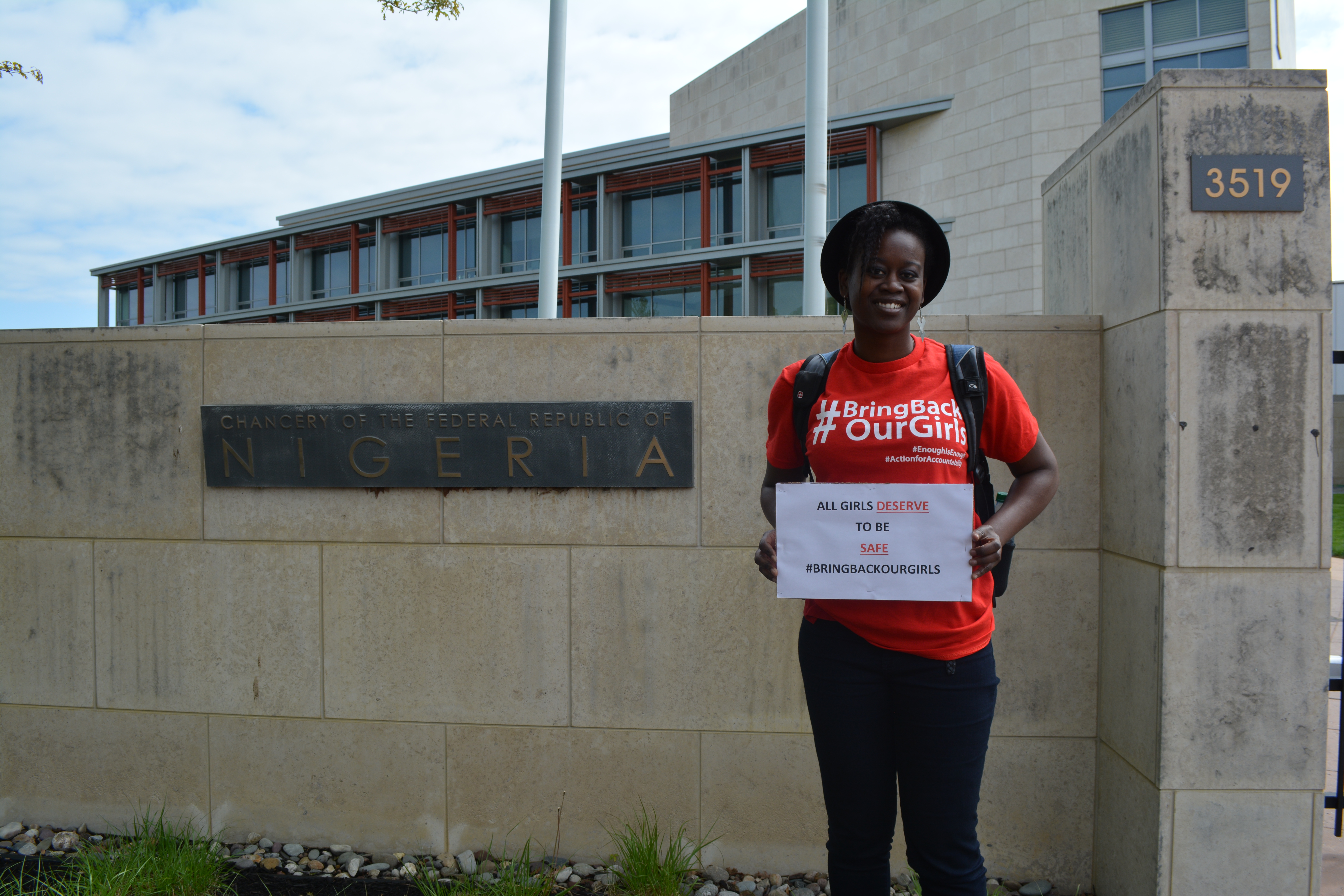
FMF National Campus Organizer Edwith Theogene at a #BringBackOurGirls rally. Photo by Kristy Birchard.

Last week, in a deal brokered in neighboring country Chad, a ceasefire agreement was supposedly made between Boko Haram and Nigerian military officials. The announcement came two days before fighters – whom some suspect have ties with Boko Haram – attacked northeastern Nigeria. Boko Haram leaders have not yet made any public statements giving their support to the ceasefire agreement with Nigerian military officials. The Nigerian government says it is scheduled to have more talks with Boko Haram this week in Chad.

Although authorities have not yet confirmed the news, residents in northeastern Nigeria say dozens of women and girls have been abducted by Boko Haram. Residents say a large militant group attacked villages in the northeastern state of Adamawa. The group reportedly forced a group of women and girls to harvest groundnuts then abducted some of the young women and teenage girls.

When hundreds of girls were initially kidnapped by Boko Haram in Chibok, the Nigerian government did little to nothing to get them back to safety. The government’s inaction sparked acts of resistance in the country, which eventually spurred a viral #BringBackOurGirls campaign that was joined by people from around the world.

Since the kidnapping in April, Boko Haram has killed hundreds of civilians. The United Nations Security Council imposed sanctions against the group last week, adding Boko Haram to a list of organizations associated with al-Qaeda. The US declared the extremists a terrorist group in 2013, the same year Nigeria declared a state of emergency in three states over “fear among our citizens and a near breakdown of law and order in parts of the country” that they have caused.

Earlier this month, Boko Haram released 27 hostages that had been taken in two separate raids this summer. Their release had given hope to activists and families still fighting for the safety of others still held by the group. Of those abducted in April, 57 have successfully fled; one young woman was found roaming a small village, pregnant and traumatized. Scholarships made possible in part by Nobel Peace Prize winner Malala Yousafzai were given to 15 escaped girls so they could continue their studies.

Media Resources: BBC News 10/23/14, 10/11/14; Forbes 10/22/14; Feminist Newswire 10/17/14; Al Jazeera 10/14/14; CNN 5/14/2013
All of Tennessee’s Major Newspapers Have Urged Voters to Reject Anti-Abortion Amendment 1

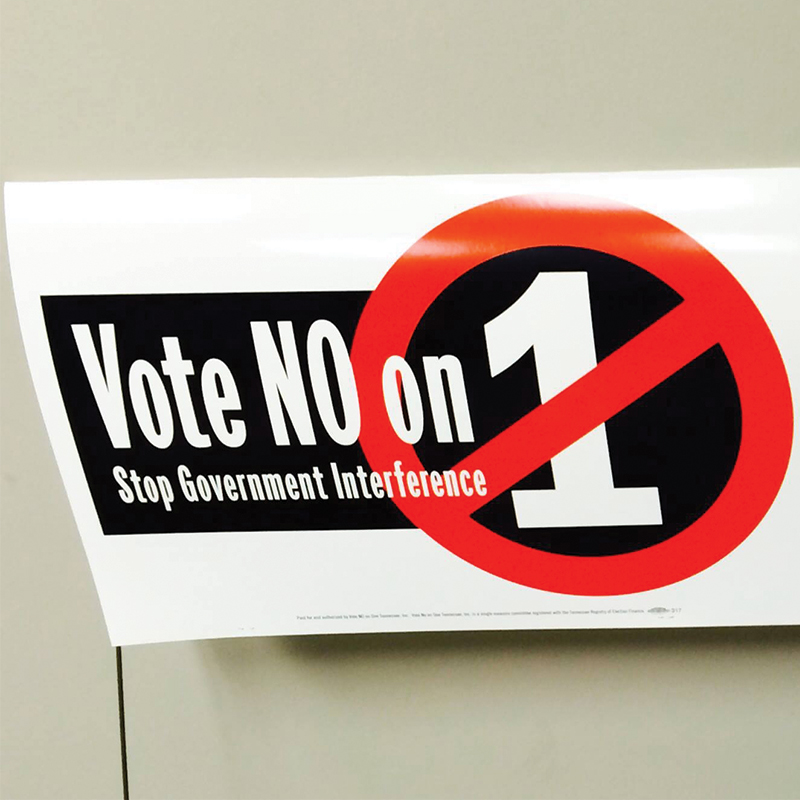
All four of Tennessee’s major papers have spoken out to oppose Amendment 1, a dangerous anti-abortion measure that will be decided by voters this fall. The Tennessean, Knoxville News Sentinel, Chattanooga Times, and Commercial Appeal have all published editorials criticizing the Amendment and encouraging a “no” vote from their readers.

via Vote No On 1 Tennessee

Amendment 1 would change the Tennessee state constitution to read: “Nothing in this Constitution secures or protects a right to abortion or requires the funding of an abortion. The people retain the right through their elected state representatives and state senators to enact, amend, or repeal statutes regarding abortion, including, but not limited to, circumstances of pregnancy resulting from rape or incest or when necessary to save the life of the mother.”

In other words, the Amendment would open the floodgate to draconian abortion restrictions and prevent legal recourse against anti-abortion legislation.

“Making any type of law immune from a court challenge is shortsighted, prejudicial – and in the case of what should be a woman’s own decision about her health – downright dangerous,” wrote the Tennessean editorial board. “For those reasons, The Tennessean recommends a vote of NO on Amendment 1.”

“We are advocating for a woman’s right to make private, personal health care decisions, including decisions on reproductive issues, without being held to the whims of partisan politicians,” wrote the Commercial Appeal. “We urge voters to vote NO on Amendment 1.”

If passed, Amendment 1 would give state politicians the right to make decisions about the health and lives of women and take those rights away from women and their doctors. Lawmakers could use the Amendment to pass legislation that denies life-saving care to women with critical illnesses and bans abortion – even in the cases of rape, incest, or to save the health or life of the woman – as well as common forms of birth control like the pill, IUDs, and emergency contraception. The four Tennessee papers agree: Amendment 1 goes too far, especially in a state where privacy laws are some of the strongest in the nation and held dear by its residents.

“Tennesseans are a fiercely independent folk, defiantly resistant to government interference in their personal lives, especially in matters of faith and family,” wrote the Knoxville New Sentinel. “Tennesseans should reject this intrusion into the private lives of women.”

“Decisions about contraception and abortion – like decisions about Viagra and fertility treatments – should be made by a man or woman in consultation with their faith, their family and their doctors,” wrote the Chattanooga Times. “Keep Tennessee government out of your private life, and vote no on Amendment 1.”

The editorials echo the voices of 40 faith leaders in Memphis as well as the voices of student activists in the state working on the Vote No on 1 campaign, including members of Feminist Majority Foundation’s Feminist Majority Alliance groups at Vanderbilt and East Tennessee State Universities who are working to mobilize and educate voters. Students have been training fellow students on activism, encouraging students to vote, disseminating information, and staging visibility events.

We will defeat Amendment 1,” Max Smith, ETSU’s Feminist Majority Leadership Alliance President, wrote for the Feminist Campus blog. “And we’ll work like heck to make sure of it.”

Early voting in Tennessee began October 15, and residents can vote early and in-person through October 30. Voters can also head to the polls on Election Day, November 4.

Media Resources: Vote No on 1 Campaign 10/19/14; The Chattanooga Times Free Press 10/12/14; Knoxville News Sentinel 10/14/14; The Tennessean 10/22/14; Feminist Campus 9/18/14, 9/24/14; Feminist Newswire 10/6/14, 10/17/14

Ferguson October Continues With National Day of Action Against Police Brutality and Mass Incarceration

Activists organized actions nationwide yesterday to protest police brutality in cities across the country as part of ongoing Ferguson October events, while outrage grows in Missouri over the the grand jury proceeding on whether Ferguson police officer Darren Wilson should face criminal charges in the shooting death of unarmed African-American teenager Michael Brown.

Ferguson October Weekend of Resistance 2014, St. Louis, MO

As part of the National Day of Protest to Stop Police Brutality and Mass Incarceration, on-the-ground organizers in Ferguson, Missouri and St. Louis County called on supporters and fellow activists from all over the nation to coordinate local, community-based vigils, sit-ins, marches, and other activities or civil disobedience actions that raise awareness and encourage meaningful response to excessive force and its disproportionate impact on people of color.

Families of victims of police brutality led protests in New York City, chanting “No More Stolen Lives!” Speakers at the demonstration stressed the impact that police brutality and mass incarceration has had on LGBT communities, people of color, women, and immigrants. Mothers Against Police Brutality gathered at City Hall in Baltimore, MD to call for police to wear body cameras and for more accountability for excessive use of force. “Every life counts. Nobody deserves to be brutally murdered. I’m sick of turning on the news and seeing another victim of police brutality,” said protester Tawanda Jones, whose brother died in police custody last year.

Protesters temporarily shut down Interstate-75 in Atlanta, GA as part of the nationwide action. Protester Will Mason told the Atlanta Journal-Constitution that he came in solidarity with those whose lives had been affected by police violence. “The police are becoming increasingly militarized, and there’s no real, sane explanation or justification for it from political leadership at any level,” said Mason. “People are getting tired of what essentially is looking more and more like fascism.” Activists, families, and victims took to the streets in Tallahassee, Fl, staging a die-in, and in cities in places like California, Michigan, Utah, Washington, and Washington, DC.

The October 22 day of action marked 75 days since the shooting death of Michael Brown by Ferguson Police Officer Darren Wilson. Activists have called for Wilson’s indictment, but to date, there has been no arrest, only growing speculation that Wilson could walk free.

Last week, the New York Times gave Wilson’s account of the shooting, in which, the officer claimed he reasonably believed his life was in danger following a struggle with Brown over the gun at Wilson’s car. Now, unidentified sources have allegedly provided details that appear to support Wilson’s account, and leaked documents have made their way into the press. The mounting amount of supposed information leaked from the grand jury – a confidential proceeding – suggest a non-indictment for Darren Wilson.

The US Department of Justice strongly condemned the leaks as “irresponsible and highly troubling.” The DOJ also expressed concern that the leaks appear to be a part of “an inappropriate effort to influence public opinion about this case.”

The grand jury leaks have also highlighted residents’ concern about the appropriateness of Prosecutor Bob McCulloch handling this case. A spokesman for the St. Louis County prosecutor’s office told the LA Times that the office wouldn’t investigate the leaks, offering the excuse that prosecutors cannot force journalists to reveal their sources. He also suggested that the leaks might be coming from federal officials in Washington. Earlier requests to replace Bob McCulloch with a special prosecutor were rejected by Missouri Governor Jay Nixon. Thousands of people from across the nation have also petitioned McCulloch to recuse himself. He has chosen not to.

The grand jury has been meeting since August 20. The St. Louis County Prosecutor’s office said they expect a decision by mid-November.

Take Action: Join the conversation on Twitter using the hashtag #O22.

Media Resources: Democracy Now 10/23/14; WBAL-TV Baltimore 10/12/14; Atlanta Journal-Constitution 10/22/14; Los Angeles Times 10/22/14; The Root 10/21/14; New York Time 10/17/14; Newsweek 8/19/14; MoveOn; Ferguson October; Twitter

Students Protest Fordham University’s Anti-Birth Control Policy

Students at Fordham University are engaged in a battle against the New York City Catholic school’s anti-birth control policy.

via Adam Fagen
via Adam Fagen

Students for Sex & Gender Equality and Safety (SAGES) has launched a petition drive, calling on Fordham to provide free and confidential access to birth control and STI testing on-campus, free condoms, professional gynecological services at the university, and resources for pregnant women, among other things. Fordham University currently does not allow contraceptives – including condoms – to be “distributed or prescribed on premises.”

The policy allows health services staff to “make limited exceptions in writing appropriate prescriptions for the treatment of an existing medical condition accompanied by supporting documentation,” but students say that this exception is not always honored. Senior Rachel Field told the Village Voice that a nurse at the Fordham student health center refused to provide her with Depo-Provera, which Field explained she used to prevent ovarian cysts. As a result, Field had to go off of the medication for a month before finding a doctor unaffiliated with the university. Eventually, however, she had to stop taking the shots – landing  her in the hospital with a ruptured cyst and a hernia. Though Field later presented documentation of this medical history to the university health center, she explained that she was once again denied birth control.

The school’s birth control policy, SAGES argues, not only threatens students’ health, it also contributes to a “sex-negative campus culture.” The group hopes the university will “foster an environment in which students are encouraged to talk about sex in healthy and safe ways.” Currently, Fordham has no “free speech zone,” in which students can demonstrate against the anti-birth control policy. SAGES has had to anonymously live-tweet meetings about sexual health on campus. They have also clandestinely engaged in “condom drops,” providing free condoms to students at school dances and other events. 

Lack of transparency around birth control can also contribute to student frustration with the university. Martha McKinley, a senior at Fordham, says that the school’s policy is kept hidden from incoming students. “It’s not a well-known thing on campus,” she told the Feminist Newswire. Students have to download and leaf through a lengthy document from the school’s website, or visit an on-campus health clinic to be told of the anti-birth control rule. According to McKinley, the process is not a friendly one.

“They’re very judgmental [at the clinic],” she said. “If you want to go on birth control, they won’t give it out, but if they find out you’re sexually active and not on birth control, they demand to know why not.” Once turned away, students are faced with a difficult search for a reasonable alternative. “It’s not easy to walk into the City and find a good, affordable gynecologist,” McKinley adds.

Despite student protests, Fordham does not appear to be backing down. “Like any other private University, Fordham has certain values it holds dear, including the right — as a University in the Jesuit Catholic tradition — to act on those values by following Church teaching on contraception,” said Christopher Rodgers, Assistant Vice President and Dean of Students at Fordham’s Rose Hill campus.

Senior Courtney Code, a retreat leader for Campus Ministry, however, told USA Today that Fordham’s policies contradict the school’s Jesuit standards. “I think that Fordham’s contraceptive policies  — while perhaps aimed at upholding Catholic values — in fact undermine the Jesuit standard of cura personalis (care for the whole person),” Code said. “The inability to acquire any kind of birth control from the Health Center compromises students’ physical, sexual health and the imposition of Catholic expectations of sexual behavior on a largely non-Catholic student population compromises psychological health by coloring sexual encounters and experiences as shameful.”

Under the Affordable Care Act (ACA), health insurance plans must cover prescription contraceptives without requiring co-pays. However, religiously-affiliated institutions, like Fordham, do not have to provide, or pay for, contraceptive coverage directly. Students must still be able to access contraceptives, without copays, through their insurance, but there is no requirement that Fordham itself provide birth control, prescriptions for birth control, or contraceptive counseling. This places many students who cannot easily access health care services, in a bind, especially those students who must access birth control for medical reasons, like Rachel Field.

“Student health and safety is non-negotiable,” said Field. She cited the UN listing of access to birth control as a basic human right, asking “why are we being denied human rights at Fordham?”

Media Resources: Change.org; ThinkProgress 10/20/14; Village Voice 10/8/14; USA Today College 10/5/14; Feminist Newswire 7/7/14; Fordham University

Doctors Warn That Measure 1 Would End In Vitro Fertilization in North Dakota

Doctors at North Dakota’s only clinic offering in vitro fertilization (IVF) are speaking out to warn voters that Measure 1, a proposed personhood amendment in the state, would make the practice illegal.

National Campus Organizer Alyssa has been on the ground in North Dakota fighting Measure 1.

Dr. Steffen Christensen, who helped found Sanford Reproductive Medicine Clinic 20 years ago, announced earlier this month that Measure 1 would “literally shut [the clinic] down,” ending IVF services for not only all North Dakota women, but many women from neighboring Minnesota. North Dakotans seeking IVF would be forced to travel out-of-state to receive treatment, restricting access for many. Doctors at the clinic, which has successfully helped families have more than 1,000 babies, have strongly opposed the Measure, which Dr. Stephanie Dahl says would make IVF treatments “impossible.”

Measure 1 would create an “inalienable right to life” for humans “at any stage of development” in the state constitution – including the moment of fertilization and conception. If passed by North Dakota voters in this election, it will be the first Personhood Amendment to take hold in the United States, banning all abortions in the state, without exception, and making illegal many forms of birth control, stem-cell research, and in vitro fertilization.

IVF involves surgically removing eggs from the ovaries, combining them with sperm in a laboratory, and then placing the fertilized eggs in the uterus. According to Dahl, IVF is an effective procedure for many patients, especially in cases with male-factor infertility. However, sometimes the procedure can create abnormal fertilized eggs, which could threaten the woman’s health. “However, under Measure 1 these abnormally fertilized eggs must be protected, even if they have no chance of growing into a health baby and will result in a miscarriage,” explained Dr. Dahl.

Measure 1 would subject Dr. Christensen and his colleagues to criminal charges for trying to help families who want to achieve a pregnancy. Even an accident in the lab that results in the destruction of a fertilized egg could become a criminal offense. Under these conditions, the Sanford Reproductive Medicine Clinic would be forced to close.

“It is ironic that personhood Measure 1 will eliminate the possibility of having a family for many North Dakota and Minnesota residents,” said Dr. Kristen Cain.

Measure 1 has been opposed by many leading health organizations, including the North Dakota Medical Association, which represents North Dakota doctors, as well as the American Congress of Obstetricians and Gynecologists (ACOG). The AARP North Dakota has also expressed concern that the Measure goes too far, as it threatens end-of-life care, and other organizations have highlighted the Measure’s potential negative impact on organ donation.

College students in North Dakota, with the help of the Feminist Majority Foundation, are also organizing against Measure 1. Students have sounded the alarm over the Measure’s impact, not only on IVF, but also on women’s reproductive health and rights more broadly, pointing out that it directly threatens the Red River Valley Women’s Clinic, North Dakota’s only abortion clinic. One student, blogging on FeministCampus.org, wrote, “Women and their partners simply must be allowed access to choices that enable responsible reproductive health – including contraception and emergency contraception, IVF treatments, and safe abortion.”

“Giving constitutional rights to a nonviable fertilized egg, embryo, or fetus – which Measure 1 would do – is dangerous to women,” she continued. “Measure 1 would not only eliminate a woman’s right to choose abortion; it would destroy her control over her own reproductive health.”

Early voting in North Dakota takes place from October 27 to October 31. Election Day is November 4. There is no voter registration in North Dakota, but an ID is required.

Media Resources: North Dakotans Against Measure 1, 10/9/14; Fargo Forum 10/7/14; Feminist Campus 10/17/14, 10/6/14; AARP North Dakota; Northern Plains Conference United Church of Christ; Mayo Clinic; North Dakota Secretary of State

Obama Administration Issues New Rule to Strengthen Response to Campus Sexual Violence

The Obama Administration announced a new rule last week to more effectively address sexual violence on college campuses by increasing transparency around campus disciplinary proceedings involving sexual violence and establishing rights for survivors within those proceedings.

via Tony Cairns
via Tony Cairns

The new rule, announced by the Department of Education, implements changes to the Clery Act, which requires all colleges and universities that participate in federal financial aid in the United States to publicly report crime information. The Act was created following the 1987 rape and murder of 19-year-old Jeanne Clery in her Lehigh University dorm room; her family noted the lack of laws requiring schools be transparent about the frequency and types of crimes committed at universities. The Act went into effect in 1991.

In March of last year, Congress passed the Campus SAVE Act as part of the reauthorization of the Violence Against Women Act (VAWA). Campus SAVE amended the Clery Act to strengthen the requirement that schools report on the level of crime on or near campus by broadening the range of reportable crimes to include domestic violence, dating violence, and stalking. It also requires schools to create proactive campus sexual assault prevention programs and to improve the institutional response to allegations of sexual assault by creating standards for disciplinary proceedings dealing with sexual assault and providing information on victims’ rights.

With one in five women sexually assaulted in college, it’s clear that we have a major problem that needs to be addressed,” said Congresswoman Carolyn Maloney (D-NY), who called the new rule, “a major step forward in the effort to curb the outrageously high rate of sexual assaults on college campuses.” Maloney introduced and spearheaded the Campus SAVE Act in the US House. She continued, “Schools will now be required to describe in detail the prevalence of sexual assault among their student populations. Schools will be required to declare what programs are in place to prevent and address dating violence, domestic violence, sexual assault and stalking. The rules will strengthen protections for survivors of sexual assault.”

The Department of Education’s new rule will now require schools to detail each type of disciplinary proceeding used by the institution in cases of alleged dating violence, domestic violence, sexual assault, and stalking, including the decision-making process, anticipated timelines, and the process by which schools determine which type of disciplinary proceeding to use. Schools must also ensure that the disciplinary proceeding used allows the accuser and the accused the same opportunities to have an advisor of his/her choice present during the proceeding or other related meetings. Survivors had reported that they were often either assigned advisors or were barred from having one.

In addition, the new rule requires colleges and universities to report their statement of policy regarding its prevention programs as well as the procedures the institution follows when a crime of sexual violence is reported. The rule also requires school to collect and release statistics on alleged crimes that were determined to be unfounded, and to include gender identity and national origin as categories of bias that can be used as the basis for a determination of a hate crime

“The Department has the responsibility to ensure that all of our students have the opportunity to learn and grow in a safe environment,” said US Secretary of Education Arne Duncan. “These new rules require institutions to ensure that students and employees have vital information about crime on campus and the services and protections available to victims if a crime does occur, which will be significant assets in addressing the growing problems of sexual assault, domestic violence, dating violence, and stalking on our nation’s campuses.”

The final rule will go into effect July 1, 2015. VAWA statutory provisions, including those in Campus SAVE, are in effect now.

Media Resources: US Department of Education 10/17/2014; Congresswoman Carolyn Maloney 10/17/14; Federal Register 6/20/2014; Clery Center

Hulu Silences Rape Survivor Speaking Out Against Anti-Abortion Amendment 67 in Colorado

feature image via Shutterstock.

Hulu, an online, ad-supported streaming service, has refused to run an advertisement from the “No on 67” campaign in Colorado, citing the company’s policy regarding “controversial” political positions on issues like abortion.

In a letter to the CEO of Hulu, dated October 10, the Vote No on 67 Campaign, which is supported by the Feminist Majority Foundation, asked the company to reconsider its unwillingness to air a 35-second spot featuring a rape survivor’s testimony about the far-reaching impact of Colorado’s proposed Amendment 67. The proposed amendment, a “personhood”measure appearing on the Colorado ballot, is considered a “trigger” law, which means if Roe v. Wade were ever overturned, Colorado law would ban abortion, with no exceptions for rape, incest, or to save the life or health of the woman. But the impact of Amendment 67 doesn’t end there.

If passed, Amendment 67 would change the definition of “person” and “child” in the  Colorado Criminal Code and Wrongful Death Act to include “unborn human beings.” This move would not only threaten abortion rights, but it would also threaten birth control, fertility treatments and some medical treatments for critically ill pregnant women. Amendment 67 would also open up the possibility of criminal investigations into miscarriages. As Feminist Majority Foundation Director of Policy & Research explains in the Fall 2014 issue of Ms. Magazine, “All pregnant women’s bodies would become potential crime scenes.”

According to Hulu’s advertising restrictions, the company accepts political advertising on a “case by case basis – with approval.” However, according to a letter from campaign organizers for “No on 67,” representatives for the site claimed running the advertisement meant Hulu was “taking a position” on the issue. Last week, in follow-up correspondence, Hulu again rejected the advertisement. An account manager for the company wrote: “According to our advertising bylaws we are unable to accept ‘Ads that advocate a controversial political or other public position’ which unfortunately No 67 falls under due to the subject matter of abortion.”

Now, Colorado-based Progress Now is circulating the #HuluLetHerSpeak petition. The petition demands Hulu reverse its decision about the ad “so that Colorado voters hear the truth.”

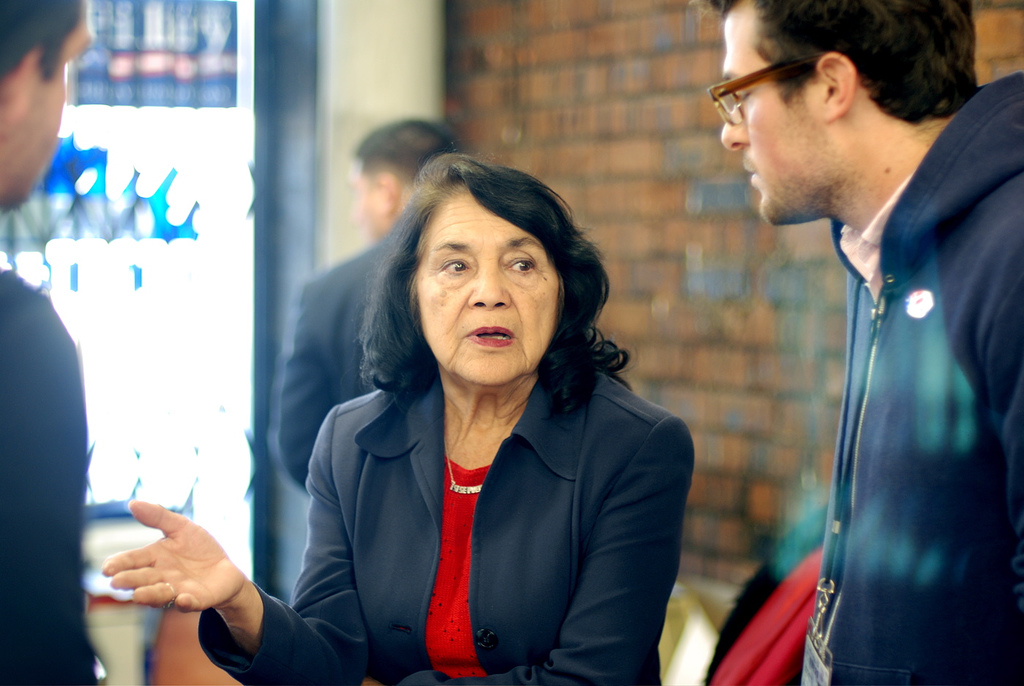
Just last week, Feminist Majority Foundation Board Member, human rights leader, feminist activist, and co-founder of the United Farm Workers, Dolores Huerta pressed young voters to reject Colorado’s personhood amendment. “Amendment 67 is saying, ‘Go back to the kitchen,'” Huerta said. “Be barefoot and pregnant and don’t come back.” She pushed back against supporters of Amendment 67 who claim that the measure would protect pregnant women, warning that it would “make pregnant women into criminals.”

“If we can’t decide on our own bodies, we can’t decide on anything,” Huerta said.

duVergne Gaines, the Director of the Feminist Majority Foundation’s Choices Campus Leadership Program called Hulu’s decision an outrage. “How dare Hulu censor fundamental free speech for women?” Gaines said. “Millions of Colorado women’s lives are being threatened with this proposed constitutional amendment,” she said. “If it passes, it will ban all abortions, ban most forms of birth control – including emergency contraception, the pill, IUDs – and it will criminalize women who suffer miscarriages, not to mention their doctors,” Gaines warned. “We demand Hulu run this important ad!”

Take Action: Sign the “Hulu: Let Her Speak” petition here.

Media Resources: Feminist Newswire 10/14/14; Huffington Post 10/17/14; Buzzfeed Community 10/17/14; Letter from No On 67 Coalition 10/10/14; Ms. Magazine Fall 2014

Afghanistan’s New First Lady Advances Women’s Issues

Just a few days after moving to the presidential palace, Afghanistan’s new First Lady Rula Ghani said that she hopes to encourage greater respect for women.

via MA
via MA

Rula Ghani already broke tradition by participating in her husband, Ashraf Ghani Ahmadzai’s, campaign for President. He even thanked her during his inaugural address for her continuous support, calling her “Bibi Gul,” a term of endearment. Rula points to her husband’s emotional tribute in his inauguration speech as a sign of the changing norms for Afghan women. “By mentioning me the way he did,” she said, “my husband really showed exactly what I mean by helping Afghan women be more assertive, more conscious of their role, more respected.”

The new First Lady knows that there is still a long way to go. “I am not looking to change the existing social structure,” she told the BBC, noting that she is aware of the sensitive nature of Afghanistan’s conservative society. She also plans to work within the existing framework of Afghanistan’s focus on family to open new opportunities for women. “Having lived in the West, I have suffered from not having an extended family around me,” she said. “I would like to give women out there the courage and the possibility to do something about improving their lives.”

President Ghani’s support of the First Lady and her activities to improve status of women seems to be an indication that the new Afghan administration will support efforts to advance women and girls’ education, health care and political status. The President has already said that he wants Afghan women represented at the highest levels of government, and he promised to encourage the participation of women in Afghan politics by forming a Women Advisory Board during meetings with civil society and women’s groups within his first week in office.

Media Resource: BBC News 10/15/14; Feminist Newswire 9/22/14, 9/29/14

Jay Leno Receives Mark Twain Prize, Salutes Mavis and Her Work for Women’s Rights

Former long-time host of “The Tonight Show” Jay Leno saluted his wife, Mavis, for her work on behalf of women’s rights around the world when he was awarded the Mark Twain Prize for American Humor this weekend at The Kennedy Center in Washington, DC.

StopTheSultan_0324
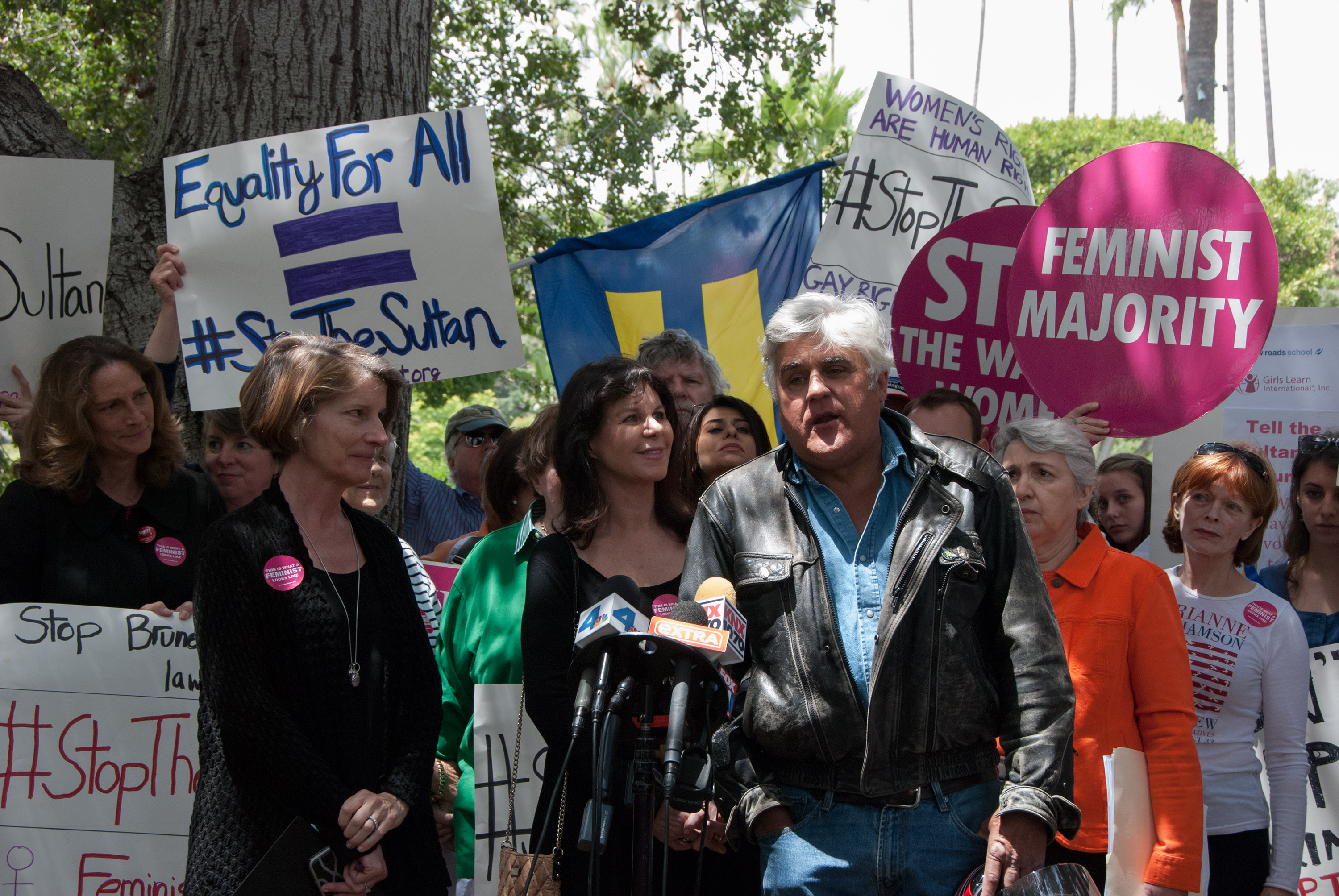
Jay and Mavis Leno at a Feminist Majority Foundation rally this summer.

The Mark Twain prize is awarded for comedic achievement, and the event, where Leno performed a monologue and paid tribute to the many comedians he has worked with throughout his career, brought together supporters of the The John F. Kennedy Center for the Performing Arts as well as leading comedians and performers. The “Tonight Show” team that worked with Jay for over 20 years, including Tonight Show producer Debbie Vickers, were in attendance. The Lenos were also saluted at a pre-event brunch at the home of Vice President Joe Biden and Dr. Jill Biden.

Eleanor Smeal, President of the Feminist Majority Foundation, attended both the brunch and the event at The Kennedy Center. “Who says feminists don’t have a sense of humor? The one thing I have learned from my years of knowing Jay Leno is that he not only loves a good joke, but he has a deep commitment to helping others,” Smeal said of Leno’s accolade. “He deserves not only the Mark Twain Prize, but recognition for his longstanding support of women’s rights and human rights.”

The Lenos are both ardent supporters of the Feminist Majority Foundation’s work, and Jay called Mavis, who is on the Foundation’s board of directors and has chaired the Campaign for Afghan Women and Girls since 1997, his “conscience.” Long before most Americans even knew where Afghanistan was, the Lenos held events protesting gender apartheid in Afghanistan and galvanized celebrities and national leaders to speak out and organize against the US and UN recognition of the Taliban. Under Mavis’s leadership, the Feminist Majority Foundation’s Campaign For Afghan Women And Girls was nominated for the Nobel Peace Prize in 2012. Mavis continues to chair this campaign and bring awareness to the continuing need for international support for Afghan women and girls as well as the need to eliminate violence against women and girls worldwide.

For the past nine years, Mavis and Jay Leno have also hosted the Feminist Majority Foundation’s annual Global Women’s Rights Awards,  which this year was pulled from its traditional venue, The Beverly Hills Hotel, in protest of the Sultan of Brunei’s new Taliban-like penal code which calls for the stoning to death of gay men and lesbians as well as the public flogging of women who have had abortions. The Lenos not only immediately pulled the event, but also publicly led a rally across the street from the hotel before the event. Their actions sparked a worldwide protest.

Media Resources: The Washington Post 10/20/14; Feminist Newswire 4/30/14, 5/2/14; Feminist Majority Foundation,


North Carolina Board of Elections Eliminates On-Campus Voting Sites Across the State

North Carolina will begin state-wide early voting on Thursday, and unlike the 2012 presidential election, many students across the state will have no polling place on-campus, making it more difficult for students to exercise their right to vote.

via kristina_a
via kristina_a

The North Carolina State Board of Elections recently eliminated the only on-campus voting location for the University of North Carolina at Charlotte, a campus with more than 20,000 students. Students at UNC-Charlotte will now have to travel over a mile, across a dense highway, in order to vote, effectively restricting access for any student without a car.

Jennifer Byrd, who is conducting get out the vote efforts for the Feminist Majority on the Charlotte campus, called the decision unacceptable. “It’s really posing a problem to these young students to get their voices heard,” she told Feminist Newswire. Byrd has announced plans to organize shuttles to take students to off-campus voting sites on Election Day, Tuesday, November 4.

The elimination of on-campus polling places is not unique to UNC-Charlotte. Rulings by the State Board of Elections have also affected Appalachia State University, Fayetteville State University, North Carolina A&T State University, and Winston-Salem State University. All four campuses have turned out in large numbers for past elections, and have historically favored Democratic candidates.

Robert Iffergan, also with the Feminist Majority, feels the elimination of the on-campus polls will have negative effects on the election. “By eliminating on-campus voting,” he said, “we’re eliminating diversity in the vote.”

Voting rights advocates have criticized the closing of on-campus voting sites as politically motivated. “When it seems like a county board would rather open a polling site on the moon than on campus to serve students and faculty, you have to wonder about the motivations,” said Allison Riggs, a voting rights attorney with the Southern Coalition for Social Justice.

Her sentiments were echoed by Bob Phillips, state director of voting rights group Common Cause. “It makes one think there are other reasons for this that have to do more with politics than, again, the goal of making voting easy and accessible for everybody,” he said.

Click here for more information about voting in your state.

Media Resources: Feminist Majority; Fox 46 Carolinas 10/16/14; WRAL at NC Capitol 5/25/14; FeministCampus.org

Justice Ruth Bader Ginsburg Slams Supreme Court for Upholding Voter Suppression in Texas

Justice Ruth Bader Ginsburg issued a blistering dissent after a ruling by the US Supreme Court this weekend threatened to disqualify more than half a million Texas voters from early voting.

via Wake Forest University School of Law

In an unsigned order Saturday, a majority of the Supreme Court sided with a Texas law requiring voters to produce specific forms of photo identification in order to cast a ballot in the 2014 election. Now, an estimated 600,000 voters – predominantly black and Latino – could be turned away at the polls. Justice Ginsburg was joined in dissent by Justices Elena Kagan and Sonia Sotomayor, who argued that they would have left a lower federal district court ruling in place.

Prior to the Supreme Court’s ruling, US District Judge Nelva Gonzalez Ramos issued a 143-page order that ultimately struck down the state’s request to require one of seven forms of approved photo ID. The controversial list includes concealed handgun permits, yet excludes student identification cards, a form of ID that other states seeking similar last-minute changes to their voting laws have approved. Judge Ramos said the law was “an unconstitutional burden on the right to vote” and has an “impermissible discriminatory effect against Hispanics and African-Americans, and was imposed with an unconstitutional discriminatory purpose.”

Greg Abbott, the Texas Attorney General, immediately appealed the district court decision. The US Court of Appeals for the Fifth Circuit then stayed Judge Ramos’s order, allowing the voter ID law to be enforced during the 2014 elections.

In her dissent, Justice Ginsburg echoed Judge Ramos’ concern that the the new law amounts to a poll tax – the likes of which was encouraged by Texans in the late 19th century and codified into Texas state law in the early 1900s. “The greatest threat to public confidence in elections in this case is the prospect of enforcing a purposefully discriminatory law, one that likely imposes an unconstitutional poll tax and risks denying the right to vote to hundreds of thousands of eligible voters,” Ginsburg wrote.

Ginsburg said the Texas law went further than recent restrictions on voting rights in other states, and was further distinguished by the extensive record supporting the argument that the law blatantly disenfranchises voters. Unlike Ohio and North Carolina – where the Supreme Court recently upheld problem voting laws – the Texas law went to trial, with arguments concluding in late September. Justice Ginsburg said the body of proof produced during the trial in Texas strengthened the lower court’s call for an injunction.  “The fact-intensive nature of this case does not justify the Court of Appeals’ stay order; to the contrary, the Fifth Circuit’s refusal to home in on the facts found by the district court is precisely why this Court should vacate the stay,” Ginsburg wrote.

Justice Ginsburg also detailed Texas’ duplicity in calling for such sweeping change, when the state “knew full well that the court would issue its ruling only weeks away from the election.” Ginsburg also criticized the state for failing to familiarize Texas voters and poll workers regarding the new voter ID requirements, citing the lower court’s argument of “‘woefully lacking’ and ‘grossly’ underfunded” public education campaigns. Ginsburg wrote, “In short, any voter confusion or lack of public confidence in Texas’ electoral processes is in this case largely attributable to the State itself.”

Natasha Korgaonkar, Assistant Counsel for the NAACP Legal Defense Fund’s Political Participation Group, argued against the Texas voter ID law at the trial. “During the trial we heard from Texas voters who could not satisfy this strict law’s requirements,” she said. “One voter testified that she would need to choose between paying for a birth certificate so she could vote, or buying groceries for her family. This is not a choice that anyone should ever have to make.”

Early voting in Texas began Monday.

Media Resources: Huffington Post Politics 10/18/14; Election Law Blog 10/9/14; Supreme Court of the United States 10/18/14, 10/8/14; NAACP LDF 10/18/14; Feminist Newswire 10/15/14, 10/13/14; 9/30/14, 10/22/13

Hundreds of Schoolgirls Kidnapped by Boko Haram To Be Released Monday

Nigerian President Goodluck Jonathan and Nigeria’s military are reportedly negotiating the release of the nearly 300 young women and girls who were abducted by Boko Haram more than six months ago, ostensibly bringing an end to six months of activist efforts calling for their return.

via Kristy Birchard
via Kristy Birchard

An adviser to President Jonathan, Hassan Tukur, told Voice of America that President Jonathan and the self-described “secretary-general of Boko Haram,” Danladi Ahmadu, have been in talks in Saudi Arabia regarding the over 270 schoolgirls abducted by the extremist group in April. The President of Chad, Idriss Deby, and high-ranking Cameroonian officials have also been party to the dialogue.

Although videos released by Boko Haram’s leader Abubakar Shekau indicated that they intended to sell the girls into slavery and hold them until members of the group were released from prisonAhmadu said the girls are “in good condition and unharmed.” A spokesperson for Boko Haram claimed the girls will be released Monday in Chad.

Initial reports of the girls’ disappearance were met with inaction by the Nigerian government, which sparked acts of resistance in Nigeria and eventually spurred the viral – and global – #BringBackOurGirls campaign. In the United States, activists staged protests and rallies calling for government support to help locate the missing girls. Ultimately, President Obama announced that he had dispatched a team of military and law enforcement agents to the region, but although the Nigerian army announced in May that they had located the girls, they remained missing months later, over 100 days after their abduction. As activist and media attention waned, advocates and the families of the abducted were frustrated and angered by the failure to rescue the girls.

“As far as our girls are concerned, they have been abandoned,” Mkeki Mutah, uncle to two missing teens, told Al Jazeera prior to the news of the neogitations. “There is a saying: ‘Actions speak louder than words.’ Leaders from around the world came out and said they would assist to bring the girls back, but now we hear nothing. The question I wish to raise is: ‘why?'”

Even so, optimists have pointed to Boko Haram’s release of 27 hostages last weekend as evidence the tide could turn in favor of parents and loved ones who have come to fear the worst. Last Saturday, the wife of Cameroon’s Vice-Prime Minister, Akaoua Babiana, and 10 Chinese workers were among those released. That group was taken captive during two separate raids in May and July. How or why the group was set free is unknown, but to date, of the 276 captured over 180 days ago, far fewer have been so fortunate.

Of the young women and girls abducted in April, 57 successfully fled. Late last month, a young woman kidnapped by Boko Haram in early April from her dormitory was found roaming a small village. The 20-year-old was pregnant and “in a state of extreme trauma.” 15 young Chibok women who managed to rescue themselves from Boko Haram were granted scholarships to continue their studies made possible, in part, by Nobel Prize winner and champion of girls’ education, Malala Yousafzai. This summer, Nigerian President Goodluck Jonathan also announced government-sponsored scholarships to support the young women’s return to school by improving infrastructure, telecommunications, and community engagement to decrease the risk of comparable attacks and create a model for school safety in conflict zones.

The freed are encouraging thousands of other girls – who’d stopped attending school for fear of Boko Haram – to bravely resume their studies.

Media Resources: Al Jazeera 10/14/14; The Guardian 9/25/14, 10/14/14; Premium Times 8/31/14; A World At School 5/2014; Voice of America 10/17/14; Feminist Newswire 5/2/14, 5/5/14, 5/6/14, 5/13/14, 5/7/14, 5/22/14, 5/27/14, 7/23/14

Student Activists Across the Country Are Fighting Extreme Anti-Abortion Ballot Measures

In Tennessee, North Dakota, and Colorado – three states deciding ballot measures aimed at restricting birth control access and outlawing abortion in the upcoming election – student activists are mobilizing to get out the vote.

10645022_10152829116279810_4935067158668389973_n


Members of  student-led Feminist Majority Leadership Alliance group Vanderbilt Feminists at Vanderbilt University have been working tirelessly to get out the word about Tennessee’s Amendment 1, which would take the right of privacy for reproductive rights out of the state constitution and give local legislators the power to restrict access to abortion, even in the case of rape, incest, or to save the life of the woman, and outlaw many forms of birth control, such as the IUD or the pill. Amendment 1 is a trigger amendment, meaning its full impact would be realized immediately if Roe v. Wade were ever reversed. In the meantime, its passage would explicitly give more power to state legislators to restrict access to abortion.

Early voting in Tennessee began on Wednesday and goes until October 30. The Vote No on 1 campaign, supported by Vanderbilt Feminists, has been recruiting both Tennessee resident voters and non-resident voters to help raise awareness and galvanize voters in opposition to the proposed Amendment. “Our goal is to reach out to voters and mobilize,” says Vanderbilt senior Erin Lee, a campaign intern. With the campaign’s help, the Vanderbilt Feminists have been training fellow students on activism, disseminating voter information, as well as calling students with information on how and where to vote.

10606073_4599077310995_1085038392633531912_n

In North Dakota and Colorado, students are encouraging voters to vote no on two ballot measures that, if passed, would become the nation’s first personhood amendments. Measure 1 in North Dakota would create an “inalienable right to life” starting “at any stage of development” – including the moment of fertilization and conception. Colorado’s Amendment 67 would include fertilized eggs in the definition of “person” and “child” in the state’s criminal code and Wrongful Death Act, and would also ban all abortions – even in the case of rape, incest, or danger to the mother’s life or health – if Roe is ever overturned. Because of the vague language in both Measure 1 and Amendment 67, the proposed changes to North Dakota and Colorado’s constitutions could also eliminate or restrict access to some common forms of birth control, deny pregnant women with life-threatening illnesses access to treatment, ban in-vitro fertilization, and subject women who have miscarriages to criminal investigations.

“In voting no, we say yes to the continued accessibility of contraceptives, preventative care for women, and to the accessibility of safe abortion,” Kate Black, a senior at North Dakota State University at Fargo and one of many students pushing folks to vote no on Measure 1, wrote on the Feminist Campus blog. Students in North Dakota can vote early, often even on campus, from October 27 through 31 as well as on Election Day.

In Colorado, where residents and students can vote in person or by mail from October 20 through Election Day, activists gathered today with legendary women’s, labor, and civil rights leader and a Presidential Medal of Freedom Honoree Dolores Huerta in an effort to get out the vote and rally against Amendment 67.  “There is no better person to sound the alarm about how deceptive and harmful this amendment is to women’s lives,”  duVergne Gaines, director of the Feminist Majority Foundation Choices Program, said of Huerta’s presence.

For more information about ballot measures in your state, visit our Ballot Measures to Watch Out For portal.

Media Resources: Fox 46 Carolinas 10/16; Vote No on 1 Campaign; Vote No on 67 Campaign; Vanderbilt Hustler 10/15; Feminist Campus 9/14/14, 10/6/14; Feminist Newswire 10/14/14;

Prosecutors Claim South Carolina’s Stand Your Ground Law Doesn’t Apply to Domestic Violence Survivors

According to South Carolina prosecutors, the state’s Stand Your Ground law, which allows people to use force to defend themselves when faced with “great bodily injury,” is an unfit defense for domestic violence victims who live with their attackers. One prosecutor even claimed that using the law to defend survivors of intimate partner violence is unconstitutional.

via Shutterstock
via Shutterstock

State prosecutors Scarlett Wilson and Culver Kidd are appealing a decision by a South Carolina judge earlier this month that applied the law to a case surrounding a domestic violence victim that stabbed her live-in boyfriend in 2012. Neighbors called the police after hearing Whitlee Jones screaming for help. In a 911 call, a neighbor is heard saying, “(He’s) pulling the lady by her hair…Can y’all please get somebody out here real quick?” According to court documents, Jones called friends for help, but she also called the police. She never talked to a dispatcher, but she can be heard struggling with Eric Lee over the phone as she cried, “Get off me” before the line went dead.

Jones left her apartment not knowing police were on the way. In an incident report filed the night of the attack, Lee told the responding officer that his girlfriend smashed his phone, but there had been no assault. The officer left the scene, and when Jones returned with friends, her attorney Mary Ford wrote, she “was not in a position to get away without acting.” Jones went to the apartment to pack up her belongings, and when she attempted to leave, Lee blocked her exit. Jones stabbed Lee once. Later, he was pronounced dead.

Circuit Judge J.C. Nicholson ruled earlier this month that Jones could not be tried for Lee’s death because of the state’s Stand Your Ground. Now, prosecutors are arguing that the law should not apply because it was not meant to deal with “personal relationships.” In other words, the law should not be used by domestic violence victims protecting themselves from serious injury or death.

Concerns over the invocation of Stand Your Ground on behalf of intimate partner violence victims adds another splinter to just how partially such laws are applied. Attorneys for mother and domestic violence survivor Marissa Alexander attempted to use a similar Florida law to defend her firing of a warning shot in the presence of her well-documented abuser, but state prosecutor Angela Corey is seeking a 60-year sentence on the basis that Alexander endangered the lives of her husband and his two children by doing so, even though nobody was harmed. In 2013, Florida’s Stand Your Ground law also came under fire by activists in the wake of the shooting death of unarmed black teenager Trayvon Martin, in which his killer was acquitted of all charges under the law. In tandem, the two cases illuminate as deadly double-standard for women who act in self-defense against intimate partners who inflict abuse upon them.

Media Resources: Feminist Newswire 3/4/14; The Post and Courier 10/12/14; Charleston City Paper 3/31/12

Over 80,000 Safety Violations Found At Bangladesh Garment Factories

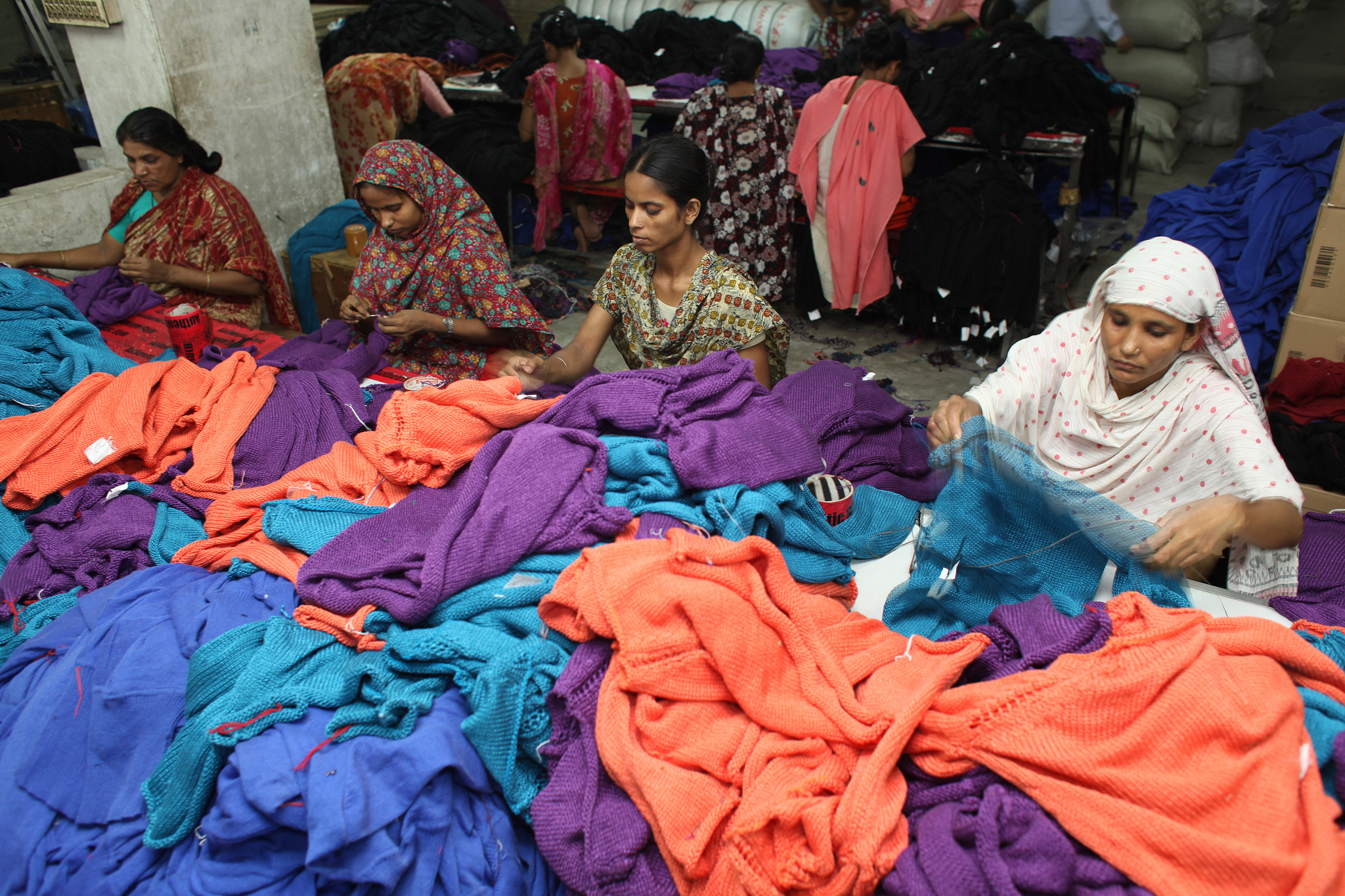
A recently completed inspection found more than 80,000 safety violations in Bangladeshi garment factories – where 85 percent of all workers are women.

via Asian Development Bank

The inspections were made as part of the Accord on Fire and Building Safety in Bangladesh, which covers more than 1,500 factories, is a legal agreement between 180 garment companies and 12 Bangladeshi trade unions and was formed after April 2013, when more than 1,100 workers died, and thousands more injured, in a factory building collapse in Rana Plaza.

Of the inspected factories, 17 had structural integrity below an acceptable level and 110 factories were not currently up to acceptable safety levels for workers to work inside. The chief safety inspector of the Accord said the number of safety violations “was to be expected.”

Around four million people work in clothing factories in Bangladesh, according to the Bangladesh Garment Manufacturers and Exporters Association, and most of them are women. Bangladesh’s export income, according to the American Journal of Sociological Research, depends on these workers, as 75 percent of that income comes from the ready-made garments industry. A woman who works in a garment factory often provides for her whole family – it therefore elevates her social status and gives her a choice outside of working as a farm hand or as a domestic servant.

“I wish I had a garments job instead of laboring in the fields, look at my hands,” Alisha Begum told NBC News. Begum was looking for the body of her sister, Rehana, after the 2013 factory collapse. “I can’t read or write which why I have to work out in the sun. Without basic reading, you can’t get a job in this type of factory.”

According to the Clean Clothes Campaign, a campaign that works to improve working conditions and to support empowerment for workers in the garment industry, $40 million is needed for families of victims. The Campaign says several companies that had links to the collapsed factory building have yet to pay anything to the Rana Plaza Donors Trust Fund. Joe Fresh acted first to compensate families of the victims, but there are still many brands and retailers who have not done anything publicly to compensate families.

The Campaign lists J.C. Penny as one of the retailers that has yet to pay. A statement issued by J.C. Penny, which has an annual revenue of about $11.9 billion, claims it does not need to pay compensation as it “had no insight into the development and sourcing of Joe Fresh apparel produced in Rana Plaza last year.” Companies such as Gap, H&M Conscious Foundation and Debenhams have made contributions even though they did not technically source their clothing from a factory in Rana Plaza. Primark, which did have a supplier in the collapsed factory, has donated around $2 million and promises $10 million more in long-term compensation.

After the Rana Plaza factory collapse, the Bangladeshi government promised to improve worker conditions; so far it has raised the minimum wage by 77 percent, to $66 a month, which is still one of the lowest wages for a garment-factory worker in the world. Workers have asked for $102 a month, but were met with police violence when they protested. Despite the Bangladeshi government giving workers a greater ability to unionize, some workers who have tried to form unions have been met with violence and bribery.

The US government has also weighed in on conditions in Bangladeshi factories. In June 2013, the US suspended trade privileges with Bangladesh and provided an Action Plan that would be the basis for reconsidering its decision. After reviewing progress on the Action Plan, the US Trade Representative in July noted continuing concern for worker safety, the need for stronger labor law reforms, and violence against labor organizers.

US trade privileges continue to be suspended, yet an investigation by Jason Motlagh and Susie Taylor for Ms. Magazine found that the US government has continued to purchase millions of dollars worth of Bangladeshi-made apparel for military retail stores (exchanges) – without monitoring their supply chains.  Congressman George Miller (D-CA) and Congresswoman Jan Schakowsky (D-IL) introduced legislation in 2013 to require military exchanges to sign onto the Accord on Fire and Building Safety in Bangladesh, but so far, nothing requires the exchanges to do so or to contribute to the cost of the structural repair or renovation of the dangerous factories from which they receive their goods.
Media Resources: Bloomberg Businessweek 10/16/2014; ThinkProgress 10/14/2014, 11/20/2013; Reuters 10/14/2014, 3/17/2014; International Labor Rights Forum 7/3/14; Ms. Magazine Summer 2014; Forbes 4/26/2014; Feminist Newswire 9/24/2013, 5/15/13; US Trade Representative 7/14, 7/19/13; NBC News 5/23/2013; Clean Clothes Campaign; Accord on Fire and Building Safety in Bangladesh

Enforcement of Voter Suppression Law in Texas Uncertain

The US Court of Appeals for the Fifth Circuit ruled yesterday that Texas could enforce its strict Voter ID law, despite a lower court’s finding that the law was discriminatory and would likely suppress the votes of African Americans and Hispanics in Texas.

via Shutterstock
via Shutterstock

Writing for the Court, Judge Edith Brown Clement described the immediate challenge to the Texas law as “not a run-of-the-mill case.” She continued, “Instead, it is a voting case decided on the eve of the election. The judgment below substantially disturbs the election  process of the State of Texas just nine days before early voting begins. Thus, the value of preserving the status quo here is much higher than in most other contexts.”

Early voting in Texas begins on October 20. Federal District Judge Nelva Gonzales Ramos’s earlier ruling, blocking enforcement of the new Voter ID law, would have allowed Texans to vote according to the laws that were in place before the Voter ID law took effect last year.

Civil rights groups challenging the law have already filed an emergency application with the US Supreme Court to delay the law’s implementation for the upcoming election. The application was filed with Justice Antonin Scalia who oversees the Fifth Circuit. He may decide the application on his own or refer it to the entire Court.

Under the new Texas Voter ID law, voters must show government-issued photo identification before they can vote at the polls. There are, however, only seven forms of photo ID that will be accepted: a Texas driver’s license, Texas election identification certificate, Texas personal identification card, US military ID, US citizenship certification, US passport, or a license to carry a concealed handgun. Student IDs and social security cards are not considered acceptable forms of identification.

In addition to suppressing the votes of people of color, the Texas law also suppresses the votes of women, students, the poor, and the elderly. It is not immediately clear when Justice Scalia or the Court will act on the emergency application.

Media Resources: SCOTUS Blog 10/15/14; The Hill 10/14/14; US Court of Appeals for the Fifth Circuit 10/14/14; Feminist Newswire 10/13/14, 10/22/13; MSNBC 10/19/13; Texas Secretary of State

Supreme Court Ruling Keeps Texas Abortion Clinics Open

The US Supreme Court issued an order last night blocking enforcement of two provisions of a restrictive Texas anti-abortion law that had forced all but eight of the state’s abortion clinics to close. The decision immediately allows 13 clinics that had been shuttered earlier this month by the Fifth Circuit Court of Appeals to reopen.

via Ann Harkness
via Ann Harkness

The US Court of Appeals for the Fifth Circuit had previously ruled that Texas could begin enforcing the admitting privileges and ambulatory surgical center requirements of its new TRAP law, passed last year as HB2, against clinics in West Texas and the Rio Grande Valley. The decision caused 13 clinics to close overnight and would have forced nearly 1 million women of reproductive age in Texas to travel more than 300 miles round-trip to the nearest clinic, preventing access to abortion for many.

Discussing the impact of the Fifth Circuit decision with Rachel Maddow on MSNBC, Amy Hagstrom Miller, CEO of Whole Woman’s Health, one of the plaintiffs challenging the Texas law, said that she was forced to close her clinic in McAllen, Texas. When staff explained to patients that they could no longer access abortion care at the clinic, but would have to travel north to obtain abortion services, Hagstrom Miller explained, “There were quite a few women who said I can’t travel north and will take matters into my own hands.”

Hagstrom Miller told Maddow that she was “very delighted” by the Supreme Court’s order. She added, “It’s delightful to be able to say yes to women in the Rio Grande Valley who have been calling us.”

Reproductive health care providers in Texas had filed an emergency application with Supreme Court Justice Antonin Scalia on October 6, asking the Court to block enforcement of the Fifth Circuit’s decision allowing the admitting privileges and ambulatory surgical center requirements – both medically unnecessary, harmful restrictions on access to abortion – to go forward. Justice Scalia, who oversees the Fifth Circuit, referred the case to the entire Supreme Court, which issued its 6-3 decision last night. Justices Scalia, Thomas, and Alito dissented, without explanation. The Supreme Court’s order allows the Texas clinics closed by the Fifth Circuit decision to reopen while the challenge to the law continues to make its way through the federal courts.

“This fight against Texas’ sham abortion law is not over,” said Nancy Northup, President and CEO of the Center for Reproductive Rights, which is representing the plaintiffs in the case. “HB2 was designed to gut the constitutional protections of Roe v. Wade and half of the state’s clinics remained closed. We will continue this legal battle until the rights of Texas women are restored.”

Texas had 44 clinics before the enactment of HB2 last year. That number dropped to 21 after parts of HB2 went into effect, and before the Supreme Court stepped in, Texas was down to only eight. In addition to this legal challenge affecting West Texas and the Rio Grande Valley, the Center for Reproductive Rights is also waging a separate challenge to the admitting privileges requirement and medication abortion restrictions contained in HB2.

Media Resources: US Supreme Court 10/14/14; Center for Reproductive Rights, 10/14/14; The Rachel Maddow Show, MSNBC 10/14/14; Feminist Newswire 10/13/14, 10/7/14, 10/3/14

Activist Dolores Huerta Fights for Reproductive Rights in Colorado

Legendary human rights leader Dolores Huerta will be in Denver, Colorado next Friday to Get Out the Vote for the 2014 election.

via Why Tuesday?
via Why Tuesday?


Huerta, a Presidential Medal of Freedom honoree, will be on the educational facility the Auraria Campus to take a stand against proposed Amendment 67, a personhood initiative on the Colorado ballot this Fall aimed at restricting abortion and birth control access.

If passed, Amendment 67 would extend the definition of “person” and “child” to a fertilized egg in the Colorado criminal code and Wrongful Death Act. The measure is a what some call a trigger law, meaning that if Roe v. Wade were ever overturned, then the amendment would be “triggered,” automatically banning all abortions, even in the case of rape, incest, or the save the life or health of the woman.

“Dolores is an important voice in Colorado, Latinas/os are a growing and powerful voting constituency – especially among young people,” says duVergne Gaines, director of the Feminist Majority Foundation Choices Program. “There is no better person to sound the alarm about how deceptive and harmful this amendment is to women’s lives, including cutting off all access to abortion and birth control.”

Amendment 67 would not only cut off all access to abortion, but if passed, it would subject any woman whose pregnancy did not result in a live birth, including women who have a miscarriage, to a criminal investigation. Moreover, it would also subject a woman’s healthcare provider to a criminal investigation. By giving legal rights to fertilized eggs, the measure could also restrict access to birth control, including IUDs, the pill, and emergency contraception. Amendment 67 would even ban in-vitro fertilization for women who want to get pregnant.

Huerta will be speaking at the 11:30 am assembly preceding a 12:00 noon Rally in an effort to encourage Colorado students to Vote No on 67 and ensure that women in Colorado have access to safe and legal abortion, birth control, and comprehensive reproductive health care.

Media Resources: Ms. Magazine Fall 2014; Vote No on 67

Early Voting Has Started in Many States

In many states, the 2014 elections have already begun through early and absentee voting. Many states are now collecting ballots through the mail, and some, like Georgia, have already begun to accept in-person ballots. In states with close races for Senate seats or highly contested ballot measures, early voting allows for a glimpse of what may be in November.

shutterstock_219997822
via Shutterstock

Colorado, which has always seen higher early voter turnout due in part to the state’s availability of early voting, began mailing early voting ballots to all registered voters today. Voters can fill them out and the mail them back by Election Day, or drop them off in person starting on October 20. Colorado is one of three states that will be voting on whether to adopt an anti-abortion and birth control state constitutional amendment. This will be the third time that Colorado voters will be asked to adopt a personhood amendment, which gives full rights to fertilized eggs.

North Dakota begins early voting on October 27, and has a state constitutional amendment ballot measure that creates an “inalienable right to life” starting “at any stage of development” – including the moment of fertilization and conception.

Tennessee will also be voting, beginning on the October 16, on a state constitutional amendment that makes its right to privacy clause no longer apply to abortion or birth control. Rather, it gives the state legislators the right to restrict access to abortion and birth control.

Early voting in Lousiana will begin on October 21, and may help determine the race between Sen. Mary Landrieu (D) and challenger Bill Cassidy (R). In North Carolina, voters will have a chance to begin the tight race between Sen. Kay Hagan (D) and challenger Thom Tillis (R) on October 23.

Early voting is traditionally viewed as providing greater opportunities to vote. The ability to vote early is incredibly important for wage earners, low-income workers, shift workers, or students who may not be able to take time off from work or school to vote on Election Day, Tuesday, November 4. You can find more information about voting in your state here.

Media Resources: Feminist Newswire 10/6/14; FeministCampus Blog 10/6/14; Ms. Magazine Fall 2014; FeministCampus.org

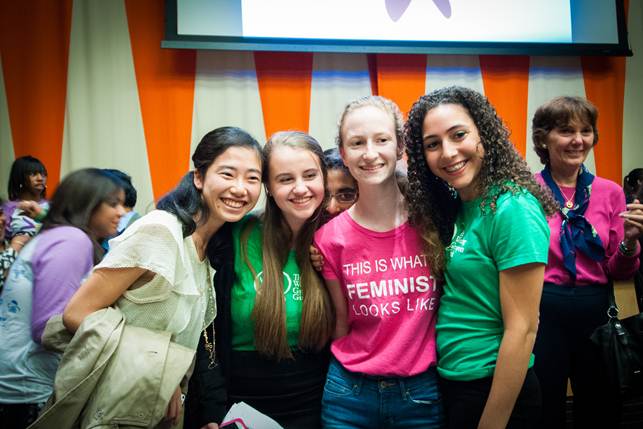
Girl Activists Spoke Out at the United Nations on International Day of the Girl

The United Nation’s third annual International Day of the Girl was recognized Saturday by activists and leaders alike. The day’s theme was “Empowering Adolescent Girls: Ending the Cycle of Violence.”

1

The designated day was created to raise awareness that gender inequality is still alive and well, and is worse in developing countries. Currently there are at least nine countries in which at least half of the women between 20 and 24 were married before age 184 million more girls than boys are out of primary school worldwide, the gender gap in youth literacy rates is still significant, and the prevalence of female genital mutilation is estimated to be between 100 and 140 million girls and women worldwide.

“Gender-based violence – from domestic violence and human trafficking to genital cutting and early and forced marriage – condemns girls to cycles of dependence, fear, and abuse,” said President Barack Obama in a proclamation marking October 11 as International Day of the Girl. “Today, we resolve to do more than simply shine a light on inequality. With partners across the globe, we support the girls who reach for their future in the face of unimaginable obstacles, and we continue our work to change attitudes and shift beliefs until every girl has the opportunities she deserves to shape her own destiny and fulfill her boundless promise.”

To mark International Day of the Girl, Girls Learn International (GLI), working through the Working Group on Girls, helped to organize Girls Speak Out at the United Nations. About 100 girls from GLI participated in the event, which gave girls a platform to share their experiences and featured stories of girls from around the world. Submissions of girls’ experiences were often kept anonymous and were instead performed by girls who attended the event.

3

“I hope one day disabled girls have their stories told and are treated like everyone else,” 11-year old Melissa Shang, a girl with muscular dystrophy who who previously started a petition to get American Girl dolls to feature a doll with a disability, said in a speech at the event. Her speech, which spoke to her experiences as a girl with disabilities, ended in a standing ovation.

A program of the Feminist Majority Foundation, Girls Learn International educates and energizes US students in the global movement for girls’ access to education. Through the program, GLI students in middle and high schools in 35 states engage with students in more than 45 partner schools in countries where girls still lag behind boys in access to education. Using a human rights framework, GLI is building a movement of informed advocates for universal girls’ education and a new generation of leaders and activists for social change.

“It’s so inspiring to see girls using their voices and being heard,” said Ellen Fishman, a member of the GLI advisory board who helped organize the event. “The girls who are already involved are raising their voices and are letting the girls in the audience know that there is enough empowerment for all of us, and that their voices matter.”

2

The importance of girls’ access to education was a significant theme, as this year’s International Day of the Girl came just a day after 17-year-old Malala Yousafzai won a joint Nobel Peace Prize, making her the youngest recipient of the prize in history. Yousafzai is known for her work in promoting education for girls worldwide; she survived being shot in the head by Taliban members in 2012 when she was on her way to school. Yousafzai has since founded The Malala Fund with her father to encourage girls’ access to education in Pakistan (Yousafzai’s home country), Nigeria, Jordan and Kenya.

In a press conference Friday, Yousafzai said, “I’m thankful to my father for not clipping my wings, for letting me to fly and achieve my goals, for showing to the world that a girl is not supposed to be the slave.”

Media Resources: Day of the Girl Summit 2014; The White House 10/10/2014; PBS 10/11/2014; Population Reference Bureau 2011; Malala Fund; Girls Learn International; Feminist.org; The World Bank; World Health Organization

>