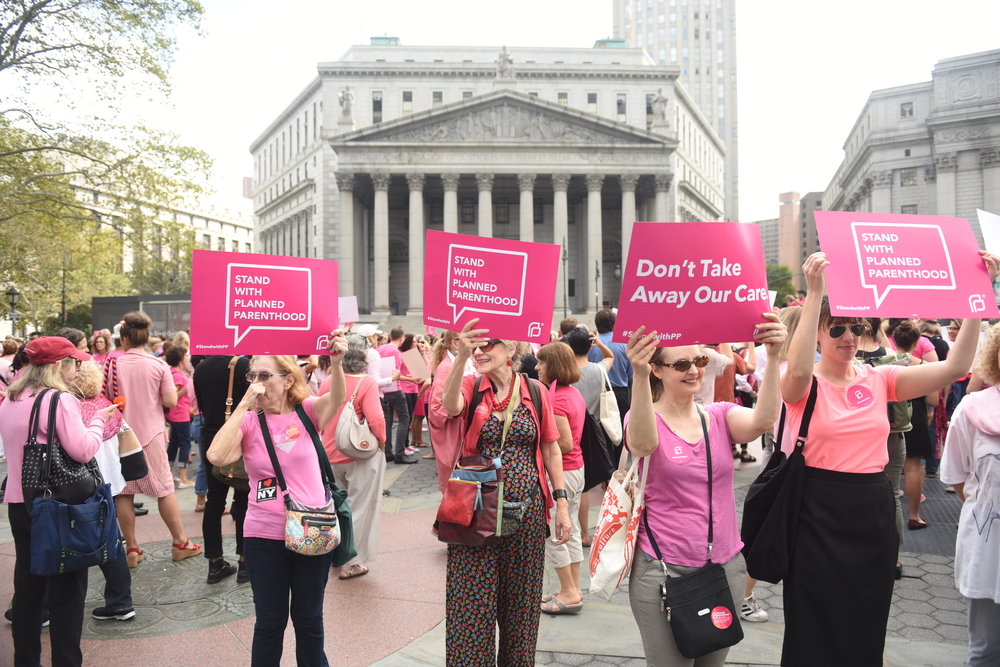
Low-wage workers around the country—the majority of whom are women—gathered Tuesday to strike for $15 an hour. The Fight for 15 campaign, now in its third year, began with fast-food workers demanding better wages, and now includes factory laborers, home- and child-care workers, janitors, retail employees and others earning less than $15 an hour.
The campaign is backed by the Service Employees International Union and has seen victories in cities across the country. In Los Angeles and Seattle, for example, city councils voted to raise the minimum wage to $15 incrementally over a period of years. And in San Francisco, residents voted to raise the minimum wage to $15 by 2018. On Tuesday, campaign organizers added Pittsburgh to their list of wins, and New York Gov. Andrew Cuomo (D) announced plans to raise the minimum wage to $15 for state employees.
Fight for 15 organizers say demonstrations were held in at least 270 locales, including Las Vegas, Fresno, Calif., Troy, Mich., Fairfax, Va. and Milwaukee, among others.
Dolores Huerta, co-founder of the United Farm Workers and a Mexican-American icon, joined activists in Milwaukee who are not only demanding a better minimum wage, but also protesting the Republican presidential debate happening last night in that city.
“The Republican candidates are going down the wrong path with all of these attacks they’re making on our community,” Huerta said in a statement. “They’re against raising the minimum wage, against fighting climate change, even though families are struggling and global warming is going to affect every one of us.”
Media Resources: The Huffington Post 11/10/15; The New York Times 11/10/15; Los Angeles Times 11/10/15
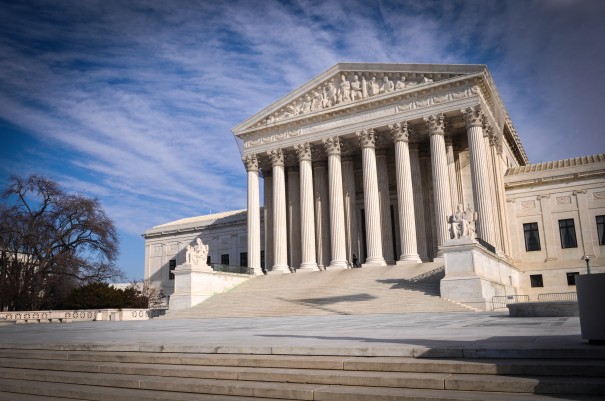
The U.S. Supreme Court on Monday allowed a Texas police officer to avoid a civil suit for shooting and killing a fleeing suspect, despite two federal appeals court decisions that would have allowed the lawsuit to go forward.
In March 2010, DPS trooper Chadrin Mullenix fired his rifle six times from atop a highway overpass at suspect Israel Leija, Jr. who had been engaged in a high-speed chase with police. Minutes before the shooting, trained DPS officers had set up tire spikes at three strategic locations to disable Leija’s vehicle in order to apprehend the suspect. Mullenix, who was never trained in shooting to disable a car in a high-speed chase, asked permission from his superior to fire at the approaching vehicle. The superior told him not to shoot, ordering Mullenix to “stand by” and “see if the spikes work first.”
Mullenix shot anyway. None of the six bullets he fired hit the car’s radiator, hood, or engine – which would have disabled the vehicle – but at least four shots hit Leija in the upper body, killing him at the scene.
Leija’s mother brought a civil suit against Mullenix, alleging that the officer had violated the Fourth Amendment by using excessive force against her son. In a 2-1 ruling, a panel of the U.S. Court of Appeals for the Fifth Circuit ruled that Mullenix could face trial. That decision was later upheld after the entire Fifth Circuit, in a 9-6 ruling, refused to rehear the case.
On Monday, in an 8-1 decision, the Court reversed the Fifth Circuit, finding that the officer’s actions did not clearly violate a constitutional prohibition on excessive force and that the officer was entitled to qualified immunity, meaning that Leija’s mother will not be able to seek justice for her son through the courts.
In a scathing dissent, Justice Sonia Sotomayor accused the Court of “sanctioning a ‘shoot first, think later’ approach to policing [that] renders the protections of the Fourth Amendment hollow.” She noted, “When Mullenix confronted his superior officer after the shooting, his first words were, “How’s that for proactive?” Justice Sotomayor described this “glib comment [as] revealing of the culture this Court’s decision supports when it calls it reasonable—or even reasonably reasonable—to use deadly force for no discernible gain and over a supervisor’s express order to ‘stand by.’”
The court’s decision comes amid massive, nationwide protests of police use of deadly force, whose victims are disproportionately African American. According to the Washington Post, 843 people have been shot dead by police this year alone.
Media Resources: U.S. Supreme Court 11/9/15; U.S. Court of Appeals for the Fifth Circuit 12/19/14; Washington Post, November 2015
In a blow to President Obama’s immigration reform efforts, the 5th Circuit Court of Appeals upheld an injunction barring the Administration from moving forward with a series of executive orders that would protect nearly 5 million people from deportation.
The 2-1 ruling upholds a February decision by a Texas-based federal judge who rejected the Department of Justice’s request for the executive orders to go into effect pending appeal. 26 states challenged the executive actions in court.
The initiatives under scrutiny include expanding the eligibility for the 2012 Deferred Action for Childhood Arrivals (DACA) program and the creation of a Deferred Action for Parents of Americans and Lawful Permanent Residents (DAPA) program through a 2014 executive order. DACA protects immigrants if they were brought into the country illegally as children. DAPA would protect parents of U.S. citizens and legal permanent residents.
Texas governor Greg Abbott responded to the decision saying, “The court’s decision is a vindication for the rule of law and the Constitution… The president’s job is to enforce the immigration laws, not rewrite them. President Obama should abandon his lawless executive amnesty program and start enforcing the law today.”
Dolores Huerta, founder and president of the Dolores Huerta Foundation and Feminist Majority Foundation board member, said, “This decision shows how important it is to elect progressive presidents. This is a decision by a conservative majority on the court.”
In a statement, Marielena Hincapié, executive director of the National Immigration Law Center, said, “The court’s flawed ruling today is inconsistent with even the most basic legal principles. While it is clear that our fight is far from over, the power of our voices and our votes will eventually prevail and bring about change. We will not deviate from a future in which all immigrants are treated with dignity and justice… We now call on the Department of Justice to seek Supreme Court review immediately where we are more likely to obtain justice for our communities.”
Media Resources: The Associated Press 11/9/15; CNN 2/17/15; The Blaze 11/9/15; National Immigration Law Center Press Release 11/9/15
The protests, which began in October, have focused on putting pressure on school administrators to lower fees for students at the University of Witerwatersrand after school administration told them to expect a 10.6% increase in tuition fees in the coming year. More than 10,000 people joined the October March, making it the largest student protest since the 1976 Soweto uprising against apartheid.
Students united to protests for weeks, prompting President Zuma to announce a 0% increase in university fees for students. The protests have spread from University of Witwatersrand and UCT to other campuses in South Africa, such as the University of the Western Cape.
Students in the United States have also united against rising tuition costs, including protests in the University of California system.
Media Resources: Mail & Guardian 11/9/15; The Guardian 10/26/15; IOL News 11/2/15; NBC Bay Area 3/18/15
Last week, Louisiana Governor Bobby Jindal’s administration filed an appeal notice at the 5th Circuit Court of Appeal in New Orleans after a federal judge ordered his administration to cease efforts to strip Medicaid funding to Planned Parenthood in the state.
Late last month, after temporarily blocking Jindal’s attempts, U.S. District Judge John deGravelles handed down a preliminary injunction requiring Louisiana to continue funding Planned Parenthood.
Jindal, a Republican candidate for president, sought the cancellation of provider agreements between Medicaid and Planned Parenthood, asserting the women’s reproductive healthcare provider does not “represent the values of the state of Louisiana in regards to respecting human life.”
He also cited a series of fraudulent and surreptitiously recorded videos released by anti-abortion group the Center for Medical Progress (CMP). The videos, which CMP claim depicts Planned Parenthood’s sale of fetal tissue, have been debunked repeatedly. Nonetheless, under Jindal’s directive, the Louisiana Department of Health and Hospitals (DHH) issued a notice to Planned Parenthood Gulf Coast (PPGC) in August alerting them of their contract termination with Medicaid effective 30 days after the notice’s date.
The need for affordable access to quality reproductive healthcare in Louisiana could not be more critical. According to the Center for Disease Control and Prevention, Louisiana has some of the highest rates of sexually transmitted disease infection in the United States, ranking first in gonorrhea infection, second in chlamydia and third in syphilis and HIV. Last year, the state’s two Planned Parenthood clinics provided nearly 20,000 STD tests as well as pelvic exams, cancer screenings and contraception to some 10,000 predominately low-income patients.
Media Resources: The Associated Press 11/5/15; RH Reality Check 10/30/15; New York Times 9/1/15
University of Missouri President Tim Wolfe has resigned amid escalating protests and calls for him to step down after failing to address the issue of racism and racial intolerance on campus.
During homecoming, the protesters blocked the president’s vehicle during a parade, but unfortunately, Wolfe did not come out to address them and the police had to move them.
Seeing the lack of acknowledgement from the president, a black graduate student, Jonathan Butler, went on a hunger strike last week to bring awareness to the “slew of racist, sexist, homophobic” incidents on campus and Wolfe’s lack of response to them.
Over the weekend, the protests picked up steam when 30 black football players announced they would not participate in football team activities, including games, until Wolfe resigned. A statement by the players revealed that the players would not tolerate any lack of action concerning threats or incidents of racism towards students. The boycott would have had significant economic repercussions for the school, including a $1 million fine if they do not play in this weekend’s game versus Brigham Young University.
Students and members of the Concerned Student 1950, an organization named after the year in which the first black student was admitted to the university, also spearheaded today’s walk out to demand Wolfe’s resignation.
Several political leaders voiced their concern over the lack of action by the school authorities. U.S. Senator Claire McCaskill (D – MO) said it is essential for the Board of Curators to send a “clear message” to the student body on how they are committed to addressing racism on the campus. In a statement, Missouri State Representative Steven Cookson said that Wolfe “can no longer effectively lead” and he should leave his post.
The groups are calling for the Education Department’s Office of Civil Rights (OCR) to remind colleges and universities of their legal obligations under Title IX of the Education Amendments of 1972 and Title VI of the Civil Rights Act of 1964 to ensure campuses are not permitting a climate of hostility toward some students based on race, sex, ethnicity, and LGBT or disability status.
Media Resources: The Maneater 11/5/15;Washington Post 11/9/15, Kansas City Star 11/9/15; Huffington Post 11/8/15; Feminist Majority Foundation Press Release 10/20/15
The Supreme Court today agreed to hear arguments from religiously affiliated non-profits challenging women’s right to access insurance coverage for birth control under the Affordable Care Act (ACA).
The non-profits seeking to deny women employees access to birth control argue that the requirement to fill out a one-page form to receive an exemption from covering birth control places a substantial burden on their exercise of religion and violates Religious Freedom Restoration Act (RFRA).
“Birth control is basic health care for women. These challenges are not about religion. There is no law in the United States that allows an employer, even a religiously-affiliated non-profit, to impose a religious belief on an employee,” said Feminist Majority President Eleanor Smeal. “Plain and simple, these cases are about sex discrimination and whether or not religion – in the United States – can still be used as a cover to discriminate against women. Will we have equal rights and democracy for everyone, or will we have democracy for men and theocracy for women?”
Under the ACA, health insurance companies must cover the full cost of all FDA-approved contraceptives – including the pill, IUDs, and emergency contraception – without requiring co-pays or cost-sharing. Religious employers, like churches, are already entirely exempt from this requirement. Religiously affiliated non-profits that object to providing birth control coverage to their employees are entitled to an accommodation that relieves them of their obligation to cover birth control.
To qualify for the accommodation, religiously affiliated non-profits must only inform their health insurance issuer, third party administrator, or the Department of Health and Human Services (HHS) – via a simple government form – that it objects to providing insurance coverage for birth control. At that point, these organizations are no longer required to play any role in providing or subsidizing birth control. The insurance issuer or third party administrator would be solely responsible for providing birth control benefits to affected employees.
Seven federal appeals courts have ruled that it is not a violation of RFRA the for a religiously affiliated non-profit to fill out a form indicating that it objects to providing insurance coverage for birth control. Only one court, the Eighth Circuit Court of Appeals, has sided with the non-profits.
The Supreme Court agreed to hear at least parts of all seven cases that requested review.
Just last Term, the Supreme Court decided in Hobby Lobby v. Burwell that for-profit corporations with religious objections could deny health insurance coverage for birth control. In its opinion, the Court determined that the government could achieve its goal of making birth control coverage available through narrower means, specifically referencing the accommodation available to religiously affiliated non-profits.
Media Resources: US Supreme Court 11/6/15; Feminist Newswire 5/12/15, 7/1/14; Centers for Medicaid and Medicare Services
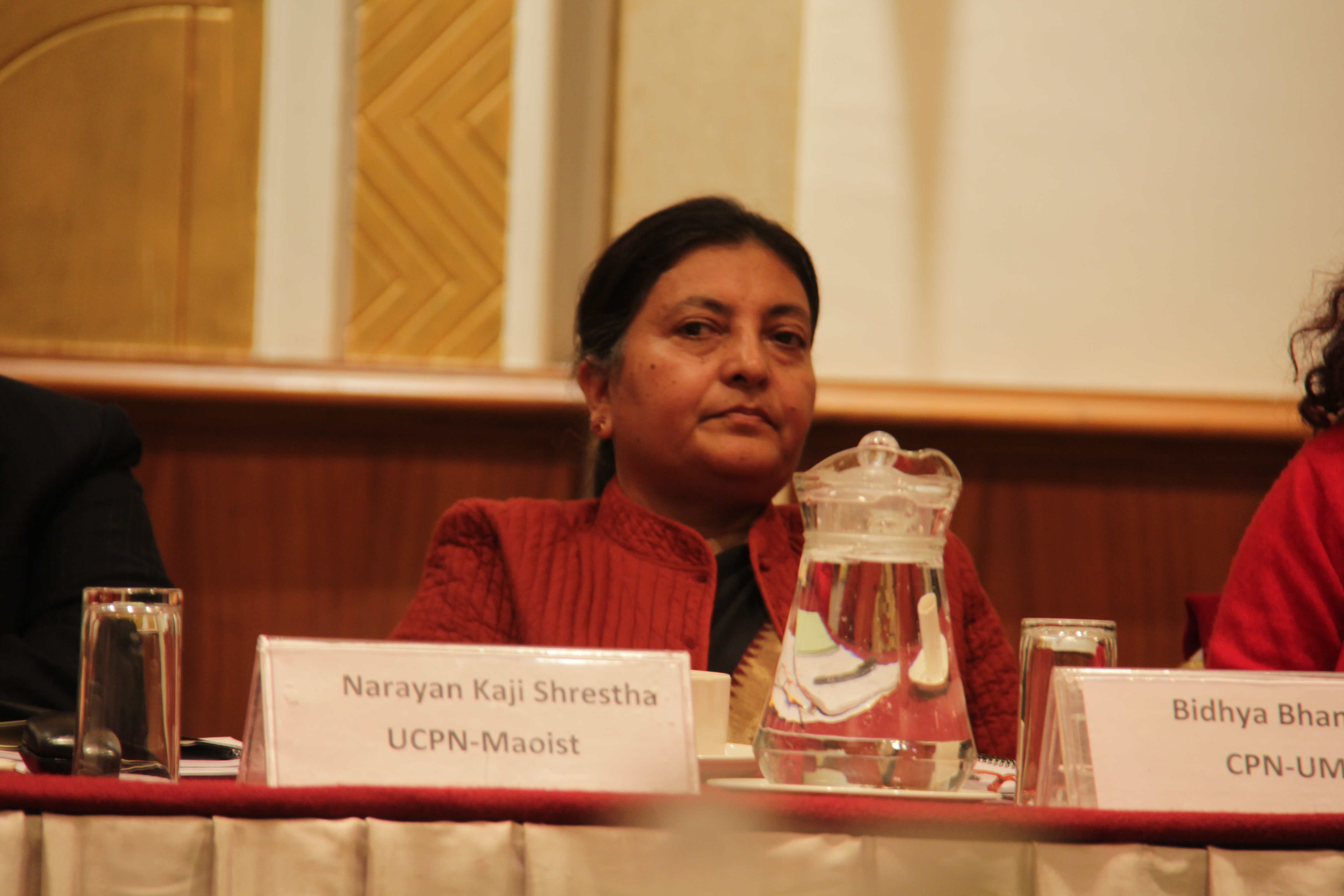
Elected by a 327 to 214 majority vote, Bhandari succeeds Ram Baran Yadav, the country’s first elected president following the dissolution of the Nepalese monarchy in 2008. Bhandari’s appointment comes on the heels of the adoption of Nepal’s new constitution, which was written with the Convention on the Elimination of All Forms of Discrimination Against Women (CEDAW) in mind. The new constitution requires that women comprise one-third of the nation’s lawmakers, as well as contribute in all government committees. It also calls for either the President or Vice President to be a woman.
A longtime political activist and women’s rights advocate, Bhandari entered parliament in 1993. In 2009, Bhandari accepted the position of the country’s first defense minister, serving until 2011. Bhandari’s presidential election undoubtedly marks a milestone in Nepal.
Bhandari, who actively pushed to secure women’s rights under Nepal’s new constitution for the last seven years, has vowed to continue fighting for minority and women’s rights in the country.
Media Resources: BBC 10/29/15; NPR 10/29/15; The Guardian 10/28/15;
Over the last six years, about 1,000 police officers in the United States lost their badges because of sexual misconduct, according to an investigation by the Associated Press. That amounts to an officer being fired for sexual misconduct nearly every other day.
The AP report examined police decertification records from 41 states between 2009 and 2014 to determine how many cases fit the Department of Justices’ standard for sexual assault:
“AP determined that some 550 officers were decertified for sexual assault, including rape and sodomy, sexual shakedowns in which citizens were extorted into performing favors to avoid arrest, or gratuitous pat-downs. Some 440 officers lost their badges for other sex offenses, such as possessing child pornography, or for sexual misconduct that included being a peeping Tom, sexting juveniles or having on-duty intercourse.”
The investigation did not include data from nine states and the District of Columbia, because they either did not decertify any officers or refused to provide this information to the AP. Decertification is an administrative process that results the loss of the ability to serve in law enforcement. This process varies by state. California and New York, two of the most populous states, are also not included in these findings, as they have no statewide system to track decertifications. Federal officers were excluded as well. Because of these gaps, these numbers are most certainly an undercount.
Chief Bernadette DiPino of the Sarasota Police Department in Florida said, “It’s happening probably in every law enforcement agency across the country… It’s so underreported and people are scared that if they call and complain about a police officer, they think every other police officer is going to be then out to get them.”
The report comes as the trial of Daniel Holtzclaw—the former Oklahoma City police officer facing 36 counts including rape, sexual battery and forcible oral sodomy—is set to begin this week. At least 13 African American women have come forward against Holtzclaw, who seems to have targeted these women because they are Black. Despite being charged with these heinous crimes and abusing his authority in the community, Holtzclaw was released on bond, which was later revoked when he let his GPS monitored ankle bracelet battery go dead. Black Women’s Blueprint, a national Black feminist organization, has called this a part of a history that “devalue[s] Black women as legitimate victims of rape and assault.”
In May, the African American Policy Forum (AAPF) released a report, “Say Her Name: Resisting Police Brutality Against Black Women,” highlighting stories of Black women who have been killed by police, and studying forms of police brutality, such as sexual assault, that are often disproportionately experienced by women.
“Although Black women are routinely killed, raped and beaten by the police, their experiences are rarely foregrounded in popular understandings of police brutality,” explains Kimberlé Crenshaw, AAPF founder and director. “Yet, inclusion of Black women’s experiences in social movements, media narratives and police demands around policing and police brutality is critical to effectively combating racialized state violence for Black communities and other communities of color.”
Media Resources: The Associated Press 11/1/15; Vox 11/2/15; Feminist Newswire 11/20/14; Black Women’s Blueprint 9/22/14; AAFP Report May 2015
Futures Without Violence, a nonprofit working to end violence against women and children around the world, has launched an innovative project that aims to prevent sexual harassment of restaurant workers.
Nearly 80 percent of women restaurant employees have been sexually harassed at work at least once, by either a coworker or customer, and more than half report being harassed at least monthly.
Futures Without Violence teamed up with New York restaurants Amali and Colors, anti-violence organization CONNECT and advocacy group Restaurant Opportunities Center United (ROC) to create a series of trainings, workplace policies and educational materials for employees with the goal of preventing workplace sexual harassment.
“The restaurant industry is rife with sexual assault and harassment, and occupations that rely on tips, like waitressing, can put women in compromising positions in which they are forced to choose between putting up with harassment and earning a decent wage,” said Catherine Barnett, executive director at ROC-New York.
Women make up about 52 percent of restaurant employees, but are 66 percent of tipped workers—which means that, in many cases, they earn less than minimum wage and subsist on tips, so must endure sexual abuse from customers just to earn a meager income (an estimated $9 an hour, including tips).
“As employers, it’s our duty to take a proactive role in preventing and addressing this issue, and recognize its impact on individuals and the workplace overall,” said James Mallios, managing partner at Amali Restaurant. “The costs of implementing these programs are far outweighed by the benefits of improved employee safety, retention, productivity and overall performance.”
During its 15-month pilot project, the coalition plans to develop a set of practices and procedures that can become the industry standard for handling on-the-job sexual misconduct.
Media Resources: Futures Without Violence 10/29/2015; ROC United 10/17/2014
Just five years since Colorado introduced an innovative family planning initiative providing little to no-cost long-acting reversible contraceptives (LARCs) to low-income women in 68 clinics, the Colorado Department of Public Health and Environment announced a 48 percent decline in teen births and abortions statewide, effectively linking access to affordable reproductive care to low rates of unintended pregnancy.
Since 2009, the Colorado Family Planning Initiative, a five-year pilot program funded privately with a $25 million grant from the Susan Thompson Buffett Foundation, has provided more than 30,000 intrauterine devices (IUDs) and other LARC methods including hormonal implants to low-income and uninsured women across the state. According to data compiled by the Colorado Department of Public Health, both births and abortions among women aged 15-19 have been cut in half, decreasing by as much as 48 percent between 2009 and 2014.
Women ages 20-24 are seeing drops, too. In the last five years, the birth and abortion rates within their age group dropped by 20 percent and 18 percent respectively. Moreover, the program has saved Medicaid approximately $79 million in birth-related costs between 2010 and 2012, meaning for every dollar spent, the initiative has returned $5.85 back into the social safety net.
Unfortunately, some remain unconvinced of the initiative’s clear benefits. In May, the Colorado Senate voted down a bill appropriating $5 million for the program, funding that would have sustained the program beyond the previous grant’s July expiration date. Several organizations have since pledged roughly $2 million to fund the program until June next year.
But according to Colorado’s chief medical officer and health department executive director Dr. Larry Wolk, the program’s effectiveness is undeniable. Given three-fourths of Colorado’s teen pregnancies are unintended, the need for increased access to affordable contraception could not be more critical.
“This initiative continues to prove its effectiveness,” said Wolk. “Thousands of low-income Colorado women now are able to pursue their dreams of higher education and a good career and choose when and whether to start a family.”
Media Resources: National Partnership for Women and Families Women’s Health Policy Report 10/26/15; Feminist Newswire 8/12/14; RH Reality Check 4/30/15; Colorado Department of Public Health & Environment 10/21/15
According to a newly-finalized written policy, Indian Health Services (IHS)-run facilities must provide Plan B One-Step or its generic equivalent to American Indian women without a prescription regardless of age, expanding access to critical emergency contraception to Native American women across 566 federally-recognized tribes nationwide.
Prior to IHS’ most recent policy, American Indian women seeking emergency contraception faced significant obstacles. Though the FDA lifted prescription and age requirements on Plan B in 2009 and 2013, a 2014 survey found IHS-run pharmacies frequently denied emergency contraception to Native American women on those grounds, requiring American Indian women seeking Plan B to visit clinics and urgent care facilities and endure medically unnecessary consultations in order to obtain the medication. A 2015 similar survey conducted by Sen. Barbara Boxer (CA-D) and staff yielded comparable results.
Timely dispensation of emergency contraception is critical. Medications like Plan B inhibit ovulation by delivering a high dose of hormones used in birth control pills to prevent pregnancy. Though emergency contraception can be taken up to five days after insemination, such drugs are most effective the sooner they are administered. For Native American women especially, improved access to emergency contraception is particularly important. According to the U.S. Department of Justice, 1 in 3 American Indian and Native Alaskan women will be raped in their lifetime, more than twice the rate faced by other women in the United States.
ACLU Legislative Counsel Georgeanne Usova applauded the move, but underscored the need for further action moving forward.
“The updated policy IHS released today is a long overdue and important step toward ensuring that Native American women have equal access to emergency contraceptive care,” said Usova. “The policy must now be rigorously enforced so that every woman who relies on IHS for her health care can walk into an IHS pharmacy and obtain the services she needs and is legally entitled to.”
Media Resources: National Partnership for Women and Families 10/19/15
Hundreds gathered this week in Washington, DC, to see Ms. magazine co-founder Gloria Steinem in conversation with Congresswoman Maxine Waters (D-CA). This was the first stop of many on Steinem’s speaking tour for her new book, My Life on the Road.
Throughout the evening, both Steinem and Waters encouraged audience members to call themselves feminists, embrace the label, and take ownership of it. When Waters shared the story of when she was told she couldn’t be a feminist because it was “a white woman’s thing,” Steinem responded, “to me, black women invented feminism disproportionately.” Both were met with marvelous applause.
Much of the conversation that followed centered on organizing and voting. Using a parable—“For want of a nail the horseshoe was lost, for want of a horseshoe the horse was lost, for want of a horse the battle was lost”—Steinem wove a narrative about the political consequences of not voting, from Harriett Woods’ U.S. Senate loss in 1982 to the 2000 presidential election, and beyond. In short, she said, every person’s vote always matters: “Due to the absence of just a few votes [in 1982], each of us can count the differences in our lives, our nation, and our world… Voting isn’t the most we can do. It’s the least we can do. Indeed, the voting booth is the one place on earth where the least powerful and the most powerful are equal.”
Throughout the question and answer session toward the end of the event, Steinem and Waters heard from passionate activists working to make a difference locally and nationally. In response to a question about how to encourage women to stand up and #ShoutYourAbortion, Steinem said she could not expect women to do what she herself had not. She then went on to read the moving dedication of My Life on the Road, written to the English doctor who performed her abortion back in 1957.
Asked what she’s most proud of, she replied, “I always say I haven’t done it yet.”
Media Resources: Cosmopolitan 10/30/14; ABC News 10/23/15
Just three days after Texas officials announced their plan to cut Medicaid funding to Planned Parenthood, investigators from the state’s Health and Human Services Commission (HHSC) raided a handful of the women’s healthcare provider’s clinics, demanding patients’ records and billing details as well as employee information.
Last week, state officials from the Texas Office of the Inspector General (a division of the HHSC led by Stuart Brown) served subpoenas to Planned Parenthood facilities in Brownsville, Dallas, Houston and San Antonio and ordered to surrender documents – including Medicaid records dating back to 2010 – to authorities within 24 hours. Though it has not been confirmed, local sources report officials are investigating suspicions of misspending of federal Medicaid funds on the part of the women’s healthcare provider.
On Monday, in a letter to Planned Parenthood affiliates in Texas, the HHSC and Inspector General Brown (with support from Gov. Greg Abbott) announced the state will cancel contracts between Medicaid and the women’s healthcare provider, accusing the organization of no longer capably “performing medical services in a professionally competent, safe, legal, and ethical manner,” citing surreptitiously recorded videos of Planned Parenthood facilities which falsely claim to depict the trafficking of fetal body parts. Should Texas proceed in withdrawing Medicaid funding to Planned Parenthood, the state will not only be in violation of federal law, but it will also cut off access to quality reproductive healthcare to tens of thousands of Texas women.
“Governor Abbott’s political grandstanding is on full display this morning,” said executive director of Planned Parenthood Votes Yvonne Gutierrez Thursday. “Representatives from the Texas Office of Inspector General showed up at Planned Parenthood centers in Brownsville, Houston, Dallas and San Antonio looking for an excuse to take healthcare away from thousands of women and men who rely on Planned Parenthood for preventative care.”
An avalanche of anti-abortion legislation and state and federal investigations has descended on Planned Parenthood since the release of several deceptively edited and repeatedly debunked videos by the anti-abortion group Center of Medical Progress (CMP) and its leader David Daleidan. To date, all investigations – including those carried out in Texas – have found no evidence of wrongdoing on the part of Planned Parenthood.
On Thursday, Ken Lambrecht, Capital Region Chief Executive Officer of Planned Parenthood Texas fingered the attacks on Texas clinics as “politically motivated”, dismissing the action as “a fishing expedition.” Officials from the HHSC have declined to comment.
Media Resources: The Guardian 10/22/15; Feminist Newswire 10/28/15;
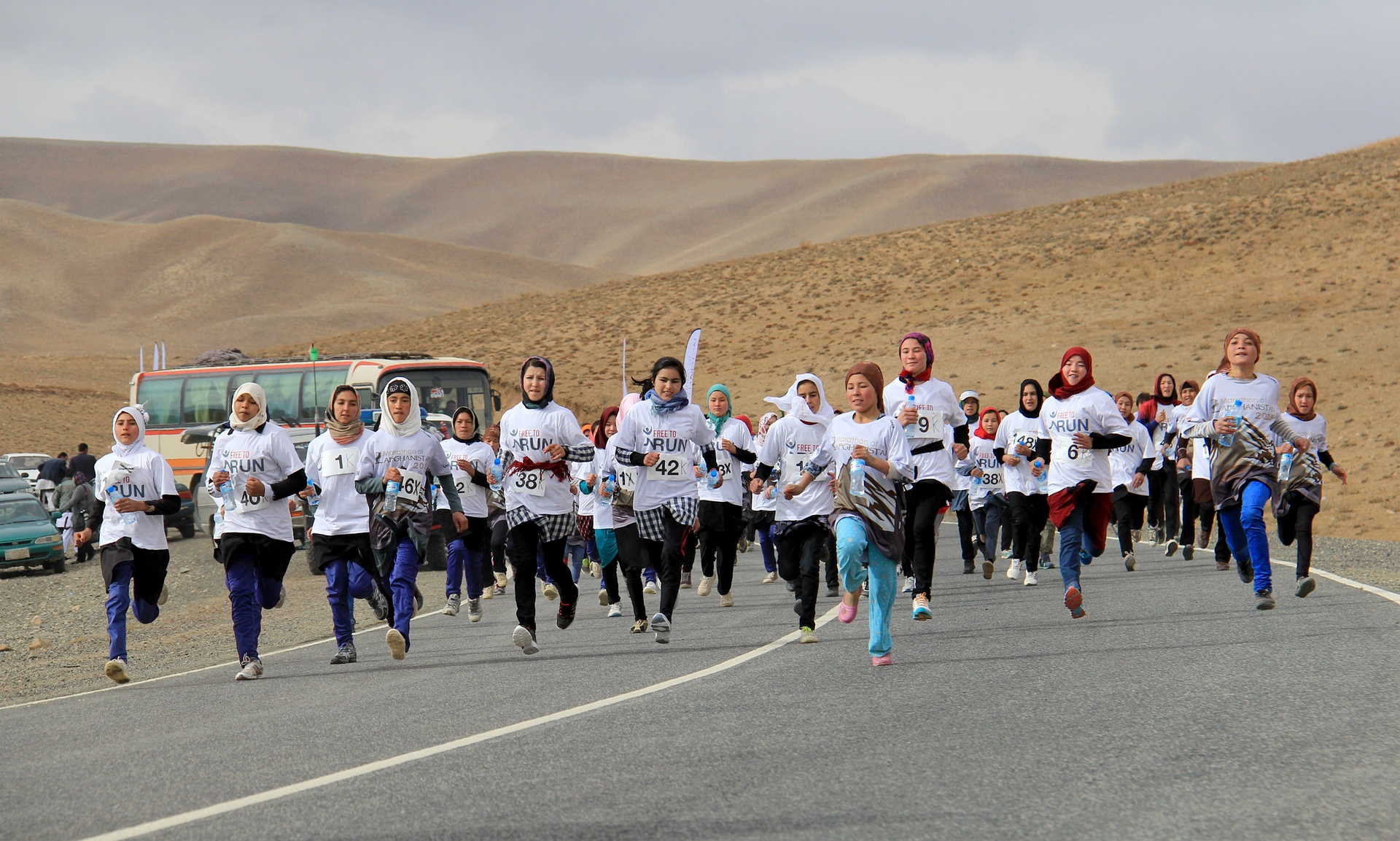
Afghanistan hosted an international marathon this month- the first marathon ever to be held in the country. Among the runners were several brave women, paving the way for women and girls.
The marathon was held in Bamyan province, located in central Afghanistan. More than 60 amateur and professional runners participated, including people from the United States and Canada, as well as runners from Afghanistan. Although about a dozen local schoolgirls participated in the shorter 10 kilometer race, only one Afghan woman ran the entire marathon.
Zainab, who is 25, spoke out about the her experience running in the marathon and the backlash she faced. “It is not easy for a woman to leave the house by herself, let alone running outside,” Zainab said, admitting that she faced a lot of street harassment during the year she spent training for this event.
“The children were stoning us, people shouted bad words like ‘prostitute’, [asked her] ‘why you don’t stay at home?'” But Zainab insists that her resolve was not shaken. She says that she hopes more young girls are encouraged to take up running.
“I have plans for the future- I have goals,” Zainab said. She spoke of her time visiting women in colleges in Afghanistan, “The girls- all of them are really quiet, and they don’t laugh. I invited them to laugh, to be happy.”
Afghan women have participated in marathons in foreign countries before, but this was the first time an Afghan woman ran in a marathon within her own country. The organizers hope that programs like this will show another side of Afghanistan in the media. Zainab is hopeful as well:
“I think little by little, I’ll bring change.”
Media Resources: Radio Free Europe 10/29/15; RH Reality Check 10/28/15; The Guardian 10/25/15;
National shock and outrage followed the spread of cellphone footage on Monday showing Deputy Ben Fields violently attacking a female student for allegedly using her cell phone during class. Since then, Deputy Fields has been fired, and both local and federal investigations have been launched. Although these actions have been taken, charges are still being pressed against two students.
Niya Kenny is one of the students arrested who is facing charges. Kenny became upset at the treatment of her fellow classmate after Deputy Field flipped her over in her desk and dragged her to the front of the classroom. Kenny attempted to stand up for the girl, and was also arrested for “disrupting the school.” Kenny has been released on a $1,000 bail.
Officers with the school resource program deny and injury to the student involved, but the student’s attorney has reported that she suffers from back and neck injuries, has a cast on her arm, and a bruise on her head. A petition is being circulated to drop all charges against the two Spring Valley High School students.
Deputy Fields is no stranger to complaints about his actions and tactics as a school resource officer. He is set to stand trial in January 2016 for a lawsuit filed by a former student who alleges that Fields “recklessly targets African-American students with allegations of gang membership and criminal gang activity.”
There has been a spotlight on the mistreatment of black women and girls recently, spearheaded by Kimberlé Crenshaw and the African American Policy Forum (AAPF). The AAPF released a report last year titled “Black Girls Matter: Pushed Out, Overpoliced, and Underprotected,” which explains how girls of color face harsher school discipline than their white peers. The data collected reveals, among other things, that nationally black girls were suspended a startling six times more than white girls, while black boys were suspended three times as often as white boys.
Media Resources: NY Daily News 10/28/15; CNN 10/28/15; Change.org Petition; Feminist Newswire 10/27/15;
Monday’s destructive earthquake in Afghanistan has left over 340 people dead in the northeastern provinces of Afghanistan and neighboring Pakistan. Among the dead were 12 school girls who perished in a stampede, as they tried to flee their school in Taloqan, located in Takhar province of Afghanistan. Even as the girls attempted to evacuate the building, the rooftop of the school collapsed.
Officials in Afghanistan and Pakistan expect the death toll to rise. As of Tuesday, the office of Afghan President Ashraf Ghani reported that as many as 115 people were dead and more than 500 injured in nine Afghan provinces, as well as in the capital city of Kabul. Hundreds more have been reported dead in Pakistan where the affected regions are more populous than in the mountainous areas of Afghanistan that were hit.
The quake, which struck Afghanistan in the Hindu Kush Mountains, registered at a magnitude of 7.5 and sent shockwaves as far as New Delhi, India. Communications were down in many of the rural areas affected, and Unicef is reporting that some of the areas hit are either inaccessible or difficult to reach. The Afghan government is conducting an assessment of the damage caused by the quake and has announced that it will assist victims and conduct rescue operations.
There is severe infrastructural damage in several Afghan provinces, including in Kabul where many people have lost their homes. Afghans are also in need of food, water, and other emergency relief services. White House spokesman Josh Earnest told reporters that the US will provide support to Afghanistan and Pakistan as needed.
The 12 school girls who were lost to the quake were laid to rest today in an emotional gathering in Takhar.
Media Resources: Office of the President of Afghanistan 10/27/15, 10/26/15; Radio Free Europe/Radio Liberty 10/27/15; Unicef 10/27/15; Reuters 10/26/15
New York Governor Andrew Cuomo just signed into law several bills strengthening protections for women in the workplace as well as victims of sex trafficking, sexual harassment, and domestic violence in an effort to further women’s equality in the state.
The new laws close loopholes that had allowed employers to have policies against sharing wage information and increases the amount of damages that can be collected in cases of wage theft; expands protections against workplace sexual harassment to include all employers, not just those with more than four employees; and allows recovery of attorneys’ fees by successful plaintiffs in sex discrimination in employment and credit cases. One of the bills now requires employers to provide “reasonable accommodation for pregnant employees,” thus adding protections for women workers from pregnancy discrimination. In addition, the bills package includes provisions to end housing discrimination against victims of domestic violence and increases penalties against sex traffickers.
The original package of bills, called the Women’s Equality Act, had also contained legislation codifying into law the Supreme Court’s 1973 decision Roe v. Wade and ensuring women in New York access to abortion services within 24 weeks of pregnancy or when necessary to protect her life, but was ultimately defeated and ruled “not germane” on a Senate vote of 32-30.
Despite the notable exclusion, NOW NY President Sonia Ossorio applauded Wednesday’s signing. “These anti-discrimination bills address key challenges that span a woman’s life,” said Ossorio. “We are leveling the playing field for women at work and improving the lives of families at home.”
But according to Dina Bakst, co-founder of A Better Balance, an organization that champions legislation to achieve a healthy work-life balance for families across the country, women still have a long road ahead. “We still have our work cut out for us to ensure full women’s equality across the state,” said Bakst, “but this huge step, years in the making, will make an enormous difference for women and families in New York.”
Media Resources: New York State Press Release 10/21/15; A Better Balance Press Release 10/21/15
In the latest incident of violent anti-abortion extremism, an intruder wielding a hatchet ripped through a Planned Parenthood in Claremont, New Hampshire last week destroying telephones, medical equipment, computers and plumber fixtures, resulting in “significant” damage including flooding. According to Claremont law enforcement, a suspect, described only as a juvenile, was apprehended at the scene.
Wednesday’s act of clinic violence marks the second in as many weeks at the Planned Parenthood of Northern New England. On October 6, vandals spray-painted the exterior of the Claremont facility with hate speech directed at the clinic’s health care providers. The connection between the two incidents, if any, remains unclear. The clinic, which has operated without incident for 18 years, offers a range of healthcare services for both men and women and does not provide abortion services.
Women’s reproductive healthcare providers have experienced a spike in acts of clinic violence and vandalism since the release of several fraudulent “sting” videos surreptitiously recorded by David Daleidan and the Center for Medical Progress (CMP), an anti-abortion group. The videos, which falsely claim to depict the trafficking of fetal body parts by Planned Parenthood, have been debunked repeatedly. Nonetheless, Planned Parenthood clinics nationwide have suffered arson, destruction of security cameras, removal of signage and graffiti at the hands of anti-abortion extremists in the months since their public distribution.
“This illegal activity is the second incident in New Hampshire since the recent escalation of attacks against Planned Parenthood, “said Jennifer Frizzell, Planned Parenthood Northern New England’s vice president for public policy. “These acts have no place in New Hampshire.”
In a statement on Wednesday, New Hampshire governor Maggie Hassan called the vandalism “an attack on the fundamental right of women to access health care” and challenged communities statewide to stand up “against those who would undermine a woman’s right to make her own healthcare decisions.”
“Planned Parenthood provides critical primary and preventive health care services – including cancer screenings, birth control and STD testing – and access to these services is essential to the economic security and vitality of our families,” said Hassen. “It is long past time to end extreme attempts to block access to critical health services for women.”
Planned Parenthood clinics have been under attack across the country in recent months. Last month a reproductive health clinic near Spokane, Washington was set on fire in what was determined by police as an arson. Proceeding this attack two Louisiana clinics suffered property damage when a unidentified perpetrator doused the construction site of a New Orleans Planned Parenthood with gasoline while in nearby Metairie, and a suspect allegedly removed signage from a local abortion clinic. And in March, a trespasser destroyed Mississippi’s Jackson Women’s Health Organization’s security cameras and power generator.
In a new report released last week, health and safety experts urged policymakers to consider the growing influence of US politicians in their electorate’s most personal and private spaces: exam rooms.
Compiled by the National Partnership for Women and Families in collaboration with the Law Center to Prevent Gun Violence, the National Physicians Alliance (NPA) and the Natural Resources Defense Council (NRDC), the report, entitled “Politics in the Exam Room: A Growing Threat”, details how political influence has adversely affected the management of healthcare in the United States by highlighting three critical areas of concern: toxic exposure, gun safety and reproductive health. Each organization examined the “politically-motivated” restrictions affecting their particular area of expertise, warning of the potentially dangerous consequences of recent legislation protecting the fracking industry, “gag rules” to prevent physicians from talking to their patients about gun safety and TRAP laws.
“Quality health care must be based on evidence,” said Debra L. Ness, president of the National Partnership for Women and Families. “Laws that put the words of politicians into the mouths of health care providers or mandate medically unnecessary procedures are outrageous and costly in every way.”
The report concludes with a short list of recommendations urging lawmakers to “reject or repeal” legislation that encroaches on the patient-provider relationship or requires physicians to defy ethical standards and practices. It also urges physicians and their patients to speak out in opposition of said policies which “undermine patient-centered care” and allow lawmakers to abuse their authority.
According to Ness, “the record number of abortion restrictions” affecting women’s access to reproductive healthcare alone is a call to action. Since 2010, more than 280 abortion restrictions have been adopted by states like Arizona, Ohio and Texas, forcing patients to undergo medically-unnecessary procedures, endure biased and misleading counseling and suffer delays in their care.
“This kind of ideological encroachment on medical care must end,” said Ness. “Women deserve ready access to high-quality, evidence-based health care, free of politics and ideology. It’s past time that politicians exit the exam room.”
Media resources: The National Partnership for Women and Families 10/14/15; Feminist Newswire;