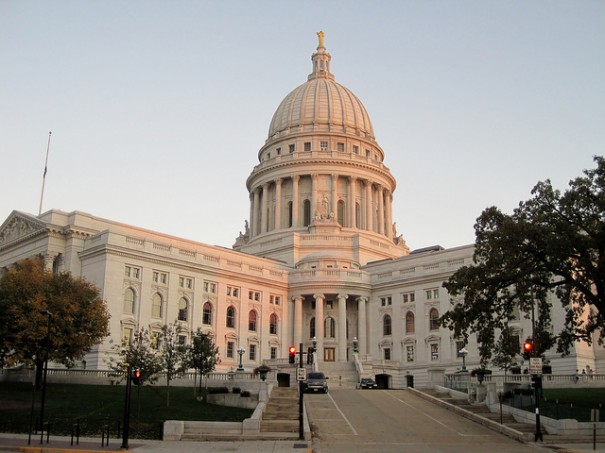
Last night, dozens of activists gathered outside the Supreme Court for a candlelight vigil calling for an end to anti-abortion terrorism.
The vigil, hosted by Reproaction, included representatives from NARAL Pro-Choice America, Planned Parenthood, the Feminist Majority Foundation, GetEQUAL, the National Council of Jewish Women, and others.
Representatives Jan Schakowsky (IL) and Mike Quigley (IL) joined the crowd and spoke of the need for abortion access and an end to the dangerous anti-choice rhetoric. Schakowsky recounted how she “has never seen such a blatant attack on women’s health and women’s reproductive rights on abortion.”
Erin Matson, co-founder and co-director of Reproaction also gave an impassioned speech: “Anti-abortion terrorism and the tolerance to it in the United States – for far too long we’ve tolerated a poisonous rhetorical climate.” Speakers called for a renewed dedication to ending clinic violence and urged activists to organize to preserve access to comprehensive women’s healthcare, including abortion and birth control.
The vigil comes days after the shooting in a Colorado Springs Planned Parenthood clinic that killed three and injured at least nine.
There will also be a Planned Parenthood-led national day of action on Saturday, December 5th. Stay tuned for details!
The Saudi monarchy has been widely criticized by international human rights organizations for a lack of equal rights for women. Saudi Arabia has also been heavily criticized by the absolute absence of freedom of speech and religion. It is the only country in the world where women are still not allowed to drive and must cover themselves in black from head-to-toe. Women must also ask a male member of the family to travel, leave the house, work, or marry.
Despite the many limitations caused by these patriarchal restrictions, the participation of Saudi women in politics is considered a step forward for women and for the defenders of women’s rights. The municipal councils have limited responsibilities but also approve budgets, suggest planning regulations, and oversee urban and development projects.
Nouf al-Sadiq, a Saudi woman, believes that women’s participation in politics “is an important step towards creating greater inclusion within society.” Muna Abusulayman, another Saudi citizen believes that women’s participation in politics “will bring a female point of view, demanding certain amendments to laws that are unfavorable towards women.”
In 2011, the now deceased King Abdullah granted women some opportunities for political participation. In 2013, King Abdullah also issued a decree mandating the Consultative Council, a body that advises the King and the cabinet, be comprised of at least 20% women.
According to the Saudi electoral commission, about 7000 people are currently running for seats on 284 municipal councils. Only a small percentage of Saudi women so far have signed up to vote in elections. Of the total population of women, 131,000 women compared to 1.35 million or 10% are registered to vote in December this year.
Media Resources: CNN 11/30/15, 8/23/15; Al Jazeera 8/20/15, 3/2/14
In the United States, women’s groups join in the international 16 Days of Activism Against Gender-Based Violence. This public awareness of the need to end sexual assault and violence, which is also rampant in the United States, is being marked by a massive social media campaign and global online vigil to ask President Obama to stand with women and girls raped in conflict. Currently, the Helms Amendment and the Geneva Conventions are being interpreted extremely narrowly by the United States government so that U.S. is not providing comprehensive humanitarian aid, including the provision of abortion, to victims of rape and conflict.
“We hear the cries for help from countless women and yet, the largest provider of humanitarian aid has turned a deaf ear to the cries from raped women seeking comprehensive reproductive health services, including the provision of abortion. This is causing unimaginable suffering and even death to women and girls around the world,” says Eleanor Smeal, President of the Feminist Majority Foundation.
Afghanistan marked the International Day for the Elimination of Violence Against Women and begun participating in the worldwide 16 Days of Activism Against Gender-Based Violence, which is being called in Afghanistan “Peace from Home to the World.” During the launch day’s event, which was attended by government officials, including First Lady Rula Ghani and women’s rights activists, speakers expressed their commitment to ending violence against women.
First Lady, Rula Ghani gave a speech on ending violence against women and supporting women by stating that “war often leads society towards violence and this violence is in violation of human dignity. Women who have raised generations should be provided with a safe environment in which to live.”
Ahmad Zia Massoud, the special envoy to President Ashraf Ghani, also pointed that violence against women in Afghanistan is a serious problem and obstacles in securing women’s rights must be removed. “All of us should remove obstacles to secure women’s right. Groups that want to use violence as a tool for their personal interest are horribly misguided.”
President Ghani’s message was read by presidential adviser, Malalai Shinwari, “the recent incident of a woman being stoned to death and the incident of a Ghor woman being lashed to death for running away from home shows graphically that we must fight violence against women.”
The Minister of Women’s Affairs Dilbar Nazari and other delegates said that although there had been some improvement in the country during the tenure of the past government and the current government, the problem of violence against women is very serious and instead of just issuing statements, government must take practical steps. “Currently there are cases of violence registered in Kabul and big violations in the provinces.” She continued on the positive note saying “there are many women seeking justice for women victims.” In other words, a large Afghan women’s movement is seeking an end to violence against women and growing in numbers and influence.
One of the participants told TOLO News that, “what is important today is our officials showed their commitment to the fight against violence against women, which hopefully will decrease in the country.” Other delegates argued that the National Unity Government needs to support women during this sixteen day period and put an end to the problem.
The scathing 2-1 ruling states that this kind of targeted restriction on abortion providers is unconstitutional because it lacks any basis to suggest that it improves safety at clinics. In his decision, Judge Richard Posner (a Reagan appointee) dismantles the argument for implementing onerous anti-abortion laws under the guise of protecting women’s health:
“Some of them proceed indirectly, seeking to discourage abortions by making it more difficult for women to obtain them. They may do this in the name of protecting the health of women who have abortions, yet as in this case the specific measures they support may do little or nothing for health, but rather strew impediments to abortion.”
These laws, known broadly as targeted regulation of abortion providers (TRAP laws), have become common practice for conservative lawmakers looking to restrict abortion access without banning the procedure outright. Posner’s opinion reinforces that the Wisconsin law “cannot be taken seriously as a measure to improve women’s health,” adding that the evidence of health benefits for women is “nonexistent.”
A similar case will be heard by the Supreme Court next year. Whole Woman’s Health v. Cole challenges two provisions of Texas’ omnibus abortion law, known as HB2. The first provision, which has already forced more than half of the clinics in the state to close, requires providers to secure hospital admitting privileges. The second provision forces clinics to fulfill costly, medically unnecessary ambulatory surgical center (ASC) requirements. Should the Supreme Court rule that requiring hospital admitting privileges is legal, the 7th Circuit Court ruling would be overturned.
Media Resources: Jezebel 11/24/15, US Court of Appeals Decision 11/23/15; Feminist Newswire 11/13/15
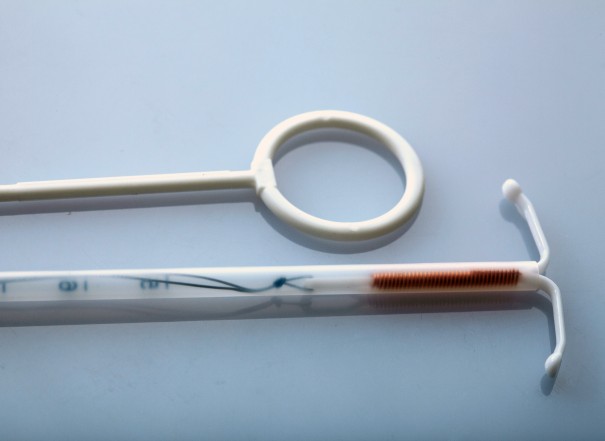
Researchers at the National Center for Health Statistics found of the 62 percent of US women using birth control between 2011 and 2013, 11.6 percent opted for LARCS with 10.3 percent choosing intrauterine devices (IUDs) and 1.3 percent preferring an implant. By contrast, only 6 percent elected to use LARCs between 2006 and 2010. In 2002, the percentage was even smaller with just 2.4 percent of women using LARCs. The birth control pill, however, still remains the most popular, accounting for 26 percent of all women employing contraceptives from 2011 to 2013. Meanwhile, alternate forms of contraception including sterilization and condoms trailed closely behind at 25 percent and 15 percent, respectively.
The benefits of LARC are undeniable. In the United States, nearly half of the 6.6 million pregnancies annually are unintended. With a failure rate of less than 1 percent, LARC methods, like the IUD, are regarded as the most effective forms of reversible birth control available today. In fact, pilot programs providing free LARCs for low-income women and teens, like that in Colorado, has seen measurable success, cutting the teen birth rate in half statewide over just five years.
LARCs have also proven the most affordable. Though the uninsured can pay upwards of $1,000 upfront for IUDs, the device makes up the cost over its 5-to-10-year use life. Fortunately, most employers (with the exception of those religiously-affiliated) are required to cover LARCs under the Affordable Care Act, putting them within reach of working women.
Media Resources: National Partnership for Women and Families 11/10/15
A survey of the Afghan people by the Asia Foundation for 2015 found that 74% of Afghans support women’s access to higher education. According to the report, women are also gaining more confidence in reporting domestic violence and are more aware of the justice system. The report revealed that “Afghan women are increasingly aware of their rights and aware of institutions to contact in a domestic conflict—rural women are more likely than urban to turn to an organization that assists them if they have a family problem.”
The report adds that “on the positive side, 2015 was a year of wins for women in Afghan politics: the cabinet now includes four female ministers and the government appointed two new female provincial governors.”
In a traditional and conservative country like Afghanistan where men frequently decide for women and give women orders about what to do and who to cast their vote for, more women now know that they should vote for themselves. The Afghan people’s survey of 2015 shows the courage of women to speak up for themselves and to express their views on voting for the person they deem better rather than being told by their male family member. According to the survey, 52% of women respondents and 48% of men said women should decide and vote for themselves. Although this figure has decreased from 58% for women and 54% for men in 2014 (an Afghan election year), there is an optimism that women are capable to make their ways and to not give up to the circumstances they are facing.
Women have also been making strides in the workforce. A higher percentage of Afghans reported the positive contribution of women to the household income. The number of Afghans has steadily increased from 13.6% in 2009 to 22.6% in 2015. The number of women contributing to the household income ranges from almost 65% in the Central parts of the country to 4.8% in other parts.
Although the survey shows progress in some areas, it has also highlighted some negative issues. For instance, the survey reports that the Afghan optimism about the overall direction of the country declined to the lowest point in a decade. 37% of respondents think the country is headed in the right direction, down from 55% in 2014. However, the analysis of the report also states that “it is a time of historic transition in Afghanistan, and the new government is inevitably grappling with simultaneous security, political, and economic challenges.”
The report somehow justifies the low mood and adds, “Afghans are particularly concerned about security, and the proportion who fears for their personal safety is at the highest point in the past decade.”
Unemployment is another problem highlighted throughout the report. Young Afghans have also been protesting in major cities demanding job opportunities. However, the Afghan President Ashraf Ghani is aware of the problem and has met with a group of young Afghans in his office last week. He spoke of the projects that will provide job opportunities to the young Afghans.
The Asia Foundation has been conducting the survey of the Afghan people for the past 11 years. This year’s survey polled 9,586 Afghans, 49.4% of which were female respondents. The margin of error for the survey was +/-1.6%. The 939 expert Afghan male and female interviewers conducted face-to-face interviews in all of 34 provinces, representing 14 ethnic groups, including insecure and physically challenging environments. The total respondents of the survey consisted of 18% urban households and 82% rural households, which almost reflects the geographic composition of Afghanistan.
Media Resources: The Asia Foundation, A Survey of the Afghan People Report 11/17/15
On the night of October 26, EMW Women’s Surgical Center in Louisville suffered a broken window when an unidentified man bolted past protestors across the street and threw his body into the clinic’s window. The clinic’s executive director, Anne, who withheld her name for security reasons, said following the incident, the man walked away calmly, leaving the window in pieces. Just three weeks later on November 11, surveillance cameras captured a male perpetrator kneeling and praying in front of the clinic. According to Anne, forty-five minutes later, the man returned, this time with “a blanket over his head” and in a matter of minutes, hurled a rock through the office’s window before walking away. Louisville police report the clinic sustained some $1600 in damage in the two incidents combined.
For now, Kentucky’s EMW have affirmed their commitment to providing reproductive care and abortions services to the women of Louisville. “We’re not angry, we’re not afraid, we’re just really sad that the mentality out there isn’t more understanding and compassionate for women,” said EMW’s Anne. “They’re not going to intimidate us.”
The Iranian government has appointed its first woman ambassador since the Islamic revolution in 1979. Marzieh Afkham is appointed to serve her country in Malaysia. She was previously working as the Spokesperson to the Ministry of Foreign Affairs, where she was the first woman to ever serve as the spokesperson for the Ministry. Ms. Afkham has been working in the diplomatic service for 30 years in various posts.
Ms. Afkham’s appointment has opened the arena for other women to aspire to such positions. The news about her appointment was well covered by many local as well as a few international mediums. Ms. Afkham has also been a strong supporter of human rights especially women’s rights. According to the state news agency IRNA, she has praised the current Foreign Minister, Jawad Zarif for his “trust in women and for the courage to take such a decision.”
IRNA reports that during a tribute to the 50 year old career diplomat, Mr. Zarif said, Ms. Afkham has “carried out her duties for two years with dignity, bravery and particular insight.”
After the current president, considered a moderate, Hassan Rouhani came to Office, he called on ministers to appoint women to key posts and promised that he will fight against discrimination. His predecessor Mahmoud Ahmadinejad, the hardliner, appointed Marzieh Vahd Dastjerdi as the first female minister to the cabinet in 2009. She was appointed to the health ministry. Ms. Afkham is only the second woman ambassador in the history of Iran. Mehrangiz Dolatshahi was the first ambassador who served in Denmark in 1976. She held the position until the revolution in 1979.
Although women in Iran hold key positions, including the parliament and the cabinet, they cannot run for president, cannot attend male sports events, and has unfriendly laws to women in cases of marriage, divorce, and inheritance. Women in Iran are also not allowed to serve as judges.
Media Resources: The Guardian 4/14/15; France24 11/9/15
On Thursday, music-streaming service Spotify announced the launch of a broad parental leave program that includes six months’ leave for new mothers and fathers.
Effective immediately, the Swedish-born company is offering full-time employees time off with 100 percent pay, which can be broken up into three separate periods and taken within the first three years of a child’s life (employees who become parents by birth, adoption or surrogacy are all eligible). The policy also extends to employees who became parents as far back as 2013. On top of that, the company is offering a one-month “welcome back” program where new parents can ease back into their work lives with part-time hours and the option to work from home.
According to a statement from Katarina Berg, Spotify’s chief human resources officer, the parental leave policy was created with Swedish cultural values in mind. “This policy best defines who we are as a company, born out of a Swedish culture that places an emphasis on a healthy work/family balance, gender equality and the ability for every parent to spend quality time with the people that matter most in their lives.”
Spotify joins a growing list of tech companies that have announced new parental leave policies in the last year, including Amazon, Netflix and Microsoft. Some have suggested that the wave of new policies reflects the age demographic of typical tech employees, who started working in their early-to-mid 20s and are now becoming parents.
Stateside, workers’ rights organizations are applauding Spotify’s decision, but caution that the U.S. remains the only developed nation in the world that does not offer federally mandated paid family leave to workers.
“This is great news for Spotify’s employees, and a sign of the times that it joins several other companies in pulling their workplace policies out of the past,” said Vivien Labaton, co-founder and co-director of Make It Work, in a statement. “But these kind of policy changes shouldn’t just be happening in the tech industry. It’s time for our elected officials to take notice and pull America out of the past. Paid family leave is a world standard, and it’s time for America to stop failing its workforce.”
Our policymakers must take note. Company policies go a long way in influencing culture, and it’s great that some companies are leading the way on this issue. However, these companies remain a small minority. We need a universal social insurance fund like the FAMILY Act so that every working American can both provide and care for their families—new babies but also seriously ill loved ones.
Media Resources: Spotify Press Release 11/19/15; Ms. Magazine Blog 11/4/15; 8/12/15; The Guardian 12/3/14; National Partnership for Women & Families Fact Sheet
The World Economic Forum just released “The Global Gender Gap” report of 2015 that ranks the United States 28th out of 145 countries. The U.S. is ranked 28th in women vis-à-vis men in economic participation and opportunities; educational attainment; health and survival; and political empowerment. Of the 145 countries, the U.S. ranks 6th in gender gap in economic participation and opportunities, 40th in educational attainment, 64th in health and survival, and a miserable 72nd in political empowerment. Due to the widening wage gap and leadership positions, the think-tank says, the U.S. fell 8 places in 2015 to 28th compared with last year.
According to the World Economic Forum at the current rate of women gaining parity with men to close pay, education, health and political participation gaps will take 118 years. The Forum reports that in the last ten years, “an addition quarter of a billion women” have entered the global workforce. The authors also wrote that women are only now “earning what men did a decade ago.”
The Nordic countries of Iceland, Norway, Finland, and Sweden still lead with the smallest gender gaps. Ireland is the only non-Nordic country that is ranked 5th. Above the U.S. is New Zealand, 10th, Germany 11th, France 15th, and the United Kingdom ranks 18th.
A Washington state investigation into Planned Parenthood has found “no evidence” of wrongdoing on the part of the women’s reproductive healthcare provider following allegations the organization was selling or profiting from fetal tissue donations.
Washington state joins a growing list of states where probes into Planned Parenthood have failed to turn up proof of any illegal activity. This announcement, however, is particularly meaningful because Washington is one of the only two states—the other being California—where the organization offers patients the option to donate fetal tissue for scientific research.
In July, citing several deceptive and surreptitiously-recorded videos by anti-abortion group the Center for Medical Progress (CMP), Washington state lawmakers sent two letters to Attorney General Bob Ferguson requesting an investigation into the healthcare provider’s activities. The videos, which claim to document the illegal sale of fetal tissue by Planned Parenthood, have been debunked repeatedly.
Despite eight states’ investigations coming up empty, right-wing lawmakers continue to target Planned Parenthood. Following the release of CMP’s deceptively-edited “sting” videos, several congressional committees launched investigations into the organization. In September, House Republicans called Planned Parenthood President Cecile Richards to testify before the House Oversight and Government Reform Committee. Last month, House Republicans announced the formation of a select committee – this time under the jurisdiction of the Energy and Commerce Committee – in an effort to defund Planned Parenthood through budget reconciliation.
For now, Ferguson hopes his state’s findings reveal the true motivations of Planned Parenthood’s opponents. “Unfounded allegations against Planned Parenthood are troubling,” said Washington State Attorney General Ferguson in a statement. “They seek to discredit the organization and divert resources away from patient services, making it more difficult for Washington women to exercise their constitutional rights.”
Media Resources: Washington State Office of the Attorney General Press Release 11/16/15; Media Matters 8/24/15; Feminist Newswire 9/1/15, 9/29/15, 10/5/15
A new report by the World Health Organization (WHO), the UN Children’s Fund (UNICEF), the United Nations Population Fund (UNFPA), the World Bank Group and the United Nations Population Division reveals a 44 percent drop in maternal mortality worldwide since 1990, highlighting the successful efforts of the many international agencies to reduce the number of pregnancy-related deaths among women globally.
According to data compiled in Trends in Maternal Mortality: 1990 to 2015, maternal deaths around the world dipped from some 532,000 in 1990 to about 303,000 in 2015, cutting the number of women’s pregnancy-related deaths nearly in half over a quarter century. The report’s findings is good news for the all international organizations especially UN which, in 2000, pledged to reduce the global maternal mortality rate to below 70 per 100,000 live births by 2030, with no country averaging worse than 140. Of the regions analyzed, Eastern Asia made the most progress, boasting a rate decrease of 27 deaths per 100,000 live births, down from 95 in 1990. Iceland and Finland as well as Poland and Greece experienced the lowest maternal mortality at a rate of 3 per 100,000. Despite still suffering from very high numbers of pregnancy-related deaths, Sub-Saharan Africa maternal mortality rate is also down from 987 deaths per 100,000 live births in 1990 to 546 today.
Though many countries made considerable strides to improve accessibility and quality of women’s reproductive healthcare around the world, some still lag behind. North Korea, Venezuela and Zimbabwe were among 13 countries where maternal mortality increased. The United States, too, saw a rise in pregnancy-related deaths from 12 to 14 per 100,000 births over 25 years. On the other side, Afghanistan has been making tremendous progress in decreasing maternal mortality rate. The death rates decreased from 1340 in 1990 to 1100 in 2000 and to 394 in 2015. Sadly, currently Sierra Leone has the highest maternal mortality rate in the world. The maternal mortality rate in 2015 in this country accounts to 1360 per 100,000.
In a statement last week, Dr. Flavia Bustreo, WHO’s assistant director-general for family, women’s, and children’s health celebrated the gains made in women’s health regionally, but underscored the importance of continued efforts to expand care for women worldwide. “Over the past 25 years, a woman’s risk of dying from pregnancy-related causes has nearly halved,” said Bustreo. “That’s real progress, although it is not enough. We know that we can virtually end these deaths by 2030 and this is what we are committing to work towards.”
The Ohio state House yesterday voted to defund Planned Parenthood in the state, only weeks after the state Senate passed a similar bill. Legislators must now decide which bill to advance.
In a 62-33 vote mostly party line vote—with all Republicans voting ‘yes’ and all Democrats except for one voting ‘no’—the House passed legislation that would redirect Ohio Department of Health grant money from healthcare providers that perform abortions.
In the most recent fiscal year, the state provided approximately $1.3 million to 28 Planned Parenthood clinics, excluding $2.4 million in Medicaid reimbursements. While the bills passed by the House and Senate do not affect the Medicaid reimbursement, the $1.3 million it eliminates will hamper Planned Parenthood’s ability to provide a variety of services, including sexually transmitted disease testing, programs to prevent infant mortality, and breast cancer screenings.
Only 3 of the state’s 28 Planned Parenthood clinics perform abortions, and none of the state-administered grant funding goes to these services.
“Testimony given by people all around our state—from Planned Parenthood staff to community partners—demonstrated that women and men rely on Planned Parenthood. Their stories and experiences directly contradict what is being said by the legislators who support this bill,” said Stephanie Kight, President and CEO of Planned Parenthood Advocates of Ohio. “Their blatant disregard for the truth and the well-being of Ohioans is shameful. They are willing to disrupt community programs that help some of our most vulnerable citizens, all to score cheap political points. These are not the leaders that the people of our state deserve.”
The Ohio bills are the latest in a series of anti-family planning and women’s health measures introduced by Republican lawmakers to eliminate funding to Planned Parenthood following the release of a series of surreptitiously obtained and heavily edited videos by the Center for Medical Progress. Despite no evidence that there is any truth to the videos’ claims that Planned Parenthood is illegally selling fetal tissue, Republicans in several states have insisted on eliminating funding that enables millions of women, especially low-income women, to access health care.
Media Resources: The Columbus Dispatch 10/21/15; Cleveland.com 11/18/15, 11/16/15; Planned Parenthood Advocates of Ohio Press Release 11/17/15; Feminist Newswire 9/8/15
The Texas Policy Evaluation Project (TxPEP) today released a groundbreaking report on self-induced abortion. The report found that at least 100,000 Texas women have ever attempted to end a pregnancy on their own without medical assistance. These findings demonstrate that in the face of burdensome restrictions on abortions, like Texas’ onerous House Bill 2 (HB2), women will resort to self-induction to terminate their pregnancies.
The Texas law has shuttered 22 clinics, leaving only 19 clinics across the entire state, cutting women’s access to safe, legal abortion. “Women still need abortions in our communities, and many of those women take matters into their own hands. Poor Texas women are finding themselves experimenting on their bodies when abortion is supposed to be legal,” said President and CEO of Whole Woman’s Health Amy Hagstrom Miller, who is the lead plaintiff in the legal challenge against HB2. The study confirms that when women don’t have access to abortion options and accurate health information, they will use whatever options and information are available, even if those turn out to be inaccurate or dangerous.
“Every woman should be able to get safe reproductive care in her community, including prenatal care, birth control, and abortion,” continued Hagstrom Miller.
The study—performed over five weeks from December 2014 to January 2015—is the first time statistics on self-induced abortion in the general population have ever been calculated by researchers. TxPEP estimates that somewhere between 100,000 and 240,000 women age 18-49 in Texas have ever tried to end a pregnancy on their own without medical assistance. The study outlines four primary reasons why women attempted to self-induce their abortion: financial limitations to travel to a clinic or pay for the procedure, the closure of their local clinic, the suggestion from a close friend or family member to self-induce, or to avoid the stigma or shame of going to an abortion clinic, especially if they had prior abortions.
On Friday, the Supreme Court agreed to review a challenge to HB2, which threatens to close more than 75% of abortion clinics in the state and deny millions of women access to safe, legal abortion. The case, Whole Woman’s Health v. Cole, seeks to permanently block two provisions of HB2. The first provision, which has already forced more than half of the clinics in the state to close, requires providers to secure hospital admitting privileges. The second provision forces clinics to fulfill costly, medically unnecessary ambulatory surgical center (ASC) requirements. The TxPEP study suggests that self-induction may become more common should the Supreme Court uphold these provisions as constitutional.
Media Resources: Texas Policy Evaluation Project Research Brief 11/17/15; Feminist Newswire 11/13/15
On Friday, the White House’s Council on Women and Girls hosted a day-long summit focused on advancing equity and elevating the status of women and girls in the United States. The Summit also served as a venue for institutions to announce new initiatives focusing on women and girls. Unlike the previously announced My Brother’s Keeper program, the initiatives unveiled on Friday are not public-private partnerships and will receive no funding or resources from the Obama Administration.
MSNBC’s Melissa Harris Perry, the director of the Anna Cooper Center at Wake Forest University, led the event and was joined by expert panelists including Attorney General Loretta Lynch, Cecilia Muñoz of the White House Domestic Policy Council and the Ms. Foundation’s Teresa Younger. The summit introduced key strategies for addressing inequity experienced by women and girls of color. Women and girls from around the world joined the conversation via social media using the hashtag #YesSheCan.
At the event, the Collaborative to Advance Equity Through Research—a coalition of American colleges, universities, and research organizations led by Wake Forest University—announced an $18 million funding commitment to support research efforts about women and girls of color. The coalition currently comprises 24 institutions, including the University of Pittsburgh, Columbia University, Harvard University, Bennett College, and Howard University School of Divinity.
Prosperity Together, a project of the Women’s Funding Network—a group of public U.S.-based women’s foundations committed to investing in women’s economic security—also announced a five-year, $100 million funding initiative to increase economic opportunities for low-income women.
In 2014, the Obama Administration created the My Brother’s Keeper Taskforce, which has attracted over $300 million in funding, and an additional $85 million for its non-profit spinoff. The total for the new private initiative for women and girls is only $118 million and does not come with any White House infrastructure like the aforementioned Taskforce.
My Brother’s Keeper has received criticism for failing to acknowledge the unique challenges faced by their female peers. Studies show girls of color experience a disproportionately higher rate of school suspensions than their white counterparts, comprise 32 percent of juvenile arrests and detentions and remain more than twice as likely to become pregnant as teens as young white women.
Media Resources: Time 11/10/15, The White House Press Release 11/13/15; Washington Post 7/21/14; Chronicle of Philanthropy 5/4/15
Thousands of Afghans took to the streets in Kabul on Wednesday after seven people from the Hazara ethnic group were beheaded by ISIS. Of the seven Afghans who were taken hostage while traveling and then beheaded, there were two women, four men, and a nine year old girl. Demonstrators, which included men and women from all ethnic groups in Afghanistan, carried coffins of the victims and marched six miles from west of Kabul to the gates of the Afghan presidential palace. They demanded justice and urged the government to take action against the increasing violence and insecurity in Afghanistan.
Afghan women made up a large group of the protesters. They stood at the front line, raised their voices and carried the coffin of Shukira, the nine year old girl who was beheaded. It is very unusual for Afghan women to carry a coffin of a deceased in public. The large participation of Afghan women in this protest shows the increasing determination of Afghan women to demonstrate and to participate in political events.
Protests continued yesterday in 10 cities across Afghanistan in many other provinces as well. People took to the streets in Herat, Nangarhar, Balkh, Ghor, Daykundi, Zabul, Bamian, Jawzjan and Ghazni against the Taliban and ISIS.
According to the Afghanistan’s President Ashraf Ghani, ISIS kept them for a month. He had announced a national day of mourning on Wednesday. In a meeting with representatives of the protestors and family members of the victims, Ghani said that “the government took every possible measure to release the hostages, but unfortunately, the terrorists had them on the move.”
Ghani said that he shared the pain of the victims’ families and called on Afghans to maintain national unity. “Our enemies, by creating incidents that have ethnic and regional color, are trying to take our unity from us. We must not let any force divide us.” He said that he had been personally monitoring progress on operations to free the hostages before they were killed by the Islamic State fighters, but the hostages had been moved 56 times to evade military operations.
The United Nations Assistance Mission in Afghanistan condemned the killings. Killing and kidnapping civilians are “serious violations of international humanitarian law,” said UNAMA chief Nicholas Haysom. He also called for the perpetrators to be held accountable.
Media Resources: LA Times 11/11/15; New York Times 11/12/15; Tolo News 11/11/15;
Between Thursday and Sunday this week, as many as 1,800 feminist scholars from around the country will meet in Milwaukee for the National Women’s Studies Association’s (NWSA) annual conference. Ms. and the Feminist Majority Foundation’s national campus organizers will join distinguished faculty and graduate students from across academic disciplines in celebrating the latest feminist scholarship.
In addition to hundreds of workshops, panels will feature such feminist luminaries as Kimberlé Crenshaw, former NWSA president Beverly Guy-Sheftall as well as event keynote speaker Sara Ahmed, the director of the Centre for Feminist Research at Goldsmiths, University of London.
Since 1977, the NWSA has worked to strengthen the field of women’s studies through feminist scholarship, building an ever-expanding membership of individuals and institutions nationwide. In recent years, addressing the need for a more inclusive space, the NWSA has centralized scholarship by women of color within its programs. It launched the NWSA Women of Color Leadership Project, a conference mainstay, at which esteemed scholars, including Angela Davis and bell hooks, will deliver keynote addresses.
Each year, some of the most well-attended conference workshops are the Ms. Sessions, featuring Ms. scholars sharing their experiences and insights about writing for the popular press. Currently in their fourth year at the conference, these Ms. writing workshops provide feminist scholars with the tools they need to translate their cutting-edge research into articles and blogs for Ms. and other media outlets.
In addition to the Ms. Sessions, Ms. in the Classroom will be introducing two innovative new Ms. Digital Readers at the exhibition booth. The readers are the first of their kind, compiling the best articles from Ms. magazine and the Ms. Blog into accessible, engaging online textbooks to be used in feminist classrooms in the U.S., Canada and globally.
Ms. in the Classroom program director Karon Jolna hopes this year’s NWSA conference will grow Ms.’ network of feminist scholars and offer them new and creative ways to engage their students. “Ms. in the Classroom strengthens the connections between academia, women’s studies, and the Ms. community of activists,” says Jolna. “With faculty participating in 48 states and more than 500 universities and colleges, [teaching tools like] Ms. Digital Readers, designed for use in the most popular women’s studies and general education courses, take on an even greater sense of currency for the next generation.”
This week, at the National Women’s Studies Association (NWSA) 2015 Annual Conference, Ms. in the Classroom, a college curriculum based on Ms. magazine, will introduce two innovative new digital readers. The readers compile the best of Ms. magazine and the Ms. Blog into easily accessible online textbooks for the 21st century feminist classroom.
Designed to engage digital-savvy undergraduate students in an ever-growing number of women’s studies and online education courses and programs, Ms. Digital Readers are edited and introduced by distinguished faculty from the Ms. Committee of Scholars and feature more than 100 articles from Ms. and the Ms. Blog—from 1972 to present day. Currently available, the new Ms. Digital Reader: Gender, Race & Class, introduced by Beverly Guy-Sheftall and edited by Aviva Dove-Viebahn, introduces students to the intersections that connect gender, race and class, strengthening students’ relationships to progressive activism on their campuses, in their communities and the larger world. For the first time ever, the Ms. Digital Reader, in partnership with Women Make Movies, will offer students the opportunity to supplement their reading with documentary films related to their topic of study.
The Ms. Digital Reader series, inspired by an appeal to educators issued by the NWSA Curriculum Institute (led by Guy-Sheftall) to approach women’s studies in transnational and intersectional terms, is the brainchild of Ms. in the Classroom program director Karon Jolna. Building on four key concepts identified as central to women’s studies and feminist activism, including intersectionality, transnationalism, knowledge production and social justice, Ms. Digital Readers feature articles written by such feminist and social justice pathbreakers as bell hooks, Gloria Steinem, Alice Walker, Bonnie Thornton-Dill, Dolores Huerta and Brittney Cooper, addressing topics like work and labor, media, and reproductive justice.
Arriving January 2016—just in time for Winter and Spring 2016 classes!—the followup Ms. Digital Reader: Introduction to Women’s Studies: So You Want to Change the World?, edited by Michele Tracy Berger, introduces students to the field of women’s studies. The articles highlight the transformative influence of studying women, gender and sexuality on students, universities, communities and feminism.
Want to join the 700+ undergraduate women’s studies programs worldwide using Ms. in the Classroom Ms. Digital Readers, but can’t attend NWSA’s Annual Conference? Sign up for Ms. in the Classroom TODAY!
Recently, a 19 year old Afghan woman was stoned to death after she was accused of adultery. The video of her stoning that has been widely shared on the internet shows that she was forced to sit in a deep hole dug for her in her home village in Ghor, a remote province in western Afghanistan. The video shows dozens of men sitting and standing around the hole pelting rocks at her.
According to several news reports in the Afghan media, at the age of 13, Rokhshana was forced to marry an old man who had lost both his arms and legs. She refused to accept the decision and eloped with her boyfriend around her age to another village. She was arrested by the security forces and was handed over to her parents. For the second time again, her father decided to force her marry another old man. Rokhshana refused to accept the second marriage as well and was on the run with her boyfriend; this time to another village. To her bad luck, she was arrested halfway to her new destination.
In the meantime, a local Taliban leader had demanded Rokhshana’s father to force her marry his brother, but her father had decided to marry her to a man he had chosen. While Rokhshana was on her way to another village, she was arrested by local Taliban members; who within hours demanded for her release around $80,000 (5 million in Afghan currency) from her farmer father. Rokhshana’s father could not pay the money. Within hours, the local Taliban determined her fate and decreed she would be stoned to death for adultery. The Taliban had asked her father to attend his daughters stoning, which he did.
Some of the other local religious leaders have also condemned the stoning and called on the government to bring the perpetrators to justice. Lawmakers in Kabul as well as civil society members and other politicians condemned the brutal and inhumane killing of Rokhshana, too.
The stoning and lashing of women was a common method of punishing women during the Taliban’s time. However, wherever the Taliban has control, they still use this barbaric method of punishment to terrorize women. Rokhshana was not the first victim of the Taliban stoning, but a number of women have been stoned to death since the collapse of the Taliban regime in late 2001.
Media Resources: Tolo News 11/9/15; Radio Free Europe Radio Liberty 11/11/15