Why The Voting Rights Act Still Matters: 16 Recent Examples of Voter Suppression and Discrimination

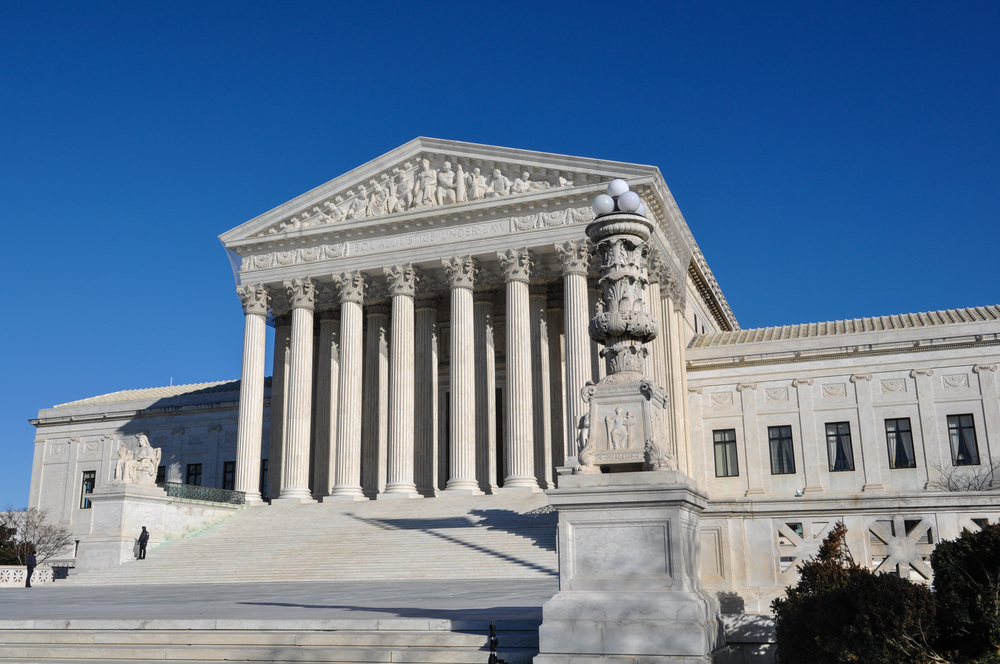
On Tuesday the Supreme Court struck down Section 4 of the 1965 Voting Rights Act by a 5-to-4 vote. The decision effectively invalidates Section 5, the hallmark provision of the Act, ruling that states with particularly aggressive histories of disenfranchising African Americans and other people of color no longer have to achieve pre-clearance from the Department of Justice to change any of their voting laws. The vote was split along ideological lines, with the conservative-leading judges voting to strike down Section 4 and the liberal-leaning judges voting to uphold it.

Chief Justice Roberts, who wrote the majority opinion, claimed that the 1965 provision was unconstitutional under “current political conditions.” According to Roberts, “no one can fairly say that [the record] shows anything approaching the ‘pervasive,’ ‘flagrant,’ ‘widespread,’ and ‘rampant’ discrimination that clearly distinguished the covered jurisdictions from the rest of the Nation in 1965.”

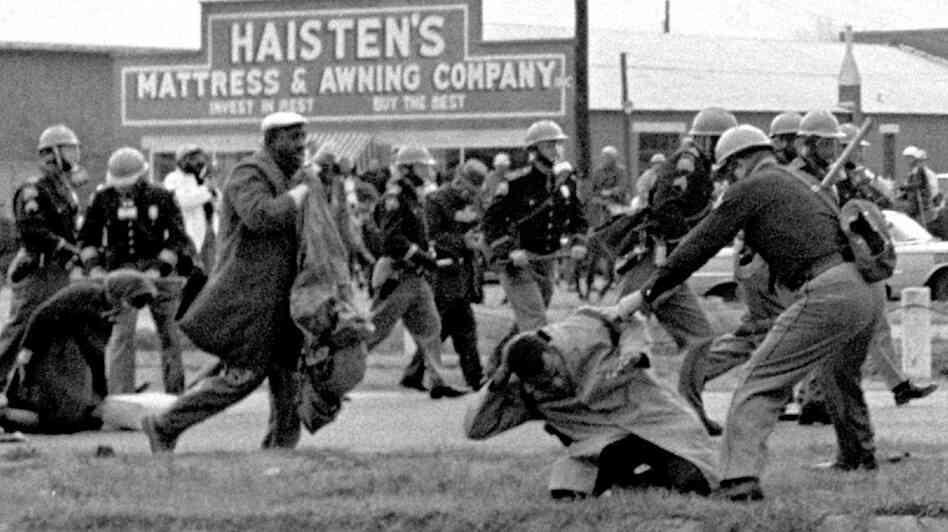
Alas, racism is fixed! So long as we’re better off than we were in the 1960s, when Civil Rights leaders and activists fought, and sometimes died, for equality, federal laws that ensure that all citizens of every race and ethnic origin have safe and equal access to the democratic system are obviously irrelevant.

And yet “the record” does not support Justice Roberts’ conviction that things are getting better, or at least are good enough. In fact, many attempts at voter suppression from the recent past attest to the idea that discrimination remains incredibly rampant. To look back at these attempts it’s also clear that many attempts at suppression are best stopped through the pre-clearance policy.

shutterstock_114656170

According to Justice Ginsberg’s dissenting opinion, between 1982 and 2006 the Department of Justice “blocked over 700 voting changes based on a determination that the changes were discriminatory.” She lists the following examples:

1. In 1995 Mississippi tried to revive a dual-voter system, in which voters were required to register separately for federal and state elections. The law was first enacted in 1892 to disenfranchise black voters. The Department of Justice struck down the law on the grounds that it discriminated against minority voters.

2. In 2000 the Department of Justice rejected a redistricting scheme in the city of Albany, Georgia, because it deliberately weakened the black vote.

3. When an unprecedented number of African-Americans decided to run for office in Kilmichael, Mississippi in 2001, the all-white Board of Alderman canceled local elections. The Department of Justice mandated that the elections occur, and three black aldermen and the town’s first black mayor were subsequently elected.

4. In response to a Supreme Court order in 2006 prohibiting Texas from redistricting in order to weaken Latin@ votes, the state sought to restrict early voting. The Department of Justice blocked the state action.

5. In 2003, when African-Americans won a majority of seats on the school board in Charleston, South Carolina, the county tried to introduce an at-large voting system that would prevent proportional representation and weaken the black vote. The Department of Justice ruled that the system was discriminatory and violated the Voting Rights Act.

6. In 1993 the Department of Justice blocked a motion by the city of Millen, Georgia to delay an election in a predominantly black district by two years, leaving it without representation.

7. In 2004, Waller County, Texas attempted to curtail early voting at polling places near a historically black university.

8. In 1990, Dallas County, Alabama sought to disenfranchise voters who did not return a voter update form. The Department of Justice ruled that the action was discriminatory and unnecessary.

But those aren’t all. Within the last twenty, ten, and even two years, we’ve seen no shortage of attempts to disenfranchise people of color, young people, elderly people, felons and former felons. Many times, these actions didn’t make it far thanks to federal intervention.

9. In 2011, eight states–Alabama, Georgia, Indiana, Kansas, Missouri, Pennsylvania, Tennessee, Texas, and Wisconsin–passed voter identification laws. With one tenth of the population without identification, the law would discourage the votes of minorities, students, seniors, and people in rural areas. 24 other states introduced voter identification laws that year.

10. In 2011 Florida and Texas passed restrictions on non-profit voter registration drives. These non-profits, such as the League of Women Voters, have proved incredibly effective at helping eligible citizen register to vote, especially on college campuses and in areas with low voter turnout.

11. In 2011 Florida passed a law reducing the early voting period by nearly half and effectively limiting black, Latina and Democratic votes, as those groups constitute the majority of early voters. Ohio, West Virginia, Tennessee, Georgia, and Wisconsin also reduced their early voting periods.

12. Partly as a result of reduced early voting, lines at the polls proved unbearable for some 201,000 Florida voters who left before casting their ballots in the 2012 Presidential Election.

13. In 2012, billboards erected in predominantly black neighborhoods in Cincinnati threatened that “VOTER FRAUD IS A FELONY!”

14. Last week the Supreme Court struck down Arizona’s law requiring proof of citizenship at the polls. The law would have targeted and suppressed minority, and in particular Latina, votes. 17 other states introduced similar legislation in 2011, and proof of citizenship laws passed in Alabama, Kansas and Tennessee. A study by the Black Youth Project predicted that these kinds of laws will disenfranchise approximately 700,000 young minority voters.

15. In a recent Los Angeles mayoral race, candidates confused Latina voters by releasing misinformation about the opponents immigration and labor policies.

16. In a 2010 gubernatorial election in Maryland, one candidate’s campaign manager authorized misleading robocalls to predominantly black counties that encouraged voters to “stay home” rather than go to the polls.

Just like racial discrimination, voter suppression isn’t all in the past. Hours after the Supreme Court released its decision, Texas Attorney General Greg Abbott announced that the state’s voter identification law, perhaps the most stringent in the country, would go into effect immediately. Last year under the Section 5 pre-clearance provision a group of federal judges struck down the law, claiming that it imposed “strict, unforgiving burdens on the poor,” and in particular on racial minority groups. Texas lawmakers wasted no time.

It’s easy to remove ourselves from the past, to underscore how we’ve changed rather than acknowledge historical continuities. But the overwhelming evidence of suppression aimed at minority groups whose votes could affect the status quo shows, if nothing else, that the systems of racism that disenfranchised citizens in 1965 still exist–that we’ve inherited and in many ways actively perpetuated them. Underlying the majority opinion is a frustratingly elementary notion of racism: so long as we don’t physically obstruct individuals from voting, minority disenfranchisement is a vaporous claim.

In her statement of dissent Justice Ginsberg refers to contemporary acts of voter suppression as “second-generation barriers.” Her language is apt: the racial discrimination we see now may not look exactly like the “flagrant” racism of the 1960s, but it is no doubt a close relative. Our voter identification and proof of citizenship laws are not far removed from literacy tests and “grandfather clauses.” These 16 examples and more affirm that the Voting Rights Act is still relevant, and still necessary – in full.

Gay Marriage and the Journey to Justice: Updates from the Supreme Court

Today is the big day—our lovely U.S. Supreme Court has ruled DOMA unconstitutional and stood with LGBT people on the right side of history.

SCOTUS_doma_slider

The Defense of Marriage Act (DOMA) and California’s Proposition 8 have been debated inside and out of the courts for what seems like an eternity. Section three of DOMA was being challenged in the courts – it is what gives gay couples equal access to “federal laws and programs” and means that same-sex couples would be able to enjoy things such as “military family benefits, social security benefits, multiple areas of tax categories, hospital visitation rights, and healthcare benefits.” It was ruled unconstitutional this morning 5-4, with Justice Kennedy leading the decision.

In terms of Proposition 8, the proposition denies same-sex couples in California the right to have their marriage deemed as legal as their heterosexual counterparts. A suit to uphold Prop 8 was dismissed 5-4 as well.

The LGBT community has achieved a huge victory. It was worth waiting and holding dear to the hope that the U.S. Supreme Court would stand on the right side of history and support equality for LGBT couples. It is difficult to wrap our heads around the fact that a nation that has seen it all is still debating, politically and socially, whether to grant or deny rights and express acceptance for our brothers and sisters. The decision to respect and celebrate same-sex relationships isn’t about religion or cultural values. It would be hypocritical to say “everyone deserves to be in love and happy, well, except if you’re gay.”

Regardless of the Supreme Court’s decisions today, the LGBT community and their allies have made their mark on this nation’s history. After this morning, let’s hope that this debate will be just that, history.

Celebrating outside the Supreme Court!
FMF interns join the SCOTUS scene!

IMG_5621

SCOTUS Decision Breakdown: On Affirmative Action and Workplace Harassment

So much SCOTUS, so little time. Here’s our take on two of the high court’s decisions from Monday.

By Lucy and Grace.

shutterstock_106535648

Affirmative Action

by Lucy

The Fisher v. University of Texas Supreme Court case reviewed the affirmative action plan of one public university – but its effects are far reaching.

When Abigail Fisher was denied admission to University of Texas – her top choice school – in 2008, she filed the lawsuit. The University of Texas, as well as other public colleges and universities in Texas, are known for their “Top Ten” plans, which allow “automatic admission to eligible students in the top 10% of their high school class.” In addition, they consider students “under standards that take account of academic achievement and other factors, including race and ethnicity.” Since Fisher was not admitted, she believes her race played a factor. Fisher is white.7-1 Supreme Court ruling in her case sent the case “back to the lower courts for further review.” By refusing to issue a formal decision, the Supreme Court sidestepped the major question: what do we do about affirmative action, and what does the future of the program look like? 

In order to have a great job later in life, it’s important to receive an education. Huge racial discrepancies exist, however, throughout public school systems across America. In 2006, the Oprah Winfrey Show revealed vast differences between the academic experiences of students from Harper High School, a primarily African American high school located in a low-income area of Chicago, and Neuqua Valley High School in suburban Naperville, Illinois. Harper students visiting the Neuqua campus were stunned to see “an Olympic-size swimming pool, a gym and fitness center, an award winning music department, a huge computer lab, and a rigorous course curriculum” in place; when visiting classes, they struggled to keep up.

Harper graduates 40 percent of its students and Neuqua graduates 99 percent. There’s even a striking difference in state exam scores: only 16 percent of students at Harper meet reading standards, while 78 meet standards at Neuqua. When applying to a university without affirmative action, even some of Harper’s top scholars would have trouble gaining admission competing with a Neuqua Valley student. That isn’t fair. That’s important proof of why affirmative action programs exist and how they still serve students of diverse racial backgrounds.

Someday we may not need affirmative action. But in a world, and more specifically, a country, where racial discrimination still thrives, that’s not the case.

Workplace Harassment

by Grace

The decision in Vance v. Ball State University is highly contingent on precedents previously established by the courts in past years. It all started in 1998, when two cases established the guidelines for liability in terms of employment discrimination and harassment. In both, the courts held that if a victim suffered harassment by a supervisor, the employer was liable. However, the court ruled in the same year that if the victim was harassed by a fellow co-worker, the employer would not be liable unless the victim can prove the negligence of a supervisor to address the issue. This all pertains to the court’s interpretations of Title VII of the 1964 Civil Rights Act and its protections of victims of discrimination.

Since the 1990’s, these decisions have left the specific definition of an employee’s “supervisor” as something to be decided on a case by case basis. Now, fast-forward to 2013: Vance, an African American employee at Ball State University and alleged victim of racially-fueled employment discrimination, challenged the definition and argued that any person that “has authority to control someone else’s daily activities and evaluate performance” is defined as a supervisor. Her employer, however, charged that someone must have “the ability to take a tangible action such as hiring, firing, or promoting [an] employee” in order to be defined as such. The Supreme Court’s 5-4 decision sided with Vance’s employer. Justice Alito defined a victim’s “supervisor” as only the employee who has the ability to cause “significant change in employment status, such as hiring, firing, failing to promote, reassignment with significantly different responsibilities, or a decision causing a significant change in benefits.” Because her immediate supervisor at Ball State University did not meet this description, Vance’s employer won the case, avoiding discrimination liability under Title VII. The dissenting opinions of Justices Ginsburg, Breyer, Sotomayor, and Kagan all acknowledged the detrimental effects this harsh decision will have on the intent of Title VII.

Because this decision so narrowly defines the role of supervisor in cases of employment harassment and discrimination, it has severely limited the legal authority of victims to bring lawsuits against discriminatory employers with any hope of protection under Title VII of the Civil Rights Act. Unless an employee’s direct supervisor is also the person responsible for their payroll, hiring, firing, etc., that employee has a slim chance of combating any case of discrimination or harassment. Taking into account the realities of many offices and workplaces and the often convoluted nature of supervisory roles – not to mention that women disproportionately experience workplace harassment- it is easy to see how the court’s new definition of “supervisor” is a blow to the rights of workers.

Supreme Court Rejects Statute of Voting Rights Act

Today the Supreme Court ruled that a statute requiring preclearance for changing voting guidelines is unconstitutional.

In a five to four decision with the opinion written [PDF] by Chief Justice John Roberts, the Supreme Court ruled that Section 4 of the Voting Rights Act (VRA), which determines which districts have to submit changes in their voting practice and regulation regardless of size to the Department of Justice (DOJ) in accordance with Section 5 of the VRA, is unconstitutional. In doing so, the Court essentially nullified Section 5 requiring preclearance in voting regulation changes. Section 5 has been used to stop over 700 discriminatory laws from going into effect between 1982 and 2006.

Roberts and the majority opinion argued that the formula determining which state and local governments must submit their changes is outdated [PDF] and therefore can no longer be used to require preclearance. While this decision subsequently voids the preclearance process, the majority did not rule preclearance requirement in Section 5 unconstitutional. Instead, the Court gave Congress the responsibility to create a new formula to determine who must comply with preclearance requirements. In a concurring opinion, Associate Justice Clarence Thomas wrote that he would have urged the Court to also overturn Section 5.

In a dissenting opinion [PDF], Justices Elena Kagan, Sonia Sotomayor, and Stephen Breyer joined Ruth Bader Ginsburg in arguing that since Congress determined the formula in Section 4 was still accurate there was a demonstrated need to retain it. Ginsburg lays out the history of the Voting Rights Act and the various challenges and reauthorizations it has faced. Ginsburg, et al., also argue that Congress is aware that the formula may need to be revised in the future based on the time frame Congress determined for reauthorization.

In her dissent, Ginsburg writes [PDF] “The sad irony of today’s decision lies in its utter failure to grasp why the VRA has proven effective… In truth, the evolution of voting discrimination into more subtle second-generation barriers is powerful evidence that a remedy as effective as preclearance remains vital to protect minority voting rights and prevent backsliding.” She continues, “For a half century, a concerted effort has been made to end racial discrimination in voting. Thanks to the Voting Rights Act, progress once the subject of a dream has been achieved and continues to be made.”

In conclusion, Ginsburg writes “After exhaustive evidence-gathering and deliberative process, Congress reauthorized the VRA, including the coverage provision, with overwhelming bipartisan support… In my judgment, the Court errs egregiously by overriding Congress’ decision.” Civil rights advocates around the country have denounced the decision.

President Obama said in a statement, “Today’s decision invalidating one of its core provisions upsets decades of well-established practices that help make sure voting is fair, especially in places where voting discrimination has been historically prevalent.” NAACP President and CEO Benjamin Todd Jealous decried, “This decision is outrageous. The Court’s majority put politics over decades of precedent and the rights of voters.” Eleanor Smeal, President of the Feminist Majority, said “The fundamental responsibility of the Supreme Court is to protect minority rights, especially the most basic right in a democracy, the right to vote. The Court has failed in this responsibility.”

Posted in Uncategorized

Supreme Court To Determine Constitutionality of MA Buffer Zone

On Monday, the Supreme Court announced that it will hear a case deciding the legality of a 2007 Massachusetts law that created a 35-foot ‘buffer zone’ around abortion clinics preventing anti-abortion protesters from entering said buffer zone.

In January of this year, the 1st US. District Court of Appeals determined that a 2007 law establishing a 35-foot “buffer zone” around abortion clinic entrances, exits and driveways did not violate the First Amendment rights of anti-abortion protesters. Protesters claimed that the buffer zone prevented them from conversing with patients in a close proximity. Advocates argued that the law was necessary to protect both patients and clinic staff from anti-abortion intimidation and violence.

The 2007 law has been challenged in court repeatedly. An earlier version of the law was ruled constitutional in 2001 and 2004 also by the 1st US District Court of Appeals. When the law was revised in 2007, it was appealed and upheld in 2009.

The Supreme Court will revisit this decision during its next session, which starts in October. The case is McCullen v. Coakley, 12-1168.

Posted in Uncategorized

Pakistani Actress Attacked with Acid

An 18 year old actress in Pakistan is in critical condition after being attacked with acid for refusing a marriage proposal.

The actress, known as Bushra Waiz, was sleeping with her family when a man climbed the wall around their home and threw acid on her while she slept. She was rushed to Lady Reading Hospital in Peshawar where it was determined that she suffered burns on over a third of her body.

Her family believes the attacker is Shaukat Khan, a local TV producer, who was trying to force Waiz to marry him. When she refused his proposal, he resorted to violence. According to Waiz’s mother, Khan has also not been paying Waiz for her work and lead to many verbal arguments that pushed Waiz to quit working with him.

On Monday, Waiz was reported in stable, but critical condition. Her attack comes less than a week after a bomb attack forced the only women’s university in the Balochistan province to close its doors indefinitely. funny photos

Posted in Uncategorized

John Derbyshire and James Taranto Miss The Point in Pieces About Military Sexual Assault

By Mychal and Carmen

There appears to be a misunderstanding at hand.

Two men – John Derbyshire and James Taranto – this week published pieces about the ongoing efforts to stop rape and sexual assault in America’s military from a victim-blamey, altogether terrifying perspective. The Pentagon predicts that in 2012, 26,000 members of the military were sexually assaulted, and defense estimates predict that 70 victims are assaulted each day. The numbers are also rising significantly year-to-year, although the overall level of reporting has remained low. Women and men alike are victims and survivors of sexual trauma which occurred either at the hands of their peers, their superiors, or even their inferiors. The bottom line is that rape in the military is real, and that it’s happening within the ranks and being mishandled within them as well. Right?

Not according to Derbyshire or Taranto, or at least not according to their words. A correction is necessary – and women are speaking out. Here, we break down both problematic approaches and shut down the incorrect information inside.

shutterstock_64485940

John Derbyshire: Military Sexual Violence is a “Hoax”

John Derbyshire recently penned an article for Taki’s Magazine about The Sexual Harassment Panic.  This theory describes the phenomenon of false rape accusations infiltrating the military and gripping the media; the “collective hysteria is of course our society’s detachment from reality” and apparently stems from women’s inherent quality of “being strongly attracted to higher-status men.” Yep. That’s right! Women in the military who report being sexually assaulted are not actually victims of sexual assault – they are simply responding to their natural desire to have forced sex with their superior officers.

Derbyshire starts off the article with an anecdote about how as a younger man, he was able to heroically change a tire!  Then he tells us about how his girlfriend at the time was unimpressed by his ability to do “something difficult, dangerous, and useful.” How sad! Her lack of enthusiasm for his heroic act proves that “some key areas of the female brain are wired differently from [males’].” He then explains six “true facts”meant “to apprise the US military” and  “assist them in pushing back against the USC (unwanted sexual conduct) tsunami.” Some of those “true facts” include “the joys of institutional segregation” and how women are likely to participate in “victim hoaxes,” in which they fake it ’til they make it with false accusations in search for an end reward. According to Derbyshire, accusations of rape from within the military are all false and/or motivated by such rewards.

Derbyshire was also nice enough to create an extremely helpful “continuum of consent” that ranges from “forcible kidnapping/rape, to drunk-and-I-don’t-know-what-I-was-thinking, to licensed connubial bliss.”  This extremely informative spectrum assures people that “the terms ‘sexual harassment’ and ‘sexual assault’ are ambiguous and open to manipulation by unscrupulous lawyers.” He argues also that there are areas between consensual and nonconsensual sex, which most of us recognize as a throwback to grey rape, in which women are told their rapes weren’t rapes even though they know they were raped.

So how does Derbyshire back up all these theories?  With links to misogynistic magazine Return of Kings, brimming with stories such as A Woman’s Sexual Experience Means Nothing and The Myth of the Date Rape Drug.  Another gem in his treasure box of misogynistic sources includes the online Publication Man Woman Myth, which describes the prevalence of false rape accusations and covers news about the feminist war on men.

James Taranto: Rape and Assault Are Just “Sexual Recklessness”

The Wall Street Journal ignited a lot of heated responses this week when they published a piece by James Taranto, conservative commentator, that called our government’s action on military sexual assault “an effort to criminalize male sexuality.” Aside from conflating sex with rape, the piece described a miitary rape trial in which the perpetrator was granted clemency as “a he-said/she-sad dispute,” tying in the survivor’s consumption of alcohol to effectively build a case against her word in said “dispute.” She claims she woke up in the back of a car and Captain Herrera was touching her inappropriately. Captain Herrera, surprisingly enough, claims that isn’t true – that she undid her own pants and “responded to his touching by resting her head on his shoulder.” This, in many minds, may also be considered “sleeping.” Captain Herrera has been accused of sexual assault multiple times.

In the end, Taranto chalks it all up to Capt. Herrera’s “sexual recklessness,” and claims that the defense bill stripping military members of the right to grant clemency in cases like these also strips a “crucial protection for the accused.” He also considers women who ask for it to be “acting recklessly,” an obscene oversight of how our rape culture works. Rika Chrsitensen responded:

Rape culture is images, language (including jokes), even laws that validate the idea of rape, and part of that validation is blaming the victim (either in a specific case or generally) by saying that clothing, behavior and decisions (such as the decision to drink, the decision to flirt, the decision to go someplace with a man) invite rape, and that women need to be more careful so they won’t get raped. This is “blaming the victim,” as opposed to addressing rape itself by teaching people not to rape and harshly punishing those who do.

These aren’t the kinds of conversations or the kind of attitude we, as a nation, need to have perpetuated in the media as Congress and our president’s administration begin taking steps toward fixing the epidemic of rape and sexual assault in the military. To be honest, these kinds of conversations are the ones we shouldn’t be having at all.

Taliban Agrees to US, Afghan Peace Talks; Afghanistan Backs Out

A day after the Taliban announced that it will agree to peace talks with the United States and Afghanistan, the Afghan government has announced it will not participate until Afghanistan plays a larger lead role.

Senior US officials confirmed that two key conditions of the negotiations would be that the Taliban breaks ties with al-Qaeda and that they recognize the Afghan Constitution including the protections for women and minorities.

The announcement came as a surprise the day after senior US officials announced that the Taliban, the Afghan government, and the US would begin peace negotiations this week at a Taliban office in Qatar. However, the Afghan government says it does not support the way the office arrangements were handled and the banner at the location, which calls the office the Islamic Emirate of Afghanistan. This is the name used by the Taliban when they were in power, and suggests to Afghanistan that the Taliban considers itself a government in exile.

Afghan President Karzai announced in a statement, “Recent developments showed that there are foreign hands behind the opening of the Taliban office in Qatar. Unless the peace process is led by Afghans, the High Peace Council will not participate in the Qatar negotiations.”

Human rights organizations fear that the office could grant the Taliban more legitimacy despite their attacks on women and ethnic minorities. An Afghan research associate for the Human Rights Watch in Kabul, Ahmad Shuja, told reporters, “We have genuine fear some of the hard-fought gains for women and minority rights would be at stake. We don’t feel the Taliban have made any change on their position on these issues in the last 10 years, especially on women’s rights.”

Pakistani Women’s University Closed Indefinitely

In the wake of a bomb attack on Saturday, the Sardar Bahadur Khan (SBK) Women’s University has shut its doors indefinitely. The Bolan Medical Complex, which was attacked while Doctors treated victims of the university bombing, is also closed indefinitely.

The target of the bomb was a bus transporting female students and teachers from Sardar Bahadur Khan Women’s University in Quetta, located in the southwestern part of Pakistan. A homemade explosive device killed 14 of the passengers and injured 19 others. The victims were rushed to the nearby Bolan Medical Complex, where there was a second explosion. After the explosion, militants took nurses, doctors, and patient visitors, many of whom were visiting those hurt in the bus explosion, hostage. 11 people were killed at the hospital. Security officials regained control of the hospital Saturday evening and reported that four of the five militants were killed and the fifth was in custody. A banned Sunni extremist group, Lashkar-e-Jhangvi, claimed responsibility for the attacks.

SBK University is the only women’s university in the province of Balochistan province. In response to the attacks, Sunday was declared an official day of mourning in Quetta. Many other organizations have announced more days and even strikes in mourning.

Posted in Uncategorized

Pakistani Women’s University Bus, Hospital Bombed

A bus for a women’s university in Pakistan and the hospital that treated victims from the blast were bombed on Saturday, killing 14 students and 24 others at the hospital.

The bus was transporting female students and teachers from Sardar Bahadur Khan Women’s University in Quetta, located in the southwestern part of Pakistan. A homemade explosive device killed 14 of the passengers and injured 19 others. The victims were rushed to the nearby Bolan Medical Complex, where there was a second explosion. After the explosion, militants took nurses, doctors, and patient visitors, many of whom were visiting those hurt in the bus explosion, hostage. Security officials regained control of the hospital Saturday evening and reported that four of the five militants were killed and the fifth was in custody. It is unclear if the bus attack and the hospital siege are related.

Prime Minister Nawaz Sharif and President Asif Ali Zardari both called the attacks “cowardly and inhuman.” “No effort will be spared to save Pakistan from such acts of terror,” Sharif continued. United Nations Secretary General Ban Ki-Moon also condemned the attacks, saying “violence against women and educators has increased in recent years. The aim being to keep girls from attaining a basic right to education.”

Posted in Uncategorized

Taliban Attack In Afghan Capital As NATO Transfers Power

Yesterday, NATO (North Atlantic Treaty Organization) transferred responsibility for the country’s security forces to the Afghan government after a bomb blast targeting a political official left three civilians dead in Kabul.

The blast, which occurred in front of the Afghan Independent Human Rights Watch, was targeting Afghanistan’s second vice-president Mohammed Mohaqiq, who is also a Muslim cleric and leader of the Hazara minority. Three civilians were killed and 30 others were injured. Mohaqiq was not injured in the blast, though six of his bodyguards sustained injuries and one car in his convoy was damaged. The Afghan Independent Human Rights Watch was not a related target.

Just miles away, Afghan President Hamid Karzai accepted control of the security operations for Afghanistan from NATO chief Anders Fogh Rasmussen. While NATO forces will still be in the country, the Afghan police force of over 350,000 officers will be in charge of operations.

Posted in Uncategorized

Indian Women’s Rights Activists Arrested

Police arrested and detained 13 women’s rights activists Thursday after anti-rape protests swelled in West Bengal, India. The protests were centered on two recent high-profile rape cases in the state.

The Indian National Crime Records Bureau released statistics Thursday related to crime against women, spotlighting West Bengal as having the highest concentration of such crime in the country. According to their data, 12.67 percent of the 30,942 reported cases of crime against women in India in 2012 occurred in West Bengal. Chief Minister Mamata Banerjee contested the report, stating that “we have been trying to curb the incidence of crime against women by taking swift actions.” Her claim that “the situation is comparatively better now as compared to other states” outraged women’s rights activists, who have perceived the state government’s handling of sexually violent crime as lacking.

40 activists gathered early Thursday morning near CM Banerjee’s residence at Kalighat temple. They planned to protest with rallies and demonstrations all day. They began marching toward the CM’s residence, but were approached by police who blocked their way and asked them to retreat. They refused, explaining that they wanted to present the CM with a memorandum. “It is not desirable to stage demonstration in front of someone”s residence,” Kolkata Police Commissioner Surajit Kar Purakayastha told reporters, “especially in front of CM”s residence.” He defended his team, adding that “the CM is a Z-plus protective. She has threats to her life.”

According to protestors, police agreed to escort 4 women to the CM’s residence but then “turned hostile,” arresting some of the peaceful protestors and “packing [them] into a police van.” The women were taken to police headquarters at Lalbazar and did not receive an explanation of the charges against them.

Protests against the government have been ongoing in India since December, when a college student was tortured and gang-raped in New Delhi. “It is the beginning of our movement,” said Anuradha Kapoor, a member of civil rights group Maitree who was arrested. “We won”t give up so easily.”

Posted in Uncategorized

Russian Lower Parliament Approves Ban On “Gay Propaganda”

On Tuesday, Russia’s Lower Parliament called the Duma unanimously passed a bill outlawing the distribution of LGBT “propaganda” to minors, essentially banning any form of support for LGBT rights in the country. 436 deputies voted in favor the bill, only one deputy abstained from the vote.

The bill bans “propaganda of nontraditional sexual relations” from being distributed to minors. However, the broad language of the bill could be interpreted to ban any public support of gay rights or face serious fines. Many cities already have such bans in place, but this bill would apply the ban nationwide.

During the debate, LGBT rights protesters held a “kiss-in” outside the Duma. Anti-gay protesters were also present, and some threw rotten eggs at LGBT activists. Other LGBT activists were physically assaulted. About 20 LGBT rights protesters were detained by the police.

The Duma also passed a bill that would outlaw religious offenses. In a vote of 308 to 2, the parliament approved a ban on “public actions expressing clear disrespect for society and committed to the goal of offending religious feelings of the faithful” punishable with fines and in some cases prison terms. This comes in response to the protest by Pussy Riot which condemned the ties between the Orthodox church and President Vladimir Putin.

Both bills still have to be approved by the Upper Parliament and signed into law by President Putin before they can be enacted nationally.

Posted in Uncategorized

Afghan Police Accused of Violence Against Women

The Afghanistan Independent Human Rights Commission accused the police of violence against women in a recently released report, attributing close to 15 percent of honor killings and sexual assaults in the region to the police force. The report follows over two years of data collection by the commission, in which they documented 163 sexual assault cases and 243 honor killings.

“The cultural impunity and the lack of follow up of these cases is something we’re very concerned about,” said Sima Samar, commission chair.

The Interior Ministry rejected the report, defending its 152,000 police officers against the claims. They said the police force had made progress in safeguarding human rights.

Violence against women in Afghanistan was widespread under the reign of the Taliban, though even significant international intervention has not prevented the nation from being consistently ranked as one of the most dangerous places to be a woman. In April, Human Rights Watch reported that women in the Afghan police force face sexual harassment, assault, and even rape from male colleagues. In May, HRW reported that 50% more women than ever were being incarcerated for “moral crimes” such as running away from forced or abusive marriages and families. In the same month, the Afghan parliament failed to pass the Elimination of Violence Against Women, which would have banned forced and underage marriage, beatings, and rape.

Posted in Uncategorized

Pussy Riot Documentary Premieres Tonight

The story of Russian feminist punk band Pussy Riot will come to life tonight in the HBO documentary “Pussy Riot: A Punk Prayer.” It will air at 9 PM EST. Three Pussy Riot members were charged in August of 2012 with “hooliganism” and sentenced to two years in prison for a performance protesting Vladimir Putin’s regime, and the separation of church and state.

The 2012 performance lasted only for forty seconds. After setting up in the pulpit of an Orthodox Church in Moscow, they were promptly arrested by Russian authorities and then went to trial. The 90-minute documentary follows not only Pussy Riot’s case but also their earlier actions,, adding to the now-familiar story with interviews of the women’s families and groups which supported their imprisonment.

Although Pussy Riot is an open movement which welcomes all interested members, the three members who faced trial were Nadezha Tolokonnikova, Yekaterina Samutsevich, and Maria Alekhina. All three were sentenced to two years in prison, although Samutsevich was recently released based on an appeal that she wasn’t able to plug in her guitar before her arrest at the infamous performance.

Posted in Uncategorized

Immigration Bills in the Works in Congress

An immigration overhaul coming from a bipartisan coalition within the Senate now faces three weeks of debate on the floor. Senate Majority Leader Harry Reid (D-NV) expects that it will come to a vote prior to the July 4 session break. If all 54 Democrats in the Senate vote for the bill, which is unlikely, the “Gang of 8” putting forward the over 800-page legislation would still need the support of upwards of six Republicans to prevent a filibuster. If passed in the Senate, the immigration reform package will face an uphill battle for passage in the House.

The legislation marks the first major set of reforms to immigration policy since President Ronald Reagan’s administration. It lays out a pathway to citizenship for those in the United States illegally now, tighter border security regulations, and processes to open up legal entry into the country for more families and workers. Those who oppose the bill worry that it lacks strict enough border control and grants too much amnesty to the estimated 11 million illegal immigrants currently in the US.

President Obama has urged Congress to work together to produce a bill before summer’s end. He addressed the topic in his weekly radio address Saturday. “The bill before the Senate isn’t perfect,” he said. “It’s a compromise. Nobody will get everything they want – not Democrats, not Republicans, not me.”

Senator Kelly Ayotte (R-NH) announced on “Face the Nation” Sunday, that she will back the bill, calling it “tough but fair” and “a thoughtful bipartisan solution to a tough problem.” The Gang of 8 working to drive the legislation through both chambers come from a bipartisan background and are willing to make concessions only “without forsaking our principles.”

Posted in Uncategorized

Scott Roeder Disciplined For In-Prison Comments

Scott Roeder, the anti-abortion extremist who murdered Dr. George Tiller in 2009, will be disciplined for threatening comments made against a clinic owner from prison. According to state officials, Roeder will spend 45 days in isolation for 23 hours a day. Roeder will only have one hour a day for exercise. In addition, he will have reduced privileges for another 60 days afterwards. The decision was made by an administrator following a hearing for Roeder this week.

The punishment is in response to a YouTube video posted by an anti-abortion extremist that featured an interview with Roeder. In the interview, Roeder is quoted as saying, “To walk in there and reopen a clinic, a murder mill where a man was stopped, is almost like putting a target on your back saying, ‘Well, let’s see if you can shoot me.'”

In 2010, Scott Roeder was found guilty of first degree murder in the May 2009 death of George Tiller by a unanimous jury after 40 minutes of deliberation. The jury also found Roeder guilty of two counts of aggravated assault. He was sentenced to 50 years in prison without the possibility of parole.

Posted in Uncategorized

OH Senate Passes Anti-Abortion State Budget

Thursday evening, the Ohio state Senate passed a $61.7 billion state budget that partially defunds Planned Parenthood and could close abortion clinics across the state. The Senate budget bill is scheduled to go to the House for a vote next week.

The budget, passed by the Senate along party lines in a vote of 23 to 10, strips $2 million in family planning funds from Planned Parenthood. The budget then also redirects family planning funds toward deceptive crisis pregnancy centers (CPCs). CPCs are often owned and operated by churches or anti-abortion groups that pose as legitimate health centers. CPCs do not have the staff to provide medically accurate information and often convey religious beliefs in an attempt to convince women to carry their pregnancies to term. The budget also includes a provision that would deny federal funding to rape crisis centers who provide information on abortion to rape victims.

Another provision of the Ohio budget as passed by the Senate could potentially close abortion clinics throughout the state. The provision prohibits abortion clinics from have transfer agreements with public hospitals in case a patient needs additional care. However, in order for ambulatory surgical centers to be licensed by the state, they are required to have such transfer agreements in place.

Kellie Copeland, executive director of NARAL Pro-Choice Ohio, told reporters, “This proposal will wreak havoc on tens of thousands of patients that rely on these facilities, and could result in 11 counties losing access to subsidized family planning services entirely.” She continued, “This is about paperwork… If they can’t make abortion illegal, they can make it virtually impossible to access by closing every clinic they can gets their hands on.”

Posted in Uncategorized

Over 400 Garment Workers Fall Ill in Bangladesh

Between 450 and 600 garment factory workers in Gazipur near Dhaka, Bangladesh, were sent to the hospital on Wednesday after they became sick from suspected water contamination.

Workers at the Starlight Sweater company began to experience stomach cramps and vomiting two hours into their shifts on Wednesday. Once at various local hospitals, they were given fluids and evaluated. Those who were recovering were released on Thursday.

Officials have not confirmed what caused the illness. However, local industrial police officer Mahfuzur Rahman told reporters “Primarily we suspect the water supply of the Starlight Sweaters factory was poisoned or contaminated.” The eight story factory gets its drinking water piped to the roof from an underground reservoir. Tap water comes from a second source and employees are discouraged from drinking it. Factory CEO Muhammad Shafiur Rahman told reporters, “We have cleaned the reservoirs overnight and now the water there is safe for drinking.” The factory reopened on Thursday.

Meanwhile, over 1,000 factory workers and relatives gathered at Rana Plaza in protest of the government’s response to the building collapse that killed over 1,300 people in April. Protesters demanded back pay and/or compensation promised by the government and the parent organization of the factories involved, Bangladesh Garment Manufacturers and Exporters Association (BGMEA). Police fired rubber bullets and tear gas at protesters after they allegedly began throwing rocks when told to disperse.

Posted in Uncategorized

Nationwide Abortion Ban Advances in Committee

A bill that would ban abortions after 20 weeks nationwide was approved by the House Judiciary Subcommittee yesterday. The bill, sponsored by Trent Franks (R-AZ), who is also the chair of the subcommittee, originally applied only to the District of Columbia and would have banned abortion at 20 weeks gestation with exceptions only to save the woman’s life. However, Franks decided to expand the bill nationwide following the murder conviction of Kermit Gosnell, a rogue doctor who performed illegal abortions in Pennsylvania. Franks has introduced the bill in previous sessions of Congress, but it was defeated.

The all-male subcommittee approved the bill along party lines in a vote of six to four. Opponents of the bill took issue with the fact that there were no women or medical professionals on the subcommittee to consider the legislation. Representative John Conyers (D-MI) objected to the bill saying, “It is totally out of order for us to determine a medical question like this under the guise of acting as members of the very vital House Judiciary Committee… No good has ever come from an all-male committee deciding the law about a woman’s body. This is not appropriate.” Ted Deutch (D-FL) echoed Conyer’s sentiments, saying that it was “hard for people to take” a group of men making medical decisions for women. He continued, “To insert a role of politics in all this, in what for [some parents] has gone from the greatest exulation they may have felt as a married couple to the depths of despair at learning they have found themselves in a situation [where] they have to make that painful decision, is just not what we should be doing.”

The bill now goes before the full House Judiciary Committee. Though a hearing or vote has not been scheduled yet, the chairman of the committee is Representative Bob Goodlatte (R-VA) who has a consistent anti-choice voting record.

Posted in Uncategorized
>