Founding Feminists: February 14, 1913

Founding Feminists is FMF’s daily herstory column.

FoundingFeministLogo-color

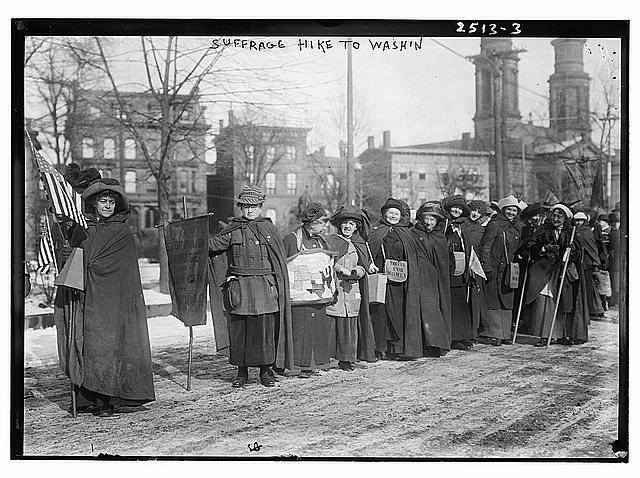
The suffragist “Army of the Hudson” continues its advance on Washington, D.C., hiking from Princeton to Trenton, New Jersey, today.

The troops have now covered 53 miles in just three days since leaving Newark.

“Our feet may be sore, but they are not cold and every one of us will stick it out to Washington,” declared “General” Rosalie Jones, as she, the other full-time hikers, plus Elizabeth Freeman in the literature (“ammunition”) wagon, pulled by Lausanne, the $59.98 suffrage horse, and Olive Schultz, ahead in the scout car, all left Princeton this morning.

The pilgrims were accompanied to the edge of town by a crowd of several hundred Princeton students. These were probably the same ones who greeted the hikers so enthusiastically yesterday, and gave them little sleep last night as they cheered outside the hikers’ hotel until quite late. While on the road to Trenton, the Princeton boys were replaced by some Lawrenceville Academy lads who marched along for a while carrying a large “Votes for Women” banner and cheering “Sis boom ah! Sis boom bah! Coo, Coo suffragettes!”

While the hikers were preoccupied with making speeches to the main body of Lawrenceville students, a small group of boys quietly borrowed the “ammunition wagon” and drove around with it for about 10 minutes. But it was returned unharmed and still well-stockpiled with suffrage brochures, so no harm done.

Upon arrival in Trenton, police officers on bicycles joined the pilgrims as they went through town. The little parade was cheered by crowds along the sidewalks as the troops made their way to the Trenton Hotel. There the hikers found many Valentines waiting for them from admirers who had read in the newspapers of their journey. (There is a contingent of “war correspondents” along for the trip sending daily reports back to their papers, so this tiny band is getting nationwide publicity.)

Of course, 53 miles in 3 days is hard on the feet, and hardest of all on those of “Corporal” Klatchken. She was already hobbling a bit yesterday, but despite her blistered feet, is still refusing to accept any rides, and was voted “pluckiest of all” by the troops tonight.

Since the march was going through Princeton, it seemed only appropriate that General Jones send greetings to its most famous resident. Though President-elect Wilson was in Philadelphia today, a letter was delivered to his home by Mary Boldt, accompanied by bugler George Wend, several other hikers, and a number of Princeton students. The letter said:

My Dear Mr. Wilson:

A small band of votes-for-women pilgrims from the States of New York, New Jersey, Pennsylvania, Delaware, Maryland, Virginia and Ohio earnestly request of you an audience for not more than two minutes in Washington as soon after your arrival as possible. They desire to present a message to you.

Thanking you in advance for your courtesy, I am, very sincerely,

Rosalie Gardiner Jones.

After arriving in Trenton, Jones and her army joined in a previously scheduled rally in favor of amending the New Jersey Constitution to authorize women to vote. This was followed by a banquet in the hikers’ honor, and finally an evening at the theater, where General Jones and Elizabeth Freeman were invited to make speeches between the acts.

1620587_10201913677387121_1140902840_n (2)

One of the evening’s major events occurred back in Princeton, however. Mary Boldt, who had arrived there well ahead of the other hikers last night, had been somewhat taken aback by the unexpected and overenthusiastic welcome given her by a large and boisterous crowd of Princeton students. Since there were conflicting reports circulating around the campus today about the incident and her reaction to it, she motored back from Trenton to reassure the students that she held them in high esteem, and appreciated their enthusiasm.

Apparently, the admiration felt by Boldt for the students was mutual. They gave her another rally, and when she auctioned off her pilgrim’s cloak for the cause, it was cut into strips that the students pinned to their lapels as a sign of support and affection. There was also a brisk business in ten-cent postcard photos of her. Then, there was one final – and much appreciated – show of support. When the automobile carrying Boldt back to Trenton broke down after half a mile, all the boys ran to her aid, then pushed the auto back into town, where it was fixed, so she was able to finish her return trip back to the army’s temporary barracks at the Trenton Hotel. Tomorrow, on to Burlington!
Founding Feminists: February 13, 1913

Founding Feminists is FMF’s daily herstory column.

FoundingFeministLogo-color

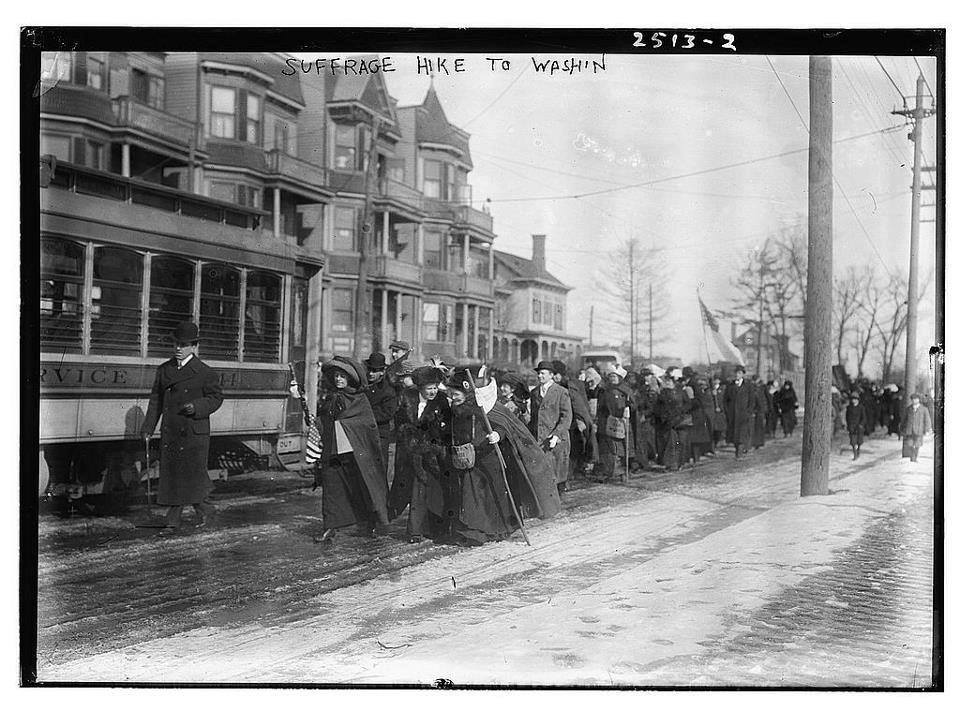
This was an eventful, but exhausting, 27-mile second day of the Newark, New Jersey, to Washington, D.C., suffrage hike by “General” Rosalie Jones and her “Army of the Hudson.”

Though appreciative of temperatures that are no longer near the zero mark as they were yesterday, warmer weather has caused problems of its own. Melting snow and ice made going any distance through slush and water difficult on the already poor roads. But even so, when the army finally pulled into Princeton, thirteen of the original sixteen troops were still in the ranks and intent on finishing the hike.

The hikers started this morning from Metuchen, New Jersey, and after a luncheon in their honor at the Hotel Klein in New Brunswick, they approached Rutgers College. Some students spotted and then surrounded Olive Schultz in the advance scout car. When one yelled: “General Jones is coming!” the rest of the students, many in cadet uniforms, formed a single-file line when a student leader said “Fall in!” They then lock-stepped out to meet her.

The students gave the General and her troops a slightly modified version of a traditional school yell (“Rah, Bow-Wow-Wow; Rah, Bow-Wow-Wow; Rutgers, suffragettes, Bow-Wow-Wow Rutgers!”) as the two armies marched together across the campus. Students then demanded a speech, which General Jones happily gave. It was accompanied by even more cheers. The atmosphere was so supportive that when she was introduced to the college president, General Jones pinned a suffrage button on his coat.

There was a brief, unplanned stop on the way to Princeton, the final destination of the day. What looked like a woman wearing a bonnet was spotted far out in a field, and Elizabeth Aldrich decided to see if she could be converted to the cause. Not until Aldrich had gone over a fence and some distance into the field was it discovered that the effort was doomed to failure, because scarecrows are universally neutral on all issues. Unfortunately, this was far from the biggest error of the day. Thanks to a wrong turn, a 20-mile hike became a 27-mile trek.

1499394_10201906009315424_178438017_n

But despite the difficulties encountered along the way, the hikers’ arrival in Princeton was well worth the effort. In fact, the welcome was a bit too enthusiastic for Mary Boldt, the first to come into town, well ahead of the others. Several hundred very boisterous students suddenly rushed out to meet her, surrounded her, then picked her up and began to carry her around, much to her confusion and dismay.

The reception for the rest of the hikers, who arrived about 7:00, was equally supportive, but a bit more restrained after the earlier incident. Speeches were made by the army’s senior officers to a crowd of students that swelled to 500, with college yells and applause being heard until well after 9:00.

The pace of the hike is taking its toll, but the undaunted spirit of the troops was best exemplified today by “Corporal” Martha Klatchken. She was in a state of near exhaustion when she arrived an hour after the first hikers, but has absolutely refused all offers of a lift from passing drivers. Instead, she leans, when necessary, on another hiker. Everyone will rest well tonight, and be off for Trenton tomorrow.

Founding Feminists: February 11, 1937

Founding Feminists is FMF’s daily herstory column.

FoundingFeministLogo-color

Amelia Earhart, who became the first woman – and only the second person – to fly solo across the North Atlantic five years ago, announced plans today for a far more ambitious adventure.

Within the next month she intends to leave on an around-the-world trip, covering 27,000 miles.

The first three days of the flight will be the most difficult and risky, since they involve flying vast distances entirely over the water. She will leave from Oakland, California and fly to Honolulu, then to tiny 1.1 square mile Howland Island in the South Pacific, and on to Lae, New Guinea. After that there will be stops in places such as Australia, India, Dakar, on the West Coast of Africa, then Natal, on Brazil’s East Coast on her way back to Oakland. She will be accompanied by Captain Harry Manning as far as Sydney, Australia, because his experience in navigating the South Seas – though gained on ships, not aircraft – will be needed.

Her purpose in making the trip is to establish the feasibility of commercial airlines making such flights. As she explained at today’s press conference:

The human reaction of pilots flying over long periods of time and distance is still an unknown quantity with respect to safety in air transport. Problems of fatigue, food, efficiency and the norm of alertness still confuse both airplane designers and pilots alike.

via Kemon01
via Kemon01

The flight will be made in a twin-engine “Flying Laboratory” Lockheed Electra 10-E monoplane. It will be outfitted with oversize 1,150-gallon fuel tanks, which should be more than adequate for even the longest 2,556-mile, 17-hour hop from Howland to Lae. Though eager to leave on her trip, Earhart said she won’t be “stampeded” into going until all safety equipment and the latest navigational aids are in place.

In addition to her passion for flying, she is also a strong supporter of equality for women. On September 22, 1932, she and other members of the National Woman’s Party met with then-President Hoover to urge him to support the Lucretia Mott (Equal Rights) Amendment. She told the President:

I know from practical experience of the discriminations which confront women when they enter an occupation where men have priority in opportunity, advancement and protection. In aviation the Department of Commerce recognizes no legal differences between men and women licensed to fly. I feel that similar equality should be carried into all fields of endeavor, so that men and women may achieve without handicap because of sex.

As far as our country is concerned, in every State of the Union today there are discriminations against women in the law. I join with the National Woman’s Party in hoping for the speedy passage of the Lucretia Mott Amendment, which would write into the highest law of our land that ‘men and women shall have equal rights throughout the United States and every place subject to its jurisdiction.’

Just three months ago, she showed her continuing commitment to equality when she sent the following telegram to the National Woman’s Party at its convention:

Because my lecture schedule prevents, I cannot be present at the Biennial Convention. However, I am so deeply interested in women obtaining full equality under the law that I am sending a small contribution to help the cause along. Today women still stand victims of restrictive class legislation and of conflicting interpretation of statutes. To clear the situation their rights must be made theirs by definition – that is – by Constitutional guarantee. Therefore, I hope this year’s National Woman’s Party meeting may bring us at least one step nearer the Lucretia Mott Amendment.

Almost seventeen years after winning the vote, the battle for full equality continues on many fronts. In addition to our best wishes for success in her latest adventure, Amelia Earhart also deserves our praise for both her pioneering work in the air as well as for her efforts to put the Mott (Equal Rights) Amendment into the Constitution.

Founding Feminists: February 10, 1919

Founding Feminists is FMF’s daily herstory column.

FoundingFeministLogo-color

A landmark suffrage victory came tantalizingly close today, but still remains just out of reach.

Only one vote stood in the way of the Susan B. Anthony (nationwide woman suffrage) Amendment being adopted by the Senate. Having already been passed by the House on January 10th of last year, Senate approval would have sent it directly to the States for ratification, and done so at the best possible time.

Since this is an odd-numbered year, all State Legislatures are now – or soon will be – in regular session, so had the Anthony Amendment been passed today, there could have been quick votes, and ratification long before the first Primary elections of 1920.

1903990_10201888959889199_1492165992_nBut because Congressional approval will be delayed by a least a few months, legislators in many States will have finished voting on this session’s bills by then, adjourn, and go back home to their other jobs until the next regular session, which in some States will not be until 1921. So getting 36 approvals from State legislatures in time for the next Presidential election will mean convincing a number of governors to call “special sessions.” Even pro-suffrage governors will not be eager to do this because of the extra expense to taxpayers, and anti-suffrage governors certainly will not want to call their legislatures back into session to approve a suffrage amendment.
Despite vigorous campaigns by both militant and more conservative suffrage groups, personal pleas from political powerhouses such as President Wilson and William Jennings Bryan to their fellow Democrats, and 26 State legislatures having recently asked Congress to pass the suffrage amendment so that they can ratify it, that last vote was nowhere to be found. The amendment’s chief sponsor, Senator Andrieus Jones, Democrat of New Mexico, was bitterly disappointed that in the final few days in which Democrats control Congress, this measure was not passed, and the blame will fall on his party.

Another Democratic Party leader expressed his disappointment this way: “It means certain defeat of the Democrats in 1920. The Republicans will adopt the resolution, and the women of the country will give them full credit for it. The Democrats have perpetrated a stupid trick in defeating the resolution.” Senate Majority Leader Thomas S. Martin, Democrat of Virginia, did not change his strong opposition to woman suffrage even though he had been warned by colleagues that his actions might “dig a hole” for the party in next year’s General Election.

Today there was a half-hour of debate, which convinced no one to switch sides, followed by a vote of 55-29. Two-thirds being needed for adoption of a Constitutional Amendment resolution, a single convert would have made it 56-28 and been sufficient for passage. Had all 96 members of the Senate been present and voting today, the result would still have been defeat, and by the same one-vote margin. The tally would have been 63-33, or one short of the 64-32 needed. The Anthony Amendment is supported by 72.7% of Senate Republicans and 59.6% of Democrats.

The opposition of Southern Democrats remains the roadblock to suffrage. Though “traditional” views about the role of women may have played a part in the “no” votes of some Senators from both North and South, the two biggest factors in Southern Democrats’ opposition to this measure are hostility toward Federal legislation in general, and the fact that this particular amendment is, and always has been, race-neutral.

Senator Edward James Gay, Democrat of Louisiana, said he was in favor of women voting, and had worked to get a suffrage bill through the Louisiana Legislature, but was opposed to a Federal amendment that would “impose” woman suffrage on all States.

Senator John Sharp Williams, of Mississippi, addressed the other concern of Southern Democrats when he attempted to offer a change in the wording of the Anthony Amendment so that it would apply to white women only. Since the resolution was already on its third reading, his motion was ruled out of order unless unanimous consent was given, something that was clearly lacking. This saved the Senate the trouble of rejecting his proposal again as they did in October, when 61 Senators voted against such a change, and 22 in favor.

Fortunately, a new Congress will be seated on March 4th. Suffragists appear to have gained three Senate votes and lost only one in the November elections, so a favorable result of 65-31 can be expected when the measure comes up again sometime this Spring. The new House must pass the Anthony Amendment again, but is expected to do so by a comfortable margin, so victory may have been delayed today, but certainly will not be denied.

Founding Feminists: February 6, 1910

Founding Feminists is FMF’s daily herstory column.

FoundingFeministLogo-color

Winning the battle for woman suffrage in New York State will benefit women of all races.

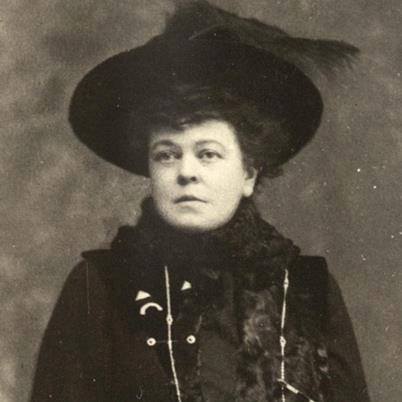
That was the pledge made today by Alva Belmont in a speech to an audience gathered at the Mount Olivet Baptist Church on West 53rd Street, in Manhattan. Invited to speak there by I.L. Moorman, President of the Negro Women’s Business League of New York, Belmont urged all her listeners to join with suffrage groups in the battle to strike the word “male” from the section of the New York State Constitution which grants voting rights to “every male citizen of the age of 21 years” who meets the standard length of residency requirements for the State, County and Election District.

Belmont told her audience that ” … unless this cause means freedom and equal rights to all women, of every race, of every creed, rich or poor, its doctrines are worthless, and it must fail in its achievements.”

1623627_10201866362364275_1168926232_n

Though giving credit to Washington, Lincoln and others for achieving partial victories in the fight for freedom, Belmont noted that: “The woman suffrage movement has higher aims than any that even the greatest of these men ever attained, for it demands the emancipation and freedom of all human beings – women and men of every race, creed and station.” In concluding her speech, she said: “As President of the Political Equality Association I extend to all present, both women and men, an earnest invitation to join my association.”

Helen Frances Garrison Villard, daughter of abolitionist William Lloyd Garrison, spoke as well, saying, “My father remarked, during the early days of the agitation against slavery, that there was still a mountain of prejudice to overcome. It is the same with the women’s suffrage movement today. But the public is getting more aroused every day over this agitation. They talk of women’s rights, I say that what we ask for are human rights!”

Also in attendance were Ella Hawley Crossett, President of the New York State Woman Suffrage Association, and Mrs. F.R. Keyser, President of the New York State Federation of Colored Women’s Clubs. At the conclusion of the speeches, about half of the 200 women in attendance said they would be accepting Belmont’s invitation to join the Political Equality Association, so it was quite a successful Sunday afternoon for the cause.

Founding Feminists: February 5, 1917

Founding Feminists is FMF’s daily herstory column.

FoundingFeministLogo-color

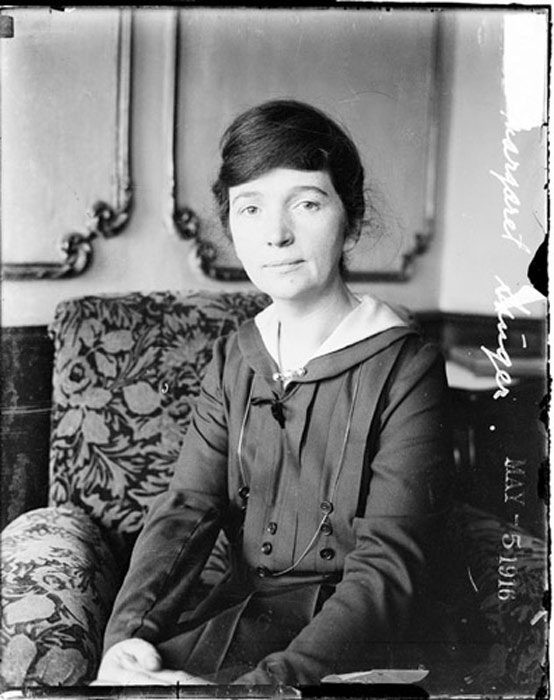
Margaret Sanger is in Brooklyn’s Raymond Street Jail tonight, beginning a 30-day sentence for the “crime” of giving out birth control information.

She shared her knowledge with women who desperately wished to have it, and could get it nowhere else but at the nation’s first and only birth control clinic.

Three days ago she was found guilty of violating Section 1142 of the New York State Penal Code by opening her clinic on October 16th and operating it until it was raided and closed on the 26th. Sentencing came today, and she was first given the option of paying a $5,000 fine instead of serving jail time. After refusing to pay the fine, she was given another opportunity to avoid prison, but only if she would agree to stop sharing information about birth control as long as Section 1142 remains on the books.

Justice Freschi, who presided over the three-judge panel, seemed quite sympathetic to Sanger, but still determined to do his duty to uphold all of New York’s laws, including its anti-birth-control statute. He said, “Mrs. Sanger, if you promise to obey the law faithfully in the future, this court will exercise extreme clemency.”

“This is a test case,” she replied, “and pending appeal only will I promise to refrain from my activities.”

Agreeing to obey the law only during the appeals process proved insufficient, so Justice Freschi then addressed her lawyer, Jonah Goldstein, hoping that he could convince his client to agree to a “deal” in which she would apparently receive a suspended sentence in return for promising to stop counseling women on birth control until the law changes:

Mr. Goldstein, what is the use of beating around the bush? We are not prosecutors looking for blood. We are simply here to judge conservatively, with an eye for the whole people. In view of the physical condition of the prisoner and of appeals pending and other attending circumstances, we are inclined toward leniency … All we are concerned about is this statute, and as long as it remains the law, will this woman promise here and now unqualifiedly to respect and obey it?

He then returned to addressing Sanger, and indicated that he believed her to be a woman of principle: “You abided by the facts given the court as evidence. You did not take the stand and attempt to perjure yourself. We will take your word if you will give it. Now, is it yes or no? What is your answer, Mrs. Sanger?”

Her answer – which was immediately followed by great applause and cheers from her many supporters in the courtroom – was: “I cannot respect the law as it is today.”

923438_10201860057046646_1260734891_n

The judge then pronounced sentence:

Margaret Sanger, with the additional evidence submitted by the learned District Attorney after your case reopened last Friday to meet the claim that the proof was insufficient, there is now additional evidence that makes out a strong case that you established and maintained a birth control clinic where you exhibited to various women articles which purported to be for the prevention of conception, and that there you made a determined effort to disseminate birth control information and advice.

We are not here to applaud nor to condemn your beliefs; but your declarations and public utterances reflect an absolute disregard for law and order. You have challenged the constitutionality of the law under consideration and the jurisdiction of this court. When this is done in an orderly way, no one can find fault. It is your right as a citizen. Refusal to obey the law becomes an open defiance of the rule of the majority as expressed in this statute. I can see no good reason for all this excitement by some people. They have a perfect right to argue freely about amending the law, but not to advise how to prevent conception.

While the law is in its present form, defiance provokes anything but reasonable consideration. It is wholesome that we have discussion by citizens on matters that affect the welfare of citizens. People have the right to free speech, but they should not allow it to degenerate into license and defiance of the law. The judgment of this court is that you be confined to the Workhouse for the period of thirty days.

Sanger was taken to the Raymond Street Jail overnight, for transfer elsewhere tomorrow. She had been considering going on a hunger strike as her sister, Ethel Byrne, did when she was sent to the Workhouse on Blackwell’s Island. But she realized that such an action would isolate her in the hospital ward, away from the other prisoners. So, instead, she will use her month inside the prison system to investigate conditions there, which have been described as “outrageous” and in need of being exposed to the public.

Fania Mindell, convicted of selling a booklet by Sanger containing basic information about sexuality and reproduction, was fined $50 today when she came up for sentencing. The fine was immediately paid on her behalf by Gertrude Pinchot of the “Committee of 100,” organized to promote legalization of birth control and defend those prosecuted for breaking the present laws.

Forty-four years have gone by since the assault on birth control began when Congress passed the infamous “Comstock Act” of 1873, which classifies birth control devices and information on how to use or obtain them as “obscene,” unmailable articles. States quickly followed suit, and passed outright bans on birth control so strict that even giving out contraceptive information to anyone by any means became a criminal offense with severe penalties.

But thanks to some very courageous people, the issue of family planning is finally being debated out in the open, and public opinion is becoming mobilized in favor of reforming these repressive laws from a previous century. The possibility that the courts will strike down, or legislatures will repeal, these laws now seems a quite realistic expectation. One sign that momentum is now shifting to birth control advocates is that the Governor of New York agreed just a few days ago to appoint a commission to study how the law might be changed in his State to permit some practical, legal means of transmitting birth control information to those who want and need it.

Despite the progress made over the past few years, the road ahead still looks like a long one. It will certainly be an especially hard journey for those like Margaret Sanger and Ethel Byrne, who prefer prison to obeying an unjust law.

But however far in the future the end of State and Federal campaigns to suppress knowledge and promote ignorance about sexuality and family planning may be, the eventual outcome is not in doubt. The only question tonight is whether those who will be fortunate enough to grow up in a time when access to accurate information about sexuality, and effective methods of birth control are freely available will be willing to fight as hard to retain those rights as those who are battling today to establish them.

Founding Feminists: February 4, 1919

Founding Feminists is FMF’s daily herstory column.

FoundingFeministLogo-color

With just six days left until a crucial vote in the Senate, William Jennings Bryan spent today at the Capitol lobbying hard for the one more vote suffrage supporters still need for final Congressional approval of the Susan B. Anthony Amendment.

Once passed by Congress, it would enfranchise women nationwide when ratified by 3/4 of the States. The three-time Democratic Presidential nominee (1896, 1900 and 1908) and recent Secretary of State (1913-15) urged his fellow Democrats to support suffrage not only as a matter of justice, but self-preservation as well:

Woman suffrage is coming to the country and the world. It will be submitted to the States by the next Congress, if not submitted by the present Congress. I hope the Democrats of the South will not handicap the Democrats of the North by compelling them to spend the next twenty-five years explaining to the women of the country why their party prevented the submission of the suffrage amendment to the States. This is our last chance to play an important part in bringing about this important reform.

Bryan has good reason to worry about how women will view the Democratic Party once they have won the vote nationwide. When the Anthony Amendment finally passed the House on January 10th of last year by the 2/3 majority needed (274-136) it was principally because of Republican votes. Republicans provided 165 affirmative votes, Democrats 104, with the other 5 pro-suffrage votes supplied by members not affiliated with either party.

1016726_10201854558109176_1304695416_n

When the suffrage amendment came up for a vote in the Senate on October 1st, it fell two votes short of the 2/3 needed, with the original tally standing at 54-30 (12 members absent or not voting). Republicans voted 27-10 in favor (73% support, comfortably over 2/3), while Democrats voted 27-20 in favor (57.4% support, well under 2/3). Senator Andrieus Jones, Democrat of New Mexico, the amendment’s sponsor, changed his vote to a “no” when he saw it wouldn’t pass, so that under Senate rules he would have the right to bring it up again if the outlook seemed more favorable. This left the final tally at 53-31. (Had all 96 Senators been present and voting, the original result would have been 62-34, an identical two-vote loss.)

Had just two more Senators voted in favor of the Anthony Amendment, the original vote would have been 56-28, not 54-30, it would have passed, been submitted to the States early last Fall, and would be well on its way to ratification by now. But despite that setback, months of hard work is paying off. The two-vote gap was cut in half yesterday when Senator William Pollock, Democrat of South Carolina, pledged his support for suffrage, so now only a single convert is being sought.

Bryan talked at length with more than a dozen Southern Democrats today, Senator Trammel of Florida among them. His vote is seen as the most likely to change and put the amendment over the top, so Trammel has been heavily lobbied by suffrage groups, and even received a personal telegram from President Wilson, the nation’s highest-ranking Democrat, urging a “yes” vote. When pressed on whether he had been converted to the cause by Mr. Bryan, Senator Trammel would only say: “I told Bryan that I would carefully consider what he had said to me.”

In another development today, twenty-two Democratic Senators who favor suffrage petitioned the Democratic Leader, Senator Thomas Martin of Virginia, to call a conference of Senate Democrats to discuss the issue. Realizing how critical this upcoming vote could be to the image of his party, Senator Martin has agreed to hold such a conference tomorrow night.

Control of Congress will be passing from Democrats to Republicans on March 4th, thanks to the election held on November 5th, thus making passage of the Anthony Amendment virtually assured sometime this year. But it would be much better if the present Congress passed it. If it doesn’t, the entire approval process would have to start all over again in the new Congress. The House would have to pass it a second time, and the Senate for the first time.

The complicated process of introducing an amendment, holding hearings, and finally getting it to the floor for a vote could easily take several months, and by late Spring or early Summer, many State Legislatures will have finished their regular sessions. Once they adjourn, the only way to get a ratification in those States during this year or the next would be for the governors of those States to call the legislatures back for a special session, something they do not like to do because of the expense to taxpayers. Obviously, anti-suffrage governors would certainly not call such sessions, so even if a majority of members of a State Legislature were eager to ratify, they couldn’t do so until their next regular session in 1921.

Though passage by Congress finally seems in sight 41 years after the Anthony Amendment was first introduced, the path to victory is still not an unobstructed one. But with victory this close, there will be an unprecedented effort to pass this long-overdue amendment without delay so that there will be 48 “Suffrage States” when America elects its next President on November 2, 1920.

Founding Feminists: February 3, 1919

Founding Feminists is FMF’s daily herstory column.

FoundingFeministLogo-color

feature image via Roni.

Sixty-three of the sixty-four votes needed for final Congressional passage of the Susan B. Anthony Amendment have now been pledged!

It was learned today that Senator William Pollock, Democrat of South Carolina, who won a special election in November to fill a four-month vacancy caused by the death of the late Senator Benjamin Tillman, will vote for the nationwide woman suffrage amendment when it comes up again a week from today.

Senator William Pollock, Democrat of South Carolina

Pressure for that 64th and final vote necessary to obtain passage by 2/3 of the 96-member Senate is intense, and will now focus on Senator Park Trammel, Democrat of Florida. He was visited by a delegation of suffragists yesterday, bringing with them a number of members of the Florida Legislature urging him to vote in favor. In addition, President Wilson has sent him a telegram personally urging a vote for suffrage.

Unfortunately, two Senators who were considered possible supporters are not cooperating. Senator George Moses of New Hampshire, a Republican elected in November to fill the final two years of the term of the late Senator Jacob Gallinger, said that the Legislature of his State had not asked him to vote for suffrage, and therefore: “That leaves me free to exercise my own discretion. I am opposed to woman suffrage and intend to vote against the resolution on Monday.”

The Idaho Legislature has recently endorsed nationwide woman suffrage (women won the vote there in 1896), so Senator William Borah, Republican of that State, was thought to be another possibility, but anti-suffrage leaders are indicating that he is still firmly in their camp, and there are no indications to the contrary tonight.

Noting that Democrats have controlled both the House and Senate since March 4, 1913, and that Republicans will be the majority in both chambers when the new 66th Congress convenes on March 4th of this year, Alice Paul warned tonight that:

This is the last chance the Democratic Party will have to take advantage of the opportunity they have neglected for the last five years to pass the amendment enfranchising the 20,000,000 women of this country. Women recognize that it is entirely in the hands of the Democratic Party to pass the suffrage measure, and will hold them responsible if it is not passed.

The last time a Senate vote was taken, on October 1, 1918, 30 Democrats voted in favor, 22 against (57.7% support); 32 Republicans voted in favor, 12 against (72.7% support) giving a final tally of 62-34, or two short of passage by the 2/3 (66.7%) needed.

The principal opposition to the measure comes from Southern Democrats, many of whom are outspoken segregationists, and object to the fact that Section One is race-neutral, and that Section Two gives Congress, not the States, the right to enforce the Anthony Amendment.

The House passed the measure on January 10, 1918, by the 2/3 majority required, but without a single vote to spare. Republicans voted 165-33 in favor (83.3%) with Democrats voting 104-102 in favor (50.5%). Six votes were cast by those not affiliated with either party, five of which were pro-suffrage, one anti-suffrage, giving a final total of 274-136.

The Susan B. Anthony Amendment, first introduced into Congress on January 10, 1878, by Senator Aaron A. Sargent, Republican of California, reads:

Section 1: The right of citizens of the United States to vote shall not be denied or abridged by the United States or by any State on account of sex.

Section 2: Congress shall have the power to enforce this article by appropriate legislation.

Founding Feminists: January 31, 1917

Founding Feminists is FMF’s daily herstory column.

FoundingFeministLogo-color

Ethel Byrne’s prison ordeal for the “crime” of dispensing information about birth control may soon be nearing an end – and have done enormous good.

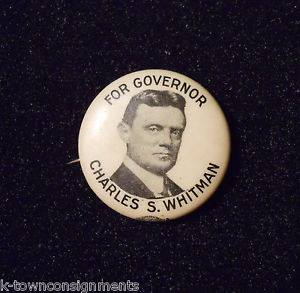
Earlier today, Gertrude Pinchot and a number of other members of the pro-birth-control “Committee of 100” met with New York Governor Charles Whitman in Albany, where he expressed sympathy for Byrne, and her cause as well.

Whitman indicated that he supported the Committee’s suggestion that he appoint a commission to study how to change New York State law, which currently makes it a criminal offense to sell or give away information on birth control or any contraceptive devices themselves. He is also open to the possibility of granting Byrne a “conditional” pardon: “I am sworn to enforce the law, and I could grant Mrs. Byrne a pardon only on condition that she would refrain from violating it upon her release.”

Apparently, the Governor wants to grant her a pardon which would leave Byrne free to speak and write in favor of legalizing birth control, but she would have to promise never to repeat her “offense” of giving out specific information about how to prevent conception. Dr. Mary Holton noted that there might be a way for Nurse Byrne to get around that restriction: “She can promise the Governor that she will not violate the law in this State, and go over to New Jersey and practice.”

The Governor also said he thought there should be an appeal of Byrne’s conviction, so that the issue of the constitutionality of bans on birth control and contraceptive information could be looked into by the courts. But one complicating factor is that if he pardons her, all legal proceedings are ended, so an appeal and court test of this outrageous Empire State law would no longer be possible for her.

1798757_10201831404650354_1916043758_n

Though a “conditional” pardon was not entirely satisfactory to the delegation – Byrne’s sister, Margaret Sanger, especially – they immediately went to the Governor’s legal assistant to obtain a pardon application blank, and also the paperwork necessary for an order compelling the Commissioner of Correction to allow Sanger to visit her sister in prison. Commissioner Lewis began denying Byrne any outside visitors even before her force-feedings began a little after midnight on the morning of the 27th, following a four and a half day hunger strike. The appeal for amendments to change the State’s anti-birth-control law was drafted by Professor John Dewey of Columbia University and signed by 39 Columbia professors plus a number of members of the City College faculty.

Ethel Byrne continues to refuse to eat voluntarily, and is being force-fed for the fifth day at the Workhouse on Blackwell’s Island. Twice a day, milk, malted milk, chicken broth, sugar and a stimulant are administered through a funnel at the end of a rubber tube inserted through her throat to her esophagus.

Commissioner of Correction Lewis, who has been unsympathetic toward Byrne from the beginning, now wants to start charging her room and board and has found a law that may allow it. He said today: “If we have people who persist in boarding with us, I think it would be a wise thing for the city to enforce this provision of the law and charge them board, especially if they insist on lying in bed, instead of working like the other prisoners.”

Fortunately, the public has become far more concerned about Ethel Byrne than Commissioner Lewis, and support for decriminalizing contraception has clearly been increasing as well. So while ignorance and repression may still be Federal and State policy in regard to family planning, the days of anti-birth-control laws now appear to be numbered, and the only question is whether they shall be overturned by the courts as unconstitutional, or by public demand for more enlightened legislation.

Founding Feminists: January 30, 1917

Founding Feminists is FMF’s daily herstory column.

FoundingFeministLogo-color

Imprisoned birth control advocate Ethel Byrne’s force-feedings continue, as do nationwide protests over her conviction and treatment.

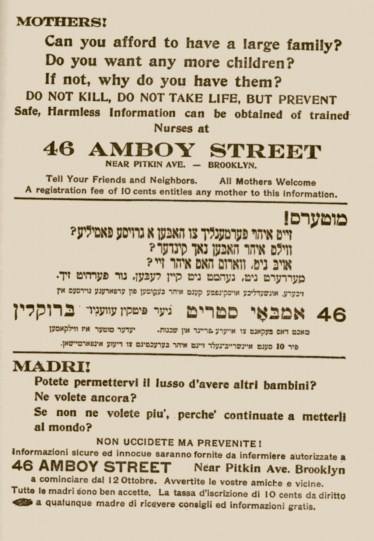
The flyer posted back in October advertising America's first birth control clinic.
The flyer posted back in October advertising America’s first birth control clinic.

Today a telegram was sent from the Chicago Economic Forum to New York City Commissioner of Correction Burdette Lewis which said:

The Economic Forum assembled on Sunday at Colonial Hall, Randolph and Dearborn Streets, vigorously and unanimously protests the cruelty being practiced on Mrs. Ethel Byrne under your authority of forcibly feeding her. Your violence is of the same quality as the court’s injustice.

Commissioner Lewis replied:

The penitentiary laws of New York provide: ‘Every person guilty of attempting suicide is guilty of a felony. A person who willfully in any manner advises, encourages, abets or assists another person in taking the latter’s life is guilty of manslaughter in the first degree.’ I will not permit or abet the violation of either section. I would neglect my duty if I willingly permitted a prisoner to injure himself.

Byrne has been in custody since January 22nd, after being convicted of violating Section 1142 of New York State’s Penal Code by furnishing information on birth control to patients at the clinic she, Margaret Sanger and Fania Mindell operated in Brooklyn from October 16th until the 26th when it was raided and closed. Immediately after her conviction she began a hunger strike, and the force-feedings commenced after she had gone without food for the first four and a half days of her 30-day sentence.

She is currently being force-fed twice a day, with beef juice newly added to Byrne’s diet of eggs, milk, and brandy, administered through a funnel at the top of a rubber tube inserted down her throat to her esophagus.

According to prison officials, she is supposedly doing well, “cooperating” in the procedure by not resisting the force-feedings, and even took a walk around the ward this morning. However, since not even her sister, Margaret Sanger, or her lawyer have been permitted to see her since before the force-feedings began just after midnight on the morning of the 27th, there is great skepticism about the official reports, and a growing concern about her health.

Founding Feminists: January 29, 1917

Founding Feminists is FMf’s daily herstory column.

FoundingFeministLogo-color

feature image via buttonknees.

Three thousand people cheered Margaret Sanger’s speech earlier tonight at Carnegie Hall, as she called for the repeal or overturning of Section 1142 of the New York State Penal Code and all similar statutes.

This law makes it a criminal offense for anyone to sell or give away contraceptives – or even information about birth control. The audience also expressed its strong support for Ethel Byrne, who is being force-fed after engaging in a four and a half day hunger strike in the Workhouse on Blackwell’s Island. She is serving a 30-day sentence for the “crime” of distributing contraceptive information.

1513660_10201821266756913_891168404_nSanger was able to attend tonight’s meeting despite having been on trial today on the same charges as her sister, Ethel Byrne. The three-judge panel has not rendered a verdict yet, and therefore could not impose the expected sentence.
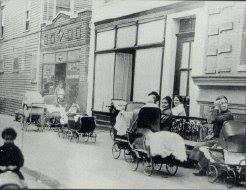
Sanger’s trial opened with testimony from the female police officer who arrested her on October 26th, ten days after she, Byrne and Fania Mindell opened the nation’s first birth control clinic. Officer Margaret Whitehurst had been to the clinic before, in an undercover role, to gather evidence. Whitehurst said that when she entered the clinic on the 26th, she observed Sanger sitting in a back room with an open box of Aseptikon Vaginal Suppositories on the table. Sanger was talking to three women on the other side of the table. After putting down the Aseptikon, Sanger picked up two rubber birth control devices, one for men and one for women, and continued talking.

Officer Whitehurst said that at this point, she and two male officers placed Sanger under arrest, and after interrogating the three other women, took Sanger to the station house in a patrol wagon. After more witness testimony and lengthy arguments from Assistant District Attorney Edward Cooper and defense lawyer Jonah Goldstein, Presiding Judge Freschi said: “This is a very close case. The court will reserve decision and ask both sides to submit briefs.”

At the Carnegie Hall rally tonight, Sanger left no doubt about her goal of repealing Section 1142 of New York State law and the Federal “Comstock Act,” both of which classify birth control devices and information on their use as obscenity:

I come to you tonight from a crowded courtroom, from a vortex of persecution. I come not from the stake at Salem, where women were burned for blasphemy, but from the shadow of Blackwell’s Island, where women are tortured for ‘obscenity.’ ….. My purpose in life is to arouse sentiment for the repeal of the law, State and Federal. It is we women who have paid for the folly of this law, and it is up to us to repeal it.

The audience members enthusiastically passed a number of resolutions by acclimation. They condemned the denial of a jury trial to Sanger and the refusal of the judge to stay Byrne’s sentence while her conviction is being appealed. They also expressed sympathy for Byrne, and protested her being denied visitors by Commissioner of Correction Lewis. Finally, they pledged to “secure such change in State and Federal laws as shall put birth control knowledge within the reach of all who need it” and “unwavering moral and financial support” to Margaret Sanger “in her campaign to establish the principle of voluntary motherhood in this country.”

The evening was a great success, with the proceeds from the 25-cent to 75-cent seats, as well as the high-priced boxes going to help the campaign to decriminalize birth control. To the surprise of many, sales of the first issue of Sanger’s “Birth Control Review,” which contains articles from such noted individuals as H. G. Wells and Havelock Ellis, advocating legalization of birth control, were not blocked by police, and numerous copies were sold at 15 cents each.

But while spirits were high at Carnegie Hall, Ethel Byrne is still unjustly imprisoned in the grim surroundings of the Workhouse. She continues to refuse to take food voluntarily, and is still being force-fed, though now only twice a day instead of three times.

One incident in her continuing ordeal exemplifies her character. When physicians offered Byrne the opportunity to take two pints of nourishment from a glass instead of a rubber tube inserted down her throat to her esophagus, and assured her that “nobody would know” she refused, saying: “Nobody else might know about it, but I would, and I would not be following out the course I have laid down.” Even Burdette Lewis, the Commissioner of Correction, had to admit that “she appears to be a very conscientious woman.”

The battle is far from over, but it has certainly reached a new stage. And thanks to the courage and determination of women and men like those here tonight, the fight for reproductive freedom will continue in public forums, courtrooms, prisons, State Legislatures, and Congress until total victory is achieved !

Founding Feminists: January 28, 1917

Founding Feminists is FMF’s daily herstory column.

FoundingFeministLogo-color

A regular schedule of force-feedings is being drawn up by Workhouse authorities for Ethel Byrne, now serving a 30-day sentence for giving out information on contraception last October at the nation’s first birth control clinic in Brooklyn.

On October 26th, after providing services to at least 400 women since it opened ten days earlier, the clinic at 46 Amboy Street was raided and closed by police for violating Section 1142 of the New York State Penal Code, which prohibits anyone from giving out information on contraception, or actual birth control devices. Byrne’s trial was held before a three-judge panel on January 8th, with sentencing on the 22nd.

1625456_10201815865901895_1101342415_n
The clinic at 46 Amboy Street in Brooklyn when it was in operation from October 16th to 26th of last year.

Ethel Byrne has been undergoing force-feeding three times a day since just after midnight yesterday morning. The procedure consists of having a rubber tube inserted through her mouth and into her esophagus while a pint of milk, two eggs, and a small amount of brandy are poured in through a funnel.

The authorities have announced that they will not end the feedings when she has recovered from the immediate effects of her four and a half day hunger strike. They will continue the ordeal until she agrees to eat and drink voluntarily. Commissioner of Correction Lewis has been besieged by telephone calls from people objecting to Byrne’s treatment, but he insists that it is nothing unusual:

Mrs. Byrne is being fed because the law requires it. Forcible feeding is nothing to cause so much comment. It is an every day matter with us. We constantly get alcoholics and drug addicts who must be forcibly fed. We are not permitted to allow prisoners to commit suicide. The only difference between Mrs. Byrne and the others is that Mrs. Byrne has someone on the outside giving out statements about her and us.

That “someone” is Margaret Sanger, who along with Fania Mindell will go on trial tomorrow for the same offense as Byrne. Since Sanger has also vowed to go on a hunger strike if jailed, Workhouse officials said today that she will not be allowed to go over four days without food as her sister did, but will probably be force-fed after two.

Neither Sanger, nor Byrne’s lawyer have been able to see the prisoner for three days, and there is growing concern about her true condition, despite reassuring bulletins issued by the Workhouse that allegedly show her condition improving. At 6:00 this evening the latest report said that her temperature was 97, pulse 96, respiration 19, blood pressure 122, and that her physical and mental condition were both “good.”

On another front, it was announced today that a delegation from the Committee of 100 will go to Albany on the 31st to ask New York Governor Charles Whitman to commute Byrne’s sentence. The Committee was organized by Gertrude Pinchot and other active members of the National Birth Control League, such as Rose Pastor Stokes, Crystal Eastman and Juliet Rublee, to protest the arrests at the clinic and to raise money to help with the growing legal expenses of birth control advocates.

The mass meeting in Carnegie Hall tomorrow night in support of those arrested at the clinic, and to promote the legalization of birth control, is now a sold-out affair, though six box seats will likely be empty. They have been reserved for the three judges who convicted and sentenced Ethel Byrne, the Assistant District Attorney who prosecuted her, and two of his staff members. The police, on the other hand, are expected to show up, since there will be an attempt to distribute copies of the first issue of the “Birth Control Review,” containing articles favoring contraception.

The immediate goal of local birth control advocates is to repeal the law under which Byrne has been convicted and Sanger and Mindell charged. Section 1142 of the New York State Penal Code reads as follows:

INDECENT ARTICLES: A person who sells, lends, gives away, or in any manner exhibits or offers to sell, lend or give away, or has in his possession with intent to sell, lend or give away, or advertises, or offers for sale, loan or distribution, any instrument or article, or any recipe, drug or medicine for the prevention of conception or for causing unlawful abortion, or advertises or holds out representations that it can be so used or applied, or any such description as will be calculated to lead another to so use or apply any such article, recipe, drug, medicine or instrument, or who writes or prints, or causes to be written or printed, a card, circular, pamphlet, advertisement, or notice of any kind, or gives information orally, stating when, where, how, of whom, or by what means such an instrument, article, recipe, drug or medicine can be purchased or obtained, or who manufactures any such instrument, article, recipe, drug or medicine, is guilty of a misdemeanor, and shall be liable to the same penalties as provided in section eleven hundred and forty-one of this chapter.

The punishment prescribed in Section 1141 is a sentence of “not less than ten days nor more than one year’s imprisonment or a fine of not less than fifty dollars nor more than one thousand dollars or both fine and imprisonment for each offense.”

Founding Feminists: January 27, 1917

Founding Feminists is FMF’s daily herstory column.

FoundingFeministLogo-color

Force-feeding of birth control advocate Ethel Byrne at the Workhouse on Blackwell’s Island has begun, and will continue on a three-times-per-day basis.

She’s currently serving a 30-day sentence for violating New York State law by distributing contraceptive information at America’s first (and so far only) birth control clinic, which was raided and closed on October 26th, 10 days after its opening.

Mrs. Rose Pastor Stokes, Mrs. Margaret Sanger and Ethel Byrne, Mrs. Sanger's sister, in court. Mrs. Sanger is on trial for sending her book "The Woman Rebel" through the mail. via Jacqui Brennan.
Mrs. Rose Pastor Stokes, Mrs. Margaret Sanger and Ethel Byrne, Mrs. Sanger’s sister, in court. Mrs. Sanger is on trial for sending her book “The Woman Rebel” through the mail. via Jacqui Brennan.

Hunger-striker Byrne had gone without food for four and a half days when prison authorities decided that her condition warranted this extreme form of intervention. Following an examination at 11:45 last night, doctors ordered her wrapped in a blanket and the feeding apparatus brought in. A rubber tube was inserted through her mouth into her esophagus, and a pint of warm milk, two eggs and a small quantity of brandy were poured through a funnel at the top of the tube. The procedure was repeated for a second time at 2:30 p.m. with a sixteenth of a grain of strychnine added, then performed a third time earlier this evening.

There is great concern tonight as to Byrne’s true condition. Her sister, Margaret Sanger, has received reports that Byrne has been unconscious since early this morning, but prison officials deny this, and have been releasing updates showing her to be “improving.” Nothing can be verified because Commissioner of Correction Burdette Lewis has denied anyone other than two staff physicians and two visiting prison physicians access to the prisoner.

Meanwhile, protests continue. Emma Goldman sent a telegram yesterday to Commissioner Lewis stating:

A thousand people in meeting assembled at Forward Hall, New York City, to protest against the continued imprisonment of Mrs. Ethel Byrne. You have a rare opportunity to prove your moral worth by refusing to be a party to the official starving to death of a woman.

Today the Commissioner replied: “I am following your advice. We fed her last night at 11:45 o’clock.”

Another mass meeting will be held in Carnegie Hall on the 29th, and Dr. Frederick Blossom, President of the New York City Birth Control League, said that at the meeting the first issue of the “Birth Control Review,” containing articles advocating birth control would be distributed. It is rumored that the police will try to stop any distribution of the publication, and if they do Blossom will appeal to the courts. So, the battle will continue on many fronts!

Founding Feminists: January 24, 1972

Founding Feminists is the FMF’s daily herstory column.

FoundingFeministLogo-color

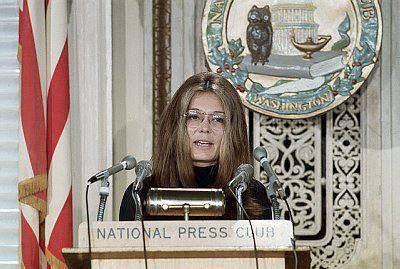
Gloria Steinem got a standing ovation today at the National Press Club, and the fact that she was applauded by an audience in which women slightly outnumbered men was proof of how much things can change when feminists are determined to change them.

From its founding in 1908 until 1955, women reporters were banned from even entering the National Press Club as guests. After that time they were allowed in, but had to bring their own brown-bag lunches and sit quietly in the balcony without asking questions of the speakers, while male reporters dined splendidly at the ballroom tables and were permitted to ask the day’s most noteworthy news makers as many questions as they wished. Finally, on January 15th of last year, it was decided to admit women as members, with precisely the same rights and privileges as men.

But all those years of protests, and last year’s vehement debate over admitting women seemed like relics of a previous century, with women at least as numerous as men at the tables, and several of the women full-fledged members, not just guests. The club’s president, Warren Rogers, even seemed apologetic about his previous opposition to admitting women and said: “That was in the dark days of my early middle age. I have grown.”

1546459_10201792206790432_905895493_n

Unfortunately, Rogers hasn’t quite outgrown the idea that women should be judged primarily on their physical appearance, nor learned the word “feminist” as yet, because in his introduction he described Steinem as “certainly the most attractive of the women’s libbers.” That remark, which would probably have gone unnoticed or gotten some applause from an all-male, pre-feminist audience, drew some hisses this year.

Gloria Steinem is in Washington, D.C., today as part of a nationwide tour promoting her new magazine, “Ms.” (pronounced “miz”) which will hit the news stands for the first time this week. It intends to be a feminist forum for all women, and a revolutionary alternative to the old-style “women’s magazines” that rarely challenge, and generally reinforce, traditional female roles. If her magazine is anything like her speech today, there’s no danger of it being confused with “Woman’s Day,” “Redbook,” or “McCalls.”

She bravely began her speech to a room full of reporters and editors with a two-front attack on the media, criticizing both unequal employment practices and stereotyped portrayals of women: “The real nitty-gritty comes here, for both women and minority men… They are unlikely to be put in a position of authority over white men. How many women or Black city editors have you met ?”

Steinem then went on to single out as an example of bias one man about whom six people complained to her before her speech:

One metropolitan editor here in Washington was the subject of six complaints for clear prejudice against women. The editor is said to give the women, who are less than 20 per cent of his staff, more than 60 per cent of the night assignments and to put women reporters with up to five years’ experience back to the cub reporter work of writing obituaries.

(Washington Post editor Harry Rosenfeld presumed he was the target of this accusation and strongly denied the charges later in the afternoon.)

Steinem then went on to cite numerous instances of unequal pay for equal work, hiring bias, and the exclusion of women from various associations made up of media professionals.

She used as a prime example of bias in coverage of women the fact that back in 1969, when the State of New York was holding hearings on possible changes in its abortion law, the only witnesses called to testify were “14 men and one nun,” and “New York reporters saw nothing peculiar about that, and only began interviewing women on the question after the women started demonstrating in the streets.” She said that this kind of attitude shows “women are not taken seriously. We are undervalued, ridiculed or ignored by a society which consciously assumes that the white male is the standard and the norm,” and said the press should challenge this assumption, not perpetuate it.

She then got to the main reason for the speaking tour, and began discussing some of the articles in her new magazine. In one by Daniel Ellsburg, he describes “the need to win, or at least not to lose, as a culturally masculine problem. The less secure the male, the more he has to prove: witness Richard Nixon.” (Finally a subject the audience could laugh about …) “Perhaps all those years of sitting on the bench watching all the football players go by ….” she said, speculating on the cause of his problem. Then, to the delight of many, she called the President “the most sexually insecure chief of state since Napoleon.” She also noted that “the most hawkish group in society is likely to be white, male, well-educated, high-income, with a drive for increased status – precisely the group most likely to make foreign policy.”

During the lively question-and-answer session, she was asked about the fact that not all men are “hawks” nor are all women “doves” in regard to war. Though she agreed Senator Margaret Chase Smith (R-Maine) was hawkish, she also noted that: “In the whole hierarchy of hawks, she’s nowhere.”

She said that the Nixon Administration seems disappointed that Indira Gandhi isn’t as warlike as they had hoped. They assumed that any “self-respecting man” would have invaded West Pakistan, but this woman Prime Minister hasn’t. Steinem noted that Margaret Mead had observed that women are “less warlike,” but can be even more fierce than men when fighting in self-defense.

Returning to politics, she got another laugh at the President’s expense when she was asked in what areas she would like to get support from Nixon. “Impeachment, maybe,” she quickly replied. But after a few moments she remembered his longtime support for the Equal Rights Amendment and said she really could use his help in getting it through Congress.

She has already expressed her support for both Senator George McGovern (D-South Dakota) and Rep. Shirley Chisholm (D-New York) in their Presidential campaigns, but she definitely isn’t a supporter of Senator Ed Muskie (D-Maine). The first time she met him, she questioned him about why he took so long to come out against the current war in Vietnam. He lost his temper, and was overheard saying: “I knew we shouldn’t have let this girl in in the first place.”

Her appearance ended as it began, with a reminder of the Press Club’s previously all-male history, and a perfect illustration of her point about the assumption of masculinity as the norm when when was presented with the traditional gift of a National Press Club tie. Both she and her audience got a good laugh out of it, then she left amid loud and sustained applause.

Founding Feminists: January 23, 1917

Founding Feminists is FMF’s daily herstory column.

FoundingFeministLogo-color

Ethel Byrne, imprisoned birth control advocate, is fully resisting jailhouse authorities today, just as she vowed to do yesterday when sentenced to 30 days for disseminating contraceptive information.

1044701_10201786782094818_1284436158_nShe committed her “crime” at America’s first and only birth control clinic, founded by her sister, Margaret Sanger, Byrne, and Fania Mindell. It opened at 46 Amboy Street, in Brooklyn, on October 16th, then was raided and closed on the 26th.
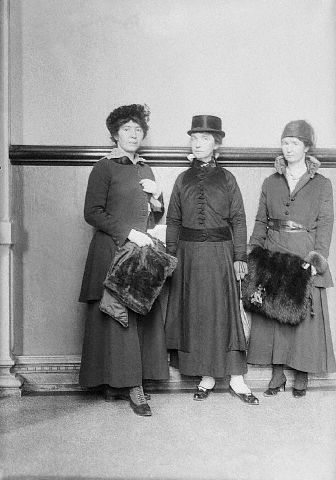
Byrne is not yet in her cell in the Workhouse on Blackwell’s Island because after initially arriving there earlier today, a writ of habeus corpus brought her back to court, and by the time it was dismissed, it was too late to return her to the Workhouse to complete the rest of the in-processing procedure. She is spending the night in a cell at The Tombs, in Lower Manhattan.

But regardless of location, her hunger strike is on, and she says that she will not cooperate in any way with her jailers. “I do not intend to have any physical contact. My sentence is unjust, and I shall protest against it in this way. I shall not work, eat, or drink while I am here.”

Commissioner of Correction Lewis is skeptical, and equally determined. He says that though prisoners have threatened hunger strikes before, none have actually been carried out, and that if at some point Byrne’s health is threatened, he will resort to force-feeding her. He intends to restrict press access to one female reporter from each paper – entitled to one visit only.

Aside from food and water, Byrne has thus far refused a bath and a physical examination. The confrontation with the female doctor who was to perform the exam was temporarily avoided when the order came down that she be immediately returned to court for a hearing. But upon arrival at Blackwell’s Island tomorrow, the battle of wills shall be renewed.

Founding Feminists: January 22, 1973

Founding Feminists is FMF’s daily herstory column.

FoundingFeministLogo-color

A stunning and landmark victory today in the 152-year battle over abortion rights in the United States.

Thanks to a Supreme Court ruling in the case of “Roe vs. Wade,” American women have not only regained the same right to abortion they had in Colonial Times and Early America, but have had their right to decide whether or not to carry a pregnancy to term affirmed as something protected by the U.S. Constitution.

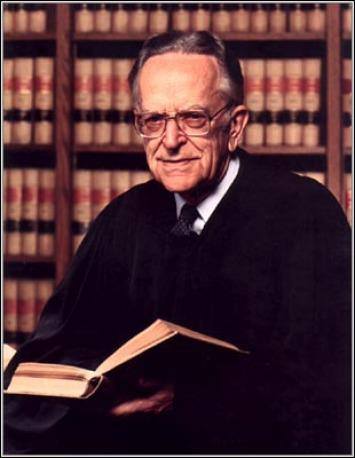
In the words of Justice Harry Blackmun, writing for the 7 – 2 majority: “The right of privacy, whether it be founded in the Fourteenth Amendment’s concept of personal liberty and restrictions upon state action, as we feel it is, or, as the District Court determined, in the Ninth Amendment’s reservation of rights to the people, is broad enough to encompass a woman’s decision whether or not to terminate her pregnancy.”

1546435_10201781501682811_1327297274_n
Justice Harry Blackmun

But today’s decision, significant as it may be, is only one part of a long battle for abortion rights, fought on many fronts and using a number of different approaches. So, though Justices Blackmun, Burger, Douglas, Brennan, Stewart, Marshall and Powell deserve praise for their ruling, far more than seven people can share credit for today’s victory. It took the combined efforts of many others over many years to create the framework in which this historic ruling could be made.

The first anti-abortion laws were passed in a medically primitive, pre-antiseptic era, when it was a dangerous procedure – even more risky than childbirth. The first law restricting abortion in the U.S. was passed in 1821, when Connecticut outlawed the procedure after “quickening” (the time the movements of a fetus can be felt, which can be around 16 – 18 weeks). In 1828, New York became the first state to ban early abortions, but there was no rush by other states to follow suit. In 1840, abortion was still fully legal in 18 of the 26 states.

In 1859, the American Medical Association (all male until 1876) launched an anti-abortion drive, and a wave of new laws prohibiting abortion followed. No woman in America could vote at the time, and until 1893, when women in the State of Colorado won the vote, they had voted in only two sparsely-populated Territories, so their views were of no concern to State Legislators during the time these strict bans were passed.

Many other factors were involved in the criminalization of abortion. Falling birth rates among American-born Caucasian women may have been a racist and xenophobic consideration for some. Since the feminist movement was making meaningful gains by the 1860s, there may also have been a “backlash” factor among Victorian men who wanted to reinforce childbearing and child raising as woman’s traditional – and only – roles.

In 1873, things went from bad to worse. Congress passed the Comstock Act, which made dissemination of anything related to abortion or birth control through the mails a Federal crime, punishable by up to five years’ imprisonment. Many states passed equally punitive laws banning contraception and abortion, or even giving out information about either.

But prohibitionist policies didn’t stop abortions from being done, only from being done in a legal, well-regulated manner. In 1910, it was estimated that 80,000 illegal abortions were being performed annually in New York City alone. In 1935, Dr. Isadore Kahn, Medical Examiner for the New York City Board of Health, said that 75 New York City abortionists were doing a combined total of 600 illegal operations each day, and estimated that the total number done in the city was about 250,000 a year. One fourth of the patients admitted to Bellevue Hospital obstetric wards that year were suffering from poorly-performed illegal abortions. In 1936, Dr. Frederick Joseph Taussig did a landmark study and carefully estimated that there were almost 700,000 abortions each year in the U.S., resulting in the deaths of 8,000 women. Throughout the 1940s and 1950s, illegal abortion was one of the biggest “rackets” in the country.

The move toward re-legalization began in 1959, when the American Law Institute framed a model law which would permit abortion if continuation of the pregnancy “would gravely impair the physical or mental health of the mother,” or if the doctor believed that “the child would be born with grave physical or mental defects,” or if the pregnancy resulted from rape or incest.

The case of Sherry Finkbine, who had to go to Sweden to get an abortion in 1962 after discovering that Thalidomide, which she had been taking as a sleep aid, caused severe fetal deformities, also brought attention to the extreme restrictions that permitted only about 8,000 of the estimated one million abortions performed annually in the U.S. to be done safely and legally.

By the mid-1960s, a re-legalization movement had begun to emerge, and it rapidly gained support. In 1965, the A.C.L.U. lent its prestige to the movement, in 1966 the Association to Repeal Abortion Laws in California was founded, and in 1967, full re-legalization was endorsed by the recently-formed National Organization for Women. That same year, Colorado, California and North Carolina reformed their laws along A.L.I. guidelines. Georgia and Maryland followed in 1968, with Arkansas, Kansas, Delaware, Oregon and New Mexico doing the same in 1969.

But 1970 was a true turning point in the battle. Hawaii totally repealed – not just “reformed” – its abortion law. The State of New York made abortions up to 24 weeks of gestation available to anyone, with no residency requirement, or the kind of humiliating procedure imposed in many states which required a woman to plead for permission before a panel of doctors – virtually all of whom were male. In a clear indication that the public was ready for change, Washington State’s anti-abortion law was tossed out by voters in a referendum.

By 1972, 64% of Americans were telling Gallup pollsters: “The decision to have an abortion should be made solely by a woman and her physician.” Though the number of abortions performed illegally was always an estimate, the number done safely and legally can be known, and has skyrocketed recently due to those who worked to reform or repeal abortion laws in their home states. That figure of about 8,000 done legally out of a million performed each year in the mid 60s rose to 22,700 in 1969; 193,500 in 1970; 262,807 in 1971 and 586,000 last year – outnumbering illegal procedures for the first time in a century.

Naturally, these developments have caused a major backlash among anti-abortion groups, and both sides had been preparing for a major escalation of their actions this year. But with the Supreme Court declaring today that a woman has a Constitutional right to terminate a pregnancy, and that states may only deny this right during the third trimester, when very few are performed, everything has suddenly changed.

Today’s ruling is truly a landmark decision, and one which should be celebrated by all who believe in a woman’s right to make reproductive decisions for herself, instead of having them made for her by far away – and overwhelmingly male – legislators. But as comforting as it might be to think that the battle for reproductive rights is over, nothing that’s happened in the past few years suggests that the opposition will graciously concede defeat and go away.

The nation’s disastrous experiment with abortion prohibition has finally been ended, but all Supreme Court Justices are eventually replaced, and a switch of only three votes would be enough to overturn “Roe.” Even if it stays on the books, there’s no doubt that every imaginable attempt to chip away at it will be made by opponents, who are as dedicated to doing away with the right to legal abortion as proponents are to protecting it.

The battle to win this basic right has been fought by those who grew up without it. But the task of insuring that abortion and birth control are always both legal and accessible must eventually fall to those too young to have any memory of back-alley abortion mills, run by incompetent or predatory practitioners, or being driven to an attempt at self-abortion. But if those who never had this right could fight so hard to win it, then surely, those who will have had the privilege of taking reproductive choice for granted all their lives will fight even harder for it if one day they are in danger of having it taken away.

Founding Feminists: January 21, 1972

Founding Feminists is FMF’s daily herstory column.

FoundingFeministLogo-color

This is certainly an exciting time to be a feminist, and that was especially true in Chicago today.

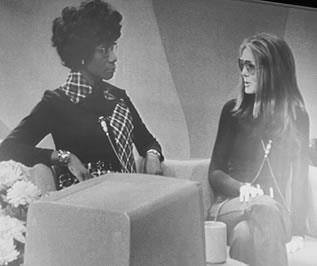
Women at the center of two national events next week are here promoting their upcoming ventures. Rep. Shirley Chisholm (D-NY) is in town to talk about her Presidential campaign, which has been running informally since July, but will be officially launched four days from now. Gloria Steinem is here as well, generating publicity for the first stand-alone issue of “Ms.” magazine (pronounced “miz”), which will hit the news stands in just a few days.

1525550_10201776253471609_303812220_n

They started the day early – and together – as guests on Channel 7’s “Kennedy and Company.” Steinem was delighted to share the camera with Chisholm, saying, “I don’t even remember when we first met. I know our first long conversation was about two years ago when I tried to talk Shirley into running against Senator Javits. We’re in contact with each other at least once a month. We spent a fortune in telegrams yesterday trying to arrange our press conferences here so they wouldn’t conflict.”

Though she forgot to bring along her copy of “Ms.,” Steinem did remember to wear her “Shirley Chisholm for President” button. Since she’s already been campaigning for Senator George McGovern (D-SD), Steinem was asked if there was a conflict, but she said that she supported both candidates.

Steinem had undivided loyalty toward her new magazine, however. Originally an insert in the December 20th issue of “New York” magazine, the response was so great that a full-length version is about to be sent out to news stands all around the country. If the 300,000 issues printed up sell out (it’s labeled a “Spring” issue so it will have several months to do so), “Ms.” will become a monthly “forum for all women” and deal with feminist and real women’s issues in a way that mainstream “women’s magazines” don’t.

The idea could work. Though “The Revolution,” owned by Susan B. Anthony and edited by Elizabeth Cady Stanton and Parker Pillsbury had a rather short run after its launch in 1868, Lucy Stone’s “Woman’s Journal” was successful, and quite influential from 1870 until 1917. Fifty-five years later it’s time for the country to have a new, overtly feminist, nationally-distributed, large circulation magazine.

Rep. Chisholm certainly sees the need for such a magazine in a nation that has yet to get over its biases in regard to sex:

People in this country have to realize no psychological test says a man is more intelligent than a woman. We here in the United States have become so hung-up on sex. We waste our energies talking about the differences between men and women, not the similarities. I have talent, and I have ability. Permit me to use them. Don’t reject me because I’m a woman.

Apparently there is still plenty of work to do in regard to eliminating sex bias in the media in particular. One nationally syndicated talk show has given the eight other candidates seeking the Presidential nomination an entire show to themselves, but Chisholm was offered only the chance to share a show with Gloria Steinem. As Steinem notes: “To this day, she hasn’t been invited to do the entire show. The problem is that people refuse to take Shirley’s candidacy seriously.”

Later in the day, Chisholm addressed a Catholic audience at a Cana Conference seminar at the Drake Hotel, and talked about the future of Black families:

If we are to relieve the burden it will not be at conferences and rap sessions about their situation, but by providing employment opportunities for the Black man who can’t support his family, but instead must leave so that his wife will be eligible for welfare benefits. No one stops to recognize that in America, Black men on the street corners do not have passports to American society – a white skin – and are paid wages embarrassing to them. Union membership is closed.” She then suggested a solution: “We need a Marshall Plan immediately that will give Black men an opportunity to work and will provide day care centers so that money spent for child care can be spent instead where it is needed – for rent, food, clothing, not to mention education.

Addressing the issue of reproductive rights, Chisholm told the priests, nuns and other members of the Church in attendance that she was a supporter of birth control and legalizing abortion:

I reject the notion that birth control by Black Americans is a form of ethnic suicide… as long as we have women in civilized, Western society – Black women, white women, pink women – we’re going to have abortion. This accounts for the largest number of maternal deaths in this country, particularly among poorer women, from quack abortionists, people who have butchered bodies in back rooms.

Let’s hope that both “Ms.” magazine and “Chisholm for President” meet with success, and are just two of many more manifestations of the new wave of feminism that has already brought about such major changes in less than a decade.

Founding Feminists: January 17, 1916

Founding Feminists is FMF’s daily herstory column.

FoundingFeministLogo-color

Over a hundred individuals who favor legalization of birth control devices and contraceptive information gathered tonight in New York City’s Breevort Hotel in support of Margaret Sanger.

She is scheduled to go on trial tomorrow for violating Federal law by distributing copies of her magazine, “The Woman Rebel,” which included articles on contraception.

Rose Pastor Stokes began the meeting by reading a number of letters from those in support of Sanger’s campaign to remove birth control and information about it from the list of “obscene” items criminalized by both Federal law (The Comstock Act) and State law (Section 1142 of the New York State Penal Code.)

The first speaker was Dr. Ira S. Wile. He made a point that proved quite popular with the audience by saying that Sanger should get support not just from those who favor birth control, but from all those who believe in the right to discuss controversial and vital topics frankly and publicly. Dr. A. L. Goldwater spoke next, recounting and praising her work. After he introduced the guest of honor, she came forward to speak, amid great applause.

Early into her speech, she defended her aggressive – even illegal – methods of promoting the cause:

I realize keenly that many of those who understand and would support birth control propaganda if it were carried out in a safe and sane manner cannot sympathize with or countenance the methods I have followed in my attempt to arouse the working woman to the fact that bringing a child into the world is the greatest responsibility.

They tell me that ‘The Woman Rebel’ was badly written; that it was crude; that it was emotional and hysterical; that it mixed issues; that it was defiant, and too radical. Well, to these indictments I plead guilty. I know that all of you are better able to cope with the subject than I am. I know that physicians and scientists have a greater technical fund of information – greater than I had on the subject of family limitation.

There is nothing new, nothing radical in birth control. Aristotle advocated it; Plato advocated it; all our great and modern thinkers have advocated it. It is an idea that must appeal to any mature intelligence.

She then said that it was time for contraceptive knowledge to be possessed not just by a small group of professionals, but by all people, because those who are denied birth control must either bring far more children than they want, or can support, into often miserable conditions, or resort to dangerous, illegal abortions.

1545228_10201752820165791_1323323406_nSanger said that in the beginning of her battle, she found many of the elite discussing birth control among themselves, but such discussions and information never got to the general public:
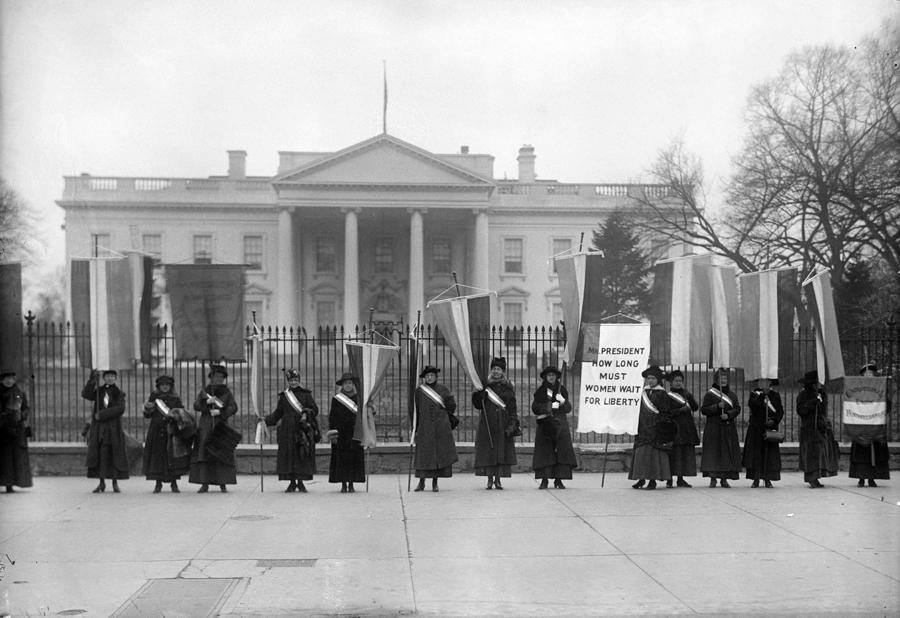
I might have taken up the policy of safety, sanity and conservatism – but would I have got a hearing? And as I became more and more conscious of the vital importance of this idea, I felt myself in the position of one who had discovered that a house is on fire; and I found out that it was up to me to shout out the warning!

The tone of my voice may have been indelicate and unladylike, and was not at all the tone that many of us would rather hear. But this very gathering – this honor you have thrust upon me – is ample proof that intelligent and constructive thought has been accrued. Some of us may only be fit to dramatize a situation – to focus attention upon obsolete laws, like the one I must face tomorrow morning. Then, others more experienced in constructive organization can gather together all this sympathy and interest which has been aroused and direct it.

She then thanked all the guests for their support, and told them that doing something to promote the cause of birth control was the most appropriate and meaningful way of supporting her.

The penalties for distributing birth control information can be substantial, so Sanger is running a real risk when she goes on trial. A few months ago, her husband, William Sanger, served 30 days in jail for violating New York State law by giving out a single pamphlet entitled “Family Limitation.” A man pretending to be a birth control advocate – but who was actually an agent of “anti-vice” crusader Anthony Comstock – hounded Mr. Sanger into searching for, then giving him a copy of the pamphlet, which was in a desk at home among his wife’s papers. She was in Europe at the time.

Margaret Sanger’s case started not long after she began publishing her monthly magazine, “The Woman Rebel,” in March, 1914. Time after time it was deemed “nonmailable” by postal authorities, and on August 25, 1914, she was indicted by the Federal Government for “objectionable” material in her magazine’s issues of March, May and July. Near the end of October, 1914, she temporarily fled to Europe, where she worked with many other birth control advocates, but voluntarily returned to the U.S. on October 6th of last year to face the charges. Her trial was initially to begin at the end of December, but was first postponed until January 4th. At that time the U.S. Attorney’s office offered her a plea bargain in which she would be fined, but not jailed. She rejected the deal, and so will face charges for which conviction could mean a $5,000 fine, imprisonment for five years, or both on each count.

The law she is accused of violating is the U.S. Criminal Code, Section 211 (1909) :

Every obscene, lewd, or lascivious, and every filthy book, pamphlet, picture, paper, letter, writing, print or other publication of an indecent character, and every article or thing designed, adapted, or intended for preventing conception or producing abortion, or for any indecent or immoral use; and every article, instrument, substance, drug, medicine, or thing which is advertised or described in a manner calculated to lead another to use or apply it for preventing conception or producing abortion, or for any indecent or immoral purpose; and every written or printed card, letter, circular, book, pamphlet, advertisement or notice of any kind giving information directly or indirectly, where, or how, or from whom, or by what means any of the hereinbefore-mentioned matters, articles or things may be obtained or made, or where or by whom any act or operation of any kind for the procuring or producing of abortion will be done or performed, or how or by what means conception may be prevented or abortion produced, whether sealed or unsealed; and every letter, packet, package, or other mail matter containing any filthy, vile or indecent thing, device or substance; and every paper, writing advertisement, or representation that any article, instrument, substance, drug, medicine or thing may, or can be used or applied for preventing conception or producing abortion, or for any indecent or immoral purpose; and every description calculated to induce or incite a person to so use or apply any such article, instrument, substance, drug, medicine or thing, is hereby declared nonmailable matter and shall not be conveyed in the mails or delivered from any post-office or by any letter carrier. Whoever shall knowingly deposit, or cause to be deposited for mailing or delivery, anything declared by this section to be nonmailable, or shall knowingly take, or cause to be taken, from the mails for the purpose of circulating or depositing thereof, or of aiding in the circulation or disposition thereof, shall be fined not more than five thousand dollars, or imprisoned not more than five years, or both.

Changing this law, and the many State laws modeled after it, will require both dedication and courage, but it appears that Margaret Sanger has ample supplies of both. Hopefully the publicity generated by her trial tomorrow will cause enough public outrage to mark the beginning of the end of such repressive legislation, and eventually result in birth control becoming easily accessible to all who desire it.

Founding Feminists: January 16, 1957

Founding Feminists is FMF’s daily herstory column.

The Equal Rights Amendment got a major boost today when President Eisenhower became the first Chief Executive to include a call for its passage in a Presidential message to Congress.

He wrote: “The platforms of both major parties have advocated an amendment to the Constitution to insure equal rights for women. I believe that the Congress should make certain that women are not denied equal rights with men.”

via Boston Public Library

The E.R.A. was first introduced into the Senate by Senator Charles Curtis (R-Kansas) on December 10, 1923. It was then introduced into the House three days later by Rep. Daniel Anthony (R-Kansas), a nephew of Susan B. Anthony. It has been the subject of hearings since February, 1924. The Republican Party became the first to endorse it in 1940, with Democrats following suit in 1944. In 1945, President Truman became the first President to personally endorse it. In 1946 the Senate voted 38-35 in favor, and though well short of the 2/3 needed, it was still an encouraging show of progress and support.

In 1950 the E.R.A. passed the Senate 63-19, and in 1953 by 73-11. However, this was with an extra section attached by Senator Carl Hayden (D-Arizona) declaring that: “The provisions of this article shall not be construed to impair any rights, benefits or exemptions, now or hereafter conferred by law upon persons of the female sex.”

The “Hayden Rider” is totally unacceptable to the amendment’s author and chief advocate, Alice Paul of the National Woman’s Party. Her amendment guarantees absolute legal equality for both men and women: “Equality of rights under the law shall not be denied or abridged by the United States or by any state on account of sex.” Seven years ago, when the “Hayden Rider” was first tacked on, Paul said: “It is impossible to imagine the Constitution containing two such paragraphs,” and she has not changed her opinion.

Alice Paul said today that only four more votes are needed in both House and Senate to get the 2/3 necessary to send the amendment to the 48 states, where it needs the approval of 36. Hopefully the President’s endorsement can help sway enough votes to get the E.R.A. passed in its original form, and enable it to swiftly become the 23rd Amendment to the U.S. Constitution. In April, a third of a century (33 years and 4 months) will have passed since the E.R.A. was first introduced into Congress. That’s far too long to have postponed making this simple declaration of equality between men and women a part of our Constitution, so it should be passed by Congress and ratified by the states without delay.

Founding Feminists: January 15, 1917

Founding Feminists is FMF’s daily herstory column.

FoundingFeministLogo-color

Reinforcements – and contributions – for the “Silent Sentinels” today.

The small group of 12 banner-bearing suffragists huddled around the White House gates from 9 a.m. until 5:30 p.m. since the 10th was expanded by enough new recruits today to form a line of pickets stretching almost all the way along the fence.

Support for their protest of President Wilson’s refusal to endorse or work for the Susan B. Anthony (nationwide woman suffrage) Amendment is manifesting itself in many forms and is growing as quickly as the number of protesters. Heavy coats and rain gear have been the most appreciated items donated to the Sentinels as they fight the Winter weather. Among the most generous of their outfitters are Elizabeth Kent and her husband, Independent Representative William Kent of California. They have given not only their own warmest clothing, but gone around collecting more from other supporters so Elizabeth can make her daily donations.

Monetary contributions are certainly welcome, and are coming in at an increased pace. Alva Belmont is the largest donor so far, at $5,000. Louisine Havemeyer sent a note to Alice Paul, who was on the picket line today right along with her troops. The note said: “Good work! Keep it up!” and was accompanied by a check for $200.

Small contributions can mean a lot as well, because they show that even people who are not active in the movement are now lending their support. For example, a schoolmaster leading a group of students along Pennsylvania Avenue walked up to a Sentinel and gave her five dollars. Another man dropped over to their headquarters at the Congressional Union for Woman Suffrage office and dropped off a dollar “to treat the pickets to coffee.” Significantly, there were even a few male supporters of equal suffrage in the line from time to time today alongside the officially designated protesters of the Congressional Union.

Expanded picket lines require more banners, so four more have been added. All the banners ask one of two questions: “MR. PRESIDENT, HOW LONG MUST WOMEN WAIT FOR LIBERTY?” and “MR. PRESIDENT, WHAT WILL YOU DO FOR WOMAN SUFFRAGE?”

1604651_10201743365089420_1835011872_n

Presidential cordiality continues to steadily increase, and has come a long way from the first day when Wilson clearly tried to ignore the pickets. Once again the President smiled, tipped his hat and even leaned forward in a kind of bow while being driven past the gate. But today First Lady Edith Wilson even gave a smile, and the automobile deliberately slowed – instead of speeding up – when entering the White House grounds.

One of the things people wonder about is whether women’s protests can have much political effect, since so many women can’t vote. But women have full voting rights in 11 States now, and for a time today, there were more women voters on the picket line than non-voting women.

President Wilson and Members of Congress must slowly be recognizing the fact that woman suffrage is steadily expanding, and women are becoming more and more of a force in electoral politics. By coming thousands of miles to protest, some of the women from Western States have shown concern for their sisters in non-suffrage States. These pickets should help show the Senators and Representatives in Congress who are elected from suffrage States that their female constituents do care about the issue, and will hold them responsible for their actions in regard to the Anthony Amendment. Even those who currently owe their jobs to a solely male electorate must sense that this will not always be the case, and will hopefully decide that this would be a good time to jump on the “Votes for Women” bandwagon.

>