UPDATE: Supreme Court Does Not Act on Same Sex Marriage

The Supreme Court has delayed its decision on whether or not it will hear a case on same sex marriage. None of the possible seven cases appeared in the orders list [PDF] released this morning that details which cases the Court will take and the ones they have rejected.

Cases being considered range from the inclusion of same-sex partners on federal and state health insurance policies to Social Security benefits to the basic legal right to marry. The Supreme Court has discussed taking these kinds of cases before, but same sex rights advocates were hopeful that a closed meeting on Fridaysuggested that the Court may see a case within the next year. For a case to appear before the Supreme Court, four judges must vote in favor of taking the case.

None of the seven cases were rejected by the Court, which means the Court could still choose to take one of the cases at the next closed conference on December 7th. At times the Court has delayed a decision in order to give the issue further consideration, according to Reuters.

LGBTQ rights, abortion rights, and the death penalty have been on the court’s radar already this year. In October, Supreme Court Justice Antonin Scalia said: “The death penalty? Give me a break. It’s easy. Abortion? Absolutely easy. Nobody ever thought the Constitution prevented restrictions on abortion. Homosexual sodomy? Come on. For 200 years, it was criminal in every state.” Later that month, the court refused to hear a case proposed by anti-abortion Personhood Oklahoma that dealt with extreme personhood legislation.

Media Resources: Reuters 12/3/12; U.S. Supreme Court Orders List 12/3/12; CNN 11/30/12; Feminist Newswire 11/27/12

The United States Supreme Court from ShutterStock

APA Removes Gender Identity Disorder from DSM-V

The American Psychological Association approved changes to the Diagnostic and Statistical Manual of Mental Disorder, or DSM, that would remove transgender from being listed as a mental disorder on Saturday.

The DSM-V, the latest edition of the diagnostic guidelines used by the mental health community, will no longer have “gender identity disorder” as a classification. Instead, the DSM-V will include “gender dysphoria” which is described as emotional distress from “a marked incongruence between one’s experienced/expressed gender and assigned gender.” The DSM-V will be released in May 2013.

Transgender activists are applauding the decision and drawing parallels to the APA’s decision to declassify homosexuality as a mental disorder. Activists are hoping that removing the label of “disorder” will help remove the stigma from the transgender community. The designation of “gender identity disorder” has been used in the past to label transgender individuals as mentally ill.

Media Resources: CBS News 12/3/12; Queerty 12/3/12; ThinkProgress 12/3/12

head green glossy icon on white background from Shutterstock

Obama Administration Endorses Abortion Access for Military Survivors of Rape

The Obama Administration released an official statement yesterday that includes support for abortion access for military survivors of rape. The statement [PDF] calls for changes to the National Defense Authorization Act for 2013, which details the military’s budget, but supports an amendment that would allow military personnel to use their insurance to cover an abortion in cases of rape or incest. The statement also supports access to elective abortions for all servicewoman and military dependents when they use their own funds, including servicewomen overseas.

Under the amendment, armed servicewomen would be granted the same rights as civilian women under federal policies that provide affordable abortion care to women who are the victims of rape or incest. Under the current policy, servicewomen are only eligible for abortion care if the woman’s life is at risk.

Senator Barbara Boxer (D-California) told reporters, “[This amendment] is particularly important given the tragically high rate of sexual assaults in our military. …I believe that American service women are entitled to the same rights and access to reproductive health care as the civilians they protect.”

Media Resources: Huffington Post 11/29/12; Statement of the Administration Policy 11/29/12; East County Magazine 11/27/12; Feminist Newswire 5/25/12

A Group of Soldiers Against the Dawn from Shutterstock

Mississippi Abortion Clinic Fights to Keep Doors Open

The Jackson Women’s Health Organization (JWHO) and the Center for Reproductive Rights filed a motion for a preliminary injunction Wednesday against a state law which could close its doors early next year. Under House Bill 1390, passed in April 2012, doctors who perform abortions must have admitting privileges at a local hospital and they must be board certified OB-GYNs. Currently both primary physicians at the clinic are board certified, but have been denied privileges by every local hospital.

According to Reuters, applications were sent to every hospital within 30 miles of the clinic on behalf of all the physicians by clinic owner Diane Derzis. Each hospital denied privileges and some even refused to consider the applications all based on the fact that the doctors are abortion providers. One rejection letter stated that the clinic “is inconsistent with this hospital’s policies and practices as concerns abortion and, in particular, elective abortions… The nature of your proposed medical practice would lead to both an internal and external disruption of the hospital’s function and business within this community.”

Nancy Northup, president of the Center for Reproductive Rights, told CNN, “Anti-choice politicians were very clear that they had one thing in mind when they passed this law: to shut down Mississippi’s only abortion clinic. …It isn’t a surprise to anyone that the physicians at the Jackson Women’s Health Organization haven’t been able to obtain admitting privileges at any local hospital.”

In July, JWHO challenged House Bill 1390 contending that the law is not medically necessary and is designed to close the clinic. A Judge ruled to let the strict anti-choice law stand, but allowed the clinic more opportunity to comply with the new regulations. If the clinic does not gain hospital privileges by January 6th, 2013, it will be forced to close as early as February.

Media Resources: CNN 11/28/12; Huffington Post 11/28/12; MSNBC 11/28/12; Reuters 11/28/12; Feminist Newswire 7/16/12

Red, White, and Blue sign from Shutterstock

President Obama Nominates Openly Lesbian Latina Judge to Federal Court

On Tuesday, President Barack Obama nominated Nitza I. Quiñones Alejandro to serve on the U.S. District Court for the Eastern District of Pennsylvania. If selected, Quiñones Alejandro would be the first openly lesbian Latina judge on the federal bench.

Quiñones Alejandro currently serves on the Philadelphia County Court of Common Pleas and became the first Hispanic women to serve on that branch when she accepted the position in 1991. She has also worked in the U.S. Department of Veteran Affairs as a lawyer and the U.S. Department of Health and Human Services as an attorney advisor.

There are currently six vacant seats on the federal court in the Eastern District of Pennsylvania. Along with Quiñones Alejandro, President Obama nominated Judge Luis Felipe Restrepo and Judge Jeffery L. Schmehl. In a White House press release, President Obama stated “These men and women have had distinguished legal careers, and I am honored to ask them to continue their work as judges on the federal bench…They will serve the American people with integrity and an unwavering commitment to justice.”

President Obama has nominated eight openly-gay judges to federal court since he took office in 2009. Three of those eight nominations have been confirmed.

Media Resources: Fox News 11/28/12; Philadelphia Inquirer 11/28/12; Human Rights Campaign 11/27/12; NBC 11/27/12; Pittsburgh Post-Gazette 11/27/12

City Hall with a statue of William Penn from Shutterstock

Ohio Senate Not to Consider “Heartbeat” Bill or Defunding Planned Parenthood

Ohio Senate President, Tom Niehaus (R-New Richmond), announced Tuesday that he will not bring the two separate measures designed to attack abortion and family planning rights to the floor before the end of this legislative term.

The “Heartbeat Bill,” House Bill 125, passed the House in 2011 and was awaiting the Senate. This bill would have prohibited an abortion once a fetal heartbeat is detected. Such a measure could potentially criminalize abortion as early as six weeks into a pregnancy – before many women know they are pregnant.

House Bill 298 would have prevented Planned Parenthood clinics in Ohio from receiving federal funding and redirected $1.7 million away from Planned Parenthood to other clinics in Ohio. This bill had yet to be voted on by the full house. If these measures were passed in both the House and the Senate, it would be the most restrictive ban on abortion in the country and made Ohio the tenth stated to defund Planned Parenthood.

According to the Washington Post, Niehaus considered a variety of reasons before deciding not to bring either piece of legislation before the Senate. “I want to continue our focus on jobs and the economy,” Niehaus told the press in regards to the heartbeat bill. “That’s what people are concerned about… Ultimately it’s my decision not to move this bill in lame duck.” He was also worried about the constitutionality of the bill if it were to face a court challenge. When Niehaus talked with reporters about the possibility of defunding Planned Parenthood, he said “I think you have to look at the entirety of the work that’s done by Planned Parenthood, and I believe they offer much-needed services that are not available other places.”

Because the two bills will not be voted on by the Senate before the end of the year, they must begin the legislative process over at the beginning of next year.

Media Resources: Toledo Blade 11/28/12; Washington Post 11/27/12; Feminist Newswire 11/15/12

Heartbeat Monitor from Shutterstock

Four Servicewomen File Lawsuit Challenging Ban on Women in Combat

Four female service members, represented by the American Civil Liberties Union, filed a federal law suit in San Francisco Tuesday afternoon to end the Pentagon’s ban on women serving in direct combat jobs. The lawsuit alleges that due to the ban women who have been attached to male combat units and have seen combat as a result of the nature of their missions are currently denied the same access that the men they served alongside have to combat leadership schools or positions that could lead to promotions. The four women plaintiffs have all served in Afghanistan or Iraq under combat conditions, and two are Purple Heart recipients.

Major Mary Jennings Hegar, one of the plaintiffs, said in a press release for ACLU, “The ability to serve in combat has very little to do with gender or any other generalization. It has everything to do with heart, character, ability, determination and dedication. This policy is an injustice to the women who have come before us and who continue to put their lives on the line for their country.” Major Jennings Heger has served three tours in Afghanistan and has been rewarded the Purple Heart.

This is the second federal law suit against the combat ban this year. In May, Two female soldiers filed a lawsuit charging that the military’s ban on women in combat is unconstitutional and violates their equal protection rights under the Fifth Amendment.

Currently, there are 238,000 jobs – about one-fifth of the regular active-duty military – that are off-limits to women. In February, the Pentagon announced a new policy that would open up more positions to women but the policy continues to prohibit women from infantry, armor, and special-operations units. Women make up about 14 per cent of the active-duty military. About 150 women have died in Iraq or Afghanistan.

Media Resources: New York Times 11/28/12; ACLU Press Release 11/27/12; Washington Post 11/27/12; Feminist Newswire 5/24/12

Camouflage painted on woman

Senate Considering UN Disability Treaty

Yesterday the U.S. Senate began debating whether or not to ratify the United Nation’s Convention on the Rights of Persons with Disabilities treaty, which would recognize fundamental human rights for persons living with disabilities on an international level. Currently 124 countries have ratified the treaty, and 154 have signed it including the United States.

The treaty requires a two-thirds majority vote in the Senate in order to be ratified. However, over 30 conservative senators have already pledged to block any international treaty up for debate during the lame duck session. Many conservatives fear that ratifying the treaty would present a challenge to U.S. sovereignty. In addition, the Convention on the Rights of Persons with Disabilities requires that persons with disabilities have equal access to reproductive health care, which some argue will lead to more abortions.

Supporters of the treaty believe it would revolutionize disability rights across the globe. Senator John Kerry (D-MA) has called the claim that the treaty will lead to more abortions “absolutely, positively, factually inaccurate,” stating that the treaty only acknowledges what procedures are legal in that country. He also stated that he believed the Americans with Disabilities Act (which the treaty was modeled after) is the standard of disability rights, and the treaty would “take that gold standard and extend it to countries that have never heard of disability rights.”

Media Resources: UN dispatch 11/28/12; CBS News 11/27/12; Washington Post 11/27/12; Huffington Post 11/26/12

A wheelchair from Shutterstock

Supreme Court to Consider Same-Sex Marriage Cases

The United States Supreme Court will decide if they will take a case regarding same-sex marriage in a closed meeting this Friday. The Court is considering seven potential cases that challenge either the federal Defense of Marriage Act (DOMA) or Proposition 8, California’s controversial ban on same-sex marriage that made national headlines.

Cases being considered range from the inclusion of same-sex partners on federal and state health insurance policies to Social Security benefits to the basic legal right to marry. The Supreme Court has discussed taking these kinds of cases before, but the meeting on Friday suggests that the Court may see a case within the next year. For a case to appear before the Supreme Court, four judges must vote in favor of taking the case. It is possible that none of the cases will appear before the court if there is not enough consensus to get four votes.

Lambda Legal Executive Director Jon Davidson told the Huffington Post, “I don’t think we’re ever had an occasion where the Supreme Court has had so many gay rights cases knocking at its door. That in and of itself shows how far we’ve come.” Lambda Legal is representing one case challenging DOMA that will be considered on Friday.

After the conference on Friday, the court could announce which cases have been accepted as early as that afternoon. Otherwise, the decision will become public on Monday morning when the court will release the order list detailing its actions during the conference.

LGBTQ rights, abortion rights, and the death penalty have been on the court’s radar already this year. In October, Supreme Court Justice Antonin Scalia said: “The death penalty? Give me a break. It’s easy. Abortion? Absolutely easy. Nobody ever thought the Constitution prevented restrictions on abortion. Homosexual sodomy? Come on. For 200 years, it was criminal in every state.” Later that month, the court refused to hear a case proposed by anti-abortion Personhood Oklahoma that dealt with extreme personhood legislation.

Media Resources: ABC News 11/27/12; Buzzfeed 11/27/12; Huffington Post 11/27/12; Feminist Newswire 10/31/12, 10/08/12

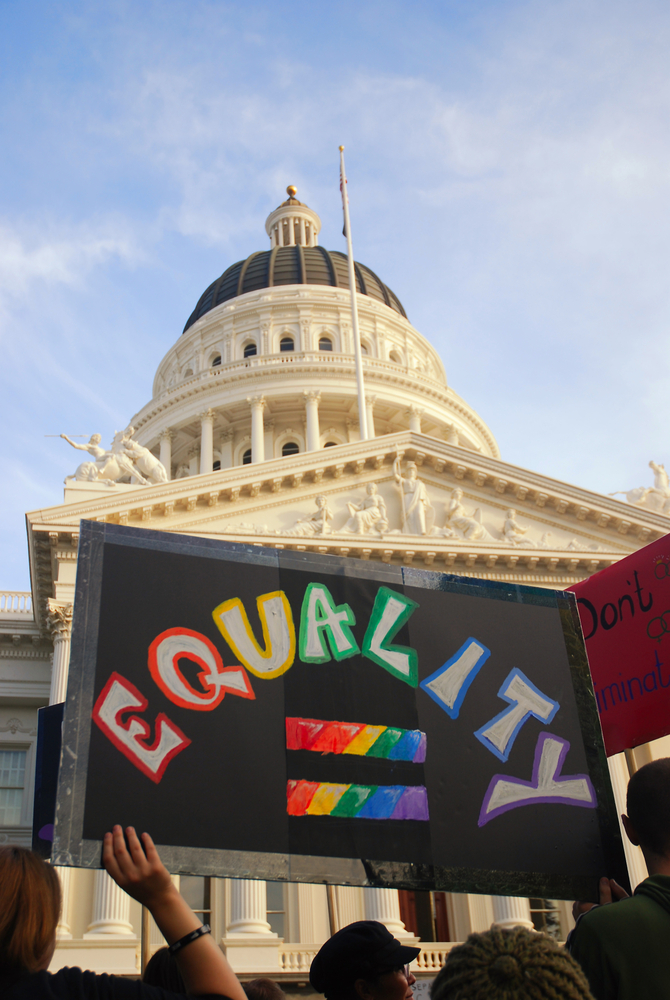
Sacarmento, CA Protest against the passage of Proposition 8 banning gay marriage byKarin Hildebrand Lau/Shutterstock.com

Arizona Launches Website To Discourage Abortion

Last week the state of Arizona launched “A Woman’s Right to Know,” a part of the Arizona Department of Health Services website that is designed to discourage women from having an abortion. The website is part of Arizona’s recent legislation to restrict access to abortion 20 weeks after a woman’s last menstrual period, or 18 weeks into gestation.

The website provides a misleading list of the potential complications of an abortion procedure, along with detailed drawings of fetal development through an entire pregnancy. The website also provides lists for adoption services and diaper banks. One section of the website addresses risks of childbirth in attempt to provide a different perspective. However, the website lists “death” as a complication of abortion (1 in 11,000 after 21 weeks) and “rarely, death” as a complication of childbirth (1 out of 6,897).

Representative Kimberly Yee (R), who sponsored the legislation, hopes the website will discourage women from seeking an abortion. According to the Arizona Daily Sun, Yee “a staunch foe of all abortions, acknowledged she believes the website will convince some women considering an abortion not to go through with it.” Yee proposed the website under the guise of providing women with the information necessary to give “informed consent.”

Arizona’s ban of abortions 20 weeks after a normal period is the most restrictive in the nation. It was challenged in court by three obstetrician-gynecologists from Arizona. After the District Court in Phoenix ruled the law constitutional, the doctors appealed to the 9th Circuit Court.

Media Resources: Arizona Daily Sun 11/26/12; ThinkProgress 11/26/12; Arizona Department of Health Services “A Woman’s Right to Know” 11/26/12; Feminist Newswire 11/5/12; Guttmacher Institute 8/2011

beautiful young woman doctor working at night in the office from ShutterStock

Michigan Considering Fetus to Qualify as a Dependent

Lawmakers in Michigan are considering allowing fetuses that are at least 12 weeks in gestation to qualify as a dependent under the state’s tax law. Two House Bills, HB 5684 and HB 5685, have been proposed in the Michigan House Tax Policy committee and were debated last week. The measures were originally scheduled to be discussed further today, however several committee members are not ready to vote on them, according toMLive.

HB 5684 and HB 5685 would allow fetuses that were determined to be at least 12 weeks in gestation by the end of the tax year to be considered a dependent when filling out income tax forms. Representative Jud Gilbert (R-Algonac), sponsor of HB 5685, says that such a change is “recognizing the fact that people have additional expenses, another person to take care of. Money saved there could be contributed to doctor’s bills and all kinds of things.”

Opponents of the measure believe that this is not about additional expenses, but instead is motivated by pro-life ideology. Zach Pohl of Progress Michigan issued a statement, where he explained, “This is really a backdoor way of passing extreme personhood legislation, which has been rejected by voters in states across the country.” Meghan Groen, director of government relations for Planned Parenthood Advocates of Michigan, voiced similar concerns to the Guardian. “The way they have drafted it, it is not for pre-natal care, but is for the fetus,” she said. “To focus on the fetus above all else is dangerous.”

Pohl and Groen are also quick to point out that the two sponsors of the legislation voted to decrease tax deductions for families. “Even worse, this would create a special new tax credit for unborn fetuses, after Lansing Republicans eliminated the tax credit for living, breathing children last year,” Pohl states. Groen continues “We don’t have child tax credit here in Michigan, that has been eliminated. … There are a lot of women here who are looking to provide for their children right now and their needs are not being met.”

According to the Guardian, the Michigan League for Public Policy (MLPP) has found that a child tax deduction that was eliminated by the state legislature and governor last year would have provided $57 million and applied to 2.35 million children in the state. This comes after a 2011 cut that reduced the Earned Income Tax Credit from 20% to 6%, which a spokeswoman for MLPP stated caused 9,000 children to fall deeper into poverty.

Media Resources: Guardian 11/22/12; Jezebel 11/21/12; MLive 11/21/12; Progress Michigan 11/20/12

Person filling out a 1040 tax form photo from Shutterstock
AAP Advocates Plan-B Access for Teens

The American Academy of Pediatrics (AAP) released new policy guidelines today in support of increasing access to emergency contraception among teenage girls.

Currently young women under the age of 17 must have a prescription in order to get emergency contraception such as Plan B. This restricts access to young women and girls who can’t get a prescription after unprotected sex in time to use emergency contraception effectively or are afraid that a doctor will tell their parents. The new AAP policy encourages that pediatricians write a prescription for young women of reproductive age in advance of any sexual activity, along with educating pediatricians about various emergency contraceptive methods including “off-label” combinations of oral contraceptives.

The AAP also addressed the issue of some teenagers being denied a prescription and how this “may be related to the physician’s beliefs about whether it is OK for teenagers to have sex.” The pediatric group stated that it believes pediatricians “have a duty to inform their patients about relevant, legally available treatment options,” including those “to which they object.”

In December 2011, The Food and Drug Administration (FDA) attempted to remove the age restrictions on accessing emergency contraception over the counter. However, the Secretary of Health and Human Servicesoverruled the FDA decision. The AAP’s policy change would provide young women a way to access emergency contraception within the confines of current federal legislation.

Media Resources: American Academy of Pediatrics Press Release 11/26/12; American Academy of Pediatrics “Emergency Contraception” 11/26/12; Huffington Post 11/26/12; Reuters 11/26/12; ThinkProgress 11/26/12; Feminist Newswire 12/7/11

Emergency Pills photo from Shutterstock

VA Board of Juvenile Justice Continues LGBT Protections

diversity

Last week Virginia’s Board of Juvenile Justice agreed to continue the inclusion of protections for LGBT youth despite opposition from Attorney General Ken Cuccinelli. The protections including LGBT youth were first introduced under Governor Mark Warner in 2005. Governor Tim Kaine, his successor, preserved the same language.

A series of revisions to the language, all of which were LGBT inclusive, were denied approval by Cuccinelli’s office. In order to get approval, the board finally revised the wording to prohibit “discrimination in violation of the Constitution of the United States, the Constitution of the Commonwealth of Virginia, and state and federal statutes and regulations.”diversity

According to Metro Weekly, the board no longer lists the characteristics that are protected from discriminatory practices, but now “instructs facilities to assess whether a resident belongs to a ‘vulnerable population’. If that determination is made, the facility must act to protect that resident’s health and safety”. A vulnerable population is cited as “a resident or group of residents who have been assessed to be reasonably likely to be exposed to the possibility of being attacked or harmed, either physically or emotionally (e.g., very young residents; residents who are small in statures; residents who have limited English proficiency; residents who are gay, lesbian, bi-sexual, transgender, or intersex; residents with a history of being bullied or of self-injurious behavior).”

In response, James Parrish, executive director of Equality Virginia, and Claire Guthrie Gastañaga, executive director of the American Civil Liberties Union of Virginia, released a joint statement, saying: “Unlike the Board for Social Services, which backed down from similar non-discrimination rules proposed for adoption and foster care agencies, the citizen representatives on the Juvenile Justice Board refused to be bullied and stood with the LGBT community. They did not give up on regulations essential to protect vulnerable LGBT youth in their care . . .”

A period of final executive review is necessary before it can be published into the Virginia Register of Regulations. Additionally, a 30 day period of public comment on the rules will occur after it is published.

Media Resources: Back2Stonewall Blog 11/20/12; Metro Weekly 11/16/12; ACLU 11/14/12

Rainbow coloured jigsaw pieces spelling out DIVERSITY photo from Shutterstock.

Routine HIV Screening to be Covered Under Obamacare

HIV Awareness

Yesterday the US Preventive Services Task Force released new guidelines recommending that every American between the ages of 15 and 65 be regularly tested for HIV. The Affordable Care Act requires insurance coverage of all preventive services recommended by the task force, which means that regular HIV testing will now be covered under Obamacare as part of a routine check-up.

1.2 million Americans are currently living with HIV – a number which the US Center for Disease Control and PHIV Awarenessrevention says has been increasing steadily over the last five years. Despite this prevalence, 20 to 25 percent of HIV-positive individuals are unaware they have the virus. There are about 48,000 new cases of HIV each year in the United States.

Previously, only ‘high risk’ individuals who had unprotected sex with multiple partners or used intravenous drugs were recommended for HIV testing. However, according to the Preventive Services Task Force, up to a quarter of HIV-positive patients report no risk factors. The new guidelines recommend the screening of every American between the ages of 15 and 65, regardless of ‘risk.’

HIV screening is an important preventive measure for the purposes of both treatment and transmission prevention. A regular HIV screening that is as common as a cholesterol test will allow HIV-positive patients to start treatment early, while their immune systems are relatively strong, which will increase their life spans. Evidence also indicates that treatment can reduce the chance of transmitting the virus to an uninfected partner by up to 96 percent.

“This marks a monumental shift in how HIV in the United States can be prevented, diagnosed and treated,” said Carl Schmid, deputy executive director of The AIDS Institute.

Thinkprogress points out that Obamacare also increased resources for HIV research and prevention, helps ensure the affordability of HIV treatment, and prohibits insurance companies from discriminating against Americans based on their HIV status.

The draft of the task force’s new guidelines is currently available online, and it open for a 30 day public comment period. The guidelines are expected to go into effect sometime within the next year.

Media Resources: US Preventive Services Task Force 11/19/12; ABC News 11/20/12; Thinkprogress 11/20/12; Reuters 11/19/12

AIDS awareness ribbon info-text graphics and arrangement concept isolated on red background photo from Shutterstock. 

Syracuse Passes Transgender Nondiscrimination Legislation

LGBT Flag

In a 7-1 vote yesterday, the Syracuse Common Council amended the Syracuse Fair Practice Law to include the protection of transgender and gender non-conforming people against discrimination. The passage of this legislation will prohibit discrimination in employment, housing, and public accommodations (such as restaurants, hotels, and stores) based on a person’s gender identity or expression.

Barrie Gewanter, director of the New York Civil Liberties Union’s (NYCLU) Central New York Chapter, said: “In passing this legislation, the Common Council has LGBT Flagreaffirmed our city’s commitment to respecting the civil rights and basic human dignity of all residents. Nobody should be denied service at a doctor’s office or fired from a job because of the way they express their gender. We applaud the Common Council for closing this gap in local anti-discrimination laws across upstate New York.”

According to NYCLU, with the passage of this legislation in Syracuse, every major city in New York State has now passed similar nondiscrimination legislation protecting the rights of transgender and gender non-conforming people. However, the New York State Senate is blocking the consideration of the Gender Expression Non-Discrimination Act (GENDA), which would prohibit such discrimination at the state level. .

On the subject of GENDA, Gewanter said, “The strength of people’s civil rights protections shouldn’t depend on whether they live in an urban area. It’s time for our state legislators to stand up for true equality and fairness by supporting GENDA.”

Media Resources: NYCLU 11/19/12; Think Progress 11/19/12

Fabric texture of the flag of the LGBT movement photo from Shutterstock. 

Judge Rules: Hobby Lobby Must Cover Contraception

Birth Control

Yesterday, U.S. District Judge Joe Heaton ruled that the craft store Hobby Lobby must cover the morning-after pill for its employees.

In September, the evangelical-owned Hobby Lobby and sister company Mardel Inc. filed a federal lawsuit against the Birth ControlObama Administration over the mandate requiring employers to provide coverage for the morning-after pill and other contraceptives. Under the new mandate, companies who do not provide coverage for contraception can face fines of up to $1.3 million daily.

In his ruling, Judge Heaton said, “Plaintiffs have not cited, and the court has not found, any case concluding that secular, for-profit corporations such as Hobby Lobby and Mardel have a constitutional right to the free exercise of religion”.

Conversely, last week U.S. District Judge Reggie Walton granted a preliminary injunction for Tyndale Publishers, a Christian publishing company opposed to providing employees with contraceptive coverage under the Affordable Care Act requirements. Meanwhile, the United Nations released a report declaring contraception a universal human right last week.

Media Resources: ABC News 11/20/12; Jezebel 11/19/12; Think Progress 11/19/12; Washington Post 11/19/12; Huffington Post 11/14/12; Feminist Newswire 9/13/12

Birth control pills photo from Shutterstock.

Harrisburg Abortion Clinics Granted 20 Foot Buffer Zone

Abortion clinics and other medical facilities in Harrisburg, Pennsylvania, were granted a small reprieve from anti-choice protesters last week when the City Council unanimously voted to create a buffer zone around the facilities. Now protestors cannot be within 20 feet of an entrance or driveway to a medical facility without facing a fine. Planned Parenthood requested the buffer zone earlier this month in response to various incidents that have required police response since the clinic started offering medical abortions in December 2011.

The President and CEO of Planned Parenthood’s Northeast, Mid-Penn, and Bucks County facilities applauded the City Council’s decision “Our employees, our patients or anyone else visiting our patients at that time shouldn’t have to be followed, harassed, yelled at or feel that their safety is at risk.” Anti-choice activists were disappointed, claiming that the buffer zone is not needed because there are existing laws against trespassing.

City Councilwoman Sandra Reid told reporters “[The City Council] has no legislative power to tell anyone what to do with their body. We’re just here to assure that those persons seeking medical care can get there without being detained or harassed.”

Media Resources: RH Reality Check 11/16/12; ThinkProgress 11/16/12; Pennlive.com 11/14/12, 11/13/12

Grunge rubber stamp with name of Pennsylvania, Harrisburg, vector illustration photo from Shutterstock.

Church of England Begins Debate on Female Bishops

St. Paul Cathedral London

The governing body of the Church of England is set to begin discussions about whether or not to allow women to become bishops. All three branches of the General Synod, the House of Bishops, the House of Clergy, and the House of Laity must approve of any decision to allow women bishops by a two-thirds majority. If these branches fail to approve the change, the measure cannot come back before the synod for at least seven years.St. Paul Cathedral London

Twenty years ago, the Anglican Church first approved that women could be ordained as priests and now women are a third of all clergy in the Church of England. The subject of women bishops was argued earlier this year, but was dismissed over language in an amendment that allowed parishes to request a male bishop who shared their beliefs if they were opposed to women bishops. Since then, the amendment has been rewritten to include slightly less discriminatory language.

Many Anglican traditionalists oppose this change, believing that having women bishops contradicts the theological foundation of the church. Some who support female bishops are against the measure because they feel it is too discriminatory because it still allows parishes to reject female bishops. While it is believed that the traditionalists do not have enough support to block the measure, those in favor of approving the measure are worried that the controversy may prevent the issue from passing.

In a letter by over 1,000 bishops, clergy, and laity that was published in the Independent, they agreed “Just as the Churches have repented of our historic anti-Semitism and endorsement of slavery, so we believe that we must now show clearly that we no longer believe women to be inferior to men.”

Media Resources: BBC News 11/19/12; New York Times 11/19/12; Guardian 11/18/12; Independent 11/18/12

St Paul Cathedral in London photo from Shutterstock

Walmart Tries to Block Worker’s Rights Protesters

OUR Walmart

Last Thursday, Wal-Mart filed a complaint with the National Labor Relations Board to block Organization United for Respect at Walmart (OUR Walmart) protesters from picketing outside of stores on Black Friday.

Walmart claims that OUR Walmart actions planned for Friday are part of continuing protests by United Food and Commercial Workers Union (U.F.C.W) and would be illegal under the National Labor Relations Act since the protesters have exceeded the maximum 30 days of permitted picketing. OUR Walmart was considered a subsidiary of the U.F.C.W. as of 2011. Yet, Jill Cashen, Communications Director for the U.F.C.W, insists that OUR Walmart has “grown and gained independence” and since then has become their own group.

Since the labor board often takes months to review and rule on complaints, it is unlikely that Walmart will receive an injunction by Friday. However, according to Angela B. Cornell, Director of the Labor Law Clinic at Cornell Law School, this recent measure is likely meant to be a warning against those employees considering action in what Walmart insists is “illegal picketing”.OUR Walmart

In response to the action, Cashen has said, “Walmart is grasping at straws . . . there’s nothing in the law that gives an employer the right to silence workers and citizens.” William B. Gould IV, former chairman of the labor board under the Clinton administration remarked in the New York Times “I don’t see this translating into a great deal of success in terms of unionizing Wal-Mart or in terms of being particularly effective in improving conditions. But I must say if [Wal-Mart has] gone to the N.L.R.B. on this, that must show that Wal-Mart is really concerned.”

OUR Walmart is trying to recruit a wide variety of allies for the action. They are working with religious leaders about holding prayers vigils at Wal-Mart locations in support of better worker treatment and are preparing fliers that community and civil rights groups can use to publicize the event.

Last month, Walmart employees in 12 states walked off the job in protest of working conditions and wages. Additionally, current employees of Walmart stores in Tennessee, California, and Texas have filed class-action lawsuits against the corporation on the basis of sex discrimination.

Media Resources: NY Times 11/18/12; Fox Business 11/16/12; Feminist Newswire 10/10/12, 10/03/12, 09/25/12, 02/21/12

Photo available under creative commons license via Flickr user Neon Tommy.

Budget Talks Begin

Today President Obama and top Congressional Leaders began to discuss compromises needed to reach an agreement between the White House and Congress for next year’s budget. If an agreement between the two is not met by the end of the year, taxes on all Americans will increase.

“We have to make sure that taxes don’t go up on the middle class, that the economy remains strong,” the President told reporters. “That’s an agenda that Democrats and Republicans and independents, people all across the country share. So our challenge is to make sure that we are able to cooperate together, work together, find some common ground, make some tough compromises, build some consensus to do the people’s business.”

In order to reduce the deficit, President Obama proposes allowing the existing tax cuts on the top two percent to expire while extending cuts for all with taxpayers with incomes below $250,000. To keep the tax cuts for the wealthiest two percent, House conservatives propose cutting federal programs such as Medicaid and Medicare. The stalemate over taxing the wealthy or cutting programs has taken tax cuts for the middle class hostage, and many of the tax cuts at stake disproportionately affect young, single women. According to a report [PDF] released earlier this year by the American Association of University Women (AAUW), women graduates only make 82 percent of the wages earned by their male counterparts one year after graduating from college. Increasing taxes for these women would have even harsher repercussions as they are already receiving lower wages than their male counterparts.

Media Resources: Christian Science Monitor 11/16/12; LA Times 11/16/12; New York Times 11/16/12; Washington Post 11/16/12; AAUW 2012

Photo available under creative commons license via Flickr user Leader Nancy Pelosi .

>