Catholic Colleges Support BC’s Ban on Condom Distribution

Catholic colleges and universities across the country are siding with Boston College’s decision to discipline students who continue to distribute condoms on campus. A representative from Catholic University, Victor Nakas, said, “One of the teachings of our faith is that contraception is morally unacceptable. Since condoms are a form of contraception, we do not permit their distribution on campus.” Colleges that have aligned their policies with Boston College include the University of Notre Dame, Georgetown University, University of Dayton, Providence College, and the Catholic University of America.

A group of Boston College students are facing possible punishment from the college’s administration for passing out condoms. The group, Safe Sites, founded a network of eighteen dorm rooms and additional spaces near the campus that provide condoms to students.

A spokesperson for the college, Jack Dunn, told students in an email that, “As a Jesuit, Catholic University, there are certain Catholic commitments that Boston College is called to uphold. We ask our students to respect these commitments, particularly as they pertain to Catholic social teaching on the sanctity of life. We recognize that, as a reflection of society at large, many students do not agree with the Church’s position on these issues. However, we ask those who do not agree to be respectful of our position, and circumspect in their private affairs.”

Media Resources: The Boston Globe 3/28/13; The Feminist Newswire 3/29/13

Condom packages from Shutterstock

French Law Providing Free Contraception and Abortion Goes Into Effect

A French law that allows minors between the ages of fifteen and eighteen to receive free contraception from family planning centers and provides abortion without cost to patients went into effect this Sunday. The law was promised by President François Holland during his election campaign.

The measure covers both contraceptive pills as well as implants, which can be obtained at pharmacies with a prescription. The patch, coil and cap, and condoms are not covered by the new law. A provision of the measure prevents obtaining contraceptives from appearing on insurance statements, preserving the anonymity of the minors who choose to use contraception.

The law was intended to reduce the number of abortions in France, where there are currently approximately 12,000 abortion procedures annually. Many women were unable to afford abortions before the measure, as the average cost ranged between €200 and €450.

Media Sources: RFI 3/31/13; The Connexion 4/1/13

The flag of France from Shutterstock

Pro-Life America Network Director Nominated to MS Board of Health

Mississippi Governor Phil Bryant (R) announced that he has nominated Terri Herring to the state’s Board of Health Wednesday. Bryant nominated her because she has “committed her life to women’s health care and the right to life.” Herring is a director of the Pro-Life America Network in addition to being president of the Mississippi Choose Life Advisory Committee.

Mississippi state law requires that the Board of Health must be comprised of five currently licensed physicians and six individuals with a background or interest in public health. Herring was nominated as the latter. Her appointment, if confirmed, would have a six year term.

Using a state’s Board of Health to control abortion regulations is a strategy that has been successful in the past. The Virginia Board of Health passed Targeted Regulations of Abortion Providers (TRAP) Laws earlier this year that are harsh regulations that could force abortion providers in Virginia to meet the building codes of new hospitals or face closure. Last year, the Kansas Board of Healing Arts voted to revoke the license of abortion provider Dr. Ann Neuhaus over allegations that she did not provide adequate mental health exams on patients she referred to the late Dr. George Tiller for late abortions. Dr. Neuhaus maintains that she provided proper exams, and critics of the decision have said that the investigation and subsequent ruling were the result of anti-abortion sentiments

Feminist Newswire 1/2/13, 6/26/12; NBC News 3/28/13; The Mississippi Press 3/28/13; WLOX 3/28/13

Red, white, and blue sign to welcome travelers to Mississippi from Shutterstock

Boston College Students Face Discipline for Distributing Condoms

A group of Boston College students are facing possible punishment from the university’s administration for passing out condoms. The group, Safe Sites, founded a network of eighteen dorm rooms and additional spaces near the campus that provide condoms to students.

A spokesperson for the college, Jack Dunn, told students in an email that, “As a Jesuit, Catholic University, there are certain Catholic commitments that Boston College is called to uphold. We ask our students to respect these commitments, particularly as they pertain to Catholic social teaching on the sanctity of life. We recognize that, as a reflection of society at large, many students do not agree with the Church’s position on these issues. However, we ask those who do not agree to be respectful of our position, and circumspect in their private affairs.”

The American Civil Liberties Union (ACLU) is now involved and are willing to counter with legal action if the proposed disciplinary action by the college takes place. The ACLU has called disciplinary threat “entirely inappropriate.”

Media Resources: WBUR News & Wire Services 3/27/13; BostInno 3/28/13; The Daily Beast 3/28/13

Condom packages from Shutterstock

ND Governor Signs Extreme Anti-Abortion Law to Close Only Clinic

North Dakota governor Jack Dalrymple (R-ND) just signed a series of three restrictive anti-abortion rights measures into state law. All three measures were passed by the Republican-controlled North Dakota House and Senate. The North Dakota legislature also passed a Personhood state constitutional amendment, which would ban the termination of a pregnancy from the moment of conception. The Personhood Amendment will be placed on the November 2014 ballot and does not require the Governor’s signature.

Governor Dalrymple signed a TRAP (Targeted Regulation Against Abortion Providers) law aimed at closing North Dakota’s only remaining comprehensive reproductive health clinic, The Red River Women’s Clinic. The TRAP law requires “admitting and staff privileges at a nearby hospital for any physician who performs abortion in ND.” This unnecessary requirement is particularly oppressive and impossible to meet. Because of the hostile state environment and threats to doctors, providers have had to travel from outside of the state to provide abortions at the clinic. In emergency cases, nearby hospitals do accept admission of a patient from the clinic without the doctor who performed the procedure having admitting or staff privileges.

The Governor also signed into law measures instituting a ban on all abortions solely for gender selection or genetic abnormalities, and a ban on any abortion after a heartbeat can be detected.

In signing all of these measures, the governor acknowledged these laws will be challenged in the courts all the way to the United States Supreme Court. He said “likelihood of this measure (fetal heartbeat law) surviving a court challenge remains in question,” but he continued it was a “legitimate attempt by a state legislature to discover the boundaries of Roe v. Wade. On the TRAP law, he said it was also “legitimate and a new question for the courts.” He also said the legislature should appropriate the necessary funds for the state attorney general to defend the measures in court. North Dakota, unlike most states today, has a large budget surplus because of an oil industry boom in the western part of the state. The Bakkan Shale deposit drilling has turned North Dakota into the 4th largest oil producer in USA.

In signing these measures into law, the governor ignored the pleas of North Dakota citizens who rallied simultaneously in the four largest cities of the state– Bismarck the capital city, Minot, Fargo, and Grand Forks–against the measures and for women’s rights and lives. The Stand Up for Women rallies showed the commitment of a large pro-choice movement in North Dakota.

Media Resources: Fargo. Grand Forks. Valleynewslive.com; Fargo,ND NBCNews.com!; Rachel Maddow ShowMSNBC 3/25/2013; Wall Street Journal

Exclamation danger sign from Shutterstock

Proposition 8 Oral Arguments Heard in Supreme Court

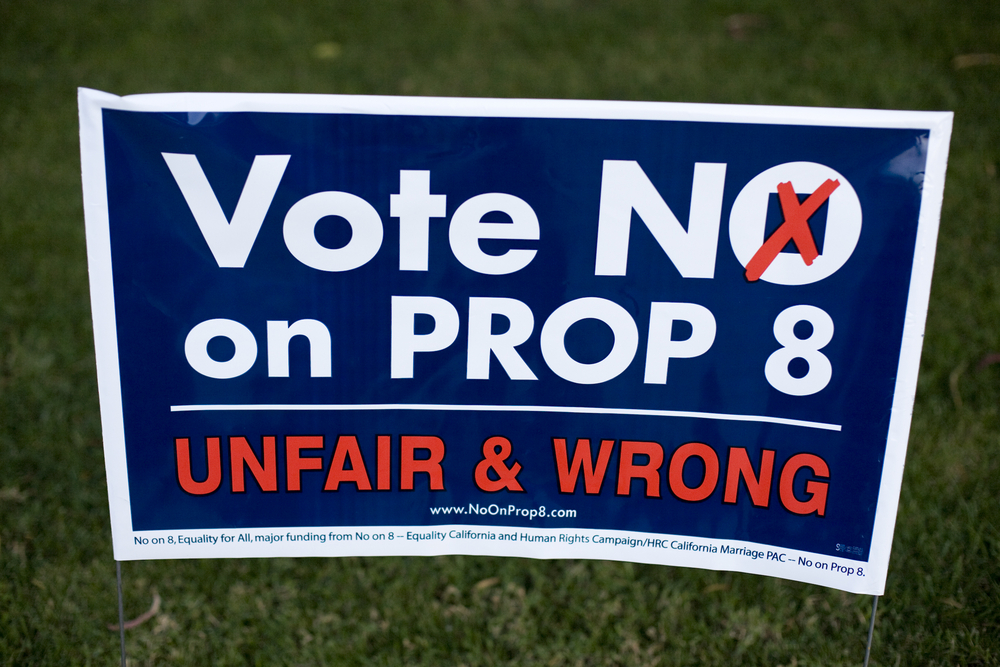
Today the Supreme Court heard oral arguments weighing the constitutionality of Proposition 8, the California ban on same sex marriage.

The Supreme Court heard arguments in the case Hollingsworth, Dennis, et al. v. Perry, Kristin M., et al. Arguments lasted for approximately an hour and twenty minutes, at which point the Supreme Court Justicesappeared reluctant on making a decision. They are expected to release a full opinion in June. The Feminist Majority Foundation and the National Organization for Women (NOW) filed an amicus brief in favor of overturning Proposition 8. The brief was written by Michael Rips and Rebecca Edelson of Stepstone and Johnson, LLP. Tomorrow the Supreme Court will hear arguments on the federal Defense of Marriage Act (DOMA), which only recognizes marriage as between one man and one woman.

Thousands of people descended on the Supreme Court to rally as part of the United for Marriage coalition of the National Gay and Lesbian Task Force, Human Rights Campaign and other LGBT advocacy and sympathetic groups , including Terry O’Neill, President of NOW. Other speakers included couples and families impacted by the laws, allies from the sports community, and politicians.

Media Resources: CSPAN 3/26/2013; Huffington Post 3/26/2013

Proposition 8 Oral Arguments Heard in Supreme Court from Shutterstock Jose Gil / Shutterstock.com

Washington May Be First State to Pass Abortion Insurance Mandate

The Washington state Senate is considering legislation that would mandate abortion insurance coverage. The recently proposed Reproductive Parity Act would require all insurance companies providing maternity care to also pay for abortions. Earlier this month, the bill passed the state House with a vote of 53-43. However, support in the Senate is less certain.

Melanie Smith, a lobbyist for NARAL Pro-Choice Washington, said “This is a core value for Washingtonians – we should protect it while we still have it and not leave access to basic health care up to an insurance company.” Supporters of the insurance mandate are careful to stress that there are no anticipated spikes in abortion.

In a statement Representative Eileen Cody (D-West Seattle), the bill’s lead sponsor, said “It’s not expanding abortion coverage, it’s ensuring the rights of women to get what they’re paying for now and to continue their freedom of choice.”

Opponents argue that this forces employers to cover a procedure they’d rather not deal with. Peggy O’Ban, a spokeswoman for Human Life of Washington said “Washington state would be the only state in the country that would force employers to pay for abortion… If passed,” she continued, “It would amount to “the first conscience coercion act in American history.”

Although proponents of the mandate insist they have the votes in the Senate, it is not clear whether the Senate will in fact allow the measure to reach the floor. The bill will go before the Senate Health Care Committee on April 1.

Media Resources: Huffington Post 3/23/2013; NARLA Pro-Choice Washington

Flag of the state of Washington painted on grungy wooden background from Shutterstock

GLAAD Changing Name and Mission to be More Trans* Inclusive

The Gay and Lesbian Alliance Against Defamation (GLAAD), announced Sunday that it is changing its name from Gay and Lesbian Alliance Against Defamation to just GLAAD in an effort to expand its mission statement to include members of the transgender community. GLAAD is known for its efforts to curb anti-gay and lesbian media–an effort it now looks to extend to trans* and bisexual people.

GLAAD spokesperson Rich Ferraro said in an interview with MSNBC.com, “This is a reflection of the work we’re doing today, and a reflection of the work the gay and lesbian community needs to be doing…our name was hindering that in many instances.”

Ferrero went on to comment on changing social stigma. “There have been huge increases in support for gay and lesbians, and for marriage equality. We’ve noticed that trend and wondered how we could use the tactics that the gay and lesbian community had used to get to today’s tipping point [for the trans* community].”

Transgender advocate Janet Mock, who joined Rich Ferraro on MSNBC, added “We need to redefine what equality is. If we’re defining equality as something that is scarce and limited and is for a very select few in our community and some of us need to wait a little bit. That is not equality. That’s upholding very systematic systems of oppression.”

According to a 2011 study by the National Coalition of Anti-Violence Programs, individuals who identify as transgender are 30% more likely to be victims of violence and discrimination (compared with heterosexual people).

Sources: MSNBC.com 3/24/13; The Huffington Post 3/25/13

Transgender symbol from Shutterstock

North Dakota Legislature Passes Personhood Measure

Today the North Dakota state legislature passed a measure that would amend the state Constitution to define life as starting as conception, granting full personhood to fertilized eggs. The state House approved the measure in vote of 57-35. The state Senate already approved the measure in February. The measure now goes before North Dakota voters. It is the first time a Personhood measure has passed in a state legislature, instead of being added to a ballot through signature drives.

Media Resources: Associated Press 3/22/2013

3D illustration of a breaking news TV screen from Shutterstock

HERvotes Blog Carnival: #StandUpforWomen! Defeat the Ryan Budget

by Eleanor Smeal, Feminist Majority Foundation and KristinRowe-Finkbeiner, MomsRising.org

Tomorrow the House of Representatives will vote on the Ryan Budget.  It is devastating to women’s advancement and to programs that women want and need.  It is the budget that women overwhelming voted against in the 2012 election with a decisive gender gap.  HERvotes, with its 52 women’s organizations, is urging a NO vote.

The Ryan Budget would repeal all the benefits in the Affordable Care Act (Obamacare) while it keeps the cost savings—a hypocritical slight of hand.  And women would pay dearly.

Health insurance companies could once again treat women as a “pre-existing condition” and charge women more than men for the same insurance coverage.  Plus insurance companies would no longer be required to provide maternity coverage.  The well woman benefits of the ACA—cancer screenings, immunizations, contraceptives, annual doctor visits, counseling for domestic violence survivors and nursing mothers without co-pays or deductibles would be gone. Young people would no longer be able to stay on their parents’ policies until 26. Older people would see the prescription drug “donut hole” reopen.

Shockingly, after its resounding election rejection, the Ryan budget would voucherize Medicare for those under 55 years of age and shift costs to seniors.  Once again, Medicaid would be converted to a block grant to the states and would be irresponsibly cut by nearly one-third over ten years.  It would result in throwing thousands of elderly people, mostly women, out of nursing homes.  Medicaid is the primary payer for some two-thirds of nursing home residents.

College students, who are now about 60% women, would see their Pell grants cut and their interest on college loans double from about 3.2% to 6.4%.

Moms will be set back by an 18% cut in the child care tax exemption in 2014.  Some 200,000 kids could be cut out of Head Start in 2014 and 8,000 schools would lose Title I federal funding.

And even Meals on Wheels–66% of the recipients are women- could be cut by as much as 18% in 2014 under the Ryan Budget.

Yes real women’s lives and programs will be devastated while the rich would see yet another cut in taxes.  We must stop the Ryan budget and sound the alarm so that the budget deal that is worked out does not shaft women, women’s programs, children, and the middle class or the poor.  Enough is enough.

You can make the difference! We invite you to take a brief moment to read the blog posts below (Scroll down). And then, importantly, to help spread the word and keep up the pressure on our elected leaders by sharing the posts below on Facebook, Twitter (with the hashtag #HERVotes), and Pinterest. And be sure to follow @HERvotes on Twitter!

#HERvotes, a multi-organization campaign launched in August 2011, advocates women using our voices and votes to stop the attacks on the women’s movement’s major advances. Part of the #HERvotesblog carnival

***

Top 5 Things to Know About New Budget Proposals in Congress, Mattea Kramer, National Priorities Project

Time for a New Budget Tune, Kathy Crandall Robinson, Senior Public Policy Director, WAND

“Ryan Budget” Is Bad for Women, Bad for Me, Public Policy Intern Riana Goren, AAUW

Ryan budget would defund health care, undo protections, Amy Allina, Raising Women’s Voices

This Is Not a Joke, KristinRowe-Finkbeiner, MomsRising.org

A Single Mother With a Childcare Subsidy Writes to Paul Ryan, Nan Mooney

Americans Want a Fair Budget Now! We Demand Congress Stop Giving Tax Breaks to the Richest 2%, Linda Meric, National Executive Director of 9to5

What’s Next for Title I Schools Under the Ryan Budget – Cutting Fridays? Amy Qualliotine, National Women’s Law Center

Why I like Paul Ryan, But Not His Budget, Randi Shmidt, YWCA


Part of the #HERvotes blog carnival.

.

 

ND Passes Six Week Abortion Ban

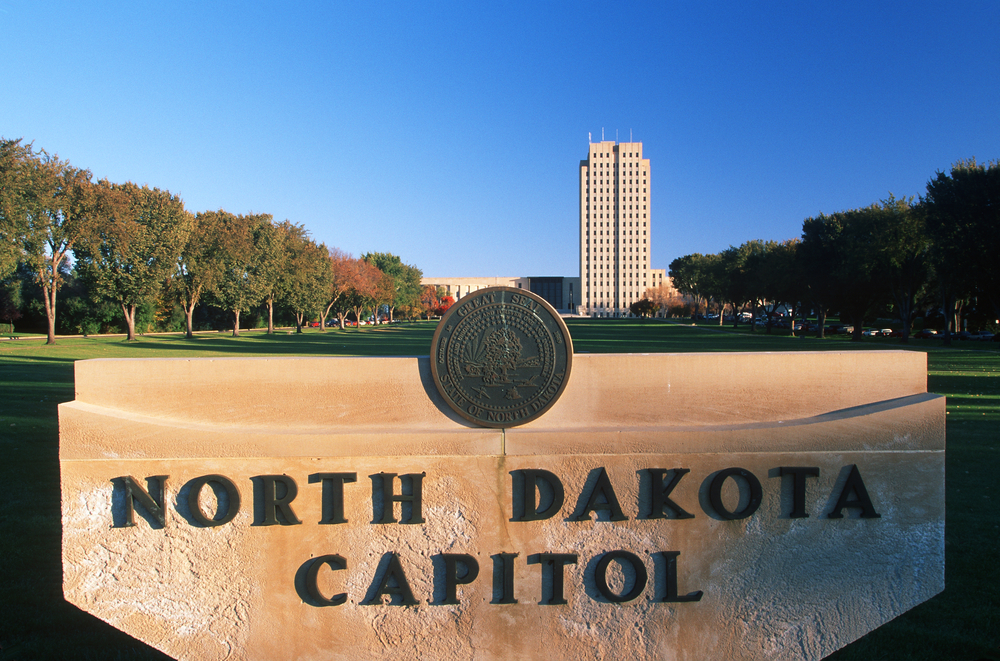
Today the North Dakota state Senate approved two bills that together would form the strictest abortion ban in the nation. Now they go to North Dakota Governor Jack Dalrymple (R) for his signature.

The state Senate voted to approve a measure that would ban abortion when a heartbeat is detected. With a transvaginal ultrasound, a heartbeat can be detected as early as six weeks. The state Senate passed another bill that prohibits abortion even when a fetal abnormality is detected, including severe genetic defects. Both of these measures have already been approved by the state House.

It is uncertain if Governor Dalrymple, who has been against abortion in the past, will sign the bills into law.

Media Resources: Associated Press 3/15/2013; Huffington Post 3/15/2013; North Dakota Legislative Branch 3/15/2013

State Capitol of North Dakota, Bismarck from Shutterstock

Sequesters Go Into Effect, Major Impact on Women

Today the automatic government spending cuts called “sequesters” will go into effect at midnight. The cuts that total $85 billion of funding for government programs will have a disproportionately harsh impact on women, not only in the United States but around the world.

$32 million will be cut from overseas family planning programs, resulting in almost 1.7 million women losing access to contraception and an estimated 500,000 more unplanned pregnancies. Many of these programs also work to fight maternal mortality across the world and experts predict that the impact of the sequester will result in approximately 1,292 more women dying as a result of childbirth.

According to the Center for American Progress, $15 million will be cut from Title X programs, which provide funding for family planning providers for contraceptives and services including cancer screenings and STI/HIV testing. Title X also includes funding for infertility services and health care referrals. These cuts could result in approximately 130,000 women losing family planning access. In addition, the National Breast and Cervical Cancer Early Detection Program, which helps lower income women access diagnostic services such as mammograms and clinic breast and pelvic examinations to prevent cancer, will be cut. These cuts combined could threaten family planning clinics across the country because they may no longer receive enough funding for basic services to stay open.

While Congress did approve the Violence Against Women Act yesterday, the sequester strips funding for violence prevention programs authorized by VAWA. A total of $13 million would be cut from violence prevention funding across the country. The three states that would see the greatest cuts in the STOP Violence Against Women Program created by VAWA are California, Texas, and New York. These three states alone could lose funding that would benefit an estimated 6,700 victims of violence.

WIC, or the Special Supplemental Nutrition Program for Women, Infants, and Children program that supplies food security for low income mothers and their children would lose $600 million in funding. In addition, child care programs which are essential for working families that cannot afford private child care will see dramatic cuts alongside funding for child vaccination programs that could see 32,000 fewer children vaccinated as a result of sequester cuts.

Primary and secondary educational programs will see $713.3 million cuts in funding. California, Texas, and Florida will see the largest decreases in funding of public K-12 education, risking an estimated 2,890 teacher jobs at the grade school level. These states also could see large decreases in funding for programs focusing on education for children with disabilities. Higher education will also be impacted by reduced funding in financial aid and work study jobs that benefit primarily low-income students.

At a press conference yesterday, Nancy Pelosi lead women Representatives in condemning the effects the sequester will have on women. Pelosi addressed the media, “Cuts to women’s health from pre-natal care to cancer screenings; cuts to services to victims of domestic violence; …cuts to initiatives to support children and families like WIC and Head Start. …For the sake of America’s women …Democrats and Republicans must work together to protect the middle class.” Representative Rosa DeLauro echoed Pelosi’s sentiments in saying “Allowing these cuts to pass is reckless, it’s irresponsible and it is especially harmful to women, to their jobs and to the services that they rely on.” Today, President Obama is meeting with leading Congressional officials in an attempt to see what resolution, if any, can be reached to avoid the extreme cuts.

Media Resources: Sources: New York Times 3/1/2013; Reuters 3/1/2013; Center For American Progress 2/28/2013; The Hill 2/28/2013; ThinkProgress 2/25/2013; Population Action International 2/22/2013; Feminist Newswire 2/28/2013, 2/26/2013

Cut costs from Shutterstock

Openly Gay MS Mayoral Candidate Found Dead

Mayoral Candidate Marco McMillan of Clarksdale, Mississippi, was found dead on Wednesday in what authorities have ruled is a homicide. 22 year old Lawrence Reed, who was found inside McMillan’s crushed car after a head-on collision, is currently in custody facing a murder charge. McMillian’s body was later discovered nearby.

“It’s too early in the investigation to know what the motive is,” a spokesman of the Sherriff’s Office said to CNN.

McMillan was the first openly gay man to run for mayor in Mississippi. The Gay & Lesbian Victory Fund and Institute tweeted that McMillian was “one of the 1st viable openly #LGBT candidates in Mississippi.” McMillan’s campaign centered around improving the employment rate in Clarksdale, as well as cracking down on crime in the impoverished Delta region.

McMillan’s campaign team said on facebook “We remember Marco as a bold and passionate public servant, whose faith informed every aspect of his life.” McMillan had previously served as Executive Director of Phi Beta Sigma, where he brought greater attention to HIV/AIDS and its impact on people of color. Ebony Magazine named McMillan to its list of thirty up-and-coming African-American leaders under thirty in 2004.

Sources: CNN 2/28/2013; International Business Times 2/28/2013; USA Today 2/28/2013

Candles from Shutterstock

AR Abortion Ban after Twenty Weeks Becomes Law

The Arkansas Senate voted yesterday to override Governor Mike Beebe’s (D) Tuesday veto of a bill that bans abortion at twenty weeks. The Senate voted 19 to 14 in favor of overriding the veto following a House override vote of 53 to 28 on Wednesday. In Arkansas, a majority vote in both houses is the only requirement to override a veto and pass a bill into law. The passage of the bill makes Arkansas the tenth state to outlaw abortions after 20 weeks.

Beebe vetoed the bill on claims that it was unconstitutional. Additionally, the 20 week ban violates the legal threshold enacted by the Supreme Court. The Supreme Court has held that bans on abortion before a fetus is viable are unconstitutional. Viability usually occurs after the 24 week mark.

The state legislature also approved a bill outlawing abortion after a fetal heartbeat is detected through an abdominal ultrasound, which typically occurs at 12 weeks. The bill now goes before Governor Beebe, who is expected to veto the legislation.

Media Resources: New York Times 2/28/13; Reuters 2/28/13; Feminist Newswire 2/28/2013, 2/14/2013

State senate building in Little Rock, capital of Arkansas from Shutterstock

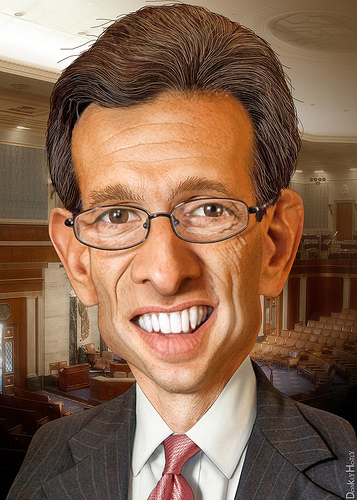
This Season’s Paul Ryan? Eric Cantor Takes On VAWA

By Terry O’Neil, National Organization for Women

House Majority Leader Eric Cantor is a powerful player on Capitol Hill who has pretty much flown under the radar with the general public. But I predict that won’t be true much longer. Now that Cantor is taking the lead on blocking reauthorization of an inclusive version of the Violence Against Women Act in the House, more and more women are asking just who is this representative from Virginia’s 7th district, with his regressive brand of politics?

Cantor has a 12-year history in Congress of voting to restrict women’s access to abortion, deny marriage rights to same-sex couples and block efforts to address workplace discrimination. He’s opposed to affirmative action, embryonic stem cell research and expanding hate crimes law to cover sexual orientation, gender, gender identity and disability. He even voted against the Lilly Ledbetter Fair Pay Act.

These anti-woman measures are bad enough. But the worst has been Cantor’s implacable hatred of the Violence Against Women Act, an antipathy so fierce that he not only took the lead in blocking it during the 112th Congress, but has now stepped forward to derail it once again. His reasoning? Near as I can tell, he just doesn’t want some victims to get help.

On Feb. 12, the Senate passed an inclusive version of VAWA reauthorization, S. 47, by an overwhelming bipartisan vote of 78-22. The Senate’s bill would offer new protections to lesbian, gay, bisexual and transgender victims, who report being unable to access services at astonishingly high rates. It would address college and university-based sexual violence, dating violence and stalking by requiring campuses to be transparent about their assault rates, prevention programs and assistance for victims. It would also recognize Native American tribal authorities’ jurisdiction over rapes committed by non-tribal members on reservations.

I was heartened by the huge margin of victory in the Senate. It indicates that Senate Republicans understand they need to regain credibility with women voters — specifically on the issue of rape — and supporting a reauthorization of VAWA that protects all sexual assault victims would be a step in the right direction. Some House Republicans understand this too; 19 of them sent a letter to the House Republican leadership urging them to pass a bipartisan bill that “reaches all victims.” In fact, we know we have the votes in the House to pass the Senate’s inclusive VAWA, if the leadership will just allow it to happen without playing political games.

Unfortunately, Eric Cantor is either too tone-deaf or too arrogant to do the right thing. Rather than moving swiftly to pass the Senate VAWA bill, Cantor has produced a “substitute amendment” that eliminates protections contained in the Senate bill, and even scales back current law, while also undermining the Office on Violence Against Women. Among its many flaws, this substitute drops LGBT protections; permits non-Native suspects to circumvent tribal authorities, leaving Native American women with inadequate protection from their abusers; and allows college and university administrations to shirk their duty to keep students safe from sexual assault.

To boot, in keeping with the Republicans’ 2013 stealth strategy as telegraphed by Louisiana Gov. Bobby Jindal (i.e., stick with the extremist anti-woman agenda but don’t be so obvious about it), Cantor has put his own stealth moves on VAWA: His bill is deceptively numbered S. 47 (because it’s a substitute amendment of the Senate bill), and it was put forward by a woman, House Republican Conference Co-Chair Cathy McMorris Rodgers (R-Wash.). I’d say that’s too clever by half. Women voters are not so easily fooled, and will likely be offended by the clumsy attempt at subterfuge.

Eric Cantor is like this season’s Paul Ryan: an influential conservative with bad ideas who has thus far escaped public scrutiny. This time around we don’t have a Mitt Romney to help raise Cantor’s profile, but that’s okay. The majority leader’s attempt to derail a hugely popular bipartisan VAWA — and his willingness to write off the more than 1,400 local, state and national organizations that have expressed support for the Senate bill — will ensure that he will have to answer to the voters for his actions, probably sooner rather than later. Let me be the first to say it couldn’t happen to a nicer guy.

Part of the #HERvotes blog carnival.

Creative Commons photo via Flickr user DonkeyHotey.

Advocating for an Inclusive VAWA

by Amanda Reed, Communications Intern at the National Organization for Women

On Feb. 12, the Senate passed an inclusive version of the Violence Against Women Act (VAWA) that would include provisions for previously-unprotected groups. Last week, the House revealed its own version of VAWA: a watered-down, non-inclusive bill that cuts out these protections. Sound familiar?

When VAWA came up for reauthorization last year, the House GOP passed a similarly unacceptable version of the bill, refusing to bring the bipartisan Senate version to the floor. This was the first time since the bill’s passage in 1994 that Congress failed to renew VAWA.

This cannot happen again. For nearly two decades, VAWA has aided women who suffer from domestic, dating and sexual violence and stalking. According to statistics from the Department of Justice and the FBI, reporting of domestic violence has increased by 51 percent since 1994. Non-fatal intimate partner violence against women has decreased by 61 percent, while the number of female deaths by intimate partner violence has declined by 34 percent. VAWA and the progress it has made in the lives of women must live on.

In comparison to the Senate VAWA, the version pushed by House Republicans does not cover all women. Provisions for already-protected groups will be weakened, while members of groups who often struggle to obtain services, legal protections and basic justice will continue to be overlooked. If the House VAWA passes:

• LGBT victims of violence, who would be protected under the Senate VAWA, will be left out of the bill’s protections entirely.

• Native American women will be left with weaker protections. A shocking three out of five Native American women experience domestic abuse. In most cases, non-Native attackers of Native American women avoid prosecution because tribal courts are unable to charge the perpetrators, and state and federal law enforcement cannot get involved. The Senate version does a far better job of addressing this injustice.

• Immigrant women will be limited in their ability to obtain U Visas, a law enforcement tool that encourages them to report and help prosecute crimes committed against them. In reporting sexual and domestic violence, these women often face the possibility of deportation, as well as language and cultural barriers.

• The SAFER Act, which helps fund investigations into rape cases, would not be included. This act provides grants that allow prosecutors to conduct audits of rape kit backlogs, which can lead them to the identities of attackers. Government experts estimate that hundreds of thousands of rape kits remain untested in the United States.

Part of the #HERvotes blog carnival.

• The Trafficking Victims Protection Reauthorization Act (TVPRA), which extends protections, resources and tools to human trafficking victims, would also not be reauthorized.

In comparison to the Senate bill, the House version of VAWA is discriminatory and inadequate. Gender-based violence is an issue all women face, and none should be excluded from the protections that VAWA provides. The passage of the Senate bill would be a huge step in fighting violence against all groups of women. If the House continues on its path to trim VAWA down, it puts the lives and well-being of many survivors at risk.

Prioritizing Campus Safety

There is a crisis at colleges and universities across the nation­. In just the first six weeks of 2013, a Huffington Post survey found 75 instances of sexual assaults reported on college campuses. This is outrageous, but we shouldn’t be surprised. A U.S. Department of Justice study found that around 28 percent of womenare targets of attempted or completed sexual assault while they are college students.

Why is it, then, that on a recent Fox News roundtable, The Five, co-host Bob Beckel asked, “When was the last time you heard about a rape on campus?” Although Beckel’s question suggests his ignorance about the rampancy of sexual assault on campus, his comment is especially misguided given that the number of reported incidents is only a fraction of the actual number that occurs. The Department of Justice study finds the reported number to be between 2 and 13 percentof all assaults, depending on the circumstances.

Beyond the shame, stigma, and fear associated with reporting a sexual assault, victims’ hesitancy to come forward often stems from unawareness about the resources and protection available to them on college campuses. Under the Clery Act of 1990, American colleges and universities are required to disclose information about crime on their campuses, including incidents of sexual assault. Yet even under the law’s requirements, ongoing incidents — like the University of North Carolina, Chapel Hill’s alleged underreporting of sexual assault to the federal government — highlight that we must do more.

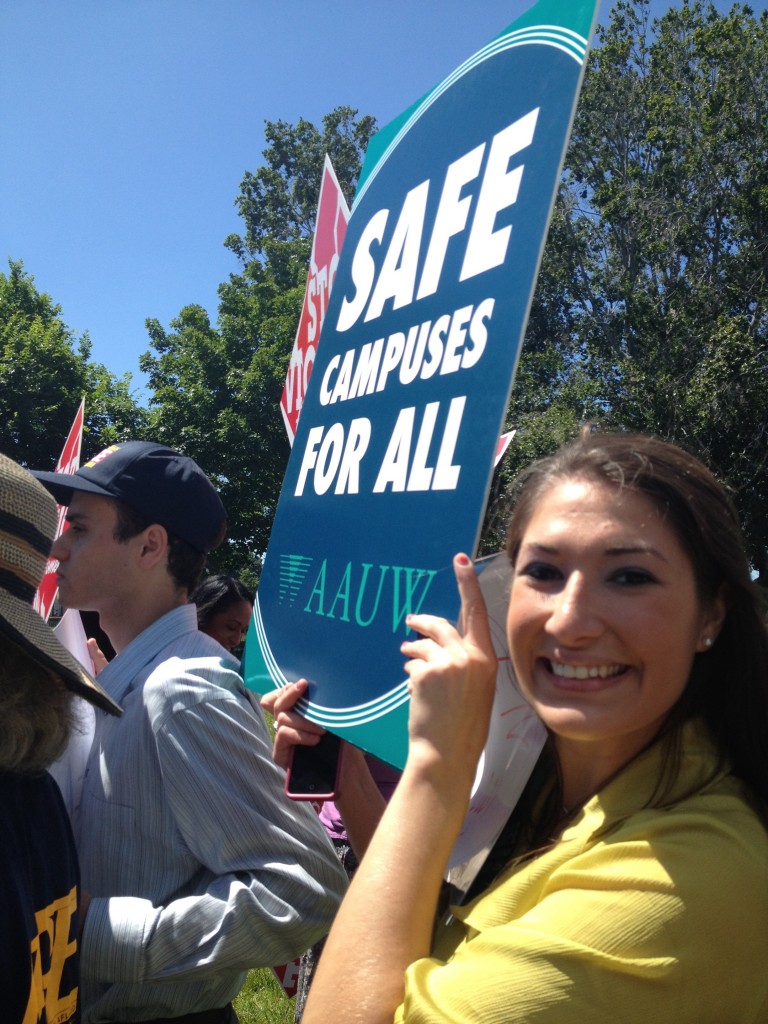
Currently, schools are not required to provide prevention training to all students, nor do they have to have a public and comprehensive policy explain the resources available to students and the procedures students should follow when such an incident occurs. That’s why AAUW has been working to pass the Campus Sexual Violence Elimination (SaVE) Act, which was included in the Violence Against Women Reauthorization Act recently passed by the Senate.

The Campus SaVE Act, championed by Sen. Bob Casey (D-PA) and Rep. Carolyn Maloney (D-NY), would require all colleges and universities to create prevention programs for students. Schools would also need to report more than just the number of sexual assaults on campus — including greater transparency about dating violence, domestic violence, and stalking. Under the act, victims would also be provided with information on counseling, health services, school disciplinary proceedings, and legal options. By spreading awareness and expanding resources available to students, the act aims to reduce sexual assault, dating violence, domestic violence, and stalking on campus, while also encouraging victims to seek help and report the crimes.

Standing in the way of the Campus SaVE Act’s goals is the House of Representatives, where Republican leadership recently released its own version of VAWA. Notably absent from the House bill is Campus SaVE. For this and other reasons, AAUW simply cannot support the House bill.

Each day that VAWA is not reauthorized with campus safety measures means another day that victims go without the resources they need. We can’t wait another day, much less another year. We must pass the Violence Against Women Act now with the Campus SaVE Act included. Use AAUW’s Action Network to tell your representative you agree.

Part of the #HERvotes blog carnival.

This post was written by National Student Advisory Council member and AAUW Public Policy Intern Bethany Imondi and originally posted on the AAUW Blog. Imondi’s participation in the SAC is sponsored by Dagmar E. McGill in memory of Happy Fernandez and Helen F. Faust.

Save #VAWA! Pass the Violence Against Women Act: A HERVotes Blog Carnival

Photo via AAUW

by Eleanor Smeal, Feminist Majority Foundation and Kristin Rowe-Finkbeiner, MomsRising.org

UPDATE (2/28/2013): VICTORY! The House of Representatives decided to stand with students, Native Americans, immigrants, and the LGBT community and passed the Senate inclusive #VAWA in a vote 286-138!

————

At last the House will vote on the Violence Against Women Act (VAWA) today. The reauthorization has been held up by partisan politics for over 500 days. Enough is enough.

Eliminating violence against women is not a partisan issue. We’re speaking up loud and clear: HERvotes urges House Representatives to vote for the bipartisan, inclusive Senate bill today.

We can’t wait any longer: Domestic violence results in over two million injuries every year. Every two minutes, someone in the United States is sexually assaulted. Three women die every day in the United States as the result of domestic violence.

You can make the difference! We invite you to take a brief moment to read the blog posts below (Scroll down). And then, importantly, to help spread the word and keep up the pressure on our elected leaders by sharing the posts below on Facebook, Twitter (with the hashtag #HERVotes), and Pinterest. And be sure to follow @HERvotes on Twitter!

#HERvotes, a multi-organization campaign launched in August 2011, advocates women using our voices and votes to stop the attacks on the women’s movement’s major advances. Part of the #HERvotes blog carnival.

***

* Congress Must Act Immediately to Reauthorize Federal Legislation to Protect All Victims of Violence, Dara Richardson-Heron, MD, YWCA

* Don’t Be Fooled, Janet Hill, Coalition of Labor Union Women (USW)

* Advocating for an Inclusive VAWA, Amanda Reed, National Organization for Women (NOW)

* This Season’s Paul Ryan? Eric Cantor Takes on VAWA, Terry O’Neill, National Organization for Women (NOW)

* Prioritizing Campus Safety, American Association of University Women

* Victims of Abuse Suffer Each Day an Inclusive VAWA Reauthorization is Delayed or Weakened, Avril Lighty, The Leadership Conference Education Fund

* Whatever Affects One Woman, Affects ALL Women, Bernardita “Beni” Yunis Varas, Young People For

* When Dating Violence Hits Close to Home, Madeline Shepherd, National Council of Jewish Women

* Violence Against Women Act Must Move Forward, National Association of Social Workers

* Join Ashley Greene and Support VAWA, Love Is Respect

* Support VAWA, Love Is Respect

*The Election is Over, Organizing for VAWA Isn’t, Love is Respect

* Servicing Members is Sometimes Sad, Judy Beard, Coalition of Labor Union Women (CLUW)

* House of Representatives Republicans: You Should Represent Women Too, Phyllis Johnson, Coalition of Labor Union Women (CLUW)

* Turning “Ifs” into “Whens”: College Students Like Me Need Reauthorization of a Full VAWA, Dana Bolger, NWLC

* New Congress should focus on passing VAWA, Sharon Stapel, New York City Anti-Violence Project

*House can no longer ignore violence against LGBT community, Sharon Stapel, New York City Anti-Violence Project

*Congress’ Opportunity to Protect All Women From Violence—We Say, Yes! Cristina M. Finch, Women’s Human Rights Program, Amnesty International USA and Adjunct Law Professor, George Mason University School of Law

*A VAWA For All Victims, Shaina Goodman, National Network to End Domestic Violence

*WHY WOMEN’S VOICES MUST “ROAR” IN MARCH, 2013, M. DeLois (Dee) Strum, The National Coalition of 100 Black Women

*Violence Erased Between the Lines, Kari Ross, Feminist Majority

*VAWA is Only the First Step, Emily Charlap, Women’s Action for New Directions (WAND)

*Campus SaVE, Courtney Condit, Break the Cycle

*Include Campus SaVE in VAWA — Today, Tory Corliss, Break the Cycle Policy Intern

*Congress: Pass a VAWA that includes Campus SaVE!, Julia, Break the Cycle


Part of the #HERvotes blog carnival.

VAWA To Go Before House of Representatives Tomorrow

Late last night, the House Rules Committee decided to bring the inclusive Violence Against Women Reauthorization Act (VAWA) to the House floor for a vote – provided that a restrictive House substitute bill is rejected first.

House leadership announced a substitute bill last week that guts necessary protections for students, LGBTQ individuals, immigrants, and Native Americans from the Senate bill. A similar “fake” VAWA was proposed by House leadership last year in an attempt to block inclusive protections, and instead allowed VAWA to expire at the end of the year without even seeing a vote.

However, the substitute bill has triggered an outcry from both House Democrats and Republicans, in addition to criticism from the White House and women’s rights organizations. At a press conference yesterday, Minority Leader Nancy Pelosi led Democratic and women’s rights leaders in decrying the House’s attempt to restrict protections. Representative Gwen Moore (D-WI), told the media “How can we justify turning battered women away because of their sexual orientation? “How can we throw our Native American women under the bus?” Also at the press conference Lauren Dunn, currently a law student at the University of Maryland who is a survivor of a gang rape by two undergraduate students, told reporters “Ending domestic assault is not about politics. Ending violence against women is about justice “justice for victims like me.”

As determined by the House Rules Committee, if the substitute bill is defeated the House will then immediately vote on the inclusive bill as passed by the Senate. Reportedly, the restrictive substitute bill is likely to fail, paving the way for the Senate bill to pass with bipartisan support. If so, the bill could go before President Obama by the end of the week.

Sources: New York Times 2/27/2013; Executive Office of the President 2/26/2013; Feminist Majority 2/26/2013; The Hill 2/26/2013; Huffington Post 2/26/2013Feminist Newswire 2/22/2013

Photo Courtesy of Feminist Majority Foundation

Sequester Targets Education, Violence Prevention Programs, Child Care

On Sunday, the White House released a comprehensive list of the impact the possible sequester cuts will have on each state if an agreement is not reached by Congress before March 1st. The list revealed shocking cuts to programs heavily relied upon by women in each state.

If the sequester goes into effect, one of the hardest hit areas will be education. California, Texas, and Florida will see the largest decreases in funding of public K-12 education, risking an estimated 2,890 teacher jobs at the grade school level. These states also could see large decreases in funding for programs focusing on education for children with disabilities. Higher education will also be impacted by reduced funding in financial aid and work study jobs that benefit primarily low-income students.

Another program that is set to be cut under the sequester is the STOP Violence Against Women Program. This program was created under the Violence Against Women Act (VAWA) of 1994, and provides grants to violence prevention programs. The three states that would see the greatest cuts in the STOP program are California, Texas, and New York. These three states alone could lose funding that would benefit an estimated 6,700 victims of violence. A total of $13 million would be cut for violence prevention across the country.

Sequester cuts will also impact government funding of child care programs. New York, Texas, and California would again be the three states most impacted by these cuts. Child care program funding is essential for working families that cannot afford private child care. In addition, California, Texas, and Florida would also see the largest cuts in funding for child vaccinations. An estimated 32,990 children would not be able to receive vaccines.

Media Resources: Washington Post 2/24/2013

Budget Cuts from Shutterstock

>