WI Senate Advances Transvaginal Ultrasound, TRAP Bill

shutterstock_136939883After intense but brief debate, the Wisconsin state Senate approved a bill that could mandate transvaginal ultrasounds before an abortion and impose unnecessary regulations on abortion clinics. The bill, SB 206 [PDF] was approved in a vote of 17 to 15 along party lines.

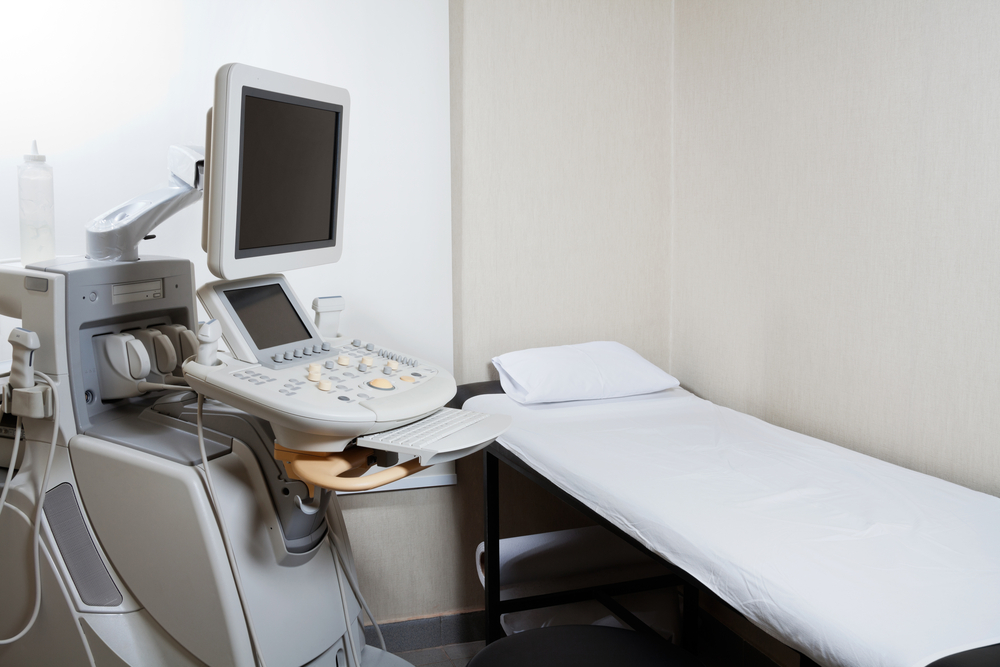
If the bill becomes law, women seeking an abortion will be forced to view an ultrasound and have a physician or ultrasound technician describe the fetus and it’s stage of development in detail. For women who are early in a pregnancy, this could mean having to go through a transvaginal ultrasound to even view the fetus. There is also no provisions in the bill about funding for the mandatory ultrasounds, creating a financial barrier for some women. Supporters of the bill argue that women can find clinics that offer free ultrasounds before their procedures. Many of these clinics are Crisis Pregnancy Centers (CPCs) which use medically inaccurate information and religious ideology to pressure women to carry their pregnancies to term.

In addition to requiring women to view an ultrasound, SB 206 also requires abortion providers to have admitting privileges at a hospital within 30 miles of the facility. This could close Planned Parenthood of Appleton, which is one of the only four abortion clinics in the entire state. Admitting privileges are not required to transfer a patient to a hospital in case of an emergency.

The bill goes before the Wisconsin Assembly on Thursday where it is expected to pass. Governor Scott Walker has said that he will sign the measure into law if it comes before his desk.

Media Resources: Journal Sentinel 6/13/2013; Huffington Post 6/12/2013; KARE 6/12/2013; ThinkProgress 6/12/2013

House Committee Advances Nationwide Abortion Ban

shutterstock_113641297Yesterday, the House Judiciary Committee voted 20 to 12 along party lines to approve a bill that would ban abortion after 20 weeks nationwide. The bill now goes before the full House of Representatives, and could be brought up for debate as early as next week.

The bill, called the Pain Capable Child Protection Act, is sponsored by Trent Franks (R-AZ), and originally applied only to the District of Columbia. However, Franks decided to expand the bill nationwide following the murder conviction of Kermit Gosnell, a rogue doctor who performed illegal abortions in Pennsylvania. The bill does not include exceptions for rape, incest, or fetal abnormality, but does include an exception to save the life of the woman. Franks has introduced the bill in previous sessions of Congress, but it was defeated.

During the committee debate, sponsor Franks echoed other conservative lawmakers in their understanding of rape. Franks successfully dissuaded fellow lawmakers from amending the bill to include an exception from rape by arguing that “the incidence of rape resulting in pregnancy are very low.” This shows striking similarity to Representative Todd Akin’s remark last year, that “…from what I understand from doctors [pregnancy from rape] is really rare. If it’s a legitimate rape, the female body has ways to try to shut that whole thing down.”

Media Resources: Bloomberg 6/12/2013; New York Times 6/11/2013; Washington Post 6/11/2013; Feminist Newswire 6/5/2013, 8/20/2012

Senate Armed Services Committee Removes Provision Challenging Military Sexual Assault

shutterstock_97312454Yesterday, Senate Armed Service Committee Chairman Carl Levin (D-MI) announced that he will remove a provision from the defense spending bill that would take military sexual assault cases out of the chain of command.

The measure was proposed by Senator Karen Gillibrand (D-NY) and would allow military prosecutors to decide which cases of sexual assault should go to trial instead of commanders, taking the cases out of the chain of command. The measure has 27 co-sponsors, including four Republicans. However, Levin announced that he would remove the provision and insert a new one that would require senior military officials to review sexual assault cases that commanders decide not to prosecute.

Aides for Gillibrand commented to news sources that Levin’s decision was “a real setback.” She plans to re-introduce the measure when the budget comes up for a final vote later in the summer. Senator Barbara Boxer (D-CA), a co-sponsor of Gillibrand’s proposal, told reporters “They basically embrace the status quo here. It’s outrageous.”

Media Resources: NBC News 6/12/2013; New York Post 6/12/2013; New York Times 6/11/2013

Planned Parenthood, ACLU File Lawsuit Against AL TRAP Law

shutterstock_108217214On Tuesday, the American Civil Liberties Union and Planned Parenthood filed a lawsuit to prevent an anti-abortion law that could threaten to close three out of the five clinics in the state from going into effect July 1.

The law, signed in April, requires that all abortions in the state be attended by an Alabama-licensed physician be present at every abortion and will require these doctors to have admitting privileges to local hospitals. According to the lawsuit, if the law goes into effect, three out of the total five abortion clinics in the state will be forced to shut their doors. In the complaint, the lawyers wrote, “The purpose and effect of the requirement, which is wholly unnecessary and unreasonable, is to impose a substantial obstacle in the path of women seeking abortion prior to viability… It is an unreasonable health regulation, and it has the unlawful purpose and effect of imposing an undue burden on women’s right to choose abortion.” If the law is allowed to go into effect on July 1, clinics will have 180 days to come into compliance.

Currently, the majority of clinics in Alabama have doctors who travel from out of state perform procedures. These doctors partner with local doctors with admitting privileges to provide necessary follow-up care. With the new measure, the doctors themselves must have the admitting privileges, severely limiting the ability of the current doctors to continue performing abortions in the state.

Media Resources: Christian Science Monitor 6/11/2013; Reuters 6/11/2013; Feminist Newswire 4/10/2013

Women’s Rights Advocate Wins Virginia Primary

shutterstock_114348214Dr. Ralph Northam from Norfolk, Virginia, has won the Democratic primary for the Virginia Lieutenant Governor race with 56% of the vote.

Northam, who is a pediatric neurologist, is also the only physician in the Virginia state Senate. He has been an outspoken voice against anti-choice measures in the state including the transvaginal ultrasound bill that gained national attention and the Targeted Regulation of Abortion Providers (TRAP) law that has already closed abortion clinics in the state.

Northam will run on the Democratic ticket alongside Terry McAuliffe for governor and Mark Herring for attorney general. The Republican ticket will have current Attorney General Ken Cuccinelli running for governor and minister E.W. Jackson for lieutenant governor

Media Resources: Associated Press 6/11/2013; Burke Patch 6/11/2013; Washington Post 6/11/2013

Plan B One-Step To Be Sold Over-The-Counter Without Age Restrictions

shutterstock_120907552The Obama administration Monday officially ended its opposition to over-the-counter sales of “Plan B One-Step,” also known as the morning-after pill. Government attorneys filed federal documents in New York announcing that the Food and Drug Administration and Department of Health and Human Services will remove age and point of sale restrictions on the emergency contraception.

Plan B One-Step, or PBOS, when taken within 72 hours of sexual activity, reduces the risk of pregnancy by up to 89 percent without damaging a fetus or causing an abortion. If someone is already pregnant when they take Plan B, the pill has no effect.

An April 5 ruling by U.S. District Judge Edward Korman demanded that PBOS be available over-the-counter to girls of any age, calling restrictions to the contrary “arbitrary, capricious, and unreasonable.” The Obama administration responded by lowering the age of regulation for the pill from 17 to 15, and filed an appeal to the ruling in the 2nd Circuit Court. On June 5, that court ruled that the FDA had to immediately make available various forms of emergency contraception to anyone, regardless of age. The FDA has withdrawn that appealand will now comply with the original ruling from April, which did not mandate the same over-the-counter availability for the two-pill version of the same product and its generics.

The FDA has asked Teva,, the manufacturer of PBOS, to submit a supplemental application for approval for the pill to be made available over-the-counter without age restrictions, according to a statement, and “intends to approve it promptly.” Generic versions of the pill may eventually also be available.

Many women’s groups are applauding the Obama Administration for dropping their appeal of Judge Kormen’s decision. “It’s about time,” said Annie Tummino of National Women’s Liberation, “that the administration stopped opposing women having access to safe and effective birth control.”

The Obama administration, however, has made clear that this is not a reversal on their stance that emergency contraception should not be available over-the-counter to teens.

Media Resources: Huffington Post 6/10/2013; ThinkProgress 6/10/2013; Feminist Newswire 4/5/2013, 5/2/2013, 5/14/2013, 6/5/2013; Us Department of Justice Letter 6/10/2013

Challenges to Unlawful Single-Sex Education Programs Advance

shutterstock_83691805The Birmingham City School District has promised to end their single-sex classes at the end of the Spring 2013 semester after signing an official agreement last week with the Office for Civil Rights. The agreement came out of an investigation prompted by the ACLU’s “Teach Kids, Not Stereotypes” campaign in December 2012 that found the district had been in violation of Title IX, the federal law prohibiting sex discrimination in public schools.

The ACLU discovered that Huffman Middle School had been separating boys and girls in every grade and for every scheduled activity – including not only courses but also homeroom and lunch. At Huffman, boys were taught about “heroic behavior” and how “to be a man,” and learned that girls were inferior to them in mathematics based on their hormonal differences. Researchers commissioned by the Birmingham City School District concluded that there was “no definitive proof” that student performance had improved due to sex segregation.

An ACLU report in August of 2012 found that public schools offering single-sex classes centered their practices on gendered stereotypes, and even served to reinforce them. An FMF study, the “State of Public School Sex Segregation in the United States 2007-2010,” released in June of the same year, found that there were over 1000 public K-12 U.S. schools with deliberate single-sex classes. It is likely most schools which sex-segregated students did not educate them equally.

School districts in Wisconsin and Idaho are also currently under investigation by the Office of Civil Rights following complaints filed by local ACLU chapters. In Wisconsin, teachers were encouraged to discipline boys who “like to read, do not enjoy contact sports, and do not have a lot of close male friends.” In Idaho, role models were sought out for boys but not girls. Dr. Leonard Sax, a proponent of single-sex education who believes there are inherent differences between the brains of girls and boys, has influenced these school districts. His ideas were also the basis for same-sex education at Huffman.

Media Resources: ACLU Blog 6/6/2013, 3/28/2013, 12/6/2012; Feminist Newswire 6/26/12, 8/29/2012

50th Anniversary of Equal Pay Act

shutterstock_77384059Fifty years ago today, in 1963, President John F. Kennedy, Jr. signed into law the Equal Pay Act, banning gender-based wage discrimination in the workplace. Yet on the anniversary of the historical legislation, women continue to face substantial pay inequity in the workforce.

Research compiled by the American Association of University Women (AAUW) reveals that as early as one year out of college, salaries are marked by gender and race. White women make an average of 77 cents on every dollar a man makes, though the gap widens to 64 cents for African-American women and 55 cents for Latina women. African-American and Latino men also experience a disparity in pay, from their white counterparts. Though this data is indicative of a gross difference in salary, other factors like access to medical benefits and paid leave often denigrate women’s earnings even further.

Many failings of the Equal Pay Act lie in the loopholes that have since been exploited in the bill, namely those allowing retaliation against employees who inquire about salary information for their peers and failing to require that employers prove that pay disparities aren’t based in gender. These loopholes are addressed in the Paycheck Fairness Act, which has been introduced in Congress 16 times over the course of eight sessions by Congresswoman Rosa DeLauro (D-CT). When the Act came to a Senate vote in June 2012, it failed to advance. All Republican members voted against it, even women.

The need for wage parity persists and has only increased over the past half of a century. Today, women are breadwinners in over 40 percent of households and occupy most administrative and office positions. “Never could we expect,” Senate Democratic Leader Nancy Pelosi said Thursday, “that 50 years later, we would still be fighting the fight.”

Media Resources: FMF Blog, 5/31/2012; News Observer, 6/9/2013; MSNBC, 6/9/2013; Feminist Newswire, 6/11/2010

House Armed Services Committee Takes on Sexual Assault In Annual Military Spending Bill

The House Armed Services Committee will vote next week on a defense policy bill that includes multiple provisions on sexual assault in the military. The epidemic of sexual assault across the armed forces was also the subject of a nearly eight-hour hearing by the Senate Armed Services Committee earlier this week.

via Maryland National Guard

The National Defense Authorization Act, or NDAA, is an annual bill that funds the Pentagon and outlines their budgetary requirements. Drafted and passed by Congress, it is their primary vehicle for reforming military procedure and policy. The 2014 NDAA includes the full language of multiple bills addressing sexual assault, including provisions that strip military commanders of their ability to overturn rape convictions, establish minimum punishments for anyone found guilty of a sex-related crime that include dishonorable discharge or dismissal from service, enhance training for attorneys involved in sex-related cases, and enable military legal counsel to provide legal assistance to victims. The House Armed Services Committee also passed the Ruth Moore Act earlier this week to ensure that survivors of sexual violence in the military can access disability benefits for Post-Traumatic Stress Disorder.

Top military officials testified before the Senate Armed Services Committee in opposition to moving responsibility for handling sex crime cases out of the chain of command. Despite the opposition, members of Congress are pushing forward on policy changes with several bills already introduced in the House and Senate. “This is clearly a systemic problem,” Rep. Niki Tsongas (D-MA) said. “Accountability is needed at every level, from everyone.”

Tsongas and Rep. Michael Turner (R-OH) wrote many of the provisions in the 2014 NDAA. “The word should go out,” Turner said, “that if you commit a sexual assault in the military, you are out.”

A recent Pentagon report claimed that as many as 26,000 military members were sexually assaulted last year – a 7,000 person increase from 2011’s predicted figure of 19,000. New oversight and assistance programs instated at various levels by the military have been unable to either increase the number of sex crime cases reported or lower the incidence of sex crimes overall. Defense estimates predict that an average of 70 victims are sexually assaulted in the military every day.

Media Resources: Huffington Post 6/6/2013, 6/6/13; US News 6/6/2013

NY Governor Cuomo Officially Introduces Women’s Equality Act

popup womanOn Tuesday, New York Governor Andrew Cuomo (D) officially introduced the long-awaited Women’s Equality Act.

The Women’s Equality Act [PDF] is designed to strengthen women’s rights in New York in ten different areas [PDF]: achieving pay equity; stopping sexual harassment in all workplaces; allowing the recovery of attorney fees in harassment cases; ending employment discrimination based on whether a woman has children; stopping income discrimination of female-headed households; stopping housing discrimination of victims of domestic violence; strengthening order of protection laws; strengthening human trafficking laws; stopping pregnancy discrimination; and protecting a woman’s right to choose. Cuomo has urged state lawmakers to pass the measure before the legislative session ends on June 20.

In an op-ed in the Huffington Post, Cuomo defended the legislation, “Over 150 years ago, the women’s suffrage movement began in America at the first Women’s Rights Convention in Seneca Falls, New York. Since then, New York has been at the forefront of important social and legal movements that have advanced the equal treatment of all people. Over the years, however, New York has fallen behind in its role as a progressive leader on women’s rights. The Women’s Equality Act, which I will introduce today, is designed to address gender inequality in our communities, and to restore New York as a leader in women’s rights.” He also argues that while opponents say the bill will expand abortion rights, it will merely codify current national abortion rights into New York law.

State Senator Andrea Stewart-Cousins (D-Yonkers), supported the bill in a statement, saying, “Women’s health and equality is not a Republican or Democratic issue… The women of New York deserve a vote on the entire Women’s Equality Act and deserve to know where their elected officials stand on these important issues.” Her sentiments are also echoed by New York voters according to a recent poll by the Quinnipiac University Polling Institute. The poll, which featured responses from 1,075 New York voters questions between May 29 and June 3, found that two-thirds of voters support the Women’s Equality Act including the abortion provision. The poll also found that men and women were closely aligned in their opinion, with 67% of women and 66% of men favoring the bill.

Media Resources: New York Post 6/6/2013; Huffington Post 6/4/2013; Press Connect 6/4/2013; Women’s Equality Act Memo 6/4/2013; Feminist Newswire 2/19/2013

Gender is Obstacle for Female Corporate Board Members

shutterstock_118563691According to a new study released by the Harvard Business Review, women who are members of corporate boards face significant barriers in their positions because of their gender.

The study, based off of a 2010 survey of almost 300 women and 100 men, sought to determine why there are so few women on the boards of Fortune 500 companies. Women only held 16.6% of board seats of Fortune 500 companies in the United States in 2012, a number that has remained relatively consistent in the past six years. Worldwide, women only made up 10% of corporate board members.

In their research, Harvard Business Review discovered that often women had to be more qualified than men in order to be appointed to a board. On average, 68% of women directors were in lead roles such as President or CEO compared to 51% of men directors. 77% of women directors held an operational role compared to 69% of men directors, despite operational experience being listed as a top quality by both women and men in the survey. “These findings suggest that to receive invitations to boards, women might need to be more accomplished than men,” the researchers said.

In addition, researchers found that women faced gender bias from fellow board members when they were finally appointed. Despite half of the male survey participants saying that female board members did not face any additional obstacles because of their gender, 86% of female respondents felt they have to overcome gender barriers in their position. Researchers found that the barriers reported fell into one of four categories: not being heard or listened to, not being accepted as an equal, establishing credibility, and stereotypes of women’s expected behavior. In the survey, researchers highlighted responses such as “I have to yell for them to hear me” and “I have to establish my credentials over and over; it never stops.” They also included an anecdote from one female respondent who has been repeated pulled aside by the CEO and other board members and told she needed to be “less vocal.” This even occurred during meetings, with one director interrupting her questions and exclaiming, “You’re behaving just like my daughter! You’re arguing too much-just stop!”

Media Resources: ThinkProgress 6/4/2013; Harvard Business Review June 2013

Women Senators Form Bipartisan Front on Military Sexual Assault

shutterstock_136952876Yesterday Senate Armed Services Committee hearing on the epidemic of sexual assault in the military demonstrated the role of the record number of women in the Senate. The seven women Members of the Committee, five Democrats and two Republicans, were united yesterday as they asked hard questions of the all-male military leadership.

Senator Claire McCaskill (D-MO), said, “This isn’t about sex. This is about assaultive dominance and violence, and as long as those two get mushed together, you all are not going to be as successful as you need to be in getting after the most insidious part of this, which is the predators in your ranks.” Even Republican Senator John McCain (AZ) was candid in his outrage, telling the panel of officials, “I cannot overstate my disgust and disappointment over continued reports of sexual assault in our military. We’ve been talking about the issue for years.” Senator Deb Fisher (R-NE) expressed a similar sentiment when she said “this is not a gender issue, it is a violence issue.”

While the senators and the military officials in attendance agreed that military sexual assault had gotten extremely out of control, debate centered around whether or not sexual assaults cases should be taken out of the chain of command. Many of the military leaders argued that removing the cases from the chain of command will cause the problem to escalate. Senator Kirsten Gillibrand (D-NY), who has proposed legislation to take sexual assault cases out of the hands of superior officers, responded, “You have lost the trust of the men and women who rely on you that you will actually bring justice in these cases.”

Yet some senators in the hearing attributed to the rampant rate of sexual assault in the military to external factors such as hormones and the availability of pornography to service members. Senator Saxby Chambliss (R-GA) decried the military’s response to sexual assault while at the same time arguing that hormones were responsible for such a high number of cases. He said, “The young folks who are coming into each of your services are anywhere from 17 to 22 or 23. Gee whiz, the hormone level created by nature sets in place the possibility for these types of things to occur… But guys, we are not doing our job. You’re not doing yours, and we are not doing ours with the rates we are seeing on sexual assaults.”

Senator Jeff Sessions (R-AL) argued that with the prevalence of pornography available to service members it was no wonder that assaults rates were so high. “Mr. Chairman, I’d just add a letter, a document here that was given to me from Morality in the Media,” he began. “[They point] out that, a picture here of a newsstand and an Air Force base exchange with, you know, sexually explicit magazines being sold. So, we live in a culture that’s awash in sexual activity. If it’s not sold on base, it’s right off base. There are videos and so forth that can be obtained, and it creates some problems, I think.”

A debate over military sexual assault is likely to occur in the House Armed Services Committee as they prepare to debate a defense policy bill on Wednesday. Provisions regarding sexual assault, in addition to Guantanamo Bay, the war in Afghanistan among others are likely to see generous discussion while a vote in anticipated in the evening.

Media Resources: Associated Press 6/5/2013; Los Angeles Time 6/5/2013; Christian Science Monitor 6/4/2013; Huffington Post 6/4/2013; ThinkProgress 6/4/2013; Washington Post 6/4/2013; Feminist Newswire 6/4/2013

US Marines concept with service tapes, dog tags and camouflaged uniform from Shutterstock

New Jersey Senator Frank Lautenberg Dies

My Approved PortraitsNew Jersey Senator Frank Lautenberg (D) passed away this morning due to complications from viral pneumonia. The Senator was 89 years-old and was the oldest currently serving member of the Senate. He holds the record for most votes cast by a Senator from New Jersey and cast his 9,000th vote in December 2011.

Lautenberg served five terms in Congress despite stomach cancer and other various health problems throughout the years. A champion of progressive legislation, Lautenberg was responsible for many laws that are considered standard today such as no smoking on airplanes, 0.008 blood-alcohol limit for driving, and a legal drinking age of 21. Lautenberg was also key in advancing several women’s rights and gun control laws, such asprohibiting convicted abusers from owning guns, attempting to defund abstinence-only education, and enforcing truth in advertising laws on crisis pregnancy centers.

New Jersey Governor Chris Christie (R) will decide how to fill Lautenberg’s Senate seat.

The Senator was the last World War II veteran in Congress. He is survived by his late wife and six children.

Media Resources: Huffington Post 6/3/2013; Lautenberg Press Office 6/3/2013; NorthJersey.com 6/3/2013; Feminist Newswire 5/21/2013, 3/16/2011

Official Lautenberg Press Photo

Illinois Same-Sex Marriage Bill Fails To Get Vote

shutterstock_122964502A bill legalizing same-sex marriage in the state of Illinois failed to gather enough support to pass before the end of the legislative session.

The law would have redefined marriage as the legal union of two people, not specifically a man and a woman. It would also have converted civil unions to marriages within a year’s time. Religious institutions and individuals that oppose homosexuality would not be required to perform marriage ceremonies for same-sex couples. The bill passed the state Senate in February with a vote of 32 to 21.

However, in the House, the bill failed to gain enough support to pass. As a result, the bill’s sponsor Representative Greg Harris (D-Chicago) announced that he would not bring the bill up for a vote. He said before the chamber, “And I’ve never been sadder to accept this request, but I have to keep my eye, as we all must, on the ultimate prize. They’ve asked for time to go back to their districts, talk to their constituents and reach out to their minds and hearts and have told me they’ll return in November with their word that they’re prepared to support this legislation.” He continued, “We will be back and we will be voting on this bill in this legislature, in this room… Until that day, I apologize to the families who were hoping to wake up tomorrow as full and equal citizens of this state.”

If passed, Illinois would have become the 13th state to legalize same-sex marriage. The Minnesota state legislature voted to approve same-sex marriage in mid-May, shortly after Rhode Island and Delaware.

Media Resources: Associated Press 6/1/2013; Chicago Sun-Times 5/31/2013; Reuters 5/31/2013; Feminist Newswire 5/14/2013, 2/15/2013

Raster gay wedding rings on rainbow path from Shutterstock

Facebook to Revise Harmful Content Policy After Social Media Campaign

shutterstock_94168588Yesterday Facebook announced that it will revise its harmful content policy to include gender-based violence after a social media campaign pressured advertisers to pull their ads from the website.

Last week Women, Action, & the Media (WAM), Everyday Sexism, and a coalition of other organizations and leaders launched the Twitter and email campaign #FBrape in an effort to convince Facebook to change their policy. In addition, the coalition pressured advertisers to remove their ads from Facebook as the ads appeared on groups and images that incited and condoned rape.

In their open letter to Facebook the campaign wrote:

These pages and images [encouraging rape] are approved by your moderators, while you regularly remove content such as pictures of women breastfeeding, women post-mastectomy and artistic representations of women’s bodies. In addition, women’s political speech, involving the use of their bodies in non-sexualized ways for protest, is regularly banned as pornographic, while pornographic content – prohibited by your own guidelines – remains. It appears that Facebook considers violence against women to be less offensive than non-violent images of women’s bodies, and that the only acceptable representation of women’s nudity are those in which women appear as sex objects or the victims of abuse. Your common practice of allowing this content by appending a [humor] disclaimer to said content literally treats violence targeting women as a joke.

The coalition called on Facebook to “1. Recognize speech that trivializes or glorifies violence against girls and women as hate speech and make a commitment that you will not tolerate this content; 2. Effectively train moderators to recognize and remove gender-based hate speech; and 3. Effectively train moderators to understand how online harassment differently affects women and men, in part due to the real-world pandemic of violence against women.”

The campaign generated over 60,000 tweets and 5,000 emails to advertisers who appeared on pages and groups that condoned violence against women. 15 advertisers, including Nissan UK, eReader Utopia, and Specialty Natural Medicine, pulled their advertisements from Facebook while others such as Zappos and Zipcar contacted Facebook and even urged people to delete their ads.

On Tuesday, Facebook released a statement in response. The statement read “Facebook’s mission has always been to make the world more open and connected… This requires us to make difficult decisions and balance concerns about free expression and community respect. We prohibit content deemed to be directly harmful, but allow content that is offensive or controversial. We define harmful content as anything organizing real world violence, theft, or property destruction, or that directly inflicts emotional distress on a specific private individual (e.g. bullying).”

Facebook continued, “In recent days, it has become clear that our systems to identify and remove hate speech have failed to work as effectively as we would like, particularly around issues of gender-based hate. In some cases, content is not being removed as quickly as we want. In other cases, content that should be removed has not been or has been evaluated using outdated criteria.”

Facebook has pledged to update their Community Standards guidelines for hate speech and update the training for the teams that monitor and review reports of hate speech and harmful content. In addition, Facebook has called for more collaboration with women’s groups and other cyberbullying/cyberhate prevention groups to help with the process.

Media Resources: WAM Statement 5/28/2013; Facebook Statement 5/28/2013; WAM Campaign Wins 5/28/2013; Open Letter to Facebook 5/21/2013

Guangdong, China – Feb 02: Facebook website Initial public offerings (IPO) for financing 5 billion dollars, but this website still could not accessed over China, Feb 02, 2012 in Guangdong, China. by Pan Xunbin / Shutterstock.com

NC Legislature Considers “Show Me Your Papers” Bill

shutterstock_110765648The North Carolina House of Representatives is considering an anti-immigration bill that would allow law enforcement officials to police a person’s immigration status based on “reasonable suspicion.” The bill has already advanced in committee.

House Bill 786, or the Reasonable Enactment of Comprehensive Legislation Addressing Immigration Matters Act (RECLAIM Act) [PDF], would allow law enforcement officials to question someone on their immigration status as part of minor offenses, such as broken headlights, if the officer has any reason to suspect that the individual is in the country illegally. In addition, the bill would not recognize matricula consular IDs, which are issued by the Mexican Consulate in North Carolina, as valid forms of identification. The bill would also force undocumented individuals who are getting a driver’s license to get a vertical restricted driver’s permit that shows their legal status, and have prepaid nonrefundable car insurance for the entire duration of the time they will hold their permit. However, the bill is actually a small step forward from the original refusal of lawmakers to allow undocumented individuals from obtaining driver’s licenses.

Many of the provisions in House Bill 786 reflect Arizona’s controversial “Show Me Your Papers” law. In 2012, the U.S. Supreme Court ruled that law enforcement officials must check the papers of any individual suspected of being undocumented. The Court struck down other provisions of the law that prohibited undocumented immigrants from soliciting work, required that papers are carried at all times, and gave police the right to arrest an undocumented immigrant without a warrant. Later that year, a federal court upheld the rulings by refusing to block the provisions allowing officers to request proof of legal immigration, residency, or citizenship of anyone they suspect might be an illegal immigrant.

Media Resources: Inquisitr 5/24/2013; ThinkProgress 5/27/2013; Winston-Salem Journal 5/14/2013; House Bill 786 5/2/2013; Feminist Newswire 9/6/2012, 6/25/2012

Middle aged traffic policeman writing on clipboard from Shutterstock

FL Teen Charged with Felony for Same-Sex Relationship Rejects Plea Deal

shutterstock_128422715An 18-year-old high school senior in Florida who was charged with a felony and expelled from her school for a consensual same-sex relationship with a 15-year-old classmate rejected a plea deal from the state on Friday.

Kaitlin Hunt was arrested in February and charged with “lewd and lascivious battery on a child 12 to 16” after the parents of her partner filed charges against Hunt. The State Attorney, Brian Workman, had offered Hunt a plea deal of two years house arrest and one year probation. Instead, Hunt will go to trial on June 20th. If convicted she could face 15 years in jail.

In a statement, Hunt’s attorney Julia Graves said, “This is a situation of two teenagers who happen to be of the same sex involved in a relationship. If this case involved a boy and girl, there would be no media attention to this case… If this incident occurred 108 days earlier when she was 17, we wouldn’t even be here.”

The case has gathered widespread media attention since it went public earlier this month. The ACLU of Floridareleased a statement in support of Kaitlin Hunt, saying “This is a life sentence for behavior by teenagers that is all too common, whether they are male or female, gay or straight. High-school relationships may be fleeting, but felony convictions are not… This prosecution does nothing to protect Florida’s young people but instead causes a great deal of harm.” Even the hacker group Anonymous has come out in support of Hunt, posting a letter that read, “While in the course of performing your duties we feel that you’ve lost perspective… The truth is, Kaitlyn Hunt is a bright young girl who was involved in a consensual, same-sex relationship while both she and her partner were minors. She has a big future ahead of her and there are people, thousands of people in fact, that have no intention of allowing you to ruin it with your rotten selective enforcement.” Anonymous also threatened actions calling for the resignation of the state attorney and those involved in the prosecution.

Media Resources: Washington Times 5/25/2013; Huffington Post 5/24/2013; ACLU of Florida 5/21/2013; Feminist Newswire 5/21/2013

Rainbow heart and ink illustration design over a white background from Shutterstock

Teenager Charged with Felony and Expelled for Same-Sex Relationship

shutterstock_108896654An 18 year old high school senior in Florida was charged with a felony and expelled from her school for a consensual same-sex relationship with a 15 year old classmate.

Kaitlin Hunt was arrested in February and charged with “lewd and lascivious battery on a child 12 to 16” after the parents of her partner filed charges against Hunt. According to Hunt’s mother, Kelley Hunt-Smith, “These people never came to us as parents, never tried to speak to us… and tell us they had a problem with the girls dating…They were out to destroy my daughter. [They] feel like my daughter ‘made’ their daughter gay.”

Hunt and her partner were both on the Sebastian River High School basketball team and in some classes together. Hunt-Smith maintains that the two had completely consensual relationship. According to the Free KateFacebook page, “Kaitlyn’s girlfriend denies that Kaitlyn ever pressured her and is adamant that their relationship is entirely consensual, but her parents are out to destroy Kaitlyn’s life.” When the basketball coach found out the two were dating, Hunt was kicked off the basketball team and the coach notified the other girl’s parents, who pressed charges. Hunt was able to remain at Sebastian despite repeated efforts by her partner’s parents to have her expelled. When they petitioned the school board, Hunt was expelled from school despite two judges and the school’s administration denying their previous requests.

The State Attorney, Brian Workman, has offered Hunt a plea deal. If she accepts, she will face two years house arrest and one year probation. If she does not accept, she could go trial and if found guilty become a registered sex offender. She must decide whether or not to accept the offer by Friday. Her family has also created a petition on change.org that received so much traffic it crashed the site.

Media Resources: CBS News 5/20/2013; Huffington Post 5/19/2013; WPTV 5/19/2013; ThinkProgress 5/18/2013

Woman hands with handcuffs on the white background from Shutterstock

Federal Judge Temporarily Blocks AR 12 Week Ban

shutterstock_122185642A federal judge has issued a temporary injunction against a twelve week abortion ban in Arkansas while the constitutionality of the bill is in question.

U.S. District Judge Susan Webber Wright of Little Rock granted the request of two doctors involved in the case to block the enforcement of the bill. In her decision she said, “I believe that there is a threat of irreparable harm, because these doctors… could face loss of their license… They also have established that their patients could suffer irreparable harm by not being able to have abortions post 12-weeks but during that pre-viability period.” The injunction will prevent the bill from going into effect until after Wright has heard closing arguments in the case and issued her decision. Currently, no date has been set to hear arguments in the case.

The “Human Heartbeat Protection Act,” or Act 301, bans abortion once a human heartbeat is detected using a standard abdominal ultrasound, usually at 12 weeks gestation. The bill was passed into law when the state legislature voted to override the governor’s veto. The ACLU and Center for Reproductive Rights have filed a lawsuit on behalf of two doctors in the state who are challenging the constitutionality of the pre-viability ban.

Media Resources: Associated Press 5/17/2013; Los Angeles Times 5/17/2013; New York Times 5/17/2013; Feminist Newswire 5/17/2013

Senior judge pounding after judgment in courtroom from Shutterstock

Nationwide Abortion Ban Introduced

shutterstock_109853063

Representative Trent Franks (R-AZ) has introduced a bill that will ban abortion after the 20th week of a pregnancy in the United States.

The bill, also called the D.C. Pain Capable Unborn Protection Act, originally would have banned abortion at 20 weeks gestation only in the District of Columbia. However, Franks decided to expand the bill nationwide following the murder conviction of Kermit Gosnell, a rogue doctor who performed illegal abortions in Pennsylvania. Franks has introduced the bill in previous sessions of Congress, but it was defeated.

Senator Eleanor Holmes Norton, who was scheduled to testify on the bill before it was expanded nationwide, issued the following statement,

“As we have always argued, the intent of my anti-choice colleagues in pursuing a D.C.-only abortion ban bill was to use the District of Columbia to get a federal imprimatur in their effort to overturn Roe v. Wade, and they thought they could do so in a stealth way by using the District. However, our efforts, together with our pro-choice allies nationwide, to highlight the nationwide intent and implications of the D.C. bill brought my anti-choice colleagues unwanted national attention, leaving them unable to hide behind the D.C. bill. Senator Mike Lee, the Senate sponsor of the D.C. abortion ban bill said he could not support a nationwide abortion ban bill because, ironically, it would violate ‘states’ rights,’ so there could still be a unique threat to the District. With the help of women nationwide, we defeated the D.C. abortion ban bill on the House floor last Congress. Now that the Franks bill will expressly target all U.S. women, we can expect an even stronger national response to this attack on women’s health.”

Though Franks cites the case of Gosnell as the reason behind the ban, pro-choice activists argue that this type of law would lead to more cases like Gosnell. President of NARAL Pro-choice America, Ilyse Hogue said in a statement “Gosnell was a criminal whose activities were made possible by the very kind of anti-choice policies Franks is advancing. By cutting funding, reducing access and imposing unnecessary restrictions on safe and legal abortion, anti-choice politicians have forced women – especially low-income women – into the waiting hands of unscrupulous operators like Kermit Gosnell. We will fight this senseless attack and protect the rights of all women.”

The bill will be read before the House Judiciary Subcommittee on the Constitution and Civil Justice on Thursday. The subcommittee is chaired by Representative Franks.

Media Resources: Huffington Post 5/17/2013; NARAL 5/17/2013; Statement of Eleanor Holmes Norton 5/17/2013

Forbidden sign painted on grunge wall from Shutterstock

>